
Our readers keep the lights on and the weekend projects moving. As an Amazon Associate, I earn from qualifying purchases.
Lag spikes ruin a clutch moment. Blurry motion in a fast-paced shooter defeats the purpose of a massive screen. The right 4k gaming projector delivers both cinematic immersion and competitive responsiveness, but the category is littered with models that prioritize resolution over refresh rate or brightness over input lag.
I’m Rikta — the co-founder and writer behind FitlyFast. I’ve spent years analyzing projector specifications, comparing contrast ratios, refresh rates, and laser light sources to separate marketing hype from real-world gaming performance across the mid-range to premium tiers.
This guide breaks down the thirteen best models currently available, focusing on the specs that actually matter for gaming: input lag measured in milliseconds, native versus pixel-shifted resolution, and the brightness required to maintain image quality in a living room. Whether you need a short-throw laser unit for a dedicated theater or a high-refresh-rate DLP for competitive play, the analysis below covers every critical detail.
How To Choose The Best 4K Gaming Projector
Selecting a gaming projector requires balancing resolution, latency, and brightness against your room conditions and preferred game genres. A unit that excels in a dark, dedicated theater may struggle in a living room with ambient light. The sections below cover the three most important specifications to evaluate before making a purchase.
Input Lag and Refresh Rate
Input lag measures the delay between pressing a button and seeing the action on screen. For competitive play, look for models advertising sub-20ms lag at 4K 60Hz. Many projectors also support 1080p at 240Hz for smoother motion in fast-paced titles. A higher refresh rate reduces motion blur, but only if the source device can output those frames. Check that the projector’s HDMI port supports the bandwidth needed for 4K at 120Hz or 240Hz at 1080p.
Brightness and Contrast
Brightness is measured in ANSI lumens or ISO lumens. A model with at least 2,000 lumens is recommended for rooms with some ambient light, while 3,000 or more lumens allows daytime viewing with curtains open. Contrast ratio affects black level depth and shadow detail. Laser-based projectors often achieve native contrast ratios above 3,000:1, providing richer dark scenes without crushing detail. Always consider your screen size — larger screens require higher brightness to maintain the same perceived luminance.
Resolution and Image Processing
Native 4K panels from Sony and other premium brands deliver the sharpest text and finest detail, but they come at a higher cost. Most DLP projectors use pixel-shifting technology to achieve 4K output from a 1080p DMD chip, which can look impressively sharp in motion but may show slight softness in static text. HDR support, including Dolby Vision, HDR10+, and HLG, improves color and contrast in compatible games. For console gaming, verify the projector’s HDMI version supports the required bandwidth for 4K at 60Hz with HDR.
Quick Comparison
On smaller screens, swipe sideways to see the full table.
| Model | Category | Best For | Key Spec | Amazon |
|---|---|---|---|---|
| BenQ TK710 | Laser | High-refresh competitive gaming | 4ms response, 240Hz, 600,000:1 contrast | Amazon |
| BenQ TK700 | DLP Lamp | Versatile console gaming | 16ms lag @ 4K, 3200 lumens | Amazon |
| ViewSonic PX701-4K | DLP Lamp | Entry-level 4K gaming | 4.2ms lag @ 1080p, 240Hz | Amazon |
| XGIMI HORIZON 20 | RGB Laser | All-in-one entertainment hub | 1ms input lag, 240Hz, 3200 ISO lumens | Amazon |
| Valerion VisionMaster Pro | Laser | Cinematic RPG and adventure | 15,000:1 contrast, 4ms input lag | Amazon |
| ViewSonic LS901-4K | Laser | Bright room and golf simulation | 5500 ANSI lumens, 4.2ms lag | Amazon |
| Epson LS800 | 3LCD Laser | Ultra short throw living room | 4000 lumens, 3-chip 3LCD | Amazon |
| NexiGo Aurora Pro | Tri-Color Laser UST | Dolby Vision UST gaming | 8ms input lag, 4K@120Hz | Amazon |
| Hisense C2 Ultra | Triple Laser | Portable high-brightness gaming | 3000 ANSI lumens, 240Hz, 2000:1 contrast | Amazon |
| AWOL Aetherion Pro | Triple Laser UST | Dark room cinematic quality | 6000:1 native contrast, 1ms lag | Amazon |
| Hisense PX3-PRO | Triple Laser UST | High-end UST laser TV replacement | 3000 lumens, 3000:1 contrast, 240Hz | Amazon |
| AWOL Aetherion Max | Triple Laser UST | Bright room ultimate gaming | 3300 ISO lumens, 1ms lag, 240Hz | Amazon |
| Sony VPL-XW5000ES | Native 4K SXRD | Reference native 4K HDR quality | Native 3840×2160, X1 processor | Amazon |
In‑Depth Reviews
1. BenQ TK710

The BenQ TK710 pairs a laser light source with a 4ms response time at 1080p 240Hz, making it a strong option for gamers who prioritize fluid motion in competitive shooters. Its 3200 ANSI lumens of brightness ensure that even in a moderately lit room, the image retains punch and saturation. The 600,000:1 dynamic contrast ratio helps dark scenes in HDR gaming maintain depth without crushing shadow detail.
At 4K 60Hz, input lag measures around 16ms, which remains comfortable for story-driven titles where precise timing matters less. The laser source eliminates lamp replacement worries and delivers consistent brightness over thousands of hours. The vertical lens shift and 1.3x optical zoom provide flexible placement options, though the throw distance is shorter than some older 1080p projectors, requiring the unit to be placed closer to the screen for a 120-inch image.
Some users noted that the projector’s picture adjustment options are generous, with corner adjustments that simplify alignment on non-ideal wall surfaces. The built-in speaker is serviceable for casual use, but pairing with an external sound system elevates the gaming experience significantly.
Why it’s great
- Extremely low input lag at 1080p 240Hz
- Laser light source eliminates lamp maintenance
- Excellent corner adjustment controls for flexible installation
Good to know
- Shorter throw ratio than some alternatives
- Built-in audio is basic
2. BenQ TK700

The BenQ TK700 is a standard-throw DLP projector designed specifically for console gaming, with 16ms input lag at native 4K 60Hz and a 240Hz mode at 1080p for smoother motion. Its 3200 ANSI lumens provide enough brightness for a 100-inch screen in a room with some ambient light, and the HDR Game mode enhances visibility in dark game environments without washing out highlights.
This model supports HDMI 2.0 with HDCP 2.2, making it compatible with PS5 and Xbox Series X at full 4K 60Hz with HDR. The automatic keystone correction and 3D support add versatility for both gaming and movie nights. Users have reported excellent image sharpness and color accuracy after calibration, though the menu system can feel cumbersome for first-time setup.
Over extended use, some customers experienced dead pixels after several thousand hours, which highlights the importance of a warranty. BenQ’s support experience varies by region. The built-in 5W Dolby Atmos speaker is adequate for casual play but lacks the low-end presence needed for immersive single-player titles.
Why it’s great
- Low input lag at native 4K resolution
- Bright enough for daytime gaming with curtains
- Effective HDR Game mode for dark scenes
Good to know
- Menu system is not user-friendly
- Long-term reliability concerns reported
3. ViewSonic PX701-4K

The ViewSonic PX701-4K offers an exceptional balance of performance and affordability for gamers seeking 4K resolution on a budget. Its 4.2ms input lag at 1080p 240Hz rivals esports monitors, while the 3200 ANSI lumens deliver vivid brightness for a 100-inch screen. The unit uses DLP pixel-shifting to achieve 3840×2160 resolution, producing a sharp image that satisfies most users despite not being native 4K.
Flexible connectivity includes dual HDMI inputs, a USB power port for streaming sticks, and support for HDR10 and HLG content. The auto keystone and 1.1x optical zoom simplify placement, though the throw ratio means a 100-inch image requires about 10.9 feet of distance. Users praised the dual-mode flexibility — crisp 1080p at high refresh for competitive gaming and detailed 4K for cinematic titles.
Some customers reported that the bulb lifespan did not meet the advertised 20,000 hours, with failures occurring around 1.5 years in typical use. Replacement lamps are affordable and easy to install, but the short warranty on the bulb itself is a consideration. Fan noise is noticeable during quiet scenes at high brightness.
Why it’s great
- Exceptional input lag for fast-paced gaming
- Very high brightness for a entry-level projector
- Supports 3D content
Good to know
- Not native 4K; pixel shifting used
- Bulb lifespan may be shorter than advertised
4. XGIMI HORIZON 20
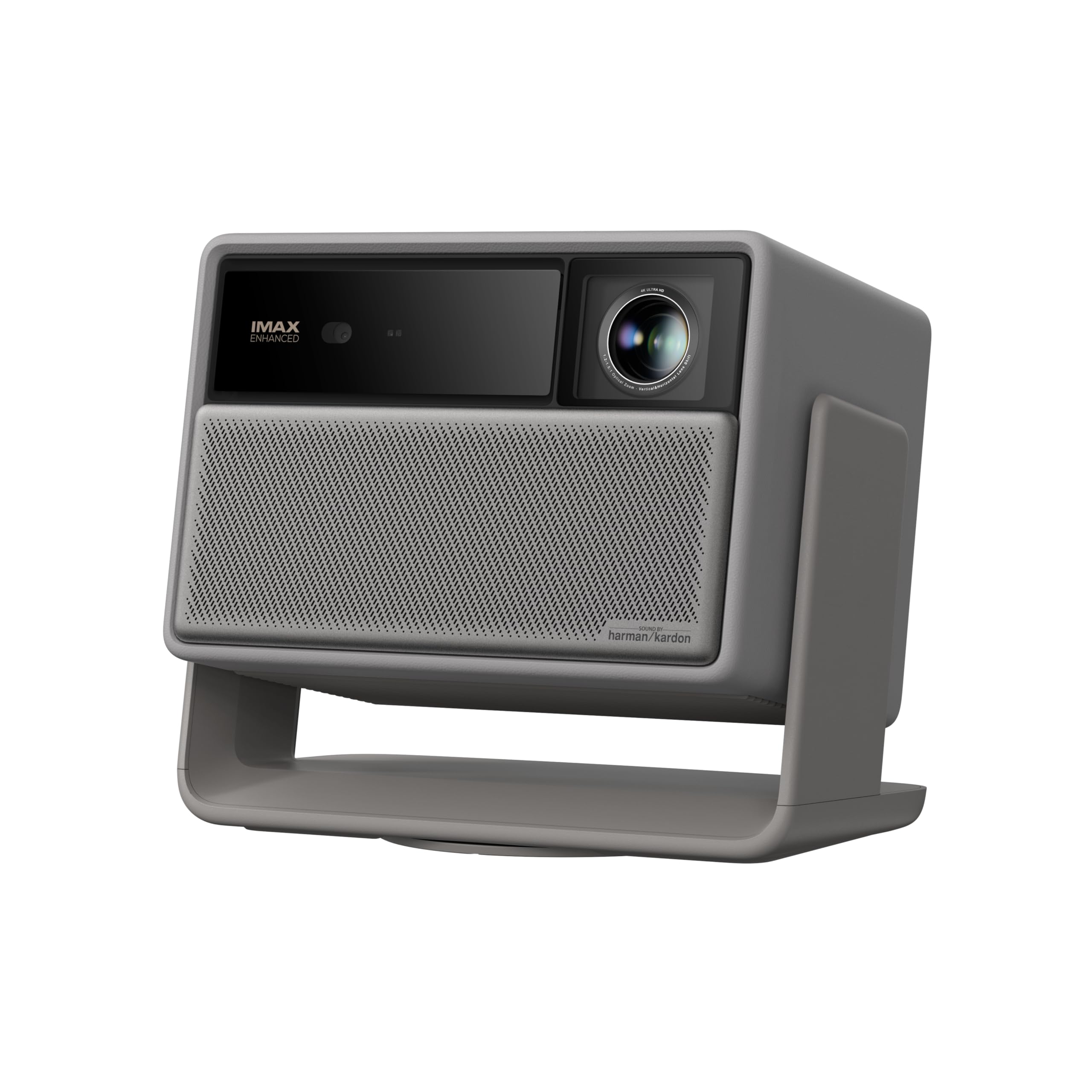
The XGIMI HORIZON 20 uses an RGB triple laser light source to produce 3200 ISO lumens and a 100,000:1 contrast ratio, delivering vibrant, accurate colors even with ambient light present. Its 1ms input lag and 240Hz refresh rate make it one of the fastest projectors available for competitive play, while features like VRR and ALLM ensure smooth sync with modern consoles.
Beyond gaming, this projector functions as a complete home entertainment hub with built-in Google TV, licensed Netflix, and powerful Harman Kardon speakers that eliminate the immediate need for external audio. The mechanical lens shift and 1.67x optical zoom provide setup flexibility without image degradation, and IMAX Enhanced and Dolby Vision certification ensure high-quality movie playback.
Some users noted that auto-keystone calibration occasionally requires manual correction, but the manual alignment tools are precise. The projector runs cooler and quieter than traditional lamp-based units, and the integrated stand simplifies placement. For gamers who want a single device for streaming, movies, and play, the HORIZON 20 is a compelling all-rounder.
Why it’s great
- Ultra-low 1ms input lag with 240Hz support
- Bright RGB laser with excellent color accuracy
- Built-in Google TV and Harman Kardon speakers
Good to know
- Auto-keystone can be inconsistent
- Price reflects premium all-in-one design
5. Valerion VisionMaster Pro

The Valerion VisionMaster Pro targets gamers who value deep blacks and rich color volume over raw brightness. With a 15,000:1 native contrast ratio and Enhanced Black Level (EBL) technology, it produces inky shadows and vibrant highlights that make RPG and adventure games pop. Its 2500 ISO lumens are sufficient for a dedicated dark room at screen sizes up to 150 inches.
The OpticFlex Lens System offers a 0.9-1.5 throw ratio with auto focus and keystone, making installation straightforward even in tight spaces. The unit supports 4K 60Hz at low latency and 1080p 240Hz for smoother frame delivery. Built on Google TV with 4GB RAM and 128GB storage, the interface handles streaming apps and multitasking without lag.
Some users noted that achieving the best image requires careful alignment and a quality ambient light rejecting (ALR) screen. The short throw ratio can be limiting for larger screens in deep rooms without digital zoom, which slightly reduces brightness. Overall, the VisionMaster Pro delivers near-cinema quality for gamers willing to optimize their setup.
Why it’s great
- Excellent native contrast for deep blacks
- EBL technology enhances HDR performance
- Snappy Google TV interface with ample storage
Good to know
- Requires physical alignment and proper screen for best results
- Short throw ratio may limit screen size in deep rooms
6. ViewSonic LS901-4K

The ViewSonic LS901-4K stands out with 5500 ANSI lumens of laser brightness, making it one of the most luminous gaming projectors on the market. This allows for clear, vibrant images in rooms with significant ambient light, and even outdoor use for evening gaming sessions. Its 4.2ms low input lag and 240Hz refresh rate ensure that the high brightness does not come at the expense of responsiveness.
The unit features a 1.7x optical zoom, 360-degree projection capability, and support for 21:9 aspect ratios, making it particularly suitable for golf simulators and ultra-wide gaming setups. HDR and HLG support provide decent contrast, though black levels are not as deep as dedicated home theater models with lower brightness.
Users have praised its performance in bright rooms and reported that it rivals far more expensive units in terms of brightness and input lag. Some found the need for extensive calibration to achieve optimal color accuracy, and the built-in speaker is adequate only for basic audio. The LS901-4K is a specialist tool for those who need maximum lumen output without sacrificing gaming performance.
Why it’s great
- Extremely bright for ambient light conditions
- Low input lag with high refresh rate
- Flexible optical zoom and 360-degree projection
Good to know
- Black levels are average for the brightness class
- Requires calibration for best picture quality
7. Epson LS800
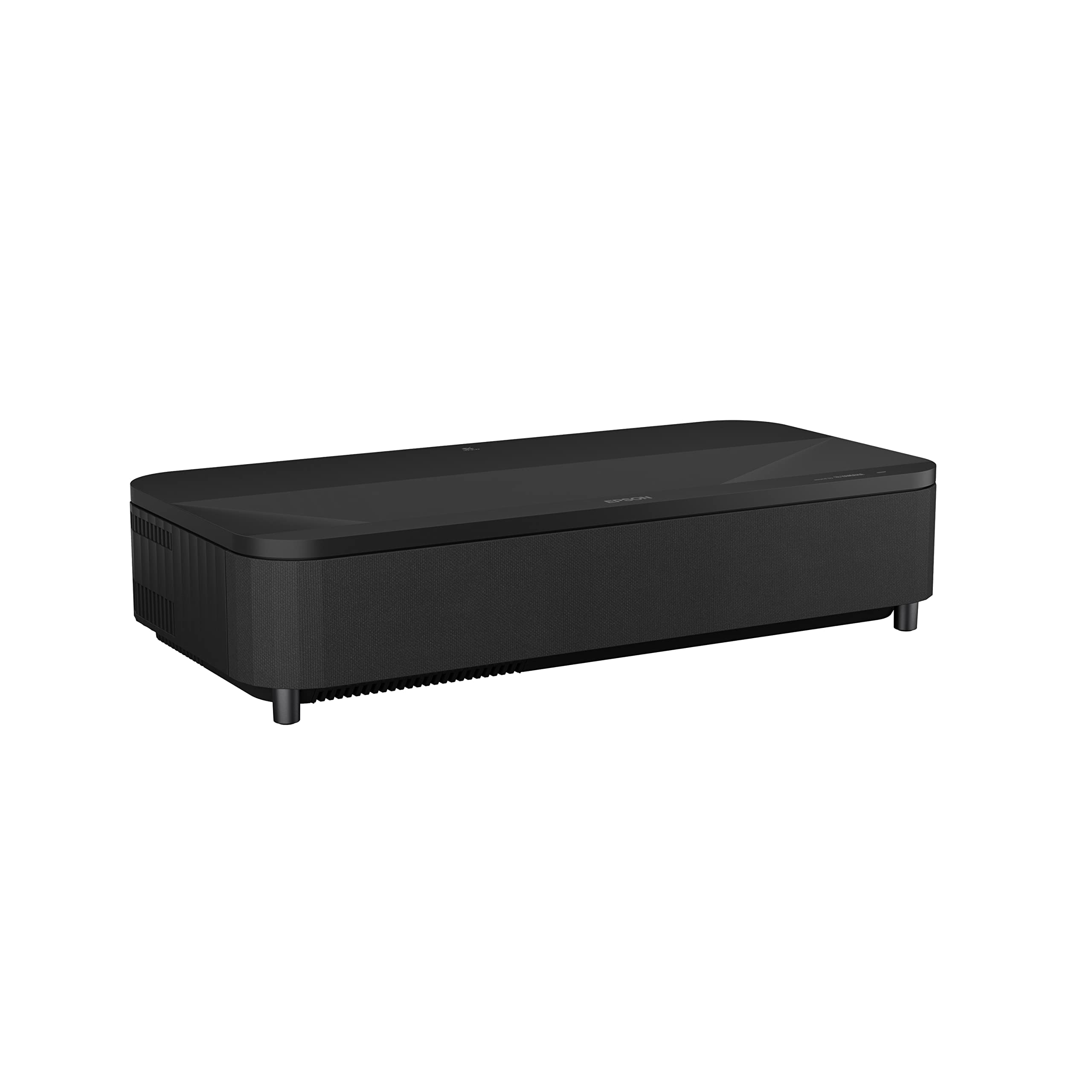
The Epson LS800 is an ultra short throw laser projector that produces a 150-inch image from just inches away, making it ideal for small rooms where a traditional throw projector would not fit. Its 3-chip 3LCD technology delivers 4000 lumens of both white and color brightness, eliminating the rainbow effect artifacts common in single-chip DLP projectors. This makes it a strong choice for long gaming sessions where visual comfort matters.
The built-in Android TV and Yamaha 2.1ch speakers provide a complete out-of-box experience, though the speakers lack the low-end punch for immersive game audio. The 4K PRO-UHD pixel-shifting system delivers sharp images, but text and UI elements can appear softer than native 4K panels. Game mode reduces input lag but disables many picture adjustment options.
Some users reported HDMI port failures after extended use, and the customer support experience can be inconsistent. Setup is straightforward, but aligning corners on an ultra short throw projector with a non-perfect wall requires patience. The LS800 is best suited for casual gamers who prioritize room-friendly placement over absolute image fidelity.
Why it’s great
- Ultra short throw fits in tight spaces
- No rainbow effect from 3LCD technology
- High brightness suitable for rooms with some light
Good to know
- Pixel-shifted 4K is not true native resolution
- HDMI reliability issues reported over time
8. NexiGo Aurora Pro

The NexiGo Aurora Pro is an ultra short throw tri-color laser projector that sets itself apart with native Dolby Vision support and the lowest tested input lag among UST projectors at 8ms. Its 2400 lumens of brightness are optimized for dark room use, where the 3000:1 native contrast ratio and dynamic laser dimming produce deep blacks and rich color saturation. The ALPD 4.0 RGB+ laser engine covers 107% of the Rec.2020 color space.
This projector supports 4K@120Hz input from modern consoles and PCs, making it one of the few UST units capable of high refresh gaming. The built-in 60W speaker system with dual woofers and tweeters provides immersive audio without an external soundbar, though serious gamers will still want a dedicated system. Active 3D support adds another layer for enthusiasts.
Some users experienced overheating and shutdown issues after extended use, and the remote control requires direct line-of-sight, which can be inconvenient with a UST placement below the screen. Focus adjustment is needed at each startup for some units. When working correctly, the Aurora Pro delivers a premium gaming experience on a 120-inch screen with impressive color volume.
Why it’s great
- Exceptional input lag for a UST projector
- Dolby Vision support with dynamic tone mapping
- Rich color gamut and deep black levels
Good to know
- Overheating and shutdown issues reported
- Remote requires line-of-sight for reliable control
9. Hisense C2 Ultra

The Hisense C2 Ultra is a portable triple laser projector that delivers an impressive 3000 ANSI lumens and a 2000:1 native contrast ratio, making it bright enough for daytime gaming with curtains closed. Its 240Hz refresh rate and low input lag provide smooth motion in fast-paced titles, and it is officially designed for Xbox, automatically reducing latency when a console is detected.
The 1.67x optical zoom and 360-degree gimbal allow flexible placement, including ceiling projection without repositioning the base. Dolby Vision, IMAX Enhanced, and HDR10+ certification ensure that HDR content is rendered with excellent color accuracy and dynamic range. The built-in JBL speakers are loud and clear, reducing the need for external audio in smaller rooms.
Some users found that achieving a 100-inch fill requires more distance than expected, which may limit its use in very compact spaces. Black levels in daytime viewing can appear slightly washed out compared to dedicated home theater projectors. The VIDAA OS is responsive but includes static ads on the home screen. For a portable unit, the C2 Ultra offers outstanding versatility.
Why it’s great
- Very high brightness for portable use
- Flexible gimbal and optical zoom for any placement
- Excellent HDR support with Dolby Vision and IMAX Enhanced
Good to know
- Requires more throw distance for desired screen size
- Black levels could be deeper in dark room conditions
10. AWOL Aetherion Pro
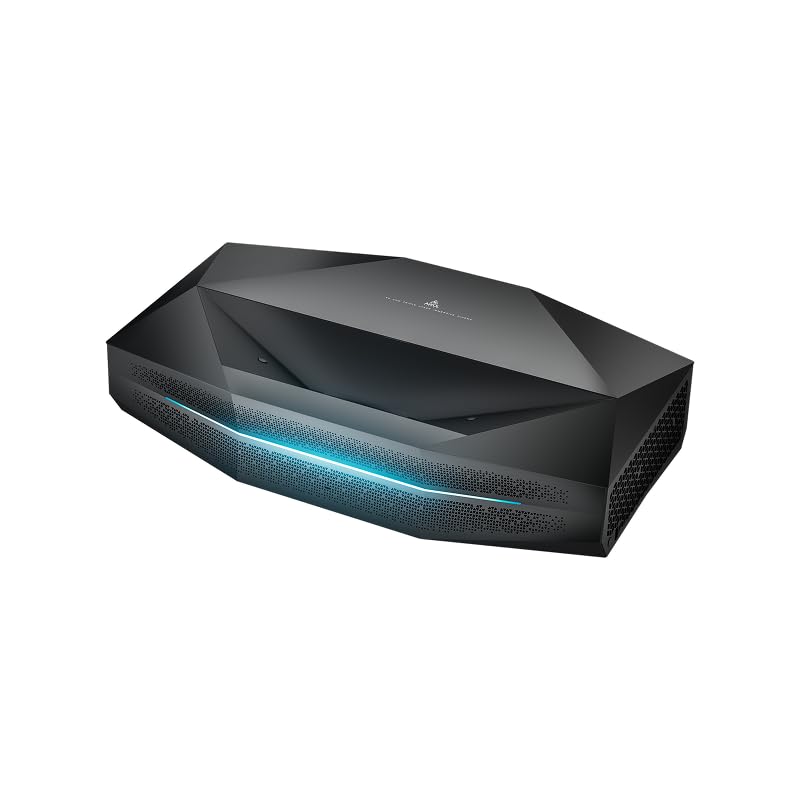
The AWOL Aetherion Pro uses a triple laser light source to achieve 6000:1 native contrast ratio and a 60,000:1 dynamic contrast ratio, delivering some of the deepest blacks available in a UST projector. With 2600 ISO lumens of brightness, it performs best in controlled lighting environments. Its 1ms input lag at 1080p and support for VRR and ALLM make it a serious contender for competitive gaming on a 200-inch screen.
PixelLock technology ensures sharp edges and fine text at massive screen sizes, a weak point for many pixel-shifting projectors. Anti-RBE technology reduces rainbow effect artifacts, improving comfort during long sessions. Built on Google TV with professional CMS and ISF certification, the color accuracy out of the box is reference-grade for a UST unit.
Some users experienced dead pixel issues within the first year, though customer support responded by replacing the unit. The menu system is complex, and the lack of auto-focus or auto-keystone means installation requires manual precision. For users willing to dial in the settings, the Aetherion Pro offers cinematic contrast that rivals traditional home theater projectors.
Why it’s great
- Superior native contrast for UST class
- Ultra-low input lag with VRR and ALLM
- Anti-RBE technology reduces eye strain
Good to know
- Dead pixel issues reported by some users
- Manual focus and keystone require careful installation
11. Hisense PX3-PRO

The Hisense PX3-PRO is an ultra short throw triple laser projector that combines 3000 lumens of brightness with a 3000:1 contrast ratio and 110% BT.2020 color gamut coverage. Its LPU Technology uses real-time AI algorithms to enhance brightness and fine-tune contrast, producing vivid images even in rooms with some ambient light. The 240Hz refresh rate and low latency support smooth gaming on screens up to 150 inches.
Dolby Vision, IMAX Enhanced, and HDR10+ support cover the full range of HDR formats, ensuring compatibility with the latest gaming titles. The built-in Google TV provides easy access to streaming services, and the Harman Kardon speakers deliver clear audio for casual use. The ultra short throw design allows placement directly below the screen, eliminating shadows and walk-in interference.
Some users noted a slight rainbow effect on high-contrast edges and found the automatic keystone adjustment to be less accurate than manual correction. The menu system could be more intuitive, and the remote control requires direct line-of-sight. For a premium UST laser TV that excels at both gaming and movies, the PX3-PRO is a top contender in its price bracket.
Why it’s great
- Wide color gamut with TriChroma laser engine
- Bright enough for ambient light conditions
- Comprehensive HDR format support
Good to know
- Minor rainbow effect on some content
- Auto-keystone could be more accurate
12. AWOL Aetherion Max
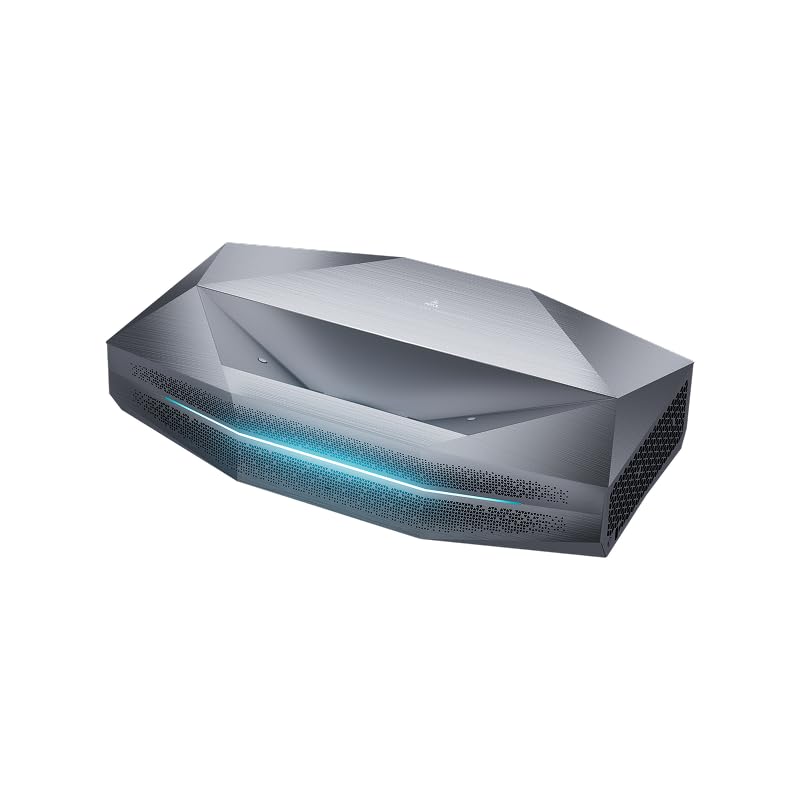
The AWOL Aetherion Max is the flagship UST projector from AWOL, offering 3300 ISO lumens of RGB triple-laser brightness that rivals many traditional home theater projectors. Its 6000:1 native contrast ratio and 60,000:1 dynamic contrast, powered by the Noirscene System II with a 7-level IRIS, provide black levels that approach OLED-like depth for a projection system. The 1ms input lag at 240Hz, combined with VRR and ALLM, makes it one of the fastest UST projectors for competitive gaming.
This unit supports 4K 120Hz input via three HDMI 2.1a ports and a DisplayPort 1.4a, eliminating cable switching between multiple consoles and a gaming PC. Dolby Vision Gaming and HDR10+ ensure that HDR content is rendered with accurate tone mapping. The Anti-RBE technology reduces rainbow effect by 99.99%, and TÜV certification for harmful light reduction makes it suitable for long sessions.
Some users reported that achieving the full 200-inch image requires a specific ALR screen and careful placement. The built-in speaker performance is adequate for dialogue but lacks the bass needed for immersive gaming. The Aetherion Max is a no-compromise UST solution for gamers who want the best possible image quality in a bright room without sacrificing responsiveness.
Why it’s great
- Very high brightness with deep black levels
- Ultra-low input lag for competitive gaming
- Multiple HDMI 2.1a ports and DisplayPort input
Good to know
- Requires a quality ALR screen for best results
- Built-in audio not sufficient for immersive gaming
13. Sony VPL-XW5000ES

The Sony VPL-XW5000ES is a native 4K SXRD home theater projector that delivers true 3840×2160 resolution without pixel shifting. Its X1 Ultimate for projector processor handles noise reduction, upscaling, and motion smoothing with exceptional precision, producing the sharpest text and most detailed textures among all models on this list. The laser light source provides 2000 lumens of brightness and a 20,000-hour lifespan.
TRILUMINOS PRO color processing covers 95% of the DCI-P3 color space, delivering rich, natural colors without oversaturation. Input lag measures under 21ms at 4K 60Hz and under 13ms at 1080p 120Hz, which is competitive for a native 4K unit. The compact chassis is 20% smaller than previous Sony models, fitting into more installation environments.
Some users noted a slow startup time of about one minute and a yellow color tint that disappears after the unit warms up. The native 4K resolution is most noticeable with high-quality sources and on screens larger than 120 inches. For gamers who demand the purest image quality and are willing to invest in a reference-class projector, the Sony VPL-XW5000ES sets the standard.
Why it’s great
- Native 4K resolution for ultimate sharpness
- Superior image processing from X1 Ultimate chip
- Excellent color accuracy with TRILUMINOS PRO
Good to know
- Slow startup time and warm-up tint
- Lower brightness than many competitors
FAQ
What is the minimum input lag I should look for in a 4K gaming projector?
Is native 4K resolution necessary for a gaming projector?
How many lumens do I need for daytime gaming with a 4K projector?
What is the difference between DLP and 3LCD for gaming?
Can I use a UST projector for competitive gaming?
Final Thoughts: The Verdict
For most users, the 4k gaming projector winner is the BenQ TK710 because it offers a laser light source, extremely low input lag at high refresh rates, and flexible installation options at a mid-range price point. If you want the absolute best image quality with deep blacks and accurate colors, grab the Sony VPL-XW5000ES for its native 4K SXRD panel and advanced processing. And for a versatile, all-in-one solution with built-in streaming and powerful audio, nothing beats the XGIMI HORIZON 20.