
Our readers keep the lights on and the weekend projects moving. As an Amazon Associate, I earn from qualifying purchases.
A drone that loses its GPS link is just an expensive paperweight drifting away. The entire point of a 4K GPS drone is the marriage of stabilized positioning with high-definition capture — a system that knows exactly where it is so you can focus on framing the shot. Whether you’re surveying property, mapping farm fields, or building a travel reel, the core requirement is the same: the bird must hold its lock while the camera delivers usable footage.
I’m Rikta — the founder and writer behind FitlyFast. My research focuses on cross-referencing real-world user endurance tests, FAA compliance documentation, and transmission system performance to separate marketing claims from actual flight capability.
These eleven models represent the current sweet spot of the best 4k gps drone market — from lightweight sub-250-gram travelers to professional-grade rigs — each validated by owner feedback and verified spec sheets.
How To Choose The Best 4K GPS Drone
Every GPS drone in this class uses satellite positioning to hold its position, return home, and execute autonomous flight modes. But that baseline masks huge differences in gimbal quality, transmission stability, and flight endurance. Here are the three specs that separate a reliable aerial camera from a frustrating experience.
Gimbal Type and Stabilization
A 4K camera is useless if every frame shakes. The mechanical gimbal is the critical component — two-axis gimbals can tilt and roll, but three-axis gimbals add yaw compensation for buttery footage during turns and wind gusts. Electronic image stabilization (EIS) can help, but it crops the frame and can introduce artifacts. For professional-looking results, prioritize a three-axis brushless gimbal over raw megapixel counts.
Transmission System and Range
Wi-Fi-based transmission is the weak link in many budget drones. It suffers from interference, latency, and range drops behind trees or buildings. Digital transmission systems (like DJI OcuSync or dedicated relay setups) provide lower latency and more stable feeds at longer distances. Look for wired-relay or proprietary digital links if you plan to fly beyond visual line of sight or in areas with competing signals.
Flight Time and Battery Configuration
Advertised flight times are usually measured in perfect, windless conditions. Real-world flight time is typically 60-70% of the stated number. Three-battery kits that deliver 75-96 minutes of total flying time are far more practical than a single battery with a high number. Also check whether the batteries support fast charging — waiting four hours to recharge a 30-minute flight kills productivity on location shoots.
Quick Comparison
On smaller screens, swipe sideways to see the full table.
| Model | Category | Best For | Key Spec | Amazon |
|---|---|---|---|---|
| Autel EVO 2 PRO V3 | Premium | Professional cinematography | 1-inch CMOS, 6K HDR | Amazon |
| DJI Flip (RC-N3) | Premium | Travel and vlogging | 1/1.3-inch CMOS, 4K/60fps | Amazon |
| Potensic Atom 2 Fly More | Mid-Range | Enthusiasts wanting integrated display | 1/2-inch Sony CMOS, 8K photo | Amazon |
| Holy Stone Sentinel HS600D | Mid-Range | Wind-resistant all-around flying | 3-axis gimbal + EIS, Level-6 wind | Amazon |
| Ruko 4K UHD Drone | Mid-Range | Beginner with 3-battery endurance | Under 249g, 20,000ft range | Amazon |
| Bwine F7MINI | Mid-Range | No-registration travel companion | Under 249g, built-in screen controller | Amazon |
| Bwine F7GB2 Pro | Mid-Range | Extended farm or property patrol | 75-minute total flight (3 batteries) | Amazon |
| Veeniix V11Air | Value | Colorful, feature-rich starter | 3-axis gimbal, 10,000ft range | Amazon |
| Holy Stone HS600 | Value | Budget with FAA Remote ID built-in | 2-axis gimbal, 20,000ft transmission | Amazon |
| Gleesfun G11PRO | Value | Complete package gift for men | 3-axis gimbal, 70-minute flight | Amazon |
| DJI Neo 2 | Entry-Level | Absolute beginners and selfies | 151g, palm takeoff, gesture control | Amazon |
In‑Depth Reviews
1. Autel Robotics EVO 2 PRO V3
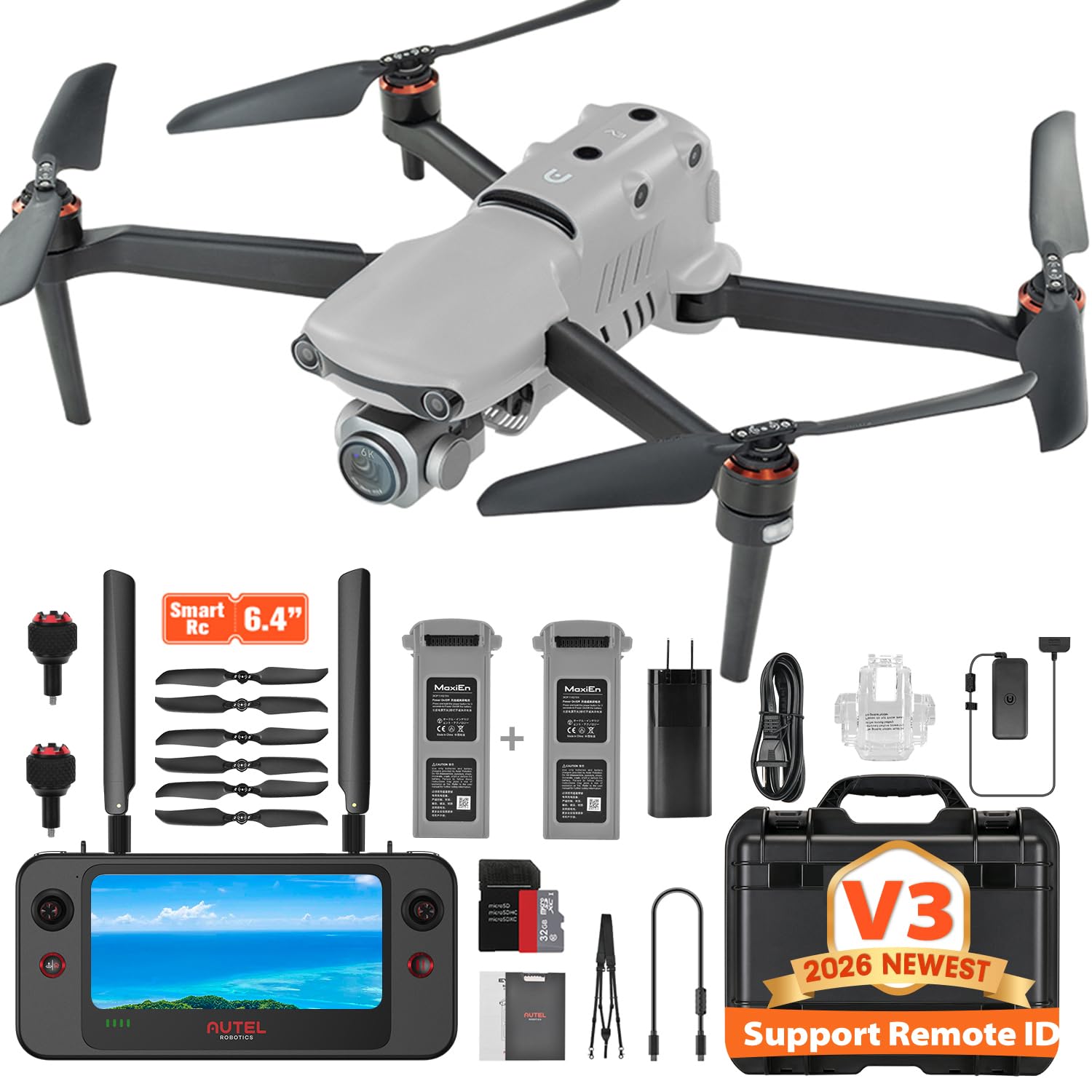
The Autel EVO 2 PRO V3 is in a different league. Its Sony 1-inch CMOS sensor captures 6K HDR video with genuine dynamic range — the adjustable aperture (F/2.8 to F/11) is rare at this level and lets you control exposure without ND filters. The Moonlight Algorithm 2.0 pushes usable ISO to 44,000, making this the only drone on this list that can shoot clean night cityscapes straight from the camera.
SkyLink 2.0 transmission delivers a stable 2.7K live feed up to 15 kilometers using tri-band frequency hopping. Omnidirectional obstacle avoidance with 12 visual sensors provides real-time pathing through complex environments, though thin wires still require pilot caution. The Smart Controller SE features a 6.4-inch OLED display, eliminating the need for a phone mount entirely.
Flight time sits around 40 minutes per battery in real conditions — the rugged bundle includes three batteries, a hard case, and a 32GB SD card. This is the commercial operator’s choice for mapping, inspection, and professional cinematography. The price reflects genuine professional hardware, not marketing hype.
Why it’s great
- Industry-leading 1-inch sensor with adjustable aperture.
- Omnidirectional obstacle avoidance adds crash safety.
- Built-in controller screen removes phone dependency.
Good to know
- Premium investment suited for commercial users or serious hobbyists.
- No geofencing, so pilot responsibility is higher.
2. DJI Flip (RC-N3)

The DJI Flip combines a sub-249-gram frame with a 1/1.3-inch CMOS sensor that records 4K/60fps HDR video. The larger sensor captures more light than typical 1/2-inch chips, producing noticeably richer colors in golden-hour conditions. Full-coverage carbon fiber propeller guards make this one of the safest drones for flying near people, and palm takeoff/landing works reliably.
Subject tracking via ActiveTrack is smooth and sticky — the drone acts like a personal cinematographer during hikes or parties. The 31-minute advertised flight time translates to about 22-25 minutes of practical flying, which is on par for this weight class. The RC-N3 remote uses OcuSync digital transmission for a low-latency feed up to 13 kilometers.
One limitation: the Flip only has forward-facing obstacle sensors, so reverse and lateral collision avoidance are absent. It also requires the DJI Fly app downloaded from the DJI website rather than Google Play. For travel vloggers and casual creators who want DJI quality without FAA registration, this is the sweet spot.
Why it’s great
- Excellent 4K/60fps HDR video from a larger sensor.
- Under 249g, no FAA registration needed.
- Palm launch and propeller guards for safe, easy operation.
Good to know
- Only forward obstacle sensors, no side or rear avoidance.
- Additional batteries and case require extra spending.
3. Potensic Atom 2 Fly More Combo
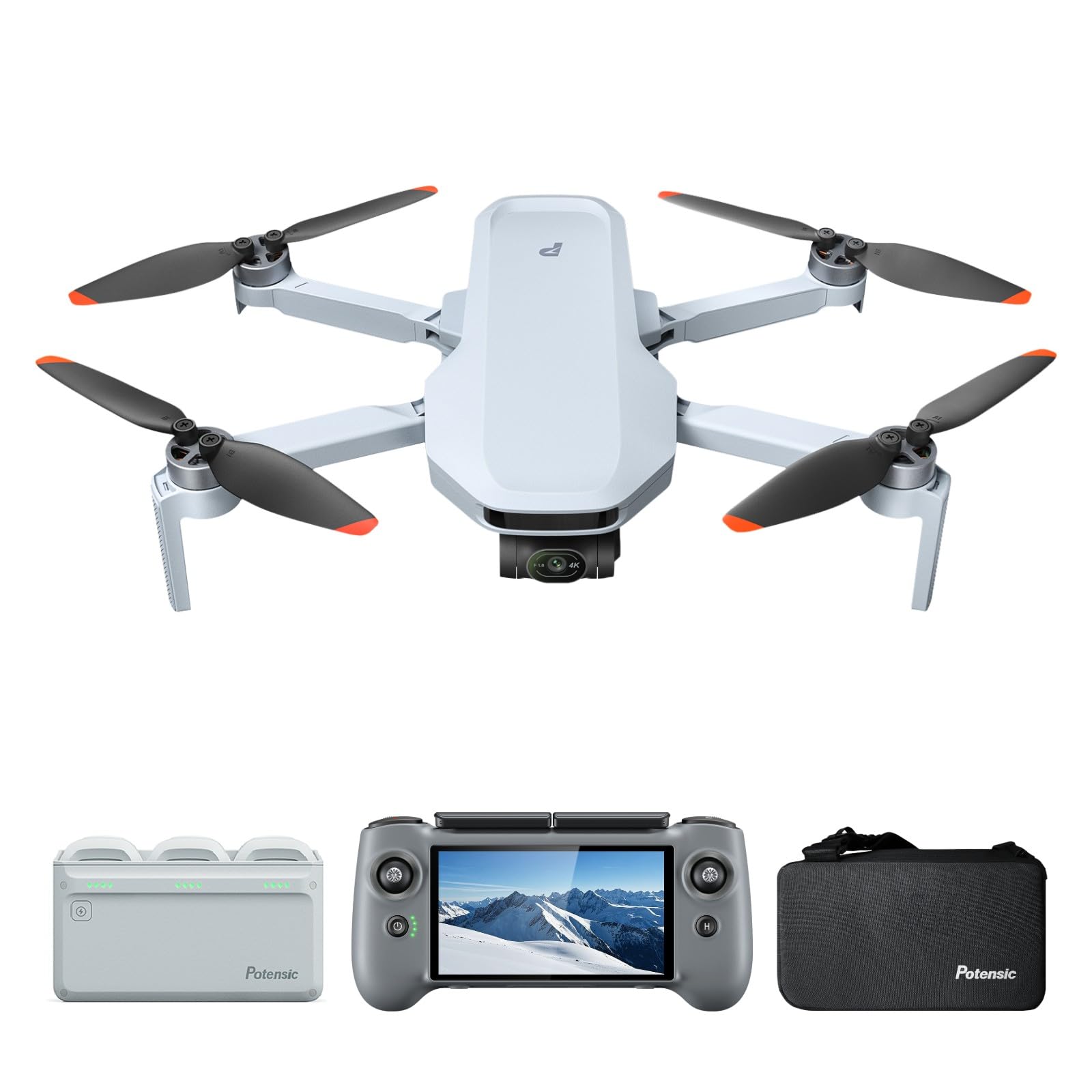
The Potensic Atom 2 stands out for its PTD 1 remote controller, which features a 5.5-inch FHD touchscreen with 700 nits of brightness — bright enough to see in direct sunlight. No phone required. The 1/2-inch Sony CMOS sensor captures 8K photos and 4K/30fps HDR video with a three-axis gimbal that keeps footage stable through turns and moderate wind.
PixSync 4.0 digital transmission delivers a 1080p/30fps live feed up to 10 kilometers. The AI tracking system offers Spotlight, Follow, and Parallel modes that lock onto subjects reliably. Vertical shooting mode (2.7K) is a nice addition for social-media-optimized clips without cropping. The Fly More Combo includes a parallel charging hub that fast-charges all three batteries in 1.3 hours.
Weighing under 249 grams, the Atom 2 avoids FAA registration. The main trade-off is the lack of obstacle sensors — it only has bottom proximity sensors for landing. Wind stability is good up to about 15-20 mph, but gusts above that require careful flying. This is a strong DJI alternative for pilots who prefer a built-in display.
Why it’s great
- Integrated 5.5-inch controller screen eliminates phone mount.
- Three-battery combo with fast-charging hub is travel-ready.
- Under 249g, no FAA registration required.
Good to know
- No forward or side obstacle avoidance.
- Maximum flight speed is slower than some competitors.
4. Holy Stone Sentinel HS600D

The Holy Stone Sentinel HS600D uses a 603-gram reinforced frame paired with powerful brushless motors that handle Level-6 wind conditions (up to about 25 mph). The combination of a three-axis mechanical gimbal and EIS produces footage that remains watchable even in breezy coastal or mountain environments. The 1/2-inch Sony CMOS sensor with F/1.8 aperture delivers 4K HDR video and 48MP photos with solid low-light performance.
The wired-relay digital transmission system replaces typical Wi-Fi, providing a low-latency feed up to 20,000 feet. Two included batteries deliver a combined 80-minute flight time. GPS smart modes include Follow Me, Smart Tracking, Time-Lapse, and Panorama — all accessible via one-tap execution. The beginner mode reduces maximum altitude and speed for new pilots.
Customer feedback highlights the excellent stability in winds up to 30-40 mph, though some users note the camera tends to overexpose in bright conditions and lacks manual ISO/exposure controls. The remote has a built-in screen, which is convenient but reduced in brightness outdoors. For pilots flying in consistently windy regions, this is the most capable mid-range option.
Why it’s great
- Excellent wind resistance for stable flying in breezy conditions.
- Wired-relay digital transmission eliminates Wi-Fi dropouts.
- Two-battery kit provides substantial total flight time.
Good to know
- Camera lacks manual ISO and exposure controls.
- Beginner mode is highly restrictive; some users prefer more control.
5. Ruko 4K UHD Drone for Adults

The Ruko 4K UHD Drone packs three intelligent batteries into a sub-249-gram foldable body, delivering a combined 96 minutes of flight time. The 1/2-inch CMOS 48MP sensor captures 8K stills and 4K/30fps video. A three-axis brushless gimbal paired with EIS keeps footage steady through turns and light wind — the cruise control mode maintains a consistent heading for cinematic sweeps.
The R2 digital transmission system provides a stable feed up to 20,000 feet without the interference issues common to Wi-Fi drones. AI-assisted takeoff and landing, combined with quadruple positioning (GPS, barometric pressure, TOF, and optical flow), make this beginner-friendly. The built-in beeper helps locate the drone if it lands out of sight.
Customer feedback is generally strong, though a few users reported defective batteries early on — Ruko’s customer service handled replacements quickly. The joysticks are sensitive, so beginners should start in a wide-open area. For pilots who want maximum airtime without FAA registration, this bundle is a compelling value.
Why it’s great
- Three batteries provide nearly 100 minutes of total flying time.
- Under 249g, no FAA registration needed.
- AI takeoff/landing assists new pilots.
Good to know
- Joystick sensitivity may feel twitchy for first-time users.
- Some early units had battery quality issues, though support resolved them.
6. Bwine F7MINI
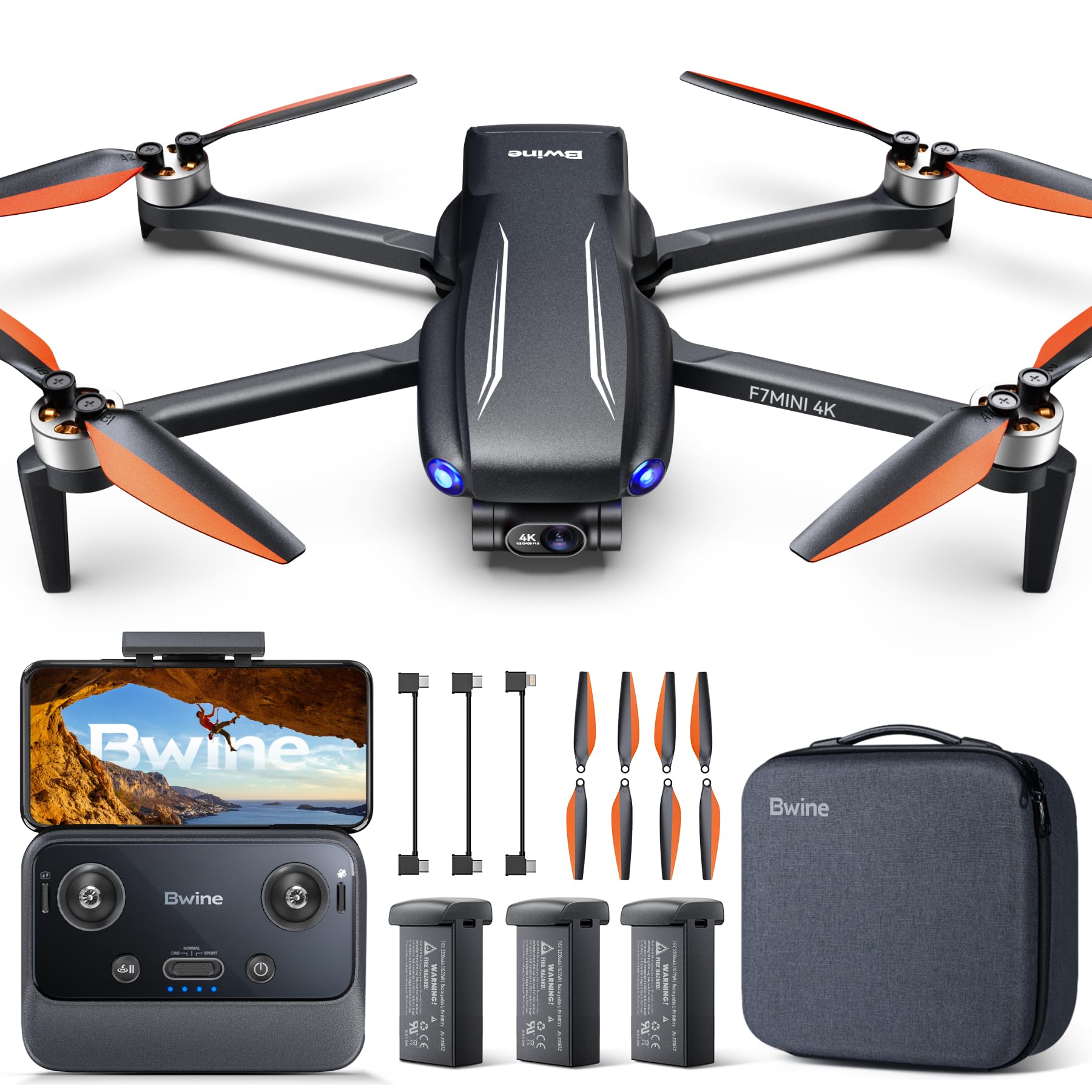
The Bwine F7MINI achieves the sub-249-gram threshold while including a 5.5-inch built-in screen controller — no phone required. The 1/2-inch CMOS sensor with F1.8 aperture captures 8K photos and 4K/30fps video, stabilized by a three-axis gimbal. Level-5 wind resistance and a 31 mph top speed make it capable in moderate breezes.
The digital transmission system claims a 20,000-foot (6 km) range with zero-latency wired connection. Three high-density batteries (32 minutes each) support PD 3.0 fast charging. Smart return-to-home, dynamic home point, and a 120 dB locator buzzer provide safety nets. Optical flow positioning enables stable indoor flight when GPS is unavailable.
Users praise the integrated screen for simplifying the flying experience. The main downsides are the slower transfer of media to a phone via the app and the lack of obstacle sensors beyond bottom proximity. For travelers who want a compact, no-registration drone with a built-in display, the F7MINI is a well-executed package.
Why it’s great
- Built-in screen controller eliminates phone dependency.
- Under 249g, FAA registration not required.
- Three fast-charging batteries provide extended flight time.
Good to know
- Media transfer to phone via app is slow.
- No forward or side obstacle avoidance sensors.
7. Bwine F7GB2 Pro

The Bwine F7GB2 Pro prioritizes endurance with three 2600mAh batteries that deliver a combined 75 minutes of flight time. The 4K camera uses a 120-degree FOV lens and a three-axis gimbal with 5x digital zoom. The 1806 brushless motors and Level-6 wind resistance allow flying at altitudes up to 2,000 meters — useful for mountain or high-plateau surveying.
GPS features include Follow Me, Waypoint, and Orbit modes. The auto-return function engages reliably on low battery or signal loss. The remote controller overlay displays telemetry data directly on the phone screen. A 2-year warranty covers damaged items, which adds peace of mind for a mid-range purchase.
User feedback notes that actual flight time per battery is closer to 15-20 minutes depending on wind and speed. The camera produces recognizable 4K footage but shows distortion during rapid turns. Beginners should remove the camera cover before flight — several owners forgot and wondered why the feed was dark. For property patrol or relaxed scenic flights, this is a solid workhorse.
Why it’s great
- Three-battery setup provides extensive total flight time.
- Strong wind resistance and high-altitude capability.
- 2-year warranty offers long-term coverage.
Good to know
- Per-battery flight time is lower than advertised in real conditions.
- Camera image distorts slightly during fast turns.
8. Veeniix V11Air
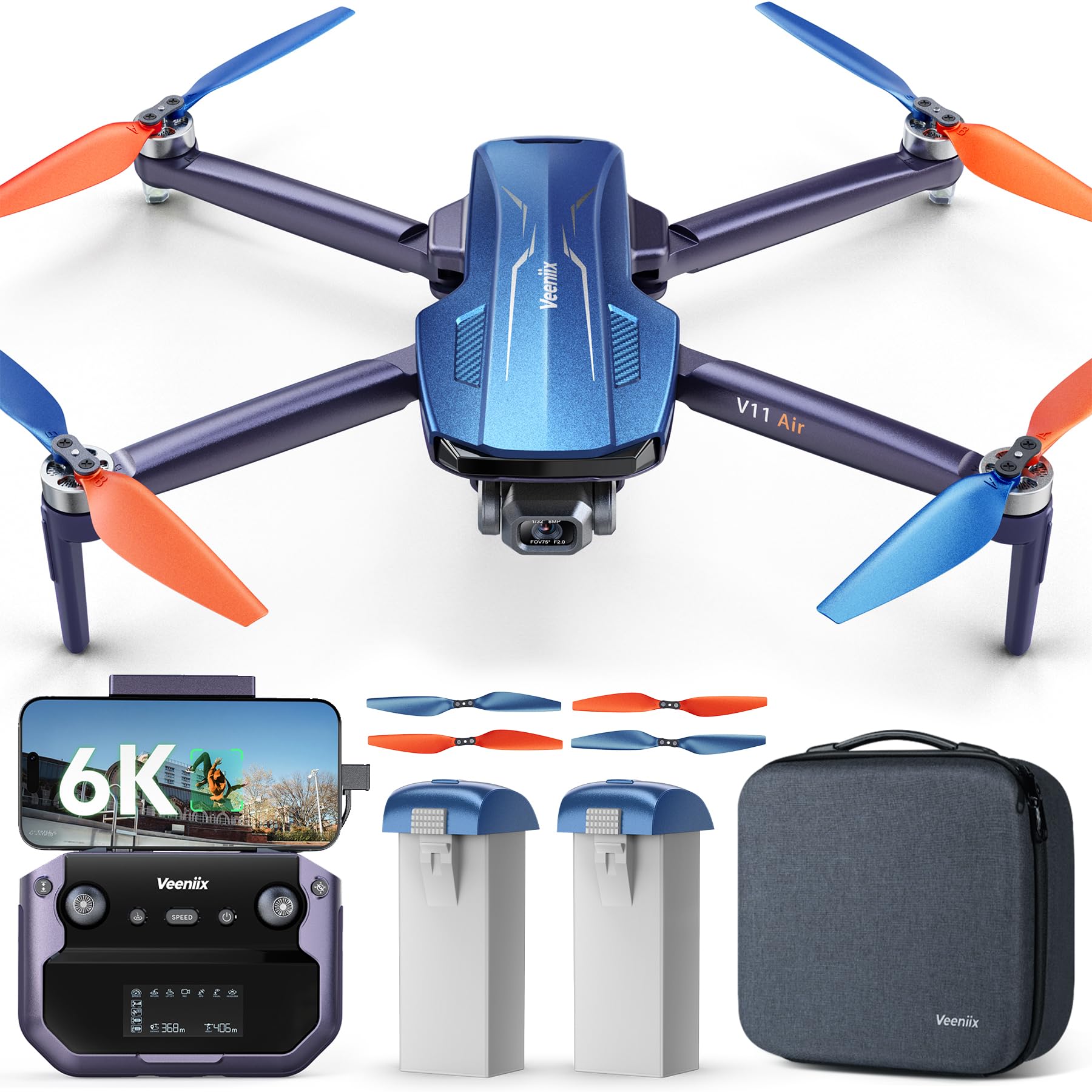
The Veeniix V11Air brings a three-axis brushless gimbal and 5x lossless zoom to the value tier. The imported sensor captures 6K stills and 4K/30fps video with smooth stabilization. The dual-battery setup provides a total of 70 minutes of flight time, with fast charging fully recharging both packs in 2.5 hours. The 10,000-foot digital transmission range is competitive at this price.
GPS smart modes include cruise control, Follow Me, Orbit, and Waypoint planning. Night mode uses longer exposure to capture low-light scenes, though image quality naturally drops compared to drones with larger sensors. The built-in FAA Remote ID compliance means pilots don’t need a separate module.
User reports indicate that actual range is closer to 2,500 feet in areas with signal interference — trees and buildings reduce transmission significantly. The Type-C port on the remote is charge-only, which confuses some users expecting data transfer. For beginners who want a colorful, feature-packed drone with a mechanical gimbal, the V11Air offers strong value.
Why it’s great
- Three-axis brushless gimbal at a value price point.
- 5x lossless zoom adds framing flexibility.
- Built-in FAA Remote ID simplifies compliance.
Good to know
- Real-world range is much shorter than advertised in areas with trees.
- Remote Type-C port is charge-only, causing setup confusion.
9. Holy Stone HS600

The Holy Stone HS600 is built around FAA compliance — it includes integrated Remote ID, eliminating the need for a separate module. The 4K EIS camera sits on a two-axis gimbal, which provides tilt and roll stabilization but lacks yaw compensation. The Sony sensor-enhanced camera produces clear footage in good light, but the two-axis gimbal is noticeable during fast yaw movements.
The WiFi repeater transmission system extends control range to 20,000 feet by embedding the repeater in the remote controller. A single data cable provides real-time image streaming without Wi-Fi. Level-6 wind resistance and brushless motors keep the 541-gram frame stable in breezy conditions. GPS intelligent return-to-home covers low battery, signal loss, and one-key return.
Users report about 28 minutes of actual flight time per battery (two included). The power-on order matters: drone first, then remote, then phone. Setting the drone on iron surfaces causes compass interference. The camera tends to overexpose and lacks manual controls, so post-processing is often needed. For budget-minded pilots who want FAA compliance out of the box, this is a functional choice.
Why it’s great
- Integrated Remote ID means no extra module purchase.
- Extended transmission range via WiFi repeater.
- Stable flight in breezy conditions.
Good to know
- Two-axis gimbal lacks yaw stabilization for smooth turns.
- Camera overexposes and lacks manual exposure controls.
10. Gleesfun G11PRO

The Gleesfun G11PRO is marketed as a complete gift kit — and the 40-piece bundle includes almost everything a new pilot needs: drone, remote, two batteries, carrying case, spare propellers, multiple cables, and tools. The three-axis brushless gimbal provides genuine stabilization across pitch, roll, and yaw. The GQ2.0 digital transmission system claims a 10,000-foot range with a two-antenna design for stable feed.
The 1/3.2-inch CMOS sensor captures 6K photos and 4K/30fps video. Cruise control mode maintains stable footage without constant joystick input. The GL2.0 Smart Battery Management System supports fast charging (2.5 hours for full charge) and over 300 charge cycles with 80% performance retention. FAA compliance is confirmed via a QR code on the drone.
Customers highlight the excellent customer service — several reported replacements after crashes. The drone handles wind surprisingly well for its price range. The main drawback is that the camera quality, while decent, does not match the clarity of drones with larger Sony sensors. For someone receiving this as a gift, the out-of-box experience is impressive.
Why it’s great
- Comprehensive 40-piece kit requires no additional purchases.
- Three-axis gimbal provides genuine stabilization.
- Excellent customer support for replacements and issues.
Good to know
- Camera sensor is smaller than premium competitors, limiting low-light quality.
- Bundle includes many accessories that some users won’t need.
11. DJI Neo 2
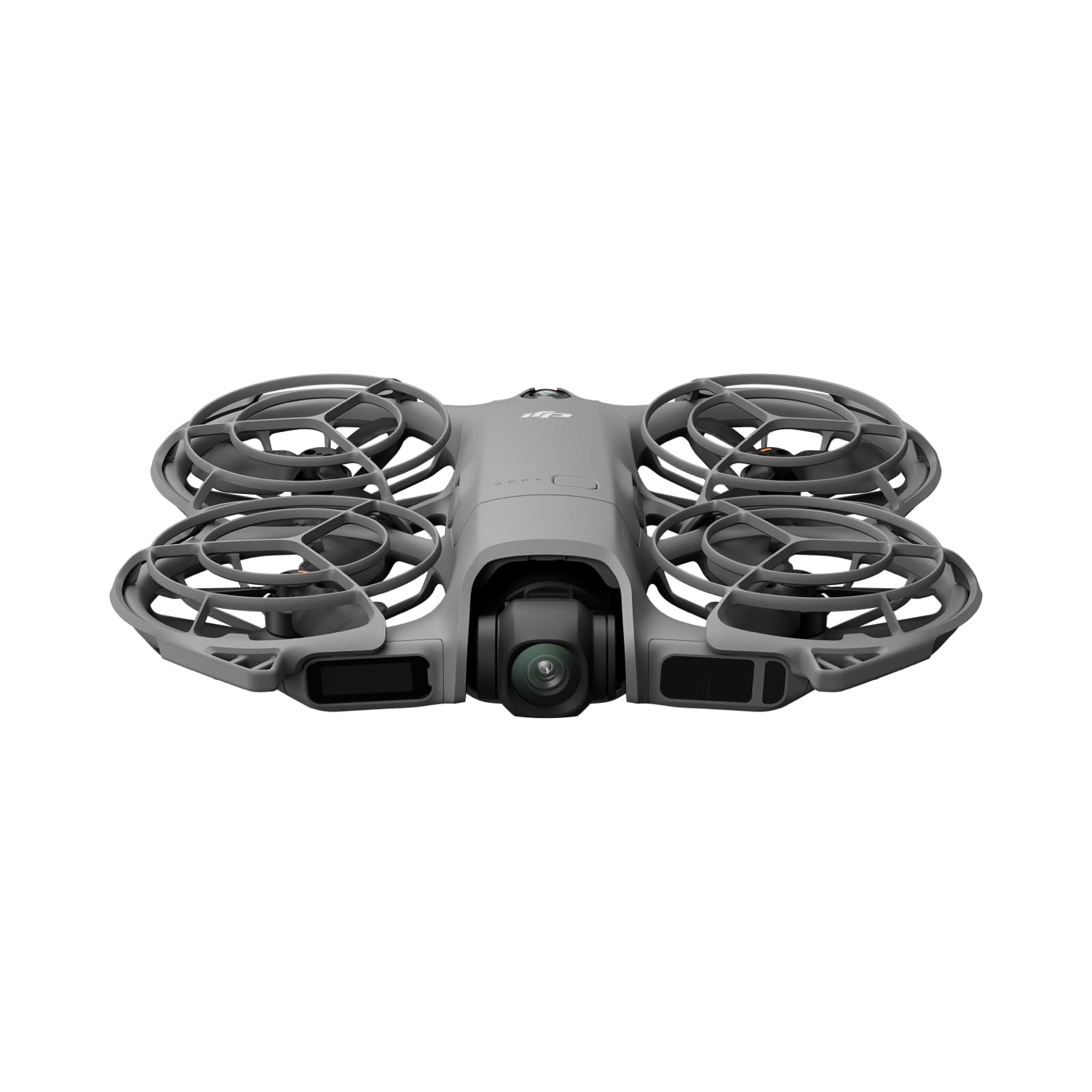
The DJI Neo 2 is the entry point to GPS-stabilized 4K flying. At just 151 grams, it is the lightest drone in this lineup and C0 certified for minimal regulatory restrictions. Palm takeoff and landing, combined with gesture controls, let you launch without a controller — just press and release. The 4K camera produces crisp, vibrant video that surprises for the weight class.
ActiveTrack keeps subjects in the frame automatically. Omnidirectional obstacle sensing provides 360-degree awareness, though the drone’s lightweight design means it can be pushed off course in strong wind. The 18-19 minute real-world flight time is short but typical for this ultra-light category. Propeller guards surround the rotors for safe operation near people.
The lack of an included remote controller means you must use the DJI Fly app on a smartphone and a compatible Bluetooth/Wi-Fi connection — some users prefer physical sticks. The DJI Fly app is unavailable on Google Play and must be downloaded from the DJI website. For absolute beginners who want a safe, simple, and portable way to capture selfie-style aerial video, the Neo 2 is the most accessible option.
Why it’s great
- Extremely lightweight and portable at 151 grams.
- Palm takeoff and gesture control for hands-free operation.
- Omnidirectional obstacle sensing improves safety.
Good to know
- No remote controller included; relies on phone app.
- Limited wind resistance due to low weight.
FAQ
What is the real-world range difference between Wi-Fi and digital transmission drones?
Can I fly a 4K GPS drone without registering with the FAA?
Why does my drone’s actual flight time not match the advertised number?
Is a three-axis gimbal really necessary for good 4K video?
What does the 6K/8K photo number mean on a 4K video drone?
Final Thoughts: The Verdict
For most users, the best 4k gps drone winner is the DJI Flip (RC-N3) because it delivers DJI’s mature camera and flight control ecosystem in a sub-249-gram package with excellent 4K/60fps HDR video and reliable GPS positioning. If you want a built-in controller screen and longer flight time, the Potensic Atom 2 Fly More Combo is the best alternative. And for professional cinematography with a 1-inch sensor, nothing beats the Autel EVO 2 PRO V3 — it’s in a class of its own.