
Our readers keep the lights on and the weekend projects moving. As an Amazon Associate, I earn from qualifying purchases.
A flickering screen, a soundbar that cuts out mid-scene, or a gaming monitor that drops refresh rate just as the action peaks — these signal failures are almost never random bad luck. They trace back to a single root cause: a 4K HDMI cable that cannot carry the bandwidth your source device demands. Picking the wrong one is a full stop to your entire home theater experience.
I’m Rikta — the co-founder and writer behind FitlyFast. I’ve spent hundreds of hours dissecting the latest HDMI 2.1 and 2.2 specifications, cross-referencing bandwidth claims against certified test results to separate real-world performance from packaging hype.
After systematic analysis, here is the definitive guide to the best 4k hdmi cable for every setup, from premium gaming rigs to budget-conscious living rooms.
How To Choose The Best 4K HDMI Cable
The only spec that truly determines a 4K HDMI cable’s capability is its data transfer rate. HDMI 2.0 cables cap at 18Gbps, which handles 4K at 60Hz comfortably. HDMI 2.1 cables must sustain 48Gbps to enable 4K at 120Hz or 8K at 60Hz. If you plan to use a PS5, Xbox Series X, or a high-end PC at 120fps, skip 18Gbps cables entirely.
Bandwidth: The Single Number That Rules Everything
Every resolution and refresh rate combination demands a specific data throughput. 4K@60Hz HDR needs roughly 18Gbps. 4K@120Hz HDR needs 48Gbps. The higher the bandwidth, the more headroom your cable has for high-bitrate HDR metadata, uncompressed audio, and Variable Refresh Rate signals. Buying a cable that meets your display’s maximum bandwidth is non-negotiable.
Certification vs. Claims
Many budget cables claim “4K support” but only meet the minimum bandwidth for 4K@30Hz, lacking the headroom for HDR or high frame rates. Look for “Ultra High Speed HDMI Certified” labels — these cables are independently tested to deliver 48Gbps or more. An “18Gbps” cable is fine for 4K@60Hz, but true high-refresh gaming demands the certified standard.
Build Quality and Shielding
Longer cable runs (15 feet and above) are susceptible to signal degradation. For runs over 25 feet, an active optical HDMI cable or a well-shielded passive cable with heavy-gauge copper wiring is essential. Braided nylon jackets, gold-plated connectors, and triple-layer EMI/RFI shielding are indicators of a cable that will resist interference and last for years without replacement.
Quick Comparison
On smaller screens, swipe sideways to see the full table.
| Model | Category | Best For | Key Spec | Amazon |
|---|---|---|---|---|
| Highwings 16K | Future-Proof | Next-gen gaming & 8K/16K setups | 96Gbps bandwidth | Amazon |
| Monoprice 8K Certified | Premium Build | Reliable 48Gbps for 4K@120Hz | 48Gbps, CL3 rated | Amazon |
| Zeskit Maya 2.1 | Certified | Certified 48Gbps home theater | 48Gbps, Ultra High Speed | Amazon |
| Highwings 4K 20FT | Long Run | Long-distance 4K@60Hz connections | 18Gbps, 20 feet | Amazon |
| BlueRigger 50 FT | Extra Long | In-wall 50ft installs | 18Gbps, CL3 rated | Amazon |
| Amazon Basics 4K | Entry-Level | Simple 4K@30Hz connections | 10.2Gbps bandwidth | Amazon |
| OREI 10-Pack | Multi-Pack | Outfitting multiple devices | 10.2Gbps, 10 pack | Amazon |
In‑Depth Reviews
1. Highwings 16K HDMI 2.2 Cable (6.6FT)
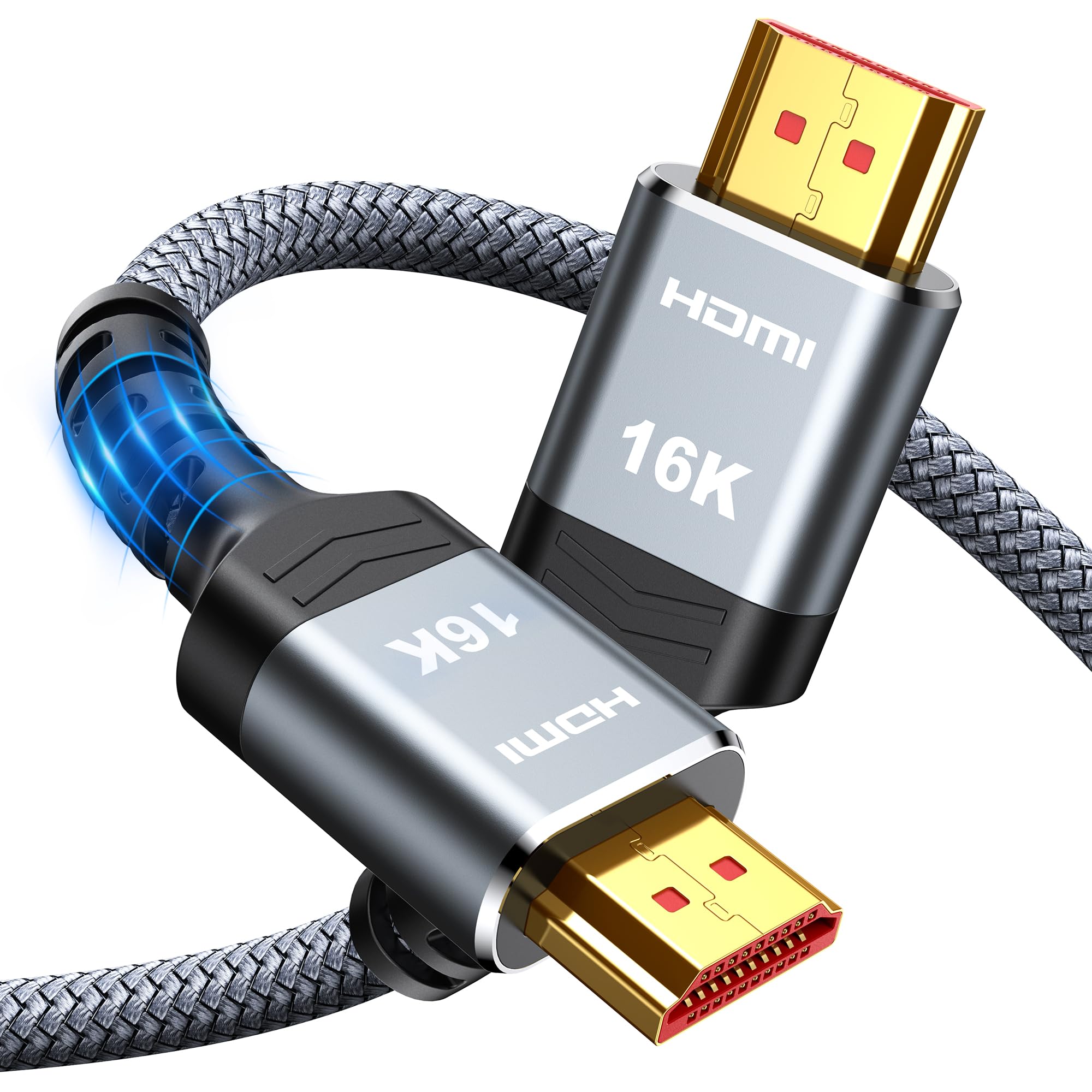
This cable obliterates the current standard. While most high-end options stop at 48Gbps, the Highwings 16K delivers a staggering 96Gbps, supporting resolutions up to 16K at 60Hz and, critically for gamers, 4K at 480Hz. It is the only cable in this lineup that can fully utilize the next generation of graphics cards and consoles before they even hit the market.
The double-braided nylon jacket and 24K gold-plated connectors signal premium build quality. Users report it instantly fixed flickering and eARC handshake issues with demanding 4K 144Hz mini-LED TVs — a problem that lesser 48Gbps cables could not solve. The advanced EMI/RFI shielding keeps signal integrity pristine even in cable-dense entertainment centers.
Its only realistic drawback is cost compared to a 48Gbps alternative, though it still undercuts many “premium” 48Gbps cables from boutique brands. For anyone building a high-refresh gaming PC or a future-proof home theater, the additional bandwidth headroom is a genuine assurance against obsolescence.
Why it’s great
- Highest available bandwidth at 96Gbps
- Eliminates flicker on demanding 4K high-Hz displays
- Premium braided build with gold contacts
Good to know
- Overkill if you only need 4K@60Hz
- Short 6.6ft length only
2. Monoprice 8K Certified Ultra High Speed HDMI Cable (3FT)
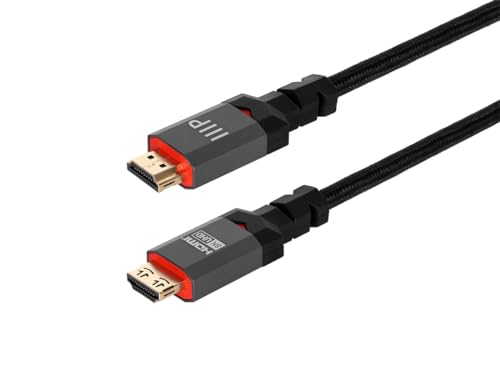
Monoprice delivers 48Gbps of certified HDMI 2.1 bandwidth at a price that undercuts many 18Gbps cables. The cast metal connector housing and a friction latch that withstands ten pounds of pull force make this a genuinely industrial-grade option. It is CL3 rated for safe in-wall installation.
Customer feedback confirms it resolved stuttering 4K Blu-ray playback where older “4K-rated” cables could not sustain the data rate. The reinforced strain relief is three times stronger than typical HDMI cables, a distinct advantage for tight spaces behind wall-mounted TVs where connectors bear constant stress.
At just 3 feet, this is not the cable for a projector run across a ceiling. But for the most common connection — from an A/V receiver or streaming device to a TV — it combines certification, tough build, and 48Gbps performance at a price that makes it the clear value king of the high-speed category.
Why it’s great
- Certified 48Gbps at a budget-tier price
- CL3 rated for in-wall use
- Friction latch prevents accidental disconnection
Good to know
- Only 3 feet — not for long runs
- Braided option not available in longer lengths
3. Zeskit Maya 2.1 8K HDMI Cable (3FT)
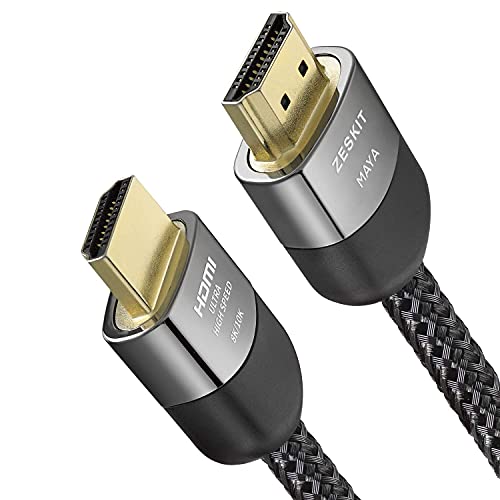
The Zeskit Maya carries official Ultra High Speed HDMI certification, complete with a hologram sticker that verifies independent lab testing to 48Gbps. This matters because it guarantees support for 4K@120Hz with full HDR, VRR, and eARC — no guesswork. It is one of the few cables users have confirmed passes a 40Gbps stress test in real A/V chains.
Users with high-end OLED TVs (Sony A90J) reported a visibly calmer, clearer picture when switching from an expensive but uncertified cable to the Maya, underscoring how certification correlates with signal integrity. The oxygen-free copper construction and tight connector fit add to its premium feel.
The only common complaint is that the cable is somewhat stiff, which can make tight bends behind a wall-mounted TV slightly difficult. For a short 3-foot jump from a streaming box or console to an AVR, however, this is a non-issue. It is the safest pick for anyone who wants certified performance without paying boutique prices.
Why it’s great
- Official Ultra High Speed certification with hologram
- Oxygen-free copper for clean signal
- Noticeable picture improvement on OLED displays
Good to know
- Stiff cable, difficult to bend sharply
- Short 3ft version only
4. Highwings 20FT 4K HDR HDMI Cable

At 20 feet, this Highwings cable solves a specific problem: getting a 4K signal across a living room without signal drop. It operates at 18Gbps, which is the ceiling for HDMI 2.0, meaning it supports 4K@60Hz with HDR reliably. The braided nylon jacket is flexible enough to route behind baseboards yet rugged enough to survive foot traffic.
Users consistently report zero flicker or dropout over the full 20-foot run, which is impressive for a passive cable at this length. The gold-plated connectors and multi-layer shielding ensure that ARC audio pass-through and HDR metadata arrive intact. It is also backward compatible, so it works with older 1080p devices without issue.
One user noted it struggles with 4K above 60Hz or certain high-bandwidth HDR modes at the full 20-foot distance, which is an inherent limitation of 18Gbps passive cables at long lengths. For standard 4K streaming, Blu-ray, and console gaming at 60fps, it remains a durable and affordable long-run solution.
Why it’s great
- Maintains stable 4K@60Hz at 20 feet
- Durable braided nylon construction
- Reliable ARC and HDR pass-through
Good to know
- Limited to 18Gbps — no 4K@120Hz
- May drop signal with very high bandwidth HDR
5. BlueRigger 50 FT 4K HDMI Cable

Pushing a 4K signal 50 feet over a passive copper cable is a genuine engineering challenge, and BlueRigger meets it with thick-gauge solid copper conductors and a CL3 fire-safety rating for permanent in-wall installation. It supports 4K@30Hz with HDR and 18Gbps bandwidth — sufficient for most projectors and streaming setups at that length.
The build quality is immediately apparent: heavy strain-relief boots, 24K gold-plated contacts, and a jacket rated for over 25,000 bends. Long-term reviews spanning five years confirm the cable maintains signal integrity without degradation, even in demanding environments like a PC monitor connected across a large room.
Caveats exist: at 50 feet, it does not support 4K@60Hz reliably with HDR. Users seeking 4K@60Hz at extreme lengths should consider an active optical HDMI cable. BlueRigger backs this with a lifetime warranty and US-based support, adding peace of mind for an installation that is difficult to re-wire.
Why it’s great
- Maintains signal at 50 feet without amplifier
- CL3 rated for safe in-wall installation
- Exceptional build quality with lifetime warranty
Good to know
- Only 4K@30Hz at full length
- Heavy and stiff cable
6. Amazon Basics 10.2 Gbps 4K HDMI Cable (6FT)

The Amazon Basics cable is the definition of adequate for standard use. Its 10.2Gbps bandwidth supports 4K resolution, but only at 30Hz refresh rates, and it lacks the headroom for HDR at 4K. That makes it a solid pick for media streaming boxes, older projectors, or secondary monitors, but a poor choice for gaming or high-bitrate Blu-ray playback.
The braided nylon jacket and aluminum housing give it a feel far above its entry-level positioning. Users who upgraded from basic black rubber HDMI cords reported a perceivable improvement in picture stability, though this is likely due to better shielding against interference rather than increased bandwidth.
Its 30Hz limitation is the defining bottleneck. If you ever plan to watch 4K HDR content or connect a modern gaming console, this cable will be the first component you replace. For a simple, reliable connection in a non-demanding setup, however, it is a perfectly functional and affordable choice.
Why it’s great
- Braided jacket feels premium
- Reliable for basic 4K@30Hz streaming
- Very affordable
Good to know
- Only 10.2Gbps — no 4K@60Hz HDR
- Not suitable for gaming or high-bitrate content
7. OREI Ultra High Speed 4K HDMI 10-Pack (6FT)

This 10-pack from OREI is the ultimate solution for outfitting multiple devices in a home theater or office environment. Each cable provides 10.2Gbps of bandwidth, supporting 4K@30Hz, 1080p, and 3D. The multi-layer shielding and PVC jacket are durable enough for daily use behind entertainment centers.
Users consistently note the connectors fit snugly without looseness, and the signal remains stable across all ten cables in the pack. For someone setting up multiple conference room displays, retrofitting a classroom, or simply wanting spares for every device, this eliminates the frustration of hunting for a cable when you need one.
The 30Hz refresh rate limit is the same constraint as the Amazon Basics cable. These are not for high-refresh gaming or future 4K@120Hz setups. But as a bulk solution for reliable 4K connectivity across many devices, the per-cable cost is extremely low and the consistency is proven by positive user feedback.
Why it’s great
- Excellent per-unit value with 10 cables
- Stable signal across all connectors
- Multi-layer shielding for interference protection
Good to know
- Limited to 4K@30Hz
- PVC jacket less flexible than braided options
FAQ
Can I use a 48Gbps cable with a 4K@60Hz TV?
Why does my 4K screen flicker with a new cable?
Are expensive HDMI cables better than cheap ones?
Do gold-plated connectors improve signal quality?
Final Thoughts: The Verdict
For most users, the best 4k hdmi cable winner is the Monoprice 8K Certified because it delivers certified 48Gbps performance with a rugged, CL3-rated build at a price that undercuts nearly every competitor. If you want future-proof 96Gbps headroom for 4K@480Hz or 8K gaming, grab the Highwings 16K. And for a long 50-foot in-wall installation where signal integrity is critical, nothing beats the BlueRigger 50 FT.