
Our readers keep the lights on and the weekend projects moving. As an Amazon Associate, I earn from qualifying purchases.
Pushing 4K at high frame rates demands a monitor that can keep up without tearing, ghosting, or blurring the action. With panel technologies ranging from Fast IPS to QD-OLED, and refresh rates climbing past 240Hz, the search for the right balance of resolution and fluidity is more nuanced than ever.
I’m Rikta — the founder and writer behind FitlyFast. I’ve spent years analyzing display hardware, digging into panel response times, color gamut coverage, and the real-world differences in motion clarity across price tiers.
After sifting through dozens of specs and customer experiences, I’ve highlighted the models that genuinely deliver on both pixel density and smooth motion. This analysis breaks down the essential categories of a 4k high refresh rate monitor so you can match the panel to your specific build and budget.
How To Choose The Best 4K High Refresh Rate Monitor
The decision comes down to how you balance motion clarity, color accuracy, and long-term panel health. Unlike standard office displays, a high-refresh 4K monitor must handle rapid pixel transitions without smearing while maintaining the crisp detail that 3840×2160 resolution provides. Your GPU budget and genre preferences will dictate the right refresh rate target and panel type.
Panel Technology: IPS vs OLED vs QD-OLED
Fast IPS panels offer excellent response times (1ms GtG), wide viewing angles, and no burn-in risk, making them a safe pick for mixed-use setups. OLED and QD-OLED panels deliver near-instant 0.03ms responses, infinite contrast, and vibrant colors, but require care with static elements to avoid image retention. For pure gaming immersion, OLED wins on visual pop; for all-day productivity plus gaming, IPS remains the workhorse.
Refresh Rate and Response Time
240Hz is the current sweet spot for competitive 4K gaming, though 144Hz and 165Hz monitors offer significant smoothness over 60Hz at a lower cost. Response time, measured in GtG (grey-to-grey), determines how quickly a pixel changes shade — lower numbers mean less ghosting. OLED panels hit 0.03ms, while the best IPS panels hover around 1ms. Pairing a 240Hz OLED with a GPU that can push 4K at those frame rates is expensive but transformative for motion clarity.
Adaptive Sync and Connectivity
HDMI 2.1 and DisplayPort 1.4 with DSC are essential for hitting 4K at 120Hz or higher without compression artifacts. Both G-Sync Compatible and FreeSync Premium technologies eliminate screen tearing, and many monitors now support both. For console gamers, HDMI 2.1 is non-negotiable to get 4K 120Hz from PS5 or Xbox Series X. USB-C with DP Alt Mode and power delivery adds convenience for laptop users.
Quick Comparison
On smaller screens, swipe sideways to see the full table.
| Model | Category | Best For | Key Spec | Amazon |
|---|---|---|---|---|
| MSI MPG 321URX QD-OLED | QD-OLED | Competitive & creative | 240Hz / 0.03ms / 99% DCI-P3 | Amazon |
| ASUS ROG Swift PG32UCDM | QD-OLED | Burn-in protection | 240Hz / 0.03ms / Custom heatsink | Amazon |
| LG 32GX850A-B UltraGear OLED | Glossy OLED | Vibrant colors & dual mode | 165Hz / 330Hz dual / 0.03ms | Amazon |
| Samsung Odyssey G8 G81SF | QD-OLED | Console & PC hybrid | 240Hz / 0.03ms / Glare Free | Amazon |
| INNOCN GA27W1Q | QD-OLED | Budget OLED entry | 240Hz / 0.03ms / MAC-View | Amazon |
| ASUS ROG Strix XG32UCG | Fast IPS | Dual-mode flexibility | 4K 160Hz / FHD 320Hz / 0.3ms | Amazon |
| LG 27G810A-B UltraGear IPS | IPS | High frame rate on budget | 4K 180Hz / FHD 360Hz / 1ms | Amazon |
| Samsung Odyssey G7 G70D | IPS | Smart TV functions | 144Hz / 1ms / Gaming Hub | Amazon |
| KTC H32P22P | Fast IPS | Large screen value | 32″ 165Hz / 1ms / 121% sRGB | Amazon |
| Dell S3225QC | QD-OLED | Productivity & media | 120Hz / 0.03ms / Spatial audio | Amazon |
| CRUA 32″ Curved 4K | VA | Budget large curved | 240Hz / 1500R / 120% sRGB | Amazon |
In‑Depth Reviews
1. MSI MPG 321URX QD-OLED

The MSI MPG 321URX strikes the hardest balance between gaming performance and productivity usability in the 4K high-refresh space. Its 31.5-inch QD-OLED panel delivers 240Hz with a 0.03ms GtG response time, producing motion clarity that eliminates any perceptible ghosting. The 99% DCI-P3 gamut and VESA DisplayHDR True Black 400 certification make HDR gaming look rich without the washed-out issues that plague lower-tier HDR monitors.
Text clarity on this QD-OLED is notably better than first-generation models, thanks to improved subpixel rendering. The KVM function with PiP/PbP is genuinely useful for switching between a desktop and a laptop, and the 90W USB-C port charges devices directly. OLED Care 2.0 includes pixel shift and static brightness limiting, which mitigates burn-in risk during office hours.
Setup is straightforward with the 4-way adjustable stand, and the included HDMI 2.1 and DP 1.4a cables support full bandwidth at 240Hz. Some users report DSC handshake quirks with dual-monitor Mac setups, but the fix — disabling DSC and locking to 120Hz — is simple. For a single-monitor gaming and work setup that demands elite motion handling, this is the reference standard.
Why it’s great
- Infinite contrast and true blacks with 240Hz fluidity
- KVM and 90W USB-C simplify multi-device desks
- Three-year warranty with burn-in coverage
Good to know
- QD-OLED can show purple tint in bright ambient light
- Dual-monitor Mac setups need DSC disabled for stability
2. ASUS ROG Swift PG32UCDM

The ASUS ROG Swift PG32UCDM pairs a 32-inch QD-OLED panel with an aggressive thermal solution — a custom heatsink and graphene film — that directly addresses OLED burn-in concerns. The 240Hz refresh rate and 0.03ms response time are identical to the MSI 321URX on paper, but ASUS adds a uniform brightness setting that keeps luminance consistent across the display, a feature that matters for color-critical work.
Color accuracy is outstanding with 99% DCI-P3 coverage and true 10-bit depth, and the Delta E < 2 calibration out of the box is reliable enough for photo editing. HDR performance is class-leading, with VESA DisplayHDR 400 True Black preserving contrast without the muted look that plagues many HDR monitors. The glossy finish sharpens text and image clarity noticeably versus matte-coated competitors.
Build quality feels premium, with a spill-resistant coating and a 1/4-inch tripod socket for streamers. The 3-year warranty explicitly covers burn-in, which lowers the long-term ownership risk. The higher price positions it as a top-shelf choice for gamers who want maximum motion clarity and are willing to pay extra for enhanced durability features.
Why it’s great
- Custom heatsink and graphene film reduce burn-in risk
- Uniform brightness mode for consistent color work
- Glossy finish delivers sharp text and vivid highlights
Good to know
- Premium price tier; no built-in speakers
- Glossy screen can reflect direct light sources
3. LG 32GX850A-B UltraGear Glossy OLED
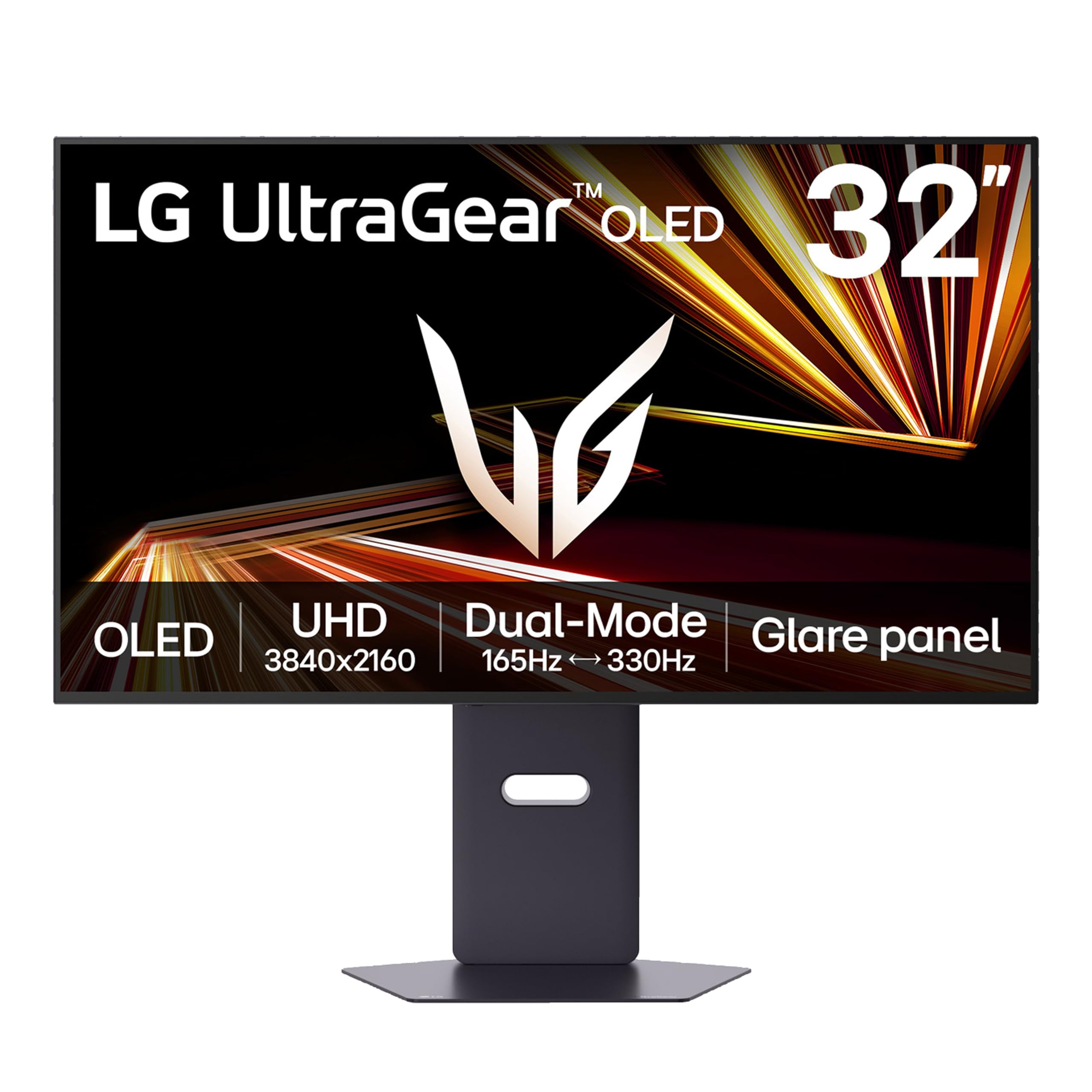
The LG 32GX850A-B uses a 4K UHD Glossy OLED panel with Micro Lens Array+ technology, which pushes typical brightness to 275 nits — brighter than previous LG OLED gaming monitors. It offers a Dual Mode that switches between 4K at 165Hz and Full HD at 330Hz via a hotkey, giving competitive players a high-frame-rate option for fast-paced shooters without leaving the desk.
Color accuracy is strong at 98.5% DCI-P3, and the 1.5M:1 contrast ratio delivers the deep blacks OLED is known for. The glossy finish significantly reduces the purple-tint issue common on QD-OLED panels in bright rooms, making it a better choice for mixed-lighting environments. The stand offers full height, tilt, swivel, and pivot adjustments.
Build quality is sturdy, and the three UL certifications (Anti-Glare, Flicker-Free, Low Blue Light) reduce eye strain during long sessions. Some users note the monitor includes a fan that produces audible noise in silent rooms, which is worth considering for audio-sensitive setups. For a 32-inch glossy OLED with dual-mode flexibility, this is a compelling alternative to the QD-OLED competition.
Why it’s great
- Glossy WOLED avoids QD-OLED purple tint
- Dual mode 4K 165Hz / FHD 330Hz for versatility
- Full ergonomic stand with pivot
Good to know
- Built-in fan noise may be audible in quiet rooms
- Peak brightness lower than QD-OLED rivals
4. Samsung Odyssey G8 G81SF
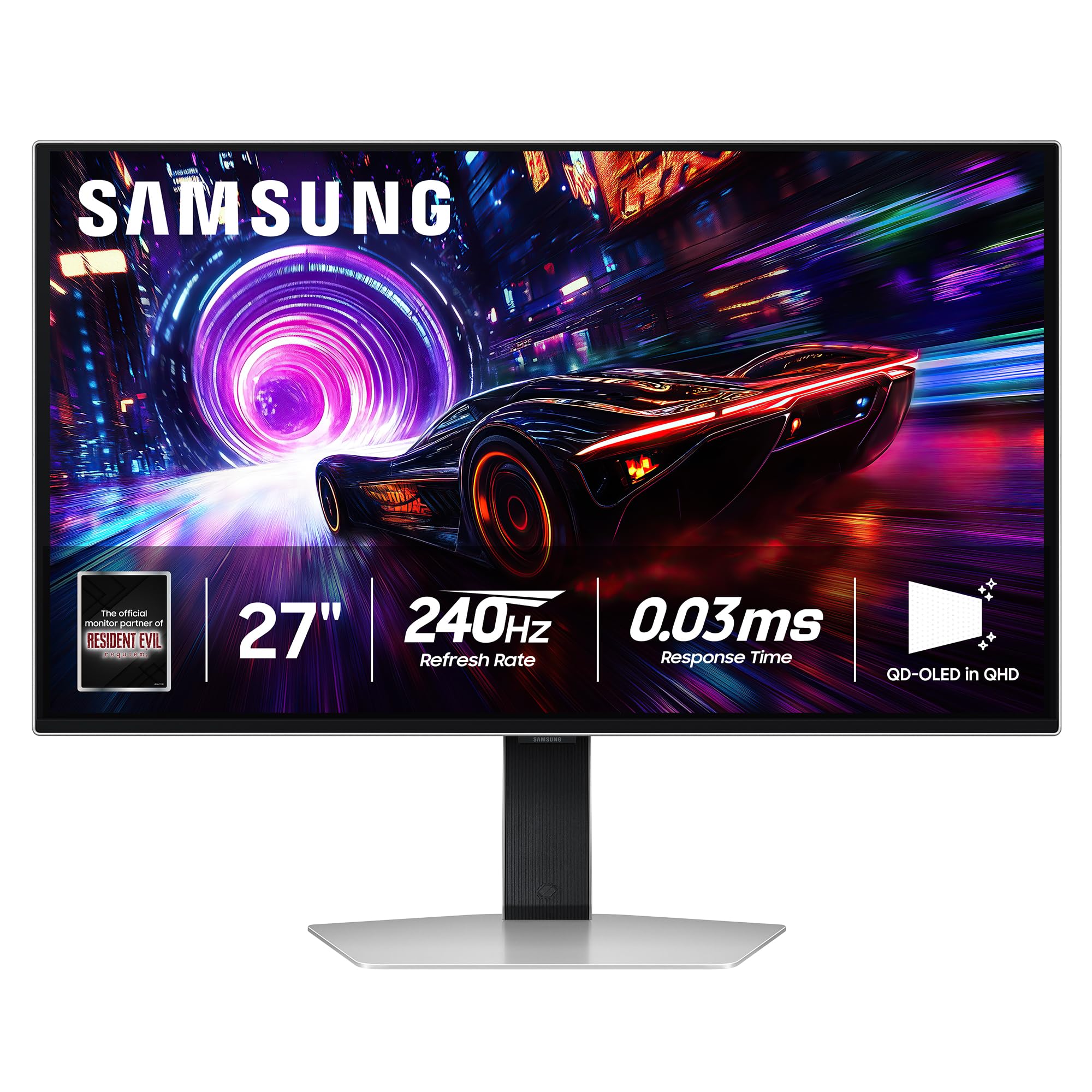
The Samsung Odyssey G8 G81SF is a 27-inch QD-OLED monitor that packs 4K resolution into a smaller diagonal, resulting in a pixel density of 166 PPI — great for users who prioritize sharp text and detailed images. The 240Hz refresh rate and 0.03ms response time deliver the same elite motion handling as larger QD-OLED siblings, but the smaller size makes it easier to fit on deeper desks.
Samsung’s Glare Free technology reduces reflections by 54% compared to conventional anti-reflection coatings, which helps preserve contrast in bright rooms. The Pulsating Heat Pipe cooling system is a first for monitors, diffusing heat five times faster than graphite to reduce burn-in risk. The Dynamic Cooling System and Thermal Modulation System automatically manage brightness to prevent overheating.
Build quality is largely metal, though the port area uses plastic. The lack of smart TV features is a positive for purists who want a dedicated gaming display. Some users find the anti-glare coating too matte for their taste, reducing perceived sharpness. For anyone wanting a 27-inch 4K OLED with robust burn-in protection, this is the current benchmark.
Why it’s great
- 166 PPI density for extra-sharp text and detail
- Pulsating Heat Pipe reduces burn-in risk
- Glare Free coating works well in bright rooms
Good to know
- Matte coating may reduce perceived sharpness
- Some early units reported power button issues
5. INNOCN GA27W1Q
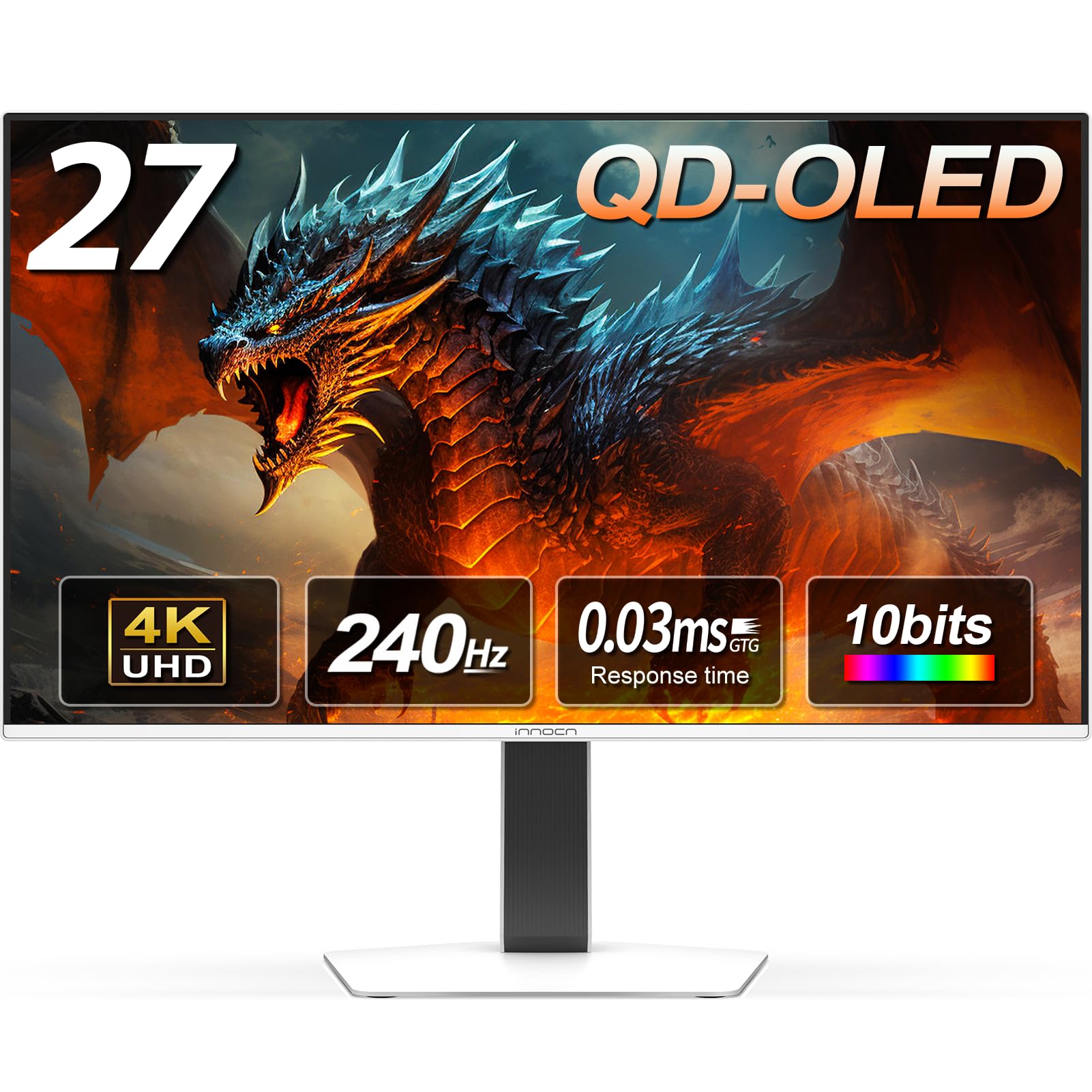
The INNOCN GA27W1Q brings a 27-inch QD-OLED panel with 240Hz refresh rate and 0.03ms response time to a price point well below the established brands. The 99% DCI-P3 coverage and 1.5M:1 contrast ratio produce the same vibrant colors and deep blacks that define OLED gaming. MAC-View Mode offers specific color calibration for Mac users, reducing the typical color mismatch when connecting Apple devices.
Connectivity includes two DisplayPort and two HDMI ports, plus a USB-C port that supports video input. The stand provides height, tilt, swivel, and pivot adjustments, and the LED atmosphere lights add a gaming aesthetic. However, the build quality feels less premium than the LG or ASUS options, with an external power brick and a menu system that lacks polish.
HDR performance is functional but requires manual tweaking — the “Normal” and “Highlights” modes correspond to different HDR peak brightness levels that aren’t documented in the box. For buyers who want OLED performance without paying the ASUS or Samsung premium and are willing to invest time in calibration, this is a strong entry-level pick.
Why it’s great
- Quad HD OLED at a budget-friendly price
- MAC-View Mode for native color matching
- Full ergonomic stand with pivot
Good to know
- External power brick and short cables
- Menu system is clunky with poor documentation
6. ASUS ROG Strix XG32UCG
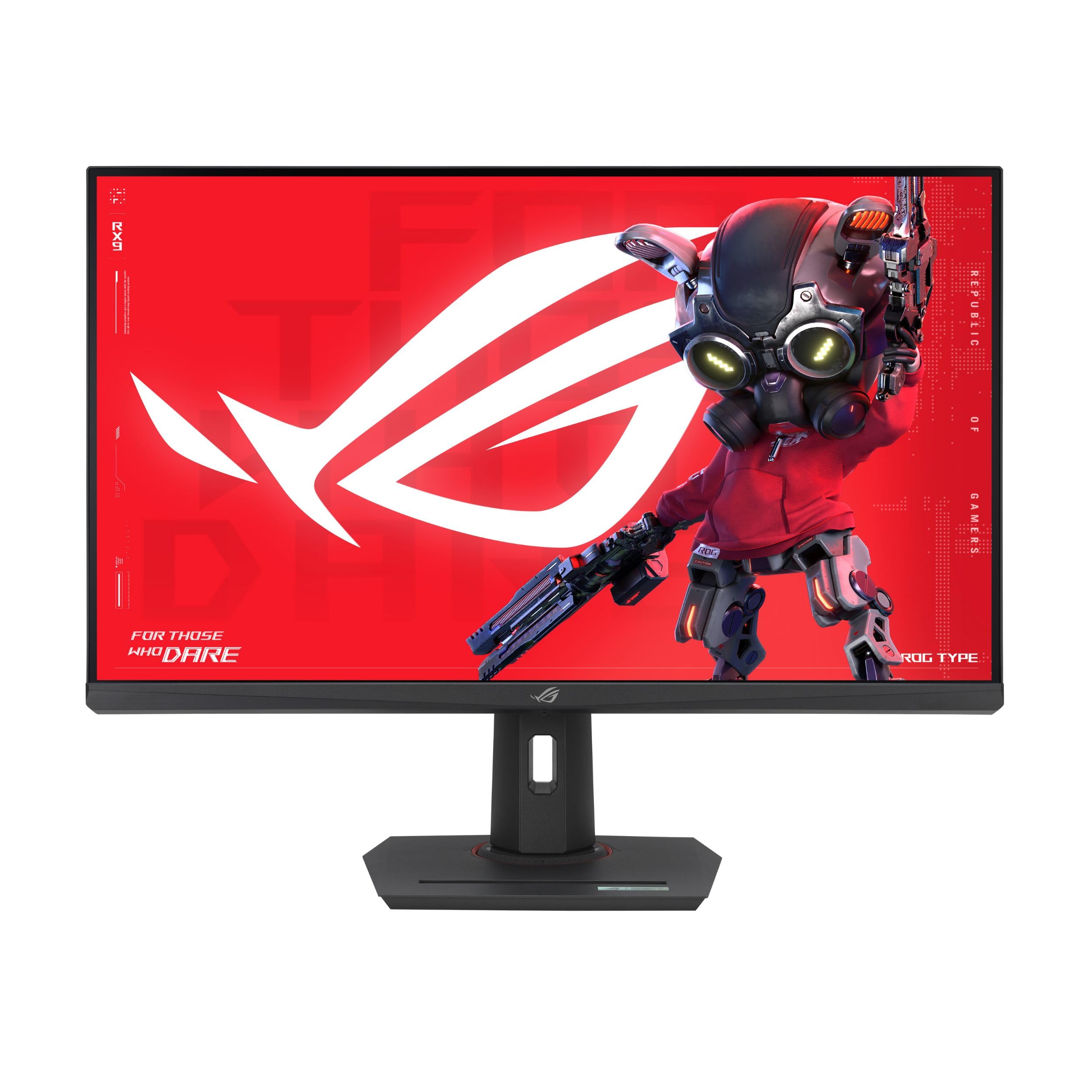
The ASUS ROG Strix XG32UCG uses a 32-inch Fast IPS panel with a dual-mode feature that switches between 4K at 160Hz and Full HD at 320Hz. The 0.3ms response time (minimum) places it among the fastest IPS monitors available, making it a serious option for competitive players who want high-refresh IPS reliability without OLED burn-in concerns.
ASUS Extreme Low Motion Blur Sync (ELMB SYNC) works alongside variable refresh rate, eliminating ghosting and tearing simultaneously — a rare feature that improves clarity in fast-paced scenes. The 130% sRGB and 95% DCI-P3 gamut deliver rich, accurate colors, and the DisplayWidget Center software allows mouse-based OSD adjustment, which is convenient for frequent tweaking.
Connectivity includes DisplayPort, HDMI, and USB-C with DP Alt Mode. The stand offers height, tilt, swivel adjustments, and a tripod socket is built in for streamers. The semi-gloss screen strikes a good balance between glare reduction and image sharpness. For gamers who want dual-mode flexibility without moving to OLED, this is the strongest IPS alternative.
Why it’s great
- Dual mode 4K 160Hz / FHD 320Hz
- ELMB SYNC eliminates tearing and ghosting together
- Fast IPS has no burn-in risk for mixed use
Good to know
- Limited static contrast ratio of 1000:1
- HDR brightness is decent but not OLED-level
7. LG 27G810A-B UltraGear IPS
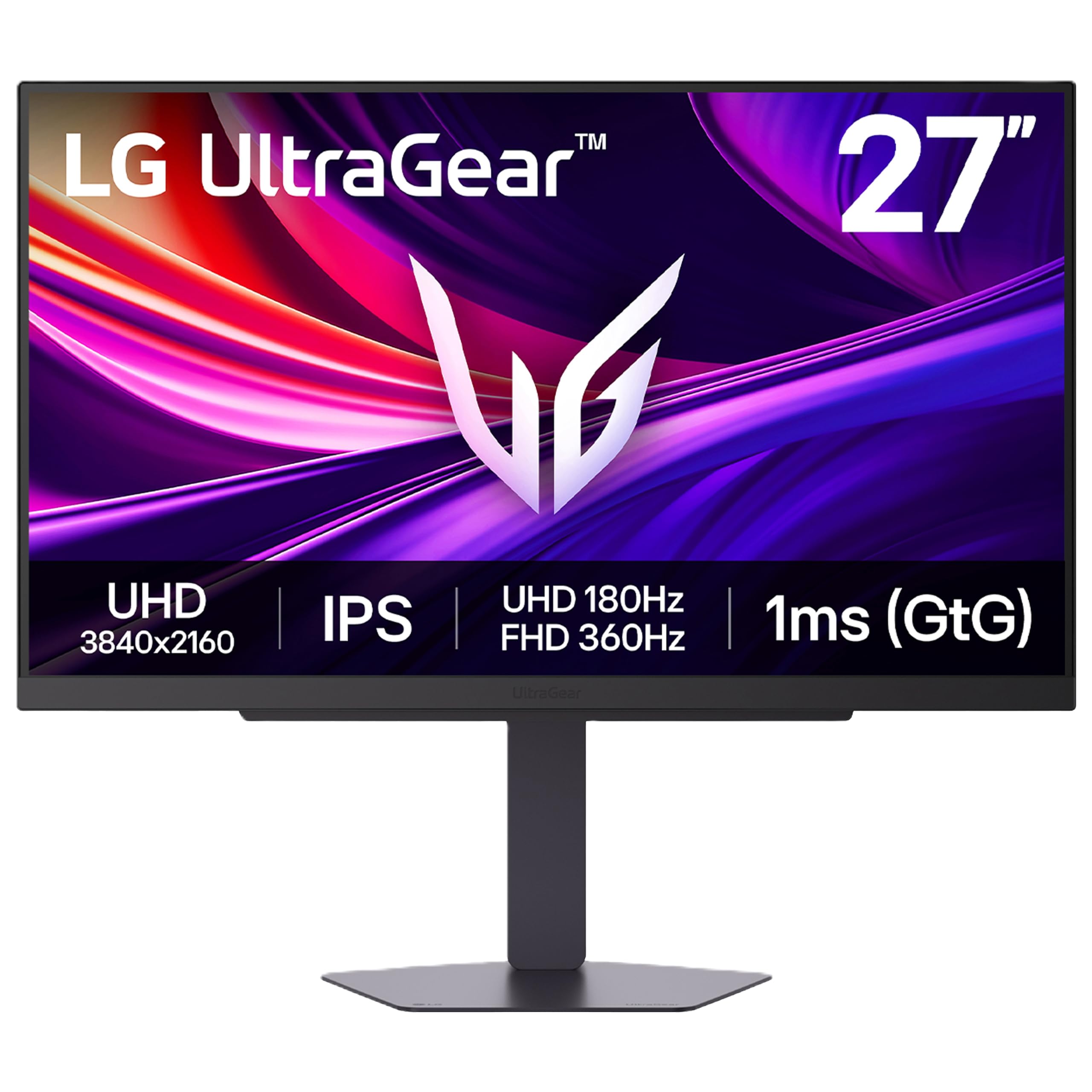
The LG 27G810A-B is a 27-inch IPS gaming monitor that offers Dual Mode switching between 4K at 180Hz and Full HD at 360Hz. The 1ms GtG response time is competitive, and the combination of G-Sync Compatible and FreeSync Premium ensures tear-free gameplay on both NVIDIA and AMD GPUs. VESA DisplayHDR 400 provides decent brightness for HDR content without the deep blacks of OLED.
Color performance is solid with 95% DCI-P3 coverage, and the IPS panel maintains consistent colors across the 178-degree viewing angle. The stand includes height, tilt, swivel, and pivot adjustments, making it easy to find the ideal viewing position. The backside connectivity layout is well-designed for cable management, with easy access to ports.
Some users report a fan noise that is noticeable in silent environments, and the black uniformity is typical for IPS — grayish in dark room scenes. For competitive gamers on a budget who want high frame rates and the flexibility of dual-mode resolution switching, this LG offers a compelling package without the OLED price premium.
Why it’s great
- Dual mode 4K 180Hz / FHD 360Hz
- IPS panel avoids burn-in for mixed use
- Full ergonomic stand with pivot
Good to know
- Fan noise may be audible in quiet rooms
- IPS contrast ratio limits HDR depth
8. Samsung Odyssey G7 G70D
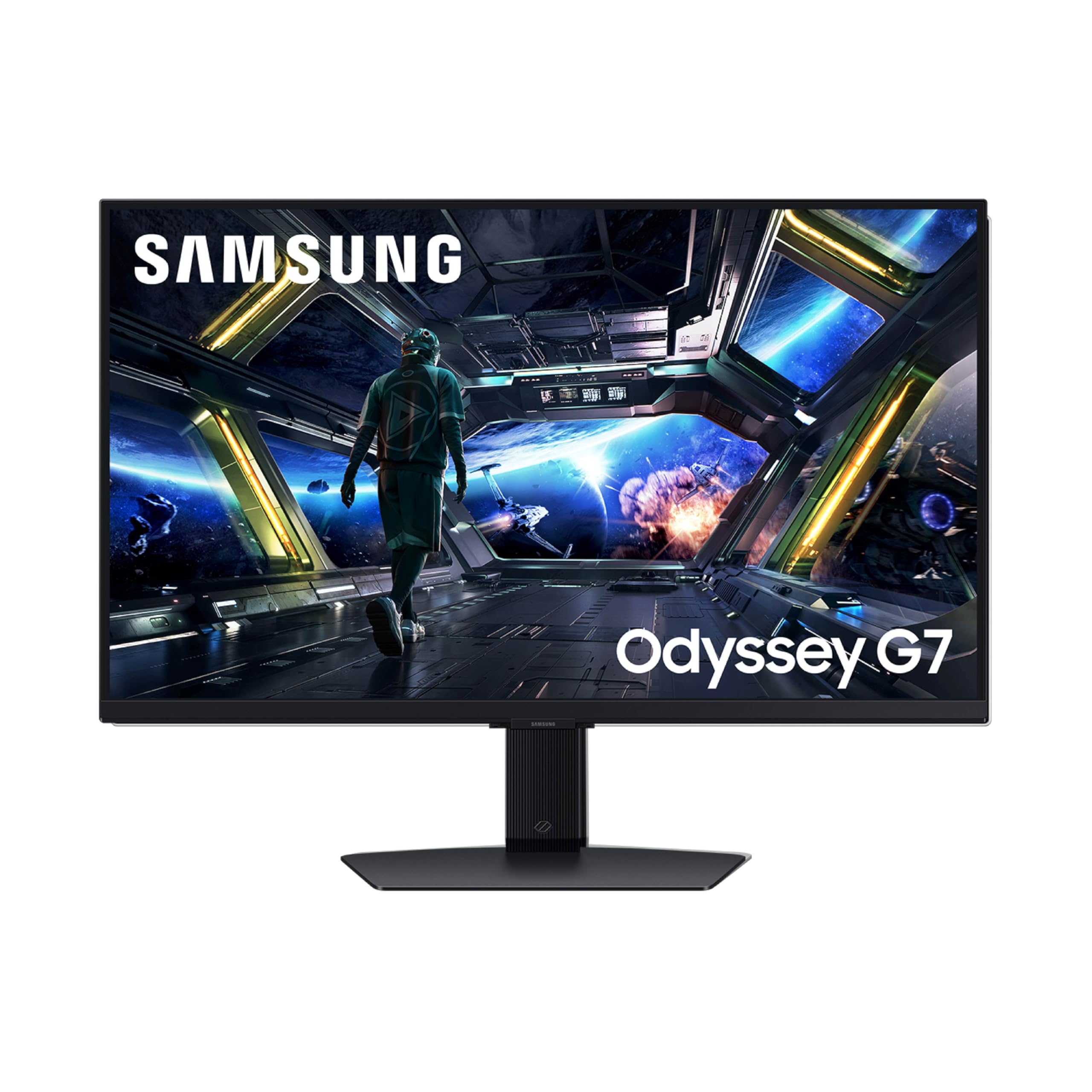
The Samsung Odyssey G7 G70D combines a 32-inch 4K IPS panel with 144Hz refresh rate and 1ms GtG response time, making it a solid mid-range option for gamers who also want smart TV functionality. The built-in Gaming Hub provides instant access to cloud gaming services and streaming apps without needing a PC, and the NQM AI Processor upscales lower-resolution content to near-4K quality.
Color performance is good with 99% DCI-P3 coverage, and DisplayHDR 400 provides adequate brightness. The Dynamic Black Equalizer adjusts brightness and saturation in dark scenes automatically, improving visibility without manual tweaking. The remote control adds convenience for navigating the smart interface.
Smart TV features can feel intrusive with ad placements, and some users report that the SDR/HDR switching causes a brief reboot. The lack of USB-C is a notable omission for laptop users. If you want a single display that doubles as a TV for streaming, this is the most practical choice.
Why it’s great
- Gaming Hub for streaming without a PC
- AI upscaling improves lower-res content
- Dynamic Black Equalizer for dark scenes
Good to know
- Smart interface can feel ad-heavy
- No USB-C port for modern laptops
9. KTC H32P22P
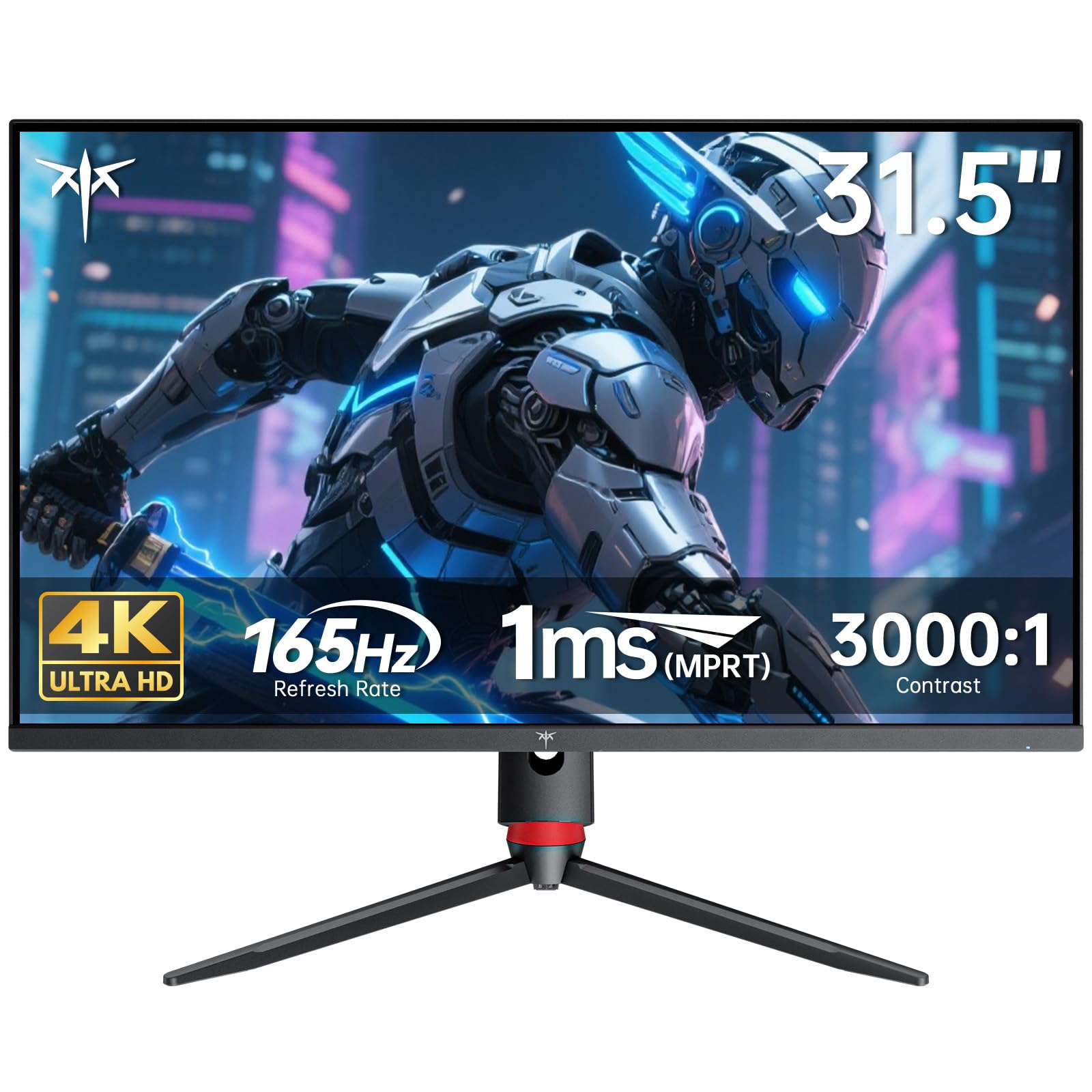
The KTC H32P22P is a 32-inch Fast IPS monitor that offers 4K resolution at 165Hz with a 1ms MPRT response time. The 121% sRGB color gamut and 3000:1 contrast ratio deliver respectable vibrancy and depth for an IPS panel, and Adaptive Sync support works with both FreeSync and G-Sync to reduce tearing.
Connectivity includes HDMI 2.1 and DP 1.4 ports, making it compatible with consoles that require 4K 120Hz. The built-in blue light filter helps reduce eye strain during long sessions. The stand provides tilt and height adjustment, and VESA mount support (100x100mm) allows for monitor arm setups.
Customer feedback highlights quality assurance issues, with reports of dead pixels and flickering on the first DisplayPort. The built-in speakers are basic. For budget-conscious buyers who want a large, fast 4K IPS panel and are willing to accept some QA variability, this represents a significant discount versus established brands.
Why it’s great
- 32-inch 4K 165Hz at a budget-friendly price
- High 121% sRGB coverage for vivid colors
- HDMI 2.1 for full console support
Good to know
- QA issues reported including dead pixels
- Built-in speakers are mediocre
10. Dell S3225QC
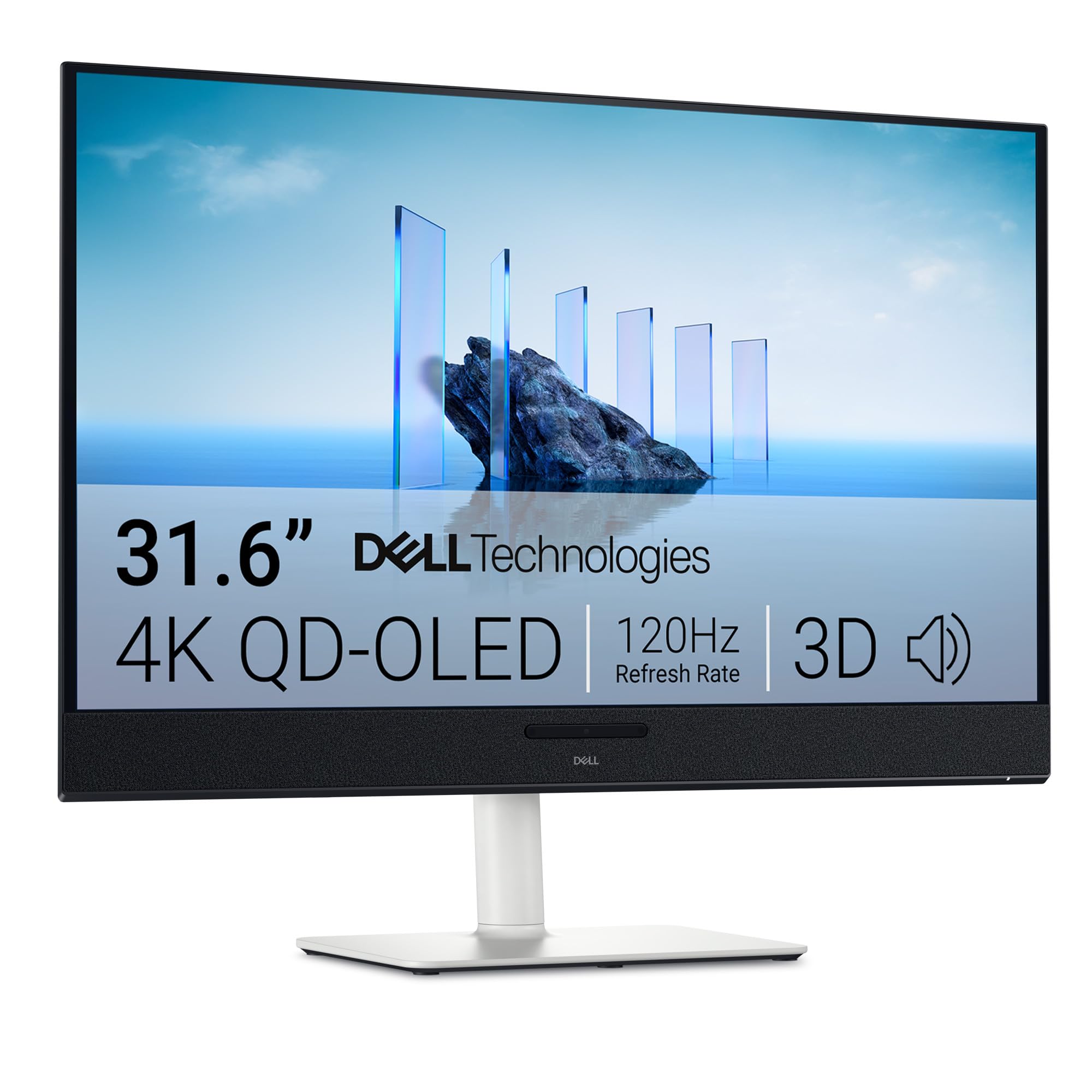
The Dell S3225QC is a 31.6-inch QD-OLED monitor that prioritizes image quality and audio over raw refresh speed. The 120Hz refresh rate and 0.03ms response time deliver smooth motion, but the focus here is on color accuracy and immersive media playback. The 99% DCI-P3 gamut and VESA DisplayHDR True Black 400 certification produce reference-grade visuals.
The built-in spatial audio system with five 5W speakers and AI-driven head tracking is unique, offering a convincing soundstage for a monitor. The single USB-C cable with 90W power delivery simplifies desk setup. The stand provides full height, tilt, swivel, and slant adjustments.
HDR brightness is limited to 250 nits typical, which is lower than dedicated gaming OLEDs. Some users experience flickering at 120Hz via HDMI, which requires using USB-C for stable high-refresh operation. For creative professionals who want OLED quality with a clean USB-C setup and decent built-in audio, this is a compelling productivity monitor.
Why it’s great
- QD-OLED with True Black 400 for deep contrast
- Spatial audio system with five speakers
- USB-C 90W for single-cable laptop setup
Good to know
- Only 120Hz, not competitive for esports
- HDMI flicker at 120Hz requires USB-C workaround
11. CRUA 32″ Curved 4K 240Hz
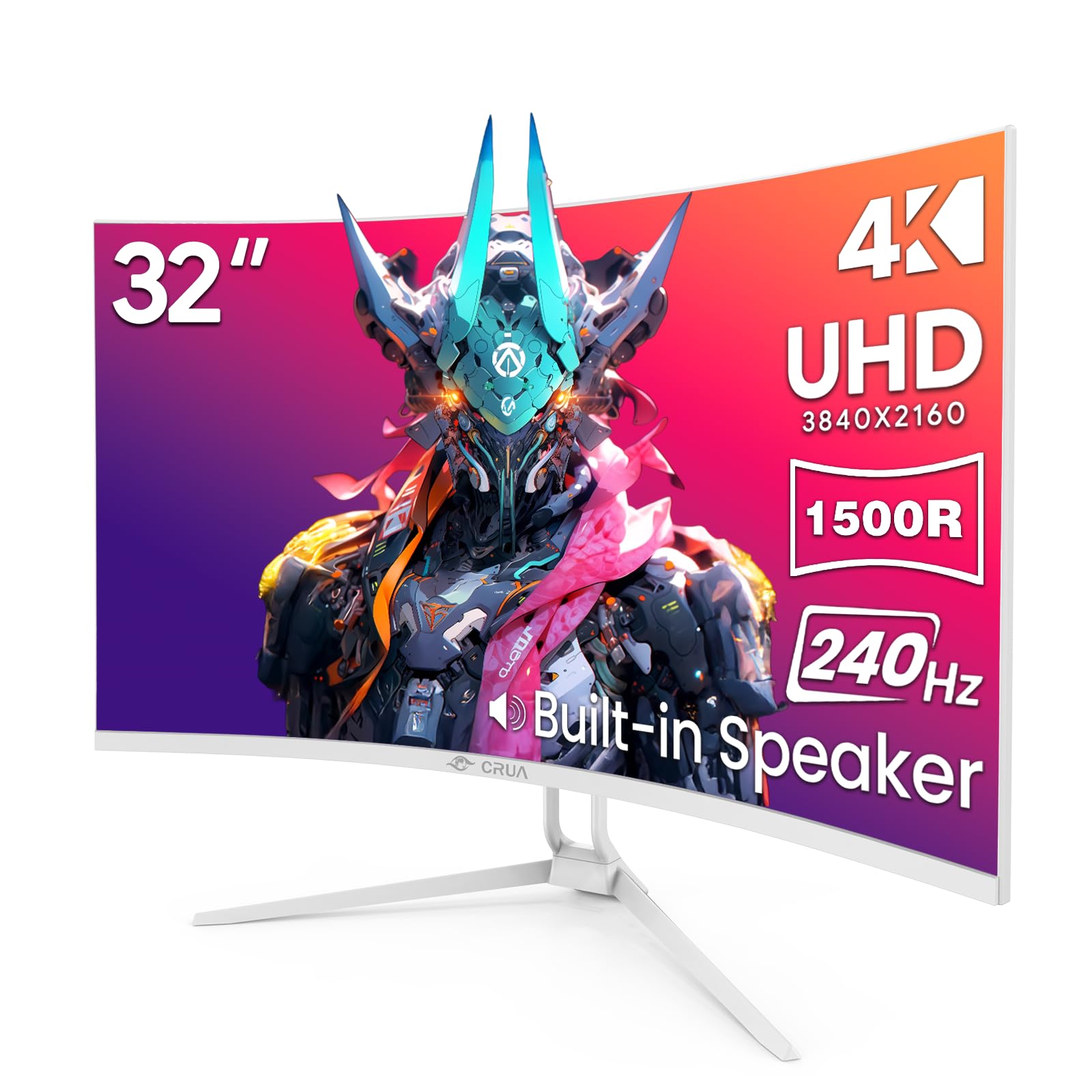
The CRUA 32-inch Curved Gaming Monitor uses a VA panel with 4K resolution and a 240Hz refresh rate, offering high-refresh 4K at an aggressively low price. The 1500R curvature provides an immersive viewing angle, and the 120% sRGB coverage delivers decent color for media consumption. AMD FreeSync is supported for tearing reduction.
Connectivity includes HDMI 2.1 and DP 1.4 ports, plus PIP/PBP for multi-source setups. The white color and RGB backlighting give it a distinct aesthetic. The stand offers tilt adjustment but lacks height adjustment, and the built-in speakers are weak.
Customer feedback is mixed — some praise the value and image quality, while others note the stand is hard to assemble and the on-screen display is confusing without a remote. The VA panel’s 3000:1 contrast ratio provides better black levels than budget IPS options, but the 300 cd/m² brightness is modest. For budget gamers who want a large curved 4K screen with high refresh, this fits a very specific niche.
Why it’s great
- 32-inch curved VA with 240Hz at low price
- HDMI 2.1 supports next-gen console 4K 120Hz
- 1500R curve enhances immersion
Good to know
- Stand assembly is tricky and lacks height adjustment
- Built-in speakers are very basic
FAQ
Can my GPU run a 4K 240Hz monitor at full speed?
Is OLED burn-in still a problem on gaming monitors?
What is the difference between QD-OLED and WOLED?
Do I need DisplayPort or HDMI for 4K high refresh?
Final Thoughts: The Verdict
For most users, the 4k high refresh rate monitor winner is the MSI MPG 321URX QD-OLED because it delivers flawless motion clarity, infinite contrast, and a comprehensive feature set at a competitive price. If you want maximum burn-in protection and elite build quality, grab the ASUS ROG Swift PG32UCDM. And for a 27-inch OLED that works perfectly with consoles and PCs alike, nothing beats the Samsung Odyssey G8 G81SF.