
Our readers keep the lights on and the weekend projects moving. As an Amazon Associate, I earn from qualifying purchases.
A photo editor’s screen is the single most critical tool in the workflow, yet most monitors ship with exaggerated contrast and blue-heavy white points that hide banding and crush shadows. Choosing a display built for color-critical work means looking beyond resolution and refresh rate to the gamut coverage, Delta E tolerances, and panel uniformity that determine whether the print matches the file.
I’m Rikta — the co-founder and writer behind FitlyFast. I’ve analyzed the technical specifications and customer feedback for over fifty professional monitors to identify which models deliver the color accuracy, wide gamut coverage, and ergonomic features that matter most in a 4K Monitor For Photo Editing.
Every model in this guide has been evaluated for factory calibration reports, out-of-box Delta E performance, and real-world editing usability — so you can confidently pick a monitor that shows exactly what your camera captured without expensive post-purchase adjustments. 4k monitor for photo editing
How To Choose The Best 4K Monitor For Photo Editing
Selecting a monitor for photo editing requires evaluating a specific set of metrics that general-use or gaming displays simply do not prioritize. The three pillars are color gamut coverage, Delta E accuracy, and panel technology — and ignoring any one of them will compromise your editing results.
Color Gamut Coverage — sRGB, Adobe RGB, and DCI-P3
For web and social media work, 100% sRGB coverage is sufficient. If you print your images or work in commercial photography, you need a monitor covering 95% to 99% of the Adobe RGB or DCI-P3 color spaces. These wider gamuts give you the deep greens, rich reds, and nuanced blues that high-end printers can reproduce.
Delta E (ΔE) and Factory Calibration
Delta E measures the difference between the intended color and what the monitor displays. For professional photo editing, look for a Delta E of less than 2 out of the box — anything higher introduces visible color shifts. Factory calibration reports, often included with ProArt or BenQ PD series monitors, give you documented proof of accuracy before you even plug in a puck.
Panel Type, Resolution, and Connectivity
IPS panels are the standard for photo editing because they maintain consistent color and brightness across wide viewing angles. IPS Black panels offer deeper contrast (2000:1) without sacrificing accuracy. A 4K UHD resolution (3840×2160) provides enough pixel density to view a full-page image at 100% zoom with retouching tools visible on the side. For connectivity, a USB-C port with at least 65W power delivery lets you dock a laptop and keep it charged, simplifying your desk — a huge advantage for a workspace that already has a printer, card reader, and external drive.
Quick Comparison
On smaller screens, swipe sideways to see the full table.
| Model | Category | Best For | Key Spec | Amazon |
|---|---|---|---|---|
| ASUS ProArt PA279CRV | Premium | Wide-gamut photo & video editing | 99% DCI-P3/Adobe RGB, ΔE < 2 | Amazon |
| ASUS ProArt PA279CV | Mid-Range | Budget-conscious color-critical work | 100% sRGB/Rec.709, ΔE < 2 | Amazon |
| Dell UltraSharp U2725QE | Premium | High-refresh photo editing & hub | 99% DCI-P3, 120Hz, Thunderbolt 4 | Amazon |
| BenQ PD3225U | Premium | Mac-centric professional studio | 98% P3, 2000:1 IPS Black, ΔE ≤ 2 | Amazon |
| BenQ PD3205U | Premium | Large-screen photo editing & design | 99% sRGB/Rec.709, ΔE ≤ 3 | Amazon |
| ViewSonic VP2788-5K | Premium | 5K resolution for pixel-peeping | 99% DCI-P3, 5120×2880, Thunderbolt 4 | Amazon |
| BenQ MA270UP | Premium | MacBook color matching plug-and-play | P3 wide color gamut, 90W USB-C | Amazon |
| ViewSonic VP2756-4K | Mid-Range | Pantone-validated editing on a budget | 100% sRGB, ΔE<2, Pantone validated | Amazon |
| LG 27UP850-W | Mid-Range | USB-C hub with high brightness | DCI-P3 95%, 400cd/m², USB-C 96W | Amazon |
| SAMSUNG ViewFinity S8 S80D | Mid-Range | Ergonomic setup and eye care | 4K UHD, HDR10, height/pivot adjust | Amazon |
| LG 32UN650-W | Entry-Level | Large screen at entry-level price | DCI-P3 95%, 32″ UHD, IPS | Amazon |
In‑Depth Reviews
1. ASUS ProArt Display PA279CRV

The PA279CRV represents the sweet spot for photo editors who need wide Adobe RGB and DCI-P3 coverage without jumping to a 32-inch panel. With 99% coverage of both DCI-P3 and Adobe RGB — rather than the more common 95% — this monitor handles the extended reds and greens that landscape and product photographers depend on for print matching. Factory pre-calibration to Delta E < 2 means you can open a raw file on day one and trust the histogram matches your intent.
The 96-watt USB-C Power Delivery is a practical advantage in a photo-editing workflow. A single cable connects a MacBook Pro, transmits the display signal, and keeps the laptop fully charged while a card reader and external SSD plug into the built-in USB hub. The ergonomic stand (tilt, swivel, pivot, height) makes it easy to switch between landscape and portrait orientation for vertical compositions.
Users consistently report excellent out-of-box uniformity and only a minor red-green cast on gray that disappears after a quick manual tweak. The matte screen coating minimizes reflections without the hazy sparkle that can obscure fine shadow detail. If you edit for print or e-commerce where color matching is non-negotiable, this is the most balanced option in the premium segment.
Why it’s great
- Industry-leading 99% Adobe RGB and DCI-P3 coverage ensures print matching accuracy right out of the box.
- USB-C with 96W Power Delivery functions as a full docking hub, reducing desk clutter.
- Premium stand with full ergonomic pivot allows portrait-mode editing for tall images.
Good to know
- Some units show a slight red-green cast on neutral gray that requires minor adjustment.
- Refresh rate is 60Hz, so it is not designed for competitive gaming.
2. ASUS ProArt Display PA279CV

The PA279CV strips back the wide-gamut Adobe RGB coverage of its bigger sibling to focus on what matters for web and social media photographers: 100% sRGB and Rec. 709 at a Delta E < 2. This makes it an excellent choice for editors whose final output is digital — think wedding albums posted online, real estate listings, or social media content — where Adobe RGB coverage would go unused.
Calman verification with a factory calibration report is included, so you can trust the sRGB mode to deliver neutral skin tones and accurate grayscales without immediate hardware calibration. The USB-C port supplies 65W Power Delivery — enough to charge a MacBook Air or a 13-inch Pro under moderate load — plus there is a four-port USB 3.2 hub for a mouse, keyboard, and card reader.
Customer feedback highlights that the sRGB and Rec. 709 modes look vibrant out of the box, though a slight green tint on the default wide-gamut mode requires a quick tint adjustment to -7. Users also note that the matte anti-glare coating preserves sharpness better than many budget-friendly 4K monitors. If your workflow stays within the sRGB space, this monitor delivers professional-grade accuracy at a decisive discount.
Why it’s great
- Factory calibration to Delta E < 2 means accurate sRGB output without a puck.
- USB-C with 65W PD and a USB hub reduces cable clutter for a compact desk setup.
- Rotates to portrait orientation, making it practical for vertical composition review.
Good to know
- Default wide-gamut mode has a green cast that needs manual correction.
- Limited to 100% sRGB, so it is not suitable for Adobe RGB print workflows.
3. Dell UltraSharp U2725QE
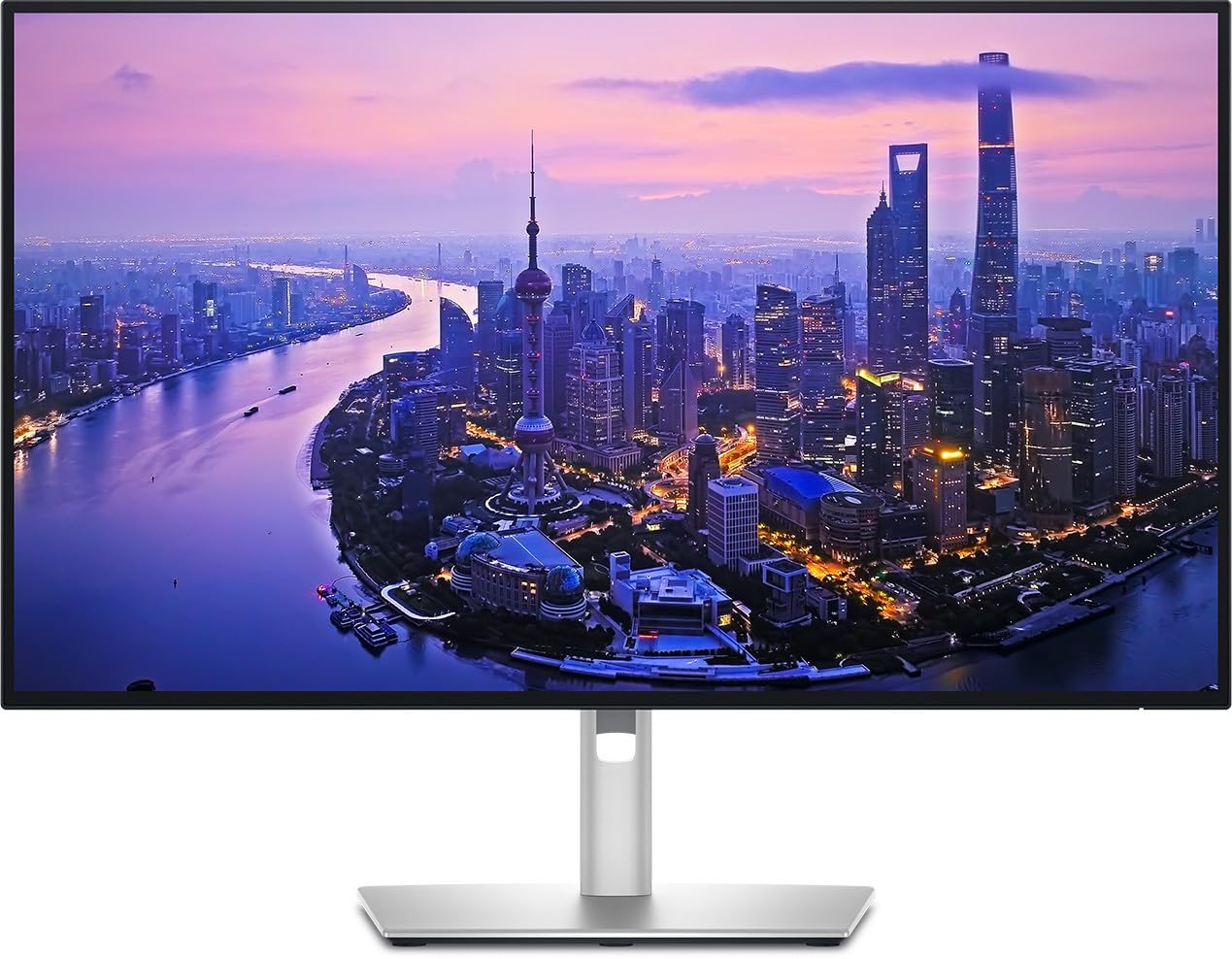
The Dell UltraSharp U2725QE breaks the photo-editing mold by pairing professional-grade color accuracy with a 120Hz refresh rate — a rare combination that benefits both detailed editing and fluid panning across high-resolution images. The IPS Black panel delivers a 2000:1 contrast ratio, producing deeper blacks than standard IPS without the off-angle gamma shift of VA panels.
Factory calibration to Delta E of less than 1.5 with 99% DCI-P3 coverage makes this a serious contender for photographers who also shoot video or edit large panoramic composites. The Thunderbolt 4 port provides a massive 140W of power delivery — enough to charge a 16-inch MacBook Pro at full speed — while supporting daisy-chaining of a second 4K display. The built-in ambient light sensor and ComfortView Plus keep the screen comfortable during long culling sessions.
Users praise the anti-glare coating for its lack of graininess, a significant improvement over older Dell matte screens. A few Mac users have reported compatibility handshake issues, particularly with the M4 Mini, but the monitor pairs flawlessly with Windows laptops and earlier Mac hardware. If you want one monitor for editing and everyday smooth-scrolling use, this is the most versatile pick.
Why it’s great
- 120Hz refresh rate makes panning and zooming in high-res images feel fluid and responsive.
- Thunderbolt 4 delivers 140W charging, fully powering a 16-inch MacBook Pro via a single cable.
- IPS Black panel provides deeper black levels than standard IPS, improving shadow detail visibility.
Good to know
- A small number of Mac users have reported compatibility errors, especially with M4 machines.
- Premium price point; the high refresh rate is unnecessary if you only edit static images.
4. BenQ PD3225U

The BenQ PD3225U uses the IPS Black panel technology that pushes contrast to 2000:1 — double that of typical IPS monitors — giving your shadows visible detail without crushing blacks. This matters when you edit high-dynamic-range images where subtle gradations in a dark sky or a model’s shadowed hair need to remain distinct rather than blending into a single dark blob.
With 98% P3 coverage, Delta E ≤ 2, and Pantone validation, this 32-inch monitor is aimed squarely at professionals who need to match physical Pantone swatches. The Thunderbolt 3 port supports daisy-chaining and delivers 85W power delivery, while the bundled HotKey Puck G2 lets you switch between color modes or input sources without diving into the on-screen menu. The anodized metal stand feels premium and adjusts smoothly.
Mac users report that the M-Book mode delivers color that matches a MacBook Pro display closely, though one reviewer noted slightly less vibrancy compared to an iMac Pro when used as a secondary screen. The 250-nit maximum brightness and 60Hz refresh mean this monitor prioritizes accuracy over brightness or motion clarity — perfect for color-critical print work.
Why it’s great
- IPS Black panel achieves 2000:1 contrast for excellent shadow detail and deep blacks.
- Pantone validated with Delta E ≤ 2, ideal for matching physical color swatches in print production.
- HotKey Puck G2 provides quick access to color modes, brightness, and input switching.
Good to know
- Maximum brightness of 250 nits is lower than competing premium models.
- Stays at 60Hz, so it does not offer the smooth scrolling of high-refresh panels.
5. BenQ PD3205U

The 32-inch BenQ PD3205U gives you the screen real estate to keep Lightroom’s Develop module, a full-size preview, and a reference histogram all visible without overlapping windows. The 99% sRGB and Rec. 709 coverage with Delta E ≤ 3 is accurate enough for print photography that does not require the ultra-wide Adobe RGB gamut of more expensive models.
The AQCOLOR engine and factory calibration report mean you can rely on the sRGB mode immediately. The HotKey Puck G2, a wired controller that sits on your desk, lets you toggle between sRGB, Rec. 709, and a user-calibrated mode with a single press — a real productivity gain when switching between web output and video review. USB-C provides 90W Power Delivery, and the KVM switch lets you control two computers with one keyboard and mouse.
Users upgrading from 27-inch 1440p monitors note that the added vertical space eliminates window overlap in Lightroom and Photoshop. The built-in speakers are barely adequate for system sounds, and the Delta E of ≤ 3 is looser than the ≤ 2 standard found on the PD3225U, which matters if you need sub-2 accuracy for high-end print proofing. For general design and hobbyist photo editing, the PD3205U offers an excellent size-to-value ratio.
Why it’s great
- 32-inch screen provides generous workspace for editing palettes and full-size image previews.
- HotKey Puck G2 gives one-touch switching between color profiles, a major workflow boost.
- Built-in KVM switch simplifies controlling a Mac and PC from the same peripherals.
Good to know
- Delta E ≤ 3 is less precise than the ≤ 2 found on competition at this price tier.
- Speakers are weak and unsuitable for any critical audio monitoring.
6. ViewSonic VP2788-5K
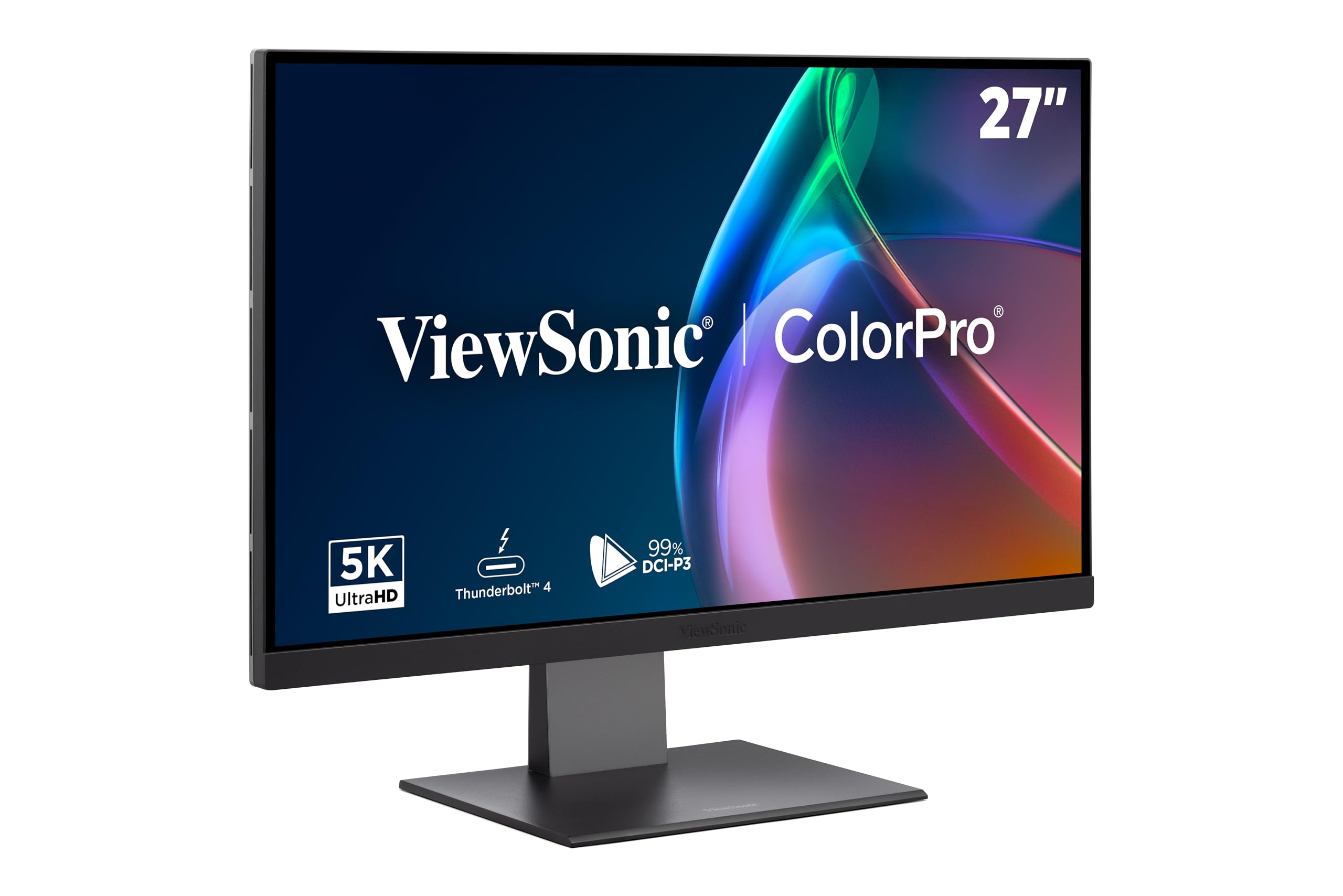
The ViewSonic VP2788-5K delivers true 5K resolution (5120×2880) on a 27-inch screen, providing a pixel density of 218 PPI that eliminates any visible pixel grid when viewing images at 100% zoom. This resolution is particularly useful for high-end product photographers who need to verify micro-detail on watch faces, fabric textures, or food packaging at full scale without interpolation artifacts.
Covering 99% DCI-P3 with HDR400 and Pantone validation, this monitor is calibrated for Mac users — the Thunderbolt 4 port delivers 100W Power Delivery and supports daisy-chaining a second 5K display. The 75Hz refresh rate is slightly above the 60Hz standard, offering a marginal smoothness benefit when scrolling through high-res catalogs.
While the color volume is impressive, users have flagged two critical issues. The Adobe RGB coverage sits at roughly 88%, which falls short for serious print work requiring the full Adobe RGB space. Several owners report buggy behavior after sleep, including USB disconnects and the display failing to wake from a connected Mac. At a premium price point, these reliability concerns make this monitor best suited for those who prioritize pixel density above all else and are willing to troubleshoot.
Why it’s great
- 5K resolution offers extreme pixel density, revealing minute detail without interpolation.
- Mac-ready with Thunderbolt 4, 100W PD, and daisy-chain support for a multi-monitor setup.
- Pantone validated with 99% DCI-P3 for vibrant color in digital and video workflows.
Good to know
- Adobe RGB coverage of ~88% is insufficient for high-end print proofing.
- Several users report wake-from-sleep bugs with Macs, causing USB disconnects and screen freezes.
7. BenQ MA270UP
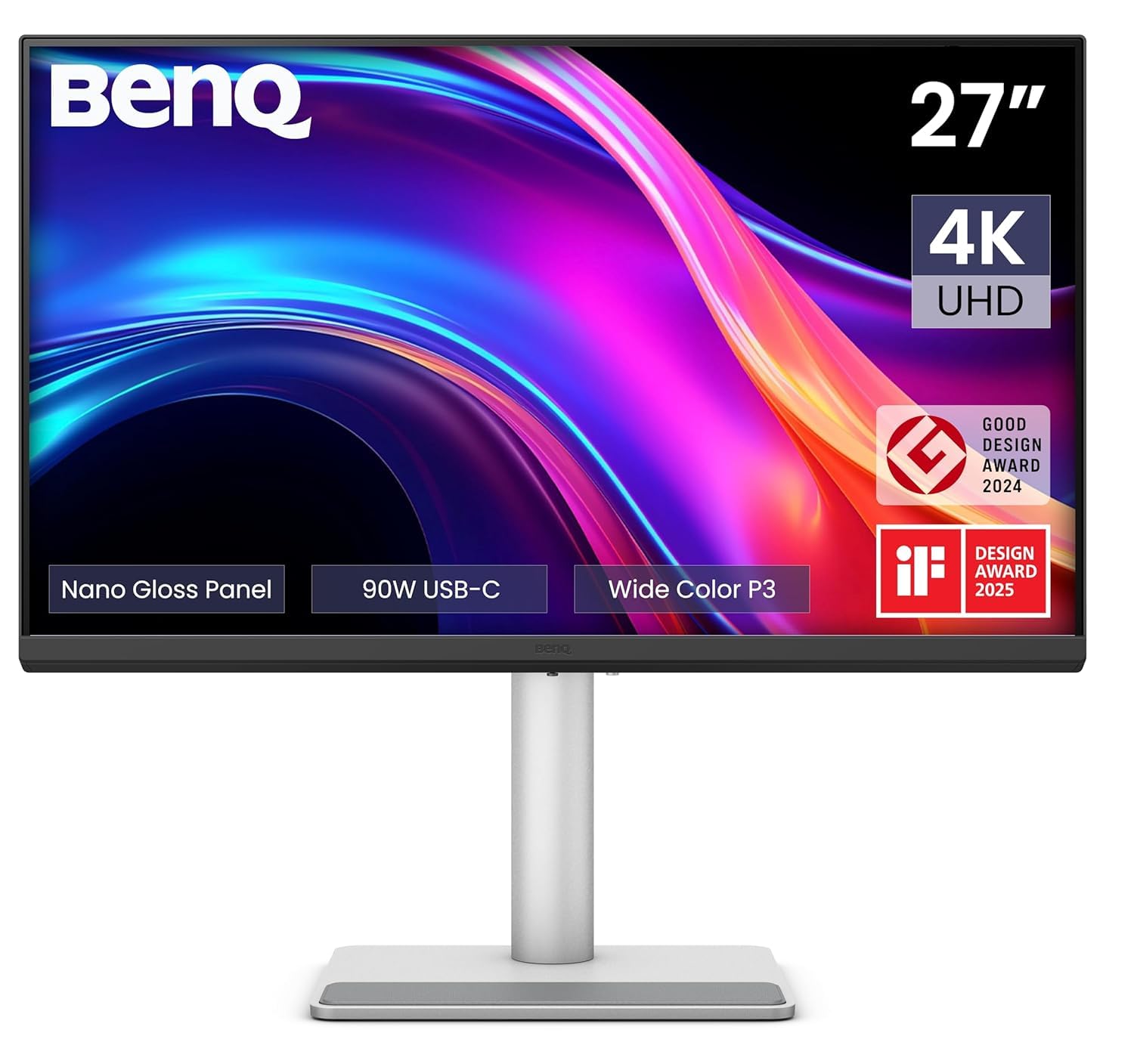
The BenQ MA270UP is purpose-built for MacBook users who want a color match without the Apple Studio Display price tag. BenQ’s proprietary color tuning reproduces the P3 wide color gamut in a way that closely mirrors the MacBook Pro’s built-in Liquid Retina XDR display, so photos you edit on the laptop look the same when viewed on the external monitor.
Dual USB-C ports deliver 90W and 15W respectively, so you can charge a MacBook while simultaneously powering an iPad or iPhone. The monitor also integrates with macOS controls — brightness and volume adjustments work directly from the MacBook keyboard, an unusual feature that makes this feel like a first-party accessory. The glossy screen enhances perceived clarity, though it introduces reflections if your workspace has uncontrolled ambient light.
Reviews consistently highlight the color match quality and the clean desk setup. The stand, while fully adjustable, feels less premium than BenQ’s PD-series stands, and the integrated speakers are mediocre. Some users have noted that the glossy coating, while great for clarity, can show reflections in brightly lit rooms. For Mac-exclusive editors who value seamless integration, this is a strong choice.
Why it’s great
- Calibrated to match MacBook Pro color natively, with full macOS brightness and volume integration.
- Dual USB-C ports provide 90W for your MacBook and a separate 15W for charging an iPad or phone.
- Glossy screen enhances perceived sharpness and contrast for photo editing.
Good to know
- Glossy coating reflects ambient light, problematic in rooms with strong overhead or window light.
- Stand feels less substantial than BenQ’s PD-series, and built-in speakers are weak.
8. ViewSonic VP2756-4K
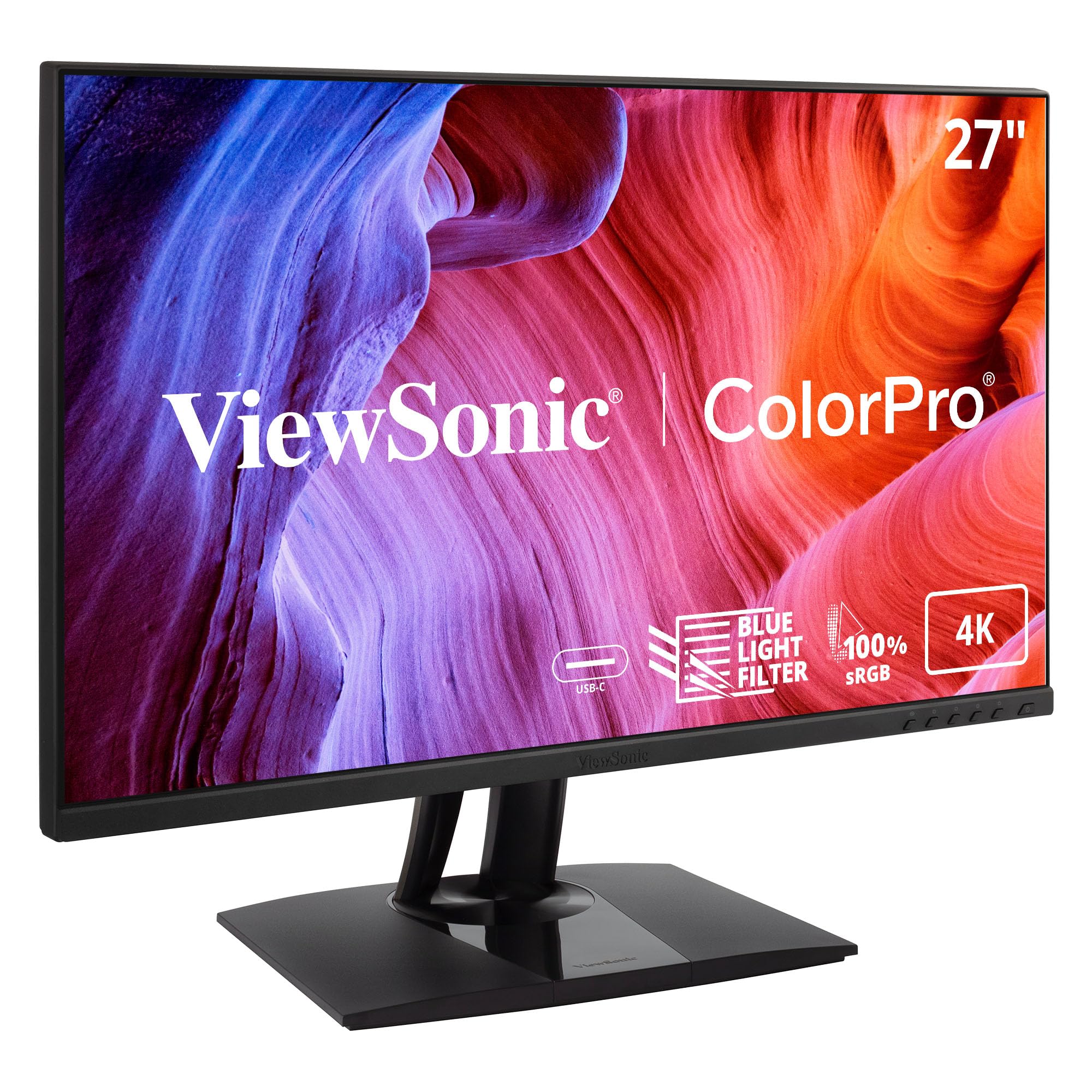
The ViewSonic VP2756-4K is one of the few budget-friendly monitors that carries both Pantone validation and factory calibration to Delta E under 2. This makes it a compelling option for editors who need verified color accuracy for product photography or brand asset work but cannot justify the premium of the ProArt or BenQ lines.
Its 100% sRGB, EBU, and SMPTE-C coverage is ideal for European broadcast and web color spaces, while the 60W USB-C Power Delivery handles charging for a MacBook Air or an ultraportable Windows laptop. The advanced ergonomic stand — tilt, swivel, pivot, and height adjustment — mirrors the flexibility of monitors twice its price.
Users note that the color matches a MacBook screen well for editing right out of the box, and the thin bezels look clean in a multi-monitor array. The on-screen display is clunky to navigate with the physical buttons, but the free software allows you to control settings from the computer. A single reviewer reported that the monitor does not rotate 90 degrees when connected to a Mac, despite the pivot feature being listed. Overall, this is a high-accuracy pick for sRGB-focused work.
Why it’s great
- Pantone validated with factory calibration for Delta E < 2 right out of the box.
- Full ergonomic stand matches the adjustability of premium-priced monitors.
- USB-C with 60W PD, plus an integrated USB hub, keeps cable clutter low.
Good to know
- On-screen menu is frustrating to navigate with the physical buttons; software control is smoother.
- Some Mac users report that the pivot rotation feature does not work as described.
9. LG 27UP850-W

The LG 27UP850-W delivers 400 cd/m² peak brightness with VESA DisplayHDR 400, making it one of the brighter mid-range options for editing in well-lit rooms or reviewing HDR source material. The DCI-P3 95% color gamut provides enough extra coverage beyond sRGB to handle modern camera profiles that lean into the wider P3 space.
The USB-C port supplies a robust 96W of Power Delivery — enough to charge a 16-inch MacBook Pro at full speed — while the 3-side virtually borderless design gives a clean, modern look. The stand offers height, pivot, and tilt adjustment, so you can easily switch to portrait orientation for vertical edits.
Users praise the vivid colors and crisp 4K clarity, noting that it closely matches the output of a 5K iMac. Some have encountered firmware issues with the USB hub after an update, but a simple monitor restart resolves it. The USB-A ports on the back supply only 1 amp, which is too low for fast-charging a Qi pad or an iPad. For photographers who need a bright screen with solid color coverage, this LG is a reliable mid-range choice.
Why it’s great
- Peak brightness of 400 nits makes it easier to edit in brightly lit rooms or review HDR images.
- USB-C delivers 96W Power Delivery, fully charging a 16-inch MacBook Pro from a single cable.
- Full ergonomic stand (height, pivot, tilt) supports portrait-mode editing.
Good to know
- USB-A ports supply only 1 amp, insufficient for fast-charging tablets or phones.
- Some users have experienced firmware glitches with the USB hub that require a monitor restart.
10. SAMSUNG ViewFinity S8 S80D
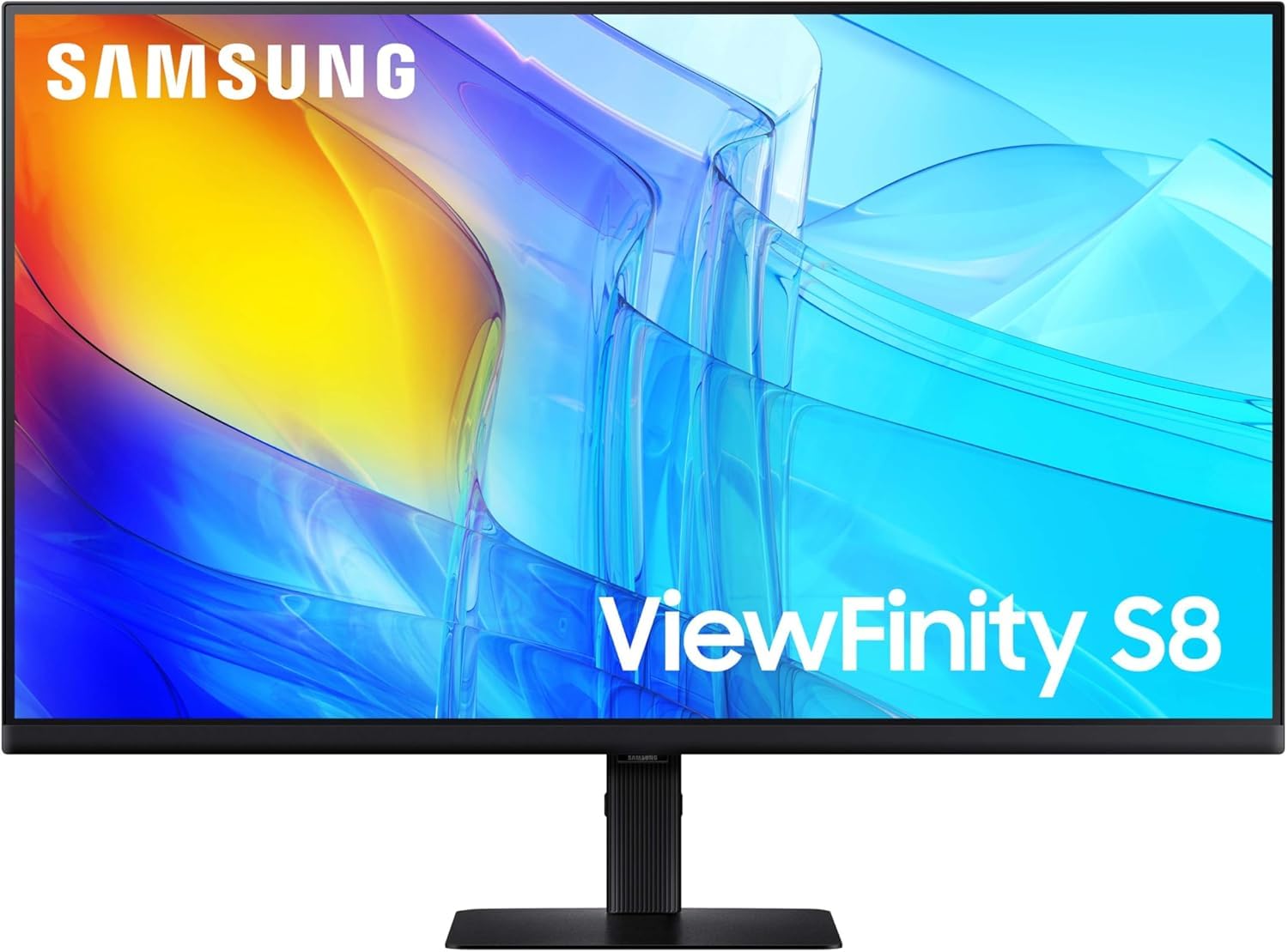
The Samsung ViewFinity S8 S80D prioritizes ergonomic flexibility and eye comfort, making it a strong pick for photographers who spend long hours culling and editing. The stand adjusts for height, tilt, swivel, and full pivot — and Samsung’s no-tool Easy Setup Stand assembly means you can switch between a horizontal and vertical orientation without hunting for a screwdriver.
With 4K UHD resolution and HDR10 support, the display reveals detail in highlights and shadows, and the matte anti-glare screen effectively cuts reflections. Samsung’s TÜV-certified Eye Saver Mode and automatic brightness adjustment adapt to room lighting, reducing fatigue during marathon shoots. The connectivity suite includes HDMI, DisplayPort, USB-A, and USB-B ports.
Users note the picture quality is sharp and clear, making Photoshop and Lightroom work easy, though the on-screen menu buttons are widely described as counterintuitive. A key limitation is the absence of built-in speakers — you will need external speakers or headphones. Some buyers have also reported that the screen sits higher than expected, causing ergonomic issues for shorter users at a fixed desk. For those who prioritize a healthy posture and reduced eye strain, this Samsung is a well-rounded value.
Why it’s great
- Full ergonomic stand with tool-free assembly makes switching between landscape and portrait easy.
- TÜV-certified eye care with automatic brightness adjustment reduces strain during long editing sessions.
- Matte anti-glare screen effectively controls reflections in bright workspaces.
Good to know
- Lacks built-in speakers; you must connect external audio.
- On-screen menu controls are confusing and unintuitive to navigate.
11. LG 32UN650-W

The LG 32UN650-W brings a large 32-inch 4K IPS panel with DCI-P3 95% color gamut to an entry-level price point, making it an attractive option for hobbyist photographers or those building a first dedicated editing station. The size advantage alone is significant — you can keep a full-size image preview beside your tool palettes without constant tab switching.
The panel calibrates easily with a SpyderXPro or similar puck, which is essential because it lacks the factory-calibrated color modes of the ProArt or ViewSonic lines. It supports HDR10 and AMD FreeSync, so it pulls double duty for casual gaming. The height-adjustable stand is functional but basic, and the 3-side borderless design looks clean.
Users upgrading from 27-inch QHD monitors report a major improvement in viewing comfort and color vibrancy. The monitor has no USB ports, no built-in speakers to speak of, and no hardware calibration LUT support — meaning you must rely on software calibration. For beginners or those on a tight budget who want a big canvas to learn on, this LG panel is an excellent entry-level tool.
Why it’s great
- 32-inch screen provides massive workspace for photo editing at a bargain price point.
- DCI-P3 95% coverage offers wider colors than standard sRGB at this price level.
- Calibrates well with a hardware puck, becoming a capable editing display after tuning.
Good to know
- No factory calibration means you must buy or borrow a colorimeter to achieve editing accuracy.
- Lacks USB ports, built-in speakers, and hardware LUT support found on more expensive monitors.
FAQ
Is a 27-inch or 32-inch 4K monitor better for photo editing?
Do I need a hardware colorimeter for my 4K photo editing monitor?
Final Thoughts: The Verdict
For most users, the 4k monitor for photo editing winner is the ASUS ProArt PA279CRV because it delivers 99% Adobe RGB and DCI-P3 coverage out of the box while offering a full ergonomic stand and 96W USB-C charging. If you want a high-refresh canvas that doubles as a productivity hub, grab the Dell UltraSharp U2725QE. And for the best bang for your sRGB editing dollar, nothing beats the ASUS ProArt PA279CV.