
Our readers keep the lights on and the weekend projects moving. As an Amazon Associate, I earn from qualifying purchases.
Specs are compiled from manufacturer listings and verified buyer reviews and can change over time — please confirm the key details on the product page before buying.
You want a 4K TV that makes movies look lifelike, with bright highlights and deep blacks. The key is Dolby Vision (a HDR format that adjusts brightness and color scene-by-scene), but the TV’s screen technology decides if you actually see that difference. This guide picks eight models that deliver, from Mini-LED to OLED, so you can match one to your room and budget.
I’m Rikta — the writer behind FitlyFast. This guide compares the manufacturers’ published specs and looks at verified customer review patterns, so you get each pick’s real strengths and trade-offs without marketing spin.
You need to match the right screen to your space. Let’s find the best 4k tv with dolby vision for your home.
Quick Picks
- Amazon Ember 55″ Mini-LED Series with Fire TV — Best Overall
- Hisense 65″ U8 Series ULED Mini-LED 4K TV — Gaming Beast
- LG 55-Inch Class OLED evo AI C5 Series — Ultimate Blacks
- Sony 65 Inch OLED BRAVIA 8 4K TV — Cinema Master
- Sony BRAVIA 5 85 Inch Mini LED TV — Big Screen Brightness
- TCL 98-Inch QM85 QLED 4K QD-Mini LED TV — Massive Theater
- Roku 65-Inch Plus Series Mini-LED QLED TV — Best Value
- Toshiba 55″ Z670R Series Mini-LED 4K UHD Smart Fire TV — Motion Master
How To Choose The Best 4K TV With Dolby Vision
Dolby Vision is a premium HDR format, but the TV you choose needs to have the brightness and contrast to actually show it off. A set with great Dolby Vision IQ (Dolby Vision that adjusts the picture based on your room’s light) can adapt to your room, but a panel that can’t hit decent peak brightness will leave those highlights looking flat.
Panel Type: Mini-LED vs. OLED
Mini-LED TVs use thousands of tiny LEDs behind the screen to create zones of light and dark. This gives them very high brightness, which is great for bright rooms and for making Dolby Vision highlights pop. On the other hand, OLED TVs have pixels that turn off completely for perfect black levels, which is unbeatable in a dark room. The catch is that OLEDs are not as bright as high-end Mini-LED sets.
Dimming Zones and Local Dimming
For a Mini-LED TV, the number of local dimming zones (individual backlight sections that turn on or off) matters. More zones mean the TV can control small areas of the screen more precisely, reducing the “halo” or blooming around bright objects on a dark background. A TV with hundreds or thousands of zones will handle Dolby Vision content much better than one with just a few dozen.
Refresh Rate and Gaming Features
If you plan to game, you want a native 120Hz or 144Hz panel so fast motion stays smooth. Look for HDMI 2.1 ports (the port needed for latest gaming consoles) and features like VRR (Variable Refresh Rate, which matches the screen’s refresh rate to the game’s frame rate to stop tearing) and ALLM (Auto Low Latency Mode, which automatically switches to a low-lag gaming mode) to keep things tear-free and responsive. Some sets also support AMD FreeSync Premium Pro for better gaming performance.
Quick Comparison
| Model | Best For | Screen Technology | Refresh Rate | HDR Support | Amazon |
|---|---|---|---|---|---|
| Amazon Ember 55″ Mini-LED | Bright Room Picture | Mini-LED / QLED | 144Hz Native | Dolby Vision IQ, HDR10+ Adaptive | Amazon |
| Hisense 65″ U8 Series | Gaming & Bright HDR | Mini-LED / ULED | 165Hz Native | Dolby Vision IQ, HDR10+, IMAX Enhanced | Amazon |
| LG 55″ OLED evo C5 | Dark Room Cinema | OLED evo | 120Hz | Dolby Vision, HDR10, Filmmaker Mode | Amazon |
| Sony 65″ BRAVIA 8 OLED | Cinematic Color Accuracy | OLED | 120Hz | Dolby Vision, IMAX Enhanced, DTS:X | Amazon |
| Sony BRAVIA 5 85″ Mini LED | Large Room & PS5 Gaming | Mini-LED | 120Hz | Dolby Vision, IMAX Enhanced, DTS:X | Amazon |
| TCL 98″ QM85 QD-Mini LED | Ultra-Large Home Theater | QD-Mini LED | 120Hz (144Hz VRR) | Dolby Vision IQ, HDR10+, HDR10 | Amazon |
| Roku 65″ Plus Series | Ease of Use & Value | Mini-LED / QLED | 60Hz | Dolby Vision | Amazon |
| Toshiba 55″ Z670R | Smooth Motion & Gaming | Mini-LED / QLED | 144Hz Native | Dolby Vision IQ, HDR10+, HDR10+ Adaptive | Amazon |
In‑Depth Reviews
1. Amazon Ember 55″ Mini-LED Series with Fire TV
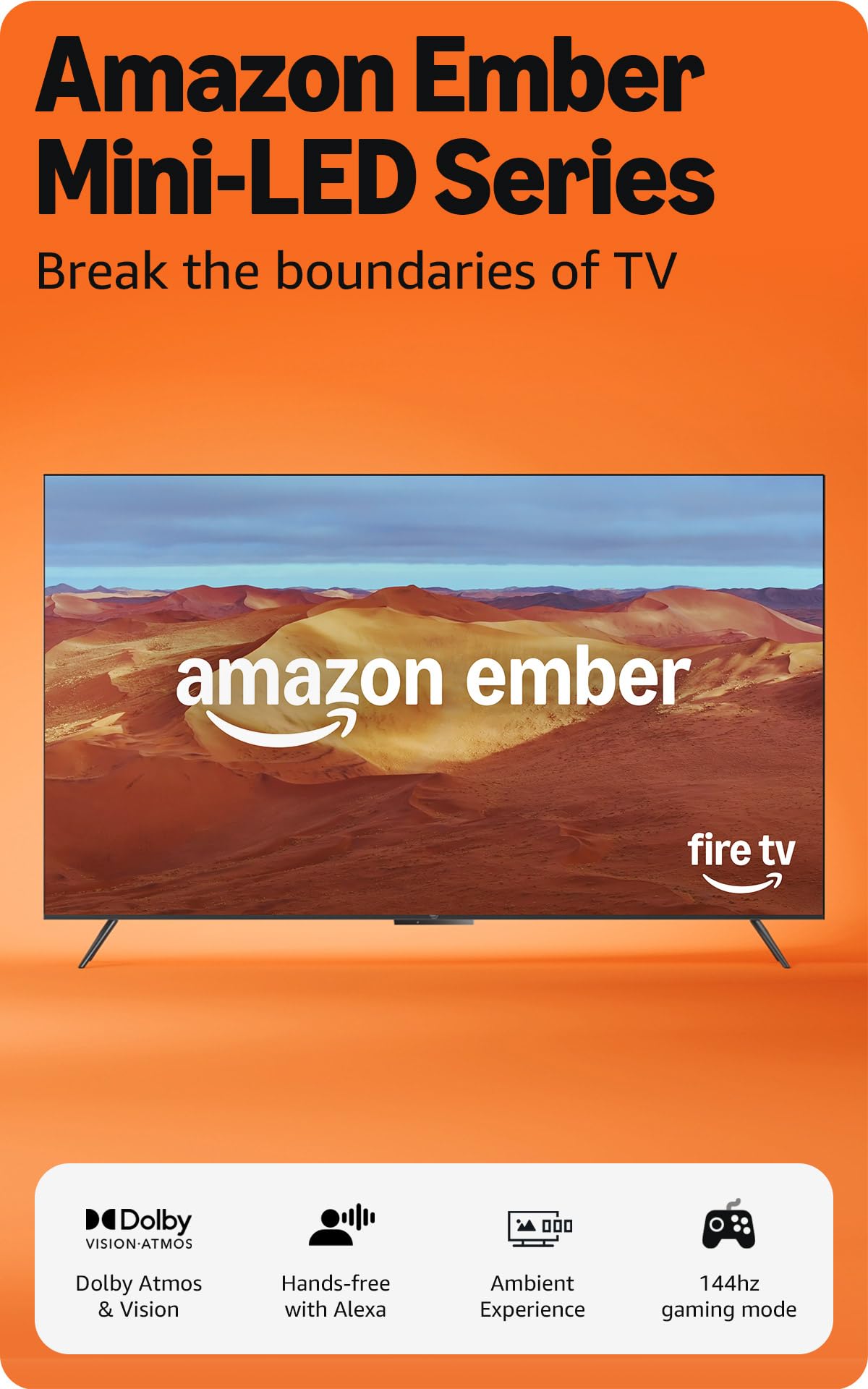
The best balance of brightness, contrast, and gaming speed under one smart interface.
This set uses 512 local dimming zones with a Mini-LED backlight to deliver deep blacks and very bright highlights for Dolby Vision. Dolby Vision IQ and HDR10+ Adaptive both work here, so the TV automatically adjusts the picture based on your room’s lighting, keeping those vivid colors accurate whether it’s day or night.
You get a native 144Hz panel (the screen actually refreshes 144 times per second) with AMD FreeSync Premium Pro certification (a feature that matches the screen’s refresh rate to a game’s frame rate to stop tearing), so fast sports and console games look smooth without tearing. The built-in 2.1 Dolby Atmos sound includes a subwoofer. Reviewers report the sound is “better than almost any TV I have heard in years.” The Fire TV interface includes Alexa+, and the set uses Omnisense technology to wake the display when you walk into the room.
What stands out
- 512 dimming zones and up to 1400 nits (a measure of brightness) peak brightness for excellent Dolby Vision contrast, making sunlit scenes look punchy
- Native 144Hz panel with FreeSync Premium Pro certified for smooth gaming
- Ambient Experience with Omnisense sensors that wake the TV when you enter
The trade-offs
- Some buyers report slow menu performance after software updates
- Black levels are impressive for Mini-LED but not quite OLED-level — the LG C5 does black better
Pick this if you want a high-performance Mini-LED that balances brightness for bright rooms with deep blacks, plus top-tier gaming features. If you must have the per-pixel black that only OLED can deliver, go with the LG C5 for a dark room setup.
2. Hisense 65″ U8 Series ULED Mini-LED 4K TV
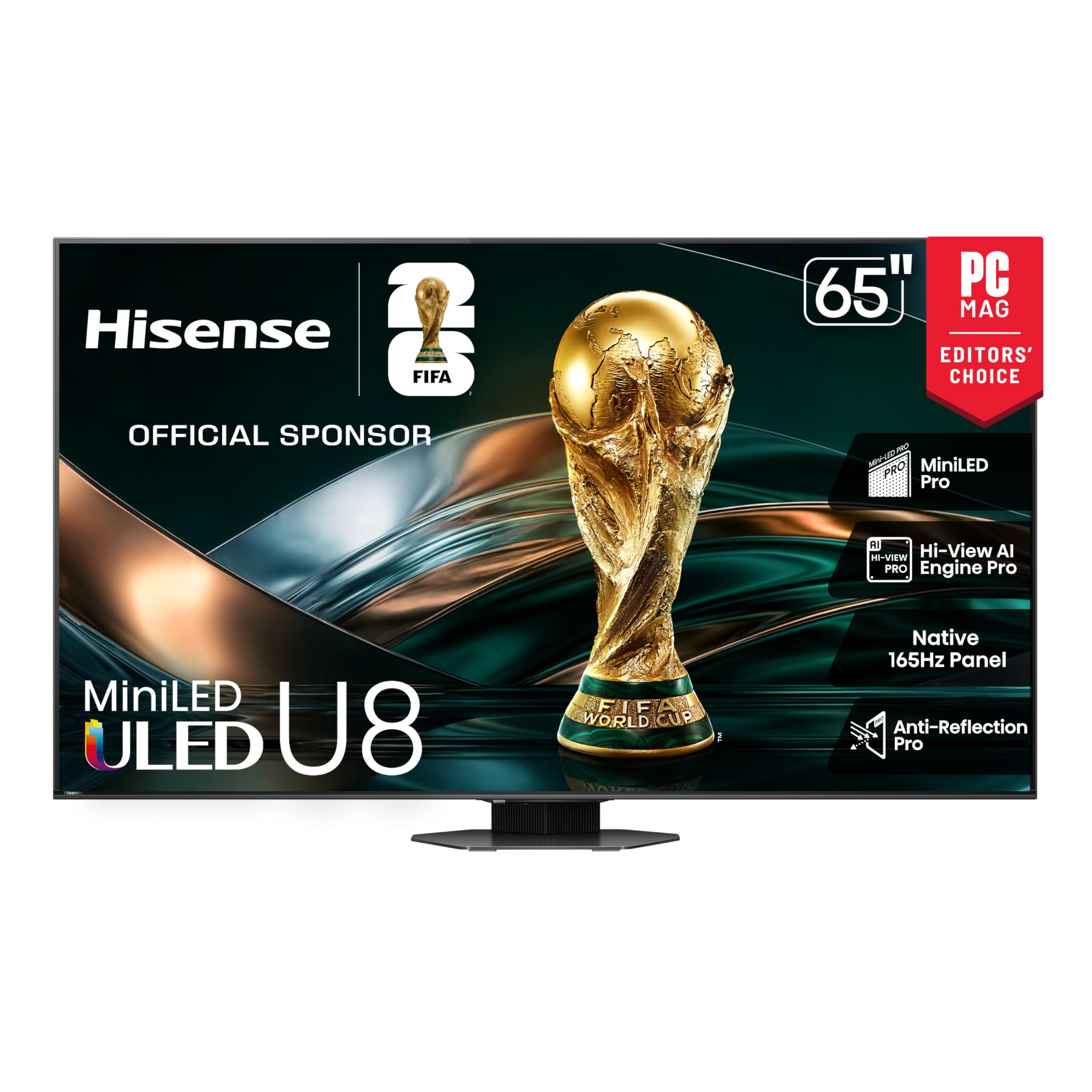
A brightness monster with a 165Hz panel built for competitive gaming.
With a peak brightness of 5000 nits (very bright, so sunlit landscapes in Dolby Vision look intensely real) and up to 5600 local dimming zones, the U8 Series delivers HDR highlights that feel punchy. The Hi-View AI Engine Pro chipset adjusts picture and sound based on what you are watching, optimizing detail scene by scene.
The native 165Hz panel (the screen refreshes 165 times per second) with a Game Booster 288 and a VRR range of 48Hz to 165Hz means this is one of the fastest TVs you can buy. It also includes AMD FreeSync Premium Pro and an Enhanced Game Bar. Owners mention the picture quality is “excellent” and the anti-glare coating “has virtually no glare,” making it great for bright rooms. The 4.1.2 channel Dolby Atmos sound uses two up-firing speakers for rich audio.
Why it leads on gaming
- Native 165Hz panel with VRR 288 and FreeSync Premium Pro for tear-free performance
- 5000 nits peak brightness and 5600 dimming zones for reference-level HDR
- 4.1.2 channel Dolby Atmos audio with two up-firing speakers for rich sound
One honest catch
- Customers note that the Google TV software can be unreliable, with some requiring factory resets after periods of inactivity
- Built-in sound is decent, but reviewers recommend a dedicated soundbar for the full experience
Reach for this if you are a serious gamer who needs the highest refresh rate and brightest HDR. If you want a simpler smart TV experience with fewer software quirks, the Roku Plus Series below will give you less hassle.
3. LG 55-Inch Class OLED evo AI C5 Series

Per-pixel perfection that makes Dolby Vision look like the director’s own monitor.
The LG C5 uses over 8.3 million self-lit pixels that can turn off completely, which gives you infinite contrast — pure black next to bright highlights with zero blooming (no halo around bright objects). The Brightness Booster magnifies each pixel’s output, so the image stays vivid even in rooms with more ambient light than you’d expect from an OLED. Combined with Dolby Vision and Filmmaker Mode (a setting that shows movies exactly as the director intended), you see movies as intended.
The Alpha 9 AI Processor Gen8 handles AI Super Upscaling (sharpening lower-resolution content), so even 1080p content looks sharper than on most non-OLED sets. Reviewers point out the “fast OS” and that pairing it with an LG soundbar creates integrated Dolby Atmos sound. It also supports AMD FreeSync and Nvidia G-Sync for smooth gaming.
The OLED advantage
- Perfect black levels with infinite contrast for the most lifelike Dolby Vision experience
- Brightness Booster and Bright Room Ready tech help it hold up in brighter rooms
- AI Super Upscaling from the Alpha 9 Gen8 processor improves lower-resolution content
The limit
- Peak brightness is lower than the best Mini-LED sets like the Hisense U8, so bright room highlights won’t be as punchy
- Risk of permanent burn-in with static elements like news tickers, though less common on modern OLEDs
Go for this one for the absolute best black levels and color accuracy in a dark room. If your living room is very bright during the day, prioritize raw brightness over perfect black levels and get the Amazon Ember instead.
4. Sony 65 Inch OLED BRAVIA 8 4K TV

Sony’s XR Processor and studio calibration make this the most accurate OLED for film lovers.
The BRAVIA 8 combines OLED’s perfect black with XR Contrast Booster 15 for higher brightness on highlights, giving you deep blacks without crushing detail. The XR Triluminos Pro processor accesses billions of real-world colors, and the XR Clear Image system upscales HD content with impressive clarity. It supports Dolby Vision and Atmos, IMAX Enhanced, and DTS:X.
For PS5 owners, exclusive features like Auto HDR Tone Mapping and Auto Genre Picture Mode tune the picture for gaming without menus. Buyers rave about “excellent dark scene performance with Dolby Vision” and note that the built-in sound is “good.” The Google TV interface is snappy, but some buyers mention aggressive static logo dimming that you can fix by setting peak luminance to medium.
What Sony does best
- XR Processor with AI delivers exceptional upscaling and real-time scene enhancement
- Studio calibrated picture modes for Netflix, Prime Video, and Sony Pictures CORE
- Exclusive PS5 features for smooth HDR and genre-based optimization
The real-world cost
- Significantly more expensive than the LG C5, which offers similar OLED performance
- Some shoppers say A/V sync issues when using an external AVR, requiring workarounds
Ideal if you prioritize color accuracy and native PS5 integration and are willing to pay a premium. For comparable OLED quality at a lower price, the LG C5 leaves more budget for a sound system.
5. Sony BRAVIA 5 85 Inch Mini LED TV

An 85-inch Mini-LED powerhouse that keeps brightness and clarity in total control.
Using thousands of Mini LEDs controlled by the XR Backlight Master Drive, this Sony delivers high brightness and authentic contrast without the blooming you sometimes see on lesser Mini-LED sets. The XR Processor with AI boosts color, contrast, and clarity in real time, and the XR Motion Clarity keeps fast-moving sports and action blur-free.
It includes Dolby Vision and Atmos, IMAX Enhanced, and DTS:X for a full cinematic package. For PS5 users, Auto HDR Tone Mapping and Game Menu make it easy to tune. Buyers report “the Dolby Vision HDR is impressive” and note that upscaling for older DVDs and video games is “superb.” The 85-inch size makes it ideal for a large living room or dedicated home theater.
The draw of this size
- XR Backlight Master Drive precisely controls thousands of Mini LEDs for deep blacks and bright highlights
- Upscaling of HD and DVD content is excellent thanks to XR Clear Image and AI
- Built-in sound is better than expected for an 85-inch set
The downsides
- Only two of the four HDMI ports are HDMI 2.1, limiting high-bandwidth gaming connections
- The remote lacks backlighting, which some buyers find annoying in a dark room
Choose this for a very large screen with high brightness for a bright room, especially if you value Sony’s superior upscaling. For an even bigger screen at a more aggressive size-to-price ratio, look at the TCL QM85.
6. TCL 98-Inch QM85 QLED 4K QD-Mini LED TV

A 98-inch QD-Mini LED panel that brings Dolby Vision IQ to a true home-cinema scale.
With up to 5,000 local dimming zones and a peak brightness of 5000 nits, the QM85 delivers stunning picture quality with ultra-deep blacks and ultra-bright whites. The QD-Mini LED ULTRA technology, combined with the TCL AIPQ PRO Processor, manages the zones with precision that minimizes blooming and boost color volume. It supports Dolby Vision IQ and HDR10+, so HDR content looks vibrant and detailed.
It has a 120Hz panel refresh rate with a 144Hz VRR (144Hz Variable Refresh Rate for smooth gaming without tearing), plus AMD FreeSync Premium Pro for low-latency gaming. Owners mention that the picture quality is “stunning” and that blacks are “near OLED-level” with “minimal blooming.” However, the built-in smart TV software can be slow, and some users recommend an external streaming device.
What you get for the size
- 5,000 local dimming zones and 5,000 nits peak brightness for massive HDR impact
- QD-Mini LED delivers near-OLED black levels with high brightness
- 120Hz panel with 144Hz VRR and FreeSync Premium Pro for gaming
The practical reality
- Software can be sluggish; many buyers recommend using an external streaming device like an Nvidia Shield
- The remote lacks a number pad and input switching via Alexa is reported as poor
Get this for a dedicated home theater room where you want a massive screen with reference-level brightness and contrast for Dolby Vision. If you prefer a more polished smart TV experience, the Sony BRAVIA 5 is a better fit.
7. Roku 65-Inch Plus Series Mini-LED QLED TV
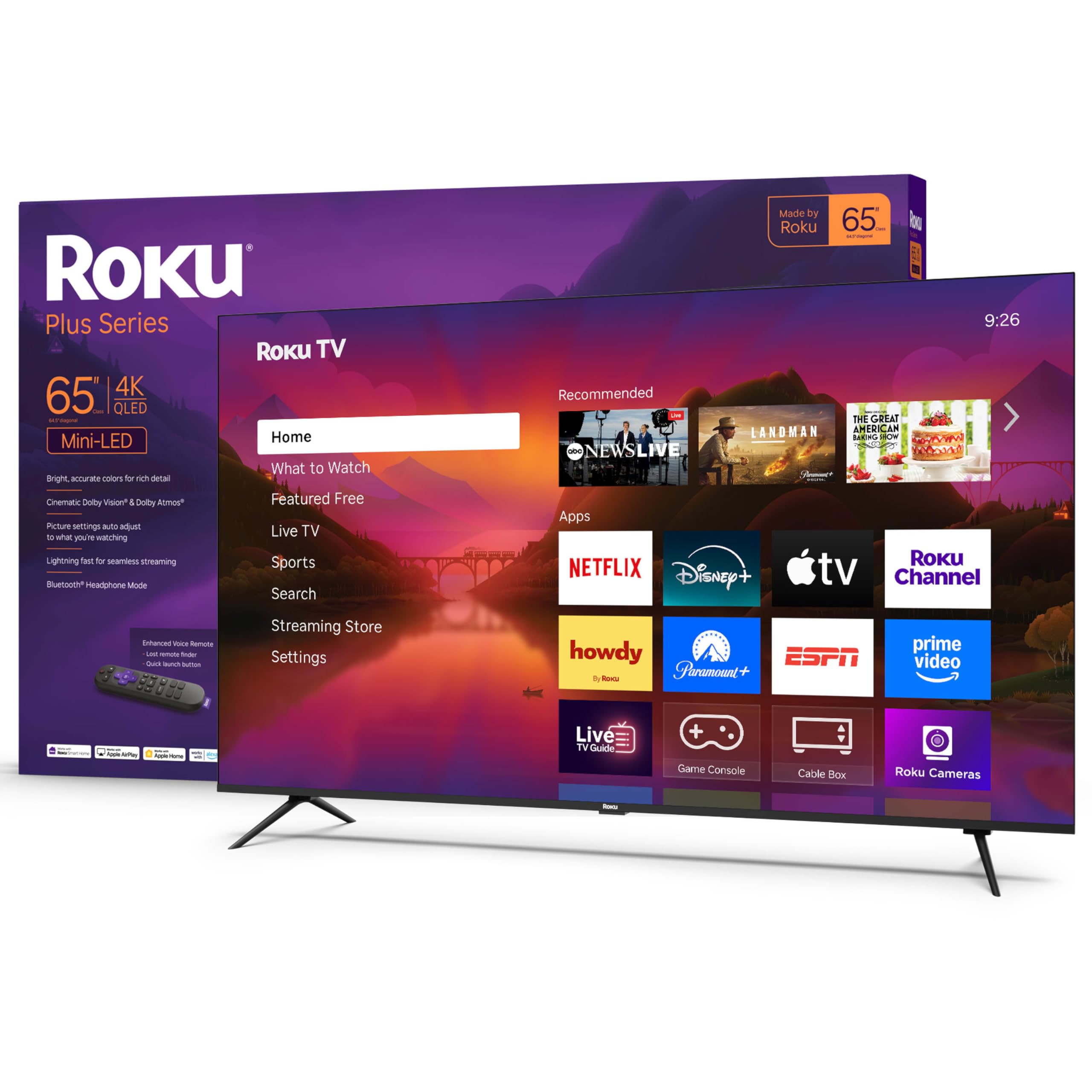
A no-fuss Mini-LED TV with a polished OS and solid Dolby Vision performance at a smart price.
The Roku Plus Series combines a Mini-LED backlight with a QLED screen and Dolby Vision to produce striking color and vivid highlights. The Roku Smart Picture Max system uses AI to clean up incoming TV signals and automatically refine color and sharpness scene by scene. Customers note the “picture quality is fantastic, dark colors are deep, and lights are vibrant.” They also note that “the feet of the TV are metal rather than plastic like most others of this price range which is a nice touch.”
The Roku OS is famously intuitive, giving you access to hundreds of free channels, and the Enhanced Voice Remote includes a lost remote finder. It also has Dolby Atmos with a built-in subwoofer, and Bluetooth Headphone Mode for private listening. It runs at 224 Kilowatt Hours per 1000 hours, while the Toshiba Z670R is listed at 291 Kilowatt Hours Per Year.
Why buyers love it
- Metal feet feel more premium than most TVs in this price class
- Roku OS is simple, fast, and regularly updated
- AI-powered Smart Picture Max automatically tune picture quality
One honest gap
- The USB port stays powered for up to 10 minutes after the TV is turned off, annoying for bias lighting setups
- The refresh rate is standard 60Hz, not ideal for high-frame-rate gaming
Best for buyers who want a high-quality, larger-screen Dolby Vision TV with a user-friendly interface and solid build without paying a premium. If you are a competitive gamer needing high refresh rates, the Hisense U8 or Toshiba Z670R is a better choice.
8. Toshiba 55″ Z670R Series Mini-LED 4K UHD Smart Fire TV

A Mini-LED gaming TV with a 144Hz panel and REGZA tuning that punches above its price.
The Z670R uses precision-controlled Mini LEDs with Full Array Local Dimming for deeper blacks and brighter highlights. The REGZA Engine ZRi Gen3, fine-tuned by Toshiba engineers in Japan, tune clarity and contrast scene by scene. It supports Dolby Vision IQ, HDR10+, and HDR10+ Adaptive, so HDR content always looks its best in any lighting. Reviewers point out “excellent contrast and vibrant colors from Mini-LED/QLED” and a “native 144Hz panel for smooth motion.”
The native 144Hz refresh rate with AMD FreeSync Premium and VRR 144Hz makes it a strong option for gaming. It also includes Game Mode Pro with low input lag. The built-in REGZA Power Audio Pro with a bass woofer provides deep, room-shaking sound. At 55 inches, it is smaller than the Roku at 65 inches, while packing more gaming-focused features.
Standout gaming features
- Native 144Hz panel with FreeSync Premium and VRR 144Hz for ultra-smooth gameplay
- REGZA Engine ZRi Gen3 provides advanced AI picture and sound processing
- Dolby Vision IQ and HDR10+ Adaptive ensure great HDR in any lighting
What to note
- It consumes 291 Kilowatt Hours Per Year, while the Roku 65″ Plus Series is listed at 224 Kilowatt Hours per 1000 hours
- At 55 inches, it is significantly smaller than other picks, best for a bedroom, office, or small living room
Choose this for a dedicated gaming setup in a smaller room where you need a high refresh rate, low input lag, and excellent HDR. For a larger screen for family movie nights without the 144Hz gaming advantage, the Roku Plus Series is a better fit.
Understanding the Specs
Local Dimming Zones
These are the individual sections of the backlight that can be turned on or off independently. More zones mean the TV can create darker blacks and brighter whites next to each other, which is what makes HDR content look punchy. A TV with 512 zones will handle a starry sky in a Dolby Vision movie much better than one with just a dozen.
Dolby Vision IQ vs Dolby Vision
Dolby Vision uses dynamic metadata to adjust brightness and color scene-by-scene. Dolby Vision IQ goes further by using a light sensor in the TV to also adjust the picture based on the brightness of your room. If your living room gets direct sunlight, Dolby Vision IQ is a real help in keeping the image visible and accurate.
Native vs Boosted Refresh Rate
The native refresh rate is the actual speed of the panel. A 120Hz or 144Hz native panel will handle fast motion from sports and video games smoothly. Some TVs advertise a “boosted” or “motion rate” that is double the native rate, but that uses software tricks to simulate smoothness. For serious gaming, always look for a native 120Hz or higher panel.
HDMI 2.1
This is the port you need for the latest gaming consoles and PC graphics cards. It supports higher bandwidth, allowing for 4K at 120Hz, variable refresh rate (VRR), and auto low latency mode (ALLM). If you own a PS5 or Xbox Series X, having at least one HDMI 2.1 port is essential to get the full gaming experience.
FAQ
Do I need Dolby Vision IQ or is plain Dolby Vision enough?
Can I tell the difference between Mini-LED and OLED?
What is the lowest refresh rate I should look for in a gaming TV?
Will a 4K TV with Dolby Vision upscale my old 1080p DVDs?
Do I need an expensive HDMI cable for Dolby Vision?
How many local dimming zones do I really need?
Is the built-in sound in these TVs good enough?
What is the difference between HDR10+ and Dolby Vision?
Which smart TV platform is fastest?
How long should a Mini-LED or OLED TV last?
Final Thoughts: The Verdict
For most buyers, the 4k tv with dolby vision winner is the Amazon Ember 55″ Mini-LED Series because it delivers a superb balance of high brightness, deep contrast with 512 dimming zones, and a native 144Hz gaming panel at a competitive price. If you want the absolute best black levels for a dedicated dark room cinema setup, grab the LG 55″ OLED evo C5. For the most affordable entry point with an excellent and easy-to-use smart platform, the Roku 65″ Plus Series Mini-LED QLED TV is a strong value.
How We Picked
We do not accept paid placement. Every pick is matched to a real buyer and a real use-case; we do not hands-on test units.
Sources & Methodology
Specifications: manufacturer listings and product documentation. Review insights: verified customer reviews, as of July 2026. Pricing: not shown on this page (it changes often); check the current price via the retailer link.
As an Amazon Associate, FitlyFast earns from qualifying purchases. This does not affect which products we feature.