
Our readers keep the lights on and the weekend projects moving. As an Amazon Associate, I earn from qualifying purchases.
The 50-55 inch size class has become the new sweet spot for home entertainment, but the gulf between a passable panel and a truly immersive viewing experience has never been wider. Buyers in 2026 face a complex matrix of Mini-LED versus QLED, native 120Hz versus 144Hz refresh rates, and varying levels of local dimming that can make or break a living room setup. This guide cuts through the marketing noise to deliver clear, spec-based comparisons so you can match the right display technology to your viewing habits and budget.
I’m Rikta — the co-founder and writer behind FitlyFast. Over the years I have analyzed hundreds of display panels, comparing contrast ratios, local dimming zone counts, and real-world HDR brightness figures to separate genuine performance from marketing fluff.
Whether you are a console gamer demanding high frame rates or a movie enthusiast chasing true blacks, finding the right best 50-55 inch tv requires understanding the interplay of refresh rates, backlighting technology, and processing power that defines today’s market.
How To Choose The Best 50-55 Inch TV
Three core decisions define the value of a 50-55 inch TV purchase in today’s market: panel backlight technology, motion handling capability, and the strength of the integrated smart platform. Understanding how these three pillars interact will determine whether your new television feels current in three years or obsolete in six months.
Backlight Architecture: Mini-LED vs Standard LED vs QLED
Standard edge-lit LED screens, common in budget-tier 55-inch models, produce a washed-out look in dark scenes because light bleeds from bright areas into black portions of the image. QLED (Quantum Dot) enhances color volume by filtering light through nanocrystals, but it still relies on the underlying backlight design. Mini-LED technology shrinks the individual LEDs so hundreds or thousands of dimming zones can fit behind the screen. More zones mean precise local dimming — a streetlamp in a night scene stays bright while the surrounding sky remains pure black. For a 55-inch panel, look for at least 150 dimming zones for noticeably better contrast; premium models exceed 1,000 zones and approach OLED-like black levels without the burn-in risk.
Refresh Rate and HDMI 2.1: Real-World Gaming Performance
Standard 60Hz panels are adequate for news and streaming dramas, but modern video game consoles output 60, 120, or even 144 frames per second. A 120Hz native panel doubles the smoothness of sports and action games versus a 60Hz screen. Native 144Hz panels, increasingly common on 2025-2026 models, bring fluidity to PC gaming and future-proof the TV as game developers push higher frame rates. HDMI 2.1 ports are non-negotiable for these higher refresh rates because they carry the necessary bandwidth. Verify that the TV has two HDMI 2.1 ports at minimum — one for your console, one for a soundbar or streaming box — and check for Variable Refresh Rate (VRR) support to eliminate screen tearing without enabling V-Sync inside games.
Smart Platform and Longevity
Every major 50-55 inch TV runs either Google TV, Fire TV, Roku OS, webOS, or Samsung Tizen. The platform determines how quickly apps launch, how frequently they receive updates, and how much ad content clutters the home screen. Roku OS remains the most clean and responsive experience with minimal ads. Google TV offers the widest app library and excellent Google Cast integration. Fire TV has improved dramatically but still shows more ad placements than the others. Consider your existing smart home ecosystem when choosing — if you use Apple devices, AirPlay 2 support matters more than the native OS.
Quick Comparison
On smaller screens, swipe sideways to see the full table.
| Model | Category | Best For | Key Spec | Amazon |
|---|---|---|---|---|
| Hisense U7 | Mini-LED | Premium Gaming | Native 165Hz / 330 VRR | Amazon |
| Samsung QN80F | Mini-LED | AI Picture Quality | NQ4 AI Gen2 Processor | Amazon |
| LG QNED85A | Mini-LED | Balanced All-Rounder | Alpha 8 AI Gen2 + 120Hz | Amazon |
| Toshiba Z670R | Mini-LED | Deep Bass Audio | REGZA Engine ZRi Gen3 | Amazon |
| TCL QM7K | Mini-LED | Bright Room Clarity | Up to 2500 Dimming Zones | Amazon |
| Samsung Q8F | QLED | Color Volume | 100% Color Volume Quantum Dot | Amazon |
| Amazon Ember | Mini-LED | Fire TV Ecosystem | 512 Dimming Zones / 1400 Nits | Amazon |
| Sony Bravia 2 55″ | LED | PS5 Integration | 4K Processor X1 / PS5 Auto HDR | Amazon |
| Roku Plus Series | Mini-LED | Roku OS Simplicity | Mini-LED / QLED / Dolby Vision | Amazon |
| iFFALCON 55U85 | Mini-LED | Hotel / Commercial Use | 4X HDMI 2.1 / 144Hz | Amazon |
| Sony Bravia 2 50″ | LED | Compact PS5 Gaming | 50″ Panel / Motionflow XR | Amazon |
In‑Depth Reviews
1. Hisense 55″ U7 Mini-LED ULED
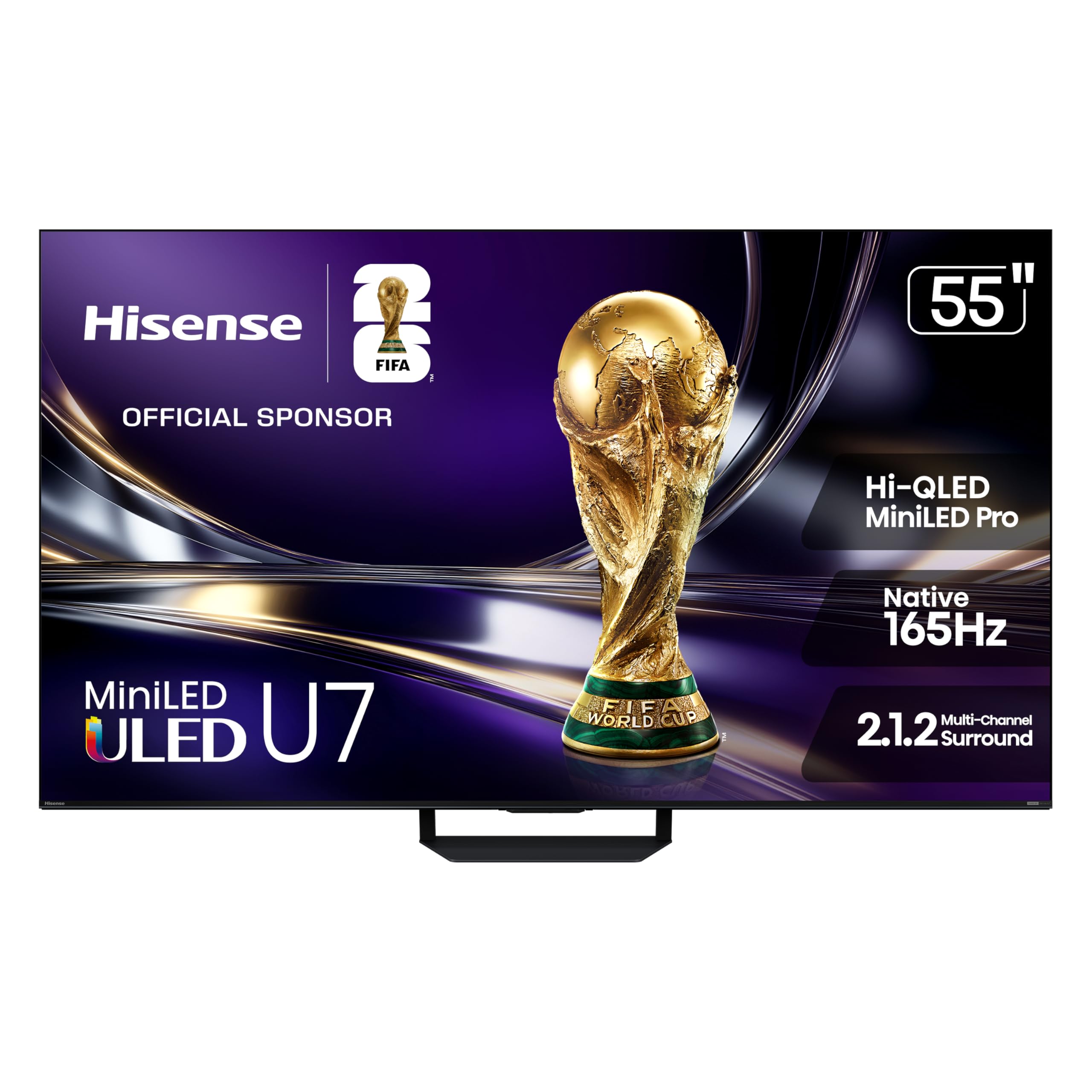
The Hisense U7 series stakes a powerful claim as the most feature-dense 55-inch panel available, pairing thousands of Mini-LED dimming zones with a native 165Hz refresh rate that exceeds what most gaming monitors offer. The Hi-QLED MiniLED Pro backlight architecture delivers measured peak brightness approaching 3,000 nits — enough to make HDR highlights genuinely dazzling even in rooms with afternoon sun streaming through windows. The anti-reflection layer uses a dual-layer screen treatment that cuts glare more effectively than the single-layer coatings found on similarly priced competitors.
Gamers benefit from the 330Hz Variable Refresh Rate ceiling, which eliminates screen tearing across both PC and console titles while keeping input lag imperceptibly low. The Hi-View AI Engine Pro processor performs real-time scene analysis to adjust color temperature and contrast mapping, which makes streaming content look noticeably sharper without introducing the soap-opera effect. Dolby Vision IQ and HDR10+ Adaptive both read ambient light sensors to maintain accurate gamma regardless of room brightness.
Audio output from the built-in 2.1.2 channel system carries enough presence for casual viewing, but the U7’s true strength lies in its visual performance. For buyers who want the highest brightness ceiling and fastest refresh rate in this size class, the Hisense U7 is the legitimate performance leader. The Google TV interface provides fast app loading with minimal bloat, and the included remote has dedicated buttons for Netflix, Prime Video, and YouTube.
Why it’s great
- Unmatched peak brightness for HDR impact in bright rooms
- Native 165Hz with 330Hz VRR is the smoothest in this class
- Excellent anti-glare layer reduces reflections dramatically
Good to know
- Built-in sound is decent but a soundbar unlocks its true potential
- Premium price reflects the high-end spec sheet
2. Samsung 55″ Neo QLED 4K QN80F

Samsung’s QN80F uses a Neo QLED Mini-LED backlight system combined with the NQ4 AI Gen2 processor — a chip that runs 20 independent neural networks to upscale content to near-4K resolution. The difference is visible when watching 1080p cable broadcasts or older YouTube videos; edges appear sharper and grain is reduced without introducing artificial-looking sharpness halos. Precision-controlled Mini-LED zones produce high contrast with minimal blooming around bright subtitles, which is a common weakness of less sophisticated local dimming implementations.
The Object Tracking Sound Lite system creates a convincing spatial audio effect that follows on-screen movement, making dialogue feel anchored to the actors rather than emerging from a fixed center channel. Dolby Atmos support is included, and the TV supports VRR gaming at up to 4K 144Hz over HDMI 2.1. The central stand design accommodates narrower furniture, which is a practical advantage for smaller apartments or media consoles with limited width.
Samsung Vision AI adjusts both picture and audio based on content type, so a sports broadcast gets brighter, more saturated colors while a film noir switches to a cooler color temperature automatically. The solar-powered remote charges from ambient light and eliminates battery waste. Buyers in the premium tier who prioritize AI-driven picture processing and Samsung’s Tizen ecosystem should prioritize this model.
Why it’s great
- 20-neural-network AI upscaling delivers best-in-class 1080p to 4K conversion
- Object Tracking Sound Lite creates impressive spatial audio from built-in speakers
- Slim design with central stand fits narrow TV consoles
Good to know
- Premium pricing positions it above most Mini-LED competitors
- Solar remote lacks a traditional number pad
3. LG 55″ QNED evo AI QNED85A

LG’s QNED85A strikes a sophisticated balance between price and performance, using a Mini-LED backlight with individual dimming zones controlled by the Alpha 8 AI Processor Gen2. The Dynamic QNED Color technology delivers 100% color volume, meaning the panel maintains saturation even at peak brightness — a spec that matters more for HDR content than simple color gamut coverage percentages. Native 120Hz refresh rate with VRR up to 144Hz keeps motion smooth across both console and PC gaming.
Filmmaker Mode preserves the director’s original frame rates, colors, and aspect ratios automatically, which is a key feature for cinephiles who want to watch 24fps content without motion smoothing artifacts. The webOS platform earned an award for its low-ad-clutter interface, and LG’s Re:New program promises software updates that extend the TV’s usable life beyond typical three-year obsolescence cycles. The Game Optimizer dashboard consolidates VRR, input lag, and black stabilizer settings into a single overlay accessible without leaving the game.
The adjustable stand width is a thoughtful detail for those who own soundbars — you can spread the legs wider to accommodate a center channel. LG’s WOW Orchestra feature syncs the TV speakers with a compatible LG soundbar for a wider soundstage. For the buyer who wants aggressive gaming features, reliable smart platform support, and a strong warranty from a major manufacturer, the QNED85A is the most well-rounded choice in the premium tier.
Why it’s great
- Outstanding color volume that stays rich at high brightness
- Filmmaker Mode for accurate 24fps playback
- Adjustable stand width accommodates soundbars
Good to know
- Remote lacks a dedicated mute button
- Sound may occasionally revert to internal speakers after HDMI-CEC changes
4. Toshiba 55″ Z670R Mini-LED
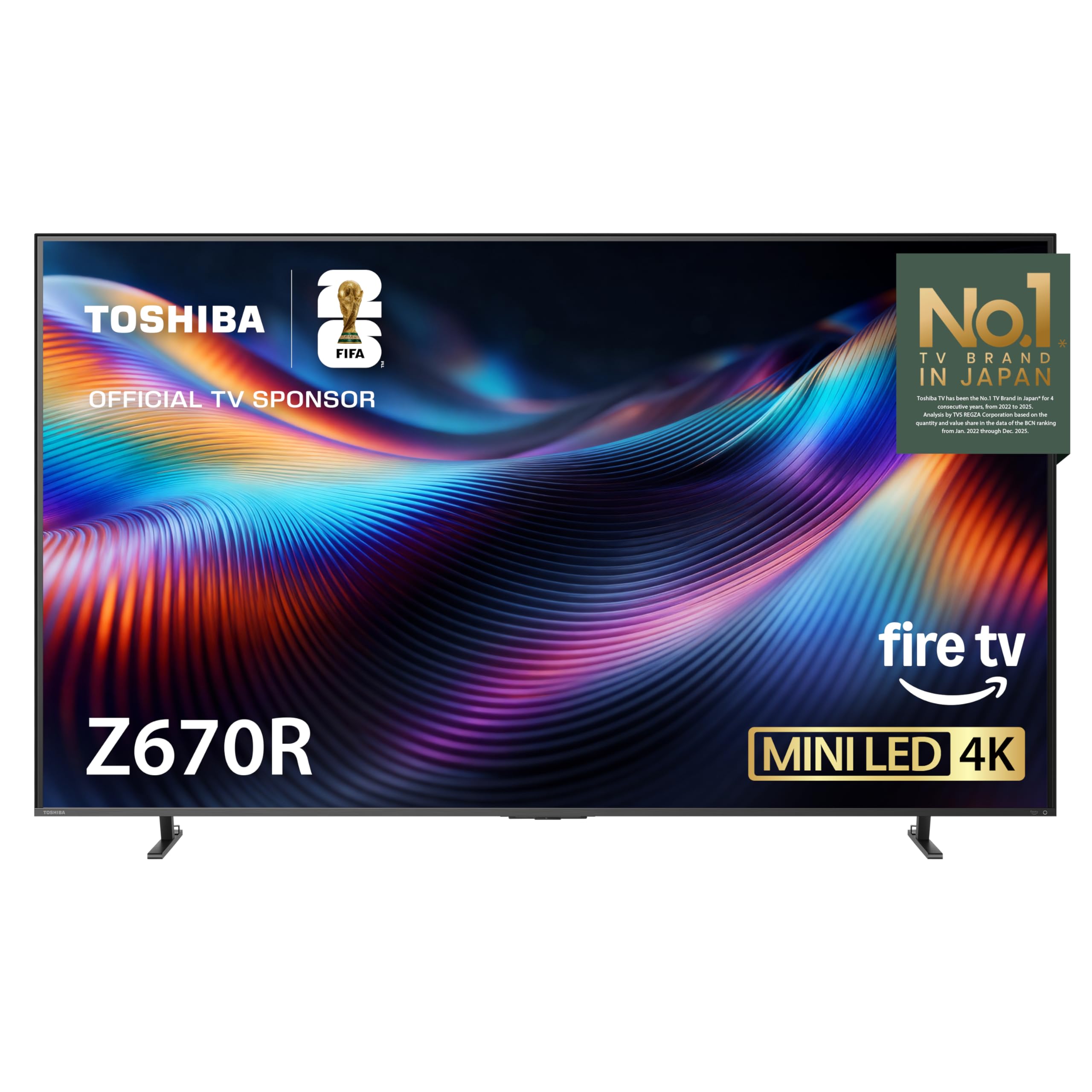
Toshiba’s return to the premium segment is anchored by the REGZA Engine ZRi Gen3, a processor fine-tuned in Japan that performs scene-by-scene optimization of clarity, contrast, and audio. The combination of Mini-LED and Full Array Local Dimming on the 55-inch Z670R produces deep blacks with minimal halo effect, while the QLED color layer pushes the panel to over a billion shades across the visible spectrum. Dolby Vision IQ and HDR10+ Adaptive both work with the AI Light Sensor Pro to match the screen’s gamma to room lighting conditions automatically.
The REGZA Power Audio Pro system includes a dedicated bass woofer that delivers genuinely impactful low-end from the built-in speakers — enough that many buyers report skipping a separate soundbar for casual TV watching. Native 144Hz refresh rate with AMD FreeSync Premium and VRR support ensures tear-free gaming, and Game Mode Pro keeps input lag low. The Fire TV platform loads quickly and includes Alexa hands-free voice control, so you can launch apps or search content without locating the remote.
Design-wise, the Toshiba uses clean lines and a minimalist profile that suits a modern living room aesthetic without screaming for attention. The included remote has dedicated hotkeys for major streaming services. Build quality feels solid, and the panel uniformity is above average for Mini-LED at this size. For buyers who want strong built-in audio performance combined with excellent contrast, this Toshiba is a clever pick.
Why it’s great
- Dedicated bass woofer produces the best built-in audio in this class
- REGZA Engine ZRi Gen3 provides excellent real-time picture tuning
- Native 144Hz with FreeSync Premium for smooth gaming
Good to know
- Fire TV platform shows more ad placements than Roku or webOS
- Bluetooth version 5 limits wireless headphone range slightly
5. TCL 55″ Class QM7K Series
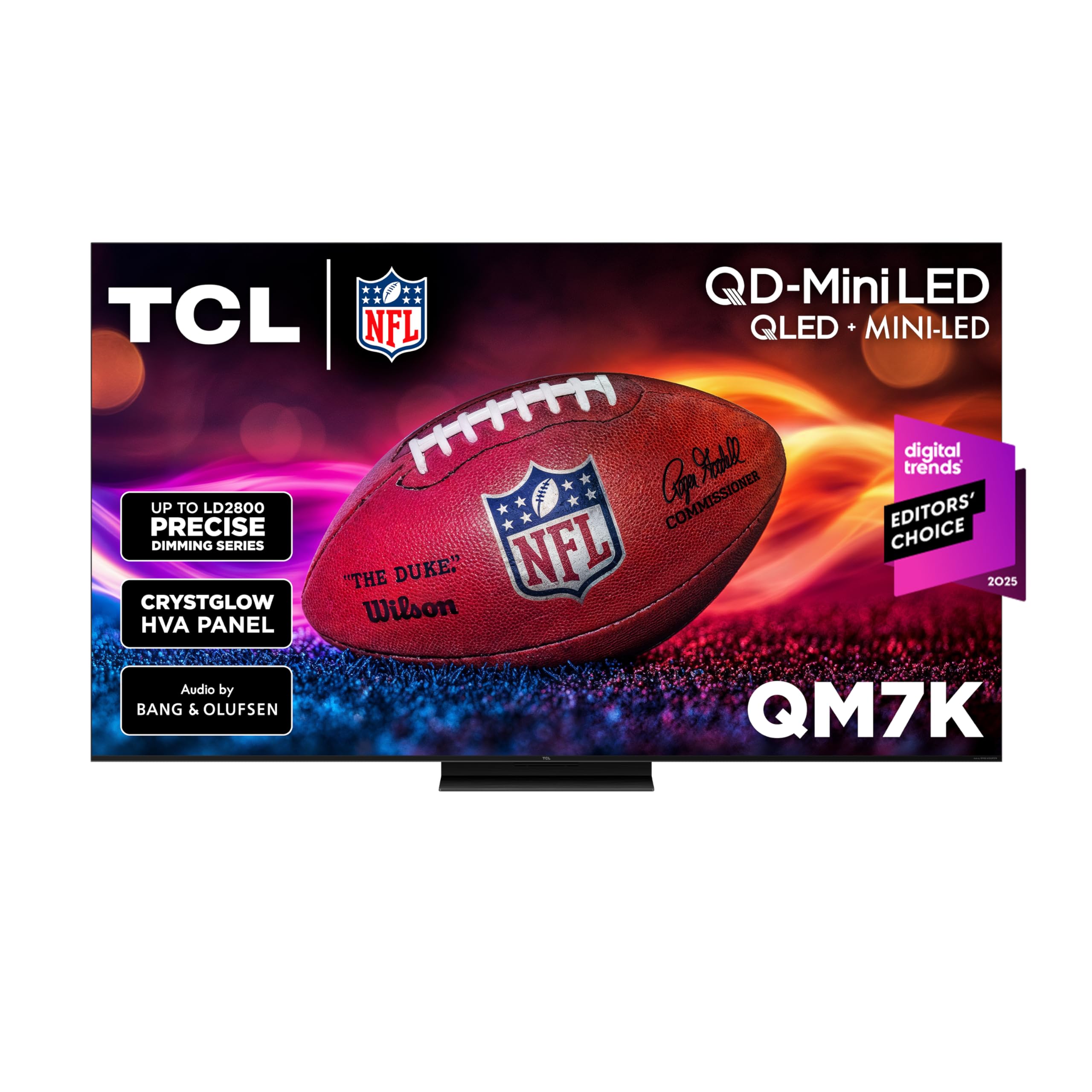
TCL’s QM7K series brings a staggering number of local dimming zones — up to 2,500 on the 55-inch model — to a mid-range price point, providing a level of contrast control that was exclusive to flagship televisions just three years ago. The QD-Mini LED backlight combines Quantum Dot color with pixel-level lighting precision that minimizes blooming around bright objects on black backgrounds. The CrystGlow HVA panel incorporates an anti-reflective treatment that keeps daytime viewing comfortable without crushing shadow detail.
The Halo Control System suite includes a bi-directional 23-bit backlight controller that manages brightness transitions smoothly, so fast-moving objects like a hockey puck or race car don’t cause sudden brightness jumps. Native 120Hz to 144Hz refresh rate support with Variable Gaming Refresh Rate up to 240Hz makes this a capable gaming display, and the Google TV interface provides a clean app experience with Chromecast built-in. The Onkyo-tuned audio system produces clear dialogue and respectable midrange presence.
Build quality includes metal accents and a sturdy stand, though the included remote feels lightweight compared to competitors. For bright room viewers who want the deepest blacks and brightest highlights without paying ultra-premium prices, the TCL QM7K offers measurable performance advantages over similarly priced QLED-only models. The extensive dimming zones give it an edge in dark room movie watching that rivals panels costing significantly more.
Why it’s great
- 2,500 dimming zones provide near-OLED black levels
- CrystGlow anti-reflective panel handles bright rooms well
- 240Hz variable refresh rate for competitive gaming
Good to know
- Included remote feels cheap compared to the TV’s build quality
- Built-in speakers are adequate but a soundbar is recommended
6. Samsung 55″ QLED Q8F

Samsung’s Q8F brings the QLED color engine to a mid-range price, offering 100% Color Volume that maintains saturation even as the panel pushes higher brightness levels — a meaningful advantage over standard LED-backlit screens that lose color intensity in bright HDR highlights. The Q4 AI Processor handles upscaling of 1080p and 1440p content to 4K with respectable clarity, and the AirSlim chassis design lets the TV sit nearly flush against the wall for a clean mounted installation.
The Samsung TV Plus platform provides over 2,700 free channels without any subscription, covering news, sports, and movies with ad-supported streaming. Native 144Hz refresh rate with VRR gaming support ensures compatibility with both PS5 and Xbox Series X at their highest frame rate targets. Samsung Vision AI automatically adjusts picture modes based on the content type being watched — switching to a brighter, cooler palette for live sports and a warmer, dimmer look for evening movies.
The solar-cell remote is a welcome sustainability feature that eliminates battery waste, though some users find the lack of a traditional number pad inconvenient for live TV channel entry. Sound quality is decent for casual viewing but lacks the bass depth of the Toshiba Z670R. For the buyer who values ultra-slim aesthetics and Samsung’s ecosystem integration with other Galaxy devices, the Q8F provides a refined package.
Why it’s great
- 100% Color Volume maintains saturation at high brightness
- AirSlim design enables near-flush wall mounting
- 2,700+ free channels via Samsung TV Plus
Good to know
- Sound lacks depth — a soundbar is a near-necessity for movies
- Included legs feel somewhat unstable for the 55-inch size
7. Amazon Ember 55″ Mini-LED
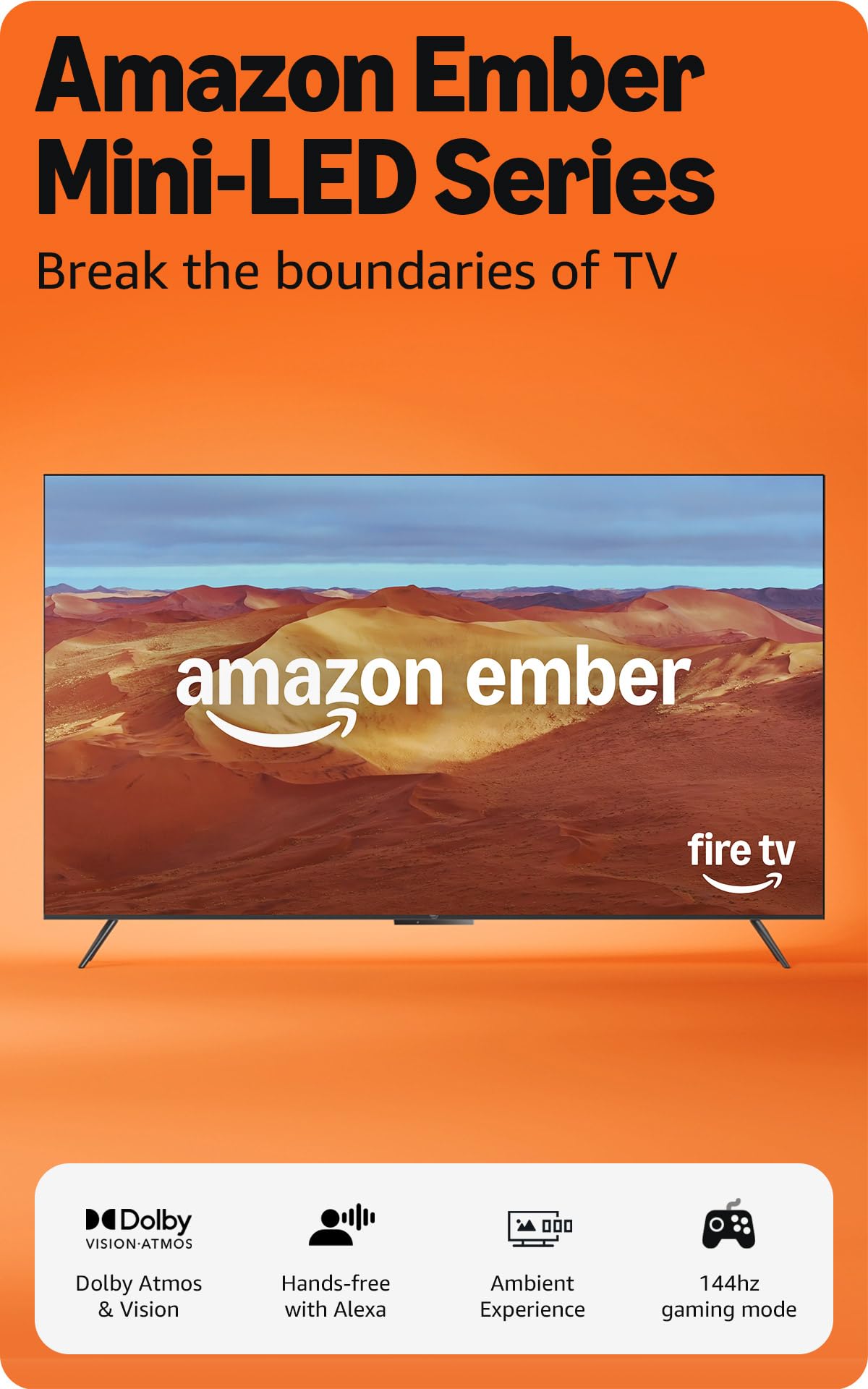
The Amazon Ember 55-inch Mini-LED series uses 512 individual dimming zones to deliver higher contrast than most direct-lit competitors at this price tier, with measured peak brightness reaching up to 1,400 nits for impactful HDR highlights. The QLED color layer produces over a billion shades, and Dolby Vision IQ with HDR10+ Adaptive both adapt to ambient room lighting. Fire TV Intelligent Picture processing fine-tunes each scene automatically, and the results are particularly strong for streaming content where source quality varies widely.
Native 144Hz refresh rate with AMD FreeSync Premium Pro certification makes this Amazon’s strongest gaming TV — the combination of tear-free variable refresh rate and low input lag rivals dedicated gaming monitors. The 2.1 Dolby Atmos audio system produces clear dialogue with noticeable bass, and the ambient experience mode turns the TV into an art display when not in active use. The Omnisense technology wakes the screen when you enter the room, eliminating the need to hunt for the remote just to check the time or weather.
The Fire TV interface has improved significantly with the 2026 software update, reducing lag and showing fewer ads than previous generations. Alexa hands-free voice control works even when the TV is off for quick smart home commands. For deep Amazon ecosystem users who own Eero routers, Blink cameras, and Ring doorbells, the integration is seamless. However, buyers who dislike platform lock-in should note the UI heavily promotes Amazon content.
Why it’s great
- 512 dimming zones deliver excellent contrast for the price
- 144Hz with FreeSync Premium Pro for tear-free gaming
- Omnisense wake and ambient art display add convenience
Good to know
- Fire TV interface still shows more ads than Roku or Google TV
- Some users report menu lag after extended use
8. Sony BRAVIA 2 II 55″

Sony’s BRAVIA 2 II builds on the company’s long heritage of signal processing, using the 4K Processor X1 to deliver natural colors and sharp details that look less processed than competing AI-upscaled images. The LED panel uses a standard direct-lit backlight rather than Mini-LED, so black levels are not as deep as the Mini-LED alternatives in this guide, but Sony’s superior motion handling partially compensates. Motionflow XR intelligently inserts frames without causing visible artifacts, making this TV excellent for watching sports and action movies.
The exclusive PS5 features — Auto HDR Tone Mapping and Auto Genre Picture Mode — are the primary differentiators for console gamers. When a PS5 is connected via HDMI, the TV automatically switches to game mode and adjusts HDR brightness mapping to match the console’s output, ensuring highlights are neither blown out nor too dim. The Game Menu consolidates all gaming picture settings into one overlay without requiring you to exit the application.
Google TV provides access to all major streaming services, and support for Apple AirPlay 2 and Google Cast makes content sharing simple regardless of your phone’s operating system. The Sony Pictures Core app includes free movies with purchase. For PS5 owners who want the most seamless console integration and the most natural motion processing available outside the four-figure OLED class, the BRAVIA 2 II is the obvious choice.
Why it’s great
- Best-in-class PS5 integration with Auto HDR Tone Mapping
- Motionflow XR produces excellent motion clarity without artifacts
- Natural color processing avoids over-sharpened look
Good to know
- Standard LED backlight cannot match Mini-LED black levels
- A minority of units have reported WiFi connectivity issues
9. Roku Plus Series 55″ Mini-LED
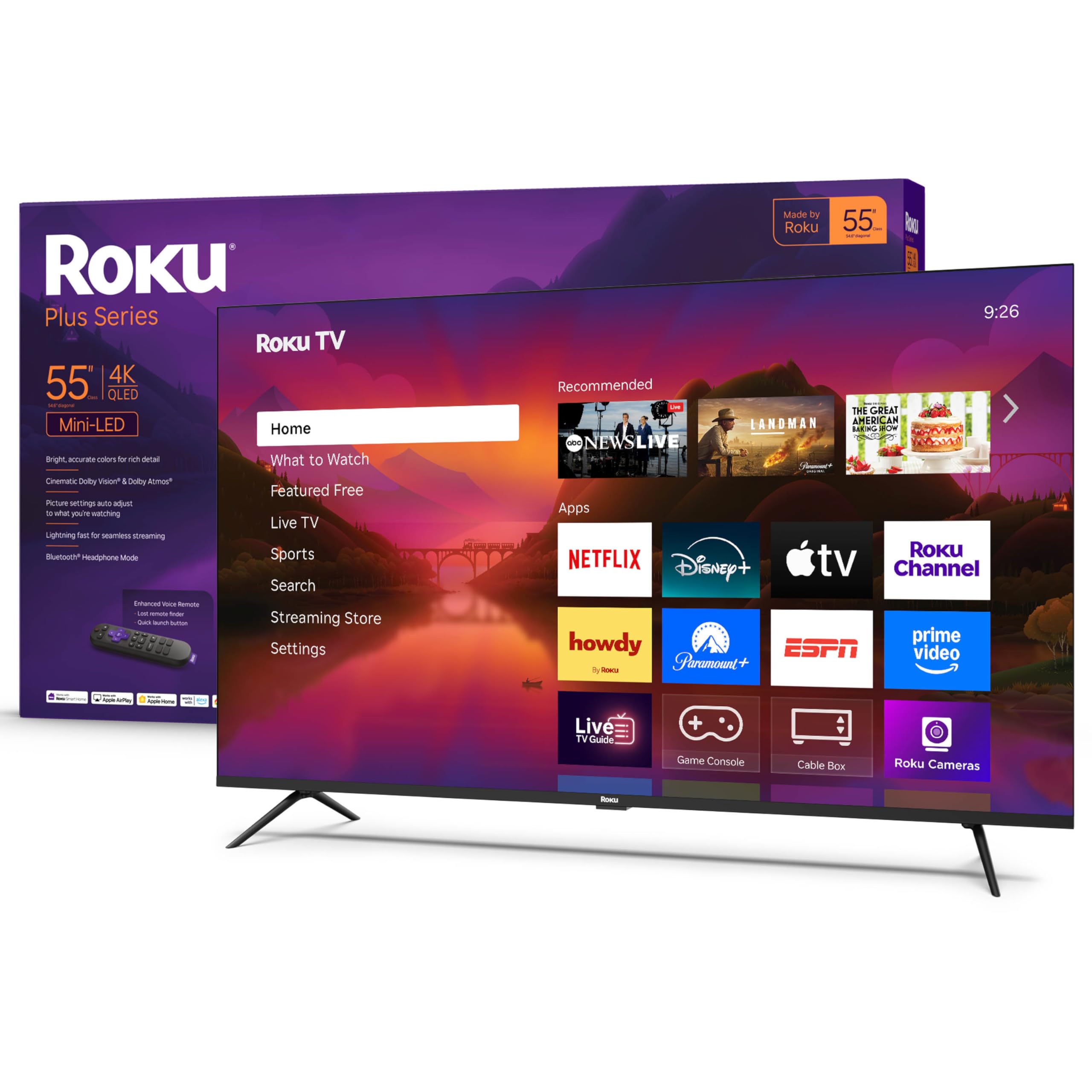
The Roku Plus Series brings Mini-LED backlighting and QLED color to the entry-level price bracket, making it the most accessible way to experience local dimming benefits without crossing into mid-range spending. The Dolby Vision support works in tandem with the Mini-LED zones to produce noticeably better contrast than standard edge-lit TVs at the same price point, with rich colors and deep blacks that make streaming movies look dramatically better. The Roku operating system remains the gold standard for simplicity — fast boot times, a clean home screen with minimal ads, and automatic software updates that keep the interface responsive.
Audio quality from the built-in system is surprisingly robust for this price tier, with a built-in subwoofer that delivers enough bass for casual movie watching without distortion at moderate volume levels. The enhanced voice remote includes a lost remote finder feature and programmable shortcut buttons for your favorite apps. Roku’s free channel lineup offers hundreds of live TV channels covering news, sports, cooking, and classic movies — all without a subscription.
Connectivity includes Bluetooth and Apple AirPlay support, so iPhone users can share their screen directly. The AI-powered Roku Smart Picture Max cleans up low-quality broadcast signals and automatically sharpens the image. For budget-conscious buyers who prioritize a smooth smart TV experience and want genuine Mini-LED contrast improvement over basic LED panels, this Roku is the smartest value proposition.
Why it’s great
- Mini-LED + QLED delivers outstanding picture for the price
- Roku OS is the fastest and least cluttered smart platform
- Built-in subwoofer produces decent bass without a soundbar
Good to know
- No USB port included — only USB-C for service
- Settings menu is basic compared to Google TV options
10. iFFALCON 55″ MiniLED 55U85
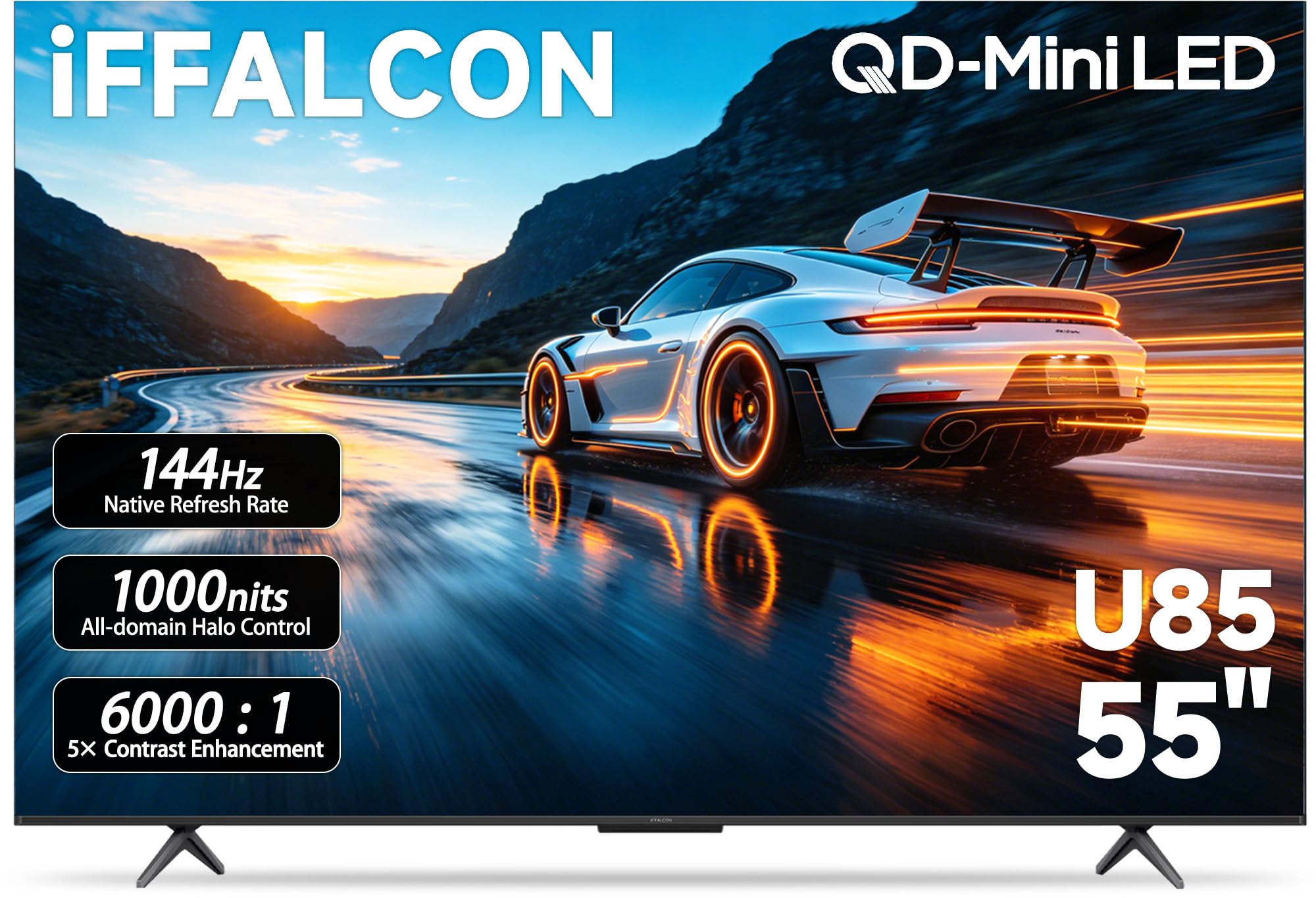
The iFFALCON 55U85 is built for versatility, offering a native 144Hz Mini-LED panel with four HDMI 2.1 ports — two supporting 4K at 144Hz for next-gen consoles and gaming PCs, and two handling 4K at 60Hz for streaming boxes and Blu-ray players. With measured peak brightness reaching 1,000 nits and a 6,000:1 contrast ratio, the HDR performance is solid for both gaming and movie watching. The FreeSync Premium Pro certification ensures tear-free gaming across the full VRR range (48–144Hz).
The unique differentiator is the built-in hotel mode, IR blaster, and IP control — features typically reserved for commercial displays. This makes the iFFALCON a strong candidate for Airbnb hosts, hoteliers, or office conference rooms who need to lock menus, set default inputs, and manage displays remotely. The 50W 2.1 channel audio system (two 15W tweeters plus a 20W woofer) with Dolby Atmos and DTS Virtual:X provides immersive room-filling sound without external speakers.
Google TV with Alexa and Google Assistant support ensures voice control works across platforms, and the far-field microphones let you search hands-free from across the room. Build quality is slightly thicker than ultra-slim competitors, but the trade-off yields better thermal management and sustained brightness. For buyers who need both high-performance gaming features and commercial-grade control options, this is a uniquely flexible panel.
Why it’s great
- Four HDMI 2.1 ports — unique even among premium models
- Hotel mode and IP control for commercial or Airbnb use
- 50W audio system with dedicated woofer
Good to know
- Thicker chassis compared to ultra-slim competitors
- Build materials are less premium than Samsung or LG models
11. Sony BRAVIA 2 II 50″
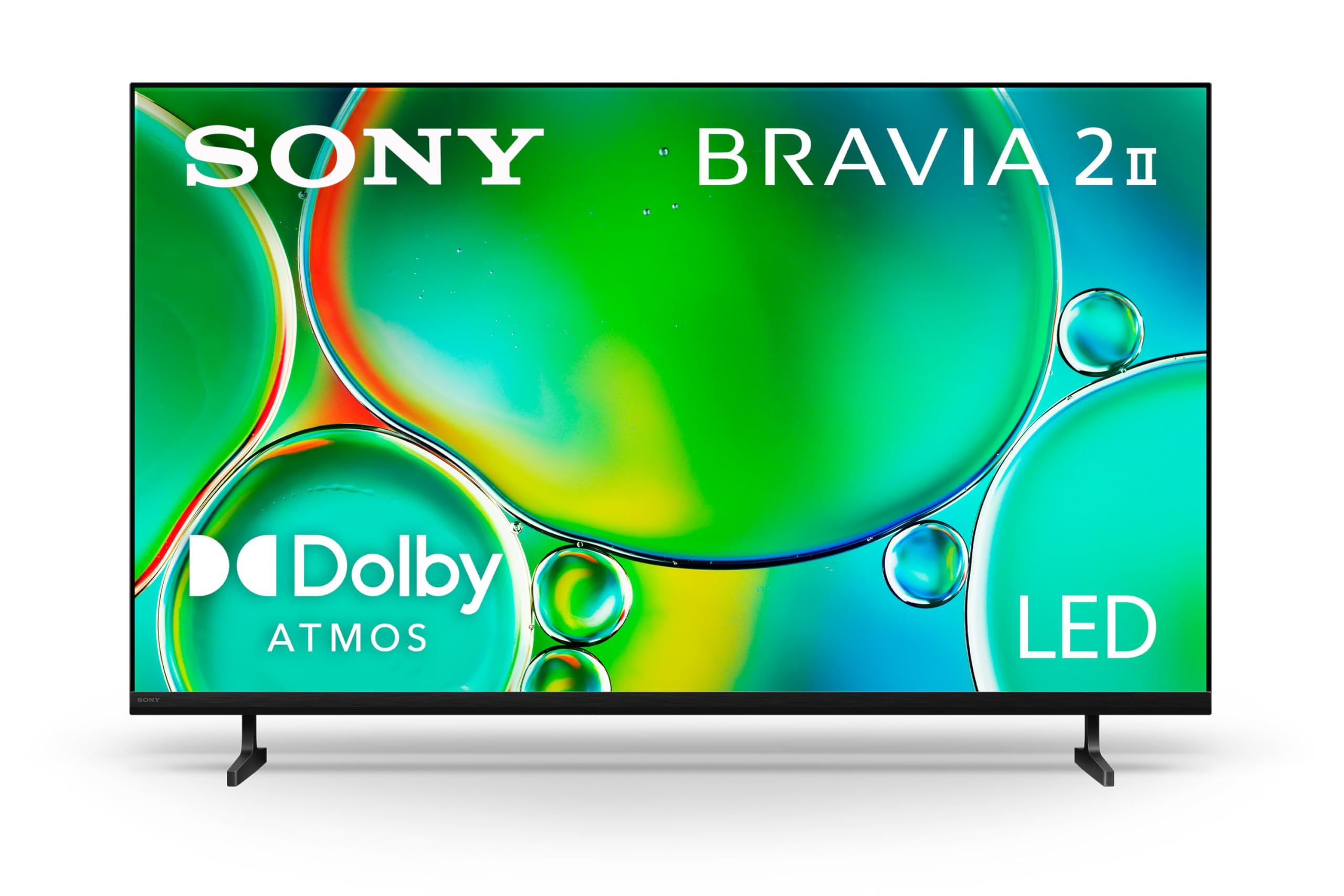
The 50-inch Sony BRAVIA 2 II offers the same 4K Processor X1 and PS5-exclusive features as its 55-inch sibling in a more space-efficient form factor, making it ideal for bedrooms, home offices, or smaller living spaces where a 55-inch panel would dominate the wall. The 4K XR-Reality PRO upscaling engine brings lower-resolution content to near-4K quality with impressive texture preservation, and Motionflow XR keeps fast-moving sports clear without the stutter common on slower panels.
PS5 integration mirrors the 55-inch model — Auto HDR Tone Mapping reads the console’s HDR metadata and adjusts brightness mapping so dark game environments maintain visible detail without washing out highlights. Auto Genre Picture Mode switches to Game Mode automatically when a game launches and returns to the standard picture mode for streaming apps. The Eco Dashboard centralizes energy efficiency settings, and the panel uses less than half the power of older LCD TVs, making it one of the most efficient 4K panels available.
Google TV provides the full streaming library, and Apple AirPlay 2 support lets iPhone users cast directly. The included Sony remote is widely considered one of the best in the industry for ergonomics and button layout. For buyers who need the Sony processing magic and PS5 features but cannot fit a 55-inch screen, this 50-inch version provides the same core experience in a more compact package.
Why it’s great
- Same PS5 features and processing as Sony’s larger models
- Very energy efficient — uses less than 50% power of older LCDs
- Excellent remote ergonomics and button layout
Good to know
- 50-inch size limits viewing distance before immersion drops
- A minority of units have reported freezing issues requiring power cycling
FAQ
Is a native 144Hz refresh rate necessary for PS5 or Xbox Series X gaming on a 55-inch TV?
How many local dimming zones are actually noticeable on a 55-inch Mini-LED TV?
Will a 50-inch or 55-inch TV fit my entertainment center?
Do I need a soundbar for a 55-inch TV or are built-in speakers good enough?
Final Thoughts: The Verdict
For most users, the best 50-55 inch tv winner is the Hisense 55″ U7 because it delivers the highest brightness ceiling, fastest refresh rate, and most effective anti-glare treatment in a package that competes with screens costing substantially more. If you want seamless PS5 integration with Sony’s superior motion processing, grab the Sony BRAVIA 2 II 55-inch. And for the best value that still offers Mini-LED contrast and the cleanest smart platform, nothing beats the Roku Plus Series 55-inch.