
Our readers keep the lights on and the weekend projects moving. As an Amazon Associate, I earn from qualifying purchases.
A power outage doesn’t just turn off the lights—it shuts down your furnace, stops your well pump, and makes your refrigerator a warm box. A generator with a 50-amp outlet is the only way to power those 240-volt heavy-duty circuits, giving you the capacity to run a central air conditioner, a water heater, and a well pump all at the same time. That’s not a luxury; it’s the difference between camping in your living room and living normally through a storm.
I’m Rikta — the co-founder and writer behind FitlyFast. I’ve spent years analyzing backup power hardware, cross-referencing engine displacement, copper windings, and THD ratings to separate genuine whole-home solutions from glorified job-site tools.
Whether you need a fuel-flexible traditional unit or a silent solar powerhouse, this guide pinpoints the best 50 amp generator for your specific home load and budget.
How To Choose The Best 50 Amp Generator
A 50-amp generator isn’t a small purchase, and picking the wrong one means either buying twice or having a unit that can’t handle your home’s starting surge. The three decisions below define whether you get real whole-home backup or just an expensive paperweight.
Fuel Type: Tri-Fuel Vs. Dual-Fuel Vs. Solar
Gasoline is easy to find but degrades in storage after a few months. Propane burns cleaner and stores indefinitely, but delivers slightly lower wattage. Natural gas is the ultimate convenience if you have a gas line, but a tri-fuel unit adds complexity and cost. Dual-fuel (gas and propane) offers the best value for most homes, while pure solar power stations like the EcoFlow DELTA Pro 3 give you silent, maintenance-free operation at the cost of recharging time.
Running Vs. Peak Watts And The 50-Amp Outlet
The 50-amp NEMA 14-50R outlet delivers 12,000 watts peak and 9,600 watts continuous at 240 volts. Your generator must meet those numbers to run your home’s transfer switch. Look for a true continuous rating above 9,500 watts on your chosen fuel. Ignore peak wattage for sizing—it only covers the starting surge of a well pump or AC compressor for a few seconds.
Inverter Vs. Open Frame: Noise And Electronics Safety
Open-frame generators are louder (70-80 dB) and produce higher Total Harmonic Distortion (THD)—bad for sensitive electronics like computers and modern refrigerators. Inverter generators produce clean power (under 3% THD) and are much quieter (50-65 dB), but cost more and typically have lower peak wattage. If you plan to run a home office or entertainment center during an outage, an inverter model is the safer choice.
Quick Comparison
On smaller screens, swipe sideways to see the full table.
| Model | Category | Best For | Key Spec | Amazon |
|---|---|---|---|---|
| Honda EU7000iS | Inverter | Quiet, Reliable Back-Up | 7000W Running / 58 dB | Amazon |
| Anker SOLIX F3800 | Solar Generator | Whole-Home Solar Backup | 3840Wh / 6000W Output | Amazon |
| GENMAX GM10500iETC | Tri-Fuel Inverter | Natural Gas Home Backup | 8500W Running / 458cc | Amazon |
| Gidrox GNV 11000W | Tri-Fuel Inverter | Quiet Tri-Fuel Power | 11000W Peak / 62 dB | Amazon |
| EcoFlow DELTA Pro 3 | Solar Generator | High-Capacity Solar | 4096Wh / 4000W Output | Amazon |
| Jackery HomePower 3000 | Solar Generator | Lightweight Solar Backup | 3072Wh / 3600W Output | Amazon |
| Westinghouse iGen8200TFc | Tri-Fuel Inverter | Compact Inverter Power | 6600W Running / 60 dB | Amazon |
| Generac GP9500 Tri-Fuel | Open Frame Tri-Fuel | Fuel Versatility | 9500W Running / 500cc | Amazon |
| Westinghouse WGen12500TFc | Dual Fuel Open Frame | High Output, Remote Start | 9500W Running / 457cc | Amazon |
| DuroMax XP12000HX | Dual Fuel Open Frame | All-Copper Windings | 9500W Running / 457cc | Amazon |
| DuroStar DS13000MX | Dual Fuel Open Frame | 13kW Peak, Budget Pick | 13000W Peak / 500cc | Amazon |
| Pulsar G12KBN-SG | Dual Fuel Open Frame | 8-Gallon Gas Tank | 9500W Running / 457cc | Amazon |
| EcoFlow DELTA Pro (Original) | Solar Generator | Budget Solar Entry | 3600Wh / 3600W Output | Amazon |
In‑Depth Reviews
1. Honda EU7000iS
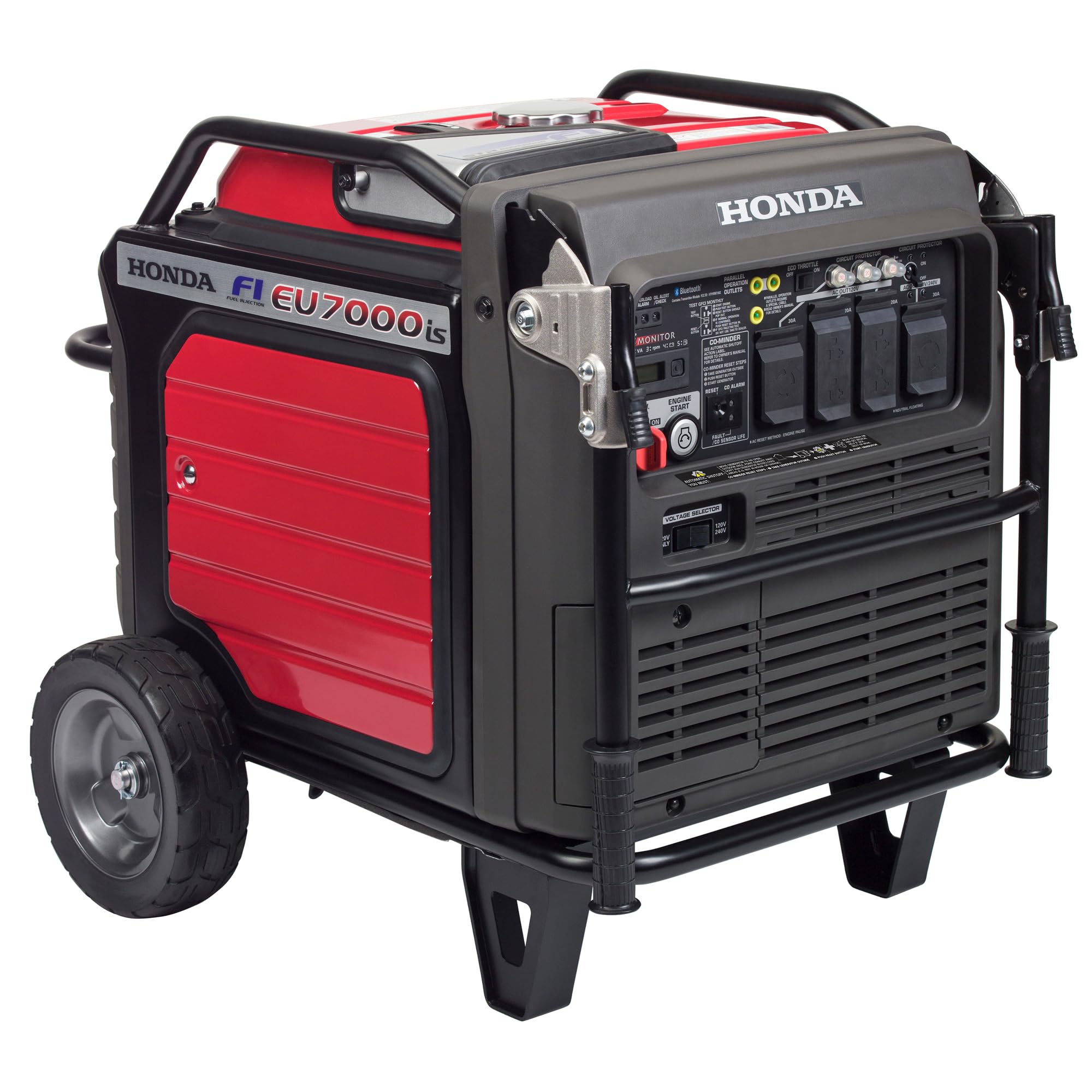
The Honda EU7000iS is the gold standard for noise-sensitive environments, rated at just 52 to 58 dB—quieter than a normal conversation. That’s a full 15-20 dB lower than any open-frame generator in this list, making it the only unit you can comfortably run overnight in a neighborhood without complaints. Its 7000 running watts on gasoline are enough to power a 3-ton central AC and a water heater with careful breaker management, as confirmed by users running it through a Generlink transfer switch.
Honda’s proprietary inverter technology delivers clean, stable power with less than 3% THD, making it completely safe for laptops, medical equipment, and modern refrigerator controllers. The Eco Throttle system adjusts engine speed to match the load, extending runtime up to 16 hours on a 5.1-gallon tank at quarter load. Bluetooth connectivity through the My Generator app allows remote monitoring, shutdown, and service reminders—a feature no other gas generator in this class offers.
It’s not a whole-home solution for heavy loads like electric ovens or 5-ton ACs, but for a typical 1,500-2,000 sq ft home with gas appliances, it’s the quietest, most reliable option available.
Why it’s great
- Exceptionally quiet 52-58 dB operation
- Bluetooth app for remote monitoring
- Clean inverter power under 3% THD
Good to know
- Gasoline only – no propane or NG support
- 7000W peak may not cover heavy 240V loads
- Premium price – highest cost per watt
2. Anker SOLIX F3800

The Anker SOLIX F3800 redefines what a portable power station can do. With a 3840Wh LiFePO4 battery and a massive 6000W AC output at both 120V and 240V, it’s the only solar generator in this list that can power a whole-home electrical panel including a 240V well pump, a dryer, or even a Level 1 EV charger via its NEMA 14-50 port. Its dual-voltage capability is a game-changer—most solar stations max out at 120V, leaving 240V appliances unpowered.
The F3800 is expandable to 26.9kWh with six extra battery packs, giving up to two weeks of backup for a typical home. Anker’s InfiniPower technology includes EV-class LFP cells and a smart temperature management system that maintains optimal charging conditions even in hot garages. The unit supports solar input up to 2400W, recharging from 0-80% in about 2.5 hours with enough panels. Users consistently praise its robust build, quiet fans, and seamless integration with transfer switches.
The main drawbacks are weight (132 lbs, though it has wheels), the need for an app to access advanced settings like charge rate adjustment, and a cold-temperature charging threshold around 50°F where the BMS limits input power. A few users report firmware update issues affecting generator charging compatibility. Still, for a home that wants silent, zero-emission backup without fuel storage, the F3800 is the most capable solar generator on the market.
Why it’s great
- 6000W output at 120V and 240V
- Expandable to 26.9kWh for multi-day backup
- NEMA 14-50 port for EV charging
Good to know
- Heavy at 132 lbs – use a dolly
- App required for setting adjustments
- BMS limits charging below 50°F
3. GENMAX GM10500iETC

The GENMAX GM10500iETC is a tri-fuel inverter generator that hits a sweet spot between noise comfort and raw power. Its 458cc engine delivers 8500 running watts on gasoline and 8000 on propane, with a peak of 10,500 watts on gas. The inverter technology keeps THD under 3%, making it safe for computers and TVs, while the fully enclosed design keeps noise at a neighbor-friendly level. Users running it on natural gas report it powers a 3-ton central AC with a well pump simultaneously—impressive for a portable inverter unit.
What sets the GENMAX apart is its comprehensive included accessories: a rain cover, ATS cable, both LPG and NG hoses, and a remote start key fob are all in the box. The control panel includes an L14-30R 30A outlet, a 14-50R 50A outlet, and a voltage transfer switch for 120V/240V simultaneous use. The neutral floating design allows easy bonding for home standby use. Forced lubrication with an oil filter extends engine life significantly compared to splash-lubed competitors.
There are a few hiccups: a paperless manual policy (available via email but not in the box), the need to buy oil separately, and some users report overload warnings when a refrigerator compressor kicks on with other loads running. The unit is also heavy (around 230 lbs) and takes up significant space. But for a home with natural gas access that wants inverter-quality power without the Honda price, the GENMAX is a compelling mid-range choice.
Why it’s great
- Tri-fuel with included NG/LPG hoses
- Inverter power – low THD and quiet
- Forced lubrication and oil filter
Good to know
- No paper manual included
- Heavy at ~230 lbs
- Occasional overload warnings with heavy loads
4. Gidrox GNV 11000W

The Gidrox GNV 11000W is one of the quietest tri-fuel inverter generators available, operating at only 62-65 dB—quieter than a normal conversation. That’s remarkable for a unit capable of 11,000 peak watts on gasoline. Its pure sine wave output (under 3% THD) is suitable for sensitive electronics, and the 8.7-gallon fuel tank provides up to 21 hours of run time at quarter load on gasoline. The dedicated ATS port makes it easy to integrate with an automatic transfer switch for hands-off backup.
Gidrox includes both LPG and NG hoses in the box, a value that most competitors charge extra for. The push-button electric start with remote backup ensures you can fire it up from inside the house during bad weather. Users consistently note the easy oil drain tube and carburetor emptying design for maintenance convenience. The fully enclosed design with ECO mode further reduces fuel consumption and noise when running lighter loads.
The downsides: the manual start handle came off after a few pulls on one user’s unit (though the electric start worked fine), and the actual dimensions (32.5″ x 27.5″ x 23″) are larger than advertised. The 258 lb weight is significant, so plan for a dedicated storage location. Long-term reliability is still unproven given how new the Gidrox brand is, but the initial build quality and feature set are impressive for the price.
Why it’s great
- Very quiet 62 dB operation for an 11kW unit
- Includes LPG and NG hoses in box
- ATS ready with dedicated port
Good to know
- Heavy at 258 lbs
- Dimensions larger than listed specs
- New brand – long-term reliability unknown
5. EcoFlow DELTA Pro 3

The EcoFlow DELTA Pro 3 is the most advanced portable power station we’ve tested, with a 4096Wh LFP battery and an inverter that outputs both 120V and 240V from a single unit—a rare capability in the solar generator space. Its 4000W continuous output (6000W with X-Boost) is enough to run a 3-ton central AC or a 240V well pump, and it can be expanded to 48kWh with extra batteries for weeks of backup. The X-Quiet technology keeps noise at just 30 dB, making it essentially silent.
The charging versatility is unmatched: 7 unique charging methods including AC wall outlets (1800W), solar (2600W total across two ports), gas generators, and even EV charging stations. Combined AC+DC charging can replenish the battery in under an hour. The IP65-rated battery pack with automotive-grade LFP cells ensures durability, and the built-in neutral-ground bonding (toggle-able in the app) makes it safe for home electrical panels without additional equipment.
Some frustrations: the app requires internet access to change settings, which is problematic during an outage if you need to adjust charge rates. The 115 lb weight is manageable with the built-in handle but awkward for frequent moving. A few users report the display is hard to read in sunlight, and the lack of a physical 12V port is a downgrade from the original DELTA Pro. For those who want silent, zero-emission 240V power and have the budget, the DELTA Pro 3 is the best solar option.
Why it’s great
- 240V output from a single solar unit
- Whisper-quiet 30 dB operation
- Expandable to 48kWh for long outages
Good to know
- App requires internet for key settings
- No physical 12V port
- Display hard to read in bright light
6. Jackery HomePower 3000
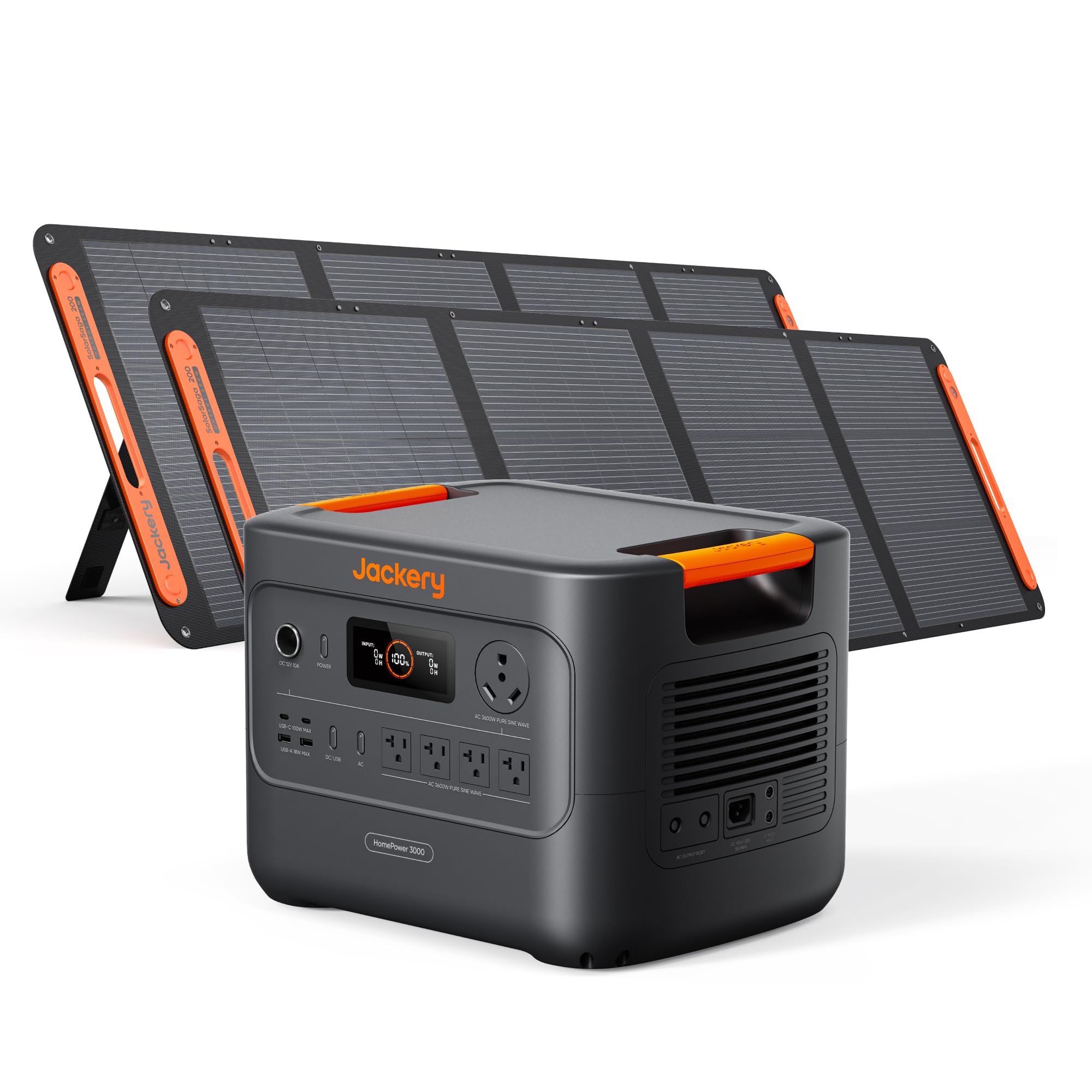
The Jackery HomePower 3000 is the lightest 3kWh portable power station on the market at just 59.5 lbs—about half the weight of the Anker SOLIX F3800. Jackery achieves this with CTB (Cell-to-Body) technology that integrates the battery cells directly into the chassis, boosting space efficiency by 14%. Despite the weight savings, it still packs a 3072Wh LFP battery and a 3600W inverter (7200W surge) that can power a refrigerator for 1-2 days or run home essentials for up to 15 hours.
The unit includes dual 100W USB-C PD ports for fast device charging, a TT-30 RV port for direct RV hookup, and a UL-certified UPS that switches within 20 ms. The ChargeShield 2.0 AI algorithm optimizes charging speeds while extending battery lifespan to 4,000 cycles (70% capacity retention). The included 2x SolarSaga 200W panels (shipped separately) can recharge the unit in about 9 hours of full sun, making it a viable off-grid solution.
The 3600W output is the lowest among premium solar units, which means it can’t handle 240V appliances like a well pump or central AC without an additional inverter. The battery is not expandable beyond its built-in capacity, limiting its use for long multi-day outages. Users also note that the unit is very heavy for its size despite being lighter than competitors, and the wheel kit sold separately is nearly mandatory. For a cabin or RV that needs a portable solar solution, it’s an excellent choice.
Why it’s great
- Very light at 59.5 lbs for its capacity
- Includes 2x 200W solar panels
- 4,000-cycle LFP battery with AI management
Good to know
- No 240V output – 120V only
- Non-expandable battery capacity
- Wheel kit not included
7. Westinghouse iGen8200TFc
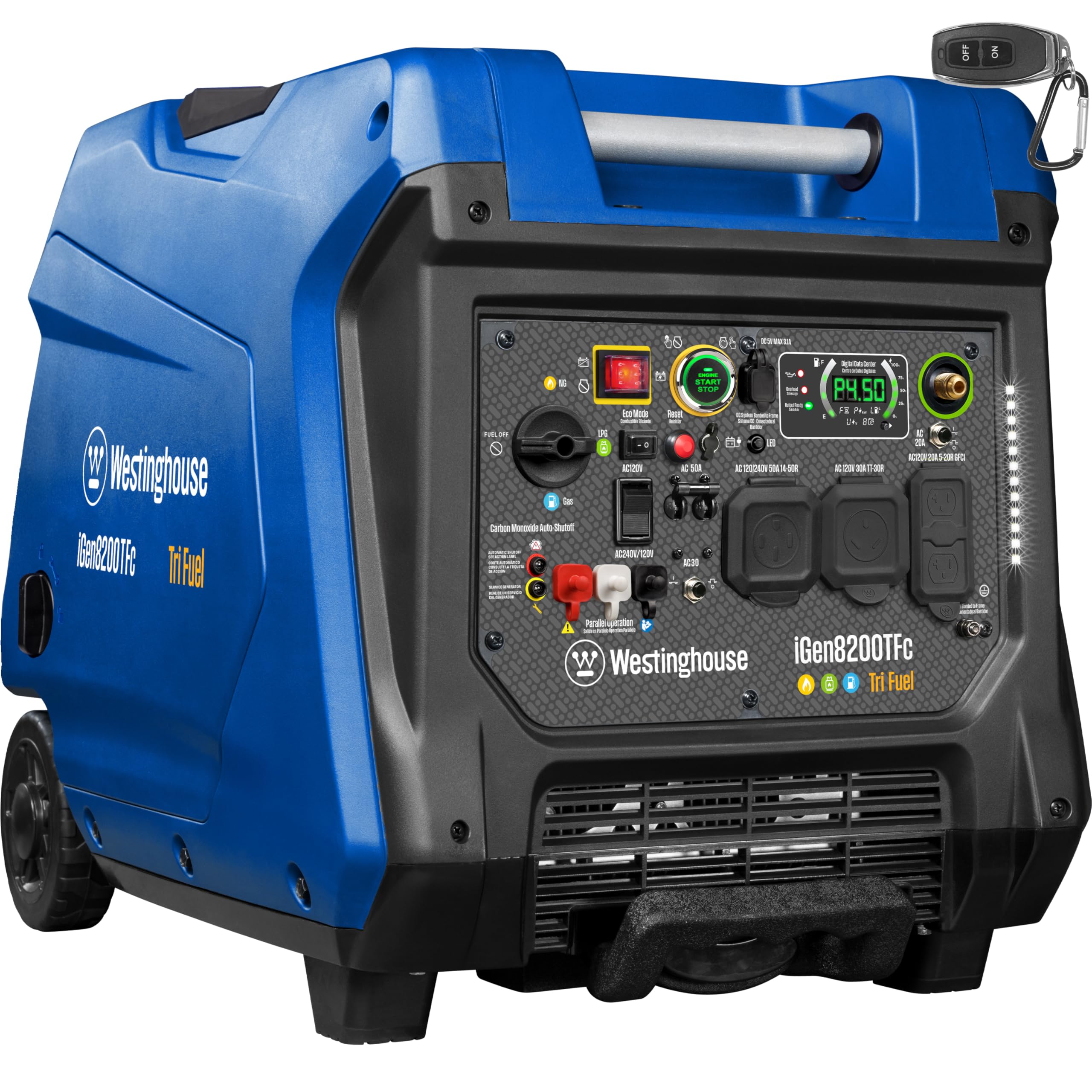
The Westinghouse iGen8200TFc is a tri-fuel inverter generator that prioritizes portability and quiet operation. At 134.5 lbs with wheels and a fold-down handle, it’s significantly lighter than tri-fuel open-frame generators of similar wattage. Its 298cc engine delivers 6600 running watts on gasoline, 5940 on propane, and 5280 on natural gas—enough to power a home’s essentials (fridge, sump pump, furnace, lights, and a window AC) through a transfer switch. The inverter technology keeps THD under 3% for safe electronics operation.
The iGen8200TFc is quiet for its class, operating at around 60 dB at 25% load. The fully enclosed design reduces noise and protects the engine from debris. Westinghouse includes a remote start key fob, a 12V battery charger, and both propane and NG hoses in the box. The tool-less access panel for maintenance is a thoughtful design touch that makes oil changes and spark plug inspection easy. Two 120V GFCI outlets, a 30A TT-30R RV outlet, and a 50A 14-50R outlet provide flexible connectivity.
The 6600 running watts are lower than open-frame units like the DuroMax XP12000HX, meaning it may struggle with a 3-ton central AC or a simultaneous well pump and furnace load. Some users find the manual’s instructions for the battery charging cable unclear. For a compact, quiet inverter with tri-fuel flexibility, the iGen8200TFc is a solid pick.
Why it’s great
- Light and portable at 134.5 lbs
- Tri-fuel with included hoses
- Quiet 60 dB operation
Good to know
- 6600W running may not cover heavy 240V loads
- 3.9-gallon tank – shorter runtime
- Manual could be clearer
8. Generac GP9500 Tri-Fuel
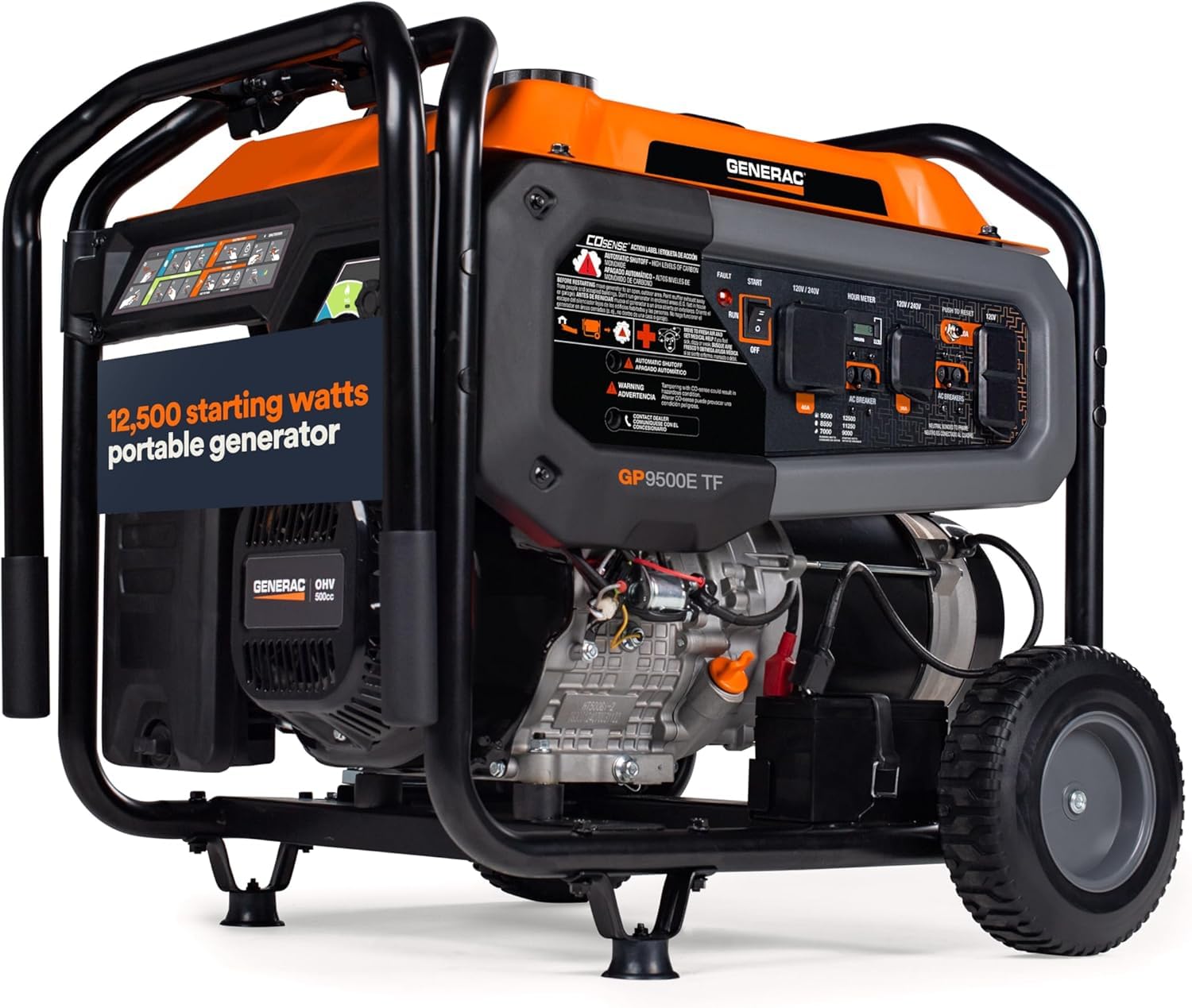
The Generac GP9500 Tri-Fuel brings a 500cc OHV engine to the table, delivering 9500 running watts and 12,500 peak watts—the highest peak among open-frame units here. Its tri-fuel capability (gas, propane, natural gas) is switchable via a simple dial, and the 7.5-gallon steel fuel tank provides up to 9.5 hours of runtime at 50% load on gasoline. Generac’s COsense technology monitors carbon monoxide levels and automatically shuts down the generator before dangerous levels accumulate.
The build quality lives up to Generac’s reputation as a leading home standby generator manufacturer. Users consistently report smooth operation with negligible metal-to-metal noise, a tighter build than mass-import alternatives. The heavy-duty steel tube cradle frame and weather-resistant covered outlets are built for harsh conditions. Never-flat wheels and a fold-down handle make transport manageable despite the 219 lb weight.
Some users report the natural gas conversion kit is not included despite the “tri-fuel” labeling—Generac customer service states a certified plumber is required for NG hookup, and additional parts may be needed. A few units have developed issues staying running after a month. The open-frame design is louder than inverter units, so consider noise regulations if you’re in a neighborhood. For raw power and fuel versatility at a mid-range price, the GP9500 is a strong contender.
Why it’s great
- High 12,500W peak from a 500cc engine
- Tri-fuel with simple fuel selector dial
- COsense auto-shutdown protection
Good to know
- Natural gas kit may need extra parts
- Open-frame – louder than inverter units
- Some reliability concerns reported
9. Westinghouse WGen12500TFc

The Westinghouse WGen12500TFc is the most value-packed dual-fuel open-frame generator in the mid-range, offering 9500 running watts on gasoline (with 12,500 peak) and 8500 running watts on propane. Its 457cc Westinghouse engine features a cast iron sleeve for longevity, and the automatic low oil and CO shutdown add essential safety layers. The remote start key fob is a genuine convenience—you can start the generator from inside your house while watching the storm approach.
Rated as a top pick by Consumer Reports and Popular Mechanics, the WGen12500TFc has been thoroughly tested. Users consistently praise its easy assembly (5 minutes, tools and oil included), reliable electric and recoil start, and ability to run a well pump and water heater simultaneously. The 6.6-gallon tank provides up to 12 hours of runtime at half load. All outlets have rubber covers for weather protection, and the 3-year limited warranty provides peace of mind.
The 212 lb weight is manageable with the wheel kit, but the open-frame design produces typical open-frame noise levels. Some users note the manual mentions a non-existent Eco switch, and the manual binding is poor. Above 2,000 ft elevation, a high-altitude kit is required. The unit is functionally tested at the factory, so some residual oil odor is normal. For a reliable, powerful dual-fuel generator with remote start, the WGen12500TFc is an excellent choice.
Why it’s great
- Remote start key fob included
- Cast iron sleeve for engine longevity
- Consumer Reports top pick
Good to know
- Open-frame – typical noise level
- High-altitude kit needed above 2,000 ft
- Manual has some errors
10. DuroMax XP12000HX

The DuroMax XP12000HX is a workhorse dual-fuel generator that emphasizes longevity through all-copper windings in its alternator. Copper conducts electricity better than aluminum and resists corrosion, leading to cooler operation and longer life—a spec serious buyers check. The 457cc OHV engine delivers 12,000 peak watts and 9,500 running watts on gasoline, with comparable performance on propane. The CO Alert system provides automatic shutdown if dangerous carbon monoxide levels build up.
Users who have owned the XP12000HX since 2022 report it starts every time without hesitation, powering lights, two refrigerators, a hot tub, and electronics during outages. The electric start works reliably, and the front-facing control panel includes four 120V GFCI outlets, a 30A twist-lock, and a 50A 14-50R outlet. The included wheel and handle kit makes moving the 222 lb unit manageable. A spare NGK BPR6RES spark plug is recommended as the factory plug may cause starting issues on propane.
Some units arrive with minor shipping damage (slightly bent frame) that doesn’t affect functionality. The open-frame design is noisy, and the engine is splash-lubricated (no oil filter), which means more frequent oil changes than pressurized lubrication engines. A few users note that the battery may arrive dead—checking charge before first start is wise. For a no-frills, powerful dual-fuel generator with premium copper windings, the XP12000HX is a solid value.
Why it’s great
- All-copper windings for durability
- CO Alert auto-shutdown safety
- Reliable electric start with many fuel options
Good to know
- Open-frame design – noisier than inverter
- Splash lubrication – no oil filter
- Some units arrive with minor shipping damage
11. DuroStar DS13000MX

The DuroStar DS13000MX offers the highest peak wattage in this list at 13,000 watts, powered by a 500cc dual-fuel engine. That peak is enough to start a 5-ton central AC or a large well pump without breaking a sweat. On gasoline, it provides 10,500 running watts—more than enough for a whole home with some load management. The dual-fuel capability (gas and propane) includes a front-facing fuel selector for easy switching. The CO Alert system adds a crucial safety layer.
Users confirm this unit powers an entire 2,600+ sq ft home including a 1.5-ton AC, fridge, stove, microwave, TVs, and water heater without strain. The push-button electric start and remote control make operation effortless. DuroStar includes a wheel and handle kit, oil funnel, spark plug wrench, tool set, and propane regulator in the box. The all-metal construction with reinforced power panel is built to withstand harsh weather.
The 220 lb weight is heavy but manageable with the included mobility kit. The open-frame design is loud—expect typical open-frame noise levels. The manual is thin on specific startup procedures; one user had to learn the proper gas valve opening sequence. The unit is large (29.75″ x 27.5″ x 25.75″), so measure your storage space. For maximum starting power at a budget-friendly price, the DS13000MX is the peak wattage king.
Why it’s great
- Highest peak at 13,000W
- 500cc engine for heavy starting loads
- All-metal construction with CO Alert
Good to know
- Open-frame – loud operation
- Large – may require dedicated storage
- Manual lacks detailed startup procedures
12. Pulsar G12KBN-SG

The Pulsar G12KBN-SG is the budget-friendly entry in our dual-fuel open-frame category, offering 9,500 rated watts and 12,000 peak watts on gasoline. Its standout feature is the 8-gallon metal fuel tank—the largest in this list—providing up to 12 hours of continuous operation at half load on gasoline. The 457cc single-cylinder OHV engine with electric start is protected by a durable powder-coated steel frame. On LPG, it delivers 8,550 running watts and 10,800 peak.
Users report the G12KBN-SG powers a 2,600 sq ft house including AC, sump pump, well, and water heater without strain when connected via a 50A hookup. The break-in procedure requiring three oil changes is typical for air-cooled engines. The control panel includes four 120V 20A outlets, a 30A twist-lock, and the essential 50A 14-50R outlet. The included mobility kit (wheels and handle) makes moving the 214 lb unit feasible.
Some units arrive dead on arrival (DOA), and the replacement process has been slow during hurricane season. A few users report that chainsaw won’t start after a few uses, with warranty claims being ignored. The open-frame design is loud, though some users find it quieter than a 5kW Husky. Shipping via freight carrier can take nearly a month with no seller communication. For the price, the G12KBN-SG offers good value if you receive a functional unit.
Why it’s great
- 8-gallon tank for extended runtime
- 12,000W peak at a budget-friendly price
- Dual fuel provides fuel flexibility
Good to know
- Some units DOA – check immediately
- Slow shipping and poor seller communication
- Open-frame – loud operation
13. EcoFlow DELTA Pro (Original)
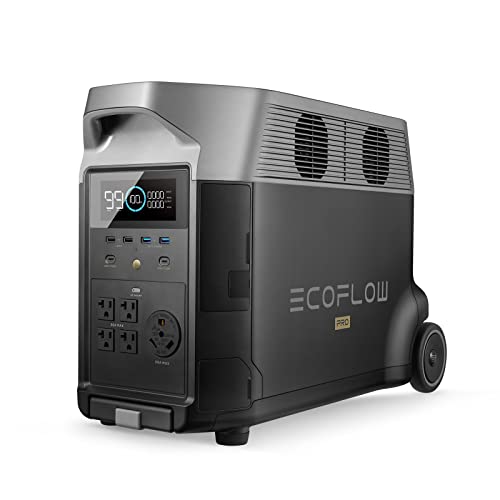
The original EcoFlow DELTA Pro is the entry point for solar backup power in the 50-amp class. With a 3600Wh LFP battery and 3600W AC output (expandable to 4500W with X-Boost), it can power most home essentials—fridge, freezer, coffee maker, lights, and electronics—for up to a day. The X-Stream fast charging technology fully recharges the unit in 1.8 hours on a 240V outlet or 2.7 hours on a 1800W wall outlet. Solar recharging is possible with up to 4x 400W panels.
The DELTA Pro is popular for its quiet operation (no combustion noise), zero emissions, and ability to run unattended while you sleep. Users appreciate the pass-through mode that automatically switches to battery backup during an outage. The EcoFlow app allows remote monitoring of charge level, temperature, and power usage. With extra batteries, capacity can be expanded to 25kWh, providing several days of backup.
The 120V-only output means it cannot power 240V appliances like a well pump or central AC without additional equipment. The 99 lb weight is manageable but awkward for frequent moving. The initial charge is slow (around 7 hours), and solar charging efficiency depends heavily on panel positioning. For a quiet, clean emergency backup that runs a subset of home loads, the original DELTA Pro is a solid entry-level solar option.
Why it’s great
- Silent operation with zero emissions
- Fast AC recharge (1.8 hours on 240V)
- Expandable to 25kWh for multi-day backup
Good to know
- 120V only – no 240V output
- Heavy at 99 lbs
- Slow initial charge from wall outlet
FAQ
What size generator do I need for a 50 amp transfer switch?
Can I run a 50 amp generator on natural gas without additional parts?
How long can a 50 amp generator run continuously?
Is an inverter generator worth the extra cost for home backup?
Can a 50 amp generator power a whole house?
Final Thoughts: The Verdict
For most users, the best 50 amp generator winner is the Westinghouse WGen12500TFc because it offers the best balance of running watts, dual-fuel flexibility, remote start convenience, and proven reliability at a competitive price point. If you want silent, emissions-free backup with 240V capability, grab the Anker SOLIX F3800. And for ultimate fuel versatility with inverter-clean power, nothing beats the GENMAX GM10500iETC.