
Our readers keep the lights on and the weekend projects moving. As an Amazon Associate, I earn from qualifying purchases.
The gap between a muddy cheap earbud and a reference-grade monitor has shrunk to a razor-thin line at the $50 mark. With hybrid driver configurations, titanium-coated diaphragms, and tuning switches once reserved for flagship models, today’s budget IEMs deliver soundstage depth and instrument separation that rival gear costing three times as much. The challenge isn’t finding good sound—it’s knowing which driver topology and tuning philosophy actually serves your ears.
I’m Rikta — the co-founder and writer behind FitlyFast. I’ve spent hundreds of hours cross-referencing driver specifications, frequency response charts, and real-user listening tests to isolate the models that justify every cent of their build.
Whether you are a gamer chasing precise imaging, a musician needing neutral monitoring, or a commuter craving noise isolation, this guide cuts through the marketing noise to reveal the best $50 iems that actually deliver on their specs.
How To Choose The Best $50 IEMs
Not all $50 IEMs sound the same. Driver topology — single dynamic versus hybrid balanced armature (BA) — defines the character of the bass, the crispness of the highs, and the width of the soundstage. A 1DD+4BA hybrid typically offers tighter bass control and faster transient response than a single dynamic driver, while a pure dynamic can deliver a warmer, more natural timbre. Beyond drivers, look for detachable 0.78mm 2-pin cables, metal or resin shells for durability, and nozzle size for ear canal fit.
Driver Configurations: Single Dynamic vs. Hybrid
A single 10mm dynamic driver provides a cohesive, warm sound with good bass extension but can struggle with treble detail and separation at this price. Hybrid models — pairing one dynamic driver with multiple balanced armatures — split the frequency load, giving each driver a narrower band to handle. This yields cleaner highs, better instrument separation, and a wider soundstage, but may introduce phase coherency issues if the crossover is poorly implemented. The best hybrids in this range use electronic crossovers to blend the drivers smoothly.
Cable and Connectivity: 0.78mm 2-Pin is King
A detachable cable is non-negotiable at this level. The 0.78mm 2-pin standard offers the broadest aftermarket upgrade path — you can swap in a balanced cable for a DAC or a microphone cable for calls. Avoid MMCX connectors in this price bracket unless you already own compatible cables; the pins on budget MMCX jacks can wear unevenly. Silver-plated copper cables (SPC) reduce signal loss and add a touch of treble sparkle, while pure copper cables warm the signature.
Fit and Isolation: Nozzle Size and Tip Rolling
A comfortable seal is the single biggest factor in perceived sound quality. If the nozzle is larger than 6mm, users with smaller ear canals will struggle to get a seal without aftermarket tips. Foam tips (like Comply or KBear 07) improve passive isolation by up to 15dB and tame harsh treble, while silicone tips preserve more detail but let in more ambient noise. The best IEMs in this category include multiple tip sizes and types in the box, saving you a separate purchase.
Quick Comparison
On smaller screens, swipe sideways to see the full table.
| Model | Category | Best For | Key Spec | Amazon |
|---|---|---|---|---|
| Linsoul KZ ZS10 PRO 2 | Hybrid | Detailed monitoring / gaming | 1DD+4BA with 4-level tuning switch | Amazon |
| KZ ZS10 Pro | Hybrid | Competitive gaming / bass response | 4BA+1DD with 304 stainless steel shell | Amazon |
| Moondrop LAN | Single Dynamic | Neutral reference / classical music | Beryllium-plated dome diaphragm | Amazon |
| CCA C10 | Hybrid | Budget value / all-round use | 1DD+4BA with zinc alloy shell | Amazon |
| Linsoul Tripowin Vivace | Single Dynamic | Warm music listening / comfort | 10mm titanium-coated PET diaphragm | Amazon |
| Vibes 202 | Single Dynamic | Bass-forward / gym use | MMCX detachable cable, 1-Tesla driver | Amazon |
| KZ ZEX | Hybrid | Soundstage width / experimental sound | 6.8mm electrostatic + 10mm dynamic | Amazon |
In‑Depth Reviews
1. Linsoul KZ ZS10 PRO 2

The ZS10 Pro 2 refines the hybrid formula with a 10mm super-linear magnetic dynamic driver and dual 31736 balanced armatures per side, plus an electronic three-way crossover that minimizes phase smear between drivers. The bass is polite but responsive — it doesn’t bleed into the mids, and the treble extension is airy without becoming splashy. The built-in 4-level tuning switch lets you toggle between a neutral reference, a slight bass shelf, a brighter top-end, or a warm V-shape, which effectively gives you four IEMs in one shell.
The shell is larger than the standard ZS10 Pro, which can cause pressure on smaller ears after extended wear. Many users report that the stock silicone ear tips are uncomfortable and emit a faint chemical smell, so plan for a foam tip swap immediately. The silver-plated cable is adequate but lacks a chin cinch, allowing the cable to slide during movement. Despite these ergonomic quirks, the tuning switch flexibility and driver clarity make this the most versatile hybrid under .
For audiophiles who want to tailor their sound signature without an EQ app, the ZS10 Pro 2 is a no-compromise pick. It reveals micro-details in recordings — the scrape of a bow string, the breath between vocal phrases — that are buried on single-driver competitors. If you only buy one IEM in this bracket, this is the one.
Why it’s great
- Four distinct tunings from the mechanical switch
- Excellent treble detail and soundstage width
- Detachable 0.75mm 2-pin cable standard
Good to know
- Bulky shell may not fit small ear conchae
- Stock ear tips are poor quality
- No chin slider on cable
2. KZ ZS10 Pro

The original ZS10 Pro remains a benchmark for competitive gaming IEMs because of its aggressive soundstage and imaging precision. The 4 balanced armature drivers handle mids and highs with surgical clarity, while the 10mm dual magnetic dynamic driver delivers a punchy, controlled bass that doesn’t mask footsteps or environmental cues. The 304 stainless steel faceplate and resin body are durable enough for daily carry in a gym bag or backpack, though the silver plate smudges easily with fingerprint oils.
The stock cable is the weak link — it’s prone to tangling and the attached microphone sounds muffled, so competitive gamers should pair this with a separate desk mic or a modmic. The nozzle is average in length and diameter, which means most users can achieve a good seal with the included silicone tips, though foam tips improve isolation noticeably. The recessed mids are a double-edged sword: they reduce vocal warmth but keep instruments separated in chaotic mixes.
In games like Valorant and Apex Legends, the ZS10 Pro lets you track enemy movement through walls with uncanny accuracy. The bass is boosted enough to feel impactful in explosions but never overwhelms the treble details. For a wired gaming setup that doesn’t break budget, this is still the reference standard.
Why it’s great
- Excellent imaging for competitive shooters
- Punchy, controlled bass without bleed
- Durable stainless steel build
Good to know
- Built-in microphone quality is poor
- Cable tangles easily
- Mids are slightly recessed
3. Moondrop LAN

The Moondrop LAN sets a new standard for neutral tuning in the sub-$50 category thanks to its beryllium-plated dome composite diaphragm and MIM powder metallurgy stainless steel shell. The beryllium coating raises the diaphragm’s stiffness-to-mass ratio, suppressing split vibration modes in the upper treble and delivering a clean, extended response without the metallic glare that plagues cheaper metal-dome drivers. The shell itself feels premium — laser-etched Moondrop branding and a seamless brushed finish make it look like a IEM.
The included cable is a 0.78mm 2-pin design with a soft, pliable jacket that resists microphonics, though it lacks a chin cinch. The LAN uses the same chassis as the Chu 2, meaning it fits smaller ears better than most hybrids, and the nozzle is short enough to work with shallow insertion tips. Sound-wise, the signature follows a mild diffuse-field target: tight sub-bass extension, linear mids, and a slight 8 kHz air bump. It’s not for bassheads — the low end is more about texture than slam — but for classical, acoustic, and vocal-centric genres, it’s revelatory at this price.
Where the LAN stumbles is in overall dynamics and macro-detail compared to hybrid competitors. The treble extension is excellent for a single dynamic, but BA-equipped models like the ZS10 Pro 2 retrieve more micro-information in complex rock tracks. If your priority is fatigue-free listening with accurate tonality, the LAN is the most honest IEM in the lineup.
Why it’s great
- Best neutral tuning under
- Premium MIM stainless steel build
- Excellent for smaller ear canals
Good to know
- Bass lacks weight for genres like EDM
- Cable has no chin cinch
- Not the most dynamic driver implementation
4. CCA C10
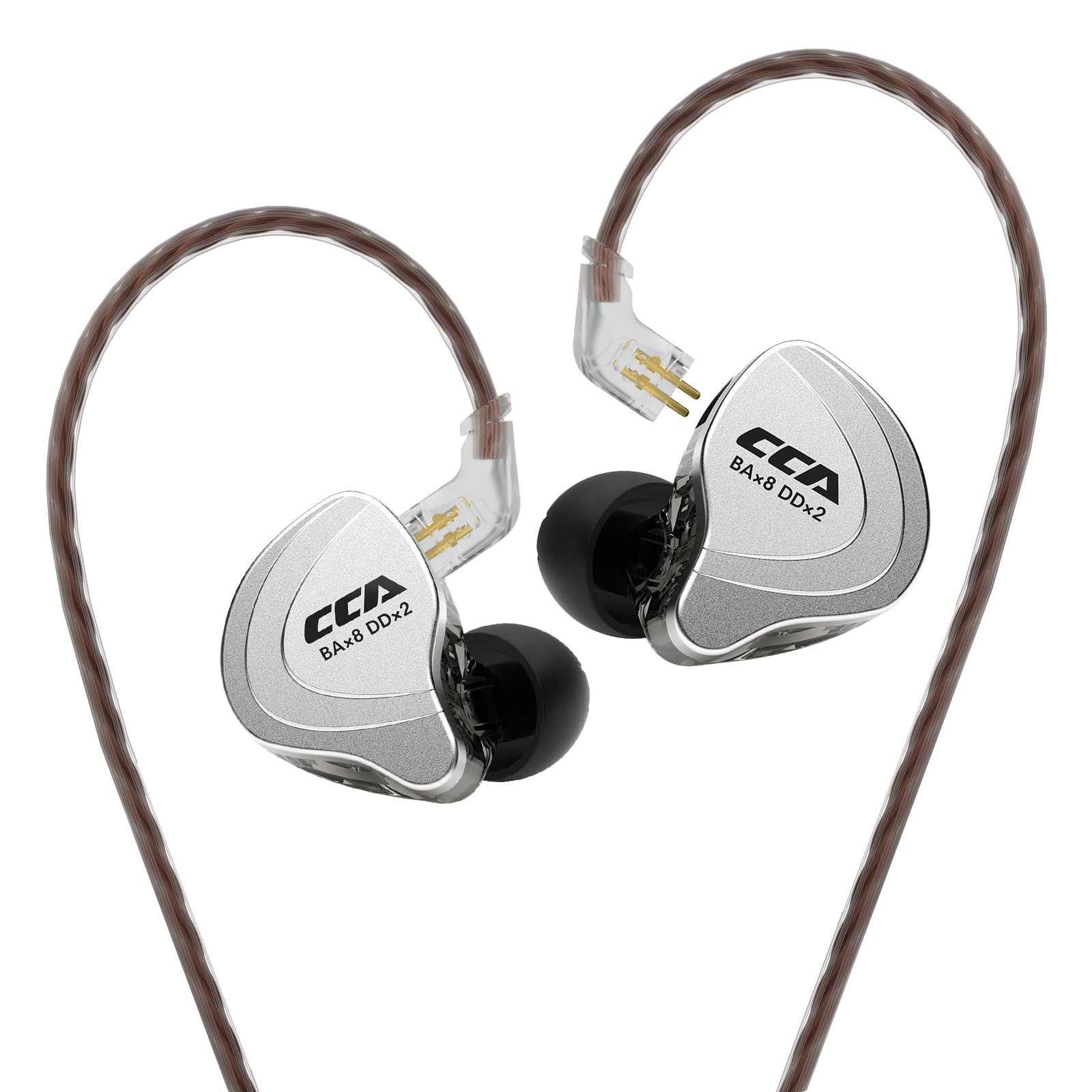
The CCA C10 packs a 1-dynamic + 4-balanced-armature configuration into a zinc alloy shell that feels heavier and more robust than its price suggests. The tuning leans toward a U-shape with a warm mid-bass bump and smooth, non-fatiguing treble that avoids the harsh peaks common in early hybrid designs. The 10mm dynamic driver handles the lows with decent authority for the price, while the four BAs (two for mids, two for highs) provide acceptable separation as long as you don’t push the volume too high — cross-over coherency is weaker at higher SPLs.
The detachable 0.75mm 2-pin cable is the same 4-core silver-plated wire used on many budget KZ models: functional but tangly, with a slightly stiff jacket that creates microphonics when rubbing against a shirt collar. The stock silicone tips seal well for average ear canals, but larger ears may need a wide-bore tip like the SpinFit CP100 to get a comfortable fit. The nozzle is on the longer side, which helps with deep insertion but can be uncomfortable for users with shallow ear canals.
For the price, the C10 delivers a balanced, engaging sound that works across genres — from hip-hop to classic rock — without needing EQ. It doesn’t match the technical performance of the ZS10 Pro 2 in treble detail or bass control, but for less money, it covers all the essential bases and includes a robust carrying case in some packaging variants.
Why it’s great
- Balanced U-shaped tuning with good low end
- Sturdy zinc alloy shell build
- Detachable cable for easy upgrades
Good to know
- Crossover can struggle at high volume
- Stock cable tangles and has microphonics
- Long nozzle may not suit all ears
5. Linsoul Tripowin Vivace

The Tripowin Vivace, co-tuned by Korean audio reviewer 0DiBi, uses a 10mm titanium-coated PET diaphragm to deliver a warm-neutral signature with a bass boost that feels organic rather than artificial. The titanium coating adds stiffness to the diaphragm without adding mass, resulting in fast transient response and clean mid-bass punch. The midrange is natural and slightly warm — male vocals have chesty presence, and female vocals stay sweet without climbing into shout territory.
The shell is a plastic body with a metal faceplate, which keeps weight low and comfort high — the 4.2mm nozzle is short enough to suit most ear anatomies without deep insertion. However, the included cable and eartips are the weakest aspects: the cable feels thin and the stock silicone tips do not provide a reliable seal for many users. Replacing them with KBear 07 foam tips improves bass extension and isolation significantly. The plastic shell also lacks the premium feel of metal competitors, but it’s more durable in practice.
For all-day listening sessions — gaming, podcasts, or long playlists — the Vivace’s relaxed treble and comfortable fit make it a top choice. It won’t win technicality awards next to hybrid rivals, but its cohesive tonality and fatigue-free presentation are rare at this price point. If you prioritize comfort and a warm signature over raw resolution, this is your pick.
Why it’s great
- Warm-neutral tuning with excellent vocal presence
- Short 4.2mm nozzle for wide fit compatibility
- Lightweight build for extended wear
Good to know
- Cable and stock eartips are low quality
- Plastic shell lacks premium feel
- Average technical detail retrieval
6. Vibes 202
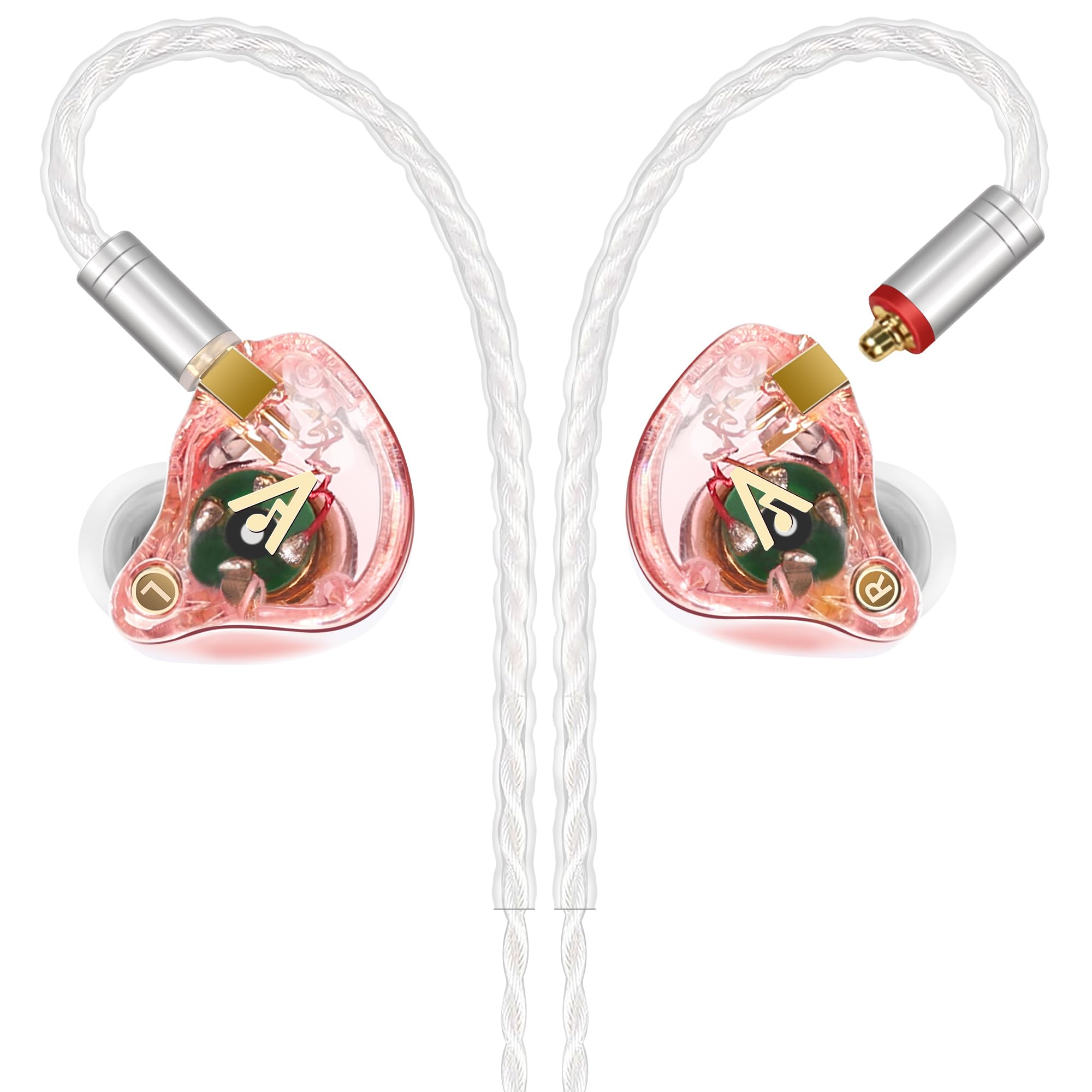
The Vibes 202 takes a bass-forward approach with a 1-Tesla neodymium dynamic driver paired with a silver-plated Litz-braided MMCX cable. The sound signature is dark — the bass peak centers around 50 Hz with a 5 dB shelf that punches hard in EDM, hip-hop, and rock. The highs are rolled off significantly compared to hybrid competitors, trading shimmer and air for a smooth, non-fatiguing top end that works well for long listening sessions or noisy environments like the gym.
The semi-transparent resin shell is visually distinctive and available in 10 colors, though the material scratches more easily than metal. The MMCX connectors are gold-plated and feel solid, but MMCX’s rotating joint is less convenient for cable rolling than 2-pin — the cable twists during use if not locked into place. The over-ear earhooks are pre-formed and flexible, providing a secure fit that stays put during running or weightlifting. The included carrying case is a rigid clamshell that protects the IEMs well in a bag.
This is not a reference monitor for mixing or competitive gaming — the treble roll-off hides spatial cues and reduces soundstage depth. But for pure bass enjoyment and noise blocking during commutes or workouts, the Vibes 202 delivers the most satisfying low-end thump under . If you know you want bass quantity over nuance, this is the clear choice.
Why it’s great
- Powerful, deep bass for EDM and hip-hop
- Smooth, non-fatiguing treble
- Secure over-ear fit for active use
Good to know
- Treble roll-off reduces detail and soundstage
- MMCX connectors less convenient than 2-pin
- Resin shell scratches easily
7. KZ ZEX

The KZ ZEX experiments with a 6.8mm low-voltage electrostatic driver paired with a 10mm dual magnetic dynamic driver — a rare topology at the price. The electrostatic driver extends the frequency response up to 40 kHz, adding an airy, ethereal quality to the treble that feels spacious and almost holographic. The dynamic driver handles the lows and mids with a slightly warm tilt, creating a U-shaped signature that emphasizes the bass and treble while keeping vocals present but not forward.
The cast zinc alloy and resin body is seamless and visually striking, especially in the rose gold finish, which has an iridescent sheen under light. However, the lack of left/right markings on the earbuds themselves (the markings are on the cable connectors) causes confusion during first setup — paying attention to the red (right) and blue (left) cable markers is essential to avoid polarity issues. The included silver-plated flat cable is tangle-resistant but stiff, and the ear hook memory wire can feel tight on larger ears.
The ZEX’s biggest limitation is its low sensitivity — it requires more power than typical IEMs, so a USB-C dongle DAC is recommended for consistent volume from phones or laptops. When properly driven, the soundstage width and treble shimmer are genuinely impressive for the price, though bass definition trails behind pure dynamic or BA competitors. It’s a niche pick for adventurous listeners who want to experience electrostatic air without spending hundreds.
Why it’s great
- Unique electrostatic+dynamic hybrid driver
- Very wide soundstage and airy treble
- Stunning rose gold zinc alloy build
Good to know
- Low sensitivity; needs a DAC dongle
- Earbuds unmarked for L/R, cable is marked
- Stiff ear hook wire on cable
FAQ
Do I need a DAC or dongle to drive $50 IEMs properly?
Why do some IEMs have tuning switches and should I use them?
Can I use these IEMs with a gaming console controller?
What eartip material is best for bass and isolation?
Final Thoughts: The Verdict
For most users, the best $50 iems winner is the Linsoul KZ ZS10 PRO 2 because its 4-level tuning switch lets you adapt the sound to any genre or source, and its 1DD+4BA hybrid driver delivers the best technical detail and soundstage width in the category. If you want a neutral reference with the most honest tonality for classical and vocal music, grab the Moondrop LAN. And for immersive competitive gaming where imaging and bass control matter most, nothing beats the KZ ZS10 Pro.