
Our readers keep the lights on and the weekend projects moving. As an Amazon Associate, I earn from qualifying purchases.
The 55-inch class has become the goldilocks zone for home entertainment — large enough to deliver a cinematic experience in most living rooms and media dens, yet compact enough to avoid dominating a wall. But the category has splintered into a maze of Mini-LED, QLED, OLED, and proprietary backlight technologies, each promising a different flavor of perfection. Picking the wrong one means living with washed-out blacks in a dark room or motion blur during the big game.
I’m Rikta — the co-founder and writer behind FitlyFast. I’ve spent countless hours dissecting panel types, refresh rates, dimming algorithms, and real-world usage patterns to separate marketing fluff from performance that actually matters when you sit down to watch.
Whether you are a cinephile chasing infinite contrast, a competitive gamer demanding 144Hz fluidity, or someone who just wants a beautiful picture in a bright living room, this guide breaks down the technology to help you find the best 55 inch smart tv for your exact setup.
How To Choose The Best 55 Inch Smart TV
Selecting the right television for your home is about understanding which visual features matter most for your viewing habits. A set built for a dark home theater prioritizes different strengths than one meant for a sun-drenched family room. Here are the three most critical factors to evaluate.
Panel Technology: OLED vs. Mini-LED vs. QLED
OLED panels use self-lit pixels that can turn off completely, producing perfect blacks and infinite contrast that make HDR content truly pop in a dark room. Mini-LED technology uses thousands of tiny LEDs behind an LCD panel to achieve much higher peak brightness, making them superior for bright rooms with direct sunlight. QLED is a marketing term for quantum-dot-enhanced LCDs that boost color volume, often combined with Mini-LED backlights for a hybrid approach.
Refresh Rate and Gaming Features
For sports and console gaming, a native 120Hz or 144Hz panel eliminates motion blur and stutter. Variable Refresh Rate (VRR) and Auto Low Latency Mode (ALLM) are essential for tear-free, responsive gameplay on PlayStation 5 and Xbox Series X. An HDMI 2.1 input is required to support 4K at 120Hz or 144Hz, so count those ports before buying.
Local Dimming Zones and Brightness
The number of local dimming zones determines how precisely a Mini-LED or FALD (Full Array Local Dimming) TV can control light. More zones mean less blooming — that distracting halo effect around bright objects on a dark background. Peak brightness, measured in nits, directly impacts HDR highlight punch and visibility in bright rooms. Premium Mini-LED models often exceed 2000 nits, while mid-range sets hover around 600-1000 nits.
Quick Comparison
On smaller screens, swipe sideways to see the full table.
| Model | Category | Best For | Key Spec | Amazon |
|---|---|---|---|---|
| LG G5 OLED evo | Premium OLED | Ultimate contrast & brightness | 165Hz / 2000+ nits | Amazon |
| LG G4 OLED evo | Premium OLED | Cinema picture quality | A11 AI Processor / 120Hz | Amazon |
| Sony BRAVIA 8 OLED | Premium OLED | PS5 gaming & movies | XR Processor / Pure Black | Amazon |
| Samsung The Frame | Lifestyle QLED | Art mode & decor | NQ4 AI Gen2 / 144Hz | Amazon |
| Hisense U7 Mini-LED | Premium Mini-LED | Bright room & high-refresh gaming | 165Hz Native / 3000 zones | Amazon |
| Samsung M80H Mini-LED | Premium Mini-LED | AI-powered picture enhancement | 144Hz / Pure Spectrum Color | Amazon |
| Toshiba Z670R Mini-LED | Mid-Range Mini-LED | Feature-rich daily viewing | 144Hz / REGZA Engine ZRi | Amazon |
| TCL QM7K Mini-LED | Mid-Range Mini-LED | Budget Mini-LED with great HDR | 144Hz / LD2500 dimming | Amazon |
| Sony BRAVIA 2 LED | Mid-Range LED | PS5 features & processing | 4K X1 Processor / 60Hz | Amazon |
| Roku Plus Series Mini-LED | Mid-Range Mini-LED | Simple Roku OS & value | Mini-LED / QLED / 60Hz | Amazon |
| Roku Pro Series Mini-LED | Premium Mini-LED | Roku ecosystem & 120Hz gaming | 120Hz / QLED / Soundstage | Amazon |
In‑Depth Reviews
1. LG G5 OLED evo (OLED55G5WUA)

The LG G5 OLED evo represents the peak of what OLED can achieve, with Brightness Booster Ultimate delivering over 2000 nits of peak brightness — a level that finally makes OLED viable in moderately bright rooms without sacrificing its signature perfect blacks. The Alpha 11 AI Processor Gen2 handles intelligent upscaling and personalized picture profiles that adapt to content in real time, and the 165Hz native refresh rate with 0.1ms response time makes it a monster for competitive gaming on consoles or PC.
HDR performance is extraordinary, with Dolby Vision, HDR10, and Filmmaker Mode all supported natively. The one-wall design leaves virtually no gap when mounted, and the metal frame feels premium. The webOS Re:New program promises five years of software updates, ensuring the smart interface stays current.
The remote lacks backlit buttons, which is a strange omission at this price tier, and the 165Hz mode requires a menu dive to enable. The set also ships without a stand included, relying on a wall bracket, so factor that into your installation plan.
Why it’s great
- Over 2000 nits peak brightness with perfect OLED blacks
- 165Hz native refresh rate with 0.1ms response
- Top-tier AI upscaling and processing
Good to know
- Remote is not backlit
- No stand included; wall mount only
- Limited ports compared to some competitors
2. LG G4 OLED evo (OLED55G4SUB)

The LG G4 OLED evo remains a stunning performer, using the A11 AI Processor to deliver rich, saturated colors and deep blacks that make HDR content look almost three-dimensional. The Brightness Booster Max technology pushes each self-lit pixel harder than previous generations, resulting in a noticeably more luminous picture than older OLEDs while maintaining 100% Color Volume with 100% Color Fidelity.
Gamers benefit from AMD FreeSync and NVIDIA G-Sync support, along with four HDMI 2.1 inputs for multi-console setups. Dolby Vision and Dolby Atmos are baked in, and Filmmaker Mode lets you watch content the way the director intended. The one-wall design sits flush against the wall for a clean, gallery-like aesthetic.
The webOS interface has improved with recent updates but still feels less intuitive than Roku or Google TV to some users. Some early units showed minor line defects that self-corrected within 24 hours, though this appears to be an anomaly rather than a widespread issue.
Why it’s great
- Infinite contrast with perfect blacks and bright highlights
- Excellent color accuracy and volume
- Four HDMI 2.1 ports for multi-device gaming
Good to know
- webOS interface not as snappy as competitors
- No integrated stand with wall-mount design
- Brightness still trails high-end Mini-LED in very bright rooms
3. Sony BRAVIA 8 OLED (K-55XR80)

The Sony BRAVIA 8 OLED leverages over eight million self-lit pixels with XR Contrast Booster 15 to deliver pure black levels alongside dazzling highlights that make HDR pop. The XR Processor intelligently analyzes every scene in real time, upscaling HD content to near-4K quality with XR Clear Image while maintaining natural grain where it belongs. This is widely considered the best TV for PlayStation 5, offering exclusive Auto HDR Tone Mapping and Auto Genre Picture Mode that optimize the console’s output automatically.
Acoustic Surface Audio+ uses the entire screen as a speaker, creating sound that seems to come directly from the action on screen rather than from a downward-firing speaker. The Google TV platform integrates all streaming services cleanly, though users report occasional software hiccups like sound dropout in some apps. Dolby Vision, Dolby Atmos, IMAX Enhanced, and DTS:X are all supported.
The set is heavy and requires help to mount or move.
Why it’s great
- Deepest blacks with exceptional shadow detail
- Best-in-class processing and upscaling
- PS5 exclusive features work flawlessly
Good to know
- Heavy and difficult to install alone
- Google TV software can have sound dropouts
- Brightness limited in direct sunlight conditions
4. Samsung The Frame LS03F (55M80H)

The Samsung The Frame LS03F is designed first as a piece of decor and second as a television. Its matte, anti-glare screen mirrors the texture of a canvas print, virtually eliminating reflections and making artwork displayed in Art Mode look convincingly like a real framed piece. The NQ4 AI Gen2 Processor handles upscaling and motion, and the panel supports 144Hz VRR for smooth gaming when the TV is in use.
Customizable bezels let you match your existing wall art frames, and the slim One Connect box keeps cable clutter to a single nearly invisible wire. The SmartThings app makes setup seamless, and the built-in Alexa and Bixby provide hands-free control. Picture quality is solid for a QLED, with vibrant colors and good brightness, though black levels can’t match OLED due to the lack of per-pixel dimming.
The wireless One Connect box can introduce connection issues with high-bandwidth 4K HDR content if placed too far from the screen, and some users report severe blooming in dark scenes with bright objects. The flush wall mount is a two-piece design that can be tricky to align perfectly over studs.
Why it’s great
- Virtually reflection-free matte screen for art display
- Beautiful flush-mount design with customizable bezels
- Excellent upscaling and 144Hz gaming support
Good to know
- Visible blooming and lifted blacks in dark scenes
- One Connect wireless connection can be unstable at high bandwidth
- Mount installation requires careful stud alignment
5. Hisense U7 Mini-LED (55U7SG)
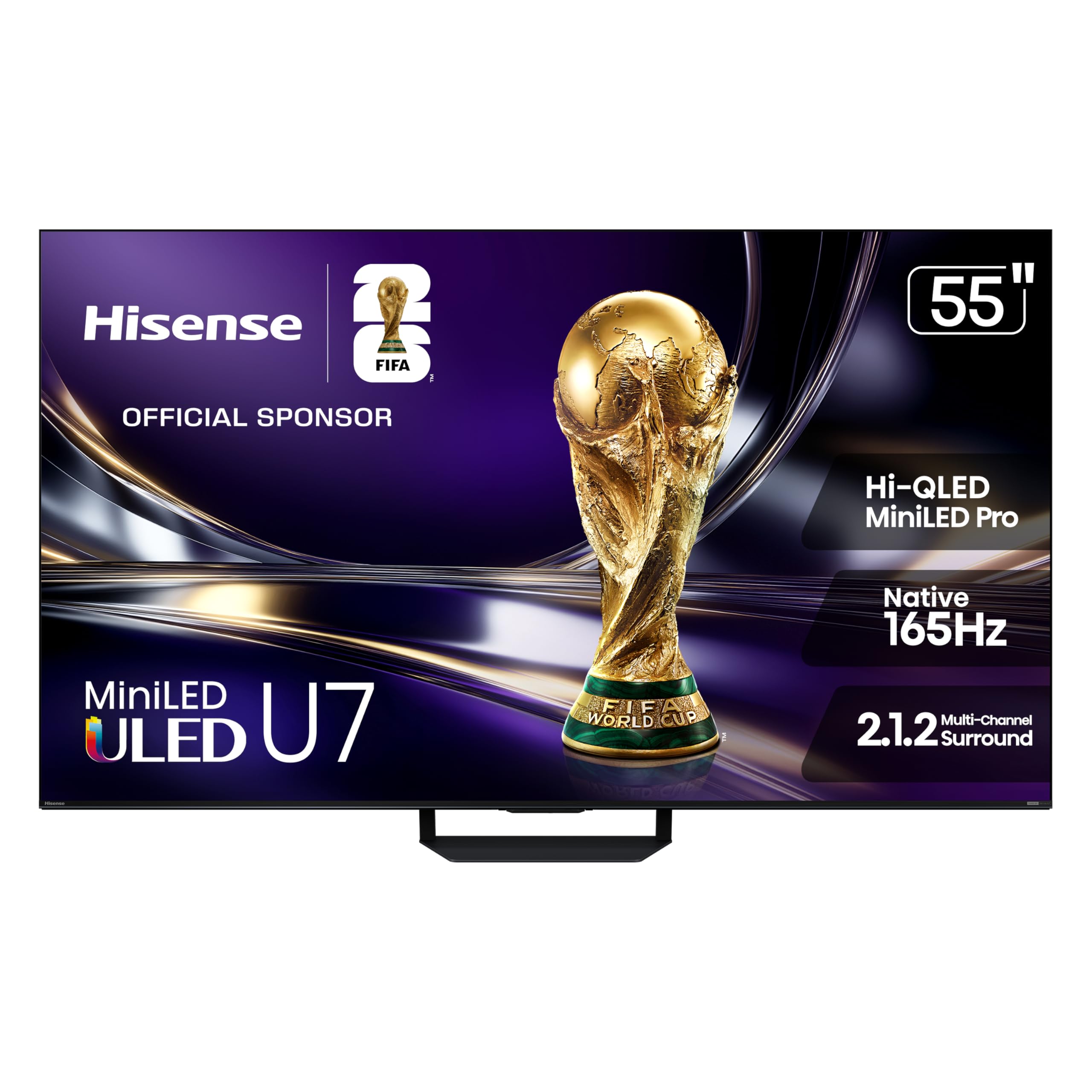
The Hisense U7 Mini-LED is a powerhouse for gamers who want high refresh rates without paying OLED premiums. Its native 165Hz refresh rate with VRR up to 330Hz ensures buttery-smooth motion with zero tearing, and the Hi-QLED MiniLED Pro backlight with up to 3000 local dimming zones delivers exceptional contrast with minimal blooming. The peak brightness of up to 3000 nits makes this one of the brightest TVs available, crushing glare in sunny rooms.
The Hi-View AI Engine Pro constantly analyzes content to adjust color, contrast, and detail automatically. Anti-reflection and glare-free screen technology uses a dual-layer treatment that keeps the picture crisp even with windows behind you. Dolby Vision IQ and Dolby Atmos are supported, along with IMAX Enhanced for a cinematic experience. Google TV provides a clean, app-rich interface.
The built-in sound is decent for a flat panel, but the 2.1.2 channel system benefits significantly from a dedicated soundbar for full Dolby Atmos immersion. The interface can feel slightly sluggish compared to the fastest Roku or webOS implementations.
Why it’s great
- Ultra-bright at up to 3000 nits peak
- 165Hz native refresh rate with low input lag
- Excellent anti-glare coating for bright rooms
Good to know
- Built-in audio benefits from a soundbar upgrade
- Google TV interface can be slightly sluggish
- Local dimming zones, while high, still show some blooming on extreme content
6. Samsung M80H Mini-LED (55M80H)
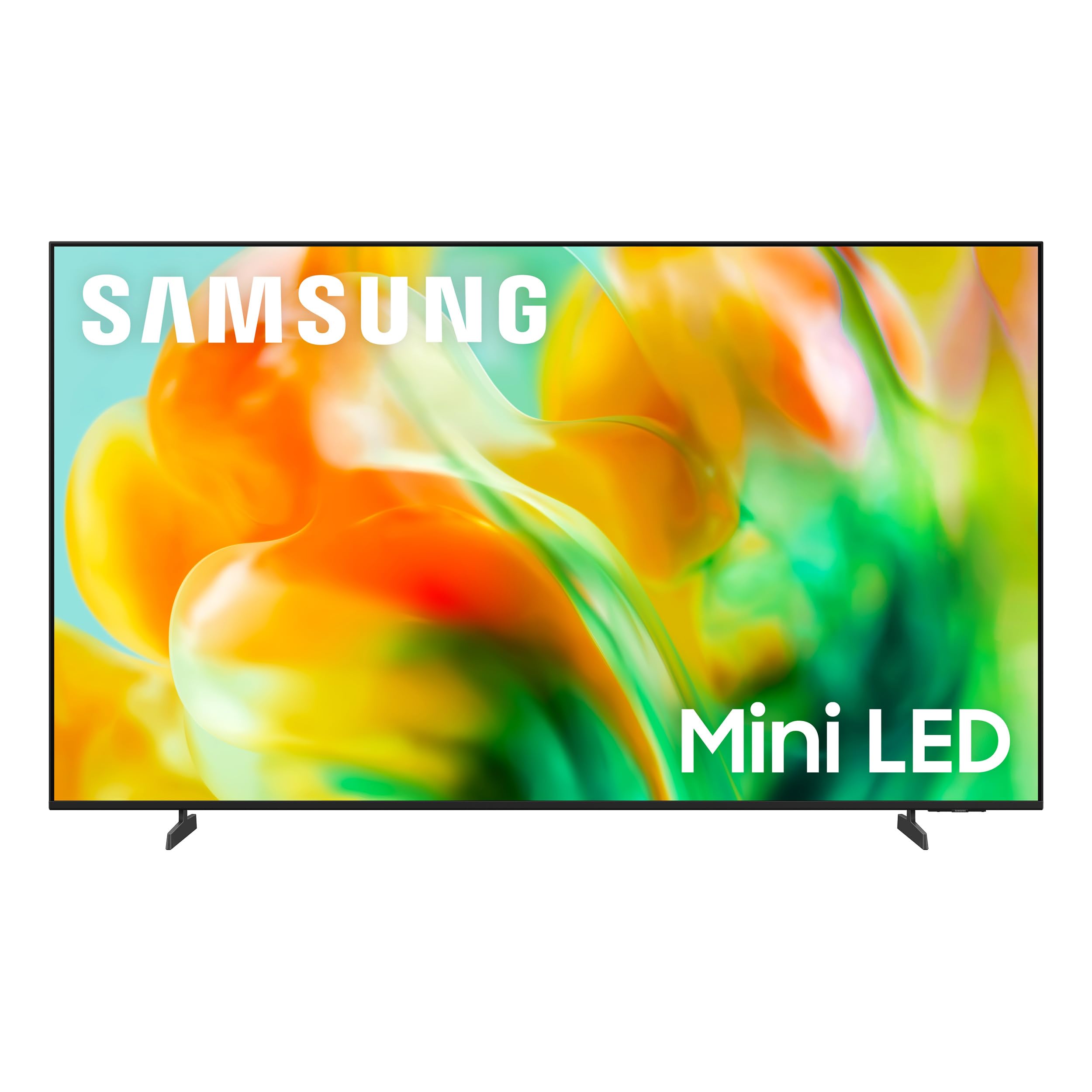
The Samsung M80H combines a Mini-LED backlight with the NQ4 AI Gen2 Processor to deliver a picture that adapts intelligently to every scene. AI Mode analyzes content in real time, enhancing clarity, color, and contrast, while Pure Spectrum Color technology reproduces one billion true-to-life shades. Motion Xcelerator 144Hz ensures fast-paced sports and games remain smooth and tear-free, and Auto HDR Remastering transforms standard SDR content to look close to HDR quality.
The Samsung Vision AI extends beyond picture quality, offering personalized recommendations and ambient features that integrate with the SmartThings ecosystem. Alexa is built in for hands-free control. The slim, minimalist design looks clean in any room, and the 120Hz panel (with 144Hz support in game mode) covers all current console requirements.
The AI picture enhancements can occasionally oversharpen or oversaturate certain content, requiring manual adjustment. The Tizen smart platform, while powerful, has a steeper learning curve and more bloatware than Google TV or Roku.
Why it’s great
- Intelligent AI processing adapts picture per scene
- One billion color shades for vibrant HDR
- Smooth 144Hz motion handling for sports and games
Good to know
- AI enhancements can be overly aggressive
- Tizen platform has more pre-installed apps than needed
- Black levels not as deep as OLED or high-zone Mini-LED
7. Toshiba Z670R Mini-LED (55Z670R)
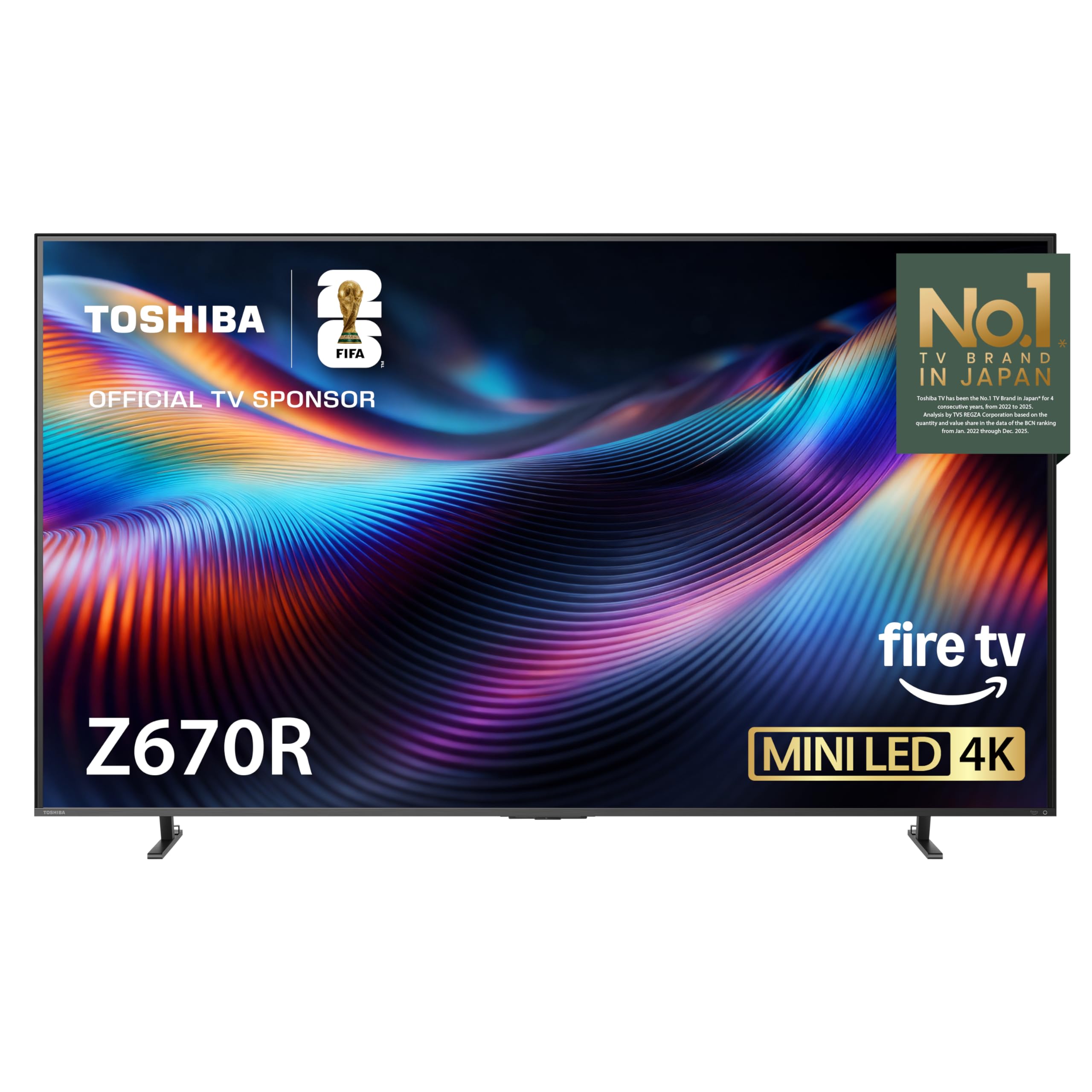
The Toshiba Z670R brings Mini-LED and QLED technology to a more accessible price point without skimping on gaming features. The native 144Hz panel with AMD FreeSync Premium and VRR support delivers tear-free gameplay, while the REGZA Engine ZRi Gen3 — fine-tuned by Toshiba engineers in Japan — optimizes clarity and contrast scene by scene. The Full Array Local Dimming with Mini-LEDs produces deeper blacks and brighter highlights than standard LED TVs.
Dolby Vision IQ and HDR10+ Adaptive adjust the picture based on ambient room lighting, and the REGZA Power Audio Pro with dedicated bass woofer offers surprising audio depth without a soundbar. Fire TV with Alexa built-in provides a seamless smart experience, though the interface has more promotional content than some users prefer. The AI Light Sensor Pro automatically adjusts brightness to reduce eye strain.
The Fire OS interface can feel cluttered with sponsored content, and the remote’s “Recents” button is awkwardly small. While the built-in woofer adds body to the sound, it doesn’t match a dedicated subwoofer setup for deep bass.
Why it’s great
- Native 144Hz with FreeSync Premium for smooth gaming
- REGZA Engine delivers excellent scene-by-scene optimization
- Built-in bass woofer for richer sound than typical TV speakers
Good to know
- Fire OS interface has excessive promotions
- Remote button layout feels cramped
- Audio lacks true subwoofer depth for cinema
8. TCL QM7K (55QM7K)
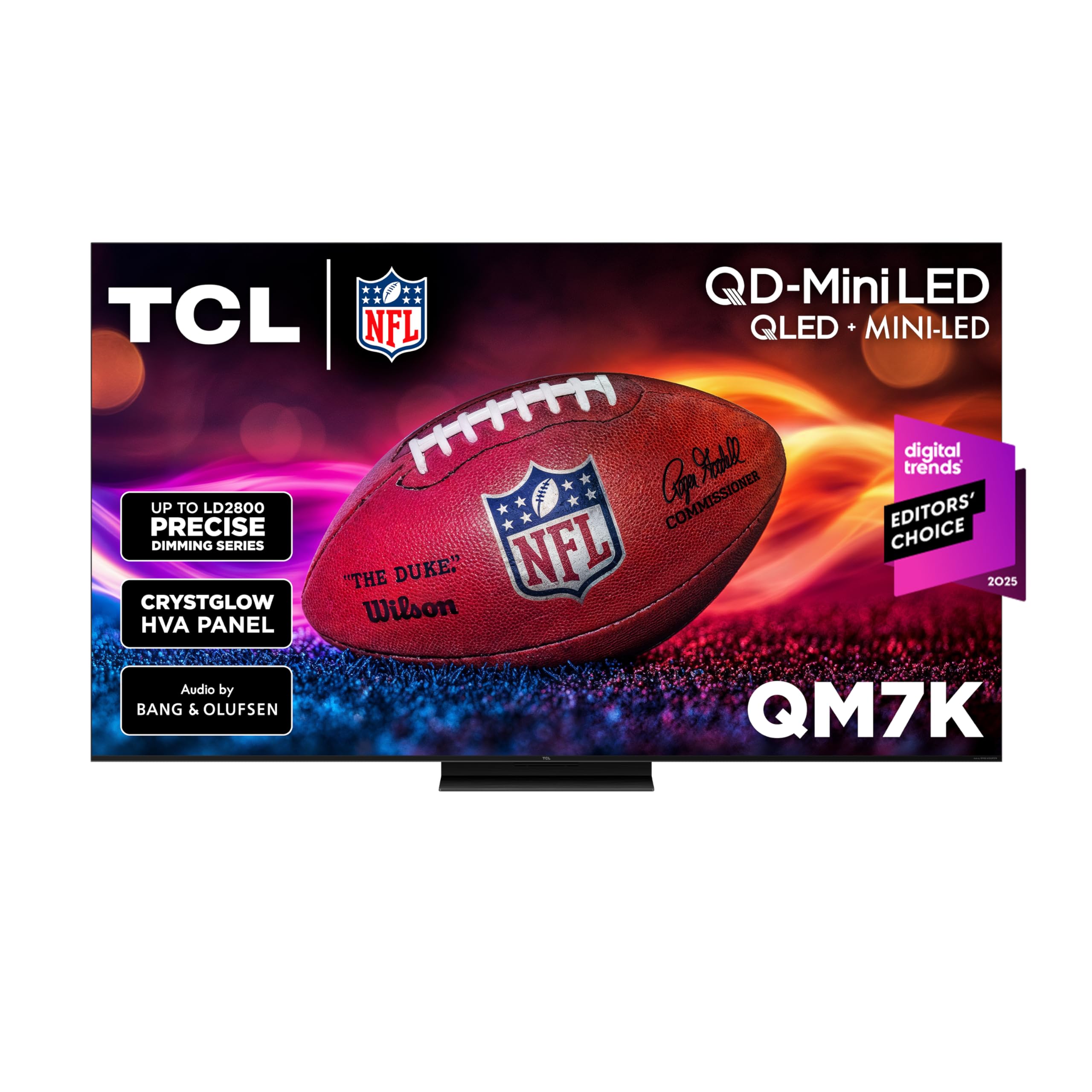
The TCL QM7K is the entry point for serious Mini-LED performance, using TCL’s QD-Mini LED technology that combines the color volume of QLED with the precise backlight control of Mini-LED. The Halo Control System, featuring up to LD2500 precise dimming zones, delivers deep blacks with minimal blooming — a remarkable achievement at this price. The CrystGlow HVA panel includes anti-reflective properties that maintain image clarity in bright rooms, and peak HDR brightness is high enough to make Dolby Vision content truly stand out.
The 144Hz native refresh rate with VRR and ALLM makes it a capable gaming companion for next-gen consoles. Google TV provides a clean, app-rich interface, and the Onkyo-tuned audio system delivers decent sound with surprising soundstage from the built-in subwoofers.
The remote feels cheap compared to the rest of the build, and Google TV does come with some pre-installed bloatware. The Bang & Olufsen audio tuning is decent but doesn’t replace a proper soundbar for immersive audio. Some users report the need for software updates to resolve occasional HDMI handshake issues.
Why it’s great
- Excellent Mini-LED contrast with up to 2500 dimming zones
- High HDR brightness for a bright room
- 144Hz with VRR for smooth gaming
Good to know
- Remote feels cheap and plasticky
- Google TV includes pre-installed bloatware
- Built-in audio still benefits from a soundbar upgrade
9. Sony BRAVIA 2 II (K-55S20M2)

The Sony BRAVIA 2 II proves that processing power can elevate a standard LED panel well above expectations. The 4K Processor X1 delivers natural, lifelike colors and dynamic contrast that rivals more expensive Mini-LED sets in everyday content. The exclusive PlayStation 5 features — Auto HDR Tone Mapping and Auto Genre Picture Mode — make this the best TV for PS5 at its price tier, optimizing both gaming and streaming content automatically.
Motionflow XR keeps fast-moving sports and action movies blur-free, and 4K XR-Reality PRO upscales HD content convincingly to near-4K detail. Google TV provides access to all streaming platforms, while the Sony Pictures CORE app includes free movies. The Eco Dashboard puts energy efficiency controls front and center.
The LED panel lacks local dimming, so black levels in dark scenes show typical LCD grayish blacks rather than the deep blacks of Mini-LED or OLED. Some units have been reported with freezing issues that require power cycling, though this may be isolated to early production batches. The refresh rate is limited to 60Hz, so high-frame-rate gaming is not supported.
Why it’s great
- Excellent processing with natural colors and sharp detail
- PS5 exclusive features work brilliantly
- Upscales HD content to near-4K quality
Good to know
- Limited to 60Hz; no high-frame-rate gaming
- No local dimming; blacks appear gray in dark scenes
- Some units have reported freezing issues requiring a power cycle
10. Roku Plus Series Mini-LED (55Roku)
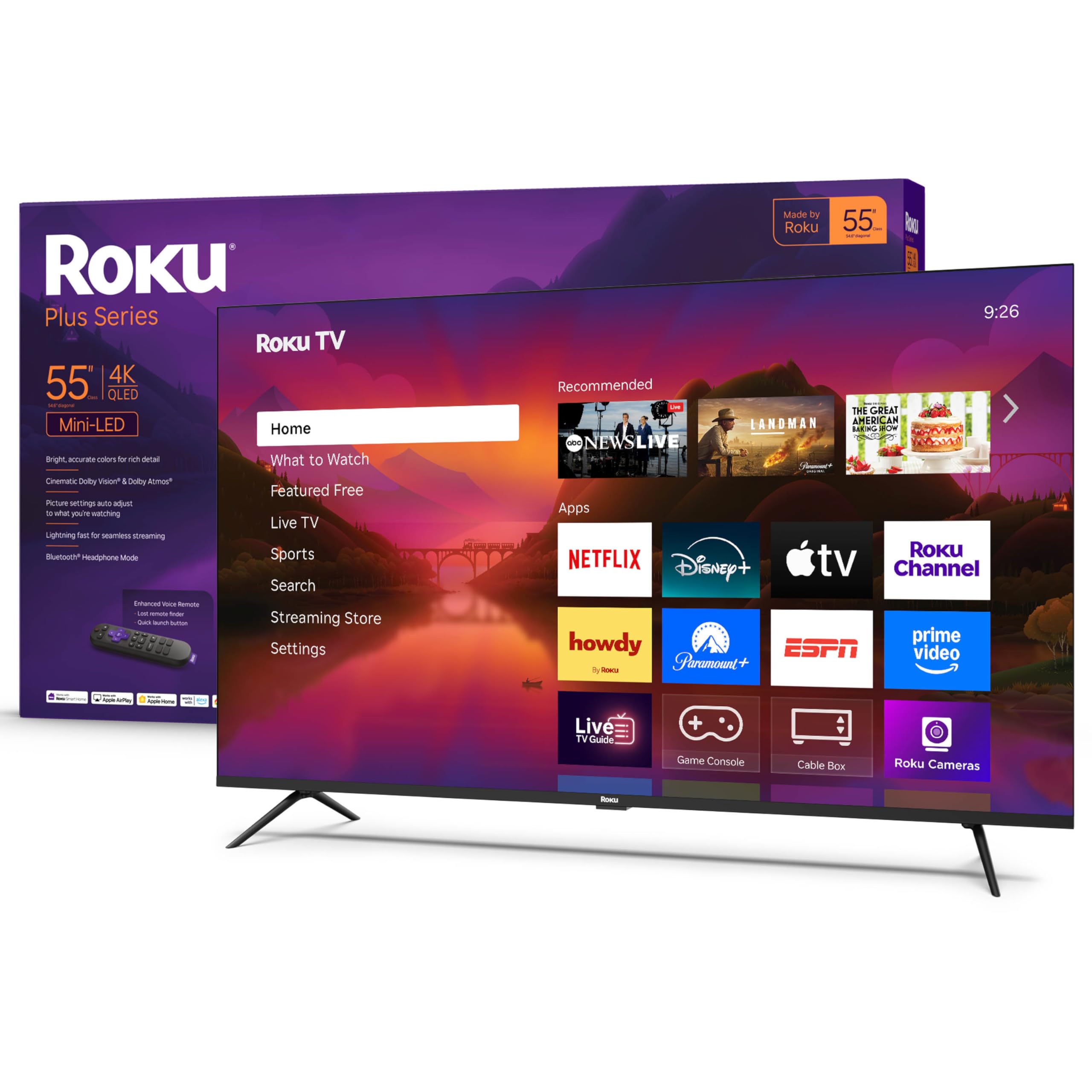
The Roku Plus Series Mini-LED offers an incredible price-to-feature ratio by combining a Mini-LED backlight with a QLED screen and Dolby Vision support. The picture quality is impressive for the money, with deep blacks (thanks to Mini-LED), vibrant colors, and good brightness that works well in most living room conditions. The Roku OS is widely considered the most intuitive and user-friendly smart platform, with automatic software updates and hundreds of free channels including live local news and sports.
The Enhanced Voice Remote includes a lost remote finder and supports hands-free voice control via Roku Voice, Siri, Alexa, or Google Assistant. Apple AirPlay compatibility makes it easy to share content from Apple devices. Roku Smart Picture Max uses AI to clean up incoming signals and optimize color and sharpness automatically. The Dolby Atmos audio with a built-in subwoofer provides fuller sound than most budget TVs.
The refresh rate is capped at 60Hz, so high-refresh-rate gaming on PS5 or Xbox Series X isn’t supported. The Roku OS, while simple, lacks the advanced customization and picture-tuning options found on Google TV or Tizen. Some users note the lack of a USB port despite having USB-C connectivity.
Why it’s great
- Mini-LED with QLED delivers great contrast and color
- Best-in-class smart platform for simplicity
- Lost remote finder and hands-free voice control included
Good to know
- Capped at 60Hz; no high-refresh gaming support
- Smart platform lacks advanced customization
- Only USB-C port; no standard USB-A
11. Roku Pro Series Mini-LED (75Roku — 55-Inch Equivalent)
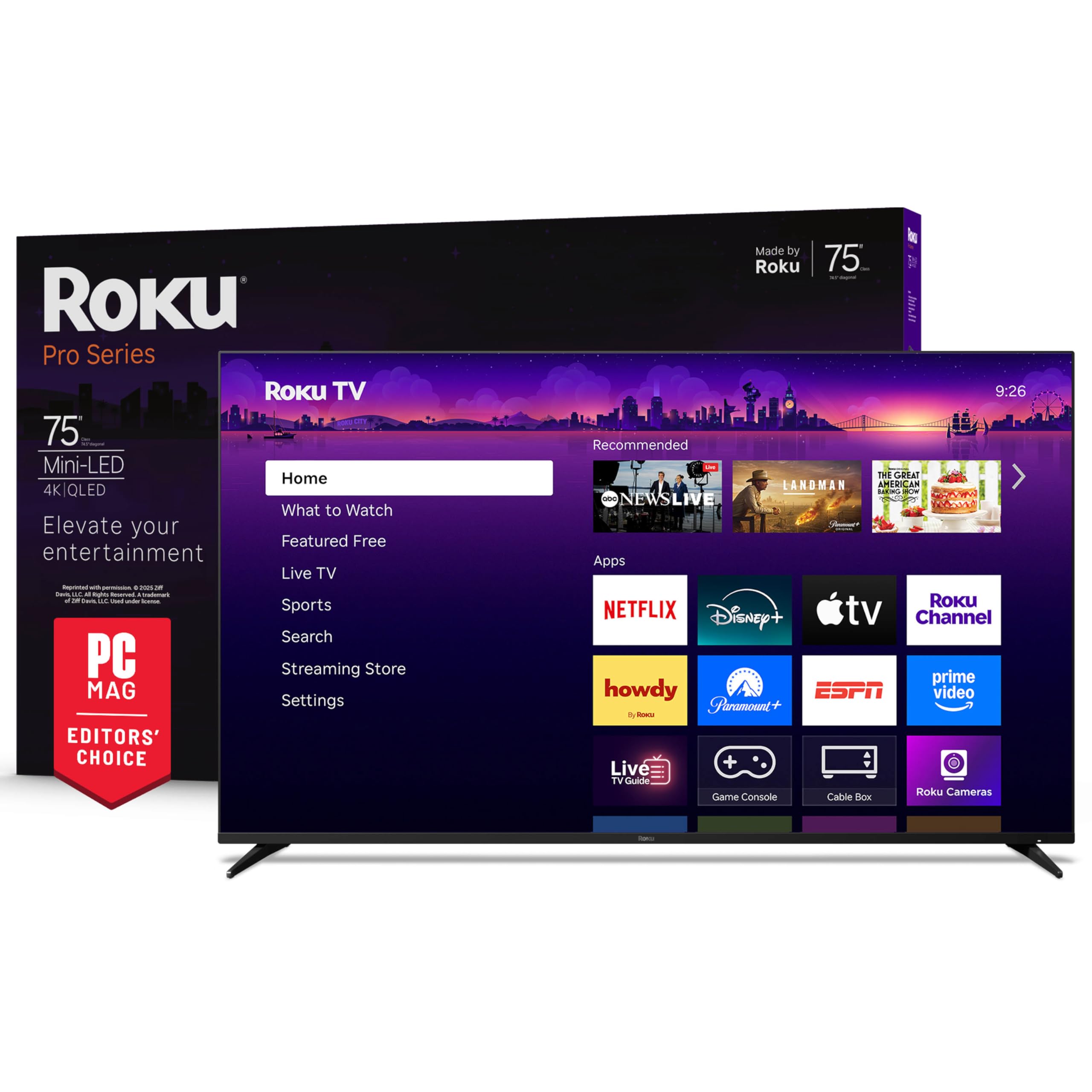
The Roku Pro Series steps up from the Plus with a 120Hz native refresh rate, making it suitable for gaming and live sports without motion blur. The QLED screen with thousands of Mini-LEDs produces vivid colors and deep contrast, while Dolby Vision IQ adjusts the picture based on room lighting. Roku Soundstage Audio with side-firing speakers and Dolby Atmos creates room-filling sound that reduces the immediate need for a soundbar.
The Backlit Voice Remote Pro is rechargeable and includes hands-free voice controls and a remote finder that activates from the side of the TV. Tool-less stands offer two height options, and the cable management system keeps things tidy. The Roku OS remains the easiest smart platform to navigate, and FreeSync Premium Pro, ALLM, and VRR support ensure tear-free gaming.
The 75-inch version reviewed here gives an idea of the Roku Pro Series quality, but the 55-inch model shares the same Mini-LED panel technology and smart features. The image quality is excellent but doesn’t match the absolute black levels of OLED. Some users report a local dimming issue on initial power-up that resolves after a short warm-up period.
Why it’s great
- 120Hz refresh rate for gaming and sports
- Excellent built-in sound with Dolby Atmos
- Backlit, rechargeable remote with locator
Good to know
- Black levels not as deep as OLED
- Local dimming may need a warm-up cycle
- Slightly heavier than expected for its size
FAQ
Is 55 inches too big for a small living room?
Do I need HDMI 2.1 for a PS5 or Xbox Series X?
What is the difference between QLED and OLED for a 55-inch TV?
Can I use a 55-inch TV as a computer monitor?
How often should a 55-inch smart TV be replaced?
Final Thoughts: The Verdict
For most users, the 55 inch smart tv winner is the LG G5 OLED evo because it delivers the ultimate combination of perfect blacks, blinding brightness, and a 165Hz native refresh rate that future-proofs your setup for years of gaming and streaming. If you want the absolute best picture for a dark home theater and have a PlayStation 5, grab the Sony BRAVIA 8 OLED for its unrivaled processing and exclusive gaming features. And for a bright living room where value matters most, nothing beats the Hisense U7 Mini-LED for its sky-high brightness, 165Hz gaming, and aggressive pricing.