
Our readers keep the lights on and the weekend projects moving. As an Amazon Associate, I earn from qualifying purchases.
Cold water numbs your feet, turns nimble kicks into clumsy stumbles, and can cut a dive or surf session short by half. A pair of 5mm neoprene wetsuit boots is the barrier between you and that misery, providing both thermal insulation and a protective layer against sharp coral, rocky shorelines, and abrasive boat decks.
I’m Rikta — the co-founder and writer behind FitlyFast. I spend my weeks analyzing hundreds of user reviews and manufacturer spec sheets to identify the concrete durability, fit, and sole construction markers that separate a boot that lasts three seasons from one that delaminates after a dozen dives.
This guide focuses solely on the 5mm neoprene wetsuit boots that deliver real warmth without turning your feet into sausages, comparing fit profiles, sole stiffness, and zipper durability so you can buy with confidence.
How To Choose The Best 5mm Neoprene Wetsuit Boots
Selecting the right 5mm boot means balancing three factors: thermal protection, sole structure for walking on abrasive surfaces, and how the boot interacts with your fins. A boot that fits poorly—too tight and it cuts circulation, too loose and it turns into a floppy water balloon—can ruin an otherwise perfect day on or under the water.
Sole Construction: Flat vs. Molded Rubber
A flat, glued rubber sole is common on budget and mid-range boots. It offers decent grip on boat decks but transmits every pebble underfoot and tends to separate over time. A molded rubber sole (found on premium models) wraps up the sides, protects the metatarsal area from fin rub, and provides a stiffer platform for walking on rocky shorelines. If you regularly walk over lava rock or barnacle-encrusted jetties, a molded sole is the smarter long-term investment.
Fit Profile and Sizing Strategy
Most 5mm boots run slightly large because of the neoprene’s internal pile lining. Diver after diver reports ordering one full EU size down from their street shoe. On the user level, the two biggest fit pain points are the toebox — too narrow and the big toe gets crushed — and heel lift, which causes the fin strap to dig in. Look for boots with a contoured ankle collar and a YKK or equivalent metal zipper that doesn’t bind when the neoprene is wet.
Zipper and Ankle Closure Design
A side zipper is the industry standard, but not all zippers are equal. Plastic zippers can crack in cold temperatures, so a metal zipper with a hook-and-loop (Velcro) security flap above it is the gold standard. The flap prevents the zipper from backing open during a dive and reduces water flushing into the boot. Some updated designs also use a widened ankle diameter to make getting zipped up less of a contortionist act.
Quick Comparison
On smaller screens, swipe sideways to see the full table.
| Model | Category | Best For | Key Spec | Amazon |
|---|---|---|---|---|
| SCUBAPRO Delta | Premium | Wide Feet & Long Dives | Molded rubber outsole | Amazon |
| Mares Trilastic | Premium | Rocky Shore Entries | 5mm super-elastic ankle | Amazon |
| Tilos TruFit | Premium | Ergonomic Fit | Anatomically shaped toebox | Amazon |
| O’Neill Heat | Mid-Range | Cold Water Surfing | Textured rubber sole | Amazon |
| XUKER | Mid-Range | All-Day River Use | Reinforced ridged sole | Amazon |
| SARHLIO | Value | Eco-Conscious Divers | BPA-free, ROHS certified | Amazon |
| Skyone | Value | Entry-Level Warmth | 5mm premium neoprene | Amazon |
In‑Depth Reviews
1. SCUBAPRO Delta Diving Boot, 5mm
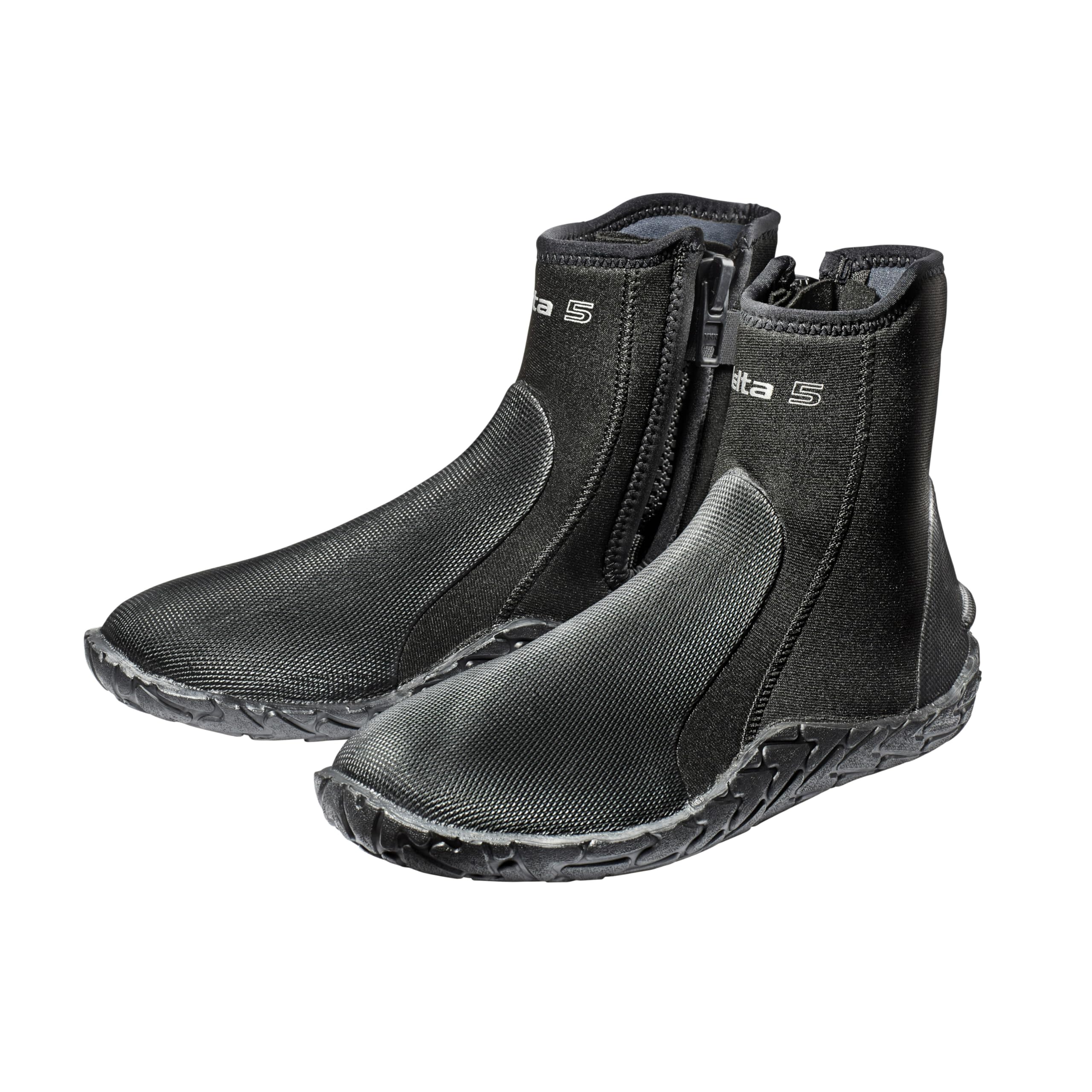
The SCUBAPRO Delta is the benchmark for a full-cut dive boot that accommodates wide feet without sacrificing heel hold. Its molded rubber outsole provides armor-like protection across the top of the foot and the metatarsal area, which eliminates the pinch point where fin straps traditionally rub. The YKK zipper is paired with a hook-and-loop security flap that stays sealed even after repeated sand exposure.
Divers with wide forefeet consistently report that the Delta’s toebox is spacious enough to prevent cramping during multi-hour dives. The 5mm X-Foam neoprene retains warmth effectively in water temperatures from the mid-50s up to 70°F. The outsole strikes a balance between stiffness for deck safety and flexibility for a natural swimming kick.
Some users note that the sole could be marginally stiffer for those who frequently walk on sharp-edged lava flows, and the boots do hold a notable amount of water inside after surfacing, leading to sloshing until drained. If your priority is a premium, long-lasting boot that respects foot anatomy, the Delta is the rightful first pick.
Why it’s great
- Molded outsole protects the metatarsal bridge from fin rub
- Full-cut design offers rare room for wide feet
- YKK metal zipper with Velcro flap stays secure
Good to know
- Sole flex may feel too soft for some technical walkers
- Retains water after immersion, causing sloshing
2. Mares Adult Trilastic 5mm Scuba Diving Boots
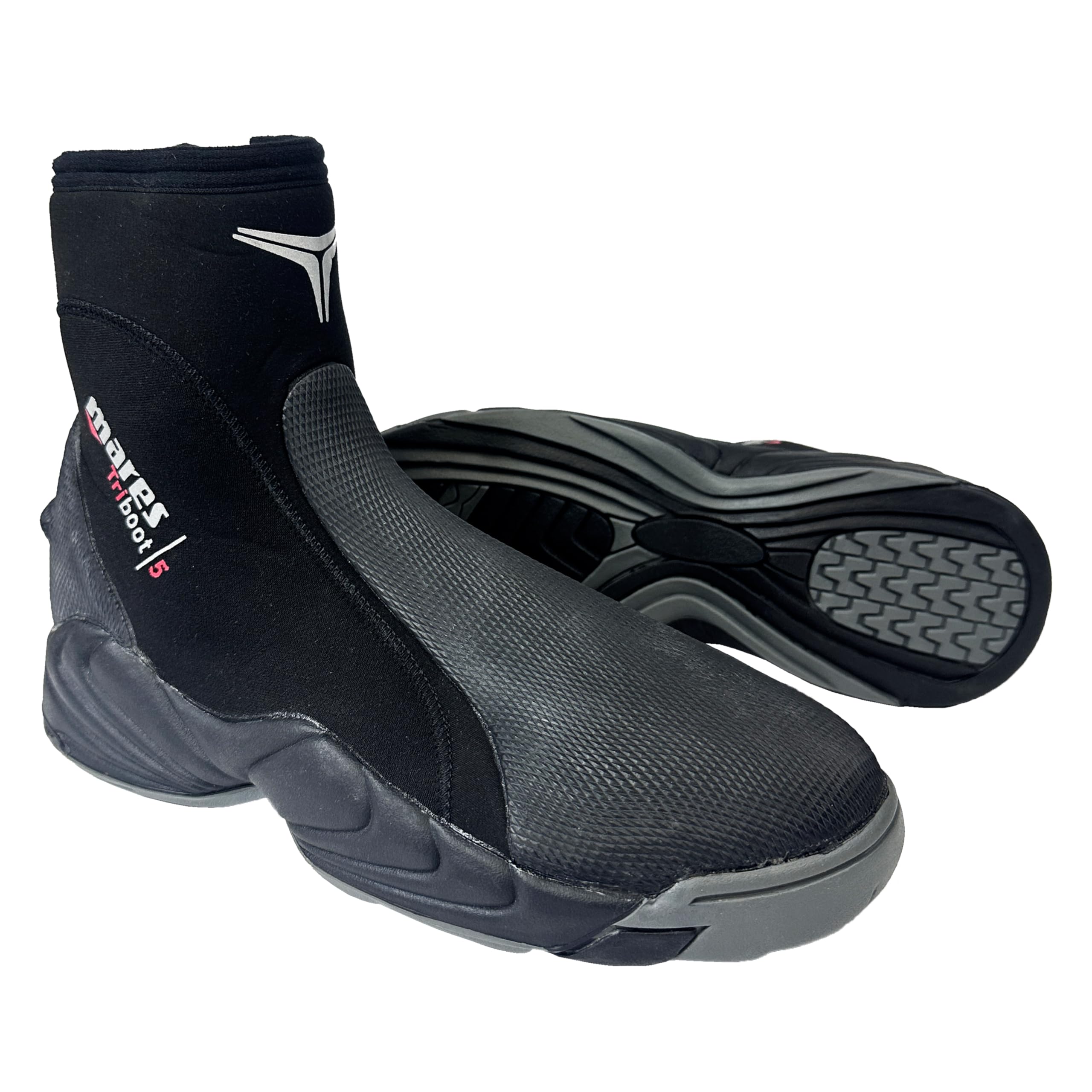
Mares uses a smart material split in the Trilastic: the foot section uses standard neoprene for maximum warmth, while the ankle uses super-elastic neoprene that allows unrestricted dorsiflexion when you kick. The rubber outsole is thick and reinforced at the toe and heel, making these boots a favorite among divers who enter and exit over sharp volcanic rock.
The fin strap lug on the heel is a practical touch that prevents your fin straps from sliding up, keeping the fin positioned correctly on the boot. The side zipper is easy to grip, and the neoprene is durable enough to withstand years of regular use without noticeable compression loss at the ankle. The 5mm thickness handles water temperatures from the low 60s down to the upper 30s with the addition of a thin neoprene sock.
The biggest consistent complaint is sizing accuracy — the boots run at least one full size large, and multiple users recommend ordering two sizes down for a proper dive fit. If you prefer a snug, performance-oriented boot with serious sole protection, the Mares Trilastic is a strong contender.
Why it’s great
- Super-elastic ankle neoprene provides kick freedom
- Reinforced toe/heel for rocky shoreline safety
- Fin strap lug holds fins securely in place
Good to know
- Sizing runs very large; size down significantly
- Some users report heel lift with standard sizing
3. Tilos TruFit Dive Boots, 3-7mm

The Tilos TruFit breaks from the traditional neoprene tube shape by molding the boot to the anatomical contours of a human foot. The result is a toebox that does not compress the toes together, virtually eliminating the “bag of water” sloshing sensation that plagues round-toe boots. This design is especially appreciated by divers with narrow feet who find standard boots sloppy through the midfoot.
After two years of regular use, long-term reviewers report no sole separation or stitching failure — a durability marker that punches above the price bracket. The low-cut ankle height works well with open-heel fins and feels less restrictive during long swims. The boots are also noticeably lighter than the full-cut competition, making them a strong choice for travel.
However, the outsole is not as thick or rigid as the SCUBAPRO or Mares offerings, so these are not the boots for heavy rock hopping. The side zipper is functional but lacks the robust feel of a YKK unit. For those who prioritize foot anatomy and a non-sloshing fit over maximum sole armor, the TruFit is the most comfortable boot in this lineup.
Why it’s great
- Anatomically shaped toebox prevents toe pinch
- Virtually eliminates water sloshing inside the boot
- Lightweight construction ideal for travel
Good to know
- Sole is too thin for rough rocky entries
- Strong chemical smell reported out of packaging
4. O’Neill Heat 5mm Round Toe Neoprene Boot
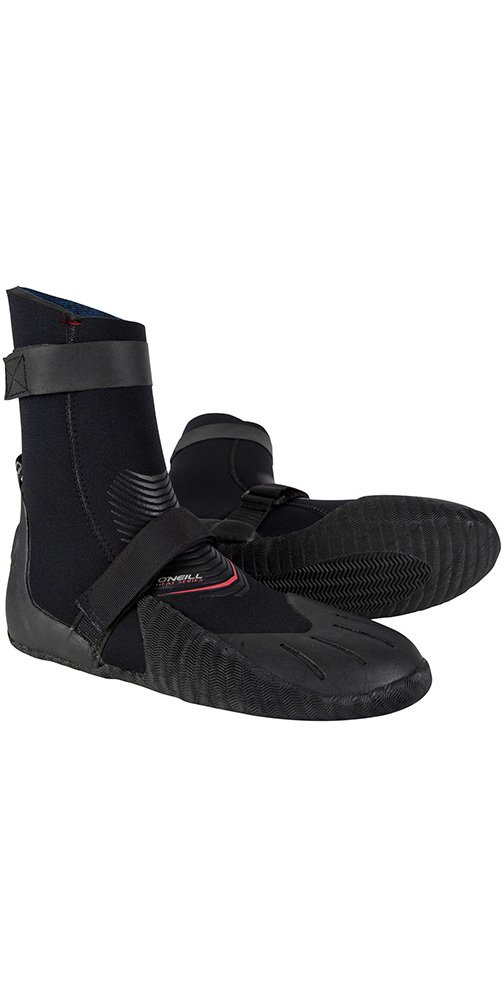
O’Neill builds the Heat as a dedicated cold-water surf boot, and its round-toe design is optimized for board feel — you can still grip the wax rail without feeling like you are wearing a ski boot. The 5mm neoprene is warm enough for 52°F Pacific water, and the textured rubber sole provides solid traction on a fiberglass board surface without marking it.
The ankle strap is a thoughtful addition that significantly reduces water flushing, a common complaint with round-toe boots. Multiple surfers report that these boots last beyond a single season of heavy use, with the sole maintaining its bond to the neoprene far longer than cheaper alternatives. Sizing is generally true to street shoe size, though some users prefer to size down by half a step for a performance fit.
On the downside, the round-toe design means your toes are pressed together in a traditional tube shape — not an issue for short sessions but noticeable on marathon paddle days. Water entry through the sides can still occur if the ankle strap is not cinched properly. For surfers who prioritize board sensitivity and lasting sole adhesion, the O’Neill Heat is a proven performer.
Why it’s great
- Excellent board feel for a thick neoprene boot
- Textured sole won’t mark the deck
- Ankle strap effectively blocks water entry
Good to know
- Round toebox can feel cramped during long sessions
- Side entry for water if strap is not tight
5. XUKER Neoprene Diving Boots, 5mm
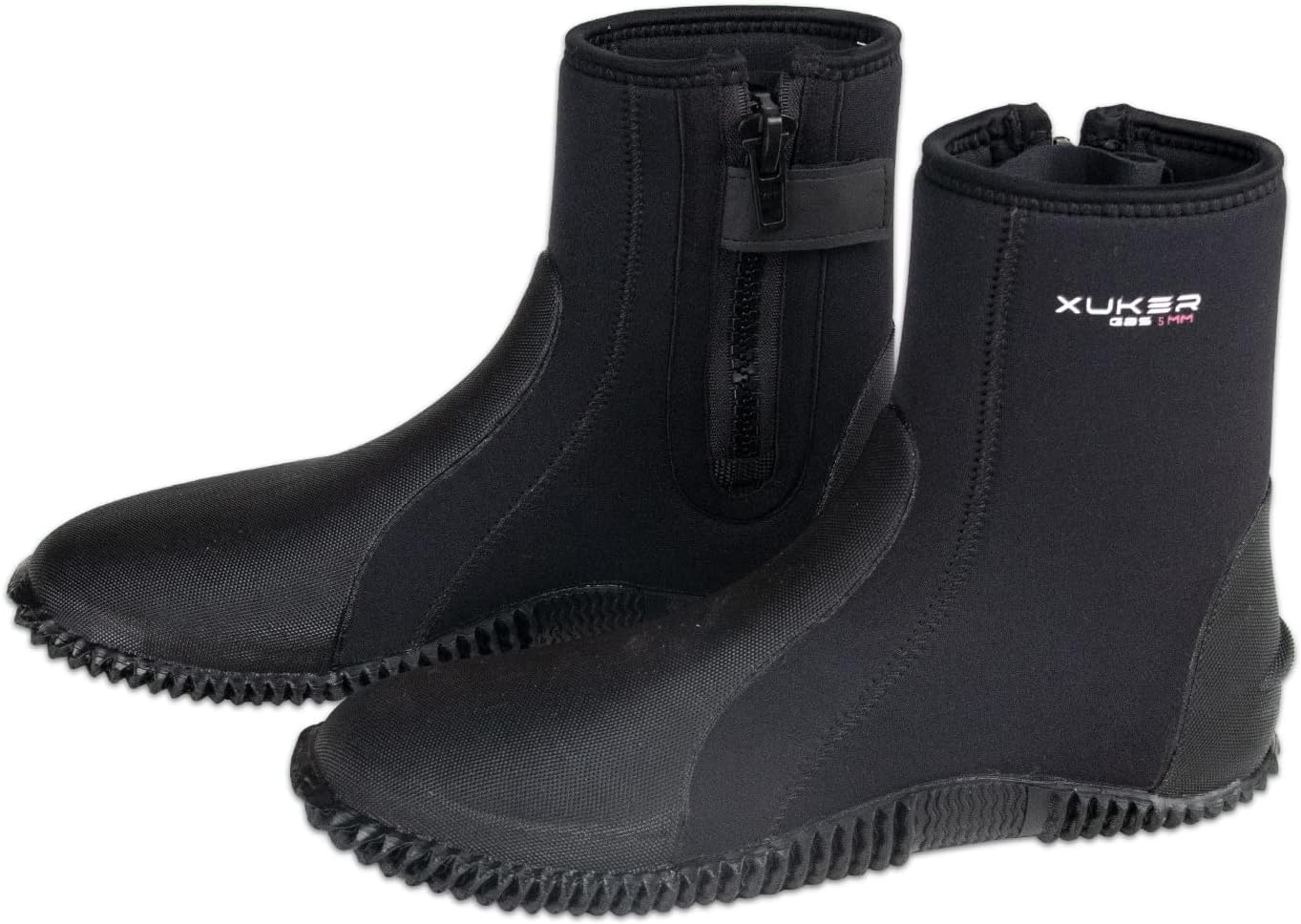
XUKER delivers a 5mm boot that punches well above its price point, with a ridged rubber sole that provides genuine grip on wet rocks and boat ramps. The reinforced sole structure is flexible enough for swimming but stiff enough to protect against sharp riverbed hazards. After months of heavy use — including up to 30 hours per week in a river environment — the boots show no signs of sole separation or loose stitching.
The neoprene is warm and snug without feeling compressive, and the side zipper makes getting into the boots straightforward even with cold hands. The ankle fit is secure enough that even users with half sizes between full numbers find the boots stay in place without heel lift. The boots are quick to rinse clean and dry, which matters when you are doing multiple water sessions back to back.
The structured sole retains water and can make the boots feel heavy immediately after exiting the water until you point your toes down to drain them. Sizing is slightly tricky for half-sizes — owners with a 10.5 foot may need to size either up or down depending on the brand of neoprene sock they plan to wear. For the price, the XUKER offers durability that rivals boots costing nearly double.
Why it’s great
- Ridged rubber sole grips well on slippery surfaces
- Proven durability through heavy weekly water exposure
- Warm and snug ankle fit minimizes water entry
Good to know
- Sole retains water, causing post-dive sloshing
- Half-size fit can be inconsistent
6. SARHLIO Neoprene Dive Boots, 5mm

SARHLIO takes a different angle by emphasizing material safety — the neoprene is ROHS certified and BPA-free, which matters if you have sensitive skin or want to avoid petroleum-based chemical padding. The 5mm boot includes a molded arch support insert that reduces foot fatigue during long walks on the beach or boat deck, a feature rarely found at this price tier.
The triple-glued, double-blind-stitched seam construction is visible and gives confidence that the boot will hold up to repeated saltwater exposure. The high-grip sole is tough enough for months of weekly surf fishing and kayaking sessions, and the heel air bubble provides a cushioning effect that reduces impact when walking on steep, uneven terrain. The boots work well with a dry suit when sized up by one step.
The zipper is functional but can jam if sand works its way into the teeth — users report that a quick freshwater rinse after each outing keeps the zipper running smoothly. The sizing is slightly generous, so order a half-size down if you plan to wear thin neoprene socks. For the diver who wants a non-toxic material option with decent arch support, the SARHLIO is a smart buy.
Why it’s great
- BPA-free, ROHS-certified neoprene for sensitive skin
- Molded arch support reduces walking fatigue
- Triple-glued seams for saltwater durability
Good to know
- Zipper can jam if sand gets into the teeth
- Sizing runs slightly large; half-size down recommended
7. Skyone Neoprene Dive Boots, 5mm

Skyone offers a no-frills 5mm boot that covers the essentials: warm neoprene, a glued and blind-stitched seam, and a flat rubber outsole that handles gravel and sandy shorelines. The boot is designed with an open-heel profile, meaning the back strap of your fins wraps around the boot’s heel pocket — this works well with most standard open-heel scuba fins and prevents the strap from slipping forward.
Users consistently report that the boots run about a half-size large, so sizing down is the safest strategy. The neoprene is 150% stretch with good recovery, making the boots easy to put on without feeling like a compression sleeve. The zipper is functional and includes a small pull tab that is easy to grip, even with thick neoprene gloves.
The flat, non-molded sole means you will feel every pebble and shell beneath your foot, and the sole is not reinforced at the toe or metatarsal area — expect less protection on sharp coral or barnacle-encrusted surfaces. The manufacturer backs the boots with a 5-year warranty, which is unusually long for the price point. For casual shore dives, kayaking, and warm-water snorkeling, the Skyone is a perfectly adequate entry point.
Why it’s great
- Open-heel design works with standard fin straps
- 150% stretch neoprene for easy donning
- 5-year manufacturer warranty coverage
Good to know
- Flat sole lacks protection for sharp terrain
- Runs half-size large; size down for a snug fit
FAQ
Should I size down in 5mm wetsuit boots to get a proper dive fit?
Can I wear 5mm wetsuit boots with any open heel fin?
How long do 5mm neoprene boots typically last with regular use?
Final Thoughts: The Verdict
For most users, the 5mm neoprene wetsuit boots winner is the SCUBAPRO Delta because it combines a spacious wide-foot fit, a fully molded rubber outsole, and a YKK zipper that survives heavy use. If you want a boot that feels sculpted to your foot with almost no water sloshing, grab the Tilos TruFit. And for cold-water surfing where board feel matters most, nothing beats the O’Neill Heat.