
Our readers keep the lights on and the weekend projects moving. As an Amazon Associate, I earn from qualifying purchases.
Specs are compiled from manufacturer listings and verified buyer reviews and can change over time — please confirm the key details on the product page before buying.
If your yoga mat is too thin, every knee press and downward dog digs into the hard floor beneath you. If it is too thick, you wobble in standing poses. A 6mm cushion sits in the balance — soft enough to protect your joints, yet firm enough to keep your balance stable. This guide walks you through the best 6mm yoga mat options, with real specs and honest trade-offs for each pick, so you can choose the one that fits your routine without second-guessing.
I’m Rikta — the founder and writer behind FitlyFast. This guide is built by comparing the manufacturers’ published specifications and the patterns across verified customer reviews, so you get each pick’s real strengths and trade-offs instead of marketing spin.
if you need extra width for broad stances or a foldable mat for a cramped dorm room, the right 6mm yoga mat delivers the protection and grip that makes floor work feel ten times better.
Quick Picks
- HAPBEAR Large Yoga Mat — Best Overall
- Manduka PRO Yoga Mat — Teacher Approved
- Gruper Yoga Mat Non Slip TPE Extra Wide — Alignment Focused
- Gaiam Yoga Mat – Premium 6mm Print — Budget Champion
- Readaeer Foldable Yoga Mat — Travel Ready
How To Choose The Best 6mm Yoga Mat
The 6mm thickness hits a balance, but the material and width decide whether it feels great or just okay under your body. Here is what separates a mat you keep for years from one you replace next season.
Material: PVC vs TPE
The material drives weight, grip, and how the mat feels over time. PVC (polyvinyl chloride) mats are dense, heavy, and famously durable — they grip the floor well but often smell of plastic for the first few days. TPE (thermoplastic elastomers) mats are lighter, easier to fold or roll, and typically free of the strong chemical odor. The trade-off is that TPE may not survive as many hard years in a studio as a thick PVC mat.
Width and length for your body
Standard yoga mats measure 24 inches wide and 68 or 72 inches long. If you are over 5-foot-10 or you tend to sprawl into wide-legged stances, a 32-inch or 36-inch wide mat can be a standout. A mat that is too short forces you to shift off-center during a full sequence, so check the dimensions before you buy.
Grip that actually works
A mat that slides on the floor or lets your hands slip in downward dog is a safety risk, not an upgrade. Look for a textured surface on the skin side and a wave-grid or dot-pattern on the bottom. Some mats need a short break-in period — a few sessions or a light salt scrub — before the grip kicks in.
Quick Comparison
| Model | Best For | Width | Material | Weight | Amazon |
|---|---|---|---|---|---|
| HAPBEAR Large Yoga Mat | Spacious home practice | 36″ | TPE | 2.65 lbs | Amazon |
| Manduka PRO | Lifetime studio use | 26″ | PVC | 7.5 lbs | Amazon |
| Gruper Yoga Mat | Alignment-guided practice | 32″ | TPE | 2.2 lbs | Amazon |
| Gaiam Premium 6mm | Budget-friendly all-rounder | 24″ | PVC | 3.08 lbs | Amazon |
| Readaeer Foldable | Travel and small-space storage | 24″ | TPE | 1.8 lbs | Amazon |
In‑Depth Reviews
1. HAPBEAR Large Yoga Mat
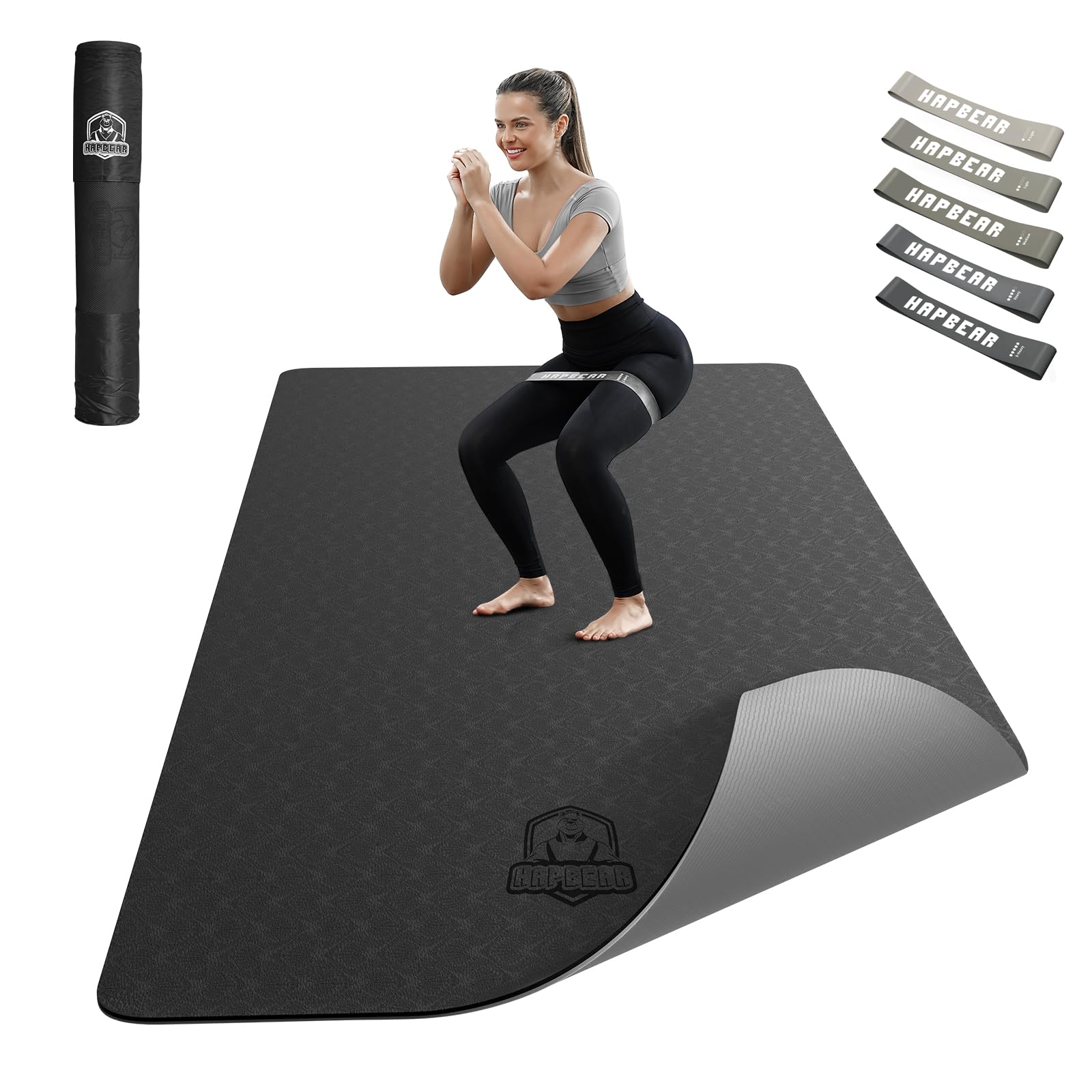
The widest mat in the lineup — 36 inches of room that standard 24-inch mats just don’t give you.
You get a 72″ x 36″ x 6mm workspace that, according to the maker, is 36 inches wide compared to a standard 24-inch mat. That extra real estate lets you stretch wide, step into warrior poses without your toes hanging off the edge, and even roll a foam roller across the surface without hitting the floor. The TPE (thermoplastic elastomers) material keeps it light at about 2.65 pounds — much easier to carry than the Gaiam mat above, which weighs 3.08 pounds.
Buyers report that the double-sided textured grip “doesn’t slide around on the floor” and that the mat rolls up nicely for storage. One reviewer who practices Tai Chi specifically chose this mat because they “needed the larger 36″ wide mat.” One buyer calls the 6mm cushion a “perfect thickness-to-size ratio” that eases knee and wrist strain without feeling squishy.
The catch is that the maker warns it is not for use on carpet — the grip works best on smooth surfaces like wood or tile. Some initial scent may be present, so plan to let it air out for a day or two before your first session. Compared to the Manduka PRO, this mat is much lighter and much wider, but it lacks the same extreme long-term durability of the dense PVC.
Why it stands out
- 36-inch width compared to standard 24-inch mats, according to the maker
- Lightweight TPE material is easy to carry in the included bag
- Buyers praise the non-slip grip on wood and tile floors
One thing to note
- Not recommended for carpet — the grip relies on a hard, smooth surface
Ideal for: Anyone who wants the most spacious 6mm mat for home floor workouts, stretching, or Tai Chi — especially if you felt cramped on a standard 24-inch mat.
Not ideal for: Carpet-only spaces or people who need the extreme long-term durability of a heavy PVC studio mat.
2. Manduka PRO Yoga Mat

The gold standard for serious yogis — 85 inches long means you never touch the dirty floor.
This mat is built for a lifetime of daily practice. Its ultra-dense 6mm PVC (polyvinyl chloride) construction provides stable cushioning that seals out moisture with a closed-cell surface — no sweat soaks into the mat, so it stays hygienic session after session. At 85 inches long and 26 inches wide, it gives tall practitioners the length they need; reviewers who are 6-foot-2 say it is “perfect for yoga” and the extra length “is well worth it.”
The closed-cell surface also means no stains or lingering smells, but multiple owners mention the mat can feel slippery when brand new. One owner shared a detailed method for scrubbing the surface with a gentle abrasive to make it grippy (a process that does void the warranty). Another reviewer summed it up simply: “for anyone that is serious about their Yoga practice — this is the gold standard of mats.”
The weight is the main trade-off — at about 7.5 pounds, it is noticeably heavier than the Readaeer foldable model (1.8 pounds) and at 7.5 pounds compared to the HAPBEAR’s 2.65 pounds. You will feel it carrying it to and from the studio, but buyers consistently say it is “well worth it” for the durability and performance. Compared to the HAPBEAR’s 36-inch width, the Manduka’s 26-inch width is narrower but still offers more stability for poses that require a very firm base.
The professional edge
- 85-inch length fits taller practitioners without hanging off the mat
- Closed-cell PVC prevents sweat and odor absorption
- Teachers and long-time practitioners call it the most durable mat they have owned
The honest catch
- Heavy at 7.5 pounds — not the mat you toss in a daypack
- Surface can be slick from the start and may need a break-in routine
Built for: Dedicated yogis, studio teachers, and anyone over 5-foot-10 who has outgrown shorter mats and wants a mat that lasts years.
skip it if: You need a lightweight travel mat or you want a grippy surface from the very first use without any break-in effort.
3. Gruper Yoga Mat Non Slip TPE Extra Wide
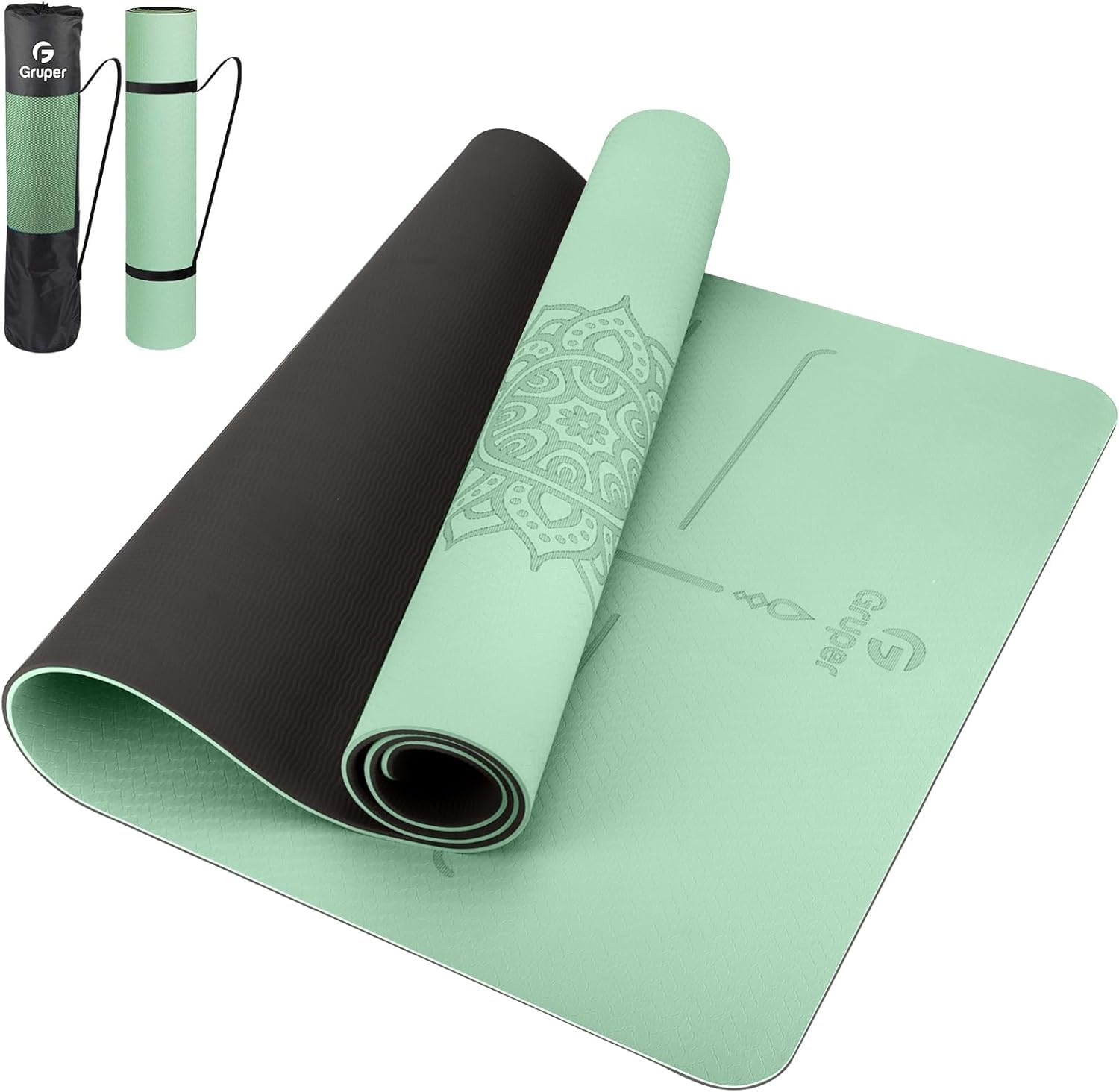
Alignment lines printed on the surface help you place hands and feet without looking at a mirror.
This mat is 32 inches wide — giving you 8 inches more room than standard 24-inch mats like the Gaiam and Readaeer — at a 2.2-pound weight that is only slightly heavier than the travel-ready Readaeer (1.8 pounds). The 72-inch length also gives you 4 inches more length than the Gaiam’s 68-inch surface. The alignment marks are particularly helpful if you practice alone at home without an instructor to correct your stance. Customers note it is “thick, comfortable, and provides excellent grip during workouts” and that the “extra width gives me more space to move.”
The TPE (thermoplastic elastomers) material is described as non-toxic and nearly odorless, so you skip the strong plastic smell that PVC mats like the Gaiam often need a few days to shed. The double-sided non-slip texture uses a wave pattern on the bottom and a polygonal texture on top. However, not everyone agrees on the grip: one reviewer gave four stars but noted that hands “slide in downward dog,” calling it better suited for mat Pilates than vigorous vinyasa flow. The included carrying strap and storage bag add convenience, though the two thickness options (6mm standard and 8mm thickened) mean you should confirm you are ordering the 6mm version rather than the softer 8mm if you want the firm balance this thickness provides.
Alignment advantage
- Printed alignment grid helps solo practitioners keep proper form
- TPE material has nearly no chemical odor out of the package, according to buyers
- 72″ x 32″ provides extra room without being as heavy as a full 36-inch mat
Watch for this
- Some users find the top surface too slick for sweaty hand poses
Pick this for: Home practitioners who want guidance from alignment marks and need a wide, lightweight mat that packs easily in the included strap.
Look elsewhere if: Your practice involves lots of hot yoga or sweaty vinyasa where a slick top surface would frustrate you.
4. Gaiam Yoga Mat – Premium 6mm Print

A trusted brand at a friendly price — the 6mm PVC mat that gym-class veterans know well.
Gaiam has been making affordable yoga mats for years, and this 6mm print version sticks to the formula: a dense PVC (polyvinyl chloride) surface with a textured non-slip feel that reviewers point out “doesn’t slide around on the floor.” The mat measures 68 inches long and 24 inches wide — shorter than the Gruper and Readaeer above by 4 inches — but the 6mm cushion is consistently praised for protecting knees and joints during floor work.
The material is PVC, labeled as 7P-free (free of seven common phthalates, which are chemicals used to soften plastics), but the smell is real. Several buyers warn that the mat “reeked of plastic smell” when first unwrapped, requiring 2-3 days of airing out with an open window. At 3.08 pounds, it is heavier than the Readaeer (1.8 pounds) but still manageable for carrying to a studio or around the house. Compared to the much lighter and wider HAPBEAR, the Gaiam is a more traditional, dense mat but it lacks the extra width for sprawling poses.
One limitation: the edge may curl if the mat stays rolled up tight in a hot car. Reviewers suggest placing a block or phone at the edge during class to hold it flat — the mat tends to flatten out after a few minutes of use.
Why it works
- Dense PVC provides stable cushioning that holds up well over a year of regular use, according to buyers
- Textured surface keeps hands and feet from sliding during poses
- Price point is friendly for beginners or anyone wanting a spare mat
What to know upfront
- Strong plastic odor from the start — plan for a 2-3 day air-out period
- 68-inch length is 4 inches shorter than most other mats here
Great for: Beginners, home floor workouts, and anyone who wants a reliable 6mm PVC mat without spending a premium — just factor in the off-gassing time.
Consider something else if: You need a longer mat for your height or you are sensitive to chemical smells and want a TPE mat that airs out faster.
5. Readaeer Foldable Yoga Mat
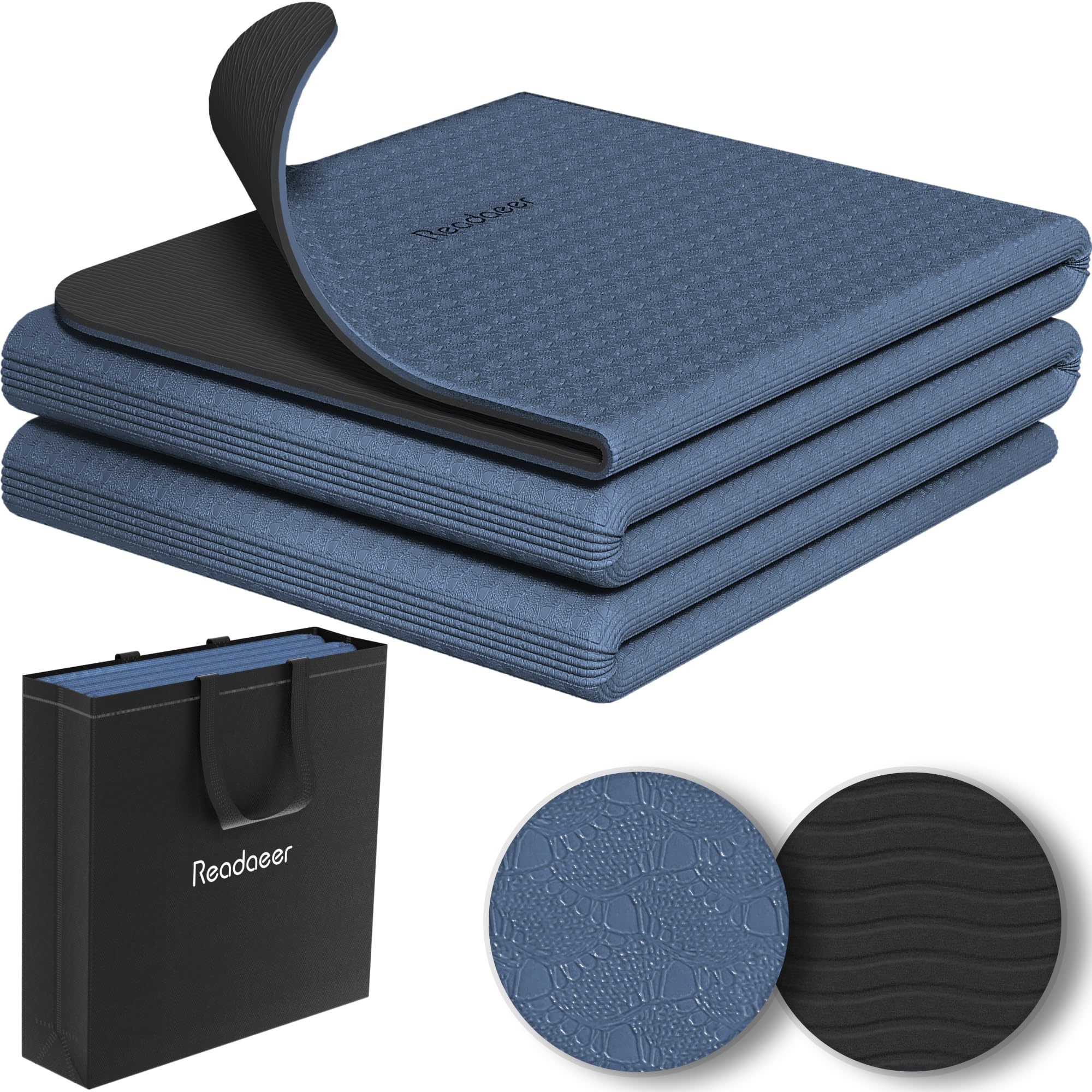
The lightest pick here at 1.8 pounds — and it folds instead of rolling, so it slides into a suitcase.
Most yoga mats roll into a tube that is awkward to pack. The Readaeer folds into a neat rectangle that fits into a carrying bag and stores flat in a locker or dorm drawer. The TPE (thermoplastic elastomers) material provides 6mm of cushioning that one buyer called “thick and comfy,” and the double-sided anti-slip surface uses a polygonal texture on top and a wave pattern on the bottom. A reviewer who brings it to a dance studio says: “It fits so well in [my locker] and that’s what mattered to me the most!” The 72-inch length also gives you 4 more inches than the Gaiam, so taller users won’t slide off the end. Compared to the wide HAPBEAR, the Readaeer is much less spacious but far more packable.
The foldable design is the standout feature here, but it comes with a compromise. Some owners note that the included carrying bag is “cheap quality” with uneven handles. The mat’s folded creases can take a few uses to relax fully, though most shoppers say “it lays completely flat” once unfolded.
The 1.8-pound weight makes it the lightest mat in this group — at 1.8 pounds versus the 3.08-pound Gaiam. That difference is noticeable if you walk to a studio or toss the mat in a backpack for a trip.
Why it stands out for travel
- Folding design is far more packable than a rolled mat — fits in suitcases and gym lockers
- At 1.8 pounds, it is the lightest mat in this lineup
- Buyers praise the comfortable cushioning and the easy fold-up storage
One honest limitation
- Carrying bag feels cheap compared to the mat itself, according to some reviews
Reach for this if: You need a 6mm mat that disappears into a bag or suitcase — perfect for traveling, commuting to the gym, or stashing in a small apartment.
Pick something else if: The bag quality matters to you on day one, or you prefer the roll-up form factor of a traditional mat.
Understanding the Specs
PVC vs TPE: Material matters
PVC (polyvinyl chloride, a dense plastic-like material) creates a mat that feels sturdy and lasts a long time, but it is heavier and often has a strong chemical smell for the first few days. TPE (thermoplastic elastomers, a blend of plastic and rubber) is lighter, has almost no odor, and is generally easier on the environment. The trade-off is longevity — a quality PVC mat like the Manduka can last a lifetime, while TPE mats tend to show wear sooner under heavy daily use.
Width: why 36 inches beats 24
Standard yoga mats measure 24 inches across, which works fine for basic flow. If you practice wide-legged poses, lift weights on the mat, or simply like room to move, a 32-inch or 36-inch mat reduces the likelihood of your hands or feet landing on the bare floor. The HAPBEAR at 36 inches is at 36 inches versus the standard 24 inches according to the maker — enough space to roll a foam roller alongside your body without leaving the mat.
FAQ
Is 6mm thick enough for hardwood floors?
Will a 6mm yoga mat work for hot yoga?
How do I get rid of the smell on a new PVC mat?
Can I put a 6mm yoga mat in the washing machine?
How long does a 6mm TPE yoga mat last?
What is the difference between 6mm and 8mm thickness?
Will a 72-inch mat be long enough for me?
Can I use a 6mm yoga mat on carpet?
Final Thoughts: The Verdict
For the majority of shoppers, the best 6mm yoga mat is the HAPBEAR Large Yoga Mat because the 36-inch width gives you room to move without the cost or weight of a premium studio mat. If you need a mat that can survive daily studio practice and you value length over width, grab the Manduka PRO. And for a budget-friendly starter that still provides real cushioning, the Gaiam Premium 6mm gets the job done once you let it air out.
How We Picked
We do not accept paid placement. Every pick is matched to a real buyer and a real use-case; we do not hands-on test units.
Sources & Methodology
Specifications: manufacturer listings and product documentation. Review insights: verified customer reviews, as of July 2026. Pricing: not shown on this page (it changes often); check the current price via the retailer link.
As an Amazon Associate, FitlyFast earns from qualifying purchases. This does not affect which products we feature.