
Our readers keep the lights on and the weekend projects moving. As an Amazon Associate, I earn from qualifying purchases.
Stepping into a 75-inch screen size means your living room becomes a theater, your game nights become stadium events, and every streaming binge turns into a cinematic experience. But not all QLED panels are built the same—the difference between a good picture and a breathtaking one comes down to local dimming zones, peak brightness, color volume, and the processing engine driving it all.
I’m Rikta — the co-founder and writer behind FitlyFast. I’ve spent countless hours analyzing the panel technologies, HDR formats, and gaming-specific features that separate the average from the elite in this category.
Whether you’re a movie purist, a console gamer, or a family upgrading for the big game, the guides below will help you navigate the specs and find the best 75 inch qled tv for your space and budget.
How To Choose The Best 75 Inch QLED TV
Choosing a large QLED TV is a long-term investment, so knowing which specs actually influence picture quality—and which are marketing fluff—is essential. The right pick balances your viewing environment, content habits, and gaming expectations.
Backlight Technology: Edge-Lit vs. Mini-LED
The simplest QLED TVs use edge-lit backlighting, where LEDs are placed along the edges of the panel. This creates uneven brightness in dark scenes. Mini-LED backlighting uses thousands of tiny LEDs arranged in dimming zones behind the screen, providing precise brightness control, deeper blacks, and far better contrast. For a 75-inch screen, Mini-LED is the clear upgrade path.
Refresh Rate and Gaming Features
A native 120Hz or 144Hz panel ensures smooth motion for sports and fluid gameplay for high-frame-rate titles. Look for HDMI 2.1 ports, Variable Refresh Rate (VRR), Auto Low Latency Mode (ALLM), and FreeSync or G-Sync support if next-gen consoles or a gaming PC will be connected. Many mid-range and premium models now include these features as standard.
HDR Performance and Color Volume
A QLED’s strength is its ability to produce bright, saturated colors over a wide range. The best models achieve over 90% DCI-P3 color space coverage and peak brightness above 1,000 nits. Dolby Vision IQ and HDR10+ Adaptive adjust the picture based on room lighting, ensuring consistent performance whether the room is dark or sunlit. This is the spec that separates a good picture from a spectacular one.
Quick Comparison
On smaller screens, swipe sideways to see the full table.
| Model | Category | Best For | Key Spec | Amazon |
|---|---|---|---|---|
| Hisense U7 | Mini-LED | Gaming & Bright Rooms | Native 165Hz / 330 VRR | Amazon |
| TCL QM8K | QD-Mini LED | HDR Movies & Gaming | Game Accelerator 288 VRR | Amazon |
| Samsung QN90D | Neo QLED | Premium All-Rounder | Object Tracking Sound+ | Amazon |
| Sony BRAVIA 9 | Mini LED | Cinematic & PS5 | XR Backlight Master Drive | Amazon |
| TCL QM8L | SQD-Mini LED | Brightness & Contrast | 6,000 Peak Nits | Amazon |
| Amazon Ember Mini-LED | Mini-LED | Amazon Ecosystem | 512 Dimming Zones | Amazon |
| Roku Pro Series | Mini-LED | Ease of Use | 120Hz / FreeSync Premium Pro | Amazon |
| Toshiba Z670 | Mini-LED | Value & Sound | REGZA Power Audio Pro | Amazon |
| Amazon Ember QLED | QLED | Fire TV Integration | Omnisense Technology | Amazon |
| Samsung The Frame | QLED | Art & Design | Matte Display / Art Mode | Amazon |
| Sony BRAVIA 7 (75XR70) | Mini LED | PS5 & Upscaling | XR Triluminos Pro | Amazon |
| iFFALCON F75 | QLED | Slim Wall Mount | 1.1″ Ultra-Slim Frame | Amazon |
In‑Depth Reviews
1. Hisense 75″ U7 Mini-LED ULED
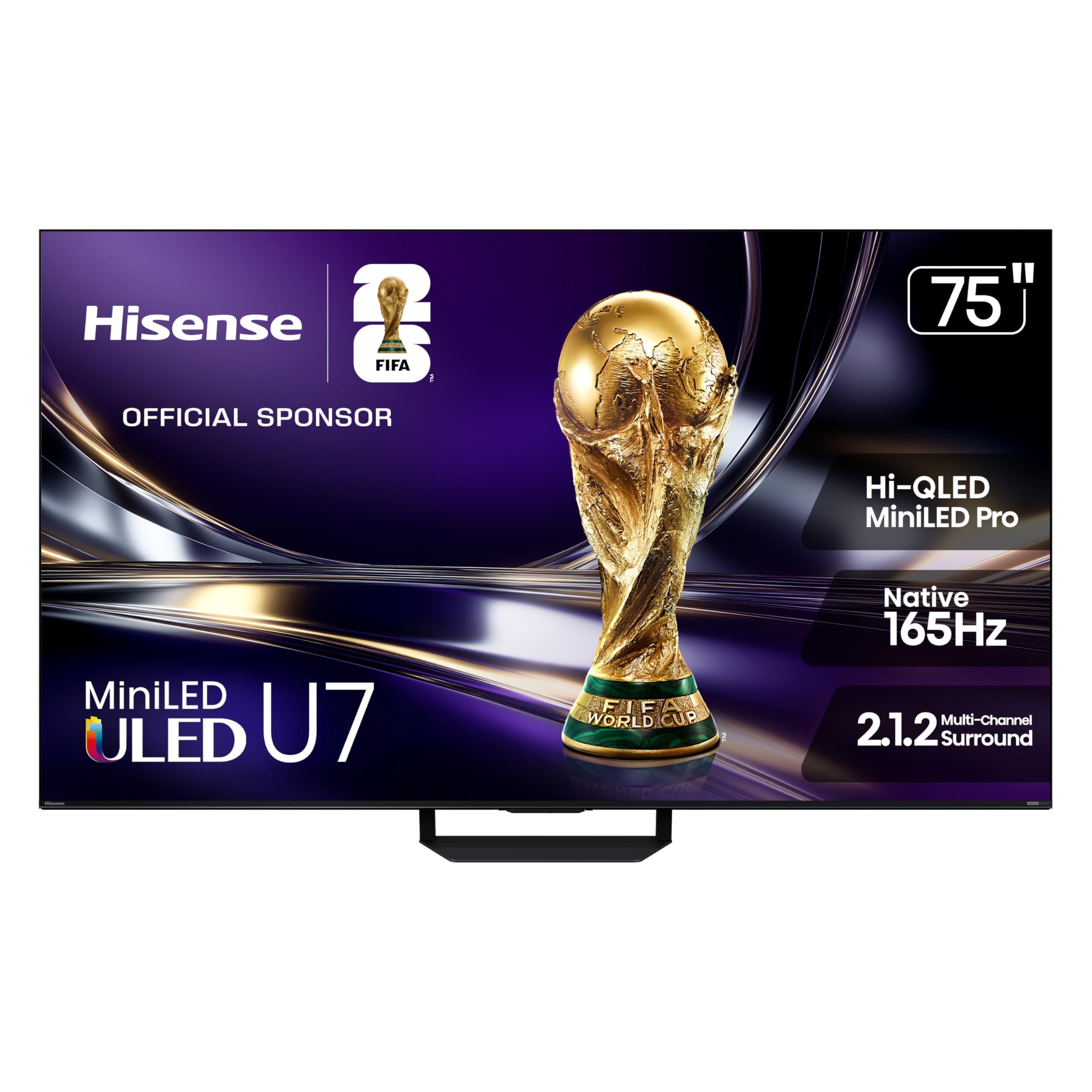
Hisense sets a new benchmark for high-performance gaming and bright-room viewing with the 75U7. The Hi-QLED MiniLED Pro backlight delivers thousands of dimming zones and up to 3,000 nits of peak brightness, which means HDR highlights look explosive while blacks remain deep and free of haze. The native 165Hz refresh rate, combined with VRR support up to an effective 330Hz, makes this the best option for PC and console gamers who demand fluid motion without tearing.
The anti-reflection and glare-free screen treatment is a standout feature for anyone with large windows or overhead lighting. It suppresses distracting reflections far better than standard single-layer coatings, keeping the image crisp and punchy even during daytime viewing. The HI-VIEW AI Engine Pro constantly optimizes color, contrast, and detail scene by scene, so older SDR content also benefits from real-time enhancement.
Built-in 2.1.2 channel audio with Dolby Atmos offers fuller bass and spatial presence than most flat-panel speakers, though a dedicated soundbar still unlocks the full cinematic experience. Google TV integration is responsive, though the interface can feel slightly cluttered with app suggestions. For the combination of refresh rate, brightness, and dimming zone density at this size, the U7 is the current sweet spot.
Why it’s great
- Exceptional native 165Hz refresh rate with 330Hz VRR for tear-free gaming
- Up to 3,000 nits peak brightness with excellent anti-glare coating
- Thousands of Mini-LED zones for deep, accurate contrast
Good to know
- Google TV interface can feel cluttered
- Built-in sound is good but benefits from an external soundbar
2. TCL 75″ QM8K Series
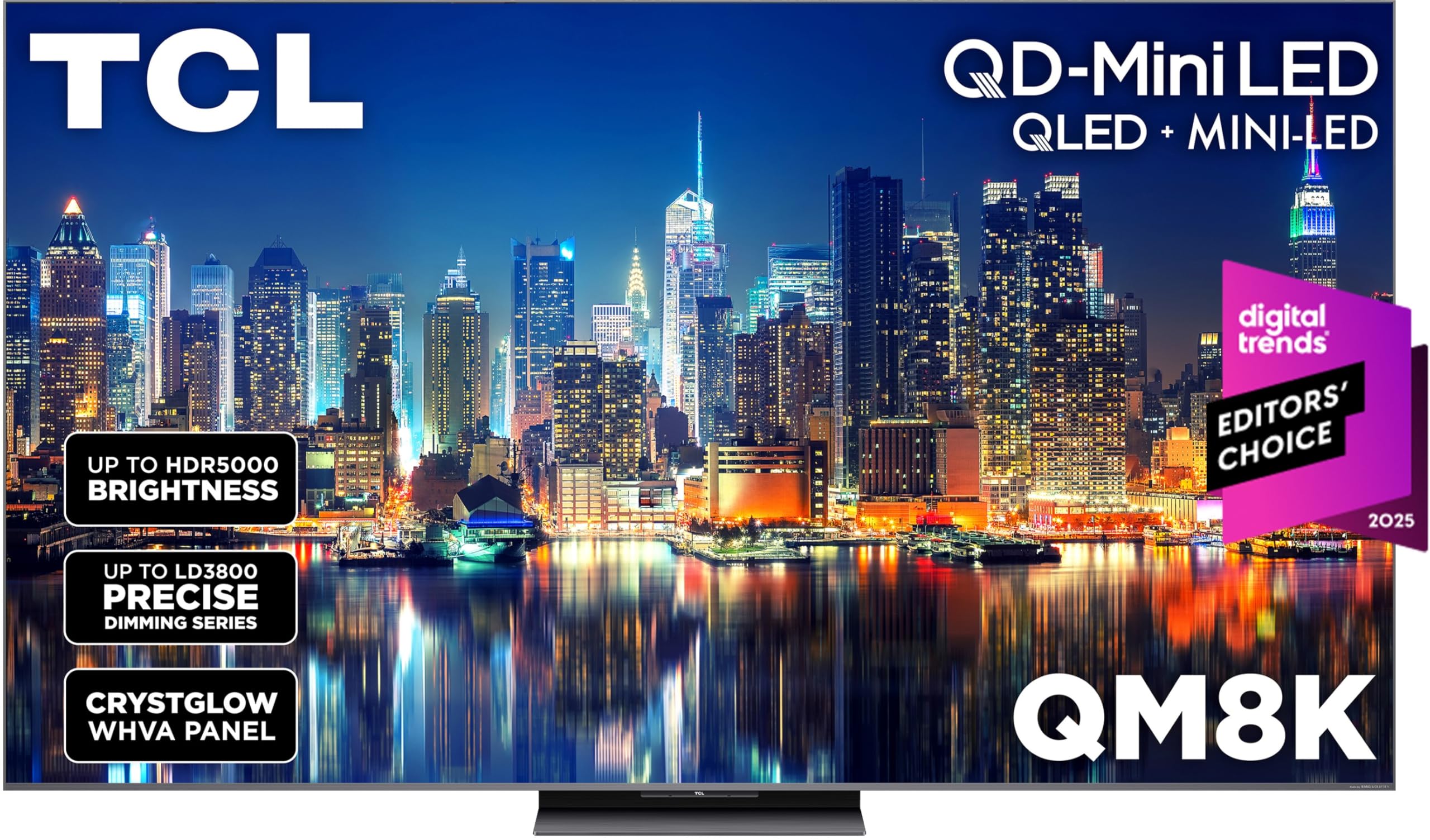
The TCL QM8K leverages its QD-Mini LED panel and new Halo Control System to produce a compelling middle-ground between the Hisense U7 and the top-tier Sony models. The anti-reflective WHVA panel, combined with high brightness, makes it a strong performer in living rooms where ambient light is a factor. It delivers punchy color volume and maintains contrast in bright conditions without the washed-out look that plagues lesser screens.
Gamers will appreciate the Game Accelerator 288, which supports up to a 288Hz variable refresh rate at lower resolutions for PC use, alongside a native 144Hz panel for console play. The combination of AMD FreeSync Premium Pro and VRR keeps gameplay smooth and responsive. Motion handling is solid with minimal blooming around bright objects against dark backgrounds, a notable achievement at this price tier.
Sound quality is above average for a flat TV, with clear dialogue and decent bass reproduction, but the primary home theater advantage here is the picture. The Google TV interface is responsive, though some users have noted minor audio sync issues with specific apps like Hulu. Overall, this is a high-value option that doesn’t force significant sacrifices in HDR performance or gaming capability.
Why it’s great
- Excellent QD-Mini LED brightness and deep black levels
- Anti-reflective screen great for bright rooms
- Game Accelerator 288 VRR for high-refresh PC gaming
Good to know
- Minor audio sync reported with some apps
- Built-in sound is good but not reference-level
3. Samsung 75″ QN90D Neo QLED

The Samsung QN90D continues to be a reference point for premium mid-range Mini-LED TVs. Its Quantum Matrix with Mini LEDs provides precise lighting control across the panel, resulting in strong contrast with minimal blooming. The NQ4 AI Gen2 Processor handles upscaling of HD and SDR content to near-4K quality with natural sharpness and texture, making it ideal for viewers who watch a mix of streaming and cable content.
Where the QN90D uniquely excels is in its audio implementation. Object Tracking Sound+ uses multiple speakers that follow on-screen action, creating a convincing three-dimensional soundstage without requiring a separate soundbar. Dolby Atmos processing is layered on top, and the dialogue clarity is excellent. This makes the QN90D one of the few TVs where the built-in sound genuinely satisfies before adding external audio.
Motion Xcelerator 144Hz ensures smooth motion for sports and gaming, while Real Depth Enhancer Pro improves the perceived dimensionality of the image. The glossier screen finish can show reflections more than matte competitors, so careful placement away from direct light sources is recommended. Tizen OS is feature-rich but can be slightly heavy on promotion of Samsung content.
Why it’s great
- Object Tracking Sound+ creates immersive built-in audio
- Excellent upscaling via NQ4 AI Gen2 Processor
- Mini LED backlight with deep blacks and vibrant HDR
Good to know
- Glossy screen can pick up reflections in bright rooms
- Samsung account setup required during installation
4. Sony 75″ BRAVIA 9 (K-75XR90)

Sony’s BRAVIA 9 represents the pinnacle of Mini-LED engineering, using the XR Backlight Master Drive to control thousands of Mini LEDs with exceptional precision. The result is a contrast performance that approaches OLED territory in dark room conditions, while delivering significantly higher brightness for HDR impact. The XR Processor provides the industry’s best motion handling and upscaling, turning even low-bitrate streaming into a crisp, grain-free image.
The inclusion of X-Wide Angle and X-Anti Reflection technologies means the picture stays accurate from virtually any seat in the room, with reflections reduced to a minimum. For PlayStation 5 owners, exclusive features like Auto HDR Tone Mapping and Auto Genre Picture Mode make this the most plug-and-play gaming experience available. The Game Menu centralizes all gaming picture settings in one overlay for quick adjustments.
Built-in audio is robust, but the true value of the BRAVIA 9 is in its processing and calibration. Studio Calibrated modes for Netflix, Prime Video, and Sony Pictures Core deliver creator-intended color grading without manual tweaking. The main tradeoff is price—it sits at the top of the market—but the combination of processing, viewing angles, and brightness sets a high standard for 75-inch QLED TVs.
Why it’s great
- Best-in-class XR processing for upscaling and motion
- X-Wide Angle and X-Anti Reflection for wide seating areas
- Perfect PS5 integration with exclusive HDR mapping
Good to know
- Premium price point reflects top-tier features
- Built-in speakers good but still benefit from a soundbar
5. TCL 75″ QM8L Series (2026)
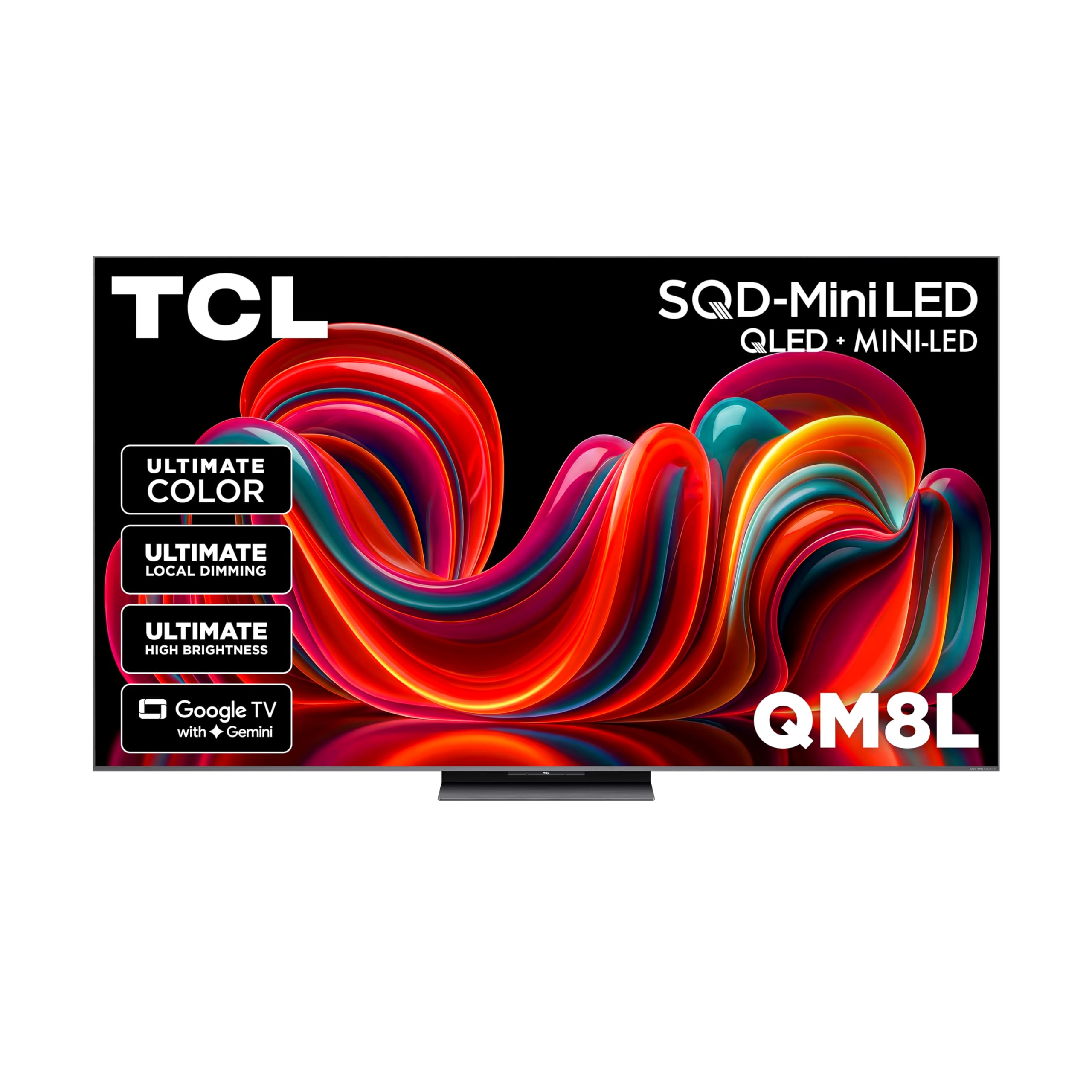
TCL pushes the brightness envelope with the QM8L, boasting up to 6,000 peak nits and over 4,000 discrete dimming zones. This is an extraordinarily bright TV, capable of making HDR highlights look blindingly realistic, which is essential for rooms with large windows or for HDR enthusiasts who want maximum impact. The 7,000:1 static contrast ratio further enhances the sense of depth in dark scenes, with near-zero bloom around text and subtitles.
The TCL Ultra Color Filter uses 5-nanometer quantum dot particles—significantly smaller than the industry standard—to achieve wider color coverage and better purity. Whites are notably cleaner, and reds and greens have a natural vibrancy that avoids oversaturation. Audio is handled by Bang & Olufsen tuning, and the built-in speaker system can fill a medium-sized room without a soundbar, though adding the optional wireless subwoofer transforms the low-end.
Google Gemini Interactive AI integration allows for voice control that feels genuinely conversational, adjusting settings or searching content with natural commands. The TCL Game Pack supports Game Accelerator 288 VRR and FreeSync Premium Pro. This is a future-proof panel for those who want the absolute brightest QLED available without stepping into microLED territory.
Why it’s great
- Industry-leading 6,000 nit peak brightness for HDR impact
- 4,000+ dimming zones for minimal blooming
- Bang & Olufsen audio with subwoofer option
Good to know
- Extreme brightness may require bias lighting to reduce eye strain
- Google OS can have minor glitches after updates
6. Amazon Ember 75″ Mini-LED Series
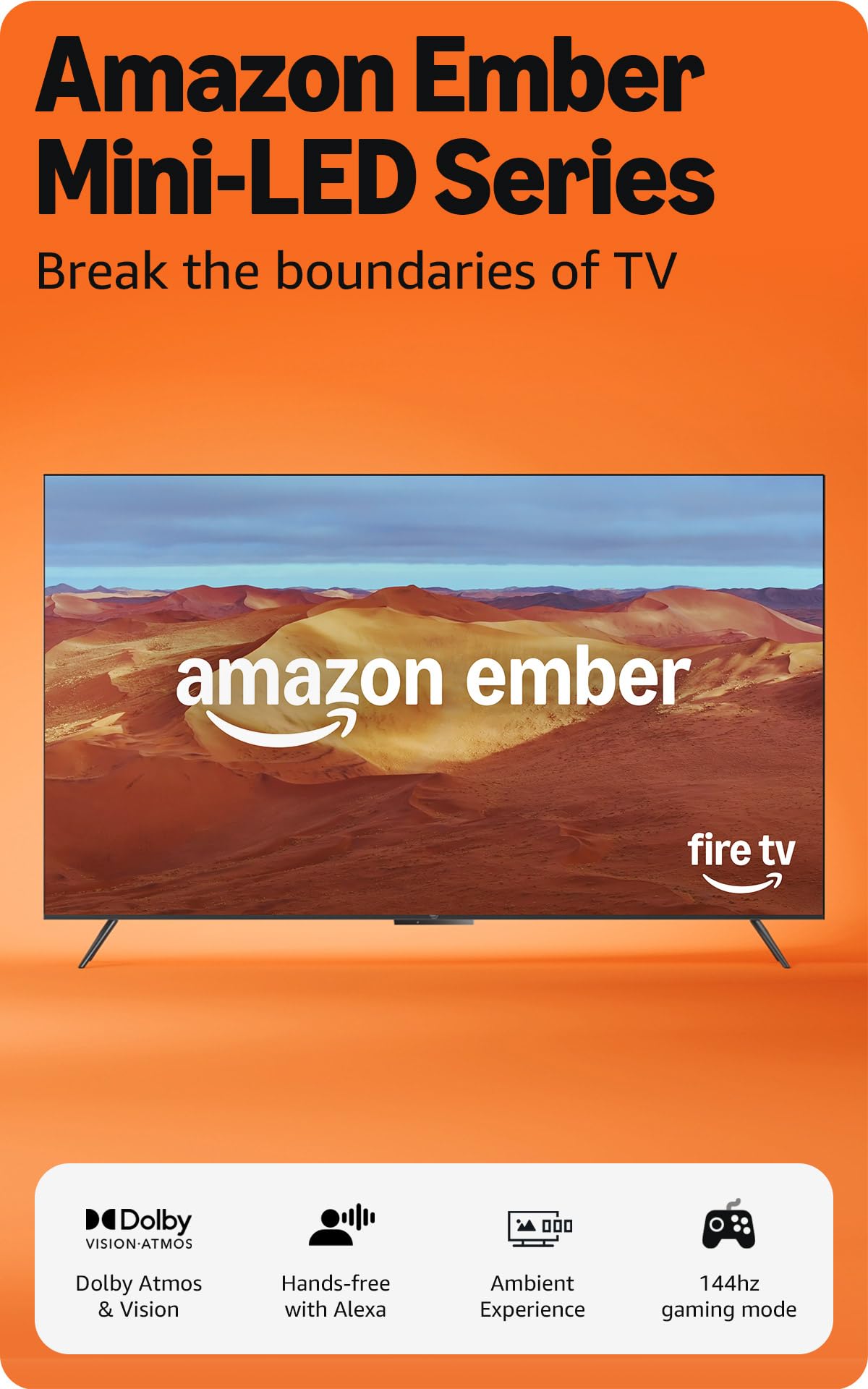
Amazon’s own Mini-LED offering brings 512 dimming zones and up to 1,400 nits of peak brightness to the table, making it competitive with mid-range models while integrating deeply with the Alexa and Fire TV ecosystem. The 4K QLED Mini-LED display covers over a billion colors with Dolby Vision IQ and HDR10+ Adaptive support, and it automatically adjusts the picture based on ambient light for consistent viewing from morning to night.
The 144Hz native refresh rate with AMD FreeSync Premium Pro certification makes this a strong gaming option. Motion handling is fluid, and input lag is low enough for competitive play. The built-in 2.1 Dolby Atmos speakers deliver clear dialogue and adequate bass—room-filling without needing a soundbar, though hardcore audiophiles will still want to add one for the most dynamic soundtracks.
The Omnisense technology and hands-free Alexa control are useful for a quick-start experience. The sensor wakes the TV when you walk into the room, showing art or the home screen instantly. On the downside, the Fire TV interface pushes Amazon content and ads heavily, which can feel intrusive. Software stability has mixed reviews, with some users reporting random reboots. This is a compelling package for homes already invested in Alexa devices.
Why it’s great
- Seamless Alexa and Fire TV integration
- 512 dimming zones with 1,400 nits peak brightness
- 144Hz with FreeSync Premium Pro for smooth gaming
Good to know
- Fire TV interface can be ad-heavy and feel cluttered
- Some users report occasional software instability
7. Roku 75″ Pro Series Mini-LED
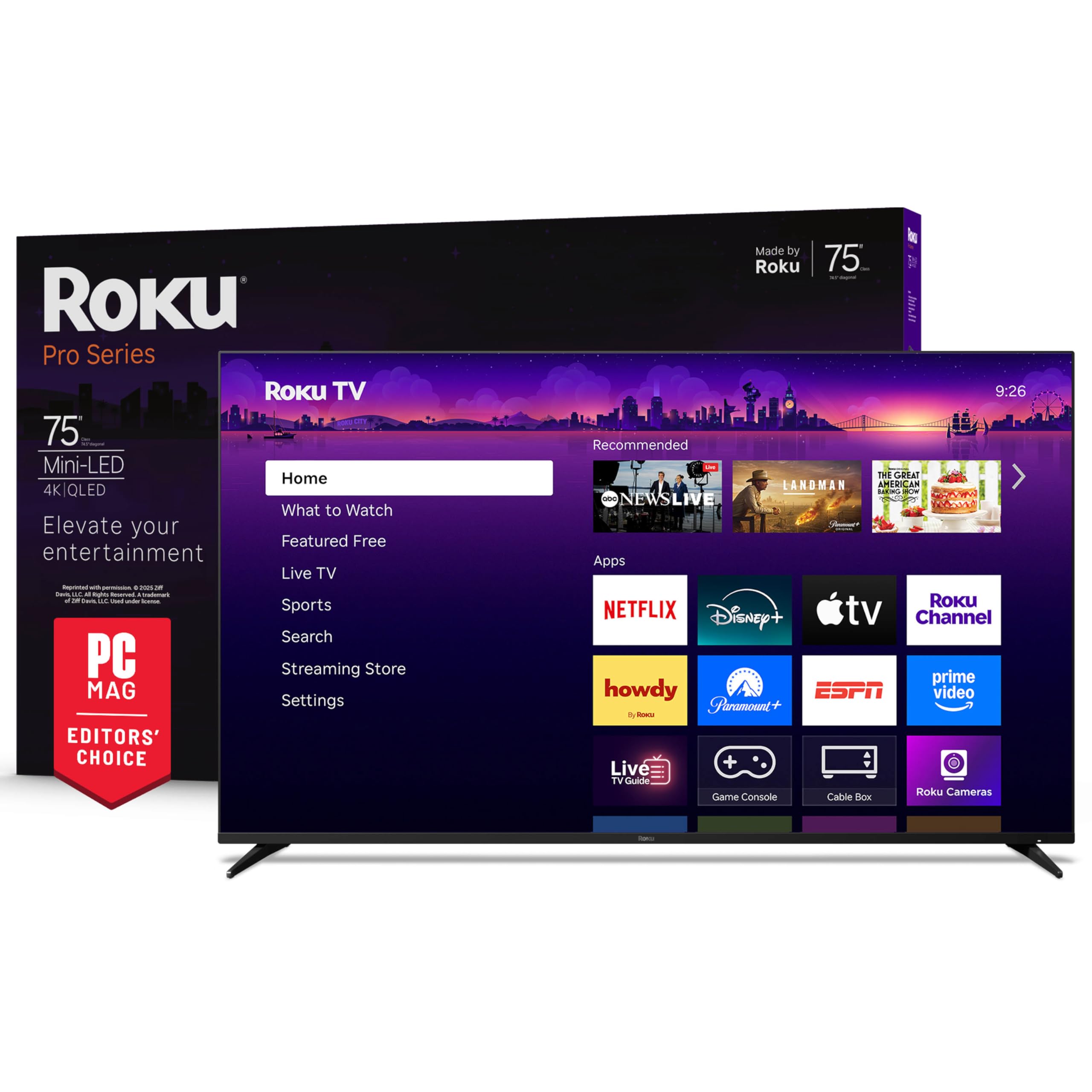
Roku’s Pro Series brings its famously intuitive interface to a high-end Mini-LED QLED panel, making it the best option for households where simplicity and ease of navigation are top priorities. The 120Hz refresh rate, combined with Dolby Vision IQ and FreeSync Premium Pro, delivers smooth motion and tear-free gaming for casual and mid-level gamers. The thousands of Mini LEDs provide vibrant highlights and deep black levels that elevate streaming movies and live sports.
The custom flush-mount design and Backdrops art mode allow the TV to sit flat against the wall and display artwork or personal photos when idle, making it a stylish living room centerpiece. The included Backlit Voice Remote Pro is rechargeable, has backlit buttons for dark rooms, and features a remote finder function—a rare convenience. The cable management system and two-height tool-less stands add to the thoughtful design.
Roku Soundstage Audio with side-firing speakers and Dolby Atmos processing produces surprisingly room-filling sound. Bluetooth Headphone Mode lets you listen privately by connecting wireless headphones to the TV, perfect for late-night viewing. The platform supports all major streaming services, and the home screen is clean and ad-light compared to Fire TV. For those who prioritize a fast, frustration-free software experience, the Roku Pro Series is a top contender.
Why it’s great
- Best-in-class intuitive Roku interface with minimal clutter
- Flush wall-mount design with art mode
- Rechargeable backlit Voice Remote Pro with finder
Good to know
- 120Hz refresh rate, not native 144Hz like some competitors
- Side-firing sound good but lacks deep bass
8. Toshiba 75″ Z670 Mini-LED
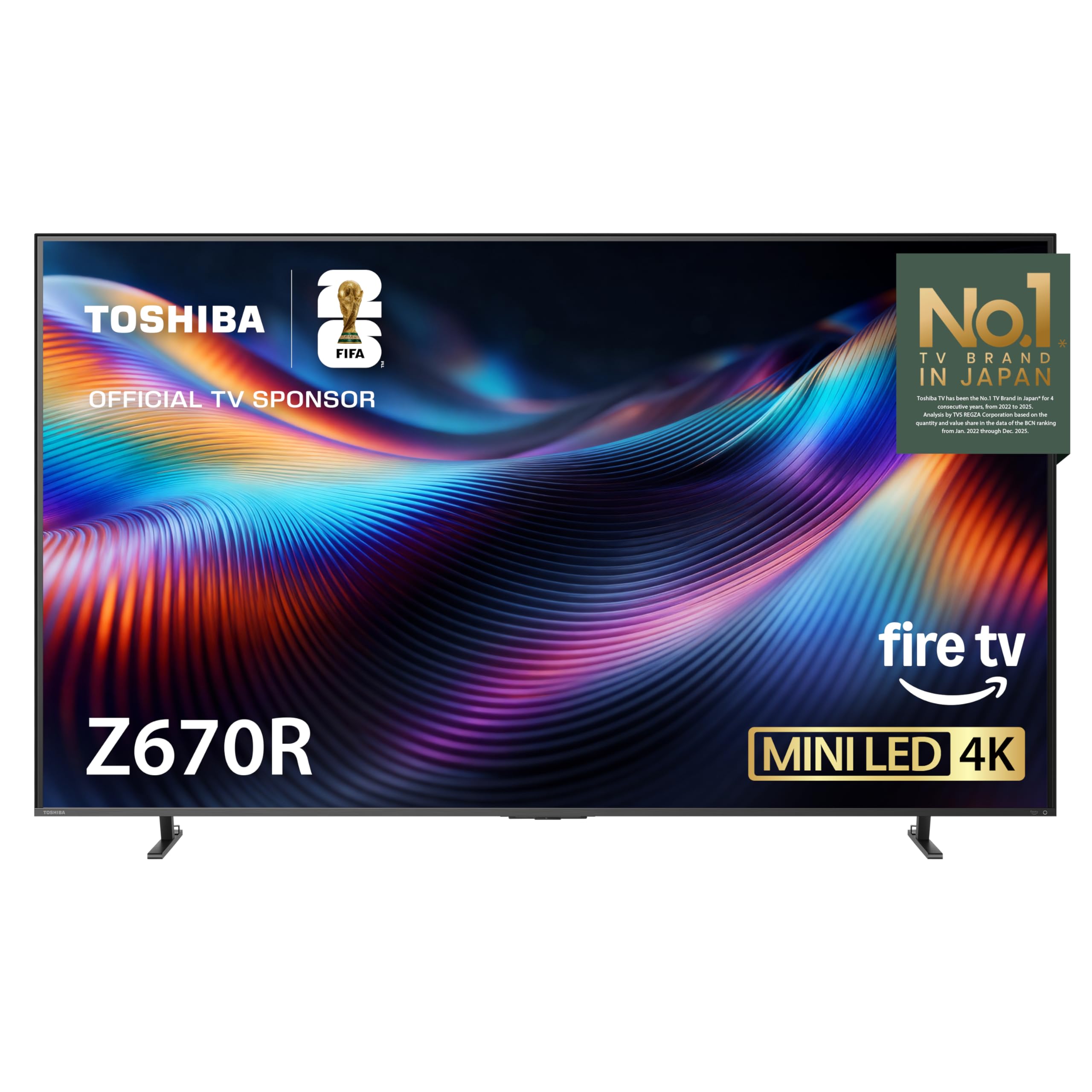
Toshiba returns to the premium TV conversation with the Z670 series, packing Mini LED with Full Array Local Dimming and the REGZA Engine ZRi Gen3 for scene-by-scene AI optimization. Contrast is strong, colors are natural without being oversaturated, and the overall picture quality is competitive with more established mid-range players. The native 144Hz panel and support for AMD FreeSync Premium and VRR make it a capable gaming TV as well.
What sets the Z670 apart is REGZA Power Audio Pro with a dedicated bass woofer. The built-in audio system generates genuinely deep, room-shaking bass that flat-panel TVs rarely achieve without an external subwoofer. Dialogue remains clear even during action-heavy scenes, reducing the need for a soundbar in most living rooms. This makes it an excellent choice for buyers who want good sound right out of the box.
Fire TV integration with Alexa built-in provides a familiar interface for Prime members, and the AI Light Sensor Pro automatically adjusts brightness and color balance to reduce eye strain. The design is minimalist and clean, with a Japan-inspired aesthetic. HDR support includes Dolby Vision IQ, HDR10+, and HLG, covering all major formats. For the feature set and audio performance at this price tier, the Z670 is a smart mid-range value pick.
Why it’s great
- Integrated bass woofer delivers exceptional built-in audio
- REGZA Engine ZRi provides natural picture optimization
- Native 144Hz with FreeSync Premium for gaming
Good to know
- Fire TV interface has Amazon ad promotions
- Dimming zones less dense than higher-end Mini-LED rivals
9. Amazon Ember 75″ QLED Series
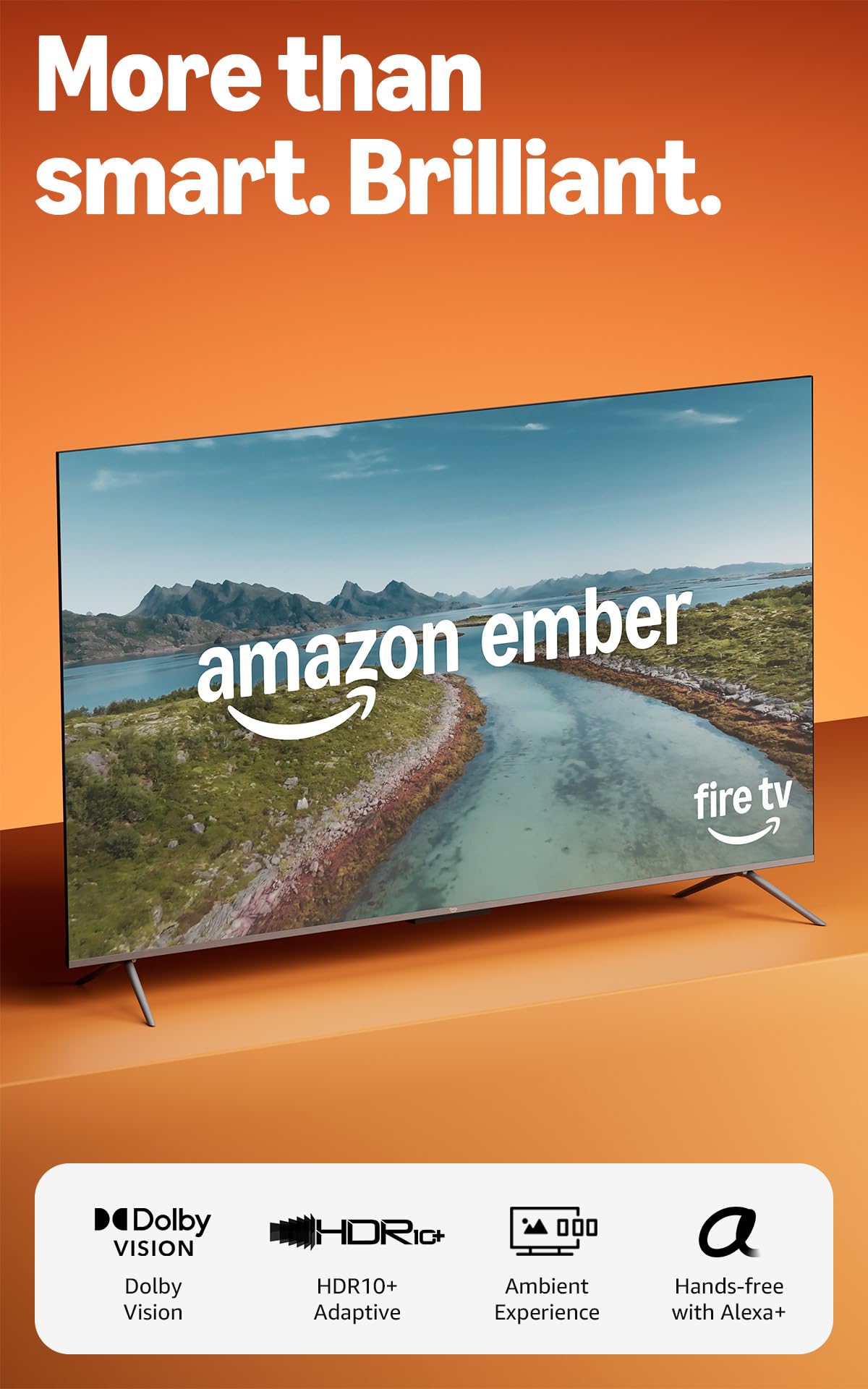
This entry-level 4K QLED from Amazon focuses on delivering core smart features and solid picture quality at a more accessible price. The 4K QLED display supports Dolby Vision and HDR10+ Adaptive, and the full-array local dimming helps improve contrast compared to basic edge-lit panels. While the brightness and zone count don’t match Mini-LED models, the picture is clear, vibrant, and well-suited for general streaming and broadcast TV in moderately lit rooms.
The Omnisense technology wakes the display when you walk into the room, and the new Alexa+ integration allows natural voice commands for finding content, controlling smart home devices, or answering questions—all hands-free without needing the remote. The quad-core processor and Wi-Fi 6 support ensure responsive app loading and smooth navigation, though the Fire TV interface still includes promotional content.
Built-in Dolby Audio provides adequate sound for casual viewing, but the lack of deep bass makes a soundbar advisable for movie nights. The TV includes four HDMI inputs, AirPlay support, and works with Amazon Luna and Xbox Game Pass for cloud gaming without a console. If you want a no-fuss QLED with voice-first controls and deep Fire TV integration, this delivers reliable performance at an entry-level cost.
Why it’s great
- Integrated Fire TV with hands-free Alexa+ voice control
- Wi-Fi 6 and quad-core processor for fast app performance
- Full-array local dimming improves contrast
Good to know
- Audio is decent but a soundbar is recommended for movies
- Software bugs reported by some users
10. Samsung 75″ The Frame (LS03D)

The Samsung The Frame QN75LS03D is a lifestyle TV first and a performance panel second, targeting buyers who want the TV to disappear into their decor when not in use. Its UL-certified matte display effectively eliminates reflections, making artwork and personal photos look like they’re printed on canvas or paper. The included Slim Fit Wall Mount allows the TV to sit flush against the wall, and the One Connect Box routes all cables through a single clean line.
Picture quality is solid for a QLED without Mini-LED backlighting. Quantum HDR delivers good contrast and bright, accurate colors, and the Pantone Validated ArtfulColor ensures that displayed artworks maintain true-to-museum color grading. The Art Mode subscription gives access to over 2,500 works from institutions like The Met and MoMA, but you can also upload your own photos for free. The customizable bezels and digital mat options let you match the TV to your room’s specific aesthetic.
For actual TV watching, the Quantum Processor 4K upscales content well, and Dolby Atmos support provides clear dialogue. The matte screen does limit peak brightness compared to glossy panels, so it’s less ideal for bright rooms focusing on HDR movies, but it excels in spaces where reducing glare and wall reflections is the priority. This is a compromise in absolute picture quality for a design that integrates seamlessly into a home’s visual landscape.
Why it’s great
- Glare-free matte display perfect for art and photos
- Flush wall-mount and One Connect Box for clean cable management
- Pantone Validated color for accurate art reproduction
Good to know
- Matte screen limits peak brightness for HDR content
- Art Store requires subscription for full access
11. Sony 75″ BRAVIA 7 (K-75XR70)

The Sony BRAVIA 7 is a strong mid-premium option that brings the company’s renowned XR processing power to a Mini-LED panel at a lower cost than the flagship BRAVIA 9. The XR Backlight Master Drive controls the Mini LEDs to deliver high contrast with improved black levels and bright HDR peaks. Colors are accurate thanks to XR Triluminos Pro, and the XR Clear Image upscaling ensures that lower-resolution content retains sharpness and texture.
For PlayStation 5 owners, the BRAVIA 7 is a natural pairing. Auto HDR Tone Mapping and Auto Genre Picture Mode detect the console and optimize settings automatically, while the Game Menu provides quick access to gaming-specific adjustments like VRR status and crosshair overlays. The native panel is 120Hz, which is sufficient for most console gaming. Input lag is low, and motion clarity is excellent for fast-paced titles.
Studio Calibrated picture modes for Netflix, Prime Video, and Sony Pictures Core deliver accurate color reproduction straight from the factory, eliminating the need for manual calibration. Acoustic Multi-Audio uses actuators behind the screen to match sound position with on-screen action, improving dialogue localization. The viewing angle is narrower than some competitors, so seating directly in front is recommended. For buyers prioritizing processing power and PS5 integration, this is a refined choice.
Why it’s great
- XR processor provides best-in-class upscaling and motion
- Perfect PS5 integration with Auto HDR mapping
- Studio Calibrated modes for accurate color out of the box
Good to know
- Narrower optimal viewing angle than VA competitors
- Some reports of blooming in very high-contrast scenes
13. iFFALCON 75″ F75 QLED
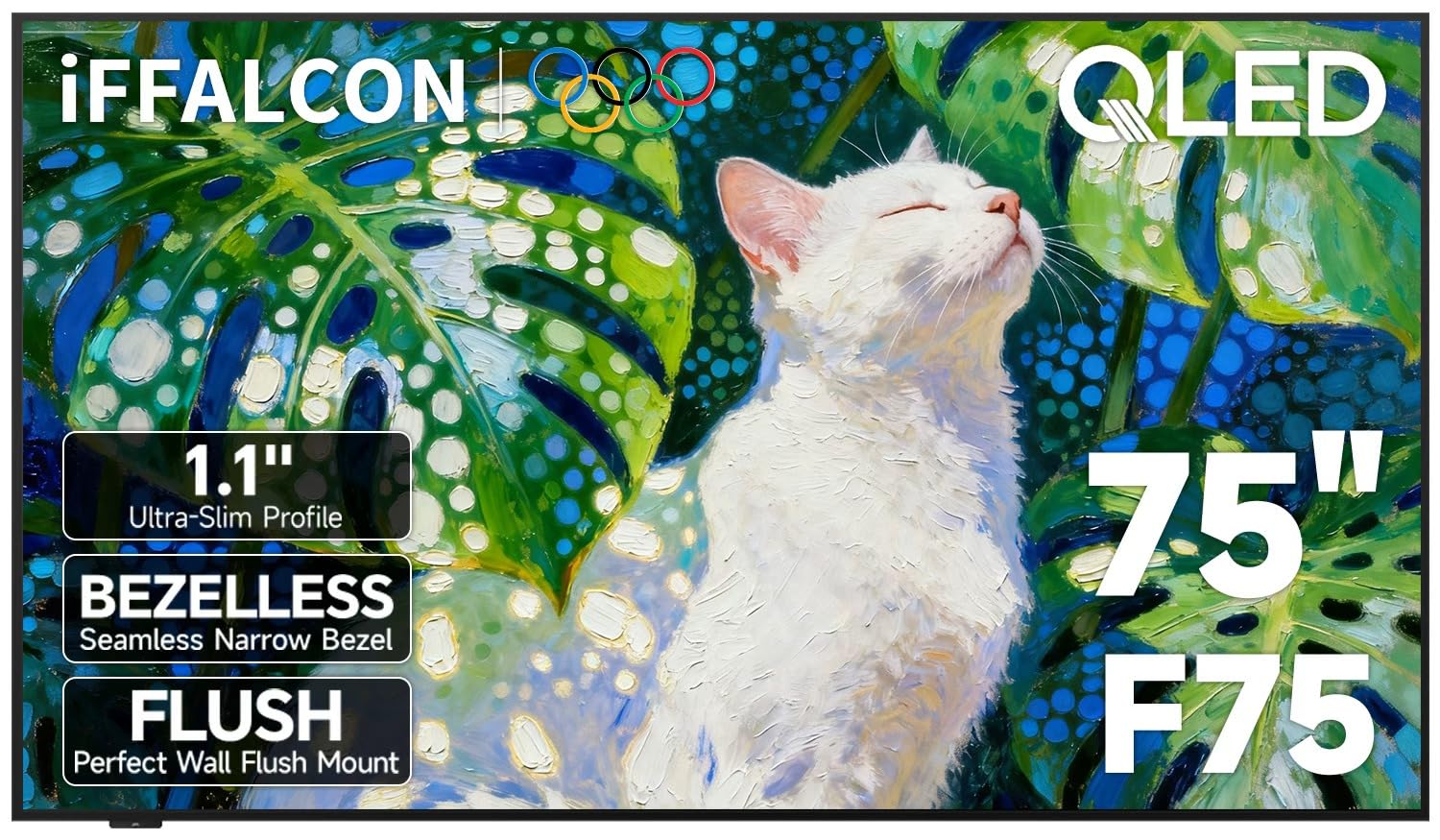
The iFFALCON F75 is designed for buyers who prioritize a clean, wall-mounted look without sacrificing modern features. Its ultra-slim 1.1-inch metal frame sits flush against the wall using the included mount, and the hidden cable management system ensures no messy wires are visible. This makes it one of the most aesthetically pleasing budget-to-mid-range QLEDs for living rooms where the TV needs to blend in rather than dominate.
Picture quality is solid for its price tier. The QLED panel covers 93% of the DCI-P3 color space, and Dolby Vision IQ adjusts the picture based on ambient room lighting. The native 144Hz refresh rate with MEMC ensures smooth motion for sports and action content. FreeSync Premium Pro support and VRR make it capable for casual gaming, with low input lag that keeps gameplay responsive. The 240Hz motion acceleration further enhances clarity during fast-moving scenes.
A unique selling point is the composite AV input via a 3.5mm adapter, allowing legacy consoles, DVD players, or camcorders to connect without additional converters—a rare feature in modern TVs. Google TV provides a clean interface for streaming, and Alexa voice control is built-in. The downside is that the speakers are adequate for dialogue but lack bass for cinematic soundtracks. The iFFALCON F75 is a smart value choice for design-conscious buyers on a tighter budget.
Why it’s great
- Ultra-slim 1.1-inch flush wall-mount design with cable management
- Composite AV input for legacy devices
- 144Hz with FreeSync Premium Pro for smooth gaming
Good to know
- Built-in speakers lack bass for cinematic audio
- Not as bright as Mini-LED competitors in very bright rooms
FAQ
What is the practical difference between edge-lit QLED and Mini-LED backlighting?
Do I need a native 144Hz panel for console gaming?
Why does Dolby Vision IQ matter more than standard Dolby Vision?
Can I use the Samsung The Frame as a normal TV for gaming?
What is the real benefit of a 5,000:1 contrast ratio in the TCL QM8L?
Final Thoughts: The Verdict
For most users, the best 75 inch qled tv winner is the Hisense 75U7 because it delivers Mini-LED brightness, a native 165Hz panel, and thousands of dimming zones at a mid-range price that outperforms like-priced OLEDs in lit rooms. If you want wall-mount aesthetics and legacy device support, grab the iFFALCON F75. And for cinematic processing with elite PS5 integration, nothing beats the Sony BRAVIA 9.