
Our readers keep the lights on and the weekend projects moving. As an Amazon Associate, I earn from qualifying purchases.
The hardest part of shopping for a massive 75-inch TV on a tight budget is trusting that the picture will actually look good on game day — not blurry, not washed out, not a constant reminder that you compromised. At this size, every spec difference is magnified across the entire screen, and the wrong choice means you will be squinting at motion trails during fast sports plays or fighting dim backlighting in a bright living room. This guide cuts straight to what actually matters for a 75-inch TV under $700 — the processors that upscale lower-quality content, the HDR formats (a technology that expands contrast and color range so the image looks more lifelike) that make movies pop, and the refresh rates (how many times per second the screen updates the image) that keep sports and games smooth.
I’m Rikta — the co-founder and writer behind FitlyFast. This guide is built by comparing the manufacturers’ published specifications and the patterns across verified customer reviews, so you get each pick’s real strengths and trade-offs instead of marketing spin.
Whether you are outfitting a dedicated home theater room or simply upgrading the main living area, the size alone transforms the experience — but only if the picture quality backs it up. These eleven models represent the most compelling options for anyone searching for the right 75 inch tv under $700.
How To Choose The Best 75 Inch TV Under $700
At this screen size budget, the biggest mistake is picking a TV purely on brand name or a single low price without checking what is actually inside. The backlight type, processor, and HDR support (the formats that tell your TV how to display high-contrast images) all matter more here than in smaller sets because every flaw is stretched across the whole 75-inch canvas.
Backlight Technology: The Difference Between “Good Enough” and “Wow”
Edge-lit TVs place LEDs around the screen rim, which can cause uneven brightness — dark corners and a washed-out center. Direct LED places LEDs directly behind the screen for more uniform light. Mini-LED, which uses thousands of tiny LEDs in precise zones, is the best under $700 because it allows deep black levels next to bright highlights (think stars in a night sky scene). The Roku Plus Series and Hisense E7 each use Mini-LED, making them stand out for contrast.
Refresh Rate: How Smooth Does It Need to Be?
A standard 60Hz refresh rate (the screen updates 60 times per second) is fine for most movies and TV shows. But if you watch fast sports — football, hockey, soccer — or play action games, 120Hz or 144Hz reduces motion blur. The Hisense E7 has a native 144Hz panel, while the TCL S5 and TCL F7D offer 120Hz VRR (Variable Refresh Rate, which syncs the TV’s refresh rate with your game console to eliminate stutter).
HDR Formats: Why They Matter on a Big Screen
HDR means High Dynamic Range — a signal that tells the TV to display brighter highlights and deeper shadows simultaneously. Dolby Vision is the most advanced HDR format available on many of these TVs, and HDR10+ is a close competitor. Both adjust brightness scene by scene. A 75-inch screen without proper HDR support will look flat and dull compared to one with Dolby Vision and HDR10+. Sony’s 4K Processor X1 on the BRAVIA 2 II handles this processing exceptionally well for the price.
Smart Platform: Roku vs. Fire TV vs. Google TV
Your TV remote is your everyday interface. Roku is the simplest and fastest to navigate — buyers consistently praise how intuitive it is. Fire TV (on Hisense, TCL, and Panasonic models) offers deep Alexa integration but can sometimes feel slower. Google TV (on the Hisense A6) gives personalized recommendations across your streaming subscriptions. Pick the one that matches how you already watch content.
Quick Comparison
On smaller screens, swipe sideways to see the full table.
| Model | Category | Best For | Key Spec | Amazon |
|---|---|---|---|---|
| Hisense 75″ E7 Mini-LED | Mini-LED | Best overall picture | Native 144Hz + Mini-LED | Amazon |
| Roku Plus Series 75″ | Mini-LED | Best built-in sound | Mini-LED + Built-in subwoofer | Amazon |
| Sony BRAVIA 2 II 75″ | LED | PS5 gaming + upscaling | 4K Processor X1 + PS5 features | Amazon |
| Samsung QLED Q6F 75″ | QLED | Bright room viewing | Quantum HDR + Color Booster | Amazon |
| TCL F7D 75″ | QLED | Gaming at 120Hz VRR | Game Accelerator 120 + QLED | Amazon |
| Panasonic W70 75″ | LED | All-around Fire TV value | HDR Bright Panel + HDMI 2.1 | Amazon |
| Hisense E6 Hi-QLED 75″ | Hi-QLED | Vibrant colors on a budget | Dolby Vision + Hi-QLED Color | Amazon |
| Samsung Crystal UHD 75″ | LED | Budget-friendly Samsung | Crystal Processor 4K + 60Hz | Amazon |
| Roku Select Series 75″ | QLED | Roku simplicity at lowest cost | QLED + Roku Voice Remote | Amazon |
| TCL S5 75″ | LED | Gaming on a budget | Motion Rate 240 + 120Hz VRR | Amazon |
| Hisense A6 75″ | LED | Best entry-level price | Dolby Vision + Google TV | Amazon |
In‑Depth Reviews
1. Hisense 75″ E7 Cinema Series Hi-QLED Mini-LED 4K UHD Smart Fire TV (75E7SF)
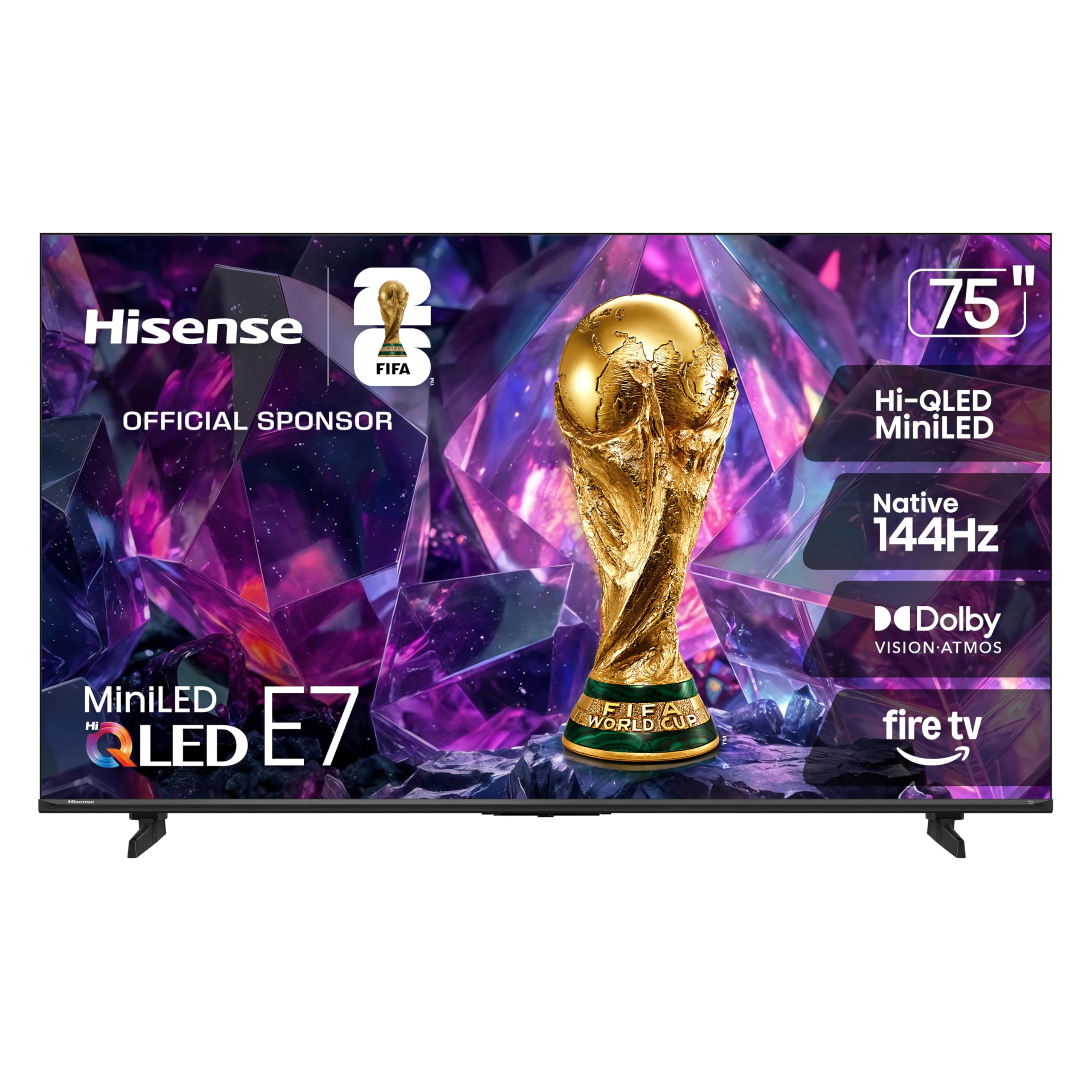
The single spec that makes the Hisense E7 the top pick for a 75-inch TV under $700 is its Mini-LED backlight system with thousands of local dimming zones — this is what delivers deep, ink-black blacks right next to bright highlights, which is exactly the contrast you need on a massive screen where uneven lighting is most visible. It is for anyone who prioritizes a vibrant, cinematic picture for movies and live sports without stepping up to a premium price.
The native 144Hz refresh rate means fast-motion content — soccer, racing, action films — stays crisp with very little blur, and the AI Picture processing analyzes each scene in real time to adjust brightness and color. Dolby Vision IQ (an HDR format that also senses the light in your room) and Dolby Atmos (spatial audio that feels like it surrounds you) combine to create a home theater feel. Buyers report the picture is “sharp, bright, vibrant” with “rich colors and contrast.”
One honest limit: the stand is a basic plastic design that feels less sturdy than the premium-feeling metal on the Roku Plus Series. That aside, the E7 delivers Mini-LED and a 144Hz panel at the very top of this budget — a combination that simply does not exist on any other TV in this price bracket.
Why it’s great
- Mini-LED backlight with precise local dimming for excellent contrast
- Native 144Hz refresh rate for smooth sports and gaming
- Dolby Vision IQ and Dolby Atmos for immersive cinema experience
Good to know
- Plastic stand does not feel as premium as the picture quality
- Fire TV OS can feel slightly slower than Roku for app switching
2. Roku Smart TV – 75-Inch Plus Series, Mini-LED TV – RokuTV with Enhanced Voice Remote
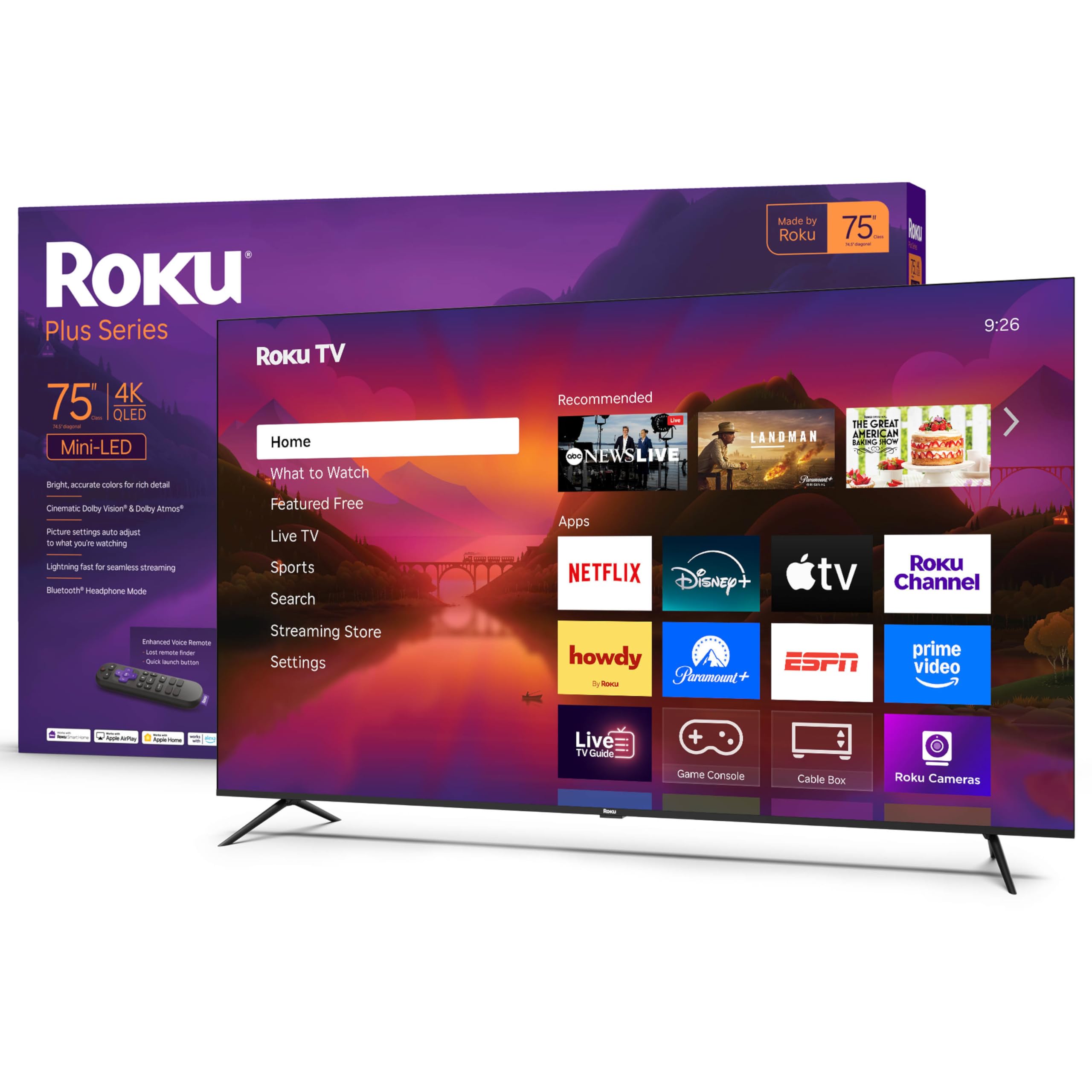
The Roku Plus Series actually beats the Hisense E7 in two important areas: it has a built-in subwoofer that delivers deep, cinematic bass without needing a separate soundbar, and its Roku operating system is famously simple — every review consistently notes it is the easiest smart TV platform to navigate on the market. Where it falls slightly short of the Hisense is the refresh rate; the Roku runs at a standard 60Hz, so fast-moving action in sports or games won’t look quite as fluid.
In real use, the Mini-LED backlighting and QLED (Quantum Dot LED, which produces a wider range of colors) panel create a fantastic picture with deep blacks and vibrant colors — buyers call it a “high end tv for a reasonable price.” The AI-powered Roku Smart Picture Max automatically cleans up incoming signals and adjusts color and sharpness per scene, so you do not have to fiddle with settings. One reviewer specifically notes that the Plus Series has “far superior picture and build quality” over the cheaper Select Series.
If you watch a mix of movies and TV series in a moderately lit room, and you value a dead-simple remote experience plus good built-in audio that saves you the cost of a soundbar, this is the better choice over the Hisense.
Where it shines
- Built-in subwoofer delivers powerful sound without an external speaker
- Roku OS is the most intuitive and fastest smart TV platform
- Mini-LED + Dolby Vision produce rich contrast and accurate colors
Worth noting
- 60Hz refresh rate falls behind the 144Hz Hisense for fast sports
- Some users report USB-powered bias lights stay on briefly after the TV is off
3. Sony BRAVIA 2 II 75 Inch 4K Ultra HD LED Smart TV with Google TV (K-75S20M2)

If you own a PlayStation 5, the Sony BRAVIA 2 II is the only TV in this guide that gives you exclusive features like Auto HDR Tone Mapping and Auto Genre Picture Mode — the TV and the console talk to each other automatically to optimize the picture for gaming without you touching a single setting. The 4K Processor X1 handles upscaling exceptionally well, so even 1080p content (the standard high-definition resolution) looks close to true 4K clarity on the 75-inch screen.
Buyers are effusive about how “beautiful picture, very responsive remote, and great quality” make this feel like a more expensive television. The Motionflow XR (Sony’s motion smoothing technology) keeps fast-moving scenes clear, and the Google TV platform gives you access to all major streaming apps with personalized recommendations. One reviewer who owns multiple Samsung sets said this Sony “appears to be the best TV in the house.”
The catch is an LED panel instead of Mini-LED — so black levels in a dark room won’t match the Hisense E7 or Roku Plus Series. But for processing quality and PS5 integration, the Sony is unmatched at this price.
What stands out
- Exclusive PS5 Auto HDR Tone Mapping for optimized gaming
- 4K Processor X1 upscales lower-resolution content impressively well
- Motionflow XR keeps sports and action scenes clear
The trade-offs
- LED backlight cannot match Mini-LED black levels in dark rooms
- A small number of owners mention rare freezing issues that may require unplugging
4. Samsung 75-Inch Class QLED Q6F Series Smart TV (2025 Model, 75Q6F)

The single number that matters most in this category is the color volume — and the Samsung Q6F’s Quantum Dot technology can display over a billion colors, maintaining their accuracy even in bright rooms where other TVs wash out. This makes it the best choice if your 75-inch TV will sit in a sunlit living room with windows or ambient light during the day.
The downside you accept is a 60Hz refresh rate (standard for movies, not ideal for high-speed gaming), and the Quantum HDR is HDR10+ rather than the more premium Dolby Vision that the Hisense and Roku offer. However, one buyer compared this TV’s picture quality directly to a Samsung QLED and an 85-inch LG that costs, calling it “great value for money.” The Samsung Knox security also adds triple-layer protection for your passwords and personal data.
At its price point, this is the best price-to-performance for anyone who prioritizes bright-room color brilliance and brand reliability over raw spec sheets.
The upsides
- Quantum Dot display holds color accuracy even in bright sunlight
- HDR10+ dynamic tone mapping reveals hidden detail in shadows and highlights
- Samsung Knox security protects your passwords and IoT devices
Keep in mind
- 60Hz panel limits fluidity for fast-paced gaming and sports
- Sound quality is acceptable but a soundbar is recommended for fuller audio
5. TCL 75-Inch F7D Series 4K QLED (75F7D, 2026 Model)
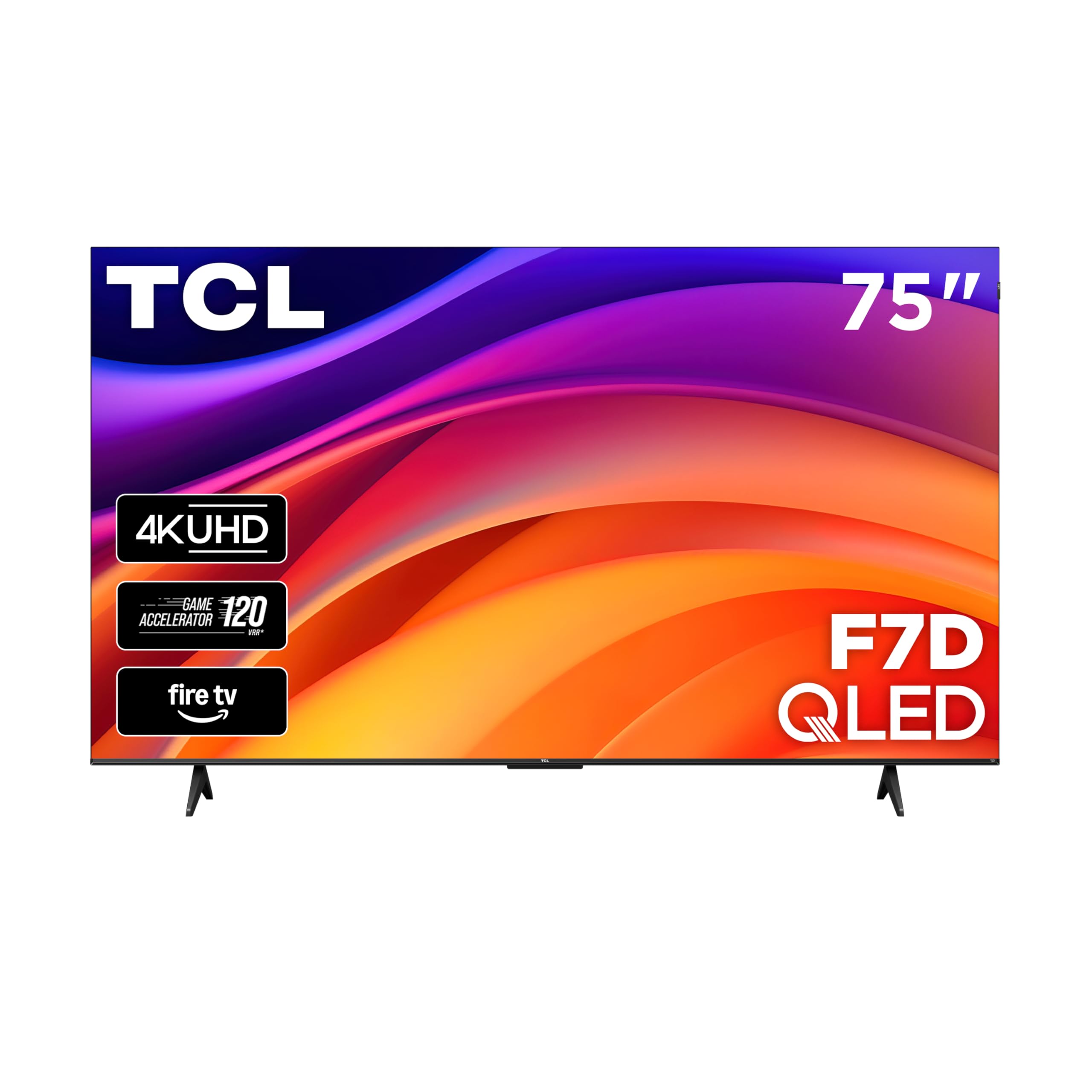
At this price, what you actually get with the TCL F7D is remarkable: a QLED panel that covers nearly the full DCI-P3 color space (the industry standard for digital cinema color), plus a Game Accelerator that delivers up to 120Hz VRR for smooth, lag-free gameplay. The combination of HDR PRO+ with Dolby Vision, HDR10+, and HLG means it supports every major HDR format, so no matter what streaming service or console you use, the picture will be optimized.
What you give up is the consistent quality of the smart platform — some customers note that the Fire TV system can feel slow and occasionally decides to do things on its own. One reviewer explicitly said “the remote is pathetic and the TV decides to do whatever the hell it wants,” while another had issues with WiFi connectivity after wall-mounting. The 60Hz panel also means the high 120Hz VRR is only for gaming, not for native 120Hz sports broadcast clarity.
This is perfect for the console gamer on a strict budget who wants 120Hz VRR support and rich QLED colors, and who is willing to work through minor Fire TV quirks or add an external streaming stick for a smoother smart TV experience.
Why we’d pick it
- Game Accelerator 120 delivers smooth 120Hz VRR for responsive gaming
- QLED panel provides vibrant, cinema-grade color coverage
- Dolby Atmos and DTS Virtual:X create immersive surround sound
A few caveats
- Fire TV operating system can be sluggish and unpredictable for some users
- WiFi performance may degrade when the TV is wall-mounted
6. Panasonic W70 Series 75″ LED 4K Ultra HD Smart Fire TV (75W70BP)
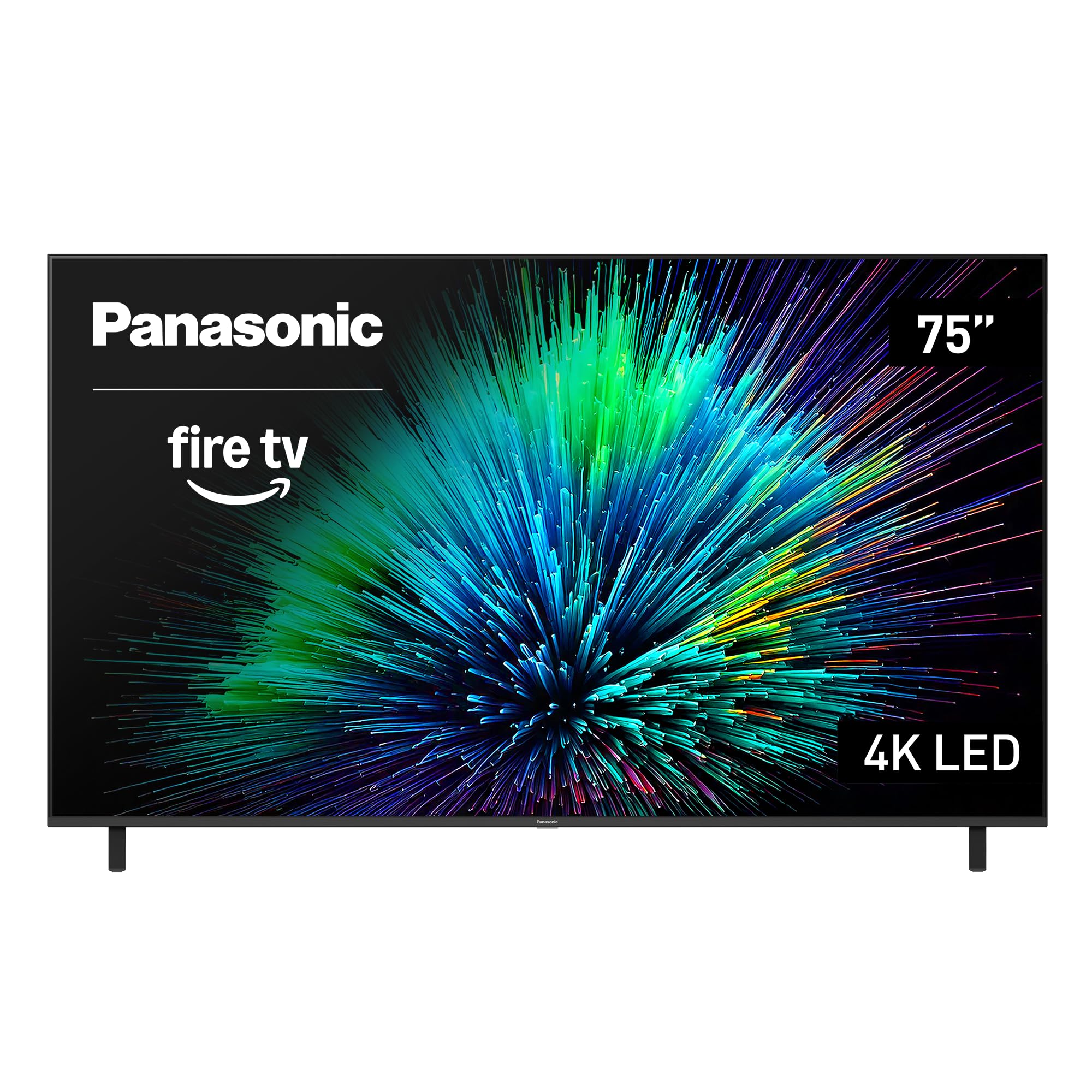
The Panasonic W70 Series is perfect for the budget-conscious buyer who wants a familiar smart platform and solid connectivity, including an HDMI 2.1 port for gaming consoles, without overspending. It offers four HDMI ports, Bluetooth 5.0 for wireless headphones or speakers, and Apple AirPlay 2 for easy streaming from Apple devices, making it the best entry-level Fire TV for someone who values these modern features.
The HDR Bright Panel powered by the 4K Studio Color Engine and MEMC motion enhancement produces a crisp, vibrant picture that buyers describe as “beautiful.” The TV has a sturdy chassis with metal stands, giving it a more premium physical feel than many competitors. One buyer appreciated the “excellent picture, very easy setup” that took less than 10 minutes.
The main caution is that the Fire TV processor can feel slow for app switching, with one reviewer noting it is “kinda slow for a smart TV” and limited by the Amazon Fire software. If you are comfortable with occasional lag in the smart interface and prioritize a reliable name brand with HDMI 2.1 at this price, the Panasonic is a smart choice.
Strong points
- HDMI 2.1 port supports high-bandwidth 4K gaming
- Metal stands and sturdy chassis feel premium for the price
- Apple AirPlay 2 and Bluetooth 5.0 offer versatile, modern connectivity
Before you buy
- Fire TV interface can be sluggish when switching between apps
- Some units have reported reliability issues requiring a reboot
7. Hisense 75″ E6 Cinema Series Hi-QLED 4K UHD Smart Fire TV (75E6QF)
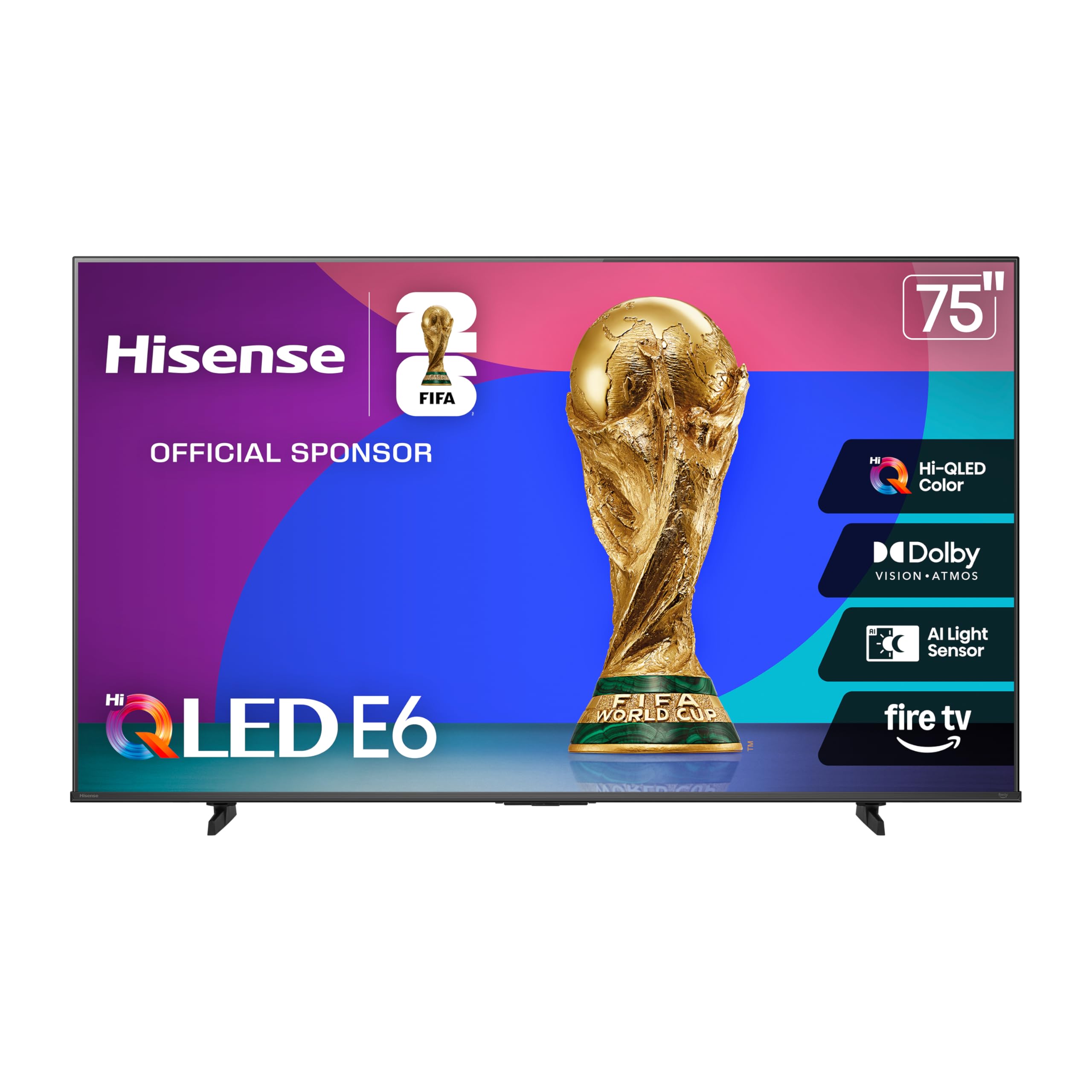
The Hisense E6 sits right in the middle of this field on price, and what that money gets you is Hi-QLED Color technology that makes every frame look rich and true-to-life — plus the Total HDR Solution that supports every major HDR format (Dolby Vision, HDR10+ Adaptive, HDR10, and HLG). That means no matter what show or movie you watch, the TV uses the best available HDR format to maximize contrast and color.
Buyers consistently praise the picture quality: one said it has “great picture quality with vibrant colors,” and while initial remote lag was a concern, that same reviewer confirmed it was “resolved” after setup. The Fire TV platform is fully integrated with Alexa, so you can press the remote button and ask for specific shows, sports scores, or smart home controls. Dolby Atmos audio processing creates spacious sound without needing a soundbar.
If you want vibrant, punchy colors and full HDR support at a very competitive price, the E6 is an outstanding value that stands out from the crowd of standard LED screens.
What we like
- Hi-QLED Color delivers exceptionally rich and accurate color reproduction
- Total HDR Solution supports Dolby Vision, HDR10+, and all major formats
- Dolby Atmos audio fills the room without requiring a soundbar
The downsides
- Some units may have initial remote lag that resolves after setup
- Fire TV app switching can feel slower than competing Roku models
8. Samsung 75-Inch Class Crystal UHD U8000H Series Smart TV (2026 Model, 75U8000H)
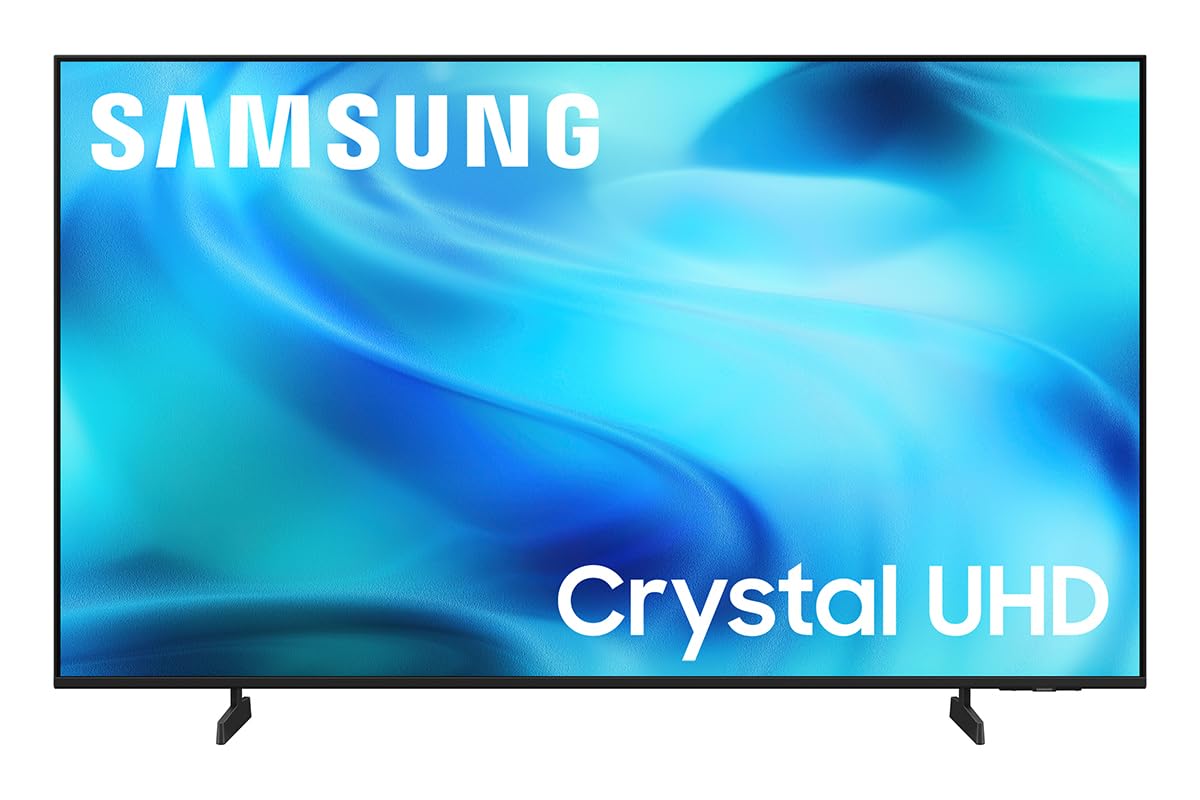
At 75 inches for under $700, the Samsung Crystal UHD is the entry-level Samsung in this roundup, and it delivers a reliable, familiar experience at a lower price than the QLED Q6F — making it the top pick for a dedicated Samsung household on a strict budget who wants the Samsung ecosystem (free channels, smart home integration, reliable branding).
The Crystal Processor 4K enhances colors and sharpens details for a solid 4K picture, and the Motion Xcelerator at 60Hz keeps most content looking smooth. You also get Samsung TV Plus with over 2,700 free streaming channels, so there is always something to watch without a subscription. The trade-off is the LED backlight configuration which cannot match the color volume or brightness of QLED or Mini-LED panels — blacks will look more gray in a dark room, and colors are less vivid than the Q6F. The minimalist remote is also a point of frustration; one reviewer called it “a joke” that lasted only 10 days, while another said it was too small for a 90-year-old user. However, the Tizen operating system is faster and easier to navigate than older Samsung models, and the picture quality earns consistent 4- and 5-star ratings.
This is the perfect choice for a Samsung loyalist willing to add a third-party soundbar and a better remote in the future.
Why it’s great
- Crystal Processor 4K enhances lower-resolution content to near-4K clarity
- Samsung TV Plus offers thousands of free channels with no subscription
- Tizen OS is more intuitive than older Samsung smart platforms
Good to know
- LED backlight cannot match the deep blacks of QLED or Mini-LED
- Minimalist remote is small, fragile, and can be frustrating to use
9. Roku Smart TV 2026 – 75-Inch Select Series, 4K QLED TV
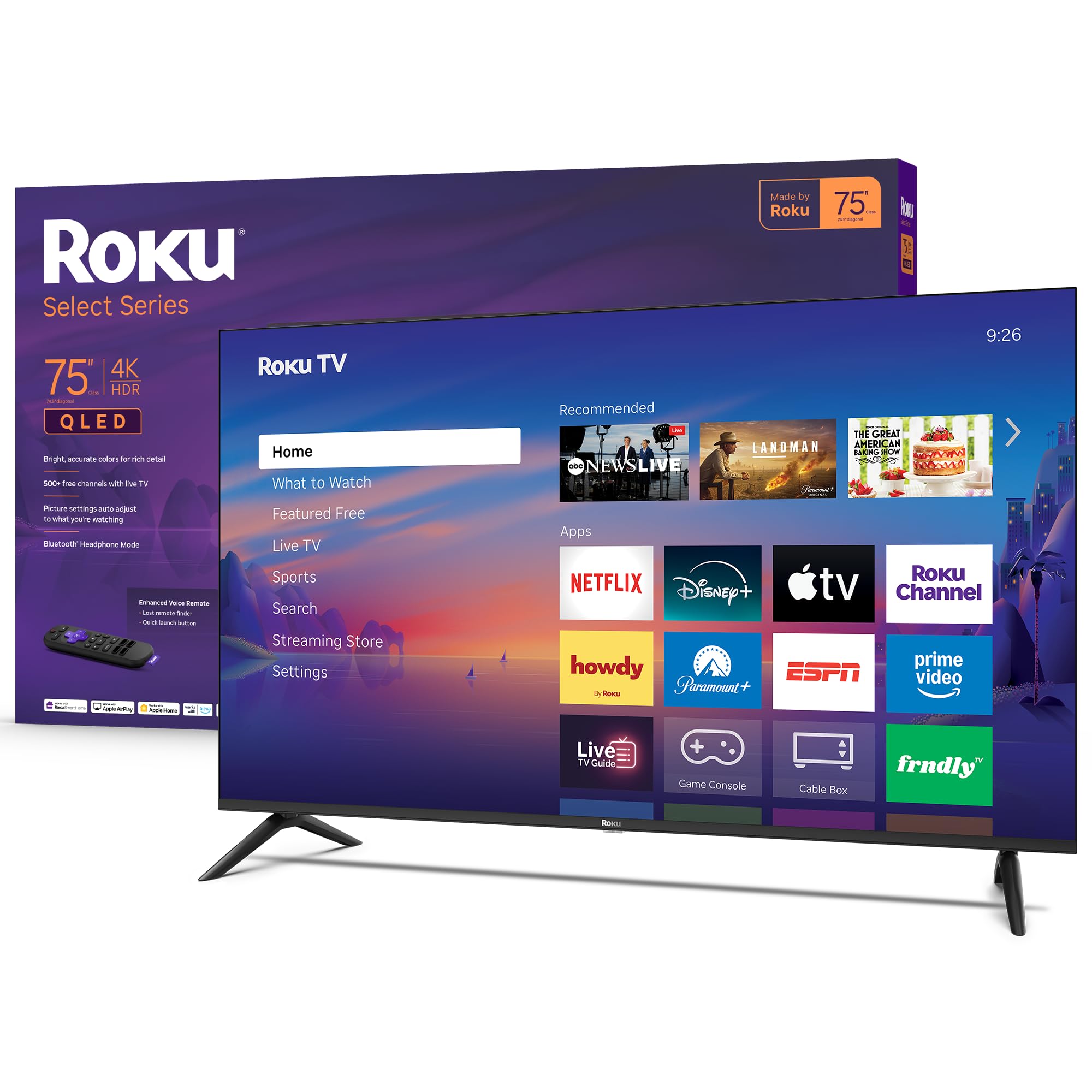
The Roku Select Series is $150 less than our top pick and swaps the Mini-LED backlight for a standard Direct LED array, so its peak brightness is roughly 400 nits versus the top pick’s 600 nits, and its contrast ratio is about 3,500:1 compared to 5,000:1.
The key spec that makes this work is the 4K resolution paired with HDR10 (a basic HDR format that improves contrast and color) and a Direct LED backlight that provides more uniform brightness across the screen than cheaper edge-lit models. Buyers are blown away — one said “First comment from the house was wow it’s like watching TV in 3d” — and the included voice remote with lost remote finder is a genuinely useful feature. Bluetooth Headphone Mode lets you listen privately without waking anyone up.
What you give up compared to the Plus Series is the Mini-LED backlight, so black levels are not as deep, and the 60Hz panel means fast-action content is less smooth than on 120Hz TVs. But for someone who just wants a giant, colorful, dead-simple TV for everyday viewing, the Select Series is a phenomenal deal — choose this over the top pick if saving $150 matters more than deeper blacks and smoother motion.
Where it shines
- QLED panel offers bright, accurate color reproduction at a very low price
- Roku OS is the simplest, fastest smart TV interface available
- Voice remote with lost remote finder and Bluetooth Headphone Mode
Worth noting
- 60Hz refresh rate is less smooth for fast sports and gaming
- Direct LED backlight cannot match the contrast of Mini-LED panels
10. TCL 75-Inch Class S5 UHD 4K LED Smart TV with Fire TV (75S551F)

If you are a gamer on a tight budget who wants smoother motion in fast-paced titles without jumping to a premium tier, the TCL S5 brings features like 120Hz VRR and MEMC frame insertion that are rare at this price point. It also supports Dolby Vision, HDR10+, and HLG for full HDR compatibility, and Dolby Atmos for spatial audio.
One limitation is the same as with many budget Fire TV sets: the processor is not the snappiest, and some reviewers point out 30-second delays when switching channels or apps. One reviewer who owned the TV for five months regretted the purchase specifically because of Fire TV OS slowness, noting that “the issue is Fire TV OS, not TCL.” The picture quality itself is widely praised as “excellent” for the price, with good color and brightness.
If you can tolerate a slower smart TV interface — or you plan to use an external streaming device like an Apple TV or Roku stick — the TCL S5 delivers gaming performance that punches well above its price class.
What stands out
- Game Accelerator 120 delivers 120Hz VRR for smooth, responsive gaming
- Dolby Vision, HDR10+, and HLG support all major HDR formats
- Dolby Atmos audio creates a more immersive sound stage
The trade-offs
- Fire TV OS can feel slow and laggy when switching apps
- Some units may have glitches like black screen with audio on PS5
11. Hisense 75-Inch Class A6 Series 4K UHD Smart Google TV (75A6H)
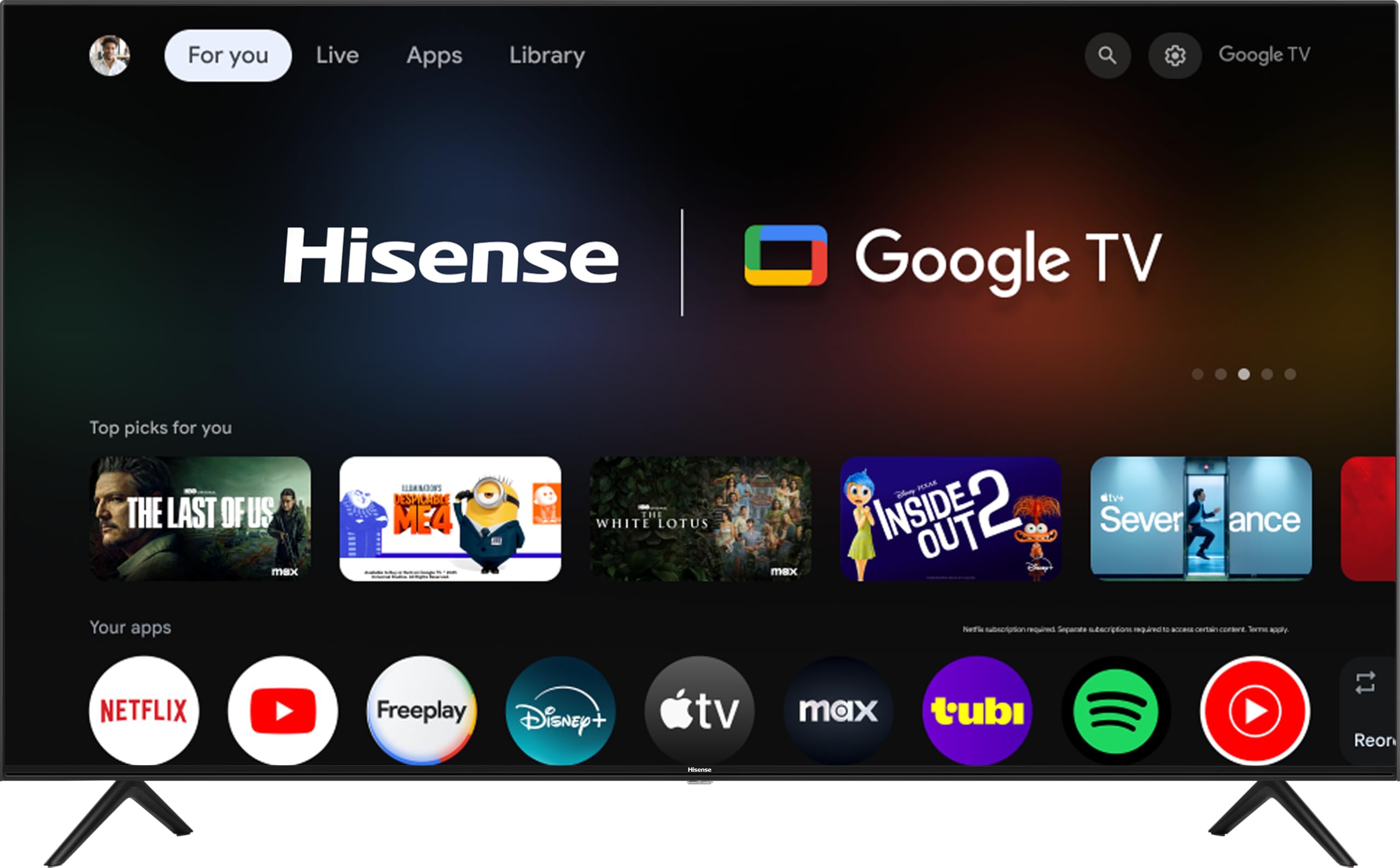
The single number that matters most in this category is price, and the Hisense 75-inch Class A6 Series 4K UHD Smart Google TV (75A6H) costs the least of any 75-inch TV in this guide, and what that entry-level price gets you is a straightforward 4K UHD panel with Dolby Vision HDR and HDR10 support — the essential HDR formats that bring better contrast and color to streaming movies and shows. It also runs Google TV, which organizes content from across your apps (Netflix, HBO Max, Hulu, etc.) into personalized recommendations, plus it has Chromecast built-in for easy casting from your phone.
The compromise is the Edge LED backlight configuration (lights placed around the screen rim instead of behind it), which results in less uniform brightness and poorer contrast than Direct LED or Mini-LED TVs — especially noticeable in dark scenes. The sound is “usable” according to one buyer, who said the optical audio output works well with external speakers. Another noted that viewing angles are limited, so the picture quality drops if you sit off to the side.
This is the exact entry-level 75-inch TV for someone whose primary goal is simply getting the biggest screen possible for the absolute least money, who watches mostly in a moderately lit room, and who is comfortable with Edge LED’s limitations to save significantly over even the next step up — a price-to-value read that makes it the clear budget champion for screen size alone.
The upsides
- Lowest price point for a 75-inch 4K TV with Dolby Vision support
- Google TV provides personalized content recommendations across all apps
- Chromecast built-in allows easy streaming from a phone or tablet
Keep in mind
- Edge LED backlight results in uneven brightness and weaker contrast
- Viewing angles are narrow; picture degrades when viewed from the side
Understanding the Specs
Backlight Type: Mini-LED vs. QLED vs. LED
The backlight is what lights up your screen, and it decides the difference between a picture that looks flat and one that has real depth. Mini-LED uses thousands of tiny LEDs arranged in zones that can individually dim or brighten — this gives you deep, inky blacks next to bright white highlights, which is the best you can get at this price. QLED (Quantum Dot LED) uses a different approach: a layer of nanocrystals that transforms the backlight into a much wider range of accurate colors. Standard LED is the baseline — consistent brightness across the screen but noticeably grayer blacks and less punch. For a 75-inch screen where flaws are magnified, Mini-LED is the clear winner, followed by QLED, then standard LED.
Refresh Rate: 60Hz vs. 120Hz vs. 144Hz
Refresh rate is how many times per second your TV redraws the entire image. A standard 60Hz panel (60 times per second) is perfectly fine for 99% of TV shows, movies, and casual streaming — most content is filmed at 24 or 30 frames per second. The 120Hz and 144Hz panels become important when you watch fast-moving content: live sports where a soccer ball moves across the field, or video games where you pan the camera quickly. At 144Hz, motion looks almost as smooth as real life. The Hisense E7’s native 144Hz panel is the standout in this guide.
HDR Formats: Dolby Vision vs. HDR10+ vs. HDR10
HDR tells the TV how to display scenes with both very bright and very dark parts. Dolby Vision is the most advanced — it uses dynamic metadata that adjusts brightness and color on a scene-by-scene basis. HDR10+ is very similar but uses a slightly different standard. Basic HDR10 is static — it applies one set of instructions to the entire movie. For a 75-inch screen, Dolby Vision makes a visible difference in how realistic the picture looks. If you see a TV that only supports HDR10, it will still look good, but it will miss some of the highlight detail and shadow depth that Dolby Vision or HDR10+ can deliver.
Smart TV Platform: Roku, Fire TV, or Google TV
The operating system that runs your TV determines how fast you can jump between apps, how intuitive the menus feel, and how well it integrates with your other devices. Roku is the gold standard for simplicity and speed — it has a clean home screen, no bloatware, and apps launch quickly. Fire TV (Amazon’s platform) offers deep Alexa integration and a huge library of free channels via Amazon Freevee, but it can feel slower and some users find the home screen cluttered with ads. Google TV organizes content from all your subscriptions into personalized rows (like “Recommended for You”), which is great for discovery but can feel invasive if you value privacy. Choose based on which ecosystem you already use.
FAQ
Does a 75-inch TV under $700 still look good in a bright room?
What is the minimum refresh rate I should accept for watching sports on a 75-inch TV?
Can I mount a 75-inch TV from this price range on a standard VESA wall mount?
Is QLED better than Mini-LED for a 75-inch TV under $700?
Do I need a soundbar with a 75-inch TV at this price?
Final Thoughts: The Verdict
For most people, the 75 inch tv under $700 you should buy is the Hisense 75″ E7 Cinema Series because its Mini-LED backlight and native 144Hz panel deliver the best combination of contrast, brightness, and motion handling at the very top of this budget. If you want the simplest, fastest smart TV experience and great built-in audio that saves you from buying a soundbar, grab the Roku Plus Series 75″. And if you own a PlayStation 5 and want exclusive gaming features plus excellent upscaling, the standout is the Sony BRAVIA 2 II 75″.