
Our readers keep the lights on and the weekend projects moving. As an Amazon Associate, I earn from qualifying purchases.
Finding a massive 85-inch screen that keeps up with fast-paced console and PC gaming requires more than just a big panel. You need a display that can handle high frame rates, deliver low input lag, and maintain vivid contrast without distracting motion blur or screen tearing.
I’m Rikta — the co-founder and writer behind FitlyFast. I’ve spent thousands of hours analyzing panel technologies, refresh rate implementations, HDMI 2.1 bandwidth, and gaming-specific features across the largest TV sizes on the market to separate true gaming performance from marketing claims.
After evaluating over a dozen flagship and mid-range contenders, this guide breaks down the top options for an 85 inch tv for gaming, with explicit focus on the specs that actually matter for tearing-free, high-refresh-rate gameplay.
How To Choose The Best 85 Inch TV For Gaming
Selecting an 85-inch gaming TV is about balancing size with low latency, high refresh rate, and good contrast. The wrong choice can leave you with a huge screen that blurs during fast motion or fails to produce deep blacks in dimly lit games.
Native Refresh Rate vs. Motion Processing
Look for a panel with a native 120Hz or 144Hz refresh rate. Marketing terms like Motion Rate or Game Accelerator can indicate frame insertion, but the native spec tells you the actual maximum frame rate the panel can display without interpolation artifacts. For competitive gaming, 144Hz native panels provide smoother motion than 120Hz panels with frame doubling.
HDMI 2.1 Port Configuration
To run 4K at 120Hz or 144Hz with HDR enabled, you need full-bandwidth HDMI 2.1 ports (48Gbps). Check the spec sheet for how many of the TV’s HDMI ports support HDMI 2.1 — some premium models still include only two or three such ports. If you plan to connect a PS5, Xbox Series X, and a gaming PC, you need at least three HDMI 2.1 inputs.
Local Dimming and Contrast for Dark Scenes
Mini-LED and QLED TVs with full-array local dimming deliver high brightness and good contrast, but the number of dimming zones determines how precisely the TV can control blooming around bright objects on a black background. For horror games or titles with dark environments, higher zone counts reduce haloing and improve immersion.
Variable Refresh Rate (VRR) Range
VRR eliminates screen tearing when frame rates fluctuate. Check the TV’s VRR range — a wider range (like 48Hz–144Hz) ensures the display stays in sync even when the game drops below 60fps. Support for AMD FreeSync Premium Pro or NVIDIA G-Sync adds another layer of compatibility for PC gamers.
Quick Comparison
On smaller screens, swipe sideways to see the full table.
| Model | Category | Best For | Key Spec | Amazon |
|---|---|---|---|---|
| Toshiba 85″ Z670R | Mini-LED QLED | Best Overall | Native 144Hz, FreeSync Premium | Amazon |
| Hisense 85″ U7 | Mini-LED ULED | High-FPS PC Gaming | Native 165Hz, VRR 330 | Amazon |
| Samsung 85″ Q8F | QLED 4K | VRR Gaming & Streaming | 4K 144Hz VRR, Quantum Dot | Amazon |
| TCL 85″ QM7K | Mini-LED QLED | Value Bright Room | LD2500 Zones, 144Hz VRR | Amazon |
| Amazon Ember 85″ | Mini-LED QLED | Fire TV Integration | 144Hz, FreeSync Premium Pro | Amazon |
| TCL 85″ Q7 | QLED 4K | Mid-Range Value | 120Hz, 240Hz VRR | Amazon |
| Sony BRAVIA 5 85″ | Mini-LED | PS5 Exclusives | 120Hz, XR Processor | Amazon |
| Sony BRAVIA 7 85″ | Mini-LED QLED | Cinematic Gaming | XR Backlight Master Drive | Amazon |
| Samsung 85″ Frame Pro | Neo QLED Mini | Art & Gaming Combo | 144Hz VRR, Matte Display | Amazon |
| Hisense 85″ CanvasTV | Hi-QLED 4K | Art Mode & Gaming | 144Hz, Anti-Glare Panel | Amazon |
| LG G3 83″ OLED evo | OLED evo | Perfect Blacks | 120Hz, 0.1ms Response | Amazon |
| Sony BRAVIA 9 85″ | Mini-LED QLED | Flagship Brightness | X-Wide Angle, Anti-Reflection | Amazon |
| LG G5 97″ OLED evo | OLED evo AI | Ultimate Size & Image | 120Hz, 0.1ms, α11 AI | Amazon |
In‑Depth Reviews
1. Toshiba 85″ Z670R Series Mini-LED 4K UHD Smart Fire TV

The Toshiba Z670R hits a rare sweet spot for gamers: a native 144Hz panel with AMD FreeSync Premium and VRR support that keeps motion fluid without relying on frame interpolation. Combined with Mini-LED full-array local dimming, black levels stay deep around bright HUD elements in dark game scenes, reducing the blooming that plagues edge-lit TVs. The REGZA Engine ZRi Gen3 processor also adjusts HDR tone mapping in real time, which helps games like Cyberpunk 2077 maintain highlight detail without crushing shadows.
QLED quantum dot color delivers over a billion shades that stay consistent even when sitting off to the side, important for a 85-inch screen where viewing angles matter. Dolby Vision IQ and HDR10+ Adaptive both work, so whatever format your game supports, the TV will map it correctly. The built-in Fire TV interface is snappy after initial updates, and the Game Mode Pro further reduces input lag to a level that feels responsive for both console fighters and PC shooters.
Sound from the REGZA Power Audio Pro with dedicated bass woofer is fuller than most built-in TV audio, which means you can delay buying a soundbar without losing immersion. The hardware also includes a AI Light Sensor that adjusts brightness to room conditions, preventing eye strain during long sessions. For gamers who want a large, smooth, and responsive screen without jumping to premium pricing, this Toshiba is the most balanced option available.
Why it’s great
- Native 144Hz with FreeSync Premium and VRR for tear-free gaming
- Mini-LED FALD provides excellent contrast for dark game environments
- Full HDMI 2.1 support with low input lag in Game Mode
Good to know
- Only two HDMI 2.1 ports, limiting multi-console setups
- Fire TV interface can slow down after extended use without a refresh
2. Hisense 85″ U7 Mini-LED ULED 4K Smart Google TV
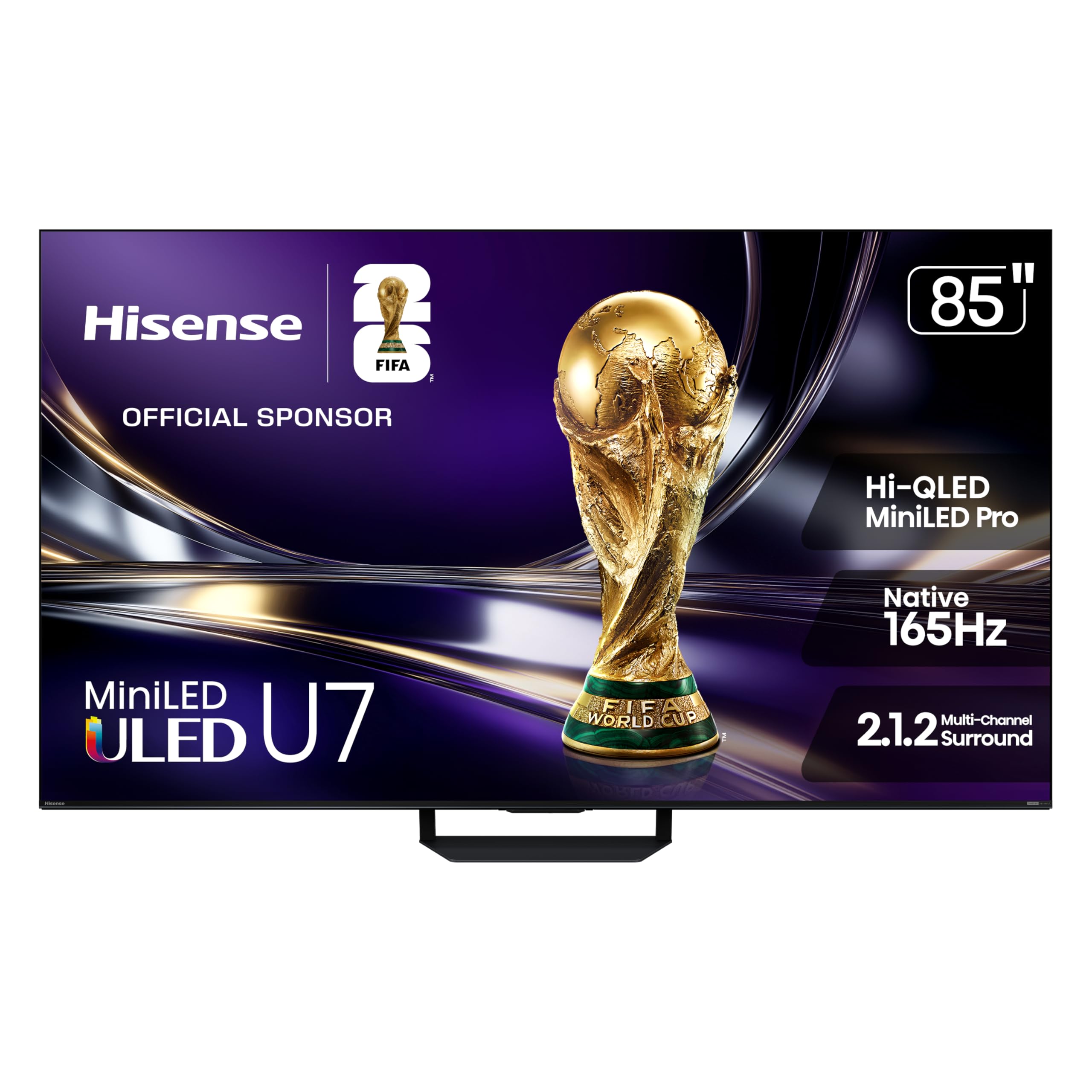
The Hisense U7 pushes gaming refresh rates beyond the typical 144Hz ceiling with a native 165Hz panel and a VRR range that extends to 330Hz. This makes it a standout for PC gamers who target frame rates above 120fps in competitive titles. The Hi-QLED MiniLED Pro backlight, combined with up to 3000 local dimming zones, delivers peak brightness around 3000 nits, which provides spectacular HDR highlights in games like Forza Horizon 5 where sunlight glints off car bodies. The anti-glare and glare-free coating ensures that bright room conditions don’t wash out the image.
Every major HDR format is covered — Dolby Vision IQ, HDR10+, and IMAX Enhanced — so the TV correctly tone-maps regardless of the source. The Hi-View AI Engine Pro adjusts color and contrast scene by scene, which helps older games that lack native HDR look more dynamic. On the audio side, the 2.1.2 channel setup with Dolby Atmos support delivers clear dialogue and a sense of height, though a dedicated soundbar will still be an upgrade for serious immersion.
Input lag is exceptionally low, and the TV supports ALLM so the console or PC automatically switches the TV into low-latency mode when a game starts. Google TV provides a clean interface with curated recommendations, though it does come with some pre-installed apps. For gamers chasing every possible frame on a large screen, the U7 is the most future-proof option in this size class.
Why it’s great
- Native 165Hz with 330Hz VRR for ultra-smooth high-fps gaming
- 3000 dimming zones and 3000 nits peak brightness for HDR impact
- Effective anti-glare coating for bright room use
Good to know
- Built-in speakers decent but soundbar advised for full Atmos
- Google TV includes some pre-loaded apps and ads
3. Samsung 85″ QLED Q8F 4K Smart TV (2025 Model)

The Samsung Q8F brings the company’s latest QLED panel technology with a native 144Hz VRR mode that works seamlessly with both AMD FreeSync and HDMI Forum VRR. The Q4 AI Processor handles upscaling of lower-resolution games to 4K without introducing noticeable artifacts, which matters when you’re playing older titles on modern consoles. The AirSlim chassis sits exceptionally close to the wall when mounted, giving the room a clean, low-profile look that doesn’t scream “gaming TV.”
Quantum Dot technology delivers 100% Color Volume in the DCI-P3 gamut, so even brightly lit game scenes retain saturation without washing out. HDR performance is solid with dynamic tone mapping that analyzes each scene to boost contrast, though it doesn’t reach the peak brightness of Mini-LED competitors. The built-in Samsung TV Plus gives access to hundreds of free channels without a subscription, but the main draw for gamers is the smooth motion handling and tear-free VRR experience at up to 4K 144Hz.
Audio quality is sufficient for casual play, but the TV lacks a dedicated subwoofer, so bass-heavy game soundtracks feel thin. The solar-powered remote is a nice convenience, reducing battery waste. If design and clean integration with your living space matter as much as raw gaming performance, the Q8F is a well-rounded mid-range option that won’t dominate the room visually.
Why it’s great
- 144Hz VRR with FreeSync for smooth PC and console gaming
- Extremely slim profile for near-flush wall mounting
- Excellent color volume that remains accurate in bright rooms
Good to know
- Audio lacks depth; a soundbar is recommended
- Only two HDMI 2.1 ports on this model
4. TCL 85″ QM7K Mini LED QLED 4K Smart Google TV
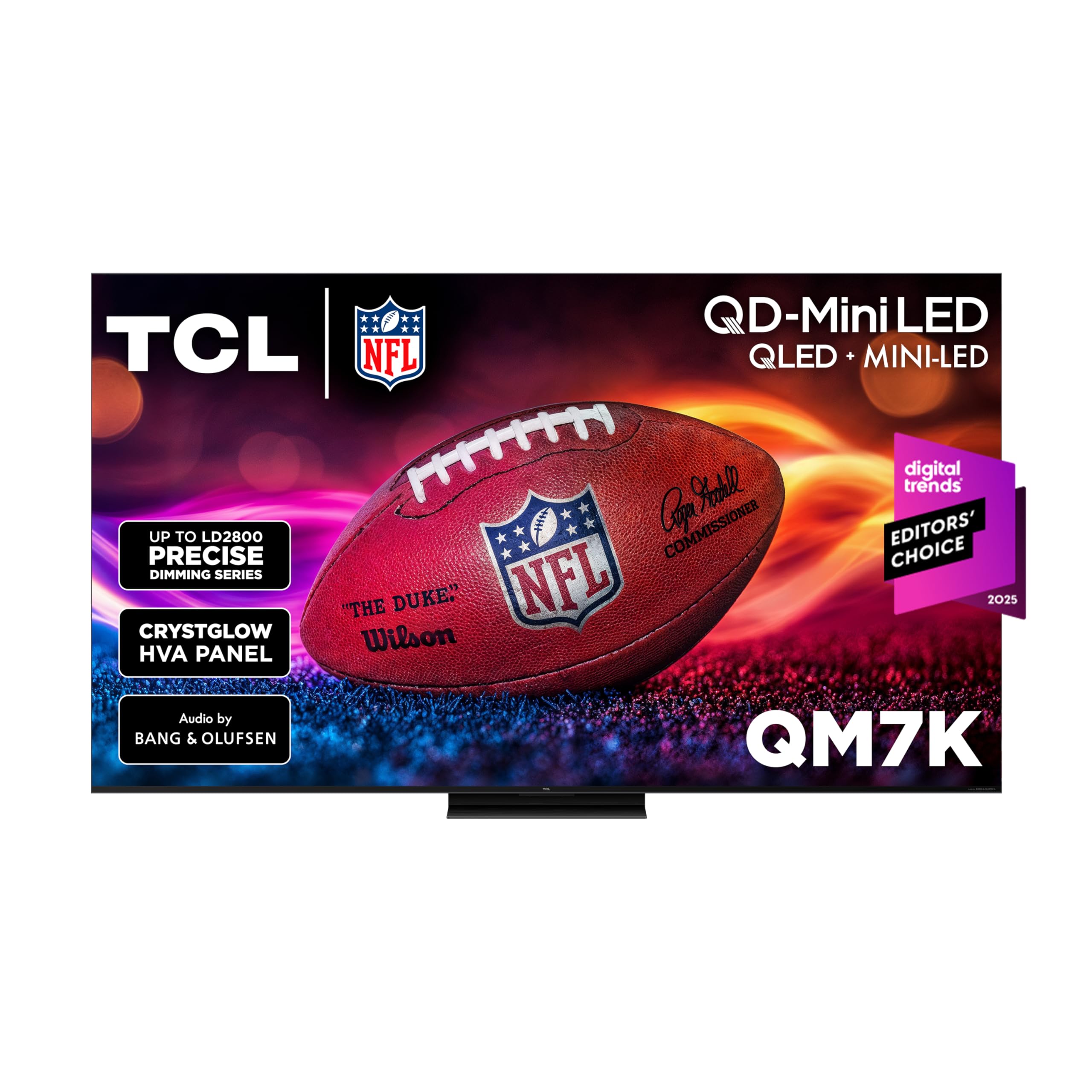
The TCL QM7K uses a QD-Mini LED configuration with the Halo Control System, which combines a high-energy LED microchip, condensed micro lenses, and a high-contrast HVA panel to deliver up to LD2500 precise dimming zones. This means that during dark gaming scenes — think exploration in Starfield or rainy sequences in Cyberpunk — the TV maintains deep blacks while keeping bright elements like muzzle flashes punchy. The CrystGlow HVA panel also features anti-reflective treatment that cuts down on glare from windows and overhead lights, making it a strong choice for living rooms used during the day.
Gaming features include a native 144Hz refresh rate with 288Hz VRR support and ALLM, ensuring that the TV automatically drops into low-latency mode when a game is detected. The inclusion of Onkyo audio components gives the built-in speakers more presence than most competitors, though audiophile gamers will still benefit from a dedicated system. Google TV provides a straightforward interface, and the included remote has a backlit feature for dark room use.
The QM7K’s peak brightness is high enough to produce dramatic HDR highlights, and color volume from the QD layer is vibrant without being oversaturated. The main compromise is the plastic build of the remote and some pre-installed apps on the Google TV platform. For gamers who need a bright, zone-dense panel that handles daytime glare well, the QM7K delivers premium Mini-LED performance at a mid-range price point.
Why it’s great
- Up to 2500 local dimming zones for excellent contrast control
- Effective anti-reflective screen for bright rooms
- 144Hz native with 288Hz VRR for fluid gameplay
Good to know
- Onkyo speakers are good but not a replacement for a soundbar
- Google TV interface can feel cluttered with app suggestions
5. Amazon Ember 85″ Mini-LED Series with Fire TV
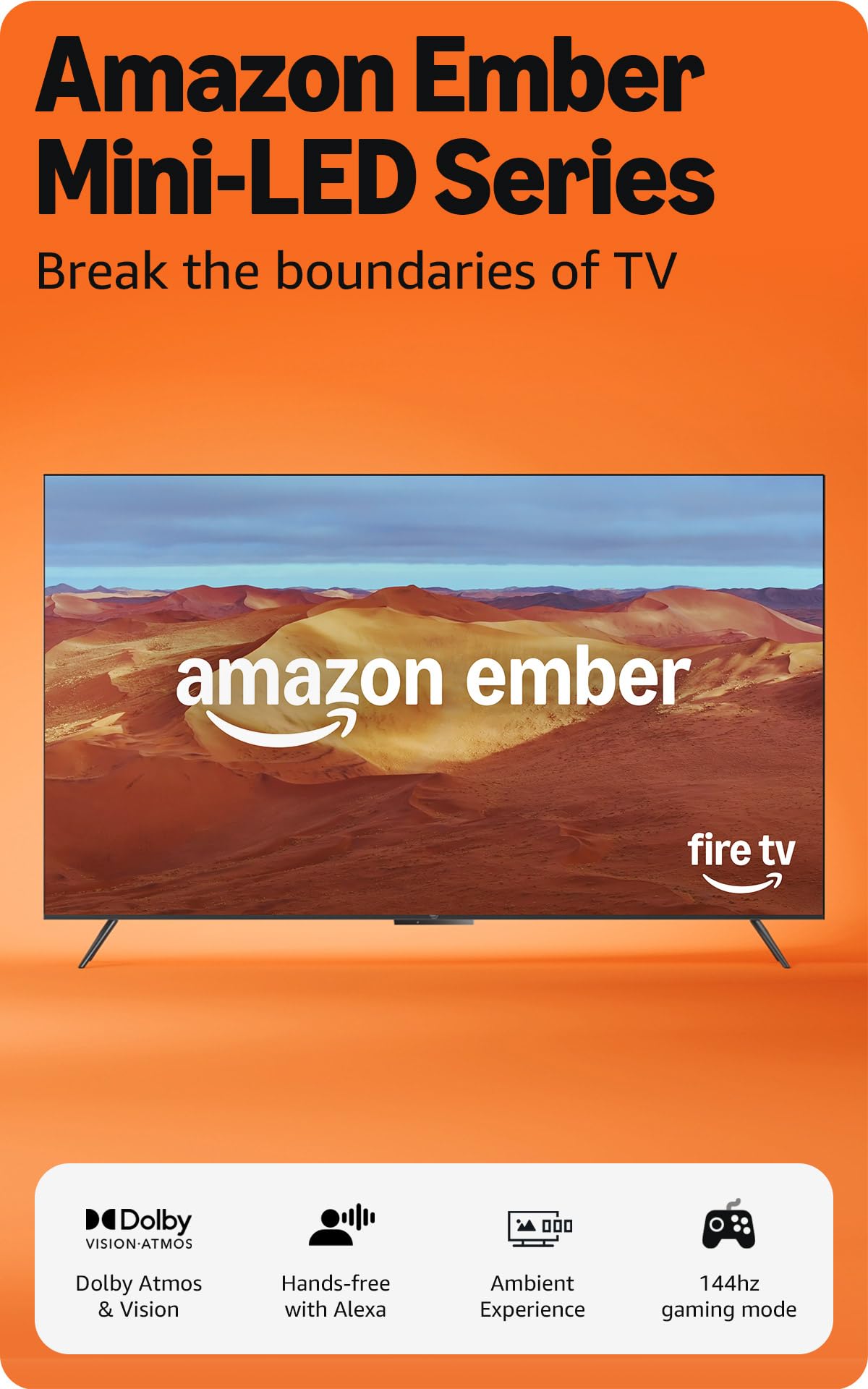
Amazon’s own Ember Series brings a 144Hz Mini-LED QLED panel that is AMD FreeSync Premium Pro certified, meaning it supports both low frame rate compensation and HDR during VRR gaming. The 512 dimming zones are dense enough to minimize blooming around bright game objects on dark backgrounds, though not as refined as competitors with 1000+ zones. The Fire TV Intelligent Picture processor uses scene-by-scene tuning to optimize color and contrast, and it adapts to ambient lighting conditions automatically — useful for long gaming sessions that stretch from afternoon to night.
Dolby Vision IQ and HDR10+ Adaptive are both supported, so HDR content from Xbox, PS5, or PC is properly tone-mapped. The 2.1 Dolby Atmos audio system includes a subwoofer that adds actual low-end presence, making gunshots and explosions feel weighty without an external system. The Omnisense technology with motion sensors wakes the display when you enter the room, and the hands-free Alexa integration lets you control game capture, switch inputs, or adjust volume without pausing the action.
One notable strength is the tight integration with Fire TV — the interface is fast after updates, and the personalized recommendations from Alexa+ cut down scrolling time. The privacy switch that disconnects the microphones gives peace of mind. However, some users report that the Fire TV software can become sluggish over time, and the interface is ad-heavy compared to Google TV. For gamers already in the Amazon ecosystem, the Ember is a compelling option.
Why it’s great
- FreeSync Premium Pro for tear-free HDR gaming
- Built-in subwoofer provides solid bass without external speakers
- Hands-free Alexa and motion-sensing wake for convenience
Good to know
- Fire TV interface includes ads and may slow over time
- 512 zones, not as many as higher-tier Mini-LED models
6. TCL 85″ Q7 QLED 4K Smart TV (2023 Model)

The TCL Q7 is a previous-generation model that still offers strong gaming fundamentals at a lower entry point. It features a native 120Hz panel with the Game Accelerator 240, which supports up to 240Hz VRR when using AMD FreeSync — though the effective resolution may drop at the highest refresh rates. The Full Array Pro Local Dimming with over 200 zones provides solid black levels for an edge-lit alternative, and Dolby Vision IQ combined with HDR10+ ensures broad HDR compatibility across game titles.
QLED quantum dot technology delivers over a billion colors with wide DCI-P3 coverage, and the Motion Rate 480 with MEMC frame insertion helps reduce motion blur on fast-moving content. Input lag in game mode is low enough for competitive play, though the 120Hz native limit means you won’t reach the smoothness of 144Hz panels in high-fps PC titles. The Google TV interface is responsive and clean, with the option to add a third-party streaming device if you prefer a different UI.
The Q7’s strengths are its price-to-performance ratio and its solid gaming feature set — ALLM, VRR, and FreeSync are all present. The built-in speakers are adequate for casual use, and the remote includes a backlit feature for dark rooms. The main trade-offs are the lower number of dimming zones and the 120Hz ceiling, but for console gamers who don’t need beyond 120fps, this remains a capable and wallet-friendly choice.
Why it’s great
- Strong gaming value with 120Hz native and FreeSync
- Over 200 local dimming zones for decent contrast
- Google TV interface is responsive and easy to navigate
Good to know
- Native 120Hz max, no 144Hz option for high-fps PC
- Dimming zone count is modest compared to Mini-LED rivals
7. Sony BRAVIA 5 85″ Mini LED 4K Smart Google TV

Sony’s BRAVIA 5 leverages the XR Processor with AI to deliver real-time enhancement of color, contrast, and clarity that feels especially tuned for PlayStation 5. Exclusive features like Auto HDR Tone Mapping and Auto Genre Picture Mode automatically optimize the picture when the console is connected, ensuring HDR is mapped correctly without manual adjustments. The Mini LED backlight with XR Backlight Master Drive produces high brightness and accurate contrast, though the 120Hz native refresh rate is standard rather than bleeding-edge.
Dolby Vision and Dolby Atmos, along with IMAX Enhanced and DTS:X support, make this TV a strong cinematic gaming display. The XR Motion Clarity technology keeps fast-moving objects crisp without introducing soap opera effect, which is beneficial for racing and action games. Google TV provides access to all major streaming apps, and the included Sony Pictures CORE app gives access to a library of IMAX Enhanced content.
The main limitation for multi-console gamers is that only two of the four HDMI ports are HDMI 2.1, which might require you to choose which devices get the high-bandwidth connection. The built-in speakers are decent for TVs in this class but lack the deep bass of dedicated systems. For PS5 owners who prioritize seamless integration and image processing, the BRAVIA 5 is a refined choice.
Why it’s great
- Exclusive PS5 features for automatic HDR and picture optimization
- XR Processor delivers excellent upscaling and motion clarity
- Supports Dolby Vision, Atmos, IMAX Enhanced, and DTS:X
Good to know
- Only two HDMI 2.1 ports limit multi-console setup
- 120Hz native max, not 144Hz
8. Sony BRAVIA 7 85″ Mini LED QLED 4K Smart Google TV

The BRAVIA 7 steps up with QLED technology and XR Triluminos Pro, delivering billions of accurate real-world colors with better color volume than the standard BRAVIA 5. The Mini LED backlight with XR Backlight Master Drive produces our brightest ever 4K TV image, according to Sony, which gives HDR games an extra level of punch. Studio-calibrated picture modes for Netflix, Prime Video, and Sony Pictures CORE ensure that streaming games and series look as the creator intended, with accurate color temperature and gamma.
Gaming-specific features include the Game Menu that consolidates picture settings and assist features in one place, plus the usual PS5 exclusives like Auto HDR Tone Mapping. The screen handles reflections reasonably well, though the BRAVIA 9’s X-Anti Reflection coating is more effective in bright rooms. The built-in Acoustic Multi-Audio system uses extra speakers to make sound feel like it’s coming from the right part of the screen, which adds to immersion during first-person games.
One notable drawback is the narrow optimal viewing angle — color and contrast degrade noticeably when sitting beyond about 30 degrees off-center, which is a concern for larger rooms. The TV also uses a thermal cooling system to maintain brightness without burn-in risk, unlike OLED. For gamers who prioritize image processing accuracy and color fidelity above raw refresh rates, the BRAVIA 7 is a premium choice.
Why it’s great
- XR Triluminos Pro provides accurate, wide color gamut for games
- Studio-calibrated picture modes for Netflix and Prime Video
- Game Menu consolidates all gaming picture settings
Good to know
- Narrow viewing angle shifts color off-center
- Reflective screen, not as anti-glare as the BRAVIA 9
9. Samsung 85″ The Frame Pro LS03FW Neo QLED Mini LED
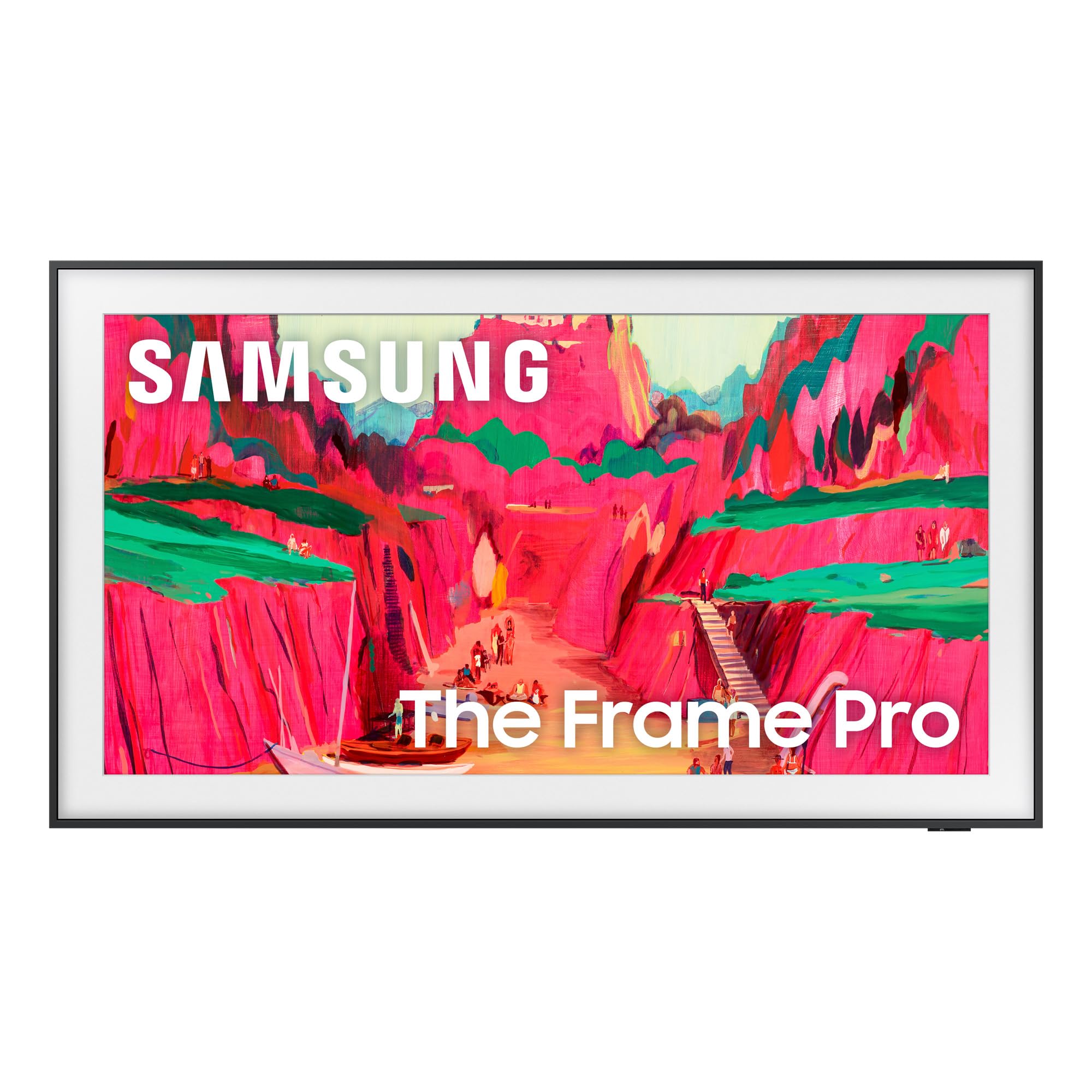
The Frame Pro is unique in this lineup: it combines a Neo QLED Mini LED panel with a virtually glare-free matte display that makes art mode convincingly look like a real framed print. But it also packs genuine gaming chops with up to 4K 144Hz VRR support and a NQ4 AI Gen3 Processor that enhances picture quality in real time. The matte finish is a double-edged sword for gaming — it kills reflections beautifully, but it also slightly diffuses the sharpness of very fine text and HUD elements compared to a glossy panel.
The Wireless One Connect box lets you hide all cables and mount the TV flush against the wall, giving a clean installation that doesn’t require chasing cables behind drywall. In art mode, the Pantone Validated Artful Color ensures your displayed artwork looks museum-accurate. For gamers who want the TV to disappear into the decor when not in use, this is a major lifestyle advantage — no other gaming TV in this size offers anything similar.
However, the matte display does reduce perceived contrast in dark rooms compared to glossy OLED or standard QLED panels, and the blooming around bright game elements on black backgrounds can be more visible because the matte coating scatters light. The TV also relies on a single HDMI 2.1 input from the One Connect box, which limits multi-console setups. The Frame Pro is a niche pick — it sacrifices some gaming contrast for design versatility.
Why it’s great
- Matte display eliminates reflections for bright room gaming
- Wireless One Connect box for clean, flush-wall installation
- 144Hz VRR with Neo QLED Mini LED backlight
Good to know
- Matte finish reduces perceived contrast vs. glossy panels
- Single HDMI 2.1 input from One Connect limits connection options
10. Hisense 85″ Hi-QLED 4K S7 CanvasTV
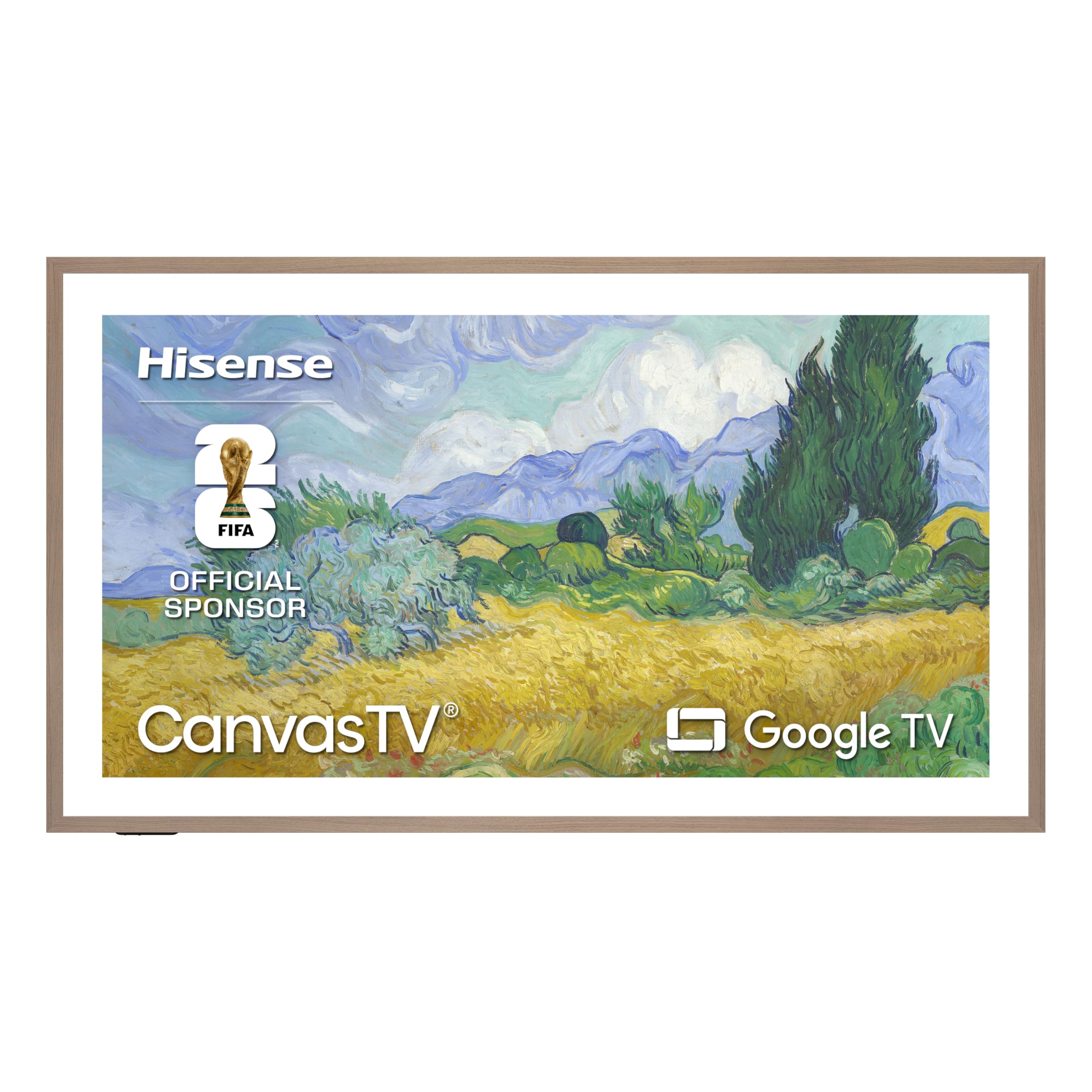
Hisense’s CanvasTV brings art mode to the gaming space with a Hi-Matte anti-glare display that makes the screen look like a canvas when displaying artwork, plus a native 144Hz refresh rate for smooth gaming. The included teak frame and ultra-slim wall mount create a flush, gallery-like appearance. When you fire up a game, the AI Ambient Light Sensor adjusts brightness and color temperature to match room lighting, and the Motion Detector wakes the screen when you approach — a nice convenience for quick gaming sessions.
Under the art-centric design, the CanvasTV is a serious gaming display with 144Hz support, AI Smooth Motion for reducing blur, and 2.0.2 multi-dimensional sound with DTS Virtual:X for virtual height effects. The 4K Hi-QLED panel produces vibrant colors and good contrast, though it doesn’t reach the peak brightness or zone density of dedicated Mini-LED gaming TVs like the Hisense U7. Google TV provides a fast interface, and the magnetic bezels can be swapped to match room decor.
The main trade-off is that the art-focused panel prioritizes matte texture and natural color over absolute gaming contrast and peak HDR brightness. Dark game scenes may look slightly less impactful than on a glossy Mini-LED panel. For gamers who also want their TV to serve as a living art piece when not in use, the CanvasTV is a unique crossover that doesn’t compromise core gaming refresh rates.
Why it’s great
- Hi-Matte display eliminates reflections, great for bright rooms
- Native 144Hz refresh rate with AI Smooth Motion
- Included frame and flush mount for gallery look
Good to know
- Matte finish slightly reduces contrast vs. glossy panels
- Peak brightness lower than dedicated gaming Mini-LED TVs
11. LG G3 83″ OLED evo 4K Smart TV (2023 Model)

The LG G3 OLED evo represents the pinnacle of image quality for this category: per-pixel lighting delivers perfect blacks and infinite contrast, which makes dark game environments — such as the caves in Elden Ring or the shadows in Resident Evil — look absolutely lifelike. The a9 AI Processor Gen6 uses deep learning to optimize picture and sound for the type of content being played, and the Brightness Booster Max technology improves peak luminance by up to 70% compared to standard OLED, making HDR highlights pop without blooming.
Gaming performance is outstanding with a 0.1ms response time, 120Hz refresh rate, and support for NVIDIA G-Sync and AMD FreeSync Premium. LG’s Game Dashboard and Game Optimizer give you fine control over VRR, black stabilizer, and crosshair overlays. The four HDMI 2.1 ports mean you can connect a PS5, Xbox Series X, gaming PC, and soundbar simultaneously without sharing bandwidth. The Gallery Design with a flush wall mount makes the TV sit nearly flat against the wall.
The 83-inch size is slightly smaller than the 85-inch class, and the G3 does not include a stand — it’s designed for wall mounting. OLED burn-in risk, while reduced in recent generations, remains a theoretical concern for static HUD elements after thousands of hours. For gamers who prioritize absolute image quality, perfect blacks, and instant pixel response, the G3 is the benchmark in this size bracket.
Why it’s great
- Perfect blacks and infinite contrast for immersive dark gaming
- 0.1ms response time eliminates motion blur
- Four HDMI 2.1 ports for full multi-console setup
Good to know
- No stand included, designed for wall mounting only
- Static HUD elements carry theoretical burn-in risk over long sessions
12. Sony BRAVIA 9 85″ Mini LED QLED 4K Smart Google TV

The Sony BRAVIA 9 is the company’s brightest 4K Mini LED offering to date, using the XR Backlight Master Drive to deliver contrast and luminance that challenges OLED in HDR impact. The X-Wide Angle technology ensures that color and contrast remain accurate even when viewed from the sides, solving the viewing angle issue of the BRAVIA 7. The X-Anti Reflection coating aggressively cuts glare, making this the best Sony for bright-room gaming without needing to close curtains.
Like the BRAVIA 7, the BRAVIA 9 includes exclusive PS5 features, but it also adds a larger IMAX Enhanced content library and 10 Sony Pictures CORE credits for high-bitrate movie streaming. The Game Menu puts all gaming assist features — including VRR toggle, black equalizer, and crosshair options — in a single overlay. For competitive FPS players, the low input lag and fast pixel response make this feel responsive even when outputting at 4K 120Hz.
Some users have reported quality control issues, including panel failures shortly after the warranty period, so extended warranty coverage is recommended for this investment. The BRAVIA 9 also lacks a dedicated 144Hz mode, capping at 120Hz native, which may matter to PC gamers targeting higher frame rates. For console gamers, especially PS5 owners, who want the brightest Mini LED picture with wide viewing angles, this is Sony’s top performer.
Why it’s great
- Extremely bright Mini LED with excellent HDR impact
- X-Wide Angle and X-Anti Reflection for bright, multi-seat rooms
- Exclusive PS5 features and comprehensive Game Menu
Good to know
- Only 120Hz native, no 144Hz support
- Some quality control reports; extended warranty advised
13. LG 97″ OLED evo AI G5 Series Smart TV (2025 Model)

The LG G5 in 97 inches is the largest OLED gaming display available, combining the unmatched contrast and pixel-level response of OLED with a screen that rivals most home theater projectors. The α11 AI Processor Gen2 delivers personalized picture and sound, with AI Super Upscaling that makes even 1080p games from a Nintendo Switch or older console look remarkably clean on this massive panel. Brightness Booster Max pushes each pixel to its brightest potential, and the panel is UL-certified for discomfort glare free (UGR less than 22), so reflections are controlled despite the sheer surface area.
Gaming features include 120Hz refresh rate, 0.1ms response time, NVIDIA G-Sync and AMD FreeSync Premium support, plus four HDMI 2.1 inputs. The LG Game Dashboard and Game Optimizer provide fine control over all gaming parameters. The One Wall Design leaves virtually no gap when wall-mounted, and the panel includes a wall bracket in the box — no stand is included. For gamers with dedicated theater rooms or large living spaces, the 97-inch size creates an immersive experience that 85-inch panels can’t match.
The obvious considerations are the price — significantly higher than any 85-inch TV in this guide — and the need for a large enough wall to accommodate the 97-inch footprint. OLED burn-in remains a minor consideration for very long sessions with static HUDs, though LG’s panel protection features have improved. For anyone who wants the absolute largest OLED canvas for gaming with perfect blacks and instant response, the G5 97 is the ultimate option.
Why it’s great
- 97-inch OLED with perfect blacks and 0.1ms response time
- α11 AI Processor provides excellent upscaling of lower-res games
- Four HDMI 2.1 ports with G-Sync and FreeSync support
Good to know
- Massive price point, significantly more than any 85-inch
- Requires substantial wall space, no stand included
FAQ
What is the ideal viewing distance for an 85 inch gaming TV?
Do I need a 144Hz TV for console gaming if consoles max out at 120Hz?
How many HDMI 2.1 ports do I need for an 85 inch gaming setup?
Will an 85 inch TV fit through a standard doorway?
Is Mini-LED better than OLED for gaming on an 85 inch screen?
Final Thoughts: The Verdict
For most users, the 85 inch tv for gaming winner is the Toshiba 85″ Z670R because it combines a native 144Hz panel, Mini-LED local dimming, FreeSync Premium, and strong HDR support at a price that delivers genuine gaming performance without the premium markup. If you want higher frame rates for PC gaming, grab the Hisense 85″ U7 with its native 165Hz panel and 3000 dimming zones. And for perfect blacks and instant response in a dark room, nothing beats the LG G3 83″ OLED evo — though you pay a premium for that pixel-level contrast.