
Our readers keep the lights on and the weekend projects moving. As an Amazon Associate, I earn from qualifying purchases.
The leap to 8K is less about resolution on its own and more about the freedom it buys you: reframing a 33-megapixel still from a single video frame, cropping into a scene without losing detail, and future-proofing your work for displays that no longer fit a 4K timeline. The technical demands are steep — a stacked CMOS sensor for readout speed, a processor that can chew through 33 million pixels sixty times a second, and a cooling system that keeps the whole thing from shutting down two minutes into a take. Choosing the wrong body means investing in overheating, rolling shutter artifacts, or a workflow that collapses under its own file weight.
I’m Rikta — the co-founder and writer behind FitlyFast. I’ve spent weeks cross-referencing sensor readout speeds, dynamic range scores, bit depths, codec flexibility, and real-world thermal behavior to determine which 8K bodies actually earn their place in a shooter’s kit.
This guide breaks down every serious contender to help you identify the best 8k camera for your specific filmmaking or photography needs without wasting time on gear that fails where it counts.
How To Choose The Best 8K Camera
An 8K camera is a complex system where sensor architecture, processor speed, codec support, and thermal management must work in unison. A high megapixel count on paper means nothing if the sensor readout is slow enough to produce heavy rolling shutter in video mode or if the body overheats during a standard interview. Focus on the interplay of these specs rather than any single headline number.
Stacked vs. Non-Stacked Sensors
A stacked CMOS sensor layers the circuitry behind the photodiodes, allowing data to read off the chip far faster than a traditional sensor. This directly reduces rolling shutter distortion in 8K and enables higher continuous shooting speeds for stills. Bodies like the Nikon Z 8 and Canon EOS R5 use stacked sensors; budget-friendly alternatives often rely on slower non-stacked designs that can exhibit noticeable skew in fast-moving scenes.
Codec Depth and Bit Depth
Not all 8K is created equal. Internal RAW recording (12-bit or higher) gives you maximum flexibility in color grading, while compressed codecs like H.265 or ProRes save storage space at the cost of some grading headroom. A camera that shoots 8K only in highly compressed formats may frustrate a professional colorist. Look for bit depth (10-bit or 12-bit) and chroma subsampling (4:2:2 or 4:4:4) as indicators of real video quality.
Thermal Management and Recording Limits
8K generates immense heat inside a small body. Cameras designed for video-first workflows, such as the Canon EOS R5 C with its built-in cooling fan, can sustain 8K recording indefinitely. Hybrid stills cameras often impose recording time limits or require the operator to manage heat by lowering resolution. Check whether a camera has active cooling or reliable passive thermal dissipation before relying on it for long-form 8K capture.
Quick Comparison
On smaller screens, swipe sideways to see the full table.
| Model | Category | Best For | Key Spec | Amazon |
|---|---|---|---|---|
| Nikon Z 8 | Hybrid Flagship | Stills + video hybrid work | 45.7MP Stacked CMOS, 8K/60p N-RAW | Amazon |
| Canon EOS R5 | High-Res Hybrid | High-res stills and video | 45MP Full-Frame CMOS, 8K RAW | Amazon |
| Canon EOS R5 C | Cinema Hybrid | Unlimited 8K/60P with fan | 45MP, 8K/60P RAW, Active Cooling | Amazon |
| Sony Alpha 7R V | AI-Focus Camera | AI autofocus and 61MP stills | 61MP BSI CMOS, 8K 24p | Amazon |
| Panasonic LUMIX S1RII | New Hybrid | 44.3MP sensor and 8K video | 44.3MP, 8K Video, Phase Hybrid AF | Amazon |
| Blackmagic 6K Pro | Cinema Body | Cinematic RAW with internal NDs | 6K S35 Sensor, 13 Stops DR | Amazon |
| Sony FX3 | Cinema Line | Low-light cinema production | 4K 120p, 15+ Stops DR, Fan | Amazon |
| Blackmagic 6K | Entry Cinema | Budget-friendly RAW video | 6K S35, 13 Stops, ProRes/RAW | Amazon |
| Nikon D850 | DSLR Classic | 45MP stills and 4K video | 45.7MP FX, 4K UHD Video | Amazon |
In‑Depth Reviews
1. Nikon Z 8

The Nikon Z 8 packs the stacked 45.7MP sensor and EXPEED 7 processor from the flagship Z 9 into a body that mirrors the ergonomic feel of the classic D850. This combination delivers internal 8K/60p recording in 12-bit N-RAW or ProRes RAW, giving colorists maximum flexibility in post without the bulk of an external recorder. The readout speed from the stacked design keeps rolling shutter well controlled, and the AF system, trained with deep learning, tracks subjects down to -9 EV.
Stills shooters benefit from 20 fps RAW bursts and up to 120 fps in JPEG mode, making it one of the most versatile all-around bodies available. The shutterless design uses a sensor shield to protect the sensor during lens changes, and the dual-slot arrangement (CFexpress Type B + SD UHS-II) offers flexible media options. Battery life is solid for a mirrorless body, though heavy 8K recording will drain it faster than stills work.
Thermal performance is impressive for a non-fan body, with users reporting over two hours of continuous 4K recording when using the correct CFexpress cards. The main trade-off is that the smaller body limits record times in 8K compared to the larger Z 9, but for most hybrid professionals, the balance of size, speed, and image quality makes this the most well-rounded 8K camera on the market right now.
Why it’s great
- Stacked 45.7MP sensor for fast readout and minimal rolling shutter in 8K
- Internal 12-bit N-RAW and ProRes RAW at up to 8K/60p
- Deep-learning AF detects people, animals, and vehicles down to -9 EV
- Shutterless design with sensor shield for safe lens changes
Good to know
- 8K record times limited by heat in the smaller body
- Single CFexpress Type B slot plus one SD UHS-II
- Steep learning curve due to extensive customization options
2. Canon EOS R5

The Canon EOS R5 was a defining release when it brought internal 8K RAW recording to a compact, full-frame mirrorless body. Its 45MP stacked, back-side illuminated sensor pairs with the DIGIC X processor to deliver stunning detail, excellent dynamic range, and clean high-ISO performance up to 51200. The Dual Pixel CMOS AF II system, with 1,053 AF points covering nearly 100% of the frame, provides fast and reliable subject tracking for both stills and video.
Video features include 8K RAW internal capture, 4K up to 120 fps with Auto Focus, and 10-bit 4:2:2 recording. The 5-axis In-Body Image Stabilization (IBIS) works well with Canon RF lenses and adapted EF glass, making handheld shooting more practical. The electronic viewfinder is excellent, and the tilting touchscreen LCD adds flexibility for low and high-angle compositions. Continuous shooting reaches 12 fps with the mechanical shutter and up to 20 fps with the electronic shutter.
The primary limitation is overheating during extended 8K recording sessions. Canon addresses this with firmware updates and the addition of a cooling fan grip accessory, but the R5 is best suited for shorter 8K clips or mixed stills and video work where the operator can manage heat. If you need unlimited 8K recording without worrying about thermal shutdown, the R5 C is a more appropriate choice. For a hybrid shooter who values image quality and autofocus above all, the R5 remains a top-tier tool.
Why it’s great
- 45MP stacked sensor with DIGIC X for exceptional stills and video quality
- Internal 8K RAW capture and 4K/120p with AF
- Dual Pixel CMOS AF II with near 100% frame coverage
- High-speed shooting up to 20 fps electronic shutter
Good to know
- Overheating limits 8K recording time without a fan grip
- Battery life is moderate, around 320 shots per charge
- Requires fast CFexpress Type B cards for 8K workflows
3. Canon EOS R5 C

The Canon EOS R5 C bridges the gap between a stills-oriented mirrorless camera and a dedicated cinema camera. It combines the same 45MP full-frame sensor found in the R5 with a built-in cooling fan that enables uninterrupted 8K/60P internal RAW recording. This active cooling system vents heat directly, eliminating the recording time limits that plague the standard R5. The camera records in multiple professional formats, including MXF-based XF-AVC for broadcast workflows and MP4 for post-production flexibility.
For filmmakers, the R5 C includes timecode input/output terminals for multi-camera synchronization, 13 assignable buttons, and support for 4K/2K oversampling that reduces moiré and noise. High Frame Rate (HFR) recording reaches 120p at 4K resolution in 4:2:2 10-bit without a sensor crop. The Dual Pixel CMOS AF with ITR AF X delivers precise, fast focusing even during HFR capture, making it a strong choice for gimbal and drone work.
Stills performance remains excellent, with 12 fps mechanical and 20 fps electronic burst shooting with full AF tracking. The main compromises are the lack of IBIS (In-Body Image Stabilization) and the absence of internal ND filters, which are common on dedicated cinema bodies. The R5 C also uses a mini-HDMI port that benefits from a cable clamp. For video professionals who need a compact body that can shoot 8K all day, the R5 C is a potent tool.
Why it’s great
- Built-in cooling fan for unlimited 8K/60P internal RAW recording
- 45MP stills at 20 fps with full AF tracking
- Timecode sync and professional XF-AVC codec support
- 4K/120p HFR without sensor crop
Good to know
- No in-body image stabilization (IBIS)
- No internal ND filters
- Mini-HDMI port may require a cable clamp for reliability
4. Sony Alpha 7R V

The Sony Alpha 7R V is built around a 61MP full-frame back-illuminated Exmor R CMOS sensor, making it the highest-resolution body in this roundup. The dedicated AI processing unit powers next-generation Real-time Recognition AF, which identifies subjects—including humans, animals, birds, insects, cars, and trains—with remarkable precision. This AF system represents a significant leap over the A7R IV, especially for tracking erratically moving subjects in challenging lighting.
Video capabilities include 8K at 24p/25p and 4K at up to 60p with full pixel readout, delivering oversampled detail. The improved BIONZ XR processor boosts processing speed eight-fold, allowing for smoother menu navigation and faster data handling. The 5-axis IBIS provides up to 8 stops of stabilization, and the articulated LCD screen makes it suitable for vlogging and low-angle compositions. The dual card slots accept both CFexpress Type A and SD UHS-II media.
For stills photographers who demand maximum resolution—landscape, commercial, and fine art shooters—the 61MP sensor justifies the investment. The main drawback is that 8K recording is limited to 24p/25p, which may feel restrictive for filmmakers who need higher frame rates. Video-focused users might prefer the Sony FX3 or a7S series, but for hybrid shooters who prioritize stills resolution and state-of-the-art autofocus, the A7R V is the definitive choice among high-megapixel bodies.
Why it’s great
- 61MP BSI sensor for exceptional stills resolution and detail
- AI-powered Real-time Recognition AF with broad subject detection
- 8K 24p video with full pixel readout
- 8-stop IBIS and articulated touchscreen LCD
Good to know
- 8K limited to 24p/25p, no high frame rate 8K
- Video features less advanced than dedicated cinema bodies
- Large file sizes require fast CFexpress Type A cards
5. Panasonic LUMIX S1RII

The Panasonic LUMIX S1RII is a new full-frame mirrorless hybrid that features Lumix’s first-ever internal 8K video recording capability. Its 44.3MP sensor is designed for a lifelike color science that handles detailed landscapes and artwork with accuracy. The Phase Hybrid AF system integrates a new AI engine that boosts human recognition, maintaining focus even when multiple subjects cross paths—useful for dynamic shooting scenarios like events or sports.
Video features include wide dynamic range log recording for cinematic slow-motion, and a handheld high-resolution mode that expands creative possibilities for stills. The AFC burst shooting reaches 40 fps, making it suitable for capturing fast action. The new Lumix Camera Flow app assists with production, and the camera supports 32-bit float audio when paired with an optional microphone adapter. The body is weather-sealed and feels robust in the hand.
Early user reports indicate that the camera can overheat in video mode under sustained use, although individual units may vary. The autofocus peaking is less refined than on rival systems, and the lens ecosystem for the L-Mount is still expanding. For photographers and videographers invested in the L-Mount system or looking for Panasonic’s unique color science, the S1RII offers a competitive starting point for 8K hybrid work.
Why it’s great
- First Lumix with internal 8K video recording
- 44.3MP sensor with unique color science for detailed captures
- Phase Hybrid AF with advanced AI subject recognition
- 40 fps AFC burst shooting for action sequences
Good to know
- May overheat during extended 8K video recording
- Autofocus peaking quality could be improved
- L-Mount lens selection smaller than Canon RF or Sony E
6. Blackmagic Design Pocket Cinema Camera 6K Pro

The Blackmagic Design Pocket Cinema Camera 6K Pro is a purpose-built cinema camera that prioritizes image quality and workflow flexibility over hybrid stills features. Its Super 35 sensor captures 6144 x 3456 resolution with 13 stops of dynamic range, and the built-in 2, 4, and 6-stop ND filters allow precise exposure control without external matte boxes. The dual gain ISO up to 25600 ensures low-noise performance in challenging light.
Recording options include 12-bit Blackmagic RAW and Apple ProRes, written to SD/UHS-II, CFast 2.0 cards, or external SSD via USB-C. The included DaVinci Resolve Studio activation key means a full post-production suite is ready out of the box. The bright, adjustable 5-inch HDR LCD reduces the need for an external monitor, and the lightweight carbon fiber polycarbonate composite body with a multifunction handgrip makes it comfortable for handheld or gimbal use.
The main consideration is that this is a video-first cinema camera—there is no stills photography mode. The auto exposure system controls iris and shutter only, which can cause exposure jumps during changing lighting conditions, making it less suited for run-and-gun scenarios without manual intervention. For serious filmmakers who value organic image quality and robust RAW codecs, the 6K Pro remains a benchmark at its tier.
Why it’s great
- Built-in 2/4/6-stop ND filters for precise exposure control
- 13 stops of dynamic range with dual native ISO up to 25,600
- 12-bit Blackmagic RAW and ProRes recording to SSD
- Includes DaVinci Resolve Studio for full grading workflow
Good to know
- Video-only camera with no stills capabilities
- Auto exposure jumps during lighting changes without manual adjustment
- Requires additional batteries or external power for long shoots
7. Sony FX3

The Sony FX3 is a compact Cinema Line camera that prioritizes low-light performance, reliable recording, and a sleek, cage-free design. Its full-frame 4K sensor delivers over 15 stops of dynamic range and exceptional sensitivity, making it one of the best options for shooting in dim environments. The S-Cinetone color science is derived from Sony’s VENICE cinema camera, providing a rich, filmic look straight out of camera without complex grading.
Built for continuous recording, the FX3 includes an in-body cooling fan that allows uninterrupted 4K 60p capture and 4K 120p in 10-bit 4:2:2 with full pixel readout. The compact body features 1/4”-20 mounting points and an included XLR top handle for professional audio input. The menu system is intuitive, and the autofocus—using 627 phase-detection points—is fast and reliable, even in low-light scenarios.
The FX3 does not have a global shutter or built-in ND filters, which are common on higher-end cinema cameras. The sensor readout, however, is fast enough that rolling shutter is well controlled. The lack of a mechanical shutter makes it less suitable for stills photography. For videographers who work in low-light environments—concerts, documentaries, run-and-gun cinema—the FX3 is a specialized, high-performance tool.
Why it’s great
- Exceptional low-light sensitivity with 15+ stops dynamic range
- Built-in cooling fan for uninterrupted 4K recording
- S-Cinetone color science for cinematic out-of-camera images
- Compact design with XLR handle for professional audio
Good to know
- No mechanical shutter for stills photography
- No built-in ND filters
- Plastic body may feel less premium than some competitors
8. Blackmagic Design Pocket Cinema Camera 6K
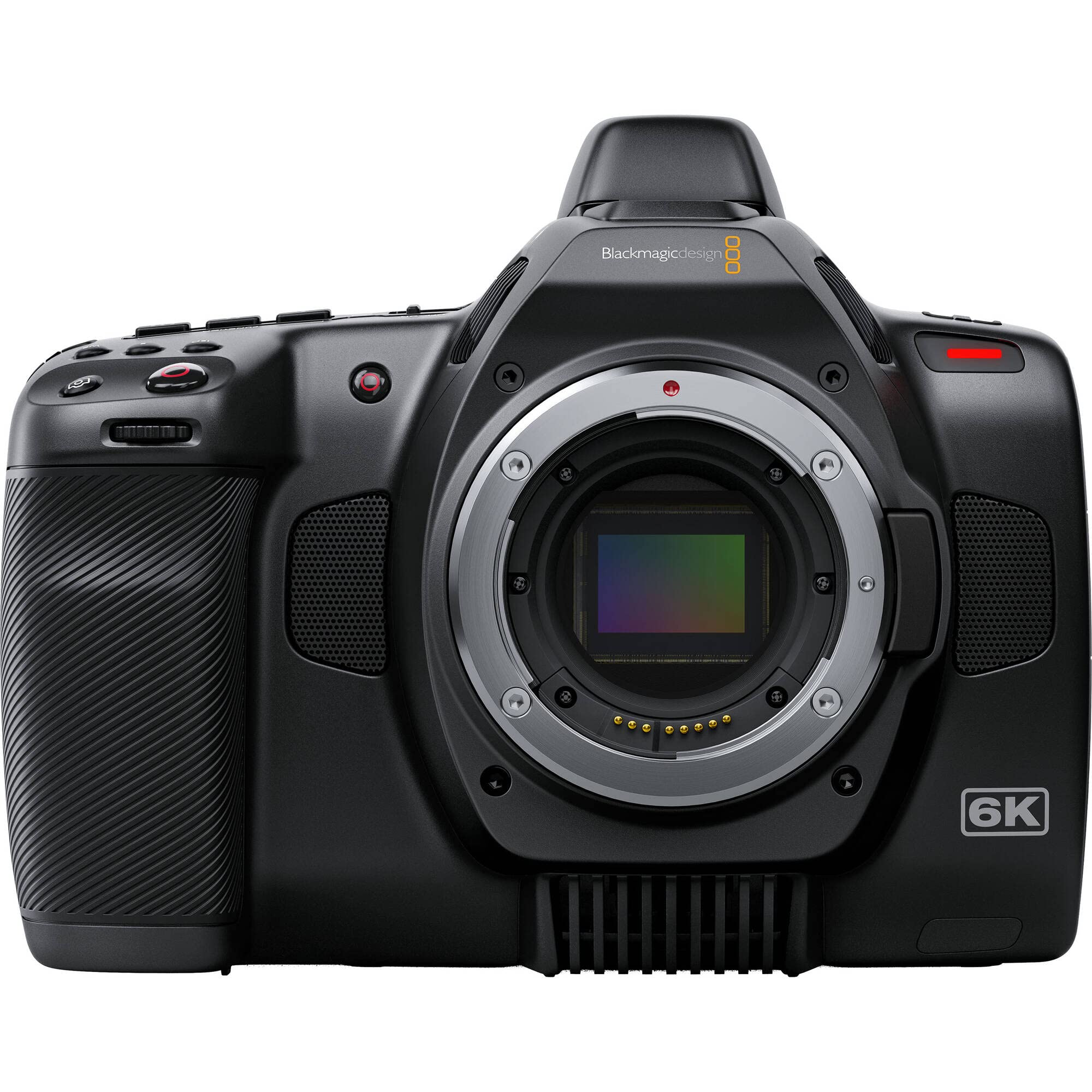
The Blackmagic Design Pocket Cinema Camera 6K is a budget-friendly entry point into professional-grade cinema RAW capture. Its Super 35 sensor shoots at 6144 x 3456 resolution with 13 stops of dynamic range, and the EF lens mount gives access to a vast library of Canon glass. The body records in 12-bit Blackmagic RAW and Apple ProRes, writing to SD/UHS-II, CFast 2.0 cards, or external SSD via USB-C. The included DaVinci Resolve Studio activation key means a full color correction suite is available immediately.
The camera supports high frame rate recording up to 120 fps in 2.8K and 1080p, and the menu structure is well-organized for manual focus workflows. The lightweight body is comfortable for gimbal use, and the image quality competes with much more expensive cinema cameras like RED and ARRI for controlled shoots. The 5-inch touchscreen is functional but can be misleading in bright sunlight, and users often pair it with an external monitor for critical focus.
The main trade-offs are the lack of built-in ND filters and the reliance on an external battery solution for extended shoots. The contrast-detection autofocus is basic and not suitable for fast-moving subjects. For indie filmmakers, music video directors, and students who want to learn on a true cinema RAW workflow without breaking the bank, the 6K Pocket remains a strong entry-level choice at an accessible price point.
Why it’s great
- 12-bit Blackmagic RAW capture with 13 stops dynamic range
- Compatible with extensive EF lens library
- Records to affordable SSD storage via USB-C
- Includes DaVinci Resolve Studio for post-production
Good to know
- No built-in ND filters
- Basic contrast-detection autofocus only
- LCD screen can be misleading in bright light; external monitor recommended
9. Nikon D850
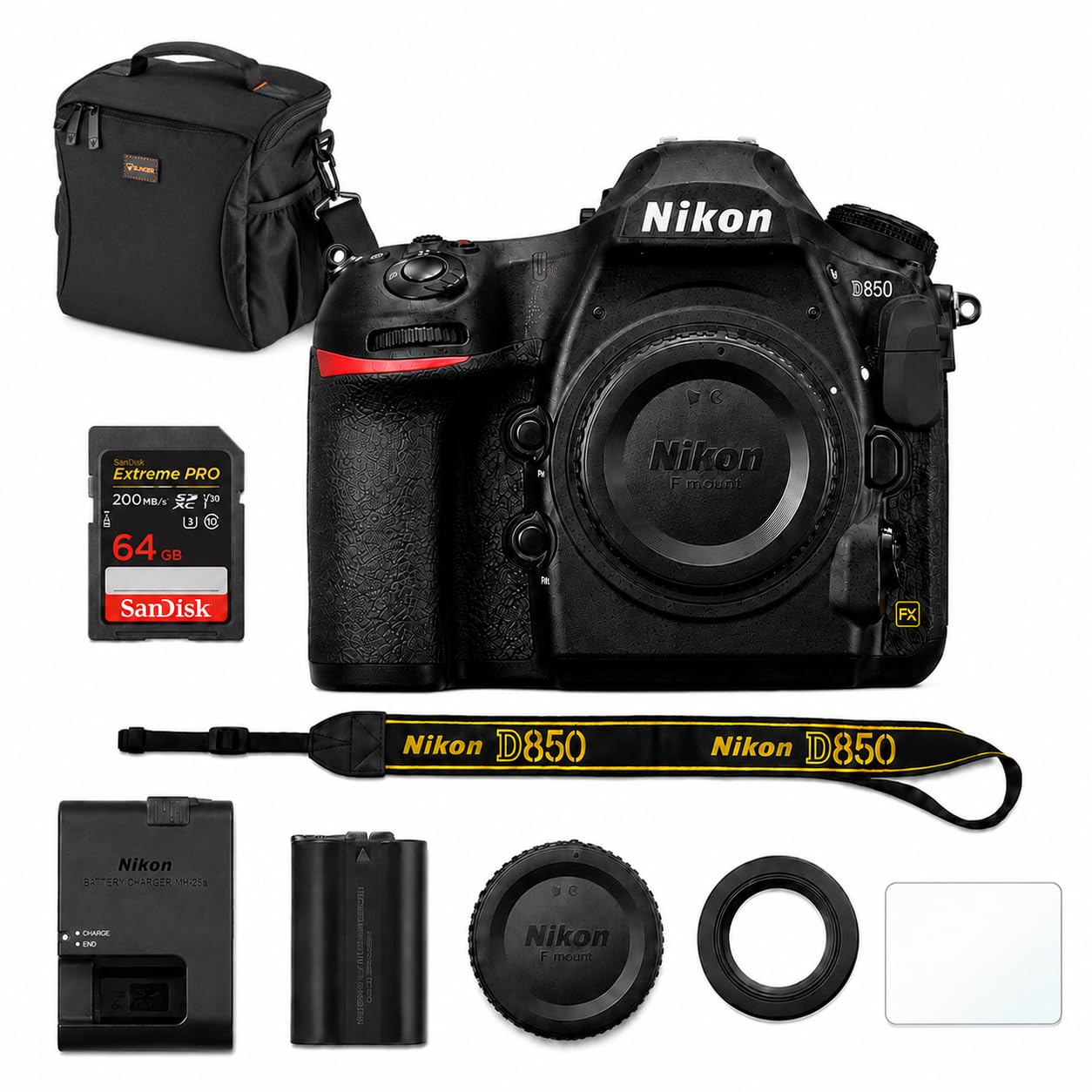
The Nikon D850 is a DSLR that was ahead of its curve at release and remains a compelling option for stills photographers who want a high-resolution body with 4K video. Its 45.7MP FX-format BSI CMOS sensor with the EXPEED 5 processor delivers exceptional dynamic range, rich colors, and low noise. The 153-point Multi-CAM 20K autofocus system provides reliable subject tracking down to f/8, which is valuable for wildlife and sports shooters using teleconverters.
Video capabilities include 4K UHD at 30p, and a Focus Shift Mode that can create 8K time-lapse movies by shifting focus through a scene. The 3.2-inch tilting touchscreen LCD works well for flexible shooting angles. Connectivity via SnapBridge Wi-Fi and Bluetooth enables seamless transfer and remote control. The D850 can shoot up to 7 fps for 51 RAW frames, or 9 fps with the optional battery grip.
The D850 does not shoot native 8K video, making it a legacy choice for those who prioritize stills above all else. The DSLR form factor is heavier than modern mirrorless alternatives. For photographers who already own a collection of F-mount lenses and want a nearly 46MP body for professional stills work with 4K video as a secondary function, the D850 is a well-valued, proven workhorse that is still widely available.
Why it’s great
- 45.7MP BSI sensor for exceptional stills image quality
- 153-point AF system works reliably down to f/8
- 8K time-lapse mode with Focus Shift automation
- Excellent dynamic range and color science
Good to know
- No native 8K video recording, only 4K UHD
- DSLR form factor is heavier than mirrorless competition
- Bundle includes a slower SD card; upgrade recommended for video work
FAQ
Does overheating still affect 8K cameras in practice?
What memory card speed do I need for 8K recording?
Final Thoughts: The Verdict
For most users, the best 8k camera winner is the Nikon Z 8 because it offers a stacked 45.7MP sensor, internal 8K/60p N-RAW, and deep-learning AF in a body that balances size, weight, and pro features. If you need unlimited 8K recording with a cooling fan, grab the Canon EOS R5 C. And for the highest resolution stills with 8K video and AI autofocus, nothing beats the Sony Alpha 7R V.