
Our readers keep the lights on and the weekend projects moving. As an Amazon Associate, I earn from qualifying purchases.
An 8TB SSD is the only real answer when your local storage demands exceed what a handful of smaller drives can deliver, yet you refuse to accept the latency of spinning hard drives or the clutter of multiple external bricks. This capacity sits at the intersection of massive archival space and near-instantaneous access, making it a critical component for video editors managing 4K/8K raw footage, photographers with decades of RAW files, gamers with libraries that exceed 2TB, and homelab builders consolidating virtual machines.
I’m Rikta — the co-founder and writer behind FitlyFast. I’ve spent countless hours dissecting controller architectures, NAND flash types, Terabytes Written (TBW) ratings, and thermal throttling behaviors across the current 8TB SSD landscape to separate the drives that sustain their peak performance from those that bog down under sustained writes.
After comparing nine models spanning SATA and NVMe interfaces, portable rugged enclosures, and workstation-grade internals, I’ve identified which 8tb ssd delivers the best balance of speed, durability, and endurance for your specific workload.
How To Choose The Best 8TB SSD
Selecting an 8TB SSD means confronting trade-offs that don’t exist at lower capacities. You are choosing between SATA’s near-universal compatibility and NVMe’s raw bandwidth, between QLC (quad-level cell) and TLC (triple-level cell) NAND, and between a compact external enclosure that fits in a pocket and a heavy internal drive that stays put. Each decision maps to a specific use case, and the wrong choice results in a drive that either can’t keep up or wears out too fast.
Interface and Bandwidth
SATA III tops out around 560 MB/s — more than enough for boot drives in legacy systems or archival storage where sequential speed isn’t critical. PCIe Gen 4 NVMe drives, like the Western Digital Blue SN5000, push past 5,500 MB/s for reads, slashing large file transfers from minutes to seconds. External options using USB 3.2 Gen 2×2 (20 Gbps) or USB 4 / Thunderbolt 4 (40 Gbps) sit in between, with the Oyen Digital U34 Bolt delivering close to 2,800 MB/s. If your workflow involves moving multi-gigabyte files daily, the interface is where you feel the difference most acutely.
NAND Flash Type and SLC Cache Behavior
Most high-capacity 8TB SSDs use QLC NAND because it packs more bits per cell, lowering cost per gigabyte. The trade-off is slower native write speeds. To mask this, manufacturers include a pseudo-SLC cache — a portion of the NAND programmed to act like single-level cells for burst writes. Once the cache fills (sometimes after just a few hundred GB of continuous writing), speeds drop to the drive’s native QLC rate, which can fall below 100 MB/s. TLC-based drives, like the Samsung 870 EVO, maintain higher sustained write floors and higher TBW ratings, making them preferable for write-heavy workloads.
Endurance (TBW) and Warranty
Terabytes Written (TBW) is the most honest predictor of lifespan. An 8TB drive with a 1,200 TBW rating, like the WD Blue SN5000, can theoretically rewrite its entire capacity 150 times before the manufacturer expects failure. The Samsung 870 EVO boasts up to 4,800 TBW — four times more endurance. For a video editor writing hundreds of GB per session, higher TBW directly translates to years of additional service. Always pair the TBW figure with the warranty length (3 to 5 years is standard at this capacity).
Quick Comparison
On smaller screens, swipe sideways to see the full table.
| Model | Category | Best For | Key Spec | Amazon |
|---|---|---|---|---|
| Samsung 870 EVO 8TB | Internal SATA | Write-heavy archival & professional video | 560 MB/s read / 4,800 TBW | Amazon |
| Oyen Digital U34 Bolt 8TB | External USB4 | Pro mobile cinema & Thunderbolt workflows | USB 4 / 2,800 MB/s | Amazon |
| Samsung 870 QVO 8TB | Internal SATA | Massive silent bulk storage | 560 MB/s read / QLC NAND | Amazon |
| WD Blue SN5000 4TB (NVMe) | Internal NVMe | High-speed project drives & gaming | 5,500 MB/s read / 1,200 TBW | Amazon |
| Lexar Armor 700 8TB | External Rugged | Outdoor field production & Apple ProRes | 2,000 MB/s / IP66 / 3m drop | Amazon |
| SanDisk Extreme Portable 8TB | External Rugged | Travel backup with hardware encryption | 1,050 MB/s / IP65 / 256-bit AES | Amazon |
| SSK 8TB External SSD | External USB-C | Cross-platform phone & laptop transfers | 2,000 MB/s / USB-C + USB-A cables | Amazon |
| Silicon Power A55 2TB | Internal SATA | Budget-friendly system upgrades | 500 MB/s / SLC Cache / 3yr warranty | Amazon |
| Fikwot FS810 4TB | Internal SATA | Entry-level 4TB bulk storage | 550 MB/s / TLC NAND / 3yr service | Amazon |
In‑Depth Reviews
1. Samsung 870 EVO 8TB
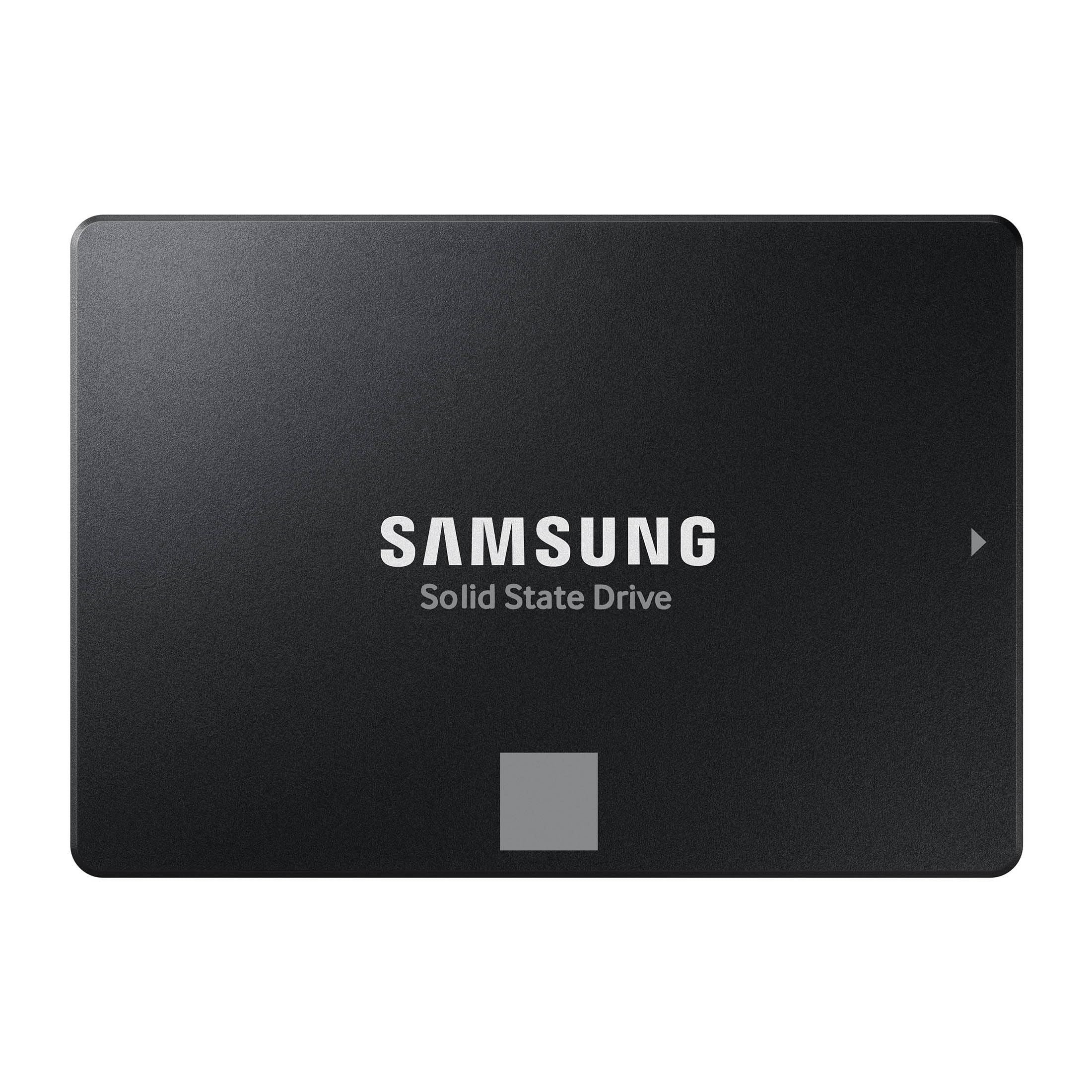
The Samsung 870 EVO is the gold standard for SATA SSDs, and the 8TB variant is the densest, most endurance-rich 2.5-inch drive available. Its 4,800 TBW rating is nearly four times the QVO’s, meaning this drive can handle daily multi-terabyte writes for a decade without approaching its rated limit. The 560 MB/s sequential read/write ceiling is the SATA interface bottleneck, but for a media server, scratch disk, or high-write database, the EVO’s sustained performance doesn’t degrade the way QLC drives do after their SLC cache is exhausted.
The 8GB DRAM cache ensures consistent random access performance even under heavy multi-threaded loads. Real-world homelab reports show the drive maintains ~520 MB/s writes in ZFS RAID1 configurations without sync errors. Samsung Magician software provides firmware updates, health monitoring, and hardware encryption management. The drive also incorporates a hardware AES 256-bit encryption engine, adding a layer of security for sensitive archives.
For creative professionals who need 8TB of internal storage that won’t create a bottleneck in post-production pipelines, the 870 EVO is the drive you install and forget. It runs noticeably cooler than its QVO sibling — user-reported operational temperatures are roughly 15°C lower under load — and it draws significantly less power than a spinning hard drive of comparable capacity. The five-year limited warranty backs up the industry-leading endurance rating.
Why it’s great
- Industry-best 4,800 TBW endurance rating
- Consistent SATA-bound performance with 8GB DRAM
- Cooler operation and lower power draw than HDDs
Good to know
- SATA III bottleneck limits speed to 560 MB/s
- Premium pricing compared to QLC-based alternatives
2. Oyen Digital U34 Bolt 8TB
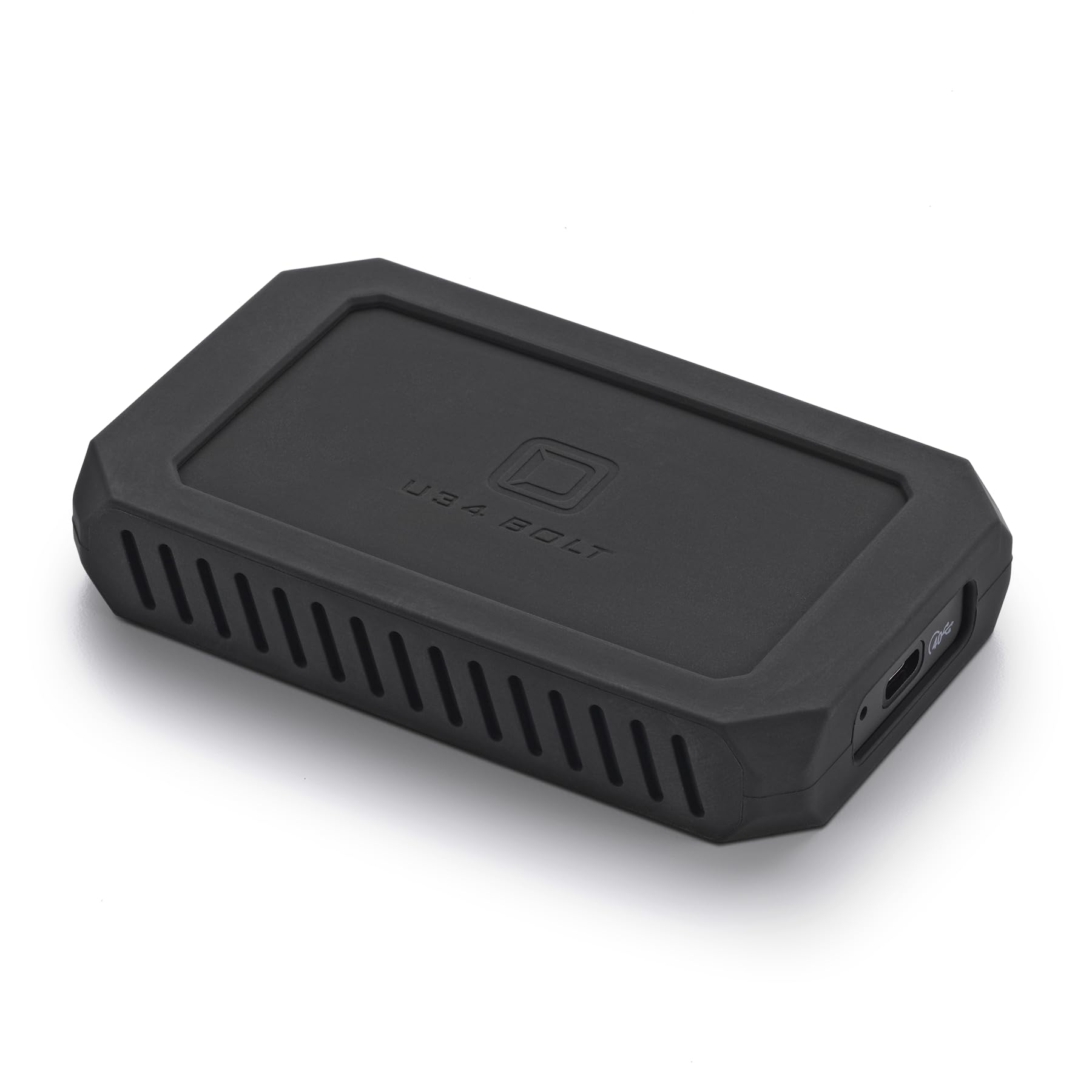
The Oyen Digital U34 Bolt is a purpose-built portable SSD for professionals who refuse to wait. Driven by the certified ASMedia ASM2464PD controller, this USB 4 / Thunderbolt 4 enclosure pushes sustained speeds up to 2,800 MB/s — enough to complete a full system backup in roughly six minutes compared to a half-hour over USB 3.2 Gen 2. The drive is pre-formatted in HFS+ for Mac, though reformatting to APFS can improve metadata performance on Apple Silicon workstations.
MIL-STD-810 drop protection and a cooling aluminum core give the U34 Bolt genuine field-readiness. The metal enclosure doubles as a heat sink, maintaining internal temperatures below throttling thresholds even during sustained 40 Gbps transfers. The drive is remarkably compact — slightly wider than a credit card and thin enough to slide into a jeans pocket, making it a realistic travel companion for cinematographers and pro audio engineers.
Customer support is a differentiator here: Oyen Digital provides a 3-year warranty with US-based phone support staff who are knowledgeable and responsive. The drive ships with a short 1.5-foot USB-C cable optimized for full-speed operation; longer passive Thunderbolt 4 cables may not work reliably. For creative workstations that already run Thunderbolt or USB 4, this is the fastest truly portable 8TB SSD on the market.
Why it’s great
- Sustained 2,800 MB/s via USB 4 / Thunderbolt 4
- Rugged MIL-STD-810 construction with effective thermal management
- Compact form factor with US-based warranty support
Good to know
- Requires high-quality short USB-C cable for full speed
- Premium pricing reflects the pro-level controller and build
3. Samsung 870 QVO 8TB

The 870 QVO is Samsung’s QLC-based 2.5-inch SATA drive that delivers 8TB at a lower per-gigabyte cost than the EVO line. With sequential reads and writes pegged at 560/530 MB/s, it performs identically to the EVO during normal desktop use and file transfers that fit within its 78GB intelligent TurboWrite SLC cache. For the average creative pro archiving completed projects or a gamer storing an entire Steam library, that cache is rarely exhausted.
Once the SLC cache fills during a sustained multi-hundred-gigabyte write, native QLC write speeds drop to roughly 150–200 MB/s. For overnight backups or one-time data migrations, that’s tolerable. The drive has been deployed successfully in RAID5 arrays with six 8TB QVOs — users report zero failures over two years, with ATTO benchmarks exceeding a single high-end Gen 4 NVMe drive when bandwidth is aggregated across the array.
Where the QVO saves money, it sacrifices endurance: the TBW rating is lower than the EVO, so it’s not suited for write-heavy database logging or 4K video production where you ingest terabytes daily. But for a Mac desktop upgrade from 4TB, or as a massive internal archive that gets read more than written, the 870 QVO provides an excellent cost-per-terabyte ratio backed by Samsung’s reliability reputation.
Why it’s great
- Lower cost per TB than the EVO line for bulk storage
- Consistent 560 MB/s reads within SLC cache window
- Proven reliability in RAID configurations over multiple years
Good to know
- QLC write speed drops after SLC cache exhausts
- Lower TBW endurance than TLC-based competitors
4. Western Digital 4TB WD Blue SN5000

The WD Blue SN5000 is a PCIe Gen 4 NVMe drive that brings 5,500 MB/s read speeds and 4TB of capacity to a compact M.2 2280 form factor. While it “only” offers 4TB (not 8), it fills a critical niche for users who need NVMe speed but don’t want to pay the premium for enterprise-level drives. The 4TB model carries a 1,200 TBW endurance rating and uses Western Digital’s nCache 4.0 technology to maintain consistent sustained writes through a hybrid SLC/QLC caching strategy.
In real-world use inside a Thunderbolt 4 or USB4 enclosure, the SN5000 writes at roughly 2,775 MB/s and reads at 2,850 MB/s — close to the limit of those external buses and competitive with the Oyen Digital U34 Bolt. Inside a desktop Gen 4 M.2 slot, it saturates the PCIe link for both sequential and random workloads. Gamers report flawless performance after a year of daily use, and the drive runs cooler and draws less power than a comparable PCIe Gen 5 drive.
The bundled Acronis True Image for Western Digital software simplifies cloning and migration, so upgrading from a smaller SSD takes minimal technical effort. Western Digital’s 5-year limited warranty and 1,200 TBW rating provide sufficient endurance for a workstation used for video editing or 3D rendering. If you need internal NVMe speed at 8TB, you’d need to look at enterprise models, but for 4TB with Gen 4 bandwidth, the SN5000 is hard to beat.
Why it’s great
- PCIe Gen 4 speeds up to 5,500 MB/s reads
- Hybrid cache system maintains fast sustained writes
- Excellent performance in external Thunderbolt enclosures
Good to know
- Available in 4TB, not 8TB capacity
- Not the best choice for write-heavy server workloads
5. Lexar Armor 700 8TB

The Lexar Armor 700 is built for the field. Rated IP66 for water and dust resistance and designed to survive 3-meter drops, it brings 2,000 MB/s sequential speeds via USB 3.2 Gen 2×2. For videographers shooting Apple ProRes directly to external storage — up to 4K 60FPS with an iPhone 15 Pro — the Armor 700’s sustained write performance keeps pace without frame drops, even during long recording sessions.
Lexar’s Thermal Control Design prevents the drive from throttling under heavy loads. Users report that a 25GB zip file transfers in roughly one minute and ten seconds, and the drive remains cool enough to touch immediately after the transfer. The included Lexar DataShield software provides 256-bit AES encryption for file-level security, and the Lexar App allows mobile backups directly from an Android or iOS device.
The drive’s compact form factor is genuinely pocket-sized; several buyers noted it was smaller than expected. It ships with both a USB-C cable and a USB-C to USB-A adapter, so it works out of the box with almost any host. For outdoor productions, film students, or anyone who moves between dust, rain, and controlled studio environments, the Armor 700 offers a rare combination of ruggedness and high-speed access.
Why it’s great
- IP66 dust/water resistance with 3-meter drop protection
- 2,000 MB/s speeds suitable for ProRes recording
- Thermal control prevents throttling during sustained writes
Good to know
- Requires USB 3.2 Gen 2×2 host port for full speed
- Runs warm during extended 4K video transfers
6. SanDisk Extreme Portable 8TB

The SanDisk Extreme Portable SSD has been a staple for mobile professionals for years, and the 8TB variant inherits the same proven formula: NVMe performance up to 1,050 MB/s read and 1,000 MB/s write, wrapped in a silicone shell that survives 3-meter drops and carries an IP65 dust and water resistance rating. The attached carabiner loop lets you clip it to a backpack strap or belt loop, making accidental disconnection or loss less likely in transit.
Hardware encryption via 256-bit AES password protection keeps data private without requiring third-party software. The drive includes both a USB-C cable and a USB-C to USB-A adapter, so it’s ready for Mac, Windows, Android, and iPadOS devices out of the box. After a year of use, customer reports indicate the drive remains fast and reliable, with transfer speeds that match its rated performance even after thousands of read/write cycles.
The 8TB capacity makes this drive ideal for photographers who never delete a RAW file or travelers carrying extensive media libraries. It’s compact enough to slip into a small camera pouch, and the passive thermal design means it draws no external power. The 5-year limited warranty provides peace of mind for a drive that will likely see heavy daily use on the road.
Why it’s great
- Verified long-term reliability after a year of daily use
- IP65 rating and 3-meter drop protection
- 256-bit AES hardware encryption included
Good to know
- Speeds cap at 1,050 MB/s (slower than Gen 2×2 alternatives)
- Slightly warm during extended file transfers
7. SSK 8TB External SSD

The SSK 8TB external SSD delivers 2,000 MB/s through a USB 3.2 Gen 2×2 interface, packaged in a compact zinc-alloy housing that feels denser than its plastic competitors. It ships with two cables — a 20 Gbps-rated USB-C to USB-C cable for full-speed operation and a 10 Gbps USB-C to USB-A cable for backward compatibility with older laptops and game consoles. This dual-cable approach eliminates the adapter fumbling common with single-cable drives.
Integrated S.M.A.R.T. health diagnostics and adaptive TRIM support help maintain peak write speeds over the drive’s lifespan by optimizing how the controller reclaims unused NAND blocks. A blue LED indicator provides real-time transfer activity feedback, helping users avoid the classic mistake of unplugging mid-write. The form factor is genuinely portable, measuring roughly 2.9 inches, and the zinc-alloy construction acts as a passive heat sink.
For a content creator juggling a Windows desktop, a MacBook, and an Android tablet, the SSK drive’s plug-and-play compatibility across USB 3.2, Thunderbolt (capped at 10 Gbps without Gen 2×2), and USB-C phone OTG connections makes it a versatile hub drive. It’s not built for rugged outdoor use like the Lexar or SanDisk, but for controlled studio, office, or home environments, it offers near-flagship speeds at a competitive cost.
Why it’s great
- Dual USB-C and USB-A cables included for cross-platform use
- Zinc-alloy housing aids cooling and feels premium
- S.M.A.R.T. and TRIM support maintain long-term performance
Good to know
- Not as rugged as IP-rated alternatives for outdoor use
- Runs warm under sustained high-speed transfers
8. Silicon Power A55 2TB
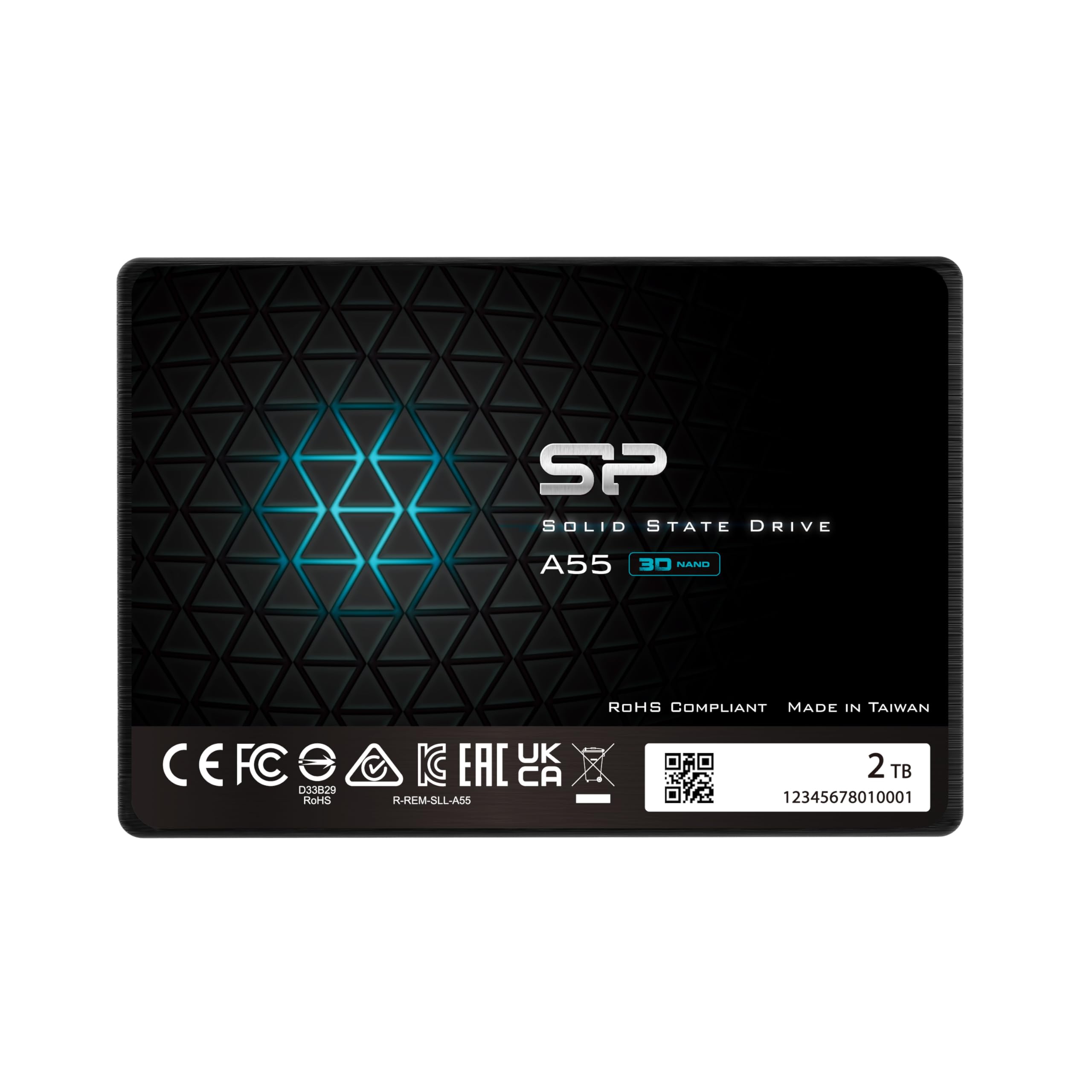
The Silicon Power A55 2TB is a no-frills SATA III SSD that brings 3D NAND and SLC cache technology to an ultra-slim 7mm form factor at a cost that makes upgrading an old laptop or desktop feel almost trivial. Sequential speeds hover around 500 MB/s — more than enough to breathe life into a system still running a 5,400 RPM HDD. Users report transforming decade-old machines into snappy daily drivers with a single swap.
The drive’s slim profile means it fits into Ultrabooks and thin notebooks that reject thicker 9.5mm SSDs. Shock resistance adds a layer of durability for laptops that get tossed into bags. Silicon Power provides a 3-year limited warranty, though they require product registration on their website to unlock the full coverage period. Customer reviews highlight consistent performance across Xbox storage expansion, Linux boot drives, and general desktop upgrades.
At 2TB, the A55 doesn’t compete with the 8TB giants on capacity, but it serves a distinct purpose: an affordable, reliable stopgap for users who need more space than 1TB but don’t want to spend hundreds on a drive that outpaces their system’s bus. For an older MacBook, a PS4, or a secondary data drive in a HTPC, the Silicon Power A55 delivers exactly the performance the SATA interface can support.
Why it’s great
- Cost-effective SATA upgrade for legacy systems
- Ultra-slim 7mm design fits thin ultrabooks
- SLC cache boosts burst write performance
Good to know
- Limited to 2TB capacity, not 8TB
- Warranty requires online product registration
9. Fikwot FS810 4TB

The Fikwot FS810 4TB is an entry-level SATA III SSD that uses 3D NAND TLC flash rather than the cheaper QLC found in many budget drives of this size. This makes it a smarter pick for users who need 4TB of storage but expect to write data regularly — TLC’s native write performance and endurance both exceed QLC, even if the sequential ceiling remains at 550 MB/s. The drive has passed 80 hours of vibration and hot-plug testing in the factory.
In real-world scenarios, the FS810 performs reliably as a boot drive in a NUC, as a media storage upgrade for a PS4, or as an internal drive for a Raspberry Pi-based streaming server. Customers report loading over 800 movies onto the 2TB model without issues, and the 4TB variant scales that capacity proportionally. The 3-year service period (with direct email support) provides a safety net for a brand that’s newer to the Western market.
For a budget-conscious user who needs 4TB and prefers TLC over QLC, the FS810 hits a sweet spot. It won’t win benchmarks, and its plastic enclosure feels less premium than the Samsung or WD options, but the underlying NAND choice and rigorous factory testing make it a far safer bet than ultra-cheap no-name drives. It’s the right pick for secondary storage that sees daily reads and occasional writes.
Why it’s great
- 4TB capacity with TLC NAND (better endurance than QLC)
- Reliable performance in PS4, NUC, and Raspberry Pi builds
- 3-year service period with factory testing certification
Good to know
- Plastic enclosure feels less premium than metal alternatives
- Limited to SATA III speeds (550 MB/s)
FAQ
Can I use an 8TB SATA SSD like the Samsung 870 EVO in a laptop with a 2.5-inch bay?
Will a USB 3.2 Gen 2×2 external SSD slow down when plugged into a Thunderbolt 4 port?
What is the real-world performance difference between QLC and TLC in an 8TB SSD?
Final Thoughts: The Verdict
For most users, the 8tb ssd winner is the Samsung 870 EVO because its unmatched 4,800 TBW endurance and consistent SATA-bound performance make it the safest long-term investment for professional and archival use. If you need external NVMe speed with genuine portability, grab the Oyen Digital U34 Bolt – its 2,800 MB/s throughput over USB 4 / Thunderbolt 4 turns multi-hour backups into five-minute tasks. And for rugged field work where water, dust, and drops are daily realities, nothing beats the Lexar Armor 700, which combines IP66 protection with the speed to handle Apple ProRes recording on location.