
Our readers keep the lights on and the weekend projects moving. As an Amazon Associate, I earn from qualifying purchases.
The humble AA battery powers everything from TV remotes and wall clocks to high-drain game controllers and smart home sensors. Yet most people still grab the cheapest alkaline pack available, unaware that a single premium lithium or rechargeable cell can outlast a dozen disposable ones. Choosing the right AA battery is no longer a convenience decision — it directly impacts how often you change batteries, how much you spend per year, and how much waste you generate.
I’m Rikta — the co-founder and writer behind FitlyFast. I’ve spent hundreds of hours analyzing discharge curves, cycle counts, shelf-life guarantees, and real-world drain performance from thousands of verified buyer reports to separate the genuine long-haul performers from the marketing fluff.
Whether you need a bulk pack for household essentials or specialized cells for security cameras and photography gear, this guide cuts through the noise to deliver a definitive, specs-backed recommendation for the best aa batteries available today.
How To Choose The Best AA Batteries
Not all AA batteries wear out equally. The chemistry inside the cell determines its voltage stability, energy density, shelf life, and whether it can be reused. Matching the right type to your device’s power draw is the single most important decision you will make.
Chemistry: Alkaline vs. Lithium vs. NiMH Rechargeable
Alkaline batteries are the cheapest upfront and work fine for low-drain devices like clocks and remotes. Lithium cells deliver a flat 1.5V curve until they die, making them essential for outdoor cameras and devices exposed to freezing temperatures. NiMH rechargeables, especially low-self-discharge (LSD) types, are the most economical choice for medium-to-high-drain applications like game controllers and flashlights because they can be reused hundreds of times.
Capacity and Discharge Rate
Milliamp-hours (mAh) estimate how much energy a battery can store. Higher mAh means longer runtime, but only within the same chemistry. A 2000 mAh NiMH cell and a 3000 mAh alkaline deliver power differently because NiMH maintains a stable voltage throughout discharge while alkaline voltage drops steadily. For devices that need consistent brightness or motor speed, stable voltage matters more than raw capacity rating.
Shelf Life and Self-Discharge
Alkaline batteries typically last 10 to 15 years in storage, making them ideal for emergency kits. Premium lithium cells can hold a charge for 20 to 25 years. Standard NiMH batteries drain themselves within months, but LSD NiMH cells retain 70 to 80 percent of their charge after one to two years. If your batteries sit idle most of the time, check the shelf-life guarantee rather than the initial capacity.
Quick Comparison
On smaller screens, swipe sideways to see the full table.
| Model | Category | Best For | Key Spec | Amazon |
|---|---|---|---|---|
| Eneloop Panasonic 6-Pack | NiMH Rechargeable | High-drain devices & daily cycling | 2100 mAh / 2100 cycles | Amazon |
| Eneloop Panasonic 10-Pack | NiMH Rechargeable | Multi-device households & photography | 2100 mAh / 2100 cycles | Amazon |
| Duracell Coppertop 24-Pack | Alkaline | Everyday household & low-drain gear | 12-year shelf life | Amazon |
| Energizer MAX 24-Pack | Alkaline | Reliable everyday power & storage | 15-year shelf life | Amazon |
| Energizer Ultimate Lithium 8-Pack | Lithium | Outdoor cameras & extreme temperatures | 8800 mAh total / 25-year shelf life | Amazon |
| Amazon Basics Rechargeable 24-Pack | NiMH Rechargeable | Budget-conscious rechargeable users | 2000 mAh / 1000 cycles | Amazon |
| Amazon Basics Alkaline 48-Pack | Alkaline | Bulk household & emergency kits | ~1900 mAh / 10-year shelf life | Amazon |
In‑Depth Reviews
1. Eneloop Panasonic BK-3MCCA6BA 6-Pack

The Eneloop is the undisputed gold standard in the NiMH rechargeable category. Rated for 2100 charge cycles, each cell delivers a consistent 1.2V output from start to finish — a crucial advantage for devices like Xbox controllers and camera flashes that stutter or shut off prematurely with alkaline cells. The factory pre-charge using solar energy is a nice touch, but the real story is the low self-discharge chemistry that retains up to 70 percent of its capacity after a decade of storage.
Real-world testing confirms the 2000 mAh minimum rating is honest, and the voltage remains flat throughout most of the discharge. Users consistently report these batteries outperforming standard NiMH cells after dozens of cycles, with zero leakage or swelling. The made-in-Japan build quality is apparent in the tight weight tolerance and consistent discharge curves across all six cells.
The only meaningful tradeoff is the upfront cost per pack. You will also need a dedicated smart charger to maximize cycle longevity, but one set of Eneloops can replace hundreds of disposable cells over its lifetime. For anyone who uses AA batteries weekly, this is the single most cost-effective purchase on the list.
Why it’s great
- Rated for 2100 recharges with minimal capacity loss
- Retains 70% charge after 10 years in storage
- Flat voltage curve ideal for high-drain electronics
Good to know
- Requires a compatible NiMH charger (not included)
- Higher initial investment than disposable packs
2. Eneloop Panasonic BK-3MCCA10FA 10-Pack

This 10-battery variant of the same Eneloop platform is the obvious choice for households that rotate through multiple sets of rechargeables daily. Everything that makes the 6-pack excellent applies here — same 2100-cycle rating, same LSD chemistry, same pre-charge — but the larger count means you can charge one set while using another. Serious photographers and heavy gamers will appreciate not having to wait for cells.
The internal consistency across a full 10-cell batch is impressive. Third-party capacity tests show each cell delivering within a few milliamp-hours of the rated 2000 mAh minimum, and the discharge profiles overlay nearly identically. That uniformity matters when running devices that require matched cells, such as two-way radios or multi-bay chargers.
The per-unit cost is lower than the 6-pack, making this the better value for committed rechargeable users. Pair it with a quality charger that has independent channel monitoring, and you have a battery rotation system that can last years without replacement. The upfront bill is higher than any alkaline pack, but the total cost per cycle drops below a penny after the first few dozen recharges.
Why it’s great
- 10-cell count with identical discharge consistency across the batch
- Same 2100-cycle and 10-year retention specs as the 6-pack
- Cost-per-cycle lower than any disposable option long-term
Good to know
- Larger upfront investment than smaller packs
- Requires organization to keep charged cells ready
3. Duracell Coppertop AA 24-Pack

Duracell’s Coppertop line remains the most trusted name in alkaline for a reason. The “Power Boost Ingredients” touted in the marketing translate to real-world performance: these units consistently outlast store-brand and value-tier alkalines in moderated drain tests, especially in devices like wireless mice and thermostats that sip power over weeks. The 12-year storage guarantee means you can load an emergency drawer and forget about them.
Users report these batteries work reliably in everything from smoke detectors to children’s toys without the dreaded voltage sag that causes dimming flashlights or sluggish motorized gadgets. The leak-proof construction is a critical safety feature for devices that sit unused for long periods — a corroded battery compartment can destroy a device in months.
For the price per cell, the Coppertop delivers the best balance of availability, trust, and performance among non-rechargeable options. If you prefer the convenience of disposables and only need moderate shelf life, this is the benchmark all other alkaline packs are measured against.
Why it’s great
- 12-year shelf life for long-term storage reliability
- Power Boost chemistry outperforms budget alkalines consistently
- Leak-proof design protects expensive electronics
Good to know
- Non-rechargeable — single use only
- Higher per-unit cost compared to bulk value brands
4. Energizer MAX AA 24-Pack
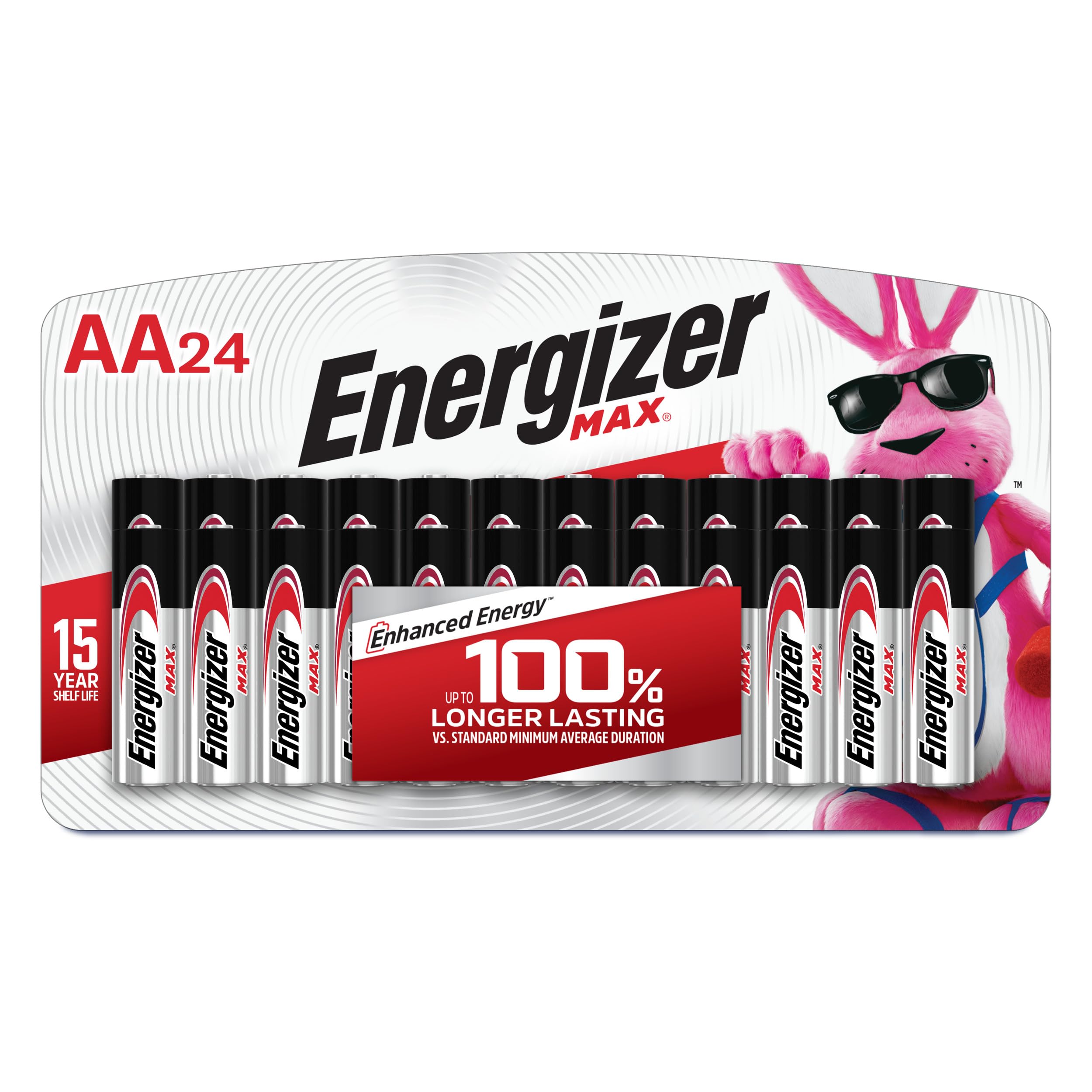
The Energizer MAX offers the longest storage guarantee among mainstream alkaline batteries at 15 years. That extra three years over the Duracell Coppertop matters if you are stocking a bug-out bag or a cabin that gets visited infrequently. The cell design has been refined to deliver more efficient power output, which translates to slightly longer runtimes in low-drain devices compared to older MAX formulations.
In practical use, these batteries perform identically to the Coppertop in most household gadgets. The key differentiator is the shelf life: if you are buying batteries specifically for emergency preparedness or long-term storage, the MAX’s additional three years of guaranteed freshness give it a slight edge. Users praise the easy-open packaging with a perforated flap that keeps the rest of the pack sealed.
For everyday use, the difference between this and the Duracell is negligible. Choose the MAX if you value the longest possible storage window. Choose the Coppertop if you want the brand with the most aggressive leak-proofing track record. Both are excellent alkaline options.
Why it’s great
- Industry-leading 15-year shelf life for emergency stocks
- Efficient cell design for longer runtime in real-world use
- Convenient resealable packaging for partial use
Good to know
- Non-rechargeable — not suitable for frequent high-drain cycling
- Performance in high-drain devices lags behind lithium chemistry
5. Energizer Ultimate Lithium AA 8-Pack

Lithium AA batteries operate in a completely different performance tier than alkaline. The Energizer Ultimate Lithium delivers a stable 1.5V output across its entire discharge curve, even in freezing conditions down to -40°F. This makes it the only real choice for outdoor security cameras, GPS trackers, and headlamps used in winter or high-altitude environments. The 25-year storage guarantee is the longest on the market.
At roughly 8800 mAh total capacity across eight cells, each individual lithium cell packs roughly double the energy of a standard alkaline under continuous load. Users consistently report six to eight months of continuous runtime in Blink cameras and smart locks that previously chewed through alkalines in half that time. The lightweight construction also reduces total payload in portable gear like flashlights and medical devices.
The premium cost per battery is substantial — roughly double that of premium alkalines. But for devices where failure is not an option, or where battery access is difficult, the reliability and cold-weather performance justify every cent. Do not use these in low-drain devices like clocks; you are paying for extreme performance you will never use.
Why it’s great
- Flat 1.5V output down to -40°F for extreme conditions
- 25-year shelf life — the longest guaranteed storage
- Roughly twice the usable energy of alkaline in high-drain use
Good to know
- Significantly more expensive per cell than alkaline
- Overkill for low-drain devices like remote controls
6. Amazon Basics Rechargeable AA 24-Pack

The Amazon Basics rechargeable NiMH cells provide an compelling entry point into the world of reusable batteries for a fraction of the Eneloop’s cost. Rated at 2000 mAh with a 1000-cycle lifespan, these cells offer about half the cycle count of premium rechargeables but at roughly a third of the price per battery. Third-party capacity tests after activation cycles have measured actual capacities exceeding 2100 mAh, which is a pleasant surprise at this tier.
The low self-discharge chemistry retains 80 percent capacity after two years of storage, making these suitable for emergency kits alongside daily use. The consistent weight and tight manufacturing tolerances across a 24-pack indicate decent quality control. Users report excellent performance in toys, night lights, and wireless peripherals — devices that drain slowly over hours or days rather than minutes.
Where these struggle is in very high-drain pulse applications like professional camera flashes or high-torque motors, where the voltage sags faster than Eneloop cells. Consider them a great mid-range workhorse for general household recharging needs rather than a hardcore performance battery. The 24-count pack is ideal for outfitting multiple devices across the home.
Why it’s great
- Excellent cost-per-cell for rechargeable users, especially in 24-pack
- Actual capacity often exceeds stated 2000 mAh after activation
- Low self-discharge retains 80% capacity after 2 years idle
Good to know
- 1000-cycle rating is half that of top-tier Eneloop cells
- Voltage sag more noticeable under high-drain pulse loads
7. Amazon Basics Alkaline AA 48-Pack

The Amazon Basics 48-pack is the ultimate choice for buyers who need a massive number of disposable AA batteries and want the lowest possible per-unit cost. At roughly 1900 mAh effective capacity, these alkalines deliver about 80 percent of the runtime of name-brand premium alkalines in high-drain scenarios but at a fraction of the price. The 10-year leak-free shelf life ensures they will be ready when needed, even if stored for years.
User feedback overwhelmingly supports these as reliable performers for low-to-medium drain devices such as remote controls, wall clocks, keyboards, and basic flashlights. The consistent manufacturing and sealed packaging prevent leakage complaints, which is a common issue with cheaper no-name brands. The Certified Frustration-Free Packaging is genuinely easy to open and includes a resealable box for storing the remaining batteries.
The tradeoff is clear: in high-drain devices like digital cameras or motorized toys, these wear out 20 to 30 percent faster than premium alkalines. For bulk household consumption where devices gradually drain over weeks, the per-cell savings are substantial enough to make this the most economical alkaline option on the list.
Why it’s great
- Lowest per-unit cost of any pack in this guide
- 10-year leak-free shelf life for long storage
- Reliable performance in low-to-mid drain household devices
Good to know
- Capacity ~20% lower than premium alkaline in high-drain tests
- Not suitable for extreme temperatures or critical devices
FAQ
Can I mix rechargeable and alkaline batteries in the same device?
Why do lithium AA batteries cost so much more than alkaline?
How many times can I actually recharge a 2100-cycle Eneloop battery?
Do I need a special charger for NiMH rechargeable AA batteries?
Final Thoughts: The Verdict
For most users, the aa batteries winner is the Eneloop Panasonic 6-Pack because it delivers exceptional value through 2100 recharge cycles, low self-discharge, and consistent voltage output for nearly every household device. If you need extreme cold-weather performance for outdoor cameras, grab the Energizer Ultimate Lithium 8-Pack. And for bulk disposable use at the lowest per-unit cost, nothing beats the Amazon Basics Alkaline 48-Pack.