
Our readers keep the lights on and the weekend projects moving. As an Amazon Associate, I earn from qualifying purchases.
You’re tired of hunting for the remote, only to find it dead again. Or your kid’s toy stops mid-play, and the only spare you have is a half-used alkaline that fizzles out in twenty minutes. Traditional AA batteries drain fast, lose voltage as they die, and create a constant stream of trash. Switching to a rechargeable system changes all that — you charge once and get consistent power for months across every device in your home.
I’m Rikta — the co-founder and writer behind FitlyFast. I’ve spent countless hours parsing datasheets, comparing mAh ratings, cycle counts, and voltage curves to identify which lithium and NiMH cells actually deliver on their promises for real-world household use.
After analyzing over a dozen top-rated options, I’ve narrowed the field to the seven models that matter most. Here is my definitive guide to the best aa lithium rechargeable batteries for your home, from high-drain gaming gear to low-drain remote controls.
How To Choose The Best AA Lithium Rechargeable Batteries
Not all rechargeable AAs are created equal. The choice between NiMH and lithium-ion chemistry, capacity ratings, cycle life, and even how you charge them will decide whether your batteries are a one-time investment or a frustrating hassle. Here is what to look for.
NiMH vs. Lithium-Ion: Know Your Chemistry
Standard NiMH cells like Eneloop deliver a nominal 1.2V that drops gradually under load. This is fine for clocks, remotes, and many toys but can cause issues in devices that expect a full 1.5V — the device might reset early or report a low battery when the cell still has plenty of juice. Lithium-ion rechargeables solve this with a built-in voltage regulator that holds a steady 1.5V from full charge to depletion, making them ideal for modern gadgets like smart locks, video doorbells, and high-drain flashlights.
Capacity: mAh vs. mWh
Most NiMH batteries are rated in milliampere-hours (mAh), typically between 2000mAh and 2600mAh for AA. Lithium-ion batteries are often rated in milliwatt-hours (mWh), which accounts for their higher voltage. A 4100mWh lithium cell delivers the equivalent of roughly 2700mAh at 1.5V — more overall energy than even the best NiMH. For maximum runtime in high-drain devices, look for the highest mWh number you can find among lithium options.
Cycle Life: How Many Recharges You Get
Panasonic’s standard Eneloop is famous for 2100 recharge cycles, while the Eneloop Pro cuts that to 500 cycles in exchange for higher capacity. Many lithium-ion batteries claim 1200 to 2000 cycles. A higher cycle count saves money over the long run, but the actual number depends on charging habits, the charger you use, and whether the battery is regularly deep-discharged. Avoid fast-charging NiMH cells at high current unless they are rated for it — slow charging at 0.1C maximizes lifespan.
Quick Comparison
On smaller screens, swipe sideways to see the full table.
| Model | Category | Best For | Key Spec | Amazon |
|---|---|---|---|---|
| Eneloop Panasonic BK-3MCCA8BA (8-Pack) | NiMH Mid-Range | Best overall for household longevity | 2100 mAh, 2100 cycles, 70% charge after 10 years | Amazon |
| Panasonic Eneloop Pro BK-3HCCA4BA | NiMH Premium | High-drain devices (flashlights, cameras) | 2600 mAh, 500 cycles, 85% charge after 1 year | Amazon |
| PUJIMAX 4255mWh 8-Pack | Lithium-Ion Value | Best value for Blink cameras & high-drain | 4255 mWh, 2000+ cycles, 1.5V steady output | Amazon |
| USB C Rechargeable AA (remGretivon) | Lithium-Ion | USB-C convenience & high-drain devices | 4100 mWh, 1500 cycles, 2.5hr charging | Amazon |
| INSZIII 4100mWh 4-Pack | Lithium-Ion | Smart home & door locks | 4100 mWh, 1200 cycles, 1.5V constant | Amazon |
| Eneloop Panasonic BK-3MCCA6BA (6-Pack) | NiMH Entry | Budget-friendly household variety | 2100 mAh, 2100 cycles, pre-charged | Amazon |
| Duracell Rechargeable AA 2500mAh 6-Pack | NiMH Trusted Brand | Gaming controllers & baby monitors | 2500 mAh, 400 cycles, 1 yr retention | Amazon |
In‑Depth Reviews
1. Eneloop Panasonic BK-3MCCA8BA (8-Pack)

The 8-pack Eneloop is the gold standard for a reason. Each cell delivers a typical 2100mAh and is rated for an astonishing 2100 recharge cycles — that is roughly once a day for nearly six years before performance degrades. They come pre-charged using solar energy at the factory and retain 70% of that charge even after a decade of storage. For household devices like remotes, clocks, mice, and kid’s toys, this is the set-it-and-forget-it solution.
Internal resistance is remarkably consistent across all eight cells, with independent testing showing each one exceeding its 2000mAh minimum rating by a healthy margin. The voltage holds steady at 1.2V under moderate load, which is plenty for the vast majority of consumer gadgets. The lack of memory effect means you can top them off at any time without harming their lifespan.
These batteries work exceptionally well in low-drain scenarios where you need long shelf life between charges. Door locks, keyboard peripherals, and TV remotes will run for years before needing a single refresh. If you want one battery type for your entire drawer, this is the pack that does it all without overthinking chemistry.
Why it’s great
- Ultra-low self-discharge — 70% retained after 10 years in storage.
- Consistent capacity across all eight cells in the pack.
- 2100 cycles is the highest cycle life of any rechargeable AA.
Good to know
- Only 1.2V nominal output, may trigger early shutdown in some 1.5V-demanding devices.
- Requires a separate NiMH charger; not USB rechargeable.
2. Panasonic Eneloop Pro BK-3HCCA4BA (4-Pack)

The Eneloop Pro sacrifices cycle count for outright capacity. At 2600mAh typical, these cells deliver roughly 30% more runtime per charge than standard Eneloops, making them the ideal choice for high-drain gear like powerful LED flashlights, camera flash units, and high-end gaming mice. In a real-world flashlight comparison, the Pro ran for 3 hours 24 minutes versus 2 hours 33 minutes from the white Eneloop — a significant jump.
The trade-off is a drop to 500 recharge cycles, which is still far better than disposables but means you won’t hand these down for a decade. They retain 85% of their charge after one year, so seasonal gadgets like holiday lights or camping gear remain ready. The Japanese manufacturing quality is evident in the consistent internal resistance and voltage delivery under sustained heavy load.
Be aware that these batteries run noticeably hotter during high-current discharge compared to the standard version. They also demand a quality charger that can deliver the higher capacity safely. For general household use, stick with the standard Eneloop — but for anything that needs maximum joules per cycle, the Pro wins.
Why it’s great
- Highest capacity among quality NiMH AAs at 2600 mAh.
- Excellent runtime in high-drain devices like flashlights and strobes.
- 85% charge retention after one year of storage.
Good to know
- Only 500 cycles versus 2100 on the standard Eneloop.
- Not ideal for low-drain devices where longevity per cycle is wasted.
3. PUJIMAX 4255mWh 8-Pack
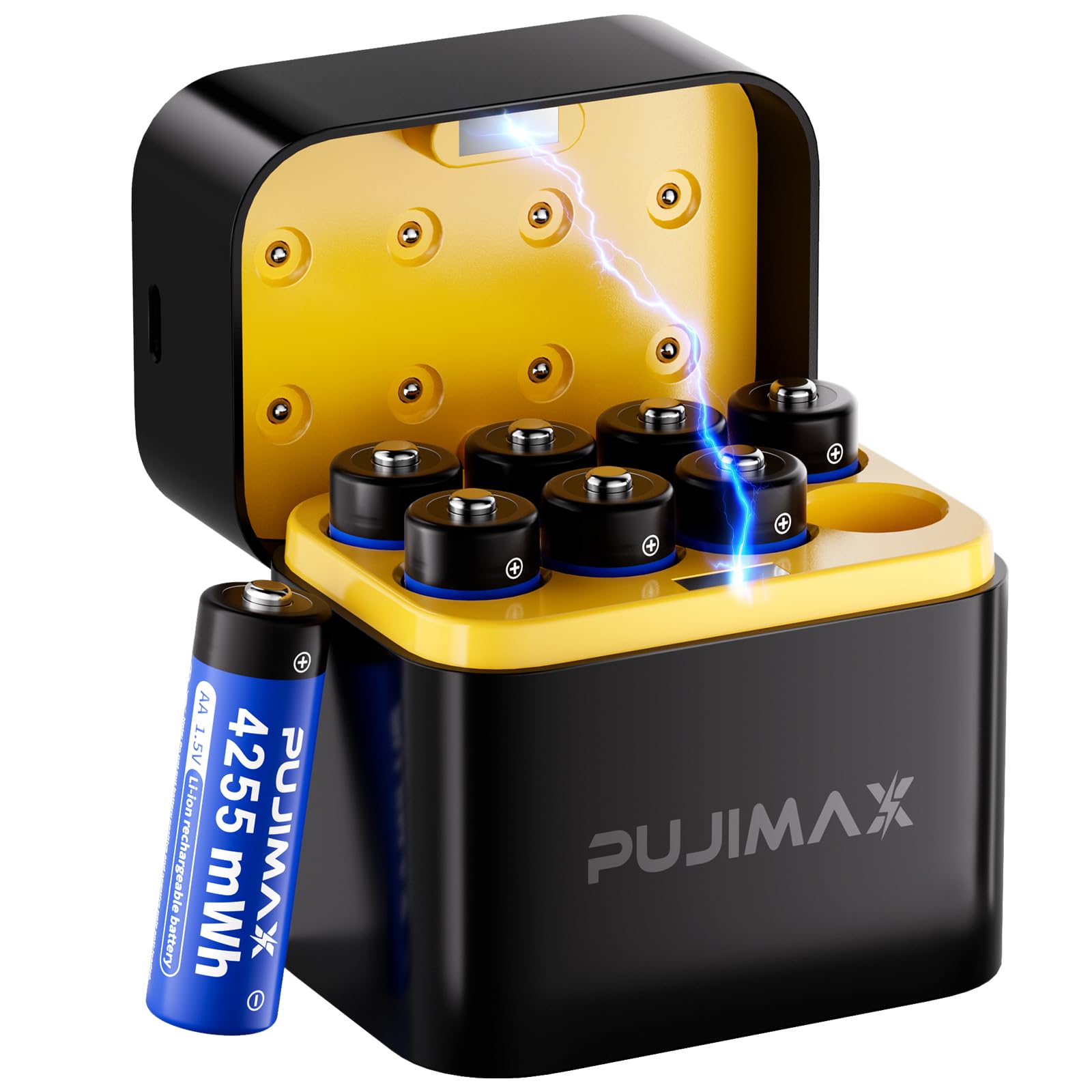
If you need bulk lithium-ion firepower without emptying your wallet, the PUJIMAX 8-pack delivers. Each cell holds 4255mWh and delivers a regulated 1.5V throughout its discharge curve. That means your Blink cameras, smart locks, and high-drain toys get consistent power until the very end — no early low-battery warnings caused by voltage sag. The included USB-C charging case handles all eight cells simultaneously and charges them fully in about 2.5 hours.
With a rated lifespan of 2000+ recharge cycles, these batteries pay for themselves within a year if they replace weekly disposable purchases. The built-in safety chip prevents overcharge, overcurrent, and short circuits. Users report that three of these cells powered a front door digital lock used multiple times daily for months before needing a refresh, outperforming alkaline alternatives by a huge margin.
The main caveat is that these are 4.2V lithium-ion cells internally stepped down to 1.5V, so they will not charge in a standard NiMH charger — you must use the included USB cradle. Also, when the internal regulator cuts off at the end of discharge, the cutoff is abrupt with no gradual dimming, which some devices handle better than others.
Why it’s great
- Eight batteries for the price of a four-pack from competitors.
- USB-C case charges all 8 cells at once with clear LED status.
- High 4255 mWh capacity with steady 1.5V output for smart home gear.
Good to know
- Abrupt cutoff at discharge — no gradual voltage drop warning.
- Requires the included USB cradle, not compatible with NiMH chargers.
4. USB C Rechargeable AA (remGretivon) 4-Pack
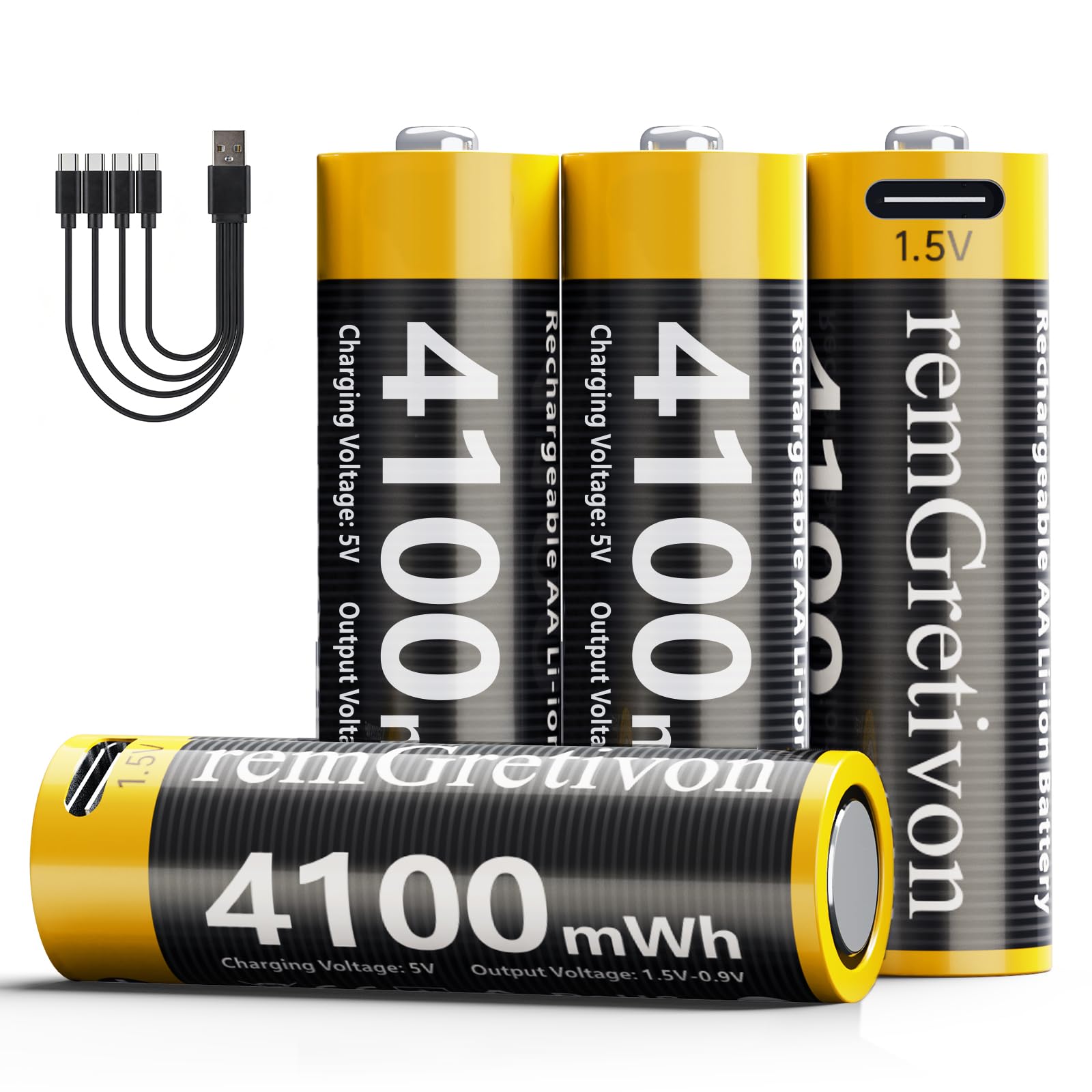
The remGretivon packs ditch the bulky charging dock entirely. Each AA battery has a built-in USB-C port hidden under a small cap, letting you charge it directly from any phone charger, laptop, or power bank. A blinking green LED indicates charging, and a solid green light confirms full capacity. The 4-in-1 cable included lets you charge all four batteries at once from a single USB-A port.
These lithium-ion cells deliver a steady 1.5V output thanks to internal voltage regulation, which means your video doorbells, Xbox controllers, and VR remotes never see a voltage dip. The 4100mWh capacity translates to noticeably longer runtime than standard NiMH rechargeables in high-drain devices. The fast charging time of 2.5 hours means you can top off a depleted set during a lunch break.
The smart IC chip provides multi-layer protection against overheat, short circuits, and overvoltage. One downside: the USB-C port cover is small and can be fiddly to open with thick fingernails. Also, because the batteries must be charged individually (or via a multi-port cable), it takes more cable management than a dedicated cradle. For travelers who already carry a USB-C cable, the convenience trade-off is worth it.
Why it’s great
- No charger needed — built-in USB-C port on each cell.
- Charges fully in just 2.5 hours with clear LED indicator.
- Steady 1.5V output prevents early device shutdown.
Good to know
- USB-C cap can be tricky to open.
- Must charge each battery individually, no integrated dock.
5. INSZIII 4100mWh 4-Pack
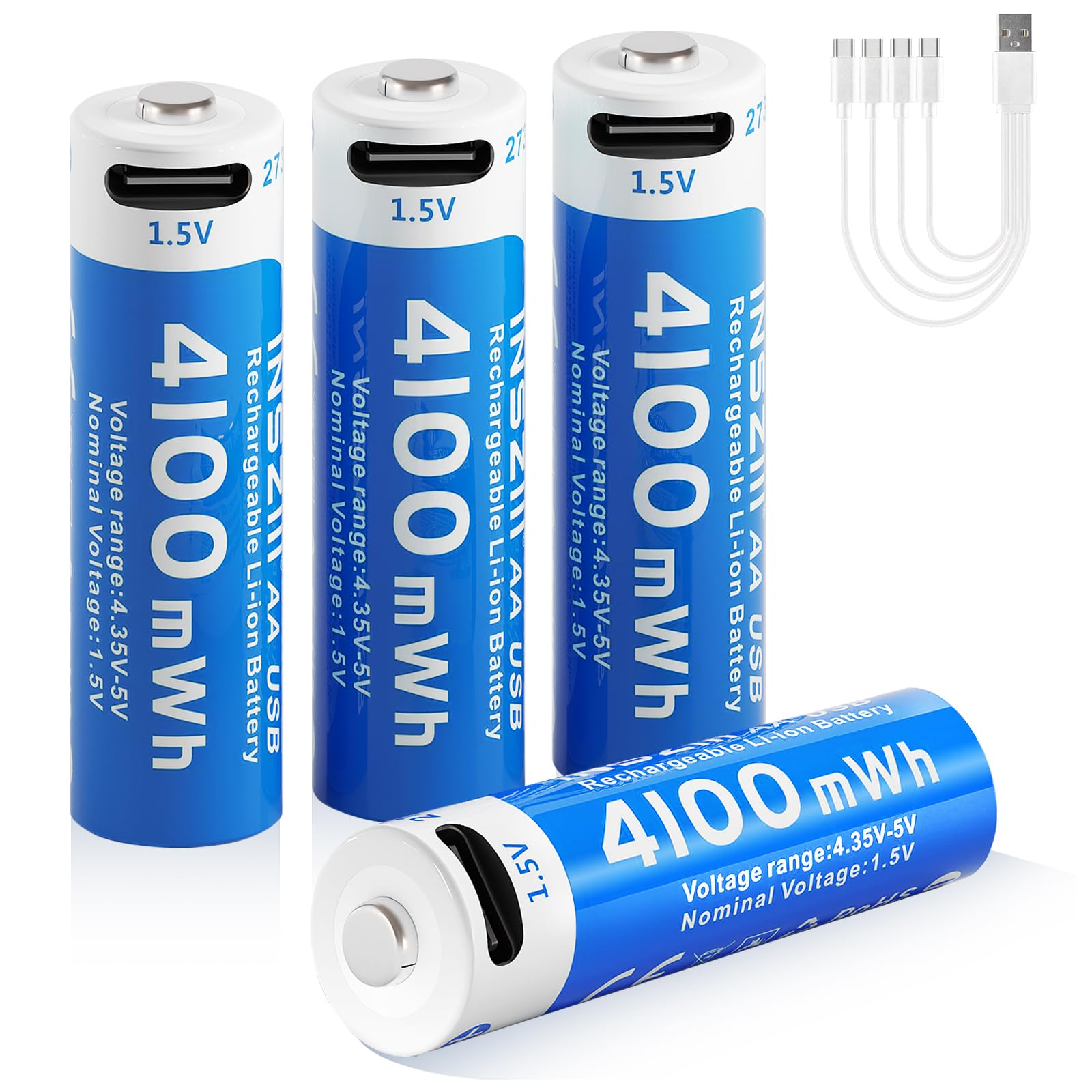
The INSZIII 4-pack offers a similar spec sheet to the remGretivon but with a slightly lower cycle rating of 1200 cycles versus 1500. The key differentiator is the charging cable configuration — INSZIII includes a 4-in-1 USB-A to four USB-C cable, and the batteries themselves feature the same USB-C port design. The 4100mWh capacity with constant 1.5V output makes them highly effective for smart home hubs like Ring doorbells, Blink outdoor cameras, and digital locks where voltage consistency is critical.
User feedback highlights the short-circuit protection as a standout feature — a built-in PCB sensor immediately shuts down the battery if it detects a fault. The blinking green LED charging indicator and solid green full-charge light are clear and easy to read. Many users report that three of these batteries lasted impressively long in a front door digital lock used daily, far exceeding alkaline performance.
The main risk is quality control variance. Some users have reported receiving a dud battery in a multi-pack order — one out of twelve cells failing to charge properly. This is not uncommon in the lithium-ion budget space, but it is worth checking each battery individually on arrival. The design is otherwise solid, with no memory effect and excellent overall runtime.
Why it’s great
- Excellent runtime in smart locks and outdoor cameras.
- Built-in short-circuit protection via PCB sensor.
- USB-C individual charging simplifies travel charging.
Good to know
- Some reports of occasional dead-on-arrival cells.
- 1200 cycles is lower than some lithium-ion competitors.
6. Eneloop Panasonic BK-3MCCA6BA (6-Pack)

The 6-pack standard Eneloop is functionally identical to the 8-pack — same 2100mAh typical capacity, same 2100-cycle lifespan, same solar pre-charge, and same 70% retention after a decade. The smaller pack size makes it a lower-commitment entry point if you are not ready to stock an entire drawer. For many, this is the smartest way to start replacing disposables: four for high-use devices and two as spares.
Real-world usage reports confirm exceptional longevity: users report over a month of daily use in an electric razor before needing a recharge. In low-drain TV remotes and wireless mice, these batteries can last multiple years between charges. The 1.2V nominal output is perfectly adequate for anything that accepts NiMH, but if you have a device that specifically requires 1.5V, look at the lithium-ion options instead.
You will need a separate NiMH charger, which is an added cost if you do not already own one. But once you have a charger, the per-cycle cost of these cells drops to near zero. The build quality is superb — all cells tested within tight internal resistance margins, with no weak units straight out of the box. For a reliable, long-term household battery that just works, this is the benchmark.
Why it’s great
- Unmatched 2100 cycles make them a one-time purchase for years.
- Pre-charged from the factory using solar energy.
- Extremely low self-discharge — 70% after 10 years.
Good to know
- Requires separate NiMH charger (not included).
- 1.2V output may not satisfy 1.5V-only devices.
7. Duracell Rechargeable AA 2500mAh 6-Pack

Duracell’s entry into the rechargeable space leverages its brand trust and ion-core technology. These NiMH cells deliver 2500mAh typical capacity with a guaranteed 400 recharge cycles and a 10-year storage warranty. They come pre-charged and hold that charge for up to one year, making them a plug-and-play replacement for households that already trust Duracell for disposables.
Performance is solid in medium-drain devices like baby monitors, digital cameras, and game controllers. Users report saving money weekly versus alkaline in camera flash units, with reliable power delivery. The 1.2V nominal output is standard NiMH, and the batteries work with any smart NiMH charger. The 400-cycle rating is lower than Eneloop’s 2100, but for many households that means 3-4 years of use before replacement.
The biggest downside is the relatively low cycle life compared to the competition at this price tier. For the same budget, you could get the standard Eneloop 6-pack with five times the cycle count. The Duracell name carries a premium, but in terms of pure lifespan value, the Eneloop offers far more recharges per dollar. Still, if you prioritize brand consistency and want a battery that works reliably with Duracell’s own charger ecosystem, this is a fine choice.
Why it’s great
- Trusted brand with excellent quality control and support.
- Pre-charged with one-year charge retention.
- Works well in baby monitors, game controllers, and flash units.
Good to know
- Only 400 cycles — far fewer than Eneloop competitors.
- Higher price per cycle compared to market leaders.
FAQ
Will 1.2V NiMH batteries work in devices that need 1.5V?
Can I charge lithium-ion AA batteries in my existing NiMH charger?
Which battery type lasts longer in a smart door lock — NiMH or lithium-ion?
Final Thoughts: The Verdict
For most users, the best aa lithium rechargeable batteries winner is the Eneloop Panasonic 8-Pack because it combines an unbeatable 2100-cycle lifespan, reliable 2100mAh capacity, and proven low-self-discharge technology that keeps batteries ready for years. If you need maximum runtime for high-drain devices like professional flashlights or camera flashes, grab the Panasonic Eneloop Pro 4-Pack. And for smart home gadgets and video doorbells that demand steady 1.5V power, nothing beats the PUJIMAX 8-Pack for its high capacity, USB-C convenience, and exceptional value.