
Our readers keep the lights on and the weekend projects moving. As an Amazon Associate, I earn from qualifying purchases.
Abrasive blasting is one of the fastest ways to strip rust, paint, and corrosion from metal, wood, and concrete, but the wrong tool delivers nothing but clogged nozzles, wasted media, and hours of frustration. The market is flooded with cheap siphon guns that starve for air and gravity-feed models that dump grit the second you tip them sideways. A genuine abrasive blaster must balance airflow efficiency, nozzle durability, and media compatibility to produce consistent, controlled results on every project.
I’m Rikta — the co-founder and writer behind FitlyFast. For this guide, I analyzed seven top-selling models from the major portable blaster segment, comparing their nozzle materials, feed mechanisms, air consumption specs, and real-world feedback from hundreds of verified buyers.
Whether you are prepping auto parts for paint, etching glass for craft work, or removing heavy scale from farm equipment, selecting the right tool makes the difference between a clean satin finish and a mess that doubles your labor time. After thorough research, this review of the best abrasive blaster options will show you exactly which models earn their place in your workshop.
How To Choose The Best Abrasive Blaster
Picking the wrong blaster often leads to weak blasting, constant clogging, or media that runs out faster than you can refill. Focus on the three factors that matter most: nozzle material, feed type, and your compressor’s CFM rating.
Nozzle Material Dictates Longevity
Ceramic nozzles resist wear from aggressive media like aluminum oxide and coal slag far longer than standard steel tips. Blasters with hardened or replaceable ceramic nozzles cost slightly more upfront but avoid the frustration of a worn orifice that widens after a few tanks of media.
Gravity Feed vs. Siphon Feed
Gravity-feed blasters deliver a steady stream of media directly into the air stream, making them ideal for detailed work and softer media like soda or walnut shells. Siphon-feed models draw media from a bucket through a hose, which works well for larger jobs but requires higher CFM to maintain consistent suction and can waste more media if the pickup tube loses prime.
Air Compressor Compatibility
Every blaster lists a minimum CFM at its operating PSI, and ignoring that number is the top reason buyers report weak performance. A 2.5 HP compressor that claims 6 CFM on paper often delivers less than 3 CFM at 90 PSI in real use. Match the blaster’s consumption spec to your compressor’s actual output, or plan on pulsing the trigger to let the tank recover.
Quick Comparison
On smaller screens, swipe sideways to see the full table.
| Model | Category | Best For | Key Spec | Amazon |
|---|---|---|---|---|
| Performance Tool M549 | Gravity Feed | High-volume metal stripping | 50 lb capacity, 15 ft hose | Amazon |
| SpeedBlaster 007R | Gravity Feed | Precision small-to-medium jobs | 12 CFM @ 125 PSI, steel chamber | Amazon |
| NANPU NP-ASBX2-K | Dual Feed | Versatility across tasks | 7 SCFM, 3 ceramic nozzles | Amazon |
| Inokraft Sand Blaster Pro Kit | Gravity Feed | Beginner-friendly kits | 900cc hopper, oil-water separator | Amazon |
| Campbell Hausfeld AT122601AV | Siphon Feed | Continuous feed from bulk media | 9 CFM @ 90 PSI, 10 ft hose | Amazon |
| LE LEMATEC Gravity-Fed Soda Blaster | Gravity Feed | Light stripping and etching | 150 PSI, adjustable flow valve | Amazon |
| TCP Global SB8048 | Gravity Feed with Recovery | Spot cleaning with minimal mess | Max 90 PSI, steel tip, recovery bag | Amazon |
In‑Depth Reviews
1. Performance Tool M549 Portable Abrasive Blaster Kit
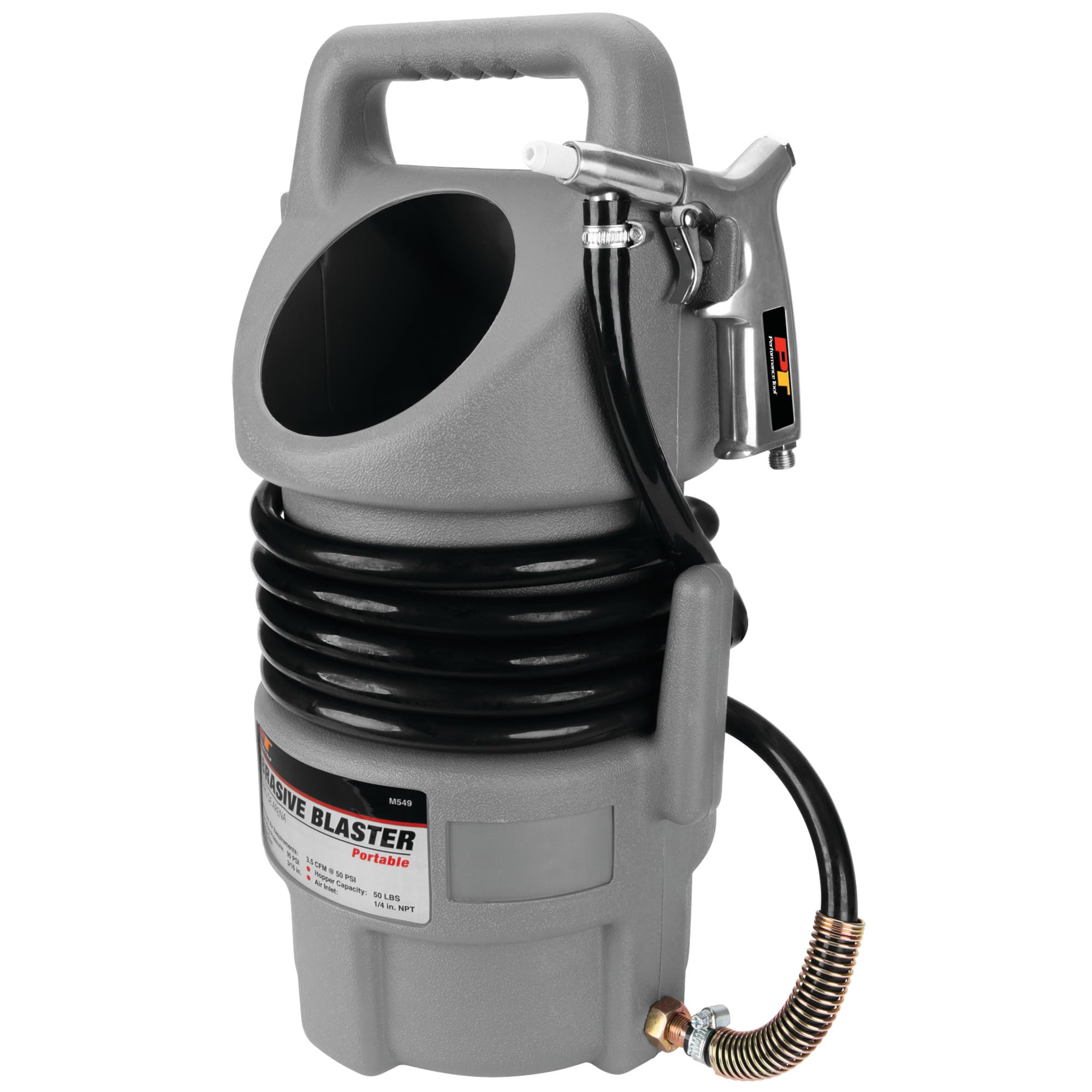
The Performance Tool M549 stands apart because of its massive 50-pound hopper and 15-foot hose, allowing you to blast continuously for far longer than any handheld gravity gun. The minimum air requirement of 3.5 CFM at 50 PSI is forgiving enough for smaller compressors, yet the unit can handle 90 PSI for aggressive stripping on car doors, farm equipment, and iron gates. Real users report excellent results with 70 grit aluminum oxide on heavy paint and rust layers, and the gravity-feed design eliminates the pickup tube issues that plague many siphon units.
Multiple verified buyers praised its build quality and value for medium-to-large projects, noting that it completely stripped a car door frame in under 15 minutes at 60 PSI. The machined construction and compatibility with silica, steel grit, glass beads, and pecan shells make it surprisingly versatile for the price tier. Weight stays manageable at just over 3 pounds, so lugging it around the shop is not a burden.
A small number of users encountered difficulty getting the siphon to pull media from the bucket, especially when operating at the lower end of the pressure range. Keeping the blaster level and maintaining at least 60 PSI typically resolves the issue, and once the flow starts it remains consistent. A moisture trap is strongly recommended to prevent clumping in the abrasive.
Why it’s great
- 50 lb hopper handles large jobs without constant refills
- Forgiving CFM requirement works with smaller compressors
- 15 ft hose provides generous reach
Good to know
- Siphon can struggle below 60 PSI
- Some users report intermittent media flow initially
2. SpeedBlaster 007R

The SpeedBlaster 007R is an American-made, shop-proven gravity-feed blaster that has been in production since 1984. Its replaceable hardened steel mixing chamber and alumina ceramic nozzle deliver a focused blast that users consistently rate as far more effective than commodity guns. Operating at 100 to 125 PSI with a 12 CFM demand, this blaster is designed for serious compressors — users with 85-gallon tanks report excellent performance on small brackets and detailed metal prep.
Verified reviews highlight its simple construction and ability to work well with baking soda, glass beads, and fine sand for delicate tasks like wood stripping and glass etching. The adjustable material control valve gives you real command over media flow, though some users note the valve feels like it has only two settings — feast or famine. The safety-vented tank and one-piece handle make it comfortable for extended use.
The major tradeoff is its appetite for media: the hopper holds only enough for a few minutes of blasting, requiring frequent refills during larger projects. Also, the blaster is messy by nature and demands full PPE — a face shield, hood, and gloves are mandatory. The flow valve could benefit from finer granularity for medium-speed work.
Why it’s great
- Proven American manufacturing since 1984
- Replaceable steel mixing chamber and ceramic nozzle
- Precise control with soda and fine media
Good to know
- High CFM demand limits compressor compatibility
- Media consumption is very high during continuous use
3. NANPU NP-ASBX2-K
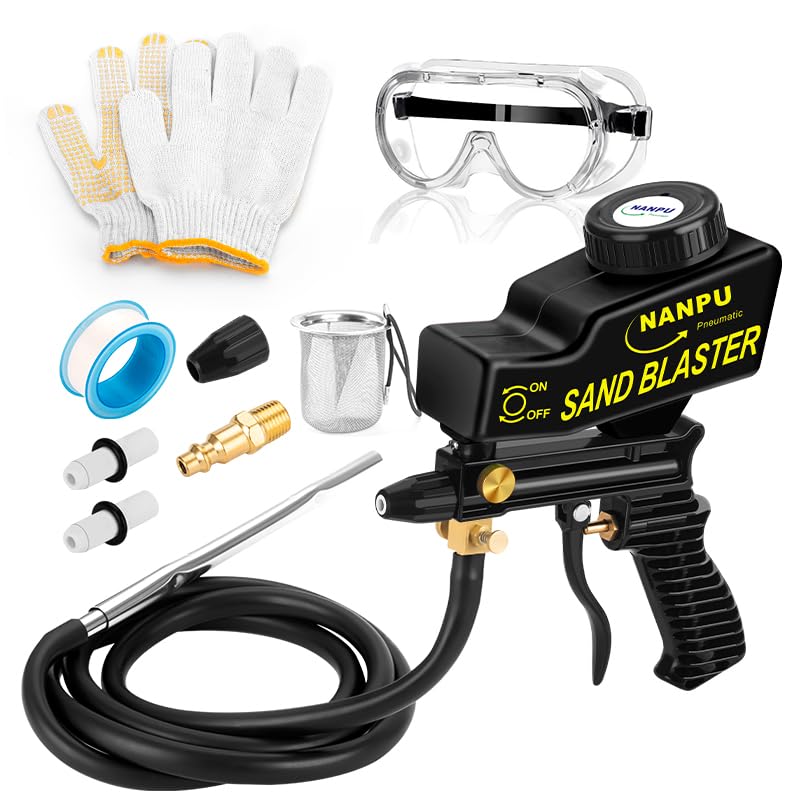
The NANPU NP-ASBX2-K is the only unit in this lineup that offers both siphon-feed and gravity-feed modes in one package, making it the most flexible option for users who tackle varied tasks. With a lightweight aluminum alloy body, three ceramic nozzles, and an operating pressure range of 90 to 150 PSI, it strips mild steel to a velvet-smooth finish when running 120-grit aluminum oxide through the hopper. The included accessories — gloves, goggles, cup filter, nozzle guards, and thread seal tape — add genuine value for first-time buyers.
Customer feedback emphasizes that this model does not clog the way many cheap blasters do, and the dual feed mechanism lets you switch seamlessly between heavy-duty stripping and detail etching. The 7 SCFM consumption is moderate, making it workable with a mid-size 20-gallon compressor as long as you pulse the trigger. The packaging is well-organized, and the build quality feels significantly more substantial than the plastic-heavy alternatives at a similar price.
One verified buyer reported that the reservoir pressurized and would not flow media at all, indicating a potential quality control inconsistency on some units. The instructions are minimal, so novices may need to watch videos to get the hang of switching feed modes. The included air hose is only 6 feet, which may be short for some workspace layouts.
Why it’s great
- Siphon and gravity feed in one tool
- Three ceramic nozzles included for longevity
- Machined alloy body resists wear
Good to know
- Occasional quality control inconsistency
- Short 6 ft air hose included
4. Inokraft Sand Blaster Premium Kit
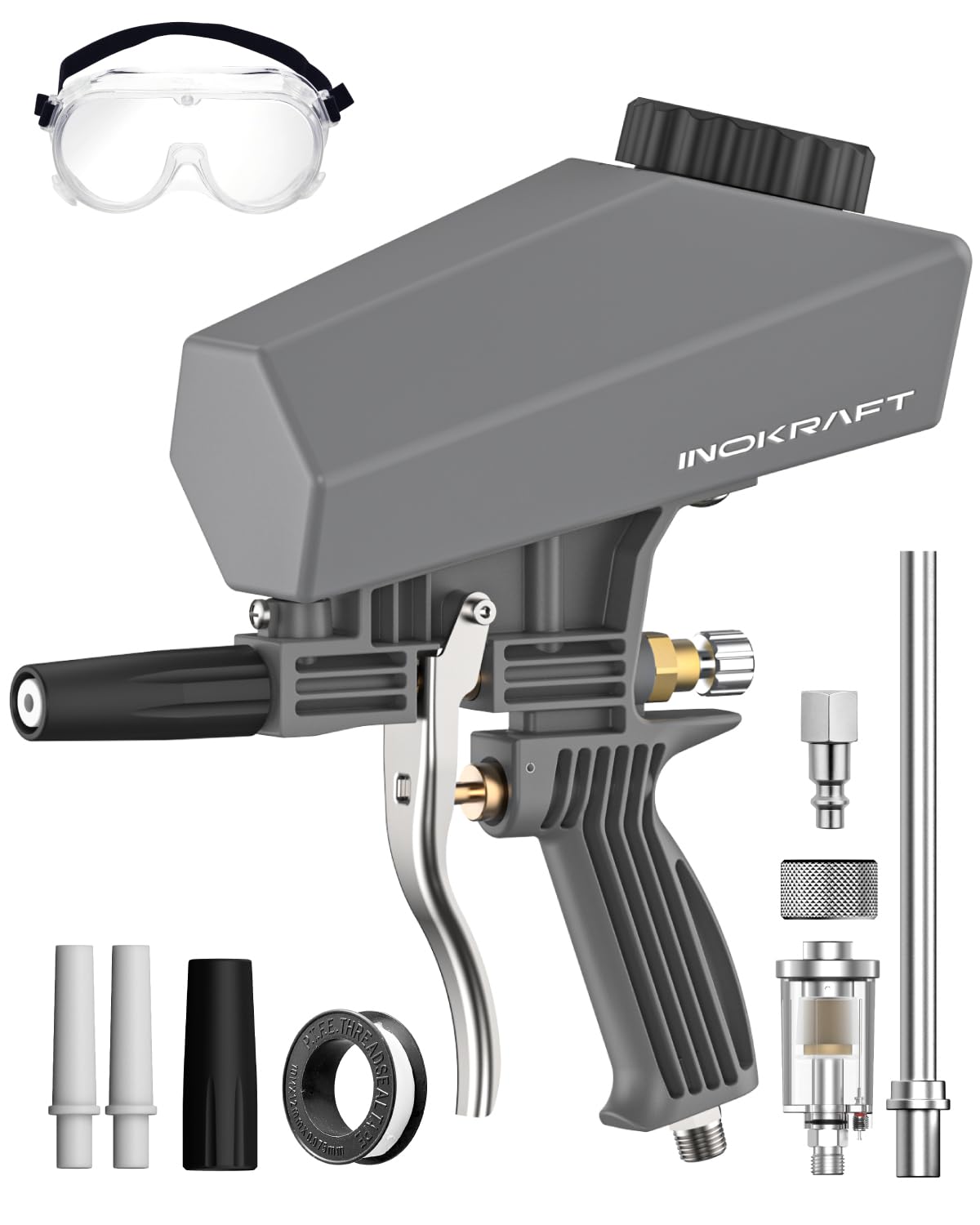
The Inokraft kit is purpose-built for beginners who want a complete solution without hunting for separate components. The integrated oil-water separator is a standout feature because moisture in the air line is the leading cause of media clumping and flow stoppage — including this component in the box saves you a separate purchase. The 900cc hopper feeds a precision ceramic nozzle that delivers up to 287 m/s airflow, and the extension nozzle lets you reach into tight engine ports and corners.
Real-world users have used this blaster successfully for walnut shell blasting on intake manifold ports, stripping powder coat with coal slag, and removing rust with 70 grit aluminum oxide. The trigger-only flow design means media only moves when you pull the trigger, reducing waste compared to models that constantly bleed air. Buyers consistently note that the learning curve is lower than with larger pressure blasters, making it a great training tool for newcomers.
The construction is predominantly plastic, which feels less durable than the metal-bodied options in the same price range. There is no siphon-feed option, so you must fill the hopper manually for every session. One user reported that the 1/8-inch tube unscrewed during use — a dab of thread locker resolved it, but it is a detail to check before your first job.
Why it’s great
- Includes oil-water separator to prevent clogs
- Trigger-only flow reduces media waste
- Great for beginners with included guides and videos
Good to know
- Mostly plastic construction
- No siphon-feed option for bucket-based media
5. Campbell Hausfeld AT122601AV

The Campbell Hausfeld AT122601AV is a classic siphon-feed blaster that pulls media directly from a bucket, making it ideal for large-scale stripping where you do not want to stop and refill a hopper every few minutes. The included ceramic nozzle and 10-foot pickup hose allow you to blast continuously as long as your compressor keeps up. Users report excellent results with Black Diamond slag, play sand, and baking soda, noting that the gun never jams when using dry, screened media.
Verified buyers have used this blaster to strip entire motorcycle parts to bare metal and remove old lacquer from car panels in a fraction of the time sanding would require. The siphon design is surprisingly forgiving with coarser abrasives, and the included wrench allows quick nozzle swaps. The construction is simple and serviceable — no electronics to fail, just a straight air-powered tool.
The 9 CFM consumption at 90 PSI means this blaster is an extreme air hog; many users found that a typical 2.5 HP compressor (with a real-world output of around 3 CFM) would deliver only 20 to 30 seconds of blast time before needing a long recovery. Cutting the pickup hose to 5 feet can help reduce the distance the media has to travel, improving efficiency. The gun also exposes water contamination in your air line quickly, so a moisture separator is not optional.
Why it’s great
- Continuous feed from bucket for large jobs
- Works with many media types without jamming
- Durable ceramic nozzle included
Good to know
- Extremely high CFM requirement limits compressor options
- Siphon can lose prime if pickup tube position shifts
6. LE LEMATEC Portable Sand Blaster Gun Kit
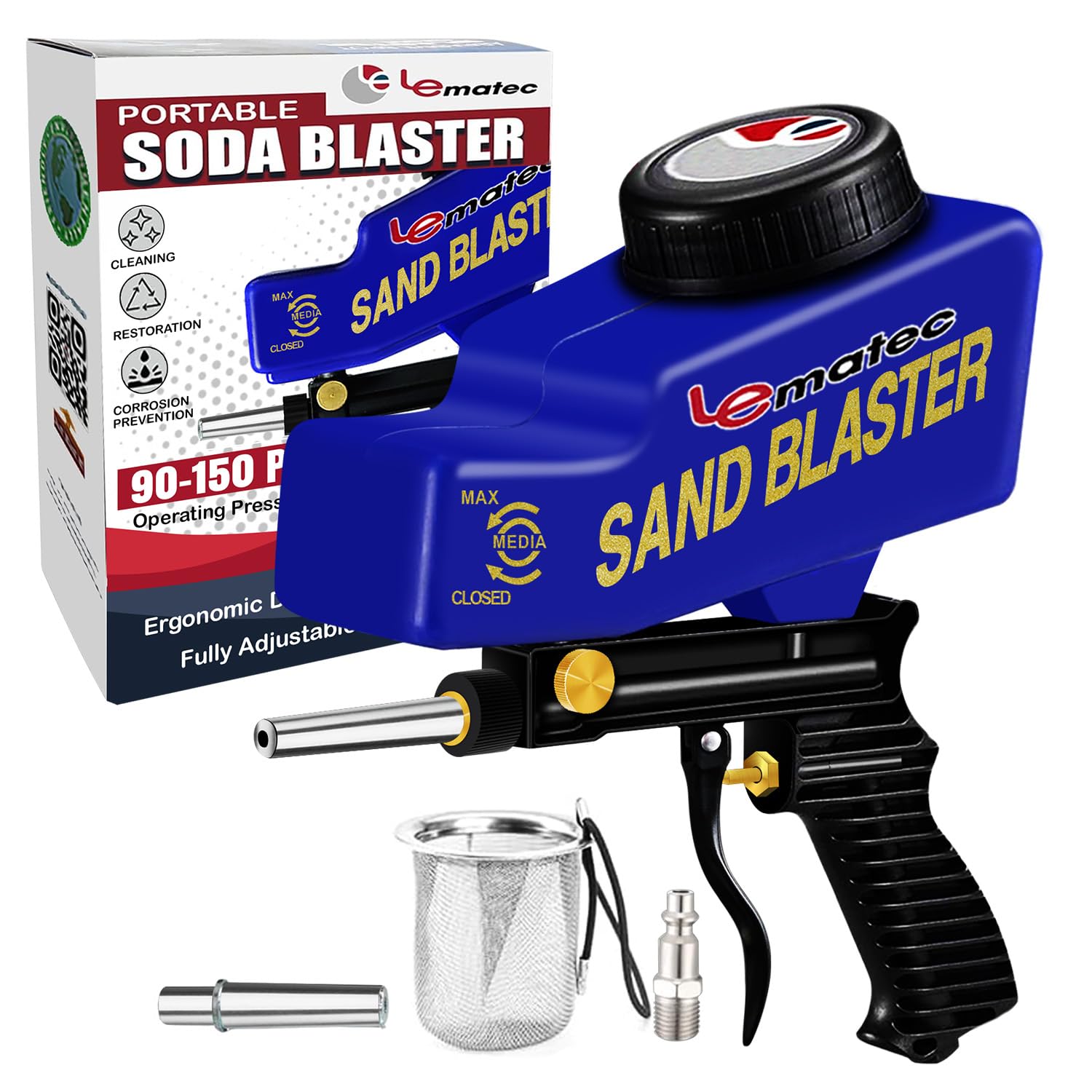
The LE LEMATEC is a lightweight, gravity-fed blaster designed for portability and ease of use on small projects such as stripping paint from plastic models, removing finish from chair stiles, or etching simple glass patterns. The adjustable flow control valve lets you dial back media consumption for delicate work, and the steel nozzle holds up well against fine abrasives like sodium bicarbonate and aluminum oxide. Users consistently report that it cuts manual sanding time from hours to minutes for small-scale restoration.
Several verified reviews note that the blaster works best at the higher end of its pressure range with dry, sieved media to maintain consistent flow. The 1.19-pound weight makes it easy to maneuver into awkward positions, and the gravity-feed design ensures the media reaches the airstream without the priming issues seen in siphon setups. It is also compatible with soda, sand, walnut shells, and glass beads, giving you flexibility without buying a second tool.
The small hopper empties rapidly — one user used 3 pounds of baking soda to strip just six chairs. The gun is not suitable for large or continuous jobs because refilling stops the workflow repeatedly. Some users found that the media flow would stop and require shaking to restart, and the plastic body does not inspire confidence for heavy-duty shop use.
Why it’s great
- Extremely lightweight for extended handheld use
- Adjustable flow valve for delicate work
- Works with soda, sand, walnut shells, and glass beads
Good to know
- Very small hopper requires frequent refills
- Plastic body may not survive heavy shop use
7. TCP Global SB8048

The TCP Global SB8048 distinguishes itself with an integrated sand recovery bag that captures used media for reuse, making it the mess-averse blaster for spot jobs on auto parts, tools, and small metal surfaces. The precise-machined steel nozzle delivers a concentrated blast pattern approximately the size of a nickel, which is ideal for targeting rust spots before welding without blanket-blasting the entire workpiece. The 90 PSI maximum pressure is modest but sufficient for removing light rust and paint layers.
Verified buyers praise its value for spot cleaning, noting that it keeps splatter to a minimum compared to open-blast setups. The kit includes three nozzle types — surface, corner, and panel spot — giving you tactical control over different geometry. The 4.6-pound weight is slightly heavier than some competitors, but the balanced design makes it comfortable for one-handed operation during quick cleanup passes.
The recovery bag is not a perfect seal; users report losing up to 75% of media when blasting beyond the horizontal plane, so keeping the work surface flat is important. The plastic fittings can be difficult to seat snugly, leading to some air leakage around the nozzle guard. This is not the tool for large panels or heavy-duty rust removal — it is strictly a spot-finishing device.
Why it’s great
- Recovery bag minimizes media waste and mess
- Three nozzle types for different surface geometries
- Excellent for targeted spot rust removal before welding
Good to know
- Media recovery drops drastically beyond horizontal plane
- Plastic fittings may leak air without careful seating
FAQ
Can I use play sand from the hardware store in my abrasive blaster?
Why does my blaster keep clogging even with clean media?
Is a gravity-feed or siphon-feed blaster better for removing rust from a car frame?
Final Thoughts: The Verdict
For most users, the best abrasive blaster winner is the Performance Tool M549 because its 50-pound hopper and forgiving 3.5 CFM minimum make it the most practical balance of capacity and compressor compatibility for serious stripping jobs. If you want precision and American-made durability for detailed work, grab the SpeedBlaster 007R. And for maximum flexibility between siphon and gravity feed, nothing beats the NANPU NP-ASBX2-K.