
Our readers keep the lights on and the weekend projects moving. As an Amazon Associate, I earn from qualifying purchases.
Finding abs 3d printer filament that actually prints without warping, cracking, or smelling up your entire workspace is the real challenge. Standard ABS is notoriously finicky about layer adhesion, bed temperature, and ambient drafts, turning promising prototypes into scrapped prints more often than not.
I’m Rikta — the co-founder and writer behind FitlyFast. I’ve spent many hours analyzing filament specs, customer feedback, and real-world printing performance across dozens of ABS spools to cut through the marketing and find what truly works for functional parts.
This guide breaks down the most reliable ABS options for strong, heat-resistant prints. best abs 3d printer filament choices are ranked here based on dimensional tolerance, real-world print success rates, and impact strength data.
How To Choose The Best ABS 3D Printer Filament
Choosing the right ABS filament goes beyond just picking a brand you recognize. You need to match the filament’s properties to your printer’s capabilities and the demands of your specific project. Here are three critical factors to evaluate.
Dimensional Accuracy and Tolerance
The diameter tolerance, measured in millimeters (e.g., ±0.02 mm), is the single most important spec for consistent extrusion. Tight tolerances prevent under-extrusion, clogs, and layer inconsistencies. Filament with specs like ±0.03 mm or better is standard for reliable prints.
Heat Deflection Temperature (HDT)
This metric tells you the temperature at which the plastic begins to soften under a load. Standard ABS typically has an HDT around 80°C to 90°C. For functional parts like automotive brackets or enclosures near heat sources, you want an ABS with an HDT of 85°C or higher to avoid deformation.
Warp Resistance and Layer Adhesion
ABS shrinks as it cools, which is why it warps and lifts from the print bed. Look for “ABS+” or low-warp formulations that reduce internal stress. Excellent layer adhesion ensures a part won’t delaminate under mechanical stress, which is critical for durable, functional objects.
Quick Comparison
On smaller screens, swipe sideways to see the full table.
| Model | Category | Best For | Key Spec | Amazon |
|---|---|---|---|---|
| FLASHFORGE ABS Pro | Low-Warp ABS | Large, complex parts | ±0.02 mm tolerance | Amazon |
| Polymaker PolyLite ABS | Standard ABS | Consistent, reliable prints | Vicat softening 104°C | Amazon |
| eSUN High Speed ABS+ | High-Speed ABS+ | Fast prints, smooth finish | Speed 50-300 mm/s | Amazon |
| Creality Hyper ABS | High-Speed ABS | Impact-resistant parts | Impact strength 19 kJ/m² | Amazon |
| SUNLU High Speed ABS | Rapid ABS | High-temp environments | HDT up to 91°C | Amazon |
| Bambu Lab ABS | Refill Spool | Bambu Lab AMS systems | ±0.03 mm tolerance | Amazon |
| ELEGOO ABS | Standard ABS | Budget-friendly prints | Heat resistant up to 85°C | Amazon |
In‑Depth Reviews
1. FLASHFORGE ABS Pro Filament
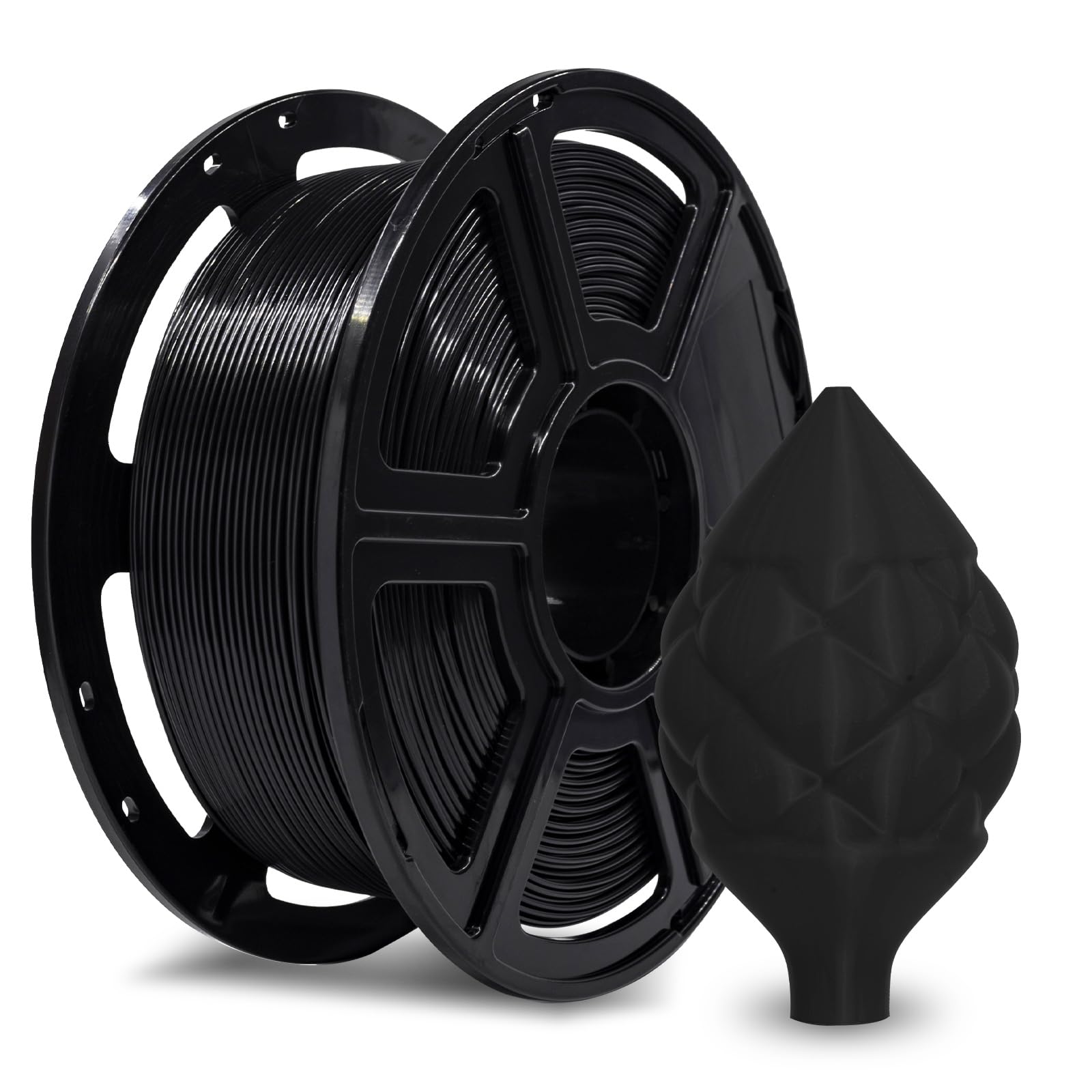
The FLASHFORGE ABS Pro is a refined ABS formulation that directly addresses the two biggest complaints of standard ABS: warping and odor. Users consistently report far less shrinkage than standard ABS, allowing for successful large-format prints that would otherwise lift from the bed.
Its dimensional accuracy is superb at ±0.02 mm, and the low-odor formula makes it more comfortable to use in a home shop setting without a full ventilation overhaul. Printers like the Bambu Lab P1S and Voron machines see excellent results with this filament at standard ABS temperatures.
One minor trade-off is that it’s more hygroscopic than some standard ABS options, so a dry box is advisable if you live in a humid climate or plan to use the spool over several weeks. The improved printability easily compensates for this small precaution.
Why it’s great
- Excellent low-warp formula for large parts
- Exceptional ±0.02 mm diameter tolerance
- Noticeably lower odor than standard ABS
Good to know
- More hygroscopic; needs drying over time
- May be slightly more brittle than standard ABS
2. Polymaker PolyLite ABS Filament

Polymaker’s PolyLite ABS uses a specialty bulk-polymerized ABS resin that significantly reduces volatile content, resulting in a cleaner printing experience with less fume emission. This engineering-grade material delivers a Vicat Softening Temperature of 104°C, making it a top choice for parts that must hold up under sustained heat.
Users consistently praise its reliable layer adhesion and smooth, matte finish. The ±0.03 mm tolerance is tight enough for detailed prints, and the vacuum-sealed bag with included desiccant ensures it arrives dry. The move to a fully recycled cardboard spool is a welcome eco-friendly touch.
The main consideration is that it requires higher temperatures than some beginner-friendly ABS options — a nozzle at 250-255°C and a heated bed at 90-100°C are standard. It also demands an enclosed printer for best results, especially for larger prints.
Why it’s great
- Very high heat resistance (Vicat 104°C)
- Low volatile content for reduced odor
- Eco-friendly cardboard spool packaging
Good to know
- Needs higher nozzle/bed temperatures
- Requires enclosure to prevent warping
3. eSUN High Speed ABS+ Filament

The eSUN High Speed ABS+ is an enhanced version of standard ABS that dramatically improves cracking and warping on large parts while maintaining high strength and toughness. Its formulation is designed to keep pace with fast printers like the Bambu Lab X1C and Creality K1 series, supporting print speeds from 50 to 300 mm/s.
Layer adhesion is a standout feature here; users report less stringing and no bubbles, with a smooth matte finish that looks professional straight off the build plate. The impact strength is noticeably higher than standard ABS, making it suitable for functional mechanical components.
While it prints cleaner than standard ABS, it still produces fumes and requires ventilation. It also benefits from being dried before use, especially if the spool has been opened for a while.
Why it’s great
- Excellent layer adhesion with matte finish
- Supports high-speed printing up to 300 mm/s
- Reduced warping for large, sturdy parts
Good to know
- Fumes still present; good ventilation needed
- Should be dried before use for best results
4. Creality Hyper ABS Filament

Creality’s Hyper ABS is formulated from lower residual monomer materials, reducing volatile emissions during printing to make it safer for open environments. It boasts an impact strength of 19 kJ/m² — nearly double that of standard PLA — making it one of the toughest ABS options for parts subject to mechanical stress.
Print speeds approaching 350 mm/s are achievable with the right printer, and users on Creality K1C and Bambu Lab machines report excellent bed adhesion and consistent extrusion. The reduced fume profile is a genuine advantage for those without a dedicated ventilation system.
However, some users noted that the print quality profile in Creality Print 6.2 was spot-on, but tuning was needed for third-party slicers. Also, while it supports open printing, an enclosure still improves large-part results.
Why it’s great
- Very high impact strength for tough parts
- Lower fume emission than standard ABS
- Supports very high print speeds
Good to know
- Enclosure still recommended for larger prints
- May require tuning for non-Creality printers
5. SUNLU High Speed ABS Filament
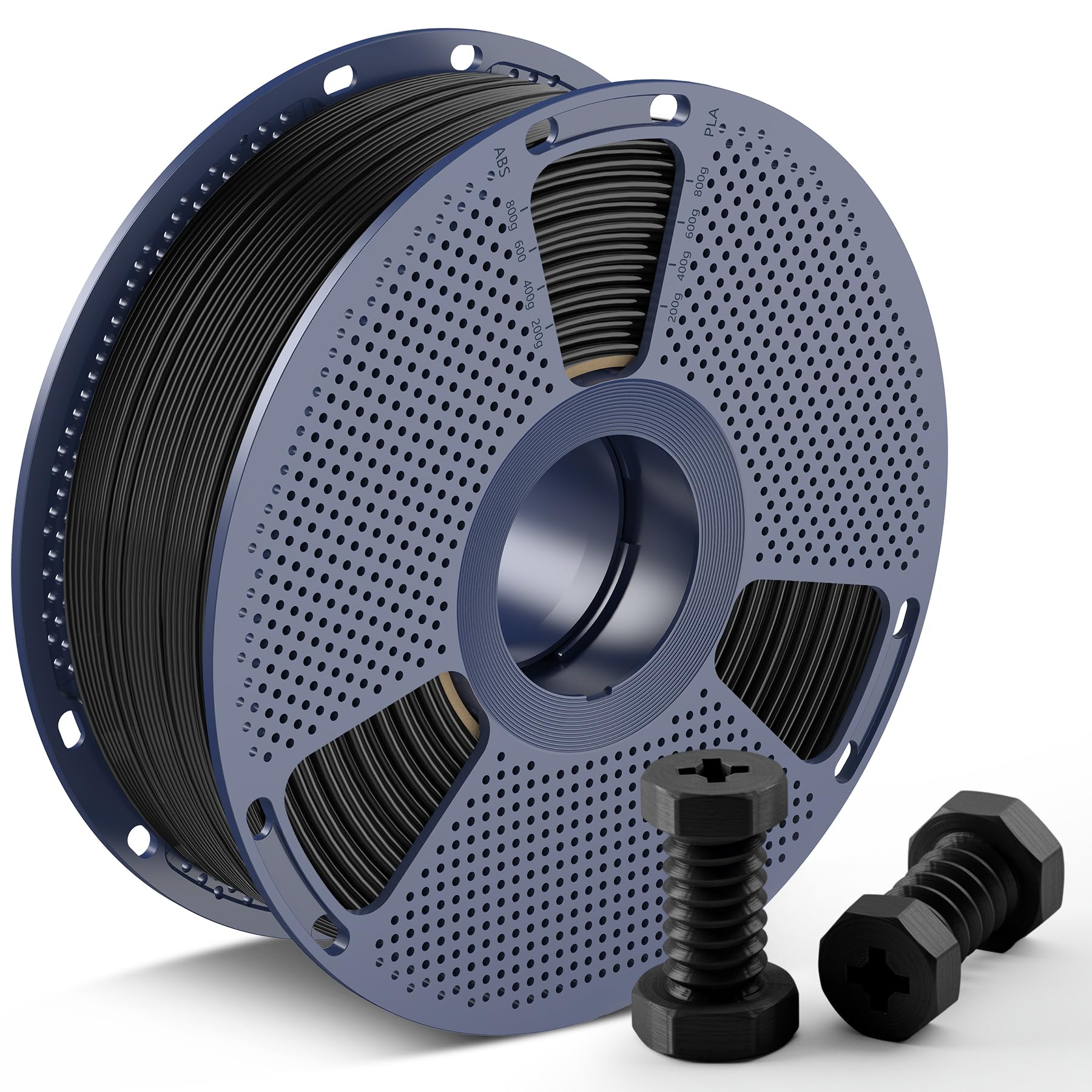
SUNLU’s High Speed ABS is engineered for printers capable of rapid motion, with a maximum recommended print speed of 350 mm/s. Its heat deflection temperature reaches 91°C, putting it among the more heat-resistant standard ABS options for functional parts in warm environments.
The filament has good impact strength and toughness, resisting deformation under sustained pressure. Users reported a slightly shinier finish compared to matte ABS options, and the spool is neat and tangle-free, reducing print interruptions.
One point to note is the nozzle temperature recommendation of 280-290°C, which is higher than many standard ABS filaments. Not all hotends can reach these temperatures safely, so check your printer’s maximum nozzle temp before choosing this filament.
Why it’s great
- High heat deflection temperature (91°C)
- Supports very fast printing up to 350 mm/s
- Neat, tangle-free spool winding
Good to know
- Requires high nozzle temperature (280-290°C)
- May need extended drying for best results
6. Bambu Lab ABS Filament Refill

Bambu Lab’s ABS is engineered for their own AMS and printer ecosystem, with RFID tags that automatically set printing parameters for a plug-and-play experience. The ±0.03 mm tolerance ensures reliable extrusion, and the silver color offers a clean, professional look right off the build plate.
It’s formulated for improved layer adhesion and lower warp compared to generic ABS, making it a strong candidate for mechanical parts and enclosures even on non-Bambu machines. The refill format reduces plastic waste, as you reuse the existing spool.
The main trade-off is compatibility: the RFID feature works only with Bambu Lab AMS units. On other printers, you’ll need to manually enter the print settings. Also, at this price point, it’s more premium than generic ABS spools, but the quality consistency is excellent.
Why it’s great
- RFID auto-configuration for Bambu printers
- Consistent quality with low warp formula
- Eco-friendly refill format
Good to know
- RFID only works with Bambu Lab AMS
- Premium price compared to generic brands
7. ELEGOO ABS Filament
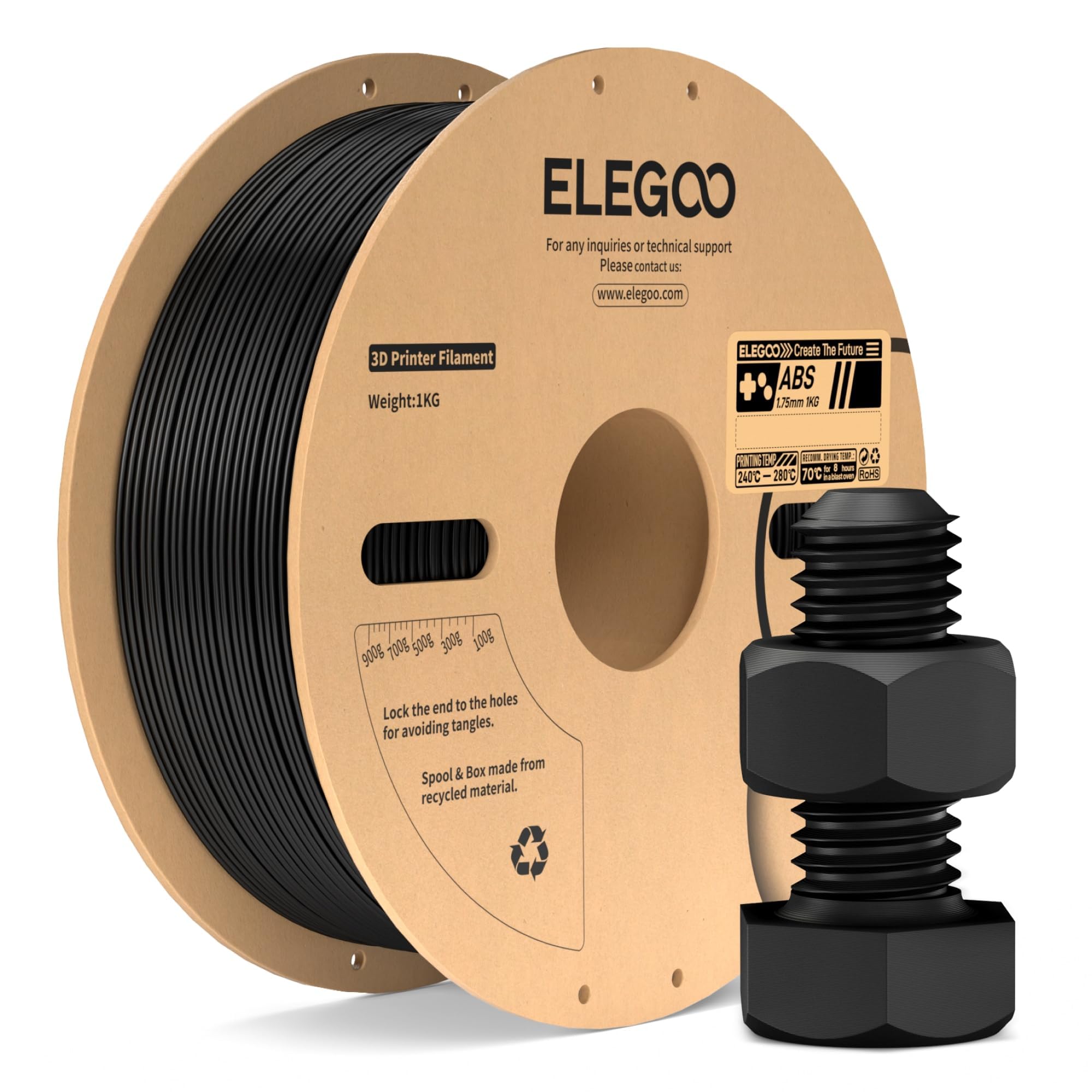
ELEGOO’s ABS filament offers reliable high-toughness and impact resistance for everyday functional prints like drone mounts and protective cases. It withstands temperatures up to 85°C and resists moisture, making it viable for prototypes that need moderate heat resilience.
Consistent feeding is supported by tight winding and manual inspection, reducing tangles and snags. Users found that with proper drying and a pre-heated chamber, it prints with strong layer adhesion and a clean finish.
It does require an enclosed printer for best results, and on some machines, additional drying at 55°C for several hours was needed to eliminate minor print artifacts. For the price, it’s a solid entry-level ABS for smaller functional projects.
Why it’s great
- Excellent impact resistance for tough parts
- Good heat and water resistance
- Budget-friendly price point
Good to know
- Requires enclosed printer for best results
- May need pre-drying for optimal prints
FAQ
What is the best temperature for printing ABS filament?
Do I need an enclosure to print ABS filament?
How do I stop ABS from warping on the print bed?
Is ABS filament toxic or does it have fumes?
What is the difference between ABS and ABS+ filament?
Final Thoughts: The Verdict
For most users, the best abs 3d printer filament winner is the FLASHFORGE ABS Pro because it offers the best balance of low-warp printability, tight dimensional tolerance, and reduced odor. If you need maximum heat resistance for engineering parts, grab the Polymaker PolyLite ABS. And for high-speed printing without sacrificing toughness, nothing beats the eSUN High Speed ABS+.