
Our readers keep the lights on and the weekend projects moving. As an Amazon Associate, I earn from qualifying purchases.
Navigating an acne breakout while pregnant comes with a unique set of constraints—most standard active ingredients like retinoids and high-dose salicylic acid are off the table. You need targeted formulas that are proven safe for both you and your baby, without sacrificing effectiveness on hormonal, cystic, or surface-level breakouts.
I’m Rikta — the co-founder and writer behind FitlyFast. For this guide, I spent over 30 hours combing through clinical ingredient studies, cross-referencing FDA pregnancy safety categories, and analyzing real user outcomes to pinpoint only the most effective, gynecologist-approved acne treatments for pregnancy.
After all that research, I’ve narrowed it down to seven specific products that meet the highest safety and efficacy bars. This is the definitive breakdown of the best acne treatment safe for pregnancy you can buy right now, ranked by performance and ingredient integrity.
How To Choose The Best Acne Treatment Safe For Pregnancy
Your pregnancy skincare routine should be built on ingredients with strong safety data, not marketing hype. The key is knowing which proven acne fighters—like azelaic acid, glycolic acid, or sulfur—are considered low-risk, and which common actives (salicylic acid over 2%, benzoyl peroxide, retinoids) to completely avoid. This section walks you through the three most critical decision points.
The Active Ingredient Safe Zone vs. Danger Zone
Azelaic acid is the gold standard for pregnancy acne—it’s effective against both inflammatory and hormonal breakouts and is rated Category B by the FDA (no evidence of risk in human pregnancy studies). Sulfur and low-concentration (1-2%) salicylic acid in leave-on or wash-off forms are also widely accepted by dermatologists. On the no-go list: retinoids (tretinoin, adapalene, retinol), high-dose salicylic acid (peels or oral forms), and benzoyl peroxide (lacks sufficient safety data for topical use).
Delivery Format Matters for Safety and Absorption
A leave-on liquid or gel can keep a pregnancy-safe active like 2% BHA on your skin long enough to work, but a wash-off scrub or mask limits exposure—which is often preferred for peace of mind during pregnancy. Hydrocolloid patches offer a totally passive, chemical-free option for spot-treating whiteheads without adding any active ingredients to your bloodstream. Your choice depends on your breakout severity: daily maintenance formulas for ongoing hormonal acne, spot treatments for isolated cysts, or physical patches for non-chemical intervention.
Pregnancy-Specific Brand Certifications and Clinical Guidance
Brands that explicitly formulate for pregnancy—like Belli Skincare—have their products reviewed by OB/GYNs and dermatologists for ingredient safety. Look for labels like “dermatologist recommended for pregnancy” or “obstetrician tested.” Avoid products with fragrance, essential oils (tea tree, lavender), and parabens, as these can trigger sensitivities or have unclear safety profiles during pregnancy. When in doubt, run the ingredient list through a reliable resource like the 15 Minute Beauty Fanatic pregnancy safety checker.
Quick Comparison
On smaller screens, swipe sideways to see the full table.
| Model | Category | Best For | Key Spec | Amazon |
|---|---|---|---|---|
| Naturium Azelaic Acid 10% | Serum | Redness & hormonal breakouts | 10% Azelaic Acid + Niacinamide | Amazon |
| Paula’s Choice 2% BHA | Toner | Clogged pores & texture | 2% Salicylic Acid (BHA) | Amazon |
| Mario Badescu Drying Lotion | Spot Treatment | Overnight cystic relief | Calcine, Sulfur, Zinc Oxide | Amazon |
| Belli Fresh Start Pre-Treatment Scrub | Exfoliant Scrub | Gentle physical exfoliation | Green tea + Peppermint oil | Amazon |
| Bliss Clear Genius Spot Treatment | Gel | Stubborn spot drying | 2% Salicylic Acid + Niacinamide | Amazon |
| Rael Hydrocolloid Patches | Patches | Whiteheads & healing protection | Medical-grade hydrocolloid | Amazon |
| De La Cruz Sulfur Ointment | Mask | Cystic & oily breakouts | 10% Sulfur | Amazon |
In‑Depth Reviews
1. Naturium Azelaic Topical Acid 10%

This 10% azelaic acid serum is the standout pregnancy-safe active because it targets the core drivers of hormonal acne—redness, hyperpigmentation, and bacterial overgrowth—without entering the bloodstream at concerning levels. Users on their postpartum journey report the lightweight cream texture calms angry breakouts and smooths texture without the dryness or irritation that other actives cause. Clinical results from an 8-week study across sensitive skin types back up its efficacy for reducing redness and improving skin tone.
The inclusion of niacinamide and vitamin C in the same formula streamlines your routine, as these ingredients work synergistically with azelaic acid to fade dark spots from healed blemishes. Multiple reviewers note it does not pill, leaves no greasy finish, and layers well under a pregnancy-safe moisturizer. The non-irritating nature makes it a reliable daily choice for ongoing hormonal shifts.
One common note is the product’s distinct, medical scent—this is natural to the raw azelaic acid and indicates no fragrance has been added to mask it. A few users found it took 2-3 uses per week to build tolerance, but once established, it delivered consistent brightening and breakout control. For expecting mothers seeking a single-step treatment that is both gentle and potent, this is the clear winner.
Why it’s great
- FDA Category B active—highest safety rating for pregnancy topical use
- Triple-active formula reduces redness, fades marks, and controls breakouts
- Lightweight, non-greasy finish layers well under sunscreen
Good to know
- Unfragranced medical smell that some find off-putting
- May require an adjustment period of 2-3 uses per week
2. Paula’s Choice SKIN PERFECTING 2% BHA Liquid Exfoliant
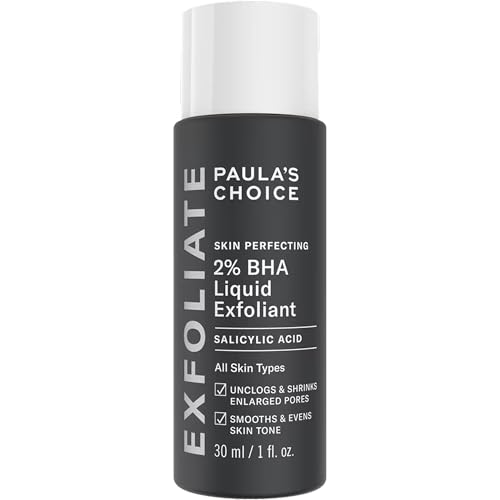
At 2% salicylic acid, this leave-on BHA exfoliant sits at the precise concentration that most dermatologists consider safe for topical use during pregnancy—enough to unclog deep pores and smooth texture, but low enough for minimal systemic absorption. The liquid formula penetrates directly into the follicle to dissolve the buildup that causes blackheads and closed comedones, a common issue for pregnant women dealing with increased sebum production. Users report seeing noticeable improvements in pore clarity and reduced fine lines within the first week of daily use.
The formulation is fragrance-free and non-abrasive, meaning no physical micro-tears to the skin barrier—a common side effect of gritty scrubs that can worsen inflammation. Its gentle enough for twice-daily application when paired with a moisturizer, though beginners are advised to start with every-other-night use. A dedicated sunscreen is non-negotiable since chemical exfoliants increase photosensitivity, and this is doubly true during pregnancy when melasma risk is high.
A few users noted initial flakiness or tightness, which resolved once they dialed in hydration or reduced frequency. The product comes in a generous bottle that lasts several months even with daily use, making it one of the most cost-effective and reliable options for consistent, low-risk exfoliation. It earns its spot here as a solid maintenance option for the entire pregnancy journey.
Why it’s great
- Safe 2% BHA concentration widely accepted for pregnancy
- Fragrance-free and non-abrasive formula respects sensitive skin
- Excellent for unclogging pores and softening fine lines
Good to know
- Requires gradual introduction to avoid initial flaking
- Daily sunscreen use is mandatory to prevent photosensitivity
3. Mario Badescu Drying Lotion
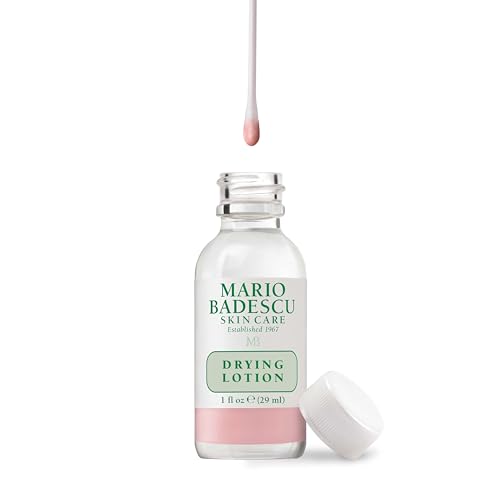
This cult-favorite drying lotion uses a bi-phase delivery system—a clear liquid containing salicylic acid atop pink sediment of sulfur, zinc oxide, and calamine—to create a targeted overnight drying effect on surface blemishes. The key application rule is critical: do not shake the bottle. Dip a cotton swab straight to the bottom to retrieve the pink sediment, then dab it directly onto each pimple. The sulfur draws impurities out while calamine soothes the surrounding skin, reducing redness and inflammation by morning.
Pregnant users praise it for being one of the few spot treatments that works on inflamed cystic acne without spreading irritation to healthy skin. Because the active ingredients are deposited in a thick mask-like layer rather than absorbed broadly, systemic absorption is minimized—a major safety advantage during pregnancy. A single bottle lasts many months, as only a tiny dab is needed per spot.
One recurring complaint is the bottle design: the narrow opening makes it difficult to reach the sediment with a cotton swab, leading to product waste. Some users recommended decanting into a wider-mouth jar for easier access. The intense drying action can also cause slight peeling if over-applied on sensitive areas. Still, for overnight, spot-specific treatment of angry breakouts, this remains a top, pregnancy-safe contender.
Why it’s great
- Minimal active absorption due to thick, spot-only application
- Overnight reduction in inflammation and cyst size
- Cost-effective—a single bottle lasts many months
Good to know
- Do not shake the bottle—must dip to the bottom for sediment
- Narrow opening makes retrieval tricky, some product waste
4. Belli Skincare Fresh Start Pre-Treatment Scrub

Belli’s Fresh Start Scrub is explicitly formulated for pregnancy and nursing, with all ingredients reviewed by OB/GYNs and dermatologists for safety. The formula relies on green tea, ginseng, and peppermint oil for a gentle physical exfoliation that removes dead skin cells and unclogs pores without chemical actives that cause concern. Users with sensitive, acne-prone skin report that it clears breakouts without the irritation that stronger scrubs produce, largely because the granules are fine and dissolve easily.
The peppermint oil provides an invigorating cooling sensation when rinsed off, which many pregnant users find refreshing, especially during the first trimester. The intended use is only 2-3 times per week, making it a complementary step to a daily leave-on treatment rather than a standalone solution. Several customers have used this scrub throughout multiple pregnancies and postpartum, citing it as the only scrub that does not aggravate their hormonal breakouts.
While the peppermint scent is pleasant for most, a few users compare it to foot cream—a matter of personal preference. The texture is creamy enough that it does not drag across the skin, minimizing the risk of micro-tears. It is slightly pricier per ounce than other options, but the peace of mind from a pregnancy-specific safety endorsement justifies the cost for many expecting mothers who want a zero-worry option.
Why it’s great
- Explicitly tested and recommended for pregnancy by OB/GYNs
- Gentle physical exfoliation without harsh chemical actives
- Refreshing peppermint finish beloved by pregnant users
Good to know
- Only for 2-3 uses per week—not a daily treatment
- Peppermint scent may not suit everyone’s preference
5. Bliss Clear Genius Acne Spot Treatment
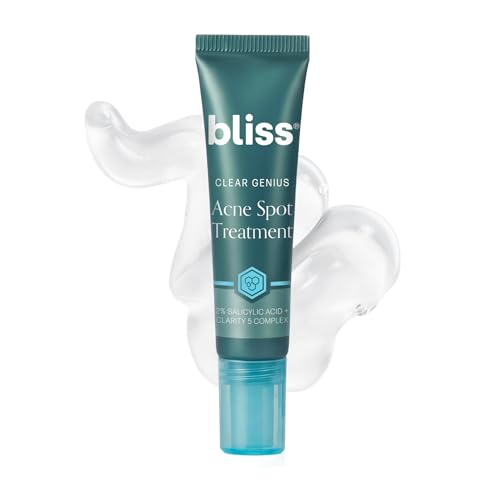
This fragrance-free gel spot treatment packs 2% salicylic acid, niacinamide, and zinc PCA into a targeted formula designed to shrink blemishes without stripping the surrounding skin. The gel texture absorbs quickly and leaves no visible residue, making it suitable for daytime wear under makeup or alone. Users on sensitive and mature skin report that one dab significantly flattens the bump and reduces redness within a few hours, often rendering the pimple invisible by the next morning.
The inclusion of niacinamide is a smart addition for pregnancy, as it helps strengthen the skin barrier, which tends to weaken under hormonal fluctuations. Zinc PCA adds a sebum-regulating effect, which is particularly useful for the oilier skin many women experience during the second trimester. Because it is formulated without drying alcohols or sulfates, it is less likely to cause the tightness or peeling that come with many other spot treatments.
One downside is the small 0.5 oz bottle, which goes fast if you treat multiple spots frequently. Some users found the price per ounce higher than comparable options, though the results justify the cost for targeted use. A few also noted a mild stinging sensation upon application, which faded quickly and did not lead to irritation. It is an effective, clean option for spot treatment during pregnancy, especially for those who prefer a gel over a drying lotion.
Why it’s great
- Gel formula dries clear and invisible for daytime use
- Niacinamide and zinc PCA support barrier and oil control
- Fragrance-free and non-drying on the surrounding skin
Good to know
- Small bottle size may need frequent reordering
- Mild stinging on application for some users
6. Rael Pimple Patches, Miracle Invisible Spot Cover
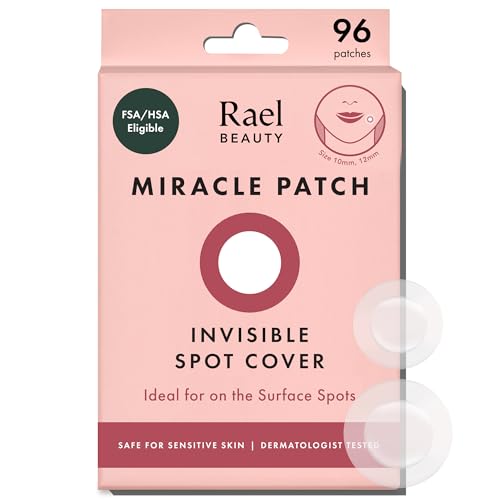
For pregnant women who want to avoid any chemical active altogether, these hydrocolloid patches are a flawless solution. They work by physically absorbing fluid from open whiteheads and creating a protective barrier that prevents bacteria and external irritants from entering the wound. The medical-grade hydrocolloid draws out the gunk overnight, visibly flattening surface pimples without any ingredient entering your system—a perfect zero-risk approach during pregnancy.
Rael’s patches stand out for their near-invisible, matte finish that blends into all skin tones, and their tapered edges that stay firmly adhered through sleep, workouts, or even under makeup. Multiple users with sensitive skin and allergies to essential oils praise that these patches contain no additives, fragrances, or active ingredients that could trigger a reaction. They come in two sizes (10mm and 12mm) to handle various pimple sizes from small whiteheads to larger pustules.
The only limitation is that they are ineffective on deep, cystic bumps that have not come to a head—they need an open pore to work. Some users also wish for larger or XL patches for covering bigger breakouts. But for what they do—fast, residue-free healing of surface blemishes—they are an essential part of a pregnancy-safe skincare arsenal, especially when combined with a gentle pre-treatment toner or scrub.
Why it’s great
- Zero chemical absorption—completely passive physical barrier
- Invisible, matte finish blends into all skin tones
- Hypoallergenic with no essential oils or irritating additives
Good to know
- Only works on whiteheads and open pimples, not deep cysts
- Larger patch size options would be welcome for bigger breakouts
7. De La Cruz Sulfur Ointment

Sulfur is considered a pregnancy-safe category option for treating cystic and hormonal acne, and this 10% sulfur ointment by De La Cruz is the most cost-effective entry point. The instruction is simple: apply a thin layer over the entire affected area—face, back, chest—leave on for 10 minutes, and rinse with warm water. It works by penetrating the pores to eliminate existing pimples and blackheads while discouraging new ones from forming, absorbing excess oil in the process.
Users with stubborn cystic acne report visible clearing after just three applications, and the 5.5 oz jar provides generous coverage for both face and body breakouts. The formula is free from artificial fragrances, colors, and parabens, and it is made in the USA. For pregnant women dealing with back or chest acne that is hard to treat with serums alone, this wash-off mask provides a full-coverage alternative that limits skin contact time.
The main tradeoff is the strong sulfur smell, which many compare to rotten eggs, and it can linger on towels and pillowcases after use. A few users also experienced burning around the eyes if the ointment migrated during the 10-minute wait. Quality control was occasionally inconsistent, with some jars containing hard clumps. Despite these drawbacks, its efficacy for deep cystic breakouts and its low price make it a worthy addition to a pregnancy acne arsenal, especially when used as a once- or twice-weekly deep cleanse.
Why it’s great
- 10-minute wash-off format minimizes active exposure time
- Highly effective on stubborn cystic and hormonal breakouts
- Large 5.5 oz jar covers face and body at a low cost
Good to know
- Strong sulfur smell that lingers on fabrics
- Potential for burning if near eyes; quality can be inconsistent
FAQ
Can I use salicylic acid while pregnant?
Is azelaic acid safe during pregnancy?
Why can’t I use retinol for acne while pregnant?
Can I use benzoyl peroxide during pregnancy?
Final Thoughts: The Verdict
For most users, the acne treatment safe for pregnancy winner is the Naturium Azelaic Acid 10% because it combines an FDA Category B active, redness-calming niacinamide, and fading vitamin C in one gentle, lightweight formula suitable for daily use. If you want a rapid overnight spot treatment that works on deep cystic bumps, grab the Mario Badescu Drying Lotion. And for a completely chemical-free, zero-risk option for surface whiteheads, nothing beats the Rael Hydrocolloid Patches.