
Our readers keep the lights on and the weekend projects moving. As an Amazon Associate, I earn from qualifying purchases.
Thin, cheap acoustic foam that arrives vacuum-sealed and never fully expands is the number one reason home studios and gaming rooms still sound like cement boxes. The panels you choose need specific density and thickness specs to actually absorb mid and high-frequency reflections rather than just decorating your wall.
I’m Rikta — the co-founder and writer behind FitlyFast. I’ve spent years analyzing materials science data for acoustic treatments, comparing polyurethane density, NRC ratings, and polyester fiber compression to separate real performance from marketing fluff.
After filtering dozens of options through real user experiences and technical specs, this guide breaks down the top contenders for the best acoustic foam panels on the market right now based on what actually kills echo.
How To Choose The Best Acoustic Foam Panels
Acoustic foam panels look simple, but the difference between a panel that actually tightens your room’s sound and one that just looks like a soundproofing prop comes down to three measurable specs. Ignore marketing terms like “professional grade” and focus on the numbers that matter.
Density and thickness determine frequency absorption
Standard 0.4-inch thick panels with low-density foam absorb only high-frequency sibilance like hissing and clicking sounds. For controlling mid-range frequencies — the range where speech, vocals, and guitar sit — you need panels at least 0.47 inches thick with a material density of 1.2 lb/ft³ or higher. Two-inch wedges push absorption further into lower mid frequencies, making them the standard for serious recording environments.
NRC rating is the real performance number
Noise Reduction Coefficient (NRC) is a single-number average of how much sound a material absorbs across four frequency bands. A panel with an NRC of 0.95 absorbs 95 percent of the sound that hits it. Anything below 0.80 is better suited for simple echo reduction in a living room, not for a studio or podcast booth where clarity matters.
Self-adhesive vs. separate mounting
Some panels ship with peel-and-stick backing that saves installation time, but they may fail on textured or painted walls. Panels without adhesive require spray glue, construction adhesive, or 3M Command strips. Budget for the extra mounting cost and consider whether you need removable installation if you rent your space.
Quick Comparison
On smaller screens, swipe sideways to see the full table.
| Model | Category | Best For | Key Spec | Amazon |
|---|---|---|---|---|
| BSHEAD 12in Acoustic Panels | Polyester Fiber | Home studio echo reduction | 0.47″ thick, 35% denser | Amazon |
| Ekkogo Hexagon Panels | Recycled PET Fiber | Eco-friendly decor + sound | NRC up to 0.95 | Amazon |
| NEPIS Brick Panels | Polyester Fiber | Studio with visual style | 14.35 lb/ft³ density | Amazon |
| Saiqiang 56-Pack Wedge | Polyurethane Wedge | Large room coverage | 1″ thick, 56 panels | Amazon |
| GUERRI 2-Inch Wedge | Polyurethane Wedge | Mid-frequency control | 2″ thick, 25 kg/cbm | Amazon |
| Burdurry 50-Pack Wedge | Polyurethane Wedge | Budget bulk coverage | 1″ thick, 50 panels | Amazon |
| AudioSilk ROOM KIT | Recycled PET Board | Professional studio clarity | NRC up to 0.91 | Amazon |
In‑Depth Reviews
1. BSHEAD 12in Acoustic Panels

These BSHEAD panels hit the sweet spot for anyone wanting real echo reduction without a complicated install. The 0.47-inch thickness combined with a 35 percent higher density than standard polyurethane foam means they absorb more energy across the mid-range spectrum where vocals and guitar notes live. Made from 100 percent polyester fiber, they arrive odorless and flame retardant — no off-gassing worries in a small home studio or gaming room.
The 45-degree chamfered edges let you tile these into geometric patterns that look intentional rather than slapped on. Peel-and-stick backing eliminates the need for spray adhesive, and users report strong adhesion on smooth walls. At roughly 7.6 square feet of coverage per 8-pack, you will need multiple packs for a full accent wall, but for targeting the reflection points behind monitors or a desk, one set goes a long way.
Reviews consistently praise the noticeable drop in slap echo and improved clarity for music and Zoom calls. The self-adhesive tape is removable without damaging paint, a major plus for renters. The only real limitation is the 0.47-inch depth — you are not taming low frequencies with these, but for voice and mid-range, they overdeliver at their price tier.
Why it’s great
- Higher density polyester fiber outperforms basic polyurethane foam
- Self-adhesive backing installs in minutes with no extra glue or tape
- Odorless and flame-retardant for safe indoor use
Good to know
- Not effective for sub-200 Hz low-frequency bass trapping
- Each pack covers only 7.6 sq ft — plan for multiple packs
2. NEPIS Brick Panels

NEPIS brings an unusually high material density of 14.35 lb/ft³ to a panel that costs less than most basic wedge foam options. That density rating is roughly 10 times higher than standard polyurethane acoustic foam, which translates to better absorption per inch of thickness. Despite being only 0.4 inches deep, this dense polyester construction punches up in taming mid-range reflections in a way thinner wedge foam cannot match.
The 3D brick surface pattern adds a modern accent wall look that is a clear upgrade over the traditional egg-crate or wedge aesthetic. Each panel comes with a peel-and-stick kraft paper backing — no spray adhesive required. The 12-pack covers approximately 12 square feet, which is enough to treat a single wall behind a listening position or desk.
Users report surprising noise reduction for such a slim profile, and the brick texture holds up well during cutting for custom fits. The main drawback is the per-panel cost relative to bulk wedge packs, but the density advantage makes this a value leader for anyone who prioritizes absorption quality over raw surface area.
Why it’s great
- Extremely high 14.35 lb/ft³ density for superior absorption per inch
- Peel-and-stick installation with no extra adhesive required
- 3D brick texture looks clean and modern on walls
Good to know
- Only 0.4 inches thick — limited low-frequency control
- Higher cost per square foot compared to bulk wedge packs
3. AudioSilk ROOM KIT

AudioSilk’s ROOM KIT is a different animal from foam. These are rigid, 46-by-23-inch panels made from compressed post-consumer recycled PET fiber — the same material used in high-end commercial acoustic treatments. The NRC rating of 0.91 places them in proper studio-grade territory, and users consistently report that these panels reduce flutter echo and reverb tails more effectively than foam equivalents of similar thickness.
At 0.4 inches thin, these panels are lightweight and easy to mount with 3M Command strips, making them ideal for rented spaces where you cannot drill holes or paint. The natural color option blends into any room without looking like a recording booth. They arrive flat and ready to install — no waiting for vacuum-packed foam to expand.
Reviewers who upgraded from basic wedge foam say the difference in sound clarity is immediate, especially for critical listening and voice recording. The main consideration is the higher entry cost and the need to purchase Command strips or contact adhesive separately. For anyone serious about treating a home studio or media room, this kit delivers genuine acoustic performance without the foam aesthetic.
Why it’s great
- Studio-grade NRC 0.91 absorption from compressed PET fiber
- Large panel size covers wall space quickly with fewer pieces
- No chemical smell, no shrinkage, and no peeling over time
Good to know
- Requires separate adhesive — no peel-and-stick backing
- Higher upfront investment than traditional foam panels
4. Ekkogo Hexagon Panels

Ekkogo takes an eco-conscious approach by manufacturing each panel from the equivalent of four recycled ocean-bound water bottles. The 5.9 oz/ft² poly-fiber material carries an NRC rating up to 0.95, which places it among the most absorbent panels at this price point. The hexagon shape and beveled edges create a honeycomb wall treatment that works as visual decor even when acoustic performance is not your primary goal.
The 12-by-10-inch panels are slightly smaller than the standard 12-by-12-inch tiles, so coverage math matters when planning a full wall. They do not include adhesive, which is actually a plus if you have textured walls where peel-and-stick fails — you can choose your own heavy-duty double-sided tape or construction adhesive. The material is odorless, formaldehyde-free, and flame retardant.
Multiple users note that the sound improvement is moderate rather than dramatic, which aligns with the thinner 0.4-inch profile. These panels shine in living rooms or home offices where you want to reduce slap echo without making the space feel like a pro studio. For style-conscious buyers who also care about material sourcing, Ekkogo hits a unique niche.
Why it’s great
- Made from recycled ocean plastic — legitimately eco-friendly
- Impressive NRC 0.95 rating for a 0.4-inch panel
- Hexagon shape creates a modern, customizable wall pattern
Good to know
- No adhesive included — must buy tape or glue separately
- 0.4-inch depth limits effectiveness on lower mid frequencies
5. Saiqiang 56-Pack Wedge
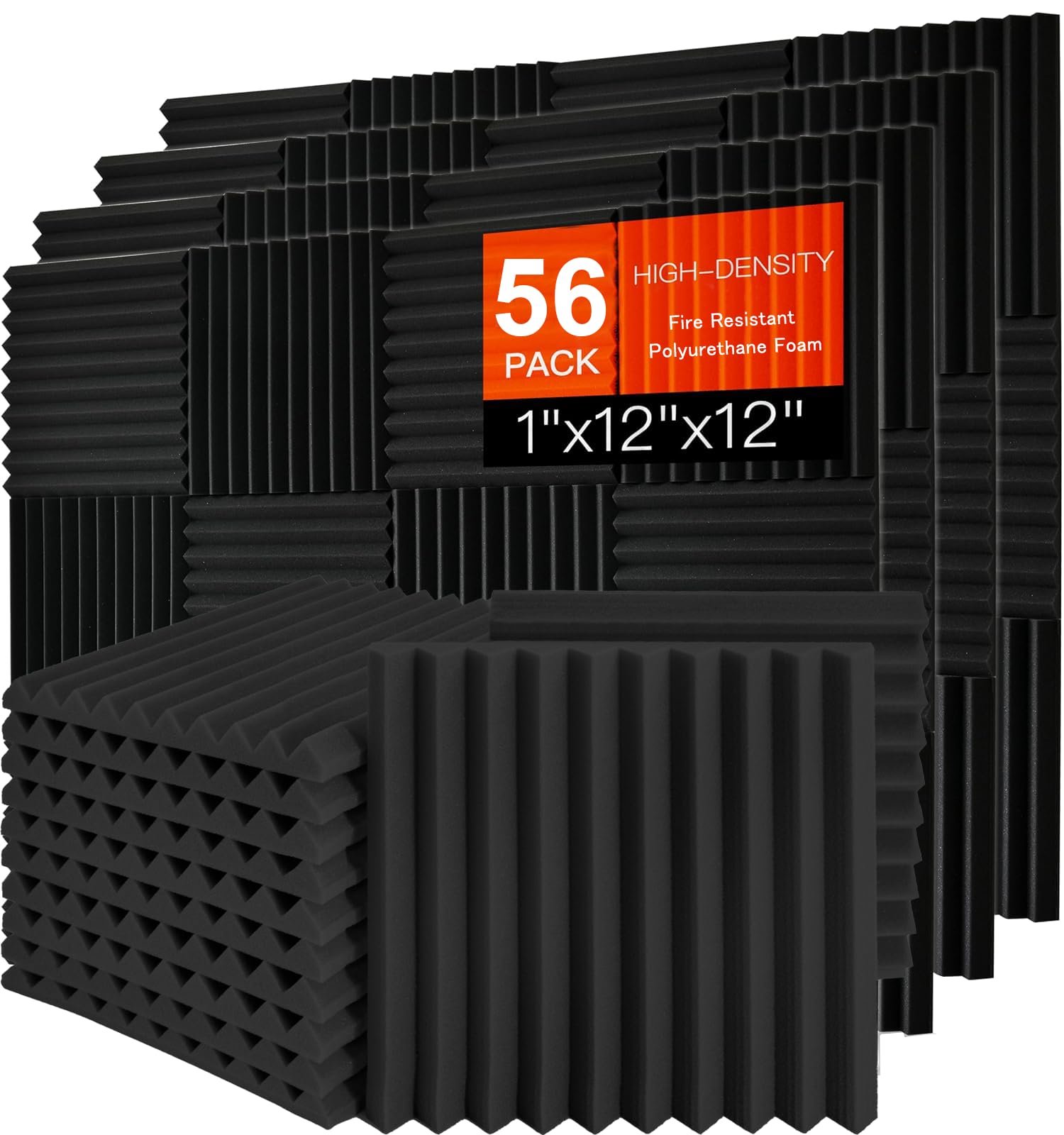
When you need to cover 56 square feet of wall or ceiling in one purchase, Saiqiang’s wedge panel pack is the most economical way to get 1-inch thick foam into a room. The polyurethane foam construction uses the classic wedge profile that scatters sound reflections and reduces standing waves. The 12-by-12-inch tiles are vacuum-packed and require 24 to 48 hours to fully expand after opening.
The flame-retardant material meets basic fire safety standards, and the foam has no strong chemical odor once it airs out. These panels do not come with adhesive, so you will need spray adhesive or double-sided tape. The 56-count is enough to treat an entire 10-by-10-foot room ceiling or one long wall, making it ideal for home theater rooms or large studio spaces on a tight budget.
Reviews are mixed on the included adhesive dots — many users recommend buying a separate spray adhesive for reliable hold. The 1-inch thickness is a step up from 0.4-inch panels and does noticeably more for controlling mid-range echo, but it is still not a bass trap. For the square footage per dollar, this pack is hard to beat for basic echo control.
Why it’s great
- 56 panels provide massive coverage for the price
- 1-inch wedge profile absorbs more mid-range than thin panels
- Fire-resistant polyurethane construction
Good to know
- Requires 24-48 hours to fully expand from vacuum pack
- No adhesive backing — budget for separate mounting supplies
6. GUERRI 2-Inch Wedge Panel
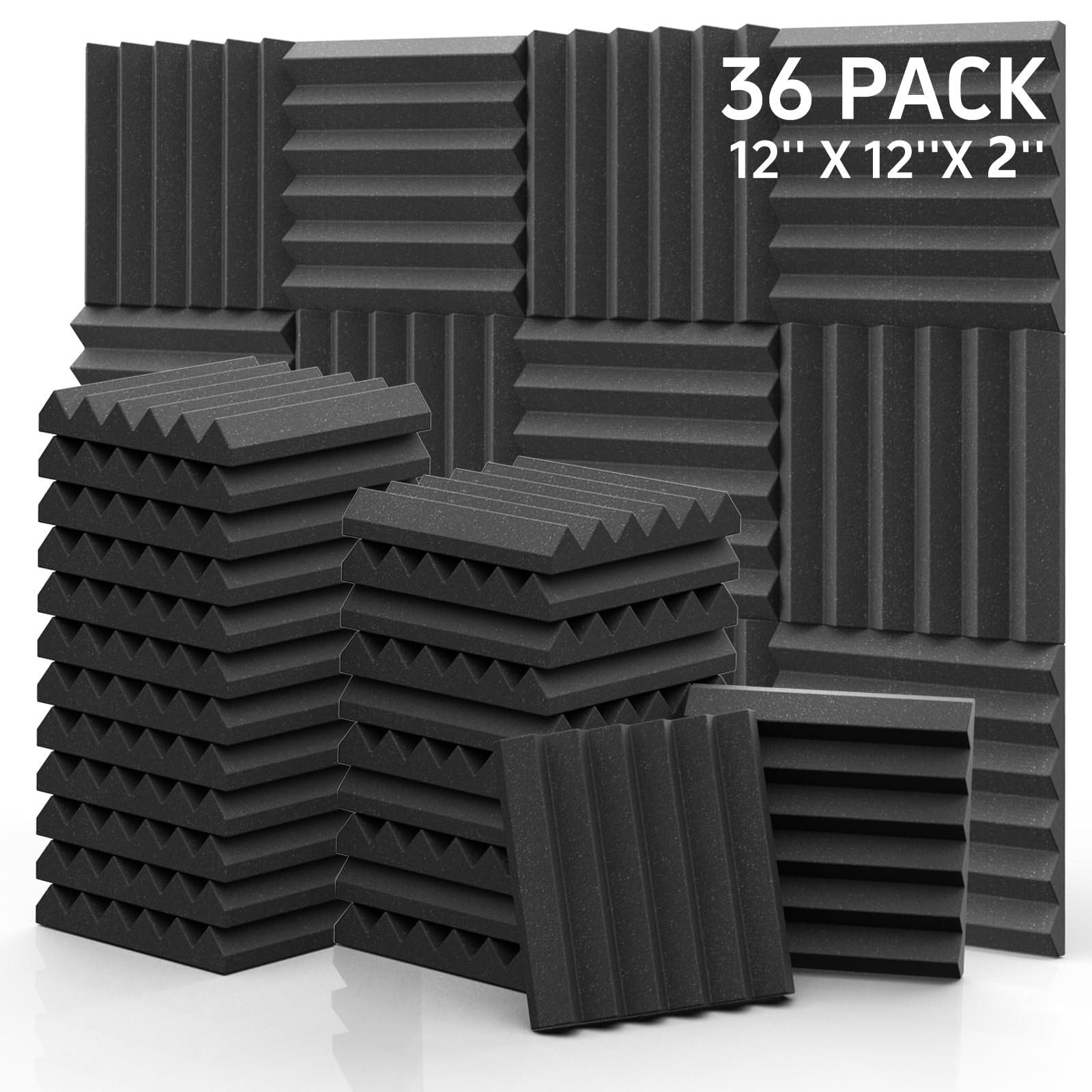
GUERRI’s 2-inch thick wedge panels represent the entry point into serious acoustic treatment. The 2-inch depth combined with a high-density 25 kg/cbm polyurethane foam formulation absorbs significantly more energy across the mid and lower-mid frequencies than the 0.4-inch or 1-inch alternatives. If your room suffers from boxy sounding vocals or muddy guitar tone, this thickness makes a measurable difference.
The 36-pack covers exactly 36 square feet, and each panel measures 12 by 12 inches. They arrive vacuum-sealed and compressed, but the manufacturer notes that the high-resilience foam typically expands to full size within hours rather than days. Users recommend gently stretching the edges to speed up the fluffing process. There is no adhesive included, but the foam holds well with acoustic spray adhesive.
Real-world feedback from voiceover artists and podcasters describes the result as “near-silence” in rooms treated with 48 panels, and the reduction in flutter echo is consistently praised. The main trade-offs are the bulkier appearance of 2-inch wedges on walls and the need to budget for adhesive. For anyone who wants actual acoustic control rather than cosmetic echo reduction, this is the minimum depth worth considering.
Why it’s great
- 2-inch depth provides real lower-mid frequency absorption
- High-density 25 kg/cbm foam outperforms thinner budget panels
- 36 panels cover an entire wall or ceiling section
Good to know
- Bulkier wedge profile eats up visual wall space quickly
- Requires adhesive spray or tape — no backing included
7. Burdurry 50-Pack Wedge

Burdurry’s 50-pack is the classic budget wedge foam that has been a staple in home studios for years. Each panel is 1 inch thick and 12 by 12 inches, made from 100 percent polyurethane foam. They arrive vacuum-sealed in separate bags and require 24 to 48 hours to expand to full height. Soaking in warm water and using a dryer can speed up the recovery process if you are impatient.
The absorption performance is solid for high-frequency reflections — sibilance, keyboard clicks, and room slap echo are noticeably reduced with sufficient coverage. The wedge design helps scatter sound rather than letting it bounce straight back. There is no adhesive backing, so you will need to supply your own double-sided tape, staples, or spray adhesive. The material is lightweight and easy to cut with a utility knife for custom fits.
User feedback is mixed regarding consistency — some panels may arrive with slight variations in thickness, and the foam can have a chemical smell that requires airing out. Several experienced users recommend using a staple gun for permanent installations since tape often fails under vibration. For the cost per panel, this pack is the cheapest way to cover a large area, but you get what you pay for in material consistency and mounting convenience.
Why it’s great
- Lowest cost per square foot of any panel in this guide
- 50 panels provide enough coverage for a full room treatment
- Classic wedge profile works well for high-frequency echo control
Good to know
- No adhesive included — requires separate mounting solution
- Some panels have inconsistent thickness and initial chemical odor
FAQ
Will acoustic foam panels block sound from leaving my room?
How many acoustic foam panels do I need for a typical bedroom?
Is there a difference between polyester fiber and polyurethane foam panels?
Final Thoughts: The Verdict
For most users, the best acoustic foam panels winner is the BSHEAD 12in Acoustic Panels because the 35 percent higher density polyester fiber combined with self-adhesive backing delivers real echo reduction without the hassle of buying separate glue. If you want professional-grade absorption that outperforms foam entirely, grab the AudioSilk ROOM KIT. And for covering a large space on a budget, nothing beats the Saiqiang 56-Pack Wedge.