
Our readers keep the lights on and the weekend projects moving. As an Amazon Associate, I earn from qualifying purchases.
A floor that sounds hollow with every step, transmits the thud of a dropped remote to the room below, or amplifies the scrape of a chair leg is a constant reminder of a poor material choice. Effective acoustic insulation transforms a space from a source of friction into a quiet, private sanctuary, whether you are in a multi-story home or an apartment where neighborly peace is paramount.
I’m Rikta — the co-founder and writer behind FitlyFast. I have spent years analyzing building-material specifications and consumer testing data to identify which underlayments genuinely deliver on their acoustic claims and which fall flat under real foot traffic.
This guide breaks down everything you need to know about the specific materials, thicknesses, and density ratings that define effective acoustic insulation for floors, helping you choose the right solution for your subfloor type and noise concern.
How To Choose The Best Acoustic Insulation For Floors
Choosing the right underlayment involves more than matching the square footage. You need to assess the type of noise you are fighting, the nature of your subfloor, and any moisture vulnerabilities that could ruin your flooring years down the road.
Focus on IIC and STC Ratings, Not Marketing Claims
Impact Insulation Class (IIC) measures how well the underlayment stops impact noise like footsteps and dropped objects. Sound Transmission Class (STC) measures how much airborne sound like voices or a television is blocked. Anything below 50 IIC is considered poor for multi-family dwellings. Look for products that list these ratings, not just vague phrases about being “quiet.”
Match the Material to the Flooring Type
Luxury Vinyl Plank (LVP) needs a thin, dense underlayment around 2-3mm to prevent the click-lock system from failing. Laminate and engineered wood can use similar dense fiber products. Solid hardwood nailed down can use a slightly thicker felt. Using a thick, spongy foam under a floating floor will cause the joints to break over time, so match the product to the exact flooring installation method.
Integrate Moisture Protection
Concrete subfloors in basements or slab-on-grade homes are moisture factories. A high-quality acoustic underlayment must include a built-in vapor barrier or be paired with a dedicated vapor film. Without this, moisture will wick up into your flooring, causing mold, warping, and delamination that completely defeats the purpose of the investment.
Quick Comparison
On smaller screens, swipe sideways to see the full table.
| Model | Category | Best For | Key Spec | Amazon |
|---|---|---|---|---|
| ROBERTS SuperFelt | Recycled Fiber | Impact & Airborne Noise | IIC 67 / STC 66 | Amazon |
| STEICO Wood Fiber | Natural Wood | Breathable Squeak-Free | 3mm / 90 sqft | Amazon |
| Floorlot GoldMax | IXPE Foam | Large Area Coverage | 200 sqft / 3mm | Amazon |
| QuietWalk Plus | Recycled Fiber | Radiant Heat Systems | 100 sqft / 3mm | Amazon |
| QuietWalk LV 50 | Recycled Fiber | LVP & Laminate | 50 sqft / 3mm | Amazon |
| qqpp EVA Mat | EVA Foam | Play / Exercise Area | 0.39″ thick / 16 sqft | Amazon |
| FatMat Sound Deadener | Butyl/Aluminum | Vibration Damping | 50 mil / 25 sqft | Amazon |
In‑Depth Reviews
1. QEP SuperFelt 44 in. W x 27.3 Ft. L Underlayment

The ROBERTS SuperFelt earns its spot at the top because it provides the most concrete acoustic data of any product here: a rated IIC of 67 and an STC of 66. This is the underlayment you choose when you need to prove to a landlord, HOA, or building code inspector that you have installed a genuine sound-control system, not just a cushy pad. The 3mm thickness is ideal for minimizing height buildup under engineered hardwood or nail-down bamboo, and the high-temperature manufacturing process gives the fibers a tight, dense structure that absorbs rather than deflects noise.
Installers consistently praise the strong double-sided adhesive tabs that keep seams flat and the tough film layer that resists tearing even when accidentally nailed through during reinstallation. Cuts require sharp scissors rather than a utility knife, which is a minor hassle for the benefit of a true vapor barrier built into the felt. Users report the floor feels solid and quiet immediately, with no creaking or springiness.
For anyone installing over a basement or concrete subfloor, the built-in moisture barrier is a critical layer of defense. While the 100-square-foot roll is a mid-range price point for this category, the verified acoustic performance and recycled fiber construction make it the most intelligent investment for noise-sensitive environments.
Why it’s great
- Highest verified IIC/STC ratings in the review.
- Durable film resists tearing during installation.
- Recycled fiber construction with low VOCs.
Good to know
- Difficult to cut with a standard utility knife; scissors required.
- Adhesive tabs may not suffice in high-traffic areas without seam tape.
2. STEICO Wood Fiber Flooring Underlayment, 3mm

STEICO uses pure wood fiber bound by lignin, the natural tar within the wood, meaning this underlayment contains zero glue additives. It is PEFC certified and breathable, which is a game-changer for subfloors with any potential for trapped moisture. The 3mm sheets come in a convenient 2×3 foot panel format rather than a roll, making it far easier for a single person to handle without the material snapping back or curling during layout.
The greatest strength here is “vapor-open” technology, which allows trapped moisture to escape rather than pooling under your floor. Users who installed this over uneven tile or old hardwood report that the high compression strength prevents the springy feel that ruins a laminate click-lock system. It also eliminates the hollow clicking noise that cheap foam underlayments allow, giving the floor a solid, massive sound.
One notable downside is the dust created during cutting. Because it is a rigid, board-like material, scoring and snapping or cutting with scissors produces a fine green wood dust. A dust mask is essential during installation. For anyone prioritizing a pure, non-toxic, and breathable acoustic layer under a floating floor, this is the best option available.
Why it’s great
- Zero glue, VOC-free natural wood fiber.
- Vapor-open technology prevents moisture buildup.
- High compression strength eliminates springy floors.
Good to know
- Produces fine dust during cutting; wear a mask.
- Sheets are less flexible than rolled felt for complex room layouts.
3. GoldMax Premium Floor Underlayment by Floorlot
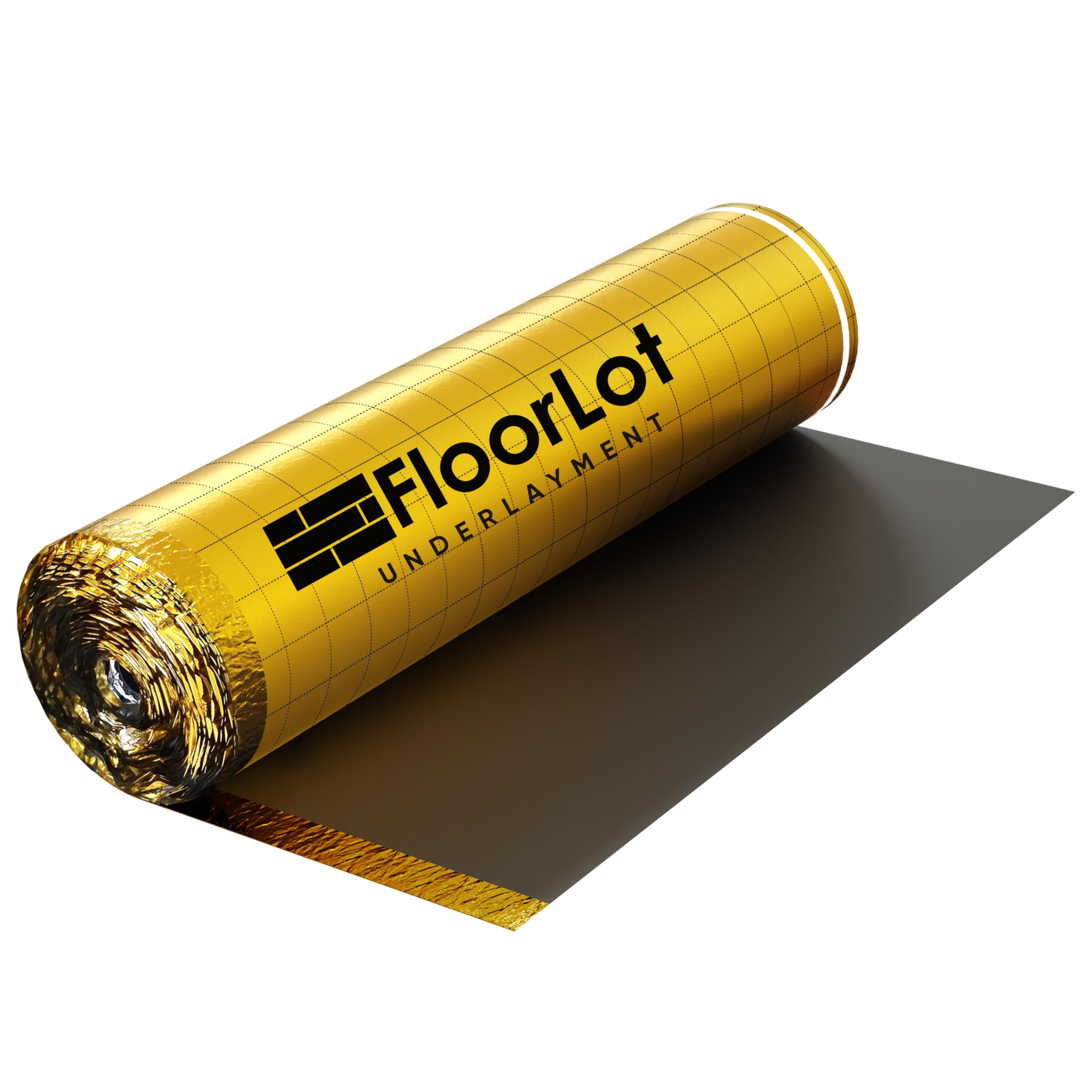
The GoldMax is a premium IXPE (irradiated cross-linked polyethylene) foam that comes in a massive 200-square-foot roll. This is the right choice for an entire main level or large basement finishing project. The integrated moisture-blocking film is fused to the foam during manufacturing rather than laminated, which prevents delamination. The material provides a solid acoustic seal against footfall noise and reduces the hollow echo that is the hallmark of a cheap floating floor.
Users highlight the included seam tape and the printed cutting grid on the film as features that speed up installation dramatically. The 3mm thickness is exactly the spec required by most LVP and laminate manufacturers to maintain warranty compliance. The material is soft enough to smooth out minor subfloor imperfections but dense enough to prevent the floor from feeling bouncy.
While this product is rated for IIC and STC, the exact numbers are not printed on the product page as clearly as the ROBERTS felt. The GoldMax is a fantastic solution for homeowners who value surface area coverage, ease of rolling, and a strong moisture barrier for a reasonable overall investment.
Why it’s great
- 200 sqft roll covers large areas without seams.
- Integrated moisture film prevents floor damage.
- Printed grid lines make cutting fast and accurate.
Good to know
- IIC/STC ratings are not explicitly listed on the packaging.
- Foil overlap on adhesive edges may affect subfloor leveling.
4. QuietWalk Plus Underlayment 100 sq ft
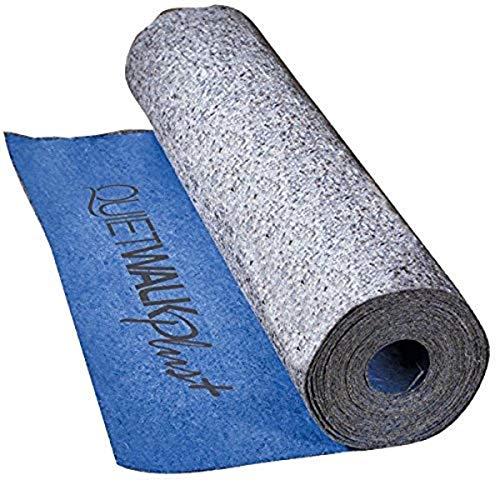
The QuietWalk Plus is a 100-square-foot roll of dense recycled synthetic fiber with a built-in 6-mil vapor barrier and the patent-pending DriWick moisture management technology. This product is explicitly certified for use with radiant floor heating systems, which is a rare and important distinction. The dense fiber structure resists thermal breakdown over time, making it the go-to choice for anyone installing over electric mats or hydronic tubing.
Reviews note that the material provides superior cushioning compared to foam, making the floor feel warmer and softer underfoot. The double-sided tape strips along the edges make seam alignment easy, though many users still recommend running a bead of acoustic sealant tape across every seam for full moisture protection. The GREENGUARD Gold certification adds confidence for households with respiratory sensitivities.
One nuance to watch: some shipments have mistakenly sent the standard QuietWalk LV instead of the QuietWalk Plus. It is worth verifying the model number upon arrival, as the Plus version offers higher density and is rated for hardwood and laminate, not just vinyl.
Why it’s great
- Certified safe for radiant floor heating systems.
- DriWick technology actively wicks subfloor moisture.
- GREENGUARD Gold certified for low chemical emissions.
Good to know
- Verify packaging confirms “Plus” model for highest density.
- Cutting requires strong scissors; a utility knife struggles.
5. QuietWalk LV 50 – Premium Underlayment

The QuietWalk LV 50 is a smaller 50-square-foot roll of the same recycled fiber technology found in the larger QuietWalk products. It is a perfect trial size for testing the material before committing to a full home installation or for covering a small bathroom or laundry room. It shares the same DriWick moisture barrier and GREENGUARD Gold certification as its bigger siblings, so you are not sacrificing performance for a smaller footprint.
This product is tailored specifically for luxury vinyl plank and tile (LVP/LVT), SPC, and WPC rigid core floors. It is thin enough at 3mm to not interfere with the locking mechanisms of these flooring types while still delivering a noticeable reduction in surface noise. DIY users report it is extremely easy to unroll and cut with a utility knife, making it a stress-free entry point for a first-time flooring install.
While the acoustic dampening is effective for impact noise, some users note it is not as thick as dedicated carpet padding for heavy airborne sound blocking. For the specific use case of quieting an LVP walkway or small studio, this is a precise tool for the job.
Why it’s great
- Low-effort trial size for testing before bulk purchase.
- Optimized for LVP, SPC, and WPC locking floors.
- Lightweight and easy to cut with a utility knife.
Good to know
- Better for impact noise than heavy airborne sound.
- Smaller coverage means more seams for larger rooms.
6. qqpp EVA Rubber 18 Tiles Interlocking Puzzle Foam Floor Mats

This product is not a traditional architectural underlayment; it is a 0.39-inch thick EVA foam tile system designed specifically for play areas, home gyms, and temporary protective flooring. The interlocking tile format means it sits on top of the finished floor rather than underneath it. It provides significant cushion for babies and toddlers learning to walk and protects knees during exercise routines.
The material is certified BPA-free, phthalate-free, and lead-free, which is the primary safety requirement for children’s play areas. The textured top surface provides grip, and the tiles are easy to wipe down with a damp cloth. Users often buy multiple packs to cover entire living rooms, and the modular nature allows for custom layout shapes around furniture.
Do not confuse this product with a sub-floor underlayment. It will not provide the same IIC-rated impact isolation as a fiber-based roll. For its intended purpose of a cushioned, safe, and colorful surface layer, it works well. Be aware that toddlers may chew on the edge pieces, which poses a potential choking hazard.
Why it’s great
- BPA-free and non-toxic for safe play areas.
- Thick cushioning for yoga or home workouts.
- Interlocking design for flexible room layouts.
Good to know
- Not a true acoustic underlayment; sits on top of the floor.
- Edge pieces can be a choking hazard for teething babies.
7. FatMat Self-Adhesive No Logo Sound Deadener Pack
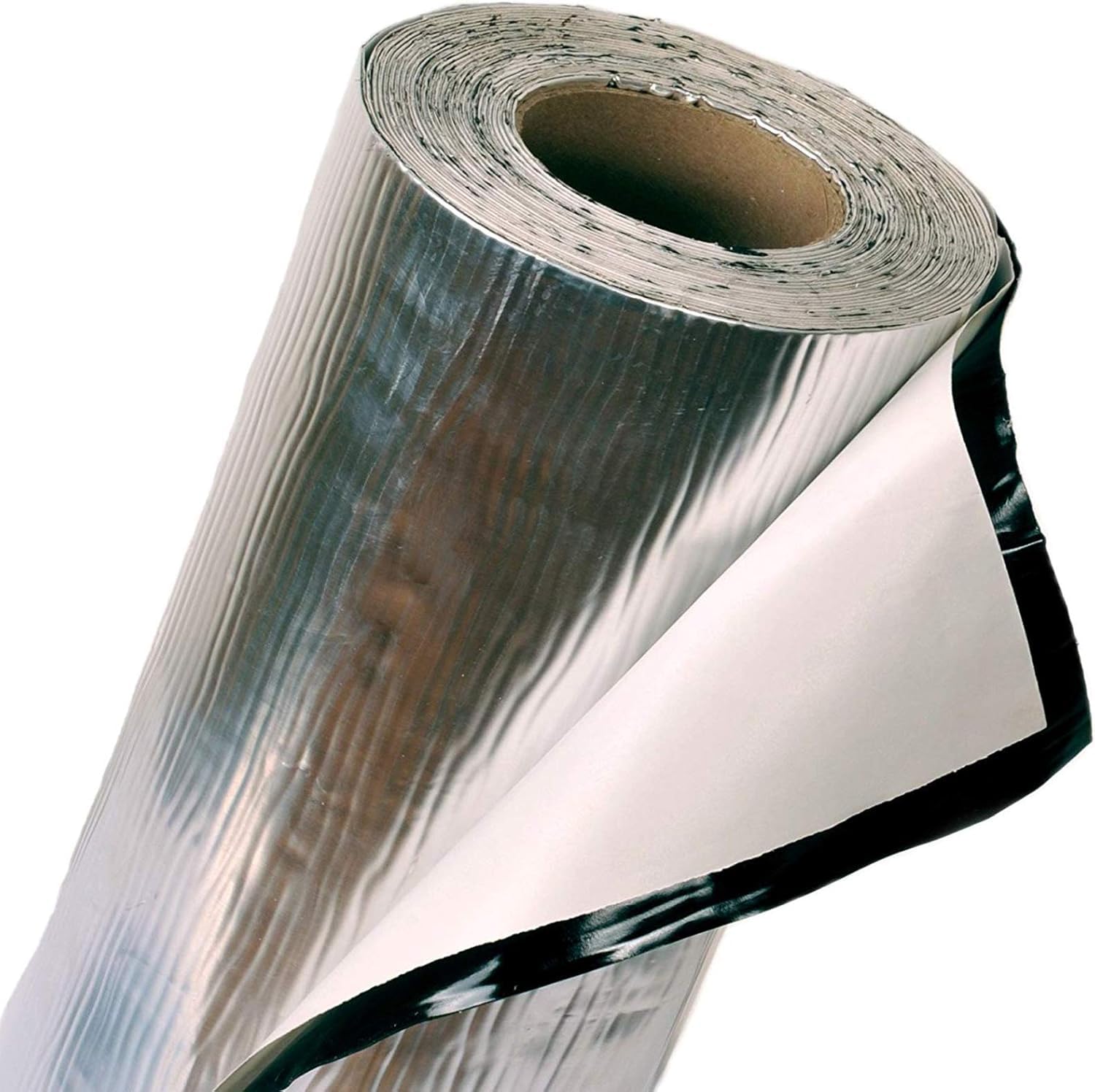
The FatMat is a butyl-rubber and aluminum foil sound deadener designed to add mass to vibrating panels. While it is most commonly used in automotive door panels and floor pans, it has a distinct application in residential flooring: damping vibrations in metal subfloors, radiator covers, or to kill the resonant ring in a metal stair tread. It is 50 mils thick and extremely sticky, adhering permanently to clean metal or plywood surfaces.
For a standard wood or concrete subfloor, this product is the wrong tool. For someone dealing with a loud metal balcony, a vibrating steel floor vent, or a tin ceiling transmission path, this deadener is the specialized solution. The 25-square-foot roll includes a roller and knife, which is a helpful starter kit.
User reviews confirm that it is effective at stopping panel resonance but note that 25 square feet is insufficient for even a small car interior, let alone a whole room. If you need vibration damping for a specific structural element rather than general impact noise, this is the most targeted product here.
Why it’s great
- Excellent adhesion and vibration-damping ability on metal.
- Includes installation roller and cutting knife.
- Heat resistant up to 100°F+ for outdoor applications.
Good to know
- Not designed for general floor noise reduction under flooring.
- 25 sqft roll covers a very small area.
FAQ
Can I use carpet padding under laminate for soundproofing?
What is the best acoustic insulation for concrete subfloors?
Does a thicker underlayment block more noise?
Final Thoughts: The Verdict
For most users, the acoustic insulation for floors winner is the ROBERTS SuperFelt because it provides the highest verified IIC and STC ratings, uses recycled material, and includes a moisture barrier that is essential for concrete subfloors. If you want a breathable, zero-glue natural option for a floating floor, grab the STEICO Wood Fiber Underlayment. And for covering a large basement area with a single roll that includes a strong moisture film, nothing beats the Floorlot GoldMax.