
Our readers keep the lights on and the weekend projects moving. As an Amazon Associate, I earn from qualifying purchases.
Walking into a room where every footstep, word, and chair scrape rings off the walls is an immediate signal that the space needs acoustic treatment. The confusion between soundproofing (blocking sound transfer between rooms) and acoustic treatment (taming echo and reverb inside a room) is the single biggest mistake buyers make when shopping for panels. Serious listeners, home studio owners, and remote workers know that the right foam geometry and density can transform a chaotic, hollow-sounding room into a controlled, quiet environment.
I’m Rikta — the co-founder and writer behind FitlyFast. After hours of research into material density, panel thickness, adhesive reliability, and real-user acoustic results across dozens of products, this guide targets the exact specs that separate effective echo absorption from decorative wall art.
Whether you are outfitting a recording booth, quieting a loud gaming den, or reducing the slap echo in your living room, this analysis of the best acoustic panels for soundproofing on Amazon breaks down which panels actually reduce reverberation and which ones just look the part.
How To Choose The Best Acoustic Panels For Soundproofing
Every buyer wants a quieter room, but the path to that goal depends on understanding that acoustic foam absorbs sound energy inside the space rather than stopping sound from entering or leaving. Start by identifying which problem you are solving: echo and reverb (acoustic foam works well) or noise transfer through walls (mass-loaded vinyl and construction are needed). For echo absorption, the key specs are thickness, density, and material composition.
Thickness Dictates Frequency Range
A 1-inch panel will absorb high-frequency sounds like hissing and sibilance effectively, but it does very little for the low-end rumble of bass or a subwoofer. For general speech clarity and mid-range absorption in an office or living room, 1-inch panels provide acceptable results. For studios, game rooms with heavy bass, or home theaters, 2-inch panels are the minimum requirement to get meaningful absorption down into the lower midrange frequencies.
Density and Material Matter More Than Shape
The density of the foam, measured in pounds per cubic foot (PCF), directly correlates with absorption performance. Open-cell polyurethane foam is the industry standard, with higher-density options delivering better broadband absorption. 100% polyester fiber panels are a safer, low-odor alternative with comparable performance. The wedge or pyramid shape increases surface area, which improves high-frequency absorption, but the core density is what dictates how much sound energy the foam can actually convert to heat.
Installation Method and Wall Compatibility
Self-adhesive panels offer the fastest setup, but that convenience comes with risk: removing them can strip paint, leave sticky residue, or damage drywall. Non-adhesive panels require separate spray adhesive or mounting squares, which gives you flexibility to reposition and remove panels cleanly. For renters or anyone planning to rearrange their space, non-adhesive panels mounted on poster boards or frames are the smarter long-term choice.
Quick Comparison
On smaller screens, swipe sideways to see the full table.
| Model | Category | Best For | Key Spec | Amazon |
|---|---|---|---|---|
| TONOR Dual-Layer | Premium | Large wall coverage & echo reduction | 0.72 inch thick, dual-layer polyester | Amazon |
| Art3d Wood Slat | Premium | Stylish decor & mid-range absorption | 0.83 inch thick, MDF + polyester | Amazon |
| Soon Global Arcadian | Premium | Decorative feature walls with groove design | 0.75 inch thick, polyester fiber | Amazon |
| Knightsacoustic 96 Pack | Mid-Range | Bulk studio coverage | 2 inch thick, polyurethane foam | Amazon |
| 100 Pack Acoustic Foam | Mid-Range | High-volume budget studio setup | 1 inch thick, polyurethane foam | Amazon |
| Sonicism Pyramid | Value | Fast echo absorption in small rooms | 2 inch thick, high-resilience PU foam | Amazon |
| Amantech Hexagon | Entry-Level | Budget-friendly echo reduction & style | 0.4 inch thick, 100% polyester fiber | Amazon |
In‑Depth Reviews
1. TONOR Dual-Layer Thickened Acoustic Wall Panels

TONOR’s dual-layer construction uses a thickened polyester fiber sandwich that acts as a broadband absorber rather than just a high-frequency diffuser. Each 47.2 x 23.6-inch sheet covers over 7.7 square feet, making it the most efficient option for covering large wall areas with minimal seams. The 0.72-inch thickness is thinner than typical studio wedges, but the dual-layer density compensates by soaking up mid-range frequencies that thinner single-layer panels miss.
Real-world feedback from users in thin-walled apartments confirms that a full installation reduces perceived neighbor noise by approximately 50%, and the classic stripe pattern blends into living spaces without looking like a recording booth. The backing adhesive is strong enough for permanent mounting but can be softened with a heat gun for removal — a critical detail for renters. The two-year warranty from TONOR adds a layer of confidence that budget brands skip entirely.
The only compromise is coverage flexibility: the large fixed panels require careful measuring before cutting, and the adhesive demands a clean, flat wall surface for optimal bond. If you want substantial echo reduction for your home theater or living room without turning the space into a foam cave, these panels deliver the best ratio of performance to appearance.
Why it’s great
- Dual-layer polyester construction absorbs a wider frequency range than single-layer options
- Large panel size reduces installation time and seam visibility
- Two-year manufacturer warranty uncommon in this price tier
Good to know
- Thinner than 2-inch studio foam, so deep bass absorption is limited
- Adhesive is permanent once fully set; removal requires heat and patience
2. Art3d Wood Slat Acoustic Panels

Art3d bridges the gap between architectural wall treatment and acoustic function with its fluted wood-slat design. The core is high-density polyester fiber sandwiched between MDF slats, giving the panel structural rigidity while maintaining sound-absorbing properties. Users consistently rate the walnut finish as matching high-end furniture, making these panels a favorite for accent walls in living rooms, home libraries, and high-end offices.
At 94.5 inches long per panel, the slat orientation creates a vertical line that makes ceilings feel taller, and the 0.83-inch thickness handles upper mid-range frequencies effectively. Unlike foam panels, the wood exterior does not compress or dent when bumped, so these panels hold up in high-traffic areas. The included components are just the panels themselves, so you will need construction adhesive or nails for secure mounting — the weight of the MDF makes peel-and-stick impractical.
Users highlight the clean cuts achievable with a fine-tooth saw blade for custom sizing, but the rigid material requires more effort to trim than soft foam. The acoustic performance is real but subtle — these panels reduce echo noticeably, though they cannot match the broadband absorption of 2-inch studio foam. For the buyer who refuses to sacrifice aesthetics for function, these panels are the clear choice.
Why it’s great
- Real wood veneer over MDF provides premium finish and structural durability
- Floor-to-ceiling length minimizes horizontal joints for a seamless look
- Adds visible warmth and sophistication while reducing room echo
Good to know
- Requires tools and adhesive for mounting; no peel-and-stick backing
- Thinner foam layer limits deep bass absorption compared to 2-inch panels
3. Soon Global Acoustical Wall Panels — Arcadian Vortex
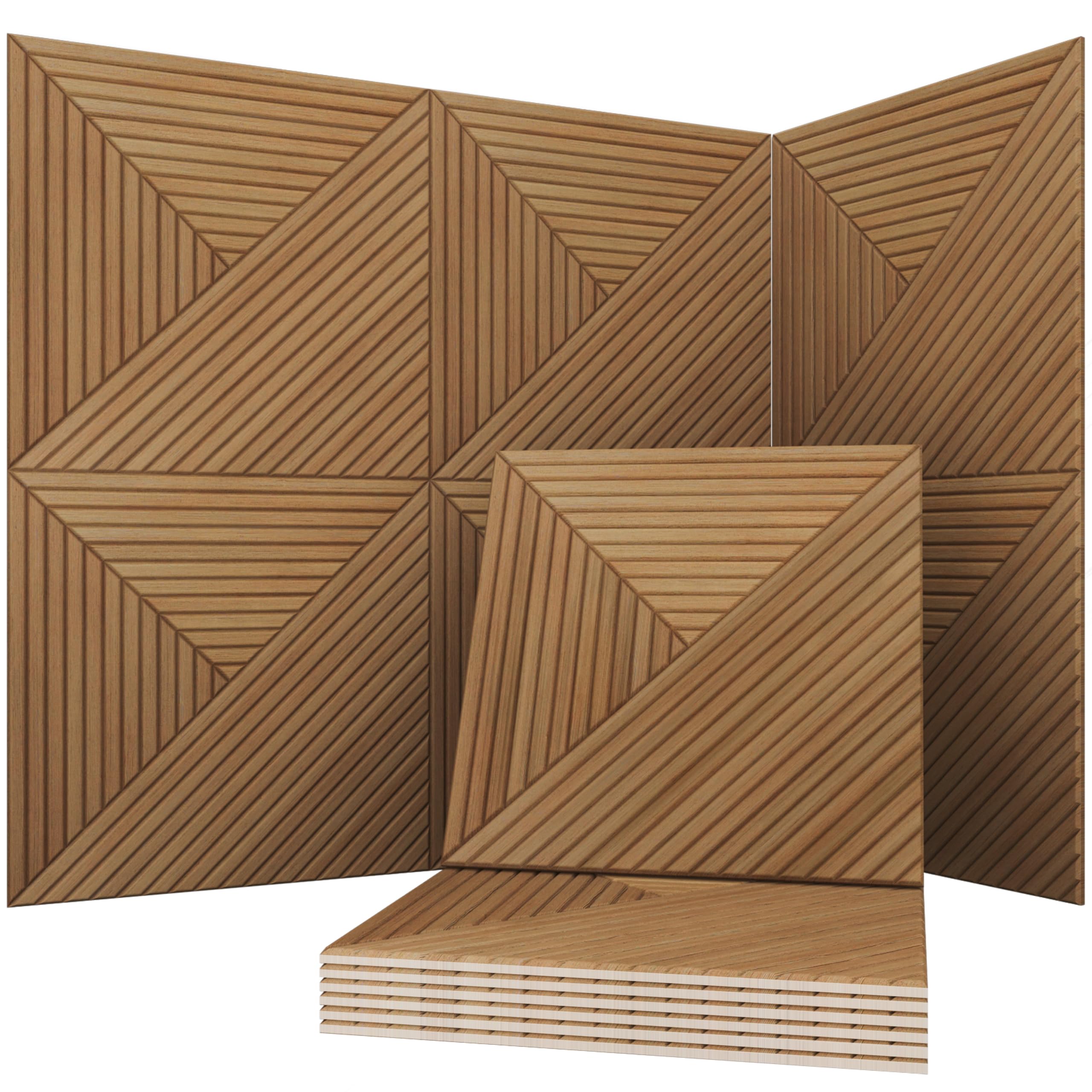
Soon Global takes the decorative acoustic panel concept further by printing a realistic wood texture onto grooved polyester fiber panels that mimic a linear channel diffuser. Each 23.62-inch square panel covers a sizable 4 square feet, and the six-pack covers roughly 24 square feet — enough for a statement wall in a home office or bedroom. The linear grooves increase the effective surface area, improving absorption of high-frequency flutter echo while the polyester core handles the mid-range.
The included 30 adhesive squares make tool-free installation genuinely possible, though users consistently report that ceiling installation fails with adhesive alone. For wall mounting, the transparent squares hold well on smooth, clean surfaces, and the panels are light enough to stay put without nails. The Arcadian Vortex pattern reduces pattern redundancy when you tile multiple panels, a detail that matters for wall-wide installations where repeating visuals can look cheap.
Customer feedback notes zero chemical odor out of the box, which is a strong advantage over polyurethane foam panels that often off-gas for days. The trade-off is that the polyester fiber compresses more easily than high-density foam, so the panels may show dent marks if bumped by furniture or equipment. These are the best-looking panels in the list for someone who wants acoustic improvement and a conversation-starting wall.
Why it’s great
- Realistic wood-grain print avoids the cheap look of standard foam tiles
- No chemical odor — safe for bedrooms and enclosed offices
- Lightweight enough for tool-free adhesive mounting on walls
Good to know
- Adhesive squares are not strong enough for reliable ceiling installation
- Polyester fiber surface is softer and may show compression marks from pressure
4. Knightsacoustic 96 Pack Sound Proof Foam Panels
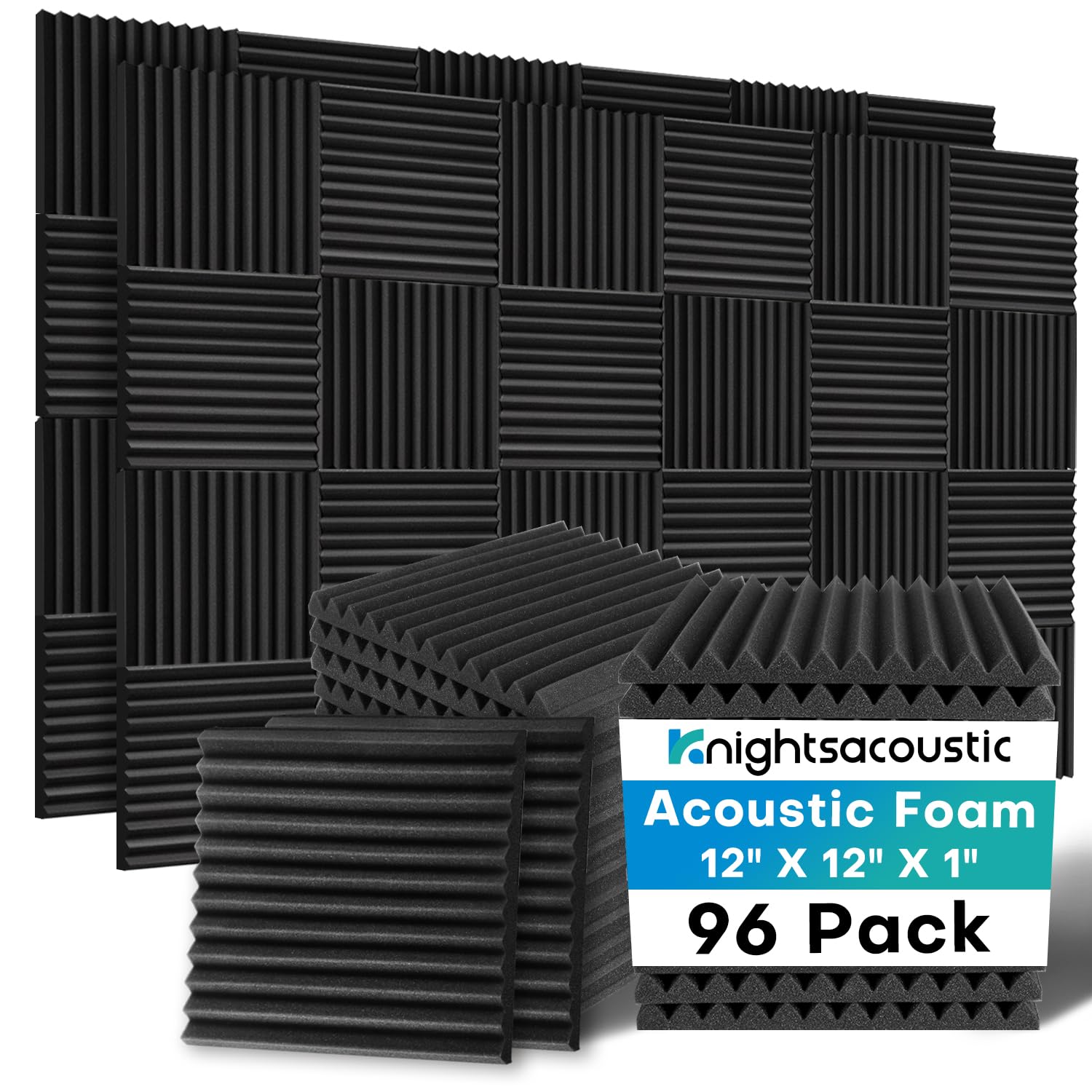
Knightsacoustic offers the most straightforward bulk solution for covering a full studio or game room with 2-inch thick acoustic foam. The wedges are 12 x 12 inches per tile, and the 96-count pack covers 96 square feet — enough to treat a 12×12 room with roughly 70 percent wall coverage. The 2-inch thickness is the critical spec here, because it enables absorption of lower mid-range frequencies that 1-inch panels cannot touch.
The foam is high-density polyurethane with a firm feel that resists permanent compression better than softer budget foams. Users note the absence of adhesive backing, which is actually an advantage for permanent installations: separate spray adhesive allows you to position every tile exactly without the stress of a permanent stick on first contact. The instructions recommend reviving compressed tiles by soaking and drying, a recovery process that confirms the open-cell foam structure is intact.
A practical concern is the slight chemical smell that polyurethane foam emits during the first week of installation. Ventilating the room and letting the panels air out resolves the odor, but sensitive users should factor that in. For pure acoustic performance per square foot at this thickness, Knightsacoustic beats most competitors on depth of absorption band.
Why it’s great
- 2-inch thickness absorbs lower frequencies that 1-inch panels miss
- 96-count pack provides enough coverage for a full room treatment
- No adhesive backing lets you customize placement with spray adhesive
Good to know
- No adhesive included; requires separate purchase of spray glue or mounting squares
- Polyurethane foam may have a mild chemical odor for the first week
5. 100 Pack Acoustic Foam Panels (1 inch)

This 100-pack of 12x12x1-inch foam panels is designed for buyers who need maximum square footage at a per-panel cost that undercuts smaller packs. At 1 inch thick, these panels excel at soaking up high-frequency reflections — think echo in a large office, vocal sibilance in a podcast room, or the metallic ring of a hard-surfaced game room. The included 250 adhesive dots simplify mounting, though users report that some tiles may fall from porous or textured walls over time.
Compressed shipping means the panels arrive vacuum-sealed flat and require 24 to 48 hours to expand back to full shape. Users who followed the expansion instructions had good results, while those who rushed installation found uneven edges. The adhesive dots are strong enough for smooth drywall but leave residue if removed, so plan the layout before sticking. A few panels in each batch may have crimped edges after expansion, which can be trimmed or hidden behind furniture.
The core limitation is the 1-inch thickness: bass frequencies from a subwoofer or a loud gaming setup will pass through these panels almost completely untamed. For treating a room where the main problem is slap echo from speech or television audio, the value proposition is undeniable. Buyers wanting low-end control should look at the 2-inch options instead.
Why it’s great
- Highest panel count per dollar for covering large surface areas
- Includes 250 adhesive dots for tool-free mounting
- Effective at eliminating high-frequency flutter echo and reverb
Good to know
- 1-inch thickness does not absorb low-frequency bass or subwoofer rumble
- Some panels may arrive with crimped edges or take 48 hours to fully expand
6. Sonicism Pyramid Sound Proof Foam Panels

Sonicism brings the classic recording studio wedge back in a pyramid profile that increases the foam surface area by roughly 40 percent compared to a flat tile of the same footprint. At 2 inches thick and made from high-resilience polyurethane, these panels are in the goldilocks zone for broadband absorption: the thickness tackles lower mid-range frequencies, while the pyramid tips diffuse high-frequency reflections. The 12-pack covers 12 square feet, which is enough for a primary reflection point behind speakers or a focused treatment zone in a small recording booth.
The self-adhesive layer is strong out of the box, but humidity and temperature changes can weaken the bond over time. Several users recommend adding spray adhesive for a permanent fix, especially if the room experiences seasonal moisture swings. The rapid expansion feature works well — panels return to full thickness within seconds of opening the vacuum packaging, saving you the waiting period that cheaper foams require.
Removal is the biggest pain point: the adhesive leaves a greasy residue on painted walls that requires solvent to clean, and the foam itself can tear if you try to rip it off in one piece. Plan the layout carefully before peeling the backing paper. For focused echo control in a gaming room or a vocal recording area, the pyramid design performs exactly as promised.
Why it’s great
- 2-inch thick PU foam absorbs low mids that 1-inch panels cannot handle
- Pyramid surface area improves high-frequency diffusion
- Rapid expansion from vacuum packaging — no 48-hour wait
Good to know
- Adhesive loses grip in humid conditions; spray adhesive recommended for permanent installs
- Removal is difficult and may leave residue or damage paint
7. Amantech Hexagon Self-Adhesive Acoustic Panels
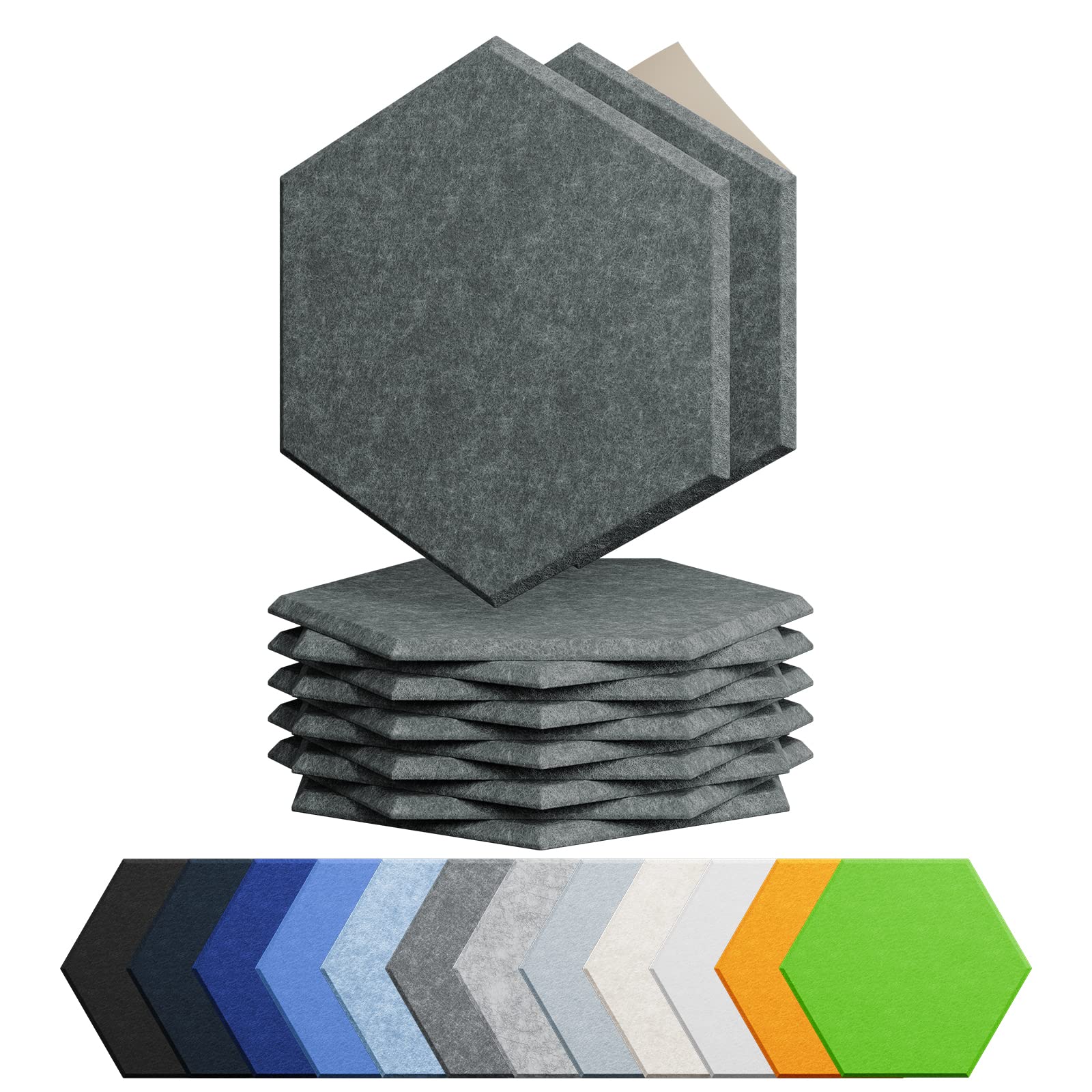
Amantech’s hexagon panels are the entry point for buyers who want to test acoustic treatment without a major financial commitment. The panels measure 12 x 10.23 inches and are just 0.4 inches thick — thinner than any other product in this review. Made from 100% polyester fiber, these panels are odorless and safe for enclosed spaces, but the thin profile severely limits the frequency range they can absorb. High-frequency sibilance and slap echo from hard surfaces see noticeable improvement, but mid-range and bass frequencies pass through almost unchanged.
The self-adhesive backing is convenient for a quick install, but users report that the adhesive can leave a sticky residue when removed from painted drywall. The hexagon shape is visually distinctive and allows for creative wall patterns, which is a genuine plus for a bedroom or home office where aesthetics matter. Multiple colors are available, including the moonlight gray shown here, so the panels can complement a room’s decor rather than clash with it.
Realistic expectations are key here: a single 12-pack covers roughly 8 square feet, which is only enough for a small treatment zone like the area behind a desk or above a television. Stacking multiple packs will be necessary for noticeable room-wide results. If your goal is to dabble in acoustic treatment for under thirty dollars, this is a low-risk starting point.
Why it’s great
- 100% polyester fiber construction is odorless and non-toxic
- Hexagon shape and multiple color options allow decorative wall patterns
- Self-adhesive backing enables tool-free installation
Good to know
- Only 0.4-inch thick — does not absorb mid or low frequencies
- Single 12-pack covers limited area; multiple packs needed for real results
FAQ
Can acoustic panels stop noise from traveling through walls to my neighbor’s apartment?
How many acoustic panels do I need for a typical 12×12 foot home office?
Will 1-inch panels work for a home theater with a subwoofer?
How do I remove self-adhesive panels without damaging my walls?
Final Thoughts: The Verdict
For most users, the best acoustic panels for soundproofing winner is the TONOR Dual-Layer because its polyester construction, large format panels, and two-year warranty provide the best combination of real echo reduction and living-room-friendly appearance. If you want maximum low-frequency absorption for a studio or gaming setup, grab the Knightsacoustic 96 Pack for deep 2-inch foam coverage. And for a decorative wall that reduces echo while looking like high-end interior design, nothing beats the Art3d Wood Slat Panels.