
Our readers keep the lights on and the weekend projects moving. As an Amazon Associate, I earn from qualifying purchases.
Acrylic offers a unique challenge for adhesives. Most glues bead up on its slick surface, leave a cloudy mess, or simply lack the strength to hold two polished edges together without breaking apart under stress. The right solvent cement doesn’t just stick — it chemically fuses the plastic, creating a bond that is often stronger than the surrounding material itself, with a perfectly invisible seam.
I’m Rikta — the co-founder and writer behind FitlyFast. My research into this guide involved cross-referencing solvent chemistry, customer durability reports, and application-specific feedback across hundreds of user reviews to isolate the formulas that truly deliver on their weld claims.
The goal of this guide is to separate the genuine welders from the weak-stick pretenders and present the most effective options currently available as the best acrylic glue.
How To Choose The Best Acrylic Glue
Selecting the right adhesive for acrylic hinges on understanding a few key differences in chemistry and presentation. The wrong choice leads to fogged plastic, weak joints that snap under light pressure, or a messy application that ruins a project you spent hours on.
Solvent Cement vs. Cyanoacrylate
A standard super glue (cyanoacrylate) can bond acrylic, but it often does so by sitting on the surface rather than merging with it. This produces a joint that can shatter cleanly along the glue line under impact. Solvent cement, by contrast, chemically dissolves the surface of the plastic, allowing the molecules of the two pieces to intertwine as it evaporates. The result is a single, unified piece of plastic with no visible seam line. For any clear acrylic project — display cases, sign stands, water features — solvent cement is the professional choice.
Viscosity and Application Method
Water-thin formulas (like Weld-On #3) rely on capillary action to wick into tight-fitting joints. They are ideal for precision work where the pieces already fit flushly, but they offer no gap-filling ability at all. Medium-bodied formulas (like Craftics #33) contain dissolved acrylic solids that give the glue a syrupy thickness. This allows it to bridge small gaps and stay put on vertical surfaces, though it requires a bit more pressure and drying time. Thick formulas are best for repairs where the pieces no longer fit perfectly or where you need to build up a corner joint.
Safety and Ventilation Requirements
All solvent cements release fumes that are potent and can cause dizziness or respiratory irritation in enclosed spaces. Low-VOC and non-chlorinated options like the modern Weld-On #3 reduce the chemical load, but they still require a well-ventilated workspace or a respirator for extended use. The 3M DP810NS goes a step further by using a two-part acrylic chemistry that is truly low-odor and non-flammable, making it a better choice for indoor hobby tables where fume management is difficult.
Quick Comparison
On smaller screens, swipe sideways to see the full table.
| Model | Category | Best For | Key Spec | Amazon |
|---|---|---|---|---|
| Weld-On #3 Cement | Mid-Range | Invisible seams on tight acrylic joints | Low-VOC, non-chlorinated formula | Amazon |
| 3M Scotch-Weld DP810NS | Premium | High-impact, low-odor structural bonds | Two-part, non-sag formula | Amazon |
| Weld-On 16 Cement | Premium | Medium-bodied gap filling on vertical surfaces | 5–6 minute working time | Amazon |
| LITKO Craftics #33 | Mid-Range | Laser-cut kits and small hobby assembly | Medium-bodied, fills small gaps | Amazon |
| Berkland Acrylic Cement | Mid-Range | Economical replacement for Weld-On #3 | Water-thin capillary action | Amazon |
| KRAFTPROTZ 3D Glue | Mid-Range | Gel control for 3D printed parts | 1.76 oz XXL bottle | Amazon |
| Plastruct Bondene | Budget | Entry-level solvent welding for hobbyists | 2 oz bottle, high evaporation | Amazon |
In‑Depth Reviews
1. Weld-On #3 Cement
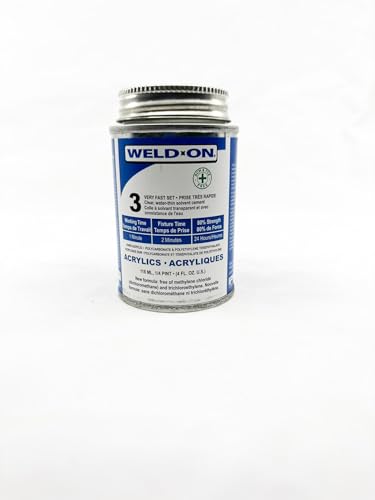
Weld-On #3 is the industry standard for a reason. Its low-viscosity, non-chlorinated formula flows into tight-fitting joints via capillary action in seconds, creating a bond that is optically clear and structurally stronger than the surrounding acrylic. The included applicator bottle with a stainless steel needle gives you pinpoint control, which is essential for work on visible seams where excess glue would ruin the finish.
Users report excellent results on everything from fish tank lid rails to cracked DJI Phantom drone bodies, with many noting that no other adhesive they had tried previously had managed to hold the repair. The low-VOC formulation is a meaningful upgrade over older chlorinated versions, reducing the harsh chemical smell without sacrificing weld speed. Keep in mind that this is a thin solvent — it will not fill gaps, so your pieces must fit flush before application.
The 4-ounce size is generous and the price per ounce is competitive, especially for a formula that is backed by decades of professional fabrication use. If you work with acrylic regularly, this is the glue to keep on your shelf.
Why it’s great
- Low-VOC, non-chlorinated formula reduces harsh fumes
- Capillary action creates invisible, structural welds
- Precision needle applicator for clean work
Good to know
- Not a gap-filler; requires tight-fitting joints
- Full cure takes 72 hours for maximum strength
2. 3M Scotch-Weld DP810NS
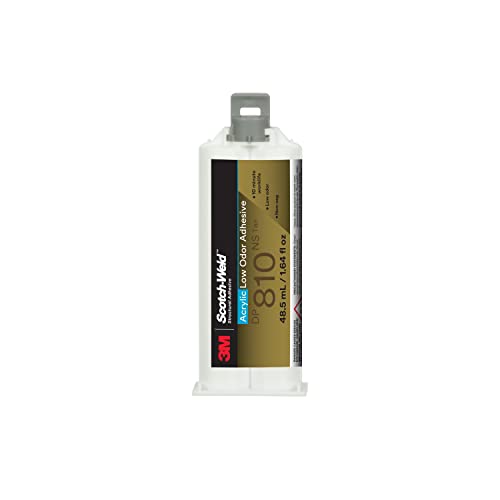
The 3M DP810NS is in a different class from the solvent cements listed here. It is a two-part toughened acrylic adhesive that cures at room temperature and delivers high shear and peel strength, along with impact resistance that a brittle solvent weld cannot match. Its non-sag formula stays exactly where you apply it, which makes it far more forgiving for vertical surfaces and overhead repairs.
This product is the standard choice in golf club assembly — pros and fitters use it to bond shaft to head because of its exceptional strength and resistance to vibration. The 10-minute work life gives you time to position parts, and handling strength is reached in just 20 minutes. It bonds oily metals and a wide range of plastics with minimal surface prep, including polycarbonate, ABS, and acrylic.
The 48.5 mL duo-pak is enough for several small to medium projects, but the cost per application is higher than solvent cement. If your project demands structural integrity — such as a repair on a moving part or a load-bearing fixture — the DP810NS is worth the investment. It is also the best choice for indoor use where low odor is critical.
Why it’s great
- Exceptional shear, peel, and impact strength
- Low odor and non-flammable for indoor use
- Non-sag formula stays put on vertical surfaces
Good to know
- Higher cost per application than solvent cements
- Requires a two-part dispensing gun for the duo-pak
3. Weld-On 16 Cement

When your project involves joints that are not perfectly flush, the thin capillary-action glues will fail. Weld-On 16 solves this with a medium-bodied formula that has a syrupy consistency, filling small gaps and bridging uneven surfaces while still delivering a full solvent weld. The working time of 5 to 6 minutes is generous enough to position and clamp parts for an accurate fit.
It works on cast acrylic, extruded acrylic, polycarbonate, ABS, and styrene, which makes it versatile beyond just clear acrylic projects. Users have successfully repaired polycarbonate water filter housings and bonded PLA and PETG 3D prints, though the formula is noticeably thicker than the #3 variant, so it does not wick into seams on its own. You need to apply it along the joint edge or use a brush.
The 5-fluid-ounce tube is compact, but the thick consistency means each application uses less volume than a thin glue would. The fumes are strong — this is not a low-VOC formulation — so a well-ventilated area or a respirator is recommended. For vertical repairs or any job where sagging is a problem, this is the superior choice in the Weld-On line.
Why it’s great
- Medium body fills small gaps that thin glues cannot
- 5–6 minute working time for accurate positioning
- Bonds a wide range of thermoplastics
Good to know
- Strong fumes require good ventilation
- Does not self-wick; needs brush or nozzle application
4. LITKO Craftics #33
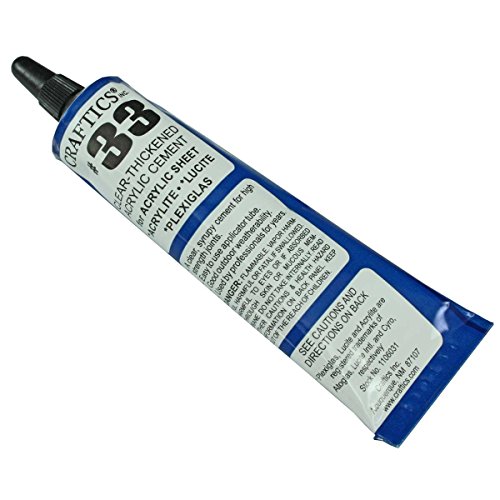
Craftics #33 from LITKO is a fast-setting, medium-bodied solvent cement that is engineered specifically for hobbyists working with laser-cut acrylic kits. It dries completely clear and, critically, does not cause the fogging or whitening that plagues cyanoacrylate glues on transparent acrylic. For display stands, tokens, dice towers, and other laser-cut components, this is the glue that keeps the finished piece looking professional.
The thickened formula fills small surface gaps and irregularities, which is a real advantage when laser-cut edges are not perfectly smooth. Users report excellent results on acrylic fish tank lids and broken refrigerator drawers, with bonds that have held for months or years. The tube packaging is small and easy to store, but the consistency can get stringy as the tube ages, which can create messy strands if you are not careful.
One trade-off is that the glue is somewhat runny despite being medium-bodied, so you need to apply it carefully and only get one chance to position parts before it sets. Full strength arrives in 24 hours. For anyone assembling acrylic models or display pieces where aesthetics matter as much as strength, this is a reliable pick.
Why it’s great
- Dries crystal clear with no fogging on transparent acrylic
- Medium body fills small gaps for imperfect joints
- Reliable on laser-cut acrylic hobby kits
Good to know
- Gets stringy with age and exposure to air
- Once applied, repositioning is not possible
5. Berkland Acrylic Bonding Cement
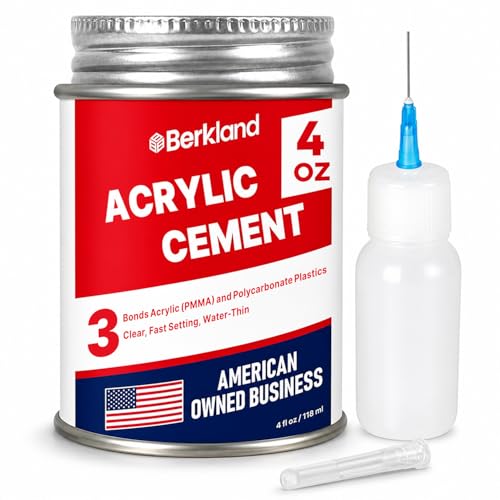
The Berkland Acrylic Cement is a water-thin formula that performs functionally identically to Weld-On #3, but at a more accessible price point. It relies on capillary action to wick into tight seams, creating a weld that is stronger than the surrounding plastic. The 4-ounce bottle comes with an applicator bottle and dropper, and the formula dries crystal clear with no clouding on transparent sheets.
Users report it bonds PLA prints strongly — stronger than the layer lines themselves — and works well on thick plexiglass boxes and cracked turntable dust covers. The included needle tip (25g) is a bit large and can dribble if you are not careful, but the glue itself is excellent. Some users recommend transferring it to a finer syringe for precision work. It sets in minutes, with full cure in 24 hours.
The one notable drawback is that the secondary lid on the storage canister can be very hard to pry open. Also, like all thin solvent cements, it will mar the surface if you spill it, and it can create bubbles in the joint if applied too generously. For the price, this is a solid budget alternative that does not compromise on weld quality.
Why it’s great
- Excellent capillary action for invisible, strong bonds
- Dries clear with no fogging on acrylic
- Good value compared to branded equivalents
Good to know
- Included needle tip is 25g and can dribble
- Storage lid is difficult to open initially
6. KRAFTPROTZ 3D Printer Super Glue
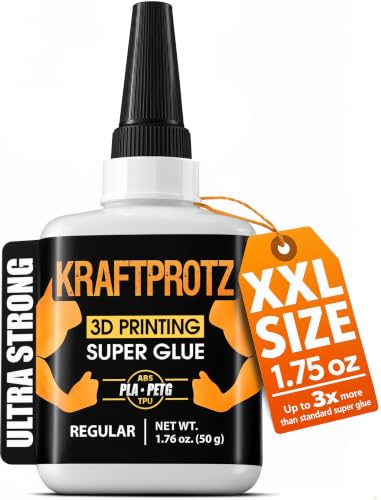
This is not a solvent cement — it is a cyanoacrylate gel formulated specifically for 3D printed filaments including PLA, ABS, PETG, TPU, and Nylon. What sets it apart from standard super glues is its gel consistency, which stays exactly where you put it instead of running into every adjacent crevice. The precision needle tip allows you to place a bead on a seam without creating a mess.
Users report that it creates a bond that feels stronger than the surrounding print, and it cures quickly without the blooming or ghosting that plagues some CA glues. The gel formula is thick enough to bridge small gaps in poorly fitting parts, but it still dries as fast as a thin glue, eliminating the need for an accelerator. The 1.76-ounce XXL bottle offers significantly more volume than standard CA glue bottles, making it a good option for frequent users.
The bond is heat resistant up to 110°C and waterproof once cured, which makes it suitable for RC parts, drone repairs, and outdoor components. This is not the glue for joining clear acrylic sheets — the gel will leave a visible line. But for assembling or repairing 3D printed parts, it is one of the most effective options available.
Why it’s great
- Gel formula stays put on vertical seams
- Bonds PLA, ABS, PETG, TPU, and Nylon reliably
- XXL bottle provides great value for heavy users
Good to know
- Leaves a visible glue line unlike solvent cement
- Not suitable for optically clear acrylic joints
7. Plastruct Bondene
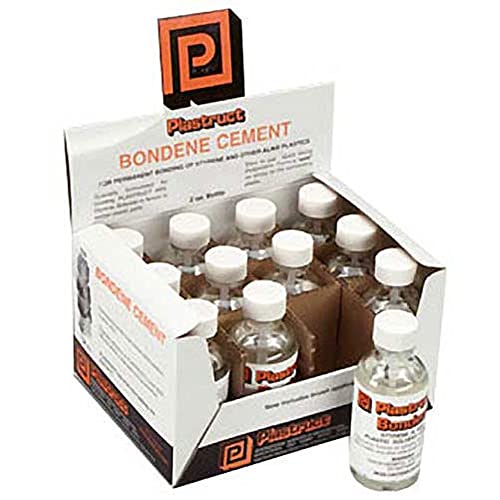
Plastruct Bondene is a classic solvent cement that has been a staple of hobby worktables for years. It works by melting the surface of styrene, ABS, and acrylic parts to create a fused joint. It is water-thin and flows quickly into seams via capillary action, making it ideal for model assembly where minimal glue application is desired. Users frequently compare it favorably to Tamiya Extra Thin and Tenax, noting that the 2-ounce bottle offers more volume for the money than those brands.
A standout feature in user feedback is its effectiveness on PLA 3D prints — several users report that it bonds PLA parts solidly, even though the glue looks like there is nothing there. It also works on TPE doll repair as a lower-cost alternative to specialized TPE glues, though the bond in high-stress areas is weaker than original mold strength. The solvent evaporates quickly, leaving a strong, clear weld in seconds.
The main complaint is that the glue evaporates noticeably even with the lid tightly closed, reducing the usable lifespan of the bottle. This is a common issue with thin solvent cements, but it is worth noting if you do not use it frequently. For the price, Bondene is an excellent entry point into solvent welding for hobbyists and modelers.
Why it’s great
- Thin, high-flow formula for clean capillary welds
- Bonds acrylic, styrene, ABS, and PLA
- Strong value with a 2-ounce bottle size
Good to know
- Evaporates noticeably over time even when sealed
- Not for high-stress repairs on flexible plastics
FAQ
Can acrylic glue be used on PLA 3D prints?
Why does my clear acrylic look foggy after using glue?
How do I apply thin solvent cement without making a mess?
Is there a difference between Weld-On #3 and Weld-On #16?
Final Thoughts: The Verdict
For most users, the best acrylic glue winner is the Weld-On #3 Cement because it combines a professional-grade low-VOC formula, reliable capillary action, and a precision applicator at a fair price. If you need a low-odor structural adhesive for high-impact joints, grab the 3M Scotch-Weld DP810NS. And for gap-filling jobs on vertical surfaces or 3D printed parts, nothing beats the Weld-On 16 Cement for its medium-bodied hold and generous working time.