
Our readers keep the lights on and the weekend projects moving. As an Amazon Associate, I earn from qualifying purchases.
Your RV or metal roof takes a beating from UV rays and rain, and thin, low-quality coatings peel and crack within a single season. The right acrylic elastomeric formula creates a flexible, waterproof membrane that reflects solar heat and prevents leaks without needing constant re-application. This guide breaks down the top performers based on real-world coverage, adhesion, and reflectivity metrics.
I’m Rikta — the co-founder and writer behind FitlyFast. My research into this category involved analyzing hundreds of hours of customer application reports and technical spec sheets to identify which acrylic roof coatings actually deliver on their solar-reflectance and waterproofing claims.
Every formula reviewed here was selected for its ability to form a durable, flexible seal on EPDM, TPO, metal, and fiberglass surfaces, and each entry focuses on the measurable specs that matter most for long-term roof protection. This guide will help you find the best acrylic roof coating for your specific roof material and climate conditions.
How To Choose The Best Acrylic Roof Coating
Picking the wrong coating means peeling, blistering, and wasted labor. Focus on your roof substrate, the coating’s solids content, and its solar reflectance rating to avoid the common beginner mistakes that lead to premature failure.
Match the Chemistry to Your Roof Substrate
Not all acrylic coatings bond to every surface. Formulations designed for EPDM rubber often contain plasticizers that damage TPO membranes, while metal-specific coatings may lack the flexibility needed for rubber roofs. Check the manufacturer’s compatibility list for EPDM, TPO, metal, fiberglass, and PVC before buying.
Prioritize Solids Content Over Water Content
A high-solids acrylic coating (typically 50-65% solids by volume) leaves a thicker, more durable membrane after the water evaporates. Lower-solids coatings require more coats to reach the same film thickness and are more prone to cracking under thermal expansion.
Look for Certified Solar Reflectance Values
White elastomeric coatings with initial reflectivity above 80% and weathered reflectivity above 70% will measurably reduce roof surface temperature and cut cooling costs. Products with ceramic microcell additives can push heat reduction further — check for independent test data or Energy Star qualification.
Quick Comparison
On smaller screens, swipe sideways to see the full table.
| Model | Category | Best For | Key Spec | Amazon |
|---|---|---|---|---|
| Dicor CoolCoat RP-IRC-1 | High-Performance | Heat reduction on EPDM/PVC | 29% heat transfer reduction | Amazon |
| Rust-Oleum 710 Elastomeric | Premium | Large flat roofs and metal | 84% initial reflectivity | Amazon |
| Gardner-Gibson Sta-Kool Turbo-Dri | Premium | Fast-drying RV applications | 30-minute dry time | Amazon |
| BEEST Liquid Rubber Coating | Mid-Range | Thick film on RV roofs | 1 gal per 50 sq ft (2 coats) | Amazon |
| Wadities RV Roof Coating | Mid-Range | Kit includes brush and cloth | Cream form, 1000% flexibility | Amazon |
| Dicor RP-MRC-1 Acrylic | Entry-Level | Metal RV roofs | 200 sq ft per gallon coverage | Amazon |
| Xmntdo RV Roof Sealant | Entry-Level | Budget-friendly RV repair | Polyurethane hybrid formula | Amazon |
In‑Depth Reviews
5. Dicor CoolCoat RP-IRC-1

Dicor’s CoolCoat formula incorporates ceramic microcells that reduce heat transfer to the interior by up to 29 percent, making this the top choice for RV owners in hot climates who want to lower AC demand. The white gloss-to-satin finish reflects solar radiation aggressively, and the 125-square-foot-per-gallon coverage allows for multiple thick coats on a standard 36-foot fifth wheel. Application requires a rubber roof cleaner/activator for proper adhesion on EPDM and PVC surfaces, which is standard practice for high-performance acrylics.
Customer reports confirm noticeable interior temperature drops after two coats, with the coating holding up under Florida sun. Some users experienced blistering after a month, which Dicor addresses in their FAQ as a normal phenomenon related to outgassing from aged rubber; they recommend their long-life formula for older roofs. The coating cures to a thick, rubbery membrane that seals small cracks effectively, but it demands careful surface prep and temperature monitoring (above 50°F) to avoid adhesion issues.
The 12-pound gallon weight indicates a higher solids content compared to entry-level coatings, contributing to its durable film build. For RV owners with EPDM or PVC roofs who want measurable cooling performance and are willing to follow a multi-coat process, this is the most effective acrylic option available. The blistering risk on neglected substrates is a valid concern, but proper cleaning and priming largely mitigates it.
Why it’s great
- Ceramic microcells reduce heat transfer by up to 29%
- Thick, high-solids formula builds durable membrane
- Glossy white finish maximizes solar reflectance
Good to know
- Only for EPDM and PVC — not for TPO or metal
- Requires separate activator for proper adhesion
- Potential blistering on aged, outgassing rubber roofs
6. Rust-Oleum 710 Elastomeric Roof Coating
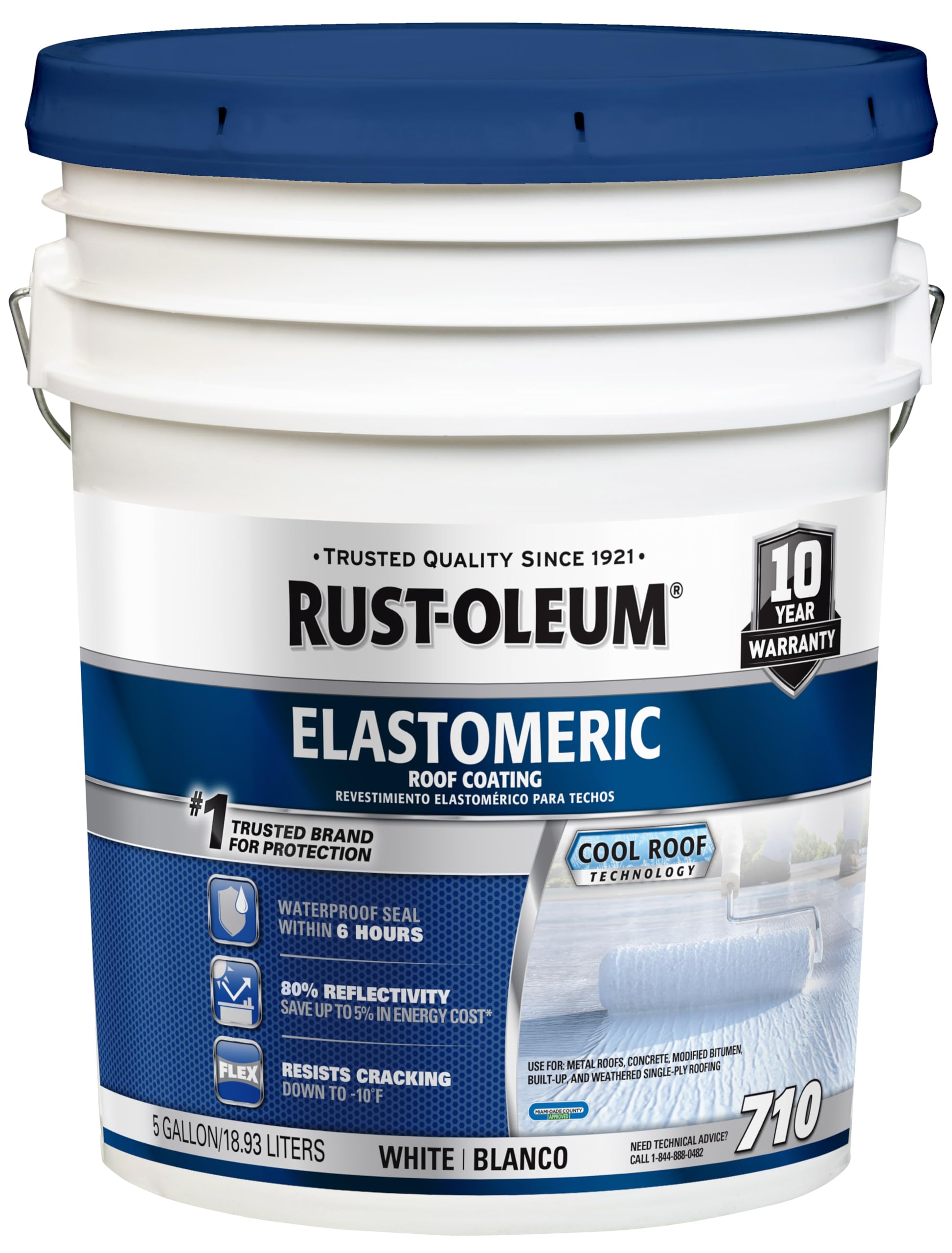
Rust-Oleum’s 710 formula delivers an 84 percent initial solar reflectivity and 74 percent weathered reflectivity, making it one of the most energy-efficient acrylic coatings for large flat roofs and metal surfaces. The 5-gallon pail provides enough material for approximately 330 square feet (two coats at 1.5 gallons per 100 square feet), ideal for whole-house applications. The latex-like consistency requires minimal stirring and cleans up with soap and water, lowering the barrier for DIY application.
Application feedback highlights the need for a thick roller nap (3/4 inch) to achieve proper film thickness on the first coat. Users report that the coating dries to a rubbery finish similar to a shoe sole, with rain resistance in about six hours under warm, low-humidity conditions. However, applying excessively thick coats can extend dry time beyond 48 hours, leaving the coating vulnerable to wash-off if unexpected rain occurs. A thin second coat improves appearance and weatherproofing.
Customers with EPDM rubber roofs on townhouses and metal box trucks report significant interior temperature drops after two coats, with one user noting the top floor stayed noticeably cooler during summer. The 5-7 year lifespan between re-coats makes this a cost-effective solution for large areas. Just be aware that full cure requires 24 hours, and thick applications on sloped roofs may run before setting.
Why it’s great
- High 84% initial solar reflectivity saves on cooling
- 5-gallon pail provides excellent coverage for large roofs
- Easy water cleanup and low odor during application
Good to know
- Thick coats take over 48 hours to fully cure
- Rain within 6 hours can wash off uncured coating
- Requires 3/4-inch nap roller for proper thickness
7. Gardner-Gibson Sta-Kool 15-Year Turbo-Dri
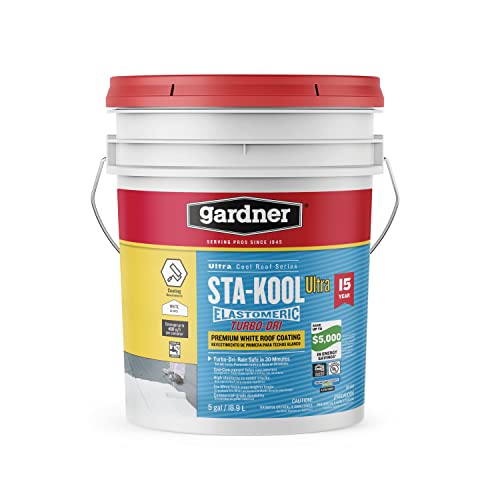
The Gardner-Gibson Sta-Kool Turbo-Dri formula cures to the touch in just 30 minutes and fully cures in three hours, making it the fastest-drying acrylic roof coating on this list. This is a critical advantage for DIY users who need to apply multiple coats in a single day or who face unpredictable weather windows. The white reflective finish is water-based and cleans up easily, and the 5-gallon pail offers substantial coverage for camper roofs and flat residential roofs.
Users note that the first coat tends to go on thin until you adjust to the required thickness; rolling it on as thick as possible in one pass eliminates the need for a third coat. The coating bonds well to EPDM and metal surfaces, and reviews from camper owners report a factory-fresh look after application. The fast dry time reduces the risk of dust and debris sticking to the wet surface, a common problem with slower-curing elastomerics.
The 15-year warranty claim is ambitious for any acrylic coating, but the product’s performance in sealing cracks and preventing water intrusion is backed by consistent positive feedback. The main consideration is that the thin consistency requires deliberate application technique to achieve adequate film build — beginners may need to practice on a small section first. For fast turnaround projects, this is the most time-efficient choice.
Why it’s great
- Fastest dry time — 30 minutes to touch, 3 hours to cure
- Excellent for multi-coat same-day application
- Water-based formula for easy cleanup
Good to know
- First coat often goes on too thin until technique improves
- 15-year warranty may be optimistic for extreme climates
- Requires thick rolling for proper film build
3. BEEST Liquid Rubber Coating

The BEEST Liquid Rubber Coating is formulated as a thick, non-runny acrylic elastomeric that bonds to EPDM, TPO, metal, aluminum, fiberglass, and PVC — making it the most versatile substrate-compatible option in this roundup. The 1-gallon container covers 50 square feet at two coats, and the ultra-low VOC, solvent-free formula is safe for indoor and outdoor use around humans and pets. This is a USA-made product from an American family-owned company in Pennsylvania, which appeals to buyers prioritizing domestic manufacturing.
Customer reviews consistently praise the thick consistency that doesn’t sag or run on vertical surfaces, a common frustration with thinner acrylic coatings. Users report excellent adhesion on RVs, utility trailers, and flat roofs, with many noting that application is straightforward for first-time DIY users. The 4-hour recoat window and 48-hour full cure timeline align with industry standards, and the coating holds up well under extreme temperature swings.
The coverage rate is lower than some competitors (50 sq ft per gallon vs. 125-200 sq ft for Dicor and Rust-Oleum), meaning larger roofs will require multiple gallons. The thicker formula also means the coating is heavier per square foot, which is not an issue for structural roofs but may add noticeable weight on lightweight camper shells. For anyone needing a single product that works across multiple roof materials, this is the most reliable all-arounder.
Why it’s great
- Bonds to EPDM, TPO, metal, fiberglass, and PVC
- Thick, non-runny formula for vertical surfaces
- Ultra-low VOC and solvent-free for safe application
Good to know
- Lower coverage rate — 50 sq ft per gallon
- Requires separate primer for EPDM roofs
- Heavier film adds weight on lightweight campers
4. Wadities RV Roof Coating

The Wadities RV Roof Coating stands out for its cream-like consistency that offers 1000 percent flexibility in the final membrane, reducing the risk of adhesion failure during thermal expansion cycles. Each 1-gallon kit includes a brush and polyester cloth for reinforcing seams and transitions, adding value for first-time buyers who lack specialized tools. The formula boasts a higher concentration of solid materials compared to thinner alternatives, creating a robust waterproof barrier.
User reports indicate the coating spreads easily with a brush or roller and dries quickly enough to apply two coats in a single day under warm conditions. Multiple customers with older fifth wheels and campers report that persistent corner and seam leaks stopped completely after two heavy coats, with no re-leaks after several months of rain exposure. The included polyester cloth is useful for reinforcing problem areas like vent edges and skylight perimeters.
The 50-square-foot-per-gallon coverage at one coat aligns with the category standard, but the cream form requires deliberate spreading to avoid uneven thickness. One reviewer noted that previous coatings peeled after two years, while this one held strong through the same period — suggesting the higher solids content delivers better long-term adhesion. For RV owners who want an all-in-one kit with reinforcement material, this is a practical, ready-to-use solution.
Why it’s great
- 1000% flexibility prevents thermal cracking
- Includes brush and polyester cloth for seam reinforcement
- Higher solids content than many entry-level coatings
Good to know
- Cream form requires careful spreading for even coverage
- 50 sq ft per gallon coverage is lower than some options
- No specific reflectivity percentage data provided
2. Dicor RP-MRC-1 Acrylic Elastomeric

The Dicor RP-MRC-1 is a dedicated acrylic elastomeric coating explicitly formulated for metal RV roofing, not for EPDM or TPO membranes. This substrate specificity is critical because metal expands and contracts differently than rubber, requiring a coating with different elastic modulus and adhesion chemistry. The brilliant white finish provides superior reflectivity on aluminum and steel roofs, significantly lowering interior temperatures — a claim backed by multiple customer reports of roofs going from too-hot-to-touch to cool after two thin coats.
At 200 square feet per gallon, this is the highest-coverage product in the lineup, making it the most economical choice for large metal roofs. One customer applied four coats on a 38-year-old RV roof and reported excellent heat deflection, with the interior staying noticeably cooler on 90-degree days. However, the coating cures slowly — even on an 80-degree day, residual runoff can drip down the RV sides if the coating is applied too thickly or if the second coat is applied before adequate drying.
The matte finish provides a clean, professional look, and a single gallon will cover an entire standard RV metal roof with multiple coats. The product comes in a 1-gallon can and requires no special primer for metal surfaces, though thorough cleaning is essential. For owners of aluminum or steel RV roofs who want maximum coverage per dollar, this is the most efficient option available.
Why it’s great
- Highest coverage — 200 sq ft per gallon
- Superior heat deflection on metal roofs
- Matte white finish looks clean and professional
Good to know
- For metal RV roofs only — not for EPDM or TPO
- Cures slowly — can run/drip on sloped roofs
- Thick coats may require 5-6 hours minimum dry time
1. Xmntdo RV Roof Sealant
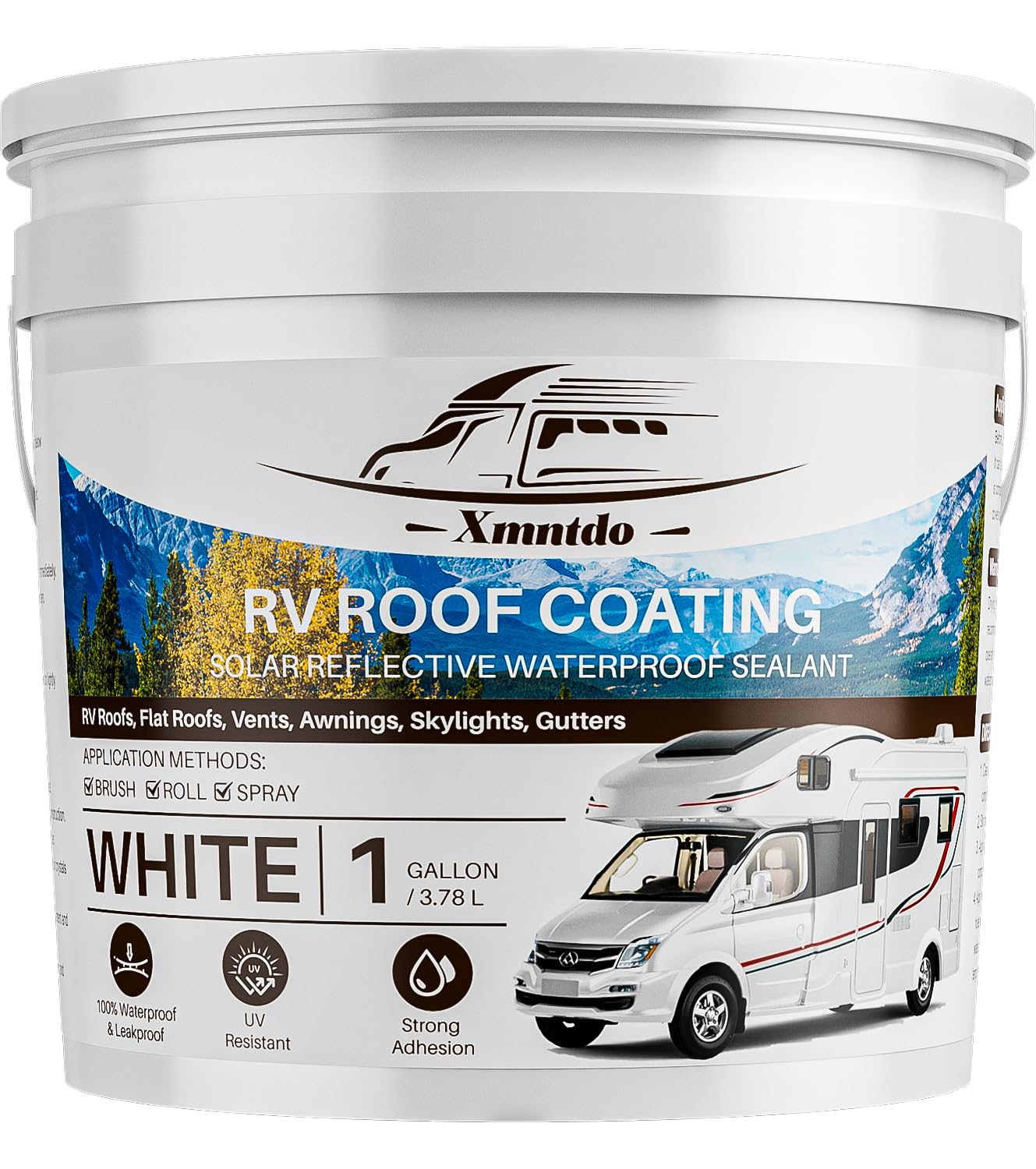
The Xmntdo RV Roof Sealant uses a polyurethane hybrid formula rather than a pure acrylic, offering a different balance of flexibility and adhesion for RV roofs made of EPDM, TPO, fiberglass, and aluminum. The self-leveling gel consistency is designed to flow into small cracks and seams, creating a seamless waterproof barrier that works well for leak repair and maintenance projects. Coverage is 50 square feet per gallon, suitable for spot repairs or coating smaller campers.
Customer feedback highlights how easy the gel is to apply with a brush or roller, with a dry-to-touch time of 4-6 hours and full cure within 24-48 hours depending on temperature and thickness. The white coating provides solar reflective properties that reduce roof surface temperature, though specific reflectivity percentages are not published. Users with older campers report effective sealing of bathroom corners, floor cracks, and canopy slide-outs, with the coating forming an invisible protective layer.
The primary trade-off with this entry-level product is the polyurethane chemistry, which may not offer the same long-term UV stability as dedicated acrylic elastomerics. The recommended application temperature above 50°F is standard, but the 24-hour wait between coats can slow down large projects. For budget-conscious buyers who need a reliable sealant for a smaller RV or specific leak areas, this product delivers good value without requiring specialized application equipment.
Why it’s great
- Self-leveling gel fills cracks and seams effectively
- Works on EPDM, TPO, fiberglass, and aluminum
- Easy brush or roller application for beginners
Good to know
- Polyurethane formula may have lower UV stability than acrylics
- Requires 24-hour wait between coats for best results
- No published solar reflectance percentage data
FAQ
Can I apply acrylic roof coating over an old rubber roof without removing it?
How many coats of acrylic roof coating do I need for my RV?
Will acrylic roof coating work on a TPO membrane?
How long does acrylic roof coating last before needing recoating?
Final Thoughts: The Verdict
For most users, the best acrylic roof coating winner is the Dicor CoolCoat RP-IRC-1 because it offers the highest heat reduction through ceramic microcell technology, builds a thick protective membrane, and is specifically engineered for the EPDM and PVC roofs found on most RVs. If you want the fastest cure time and need to finish a project in a single day, grab the Gardner-Gibson Sta-Kool Turbo-Dri. And for maximum coverage on a metal roof at the lowest cost, nothing beats the Dicor RP-MRC-1 Acrylic Elastomeric.