
Our readers keep the lights on and the weekend projects moving. As an Amazon Associate, I earn from qualifying purchases.
Nothing ruins a painting faster than a varnish that yellows, peels, or leaves a frosty haze. Artists invest hours in color mixing and layering, only to watch a poor sealer dull their work or shift the hue entirely. The right acrylic varnish should lock in vibrancy, protect against dust and UV light, and dry to the exact sheen you intended — without chemical surprises.
I’m Rikta — the co-founder and writer behind FitlyFast. I’ve spent hundreds of hours cross-referencing technical data sheets, analyzing customer test results, and studying polymer chemistry to separate the varnishes that deliver archival protection from the ones that fail within a year.
Acrylic varnish is the final, critical layer that determines whether your artwork lasts decades or degrades in months. This guide reviews seven top contenders to help you find the best acrylic varnish for your specific project needs, from miniature wargaming figures to large gallery canvases.
How To Choose The Best Acrylic Varnish
Selecting a varnish goes beyond grabbing the first glossy bottle you see. The wrong choice can leave brush strokes, turn milky in humidity, or yellow after six months. Here are the critical factors to weigh before you buy.
Sheen Level — Gloss, Satin, or Matte
Gloss varnish deepens colors and creates a reflective, wet look ideal for abstract pieces or work meant to pop under gallery lights. Satin offers a mid-range sheen that reduces glare while still enhancing color depth — popular for general-purpose painting. Matte varnish kills reflections entirely, preserving the original flat look of the paint, but some formulas can leave a chalky haze if applied too thickly. Always test on a sample board first.
Film Hardness and Removability
Archival varnishes are designed to be removable — they form a sacrificial layer that can be taken off with a gentle solvent without damaging the paint beneath. This is essential for professional artists who may want to clean or re-varnish decades later. Many water-based acrylic varnishes, however, form a permanent, non-removable film once fully cured. Check the label: if the manufacturer says it’s archival and removable, it typically contains a synthetic resin like MSA or Gamvar that meets conservation standards.
Application Method and Drying Behavior
Liquid brush-on varnishes give you precise control over thickness and leveling, but they can leave visible brush marks if not applied with a soft, wide brush. Spray aerosols offer a uniform, airbrushed finish without streaks, but overspray and environmental humidity can cause frosting. Quick-dry formulas are appealing but require working quickly — if you hesitate, you’ll create lap marks. For large canvases, a self-leveling liquid varnish is usually safer; for small models and miniatures, a spray delivers finer control.
Quick Comparison
On smaller screens, swipe sideways to see the full table.
| Model | Category | Best For | Key Spec | Amazon |
|---|---|---|---|---|
| Liquitex Professional Satin Varnish | Satin Liquid | Professional canvases & murals | Self-leveling, 72hr full cure | Amazon |
| Gamblin Gamvar Picture Varnish | Removable Gloss | Archival & gallery paintings | Removable synthetic resin | Amazon |
| Vallejo Acrylic Satin Varnish Spray | Aerosol Spray | Miniatures & model kits | 400ml spray, scratch resistant | Amazon |
| AK Interactive Ultra Matt Varnish | Ultra-Matte Spray | Dead-flat miniature finishes | Zero-glare matte aerosol | Amazon |
| RUSTINS Quick Dry Poly Varnish Satin | Polyurethane Satin | Wood & tile crafts | 10-15 min dry-to-touch | Amazon |
| DecoArt DuraClear Matte Varnish | Brush-on Matte | Mixed-media & polymer clay | True matte, 236ml bottle | Amazon |
| Mont Marte Gloss Acrylic Varnish Signature | Budget Gloss Liquid | Student art & craft projects | 30-min dry, brush included | Amazon |
In‑Depth Reviews
1. Liquitex Professional Satin Varnish

Liquitex is the gold standard in acrylic mediums for good reason. This satin varnish levels itself beautifully — brush strokes disappear as it dries, leaving a uniform, non-tacky surface. The 237ml bottle sealed an entire indoor mural with one coat, according to real users, and the satin finish hits the sweet spot between gloss richness and glare-free viewing.
The varnish dries to the touch in about four hours and reaches full hardness at 72 hours. It’s non-yellowing, UV-resistant, and water-resistant once cured. Artists note that additional coats push the sheen toward a glossier look, so one to three thin coats give you control over the final reflection. Cleaning requires only warm water and dish soap while wet.
This is not a removable varnish — it forms a permanent film. That makes it ideal for indoor pieces where you won’t need future conservation stripping. For professional muralists, pour painters, and canvas artists who want a reliable, consistent satin finish, this is the benchmark.
Why it’s great
- Self-leveling formula eliminates brush marks
- Non-yellowing with UV protection built in
- Easy water cleanup before cure
Good to know
- Permanent film — not removable for archival cleaning
- Requires 72 hours for full hardness
2. Gamblin Gamvar Picture Varnish

Gamblin Gamvar is the choice of professional artists who need a varnish that restores original brilliance without altering the paint layer. It’s a synthetic resin formula that rivals traditional Damar natural resin but applies faster and with less odor. Users report that dull, muddy paintings regain their full depth and clarity after a single coat.
The key differentiator here is removability. Gamvar can be gently removed years later with mineral spirits, allowing conservators to clean dirt or reverse yellowing without damaging the acrylic beneath. Most water-based varnishes cannot offer this. The 8.5oz bottle goes a long way — a thin, even coat is all it takes, and the gloss finish dramatically deepens dark colors.
Because it’s a slower-drying solvent-based varnish, you must work in small sections with a soft brush to avoid bubbles. Gamblin recommends waiting at least six months after the painting is completed before applying, which is standard for archival varnishes. If you sell gallery work or want true conservation-grade protection, this is the winner.
Why it’s great
- Removable synthetic resin for archival safety
- Dramatically restores color depth and clarity
- Low odor compared to traditional damar
Good to know
- Paint must be fully cured (6+ months) before application
- Requires careful section-by-section brushing to avoid bubbles
3. Vallejo Acrylic Satin Varnish Spray
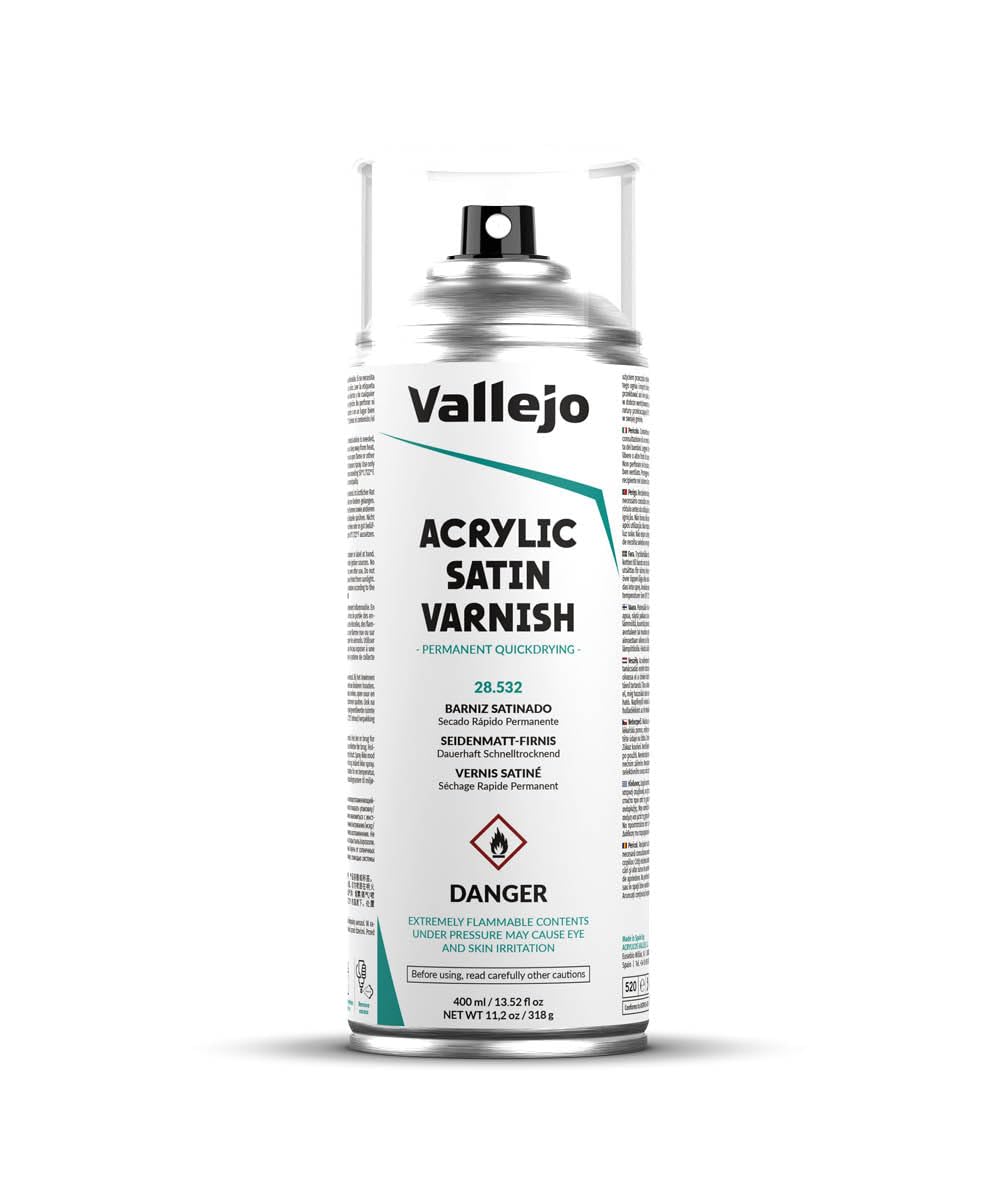
Vallejo’s spray varnish delivers 400ml of aero-applied protection that wargamers and scale modelers have trusted for years. The satin sheen sits between flat and gloss — ideal for military miniatures where you want a realistic, slightly reflective surface that still holds detail. The spray pattern is even and the nozzle atomizes well, reducing the risk of pooling.
The film hardens into a scratch-resistant, UV-blocking layer that handles handling during gameplay. Users caution that the spray goes on wet, so heavy application from too close can cause frosting or a temporary glossy appearance. Shaking the can for a full minute and spraying from about 40cm away at low humidity eliminates this risk. It’s compatible with wood, metal, resin, and most plastics.
For the price, you get four times the volume of many premium hobby sprays. The finish darkens colors slightly, which actually makes them richer. If you batch-paint armies or large model collections, this is the most efficient way to seal everything uniformly.
Why it’s great
- High volume for the cost — great for batch painting
- Scratch resistant film for gaming miniatures
- Even spray pattern with good atomization
Good to know
- Can frost if applied in high humidity or too close
- Sprays wet — light coats are essential
4. AK Interactive Ultra Matt Varnish
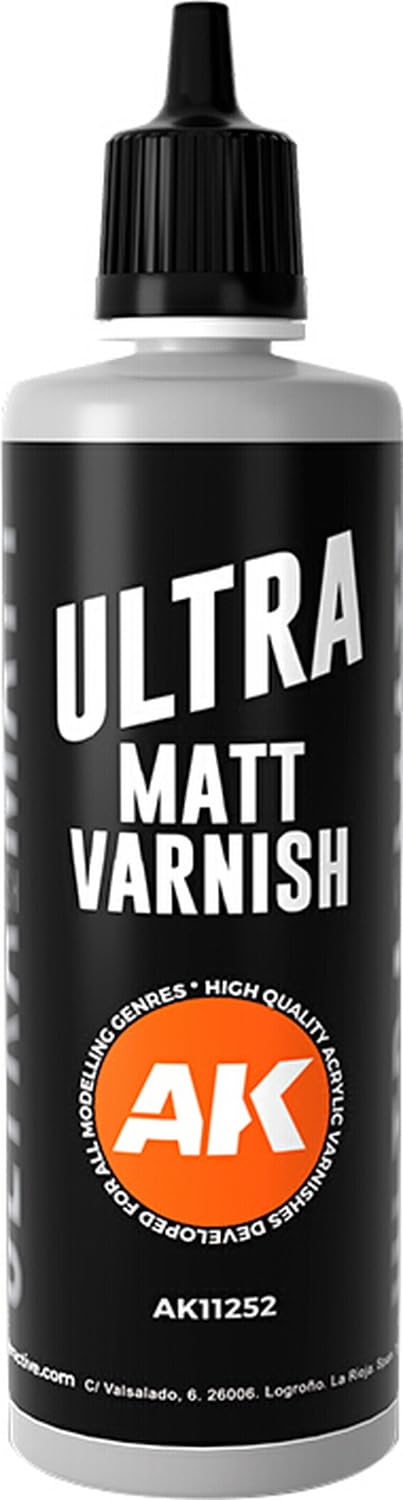
AK Interactive’s Ultra Matt is the go-to for painters who cannot tolerate any reflection. This 100ml aerosol delivers a dead-flat finish that feels velvety to the touch — no glare, no sheen, just the raw pigment color. Miniature painters use it between paint layers to reset the surface texture and as a final seal before applying metallic highlights.
The varnish flows beautifully through an airbrush when thinned with AK’s proprietary thinner, and it dries quickly with no discernible film. Users note it works best over gloss base layers; applying it directly to matte paint can sometimes cause a white, cloudy residue if not shaken thoroughly or if the ambient humidity is high. It’s a water-based acrylic formula, but it’s specially engineered for scale models and wargaming figures.
The 3.38oz can is small, which reflects its premium positioning. One can will seal roughly 20-30 standard 32mm miniatures. If you chase museum-quality, zero-glare finishes for competition pieces or display models, this is the formula that serious miniature artists swear by.
Why it’s great
- Genuine dead-flat matte with soft tactile finish
- Flows well through airbrush for precise control
- Dries quickly between layers
Good to know
- Small can size — limited coverage per purchase
- Can create white residue if conditions are wrong
5. RUSTINS Quick Dry Poly Varnish Satin
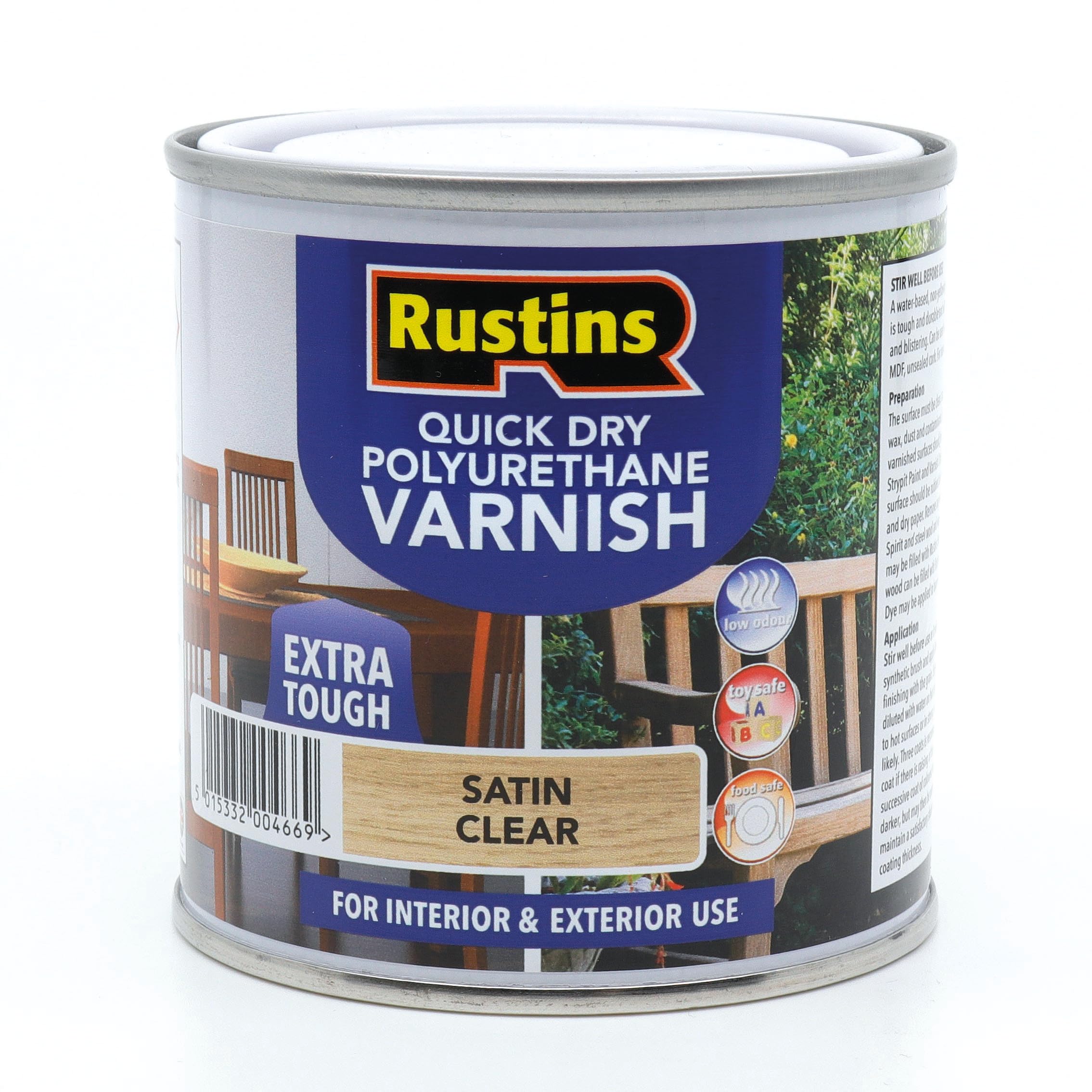
Rustins dries to the touch in 10-15 minutes per coat, making it one of the fastest-drying varnishes in this lineup. The polyurethane formula creates a tough, water-resistant finish on wood and tile — it’s not an acrylic varnish in the traditional sense, but it works beautifully as a topcoat for acrylic-painted furniture and craft wood projects. Users report brush marks disappear as it dries.
The satin finish hits a refined middle ground: enough sheen to protect colors without the disco-ball reflection of gloss. It applies milky but clears as it cures. Three thick coats, applied with a soft brush, create a surface that withstands damp cloth cleaning. The 250ml coverage is modest — about 13.5 square feet per quart equivalent — but a little goes a long way.
This is a solvent-based polyurethane, so ventilation is important. The odor is lower than many competing poly varnishes, but it’s still noticeable. If your project involves acrylic paint on furniture, decorative wooden boxes, or ceramic tiles and you need fast turnaround, this is a solid match.
Why it’s great
- Ultra-fast dry-to-touch in 10-15 minutes
- Withstands damp cloth cleaning once cured
- Brush marks level out naturally
Good to know
- Polyurethane, not pure acrylic — may yellow over time
- Requires good ventilation during application
6. DecoArt DuraClear Matte Varnish

DecoArt’s DuraClear is the reliable workhorse of the matte varnish world. It goes on easily with a brush, dries to a near-flat finish with only a whisper of sheen, and bonds well to painted polymer clay, wood, metal, and plastic. Users who have stuck with it for years report consistent results across every new bottle — no formula changes, no surprises.
The 236ml bottle delivers generous coverage for mixed-media artists. It’s not completely dead flat — some users note a slight satin-like glow — but for most craft applications, it’s matte enough to eliminate distracting reflections while still sealing the surface. A little goes a long way; two thin coats typically produce a uniform protective layer.
Dry time is a bit slower than some competitors, which is actually a benefit for beginners because it gives you working time to brush out streaks. The finish is permanent and non-removable, which is fine for decorative objects and jewelry but not ideal for archival paintings. For polymer clay sealers, jewelry pendants, and craft furniture touch-ups, this is a dependable, affordable choice.
Why it’s great
- True matte with very minimal sheen
- Bonds well to polymer clay and mixed media
- Generous coverage from a single bottle
Good to know
- Not completely dead flat — slight residual shine
- Permanent film, not removable
7. Mont Marte Gloss Acrylic Varnish Signature

Mont Marte’s Signature gloss varnish is the entry-level champion for student artists. At 250ml with a brush included, it’s ready to use right out of the package. The gloss finish is genuinely shiny — it brings out fine details that spray varnishes can obscure, according to users who switched from aerosol to this brush-on bottle. Reviewers describe it as forming a hard, permanent film that lasts years.
It dries clear in about 30 minutes and is water-based, so soap and water clean up any mistakes while it’s wet. The consistency is thick but blends out smoothly. Some users noted that brush marks can be visible if you’re not careful, and one reviewer recommended using a sponge applicator for better leveling. The smell is mild, not overpowering like solvent-based varnishes.
It’s not UV-resistant or archival-grade, and the bottle’s cap can be fragile — one reviewer reported the bottle broke on opening. But at this price point, you’re getting reliable gloss protection for classroom projects, student portfolios, and decorative pieces where extreme longevity isn’t the top priority. For the budget-conscious painter starting out, this is a safe, effective start.
Why it’s great
- Very glossy finish enhances color vibrancy
- Brush included for immediate use
- Non-toxic and water-cleanup while wet
Good to know
- Brush marks can remain if not applied carefully
- No UV protection or archival removability
FAQ
Can I apply acrylic varnish with a regular paintbrush?
Why did my matte varnish dry with a white haze?
How long should I wait before varnishing an acrylic painting?
Final Thoughts: The Verdict
For most users, the best acrylic varnish winner is the Liquitex Professional Satin Varnish because it balances professional-grade self-leveling, UV protection, and a beautiful satin finish that works for canvas art, murals, and craft projects alike. If you need an archival removable varnish for gallery pieces, grab the Gamblin Gamvar. And for miniature painters chasing zero-glare results, nothing beats the AK Interactive Ultra Matt Varnish.