
Our readers keep the lights on and the weekend projects moving. As an Amazon Associate, I earn from qualifying purchases.
Buying a camera to take deep below the ocean surface means trusting a piece of electronics with memories you cannot reshoot. The wrong seal, a housing that fogs up, or a sensor that chokes in low light will turn a dive trip into a frustrating gallery of blue-green blurs. The difference between a great underwater camera and a bad one comes down to three things: certified depth rating, true low-light sensor performance, and how the camera handles color correction automatically when natural red light disappears at 15 feet.
I’m Rikta — the co-founder and writer behind FitlyFast. I’ve spent hundreds of hours researching action camera specs, analyzing real diver feedback from saltwater environments, and breaking down the engineering that separates cameras built for a quick pool splash from those designed for actual wreck and reef diving.
Whether you plan to film manta rays at night or just want a reliable companion for your next vacation, understanding the trade-offs between depth ratings, battery endurance, and in-camera color science will save you from buying the wrong gear. This guide helps you find the best action camera for scuba diving for your specific diving style and budget.
How To Choose The Best Action Camera For Scuba Diving
Picking a camera for diving requires you to look past the marketing claims that work for skateboard and ski footage. Underwater, the physics of light absorption, pressure at depth, and reduced contrast change every assumption about what makes a camera good. Focus on these four pillars and you will end up with footage you actually want to watch.
Depth Rating vs. Surface Waterproofing
A camera labeled “waterproof to 33 feet” has a housing that seals against splashes and short submersion. For scuba diving, you need a camera that is certified to at least 30-40 meters, either through a dedicated housing or an integrated waterproof design rated for sustained pressure at depth. Many action cameras are waterproof out of the box to around 10 meters, which is fine for snorkeling but inadequate for standard open-water dives that go to 18 meters or deeper. Always check whether the rating applies to static pressure in fresh water or moving salt water, and be aware that manufacturers often test in ideal lab conditions, not in actual ocean environments with temperature changes and sand.
Sensor Size and Low-Light Performance
At depths beyond 5 meters, red and orange light wavelengths are absorbed by water, leaving only blue and green. This creates a low-light environment even on sunny days. A camera with a larger sensor and bigger individual pixels captures more light, resulting in cleaner footage with less noise in darker conditions. Larger sensors also preserve more detail when you correct the blue tint in post-production. The sensor size—expressed as a fraction like 1/1.3-inch or 1/1.1-inch—is a better indicator of underwater image quality than the megapixel count.
Color Correction and Underwater Modes
Water acts like a filter, stripping warm colors and leaving footage looking flat and blue. Some cameras include dedicated underwater white balance presets or support physical color correction filters that clip onto the lens. A good underwater mode automatically adjusts the color temperature and tint to compensate for the missing reds, saving you hours of color grading later. For serious divers, a camera that allows manual white balance control or offers a red filter accessory is far more valuable than extra resolution.
Battery Life and Diving Logistics
Cold water drains lithium-ion batteries faster than normal conditions, and you cannot swap batteries mid-dive without surfacing and breaking the seal. Look for battery life ratings based on actual video recording, not standby time. A camera that lasts at least 90 minutes of continuous recording in cold water lets you film two full dives without recharging. Some models support hot-swappable batteries when used with an external housing, but for integrated designs, battery endurance is the deciding factor between capturing the whole dive or missing the final 15 minutes.
Quick Comparison
On smaller screens, swipe sideways to see the full table.
| Model | Category | Best For | Key Spec | Amazon |
|---|---|---|---|---|
| DJI Osmo Action 6 Enhanced | Premium Action Cam | 8K diving with variable aperture | 1/1.1″ sensor, 20m waterproof | Amazon |
| GoPro MAX2 | 360 Action Cam | Immersive 360 reef shots | 8K 360, 6 microphones | Amazon |
| OM System Tough TG-7 | Dedicated Dive Camera | Macro and still photography | 15m waterproof, F2.0 lens | Amazon |
| Insta360 X4 Dive Bundle | 360 Dive Bundle | Invisible selfie stick dives | 8K 360, 50m with dive case | Amazon |
| GoPro HERO13 Black | Standard Action Cam | High-res 5.3K depth footage | 5.3K60, 10m waterproof | Amazon |
| DJI Osmo Action 5 Pro | Mid-Range Action Cam | Night diving & low light | 1/1.3″ sensor, 20m waterproof | Amazon |
| SeaLife SportDiver Housing | Phone Housing | Using your phone underwater | 130ft depth, leak alarms | Amazon |
| Ricoh WG-80 | Rugged Point-and-Shoot | Construction & field work | 14m waterproof, macro lights | Amazon |
| Pentax WG-90 | Rugged Point-and-Shoot | Macro underwater inspection | 14m waterproof, 6 LED macro ring | Amazon |
In‑Depth Reviews
1. DJI Osmo Action 6 Enhanced Combo
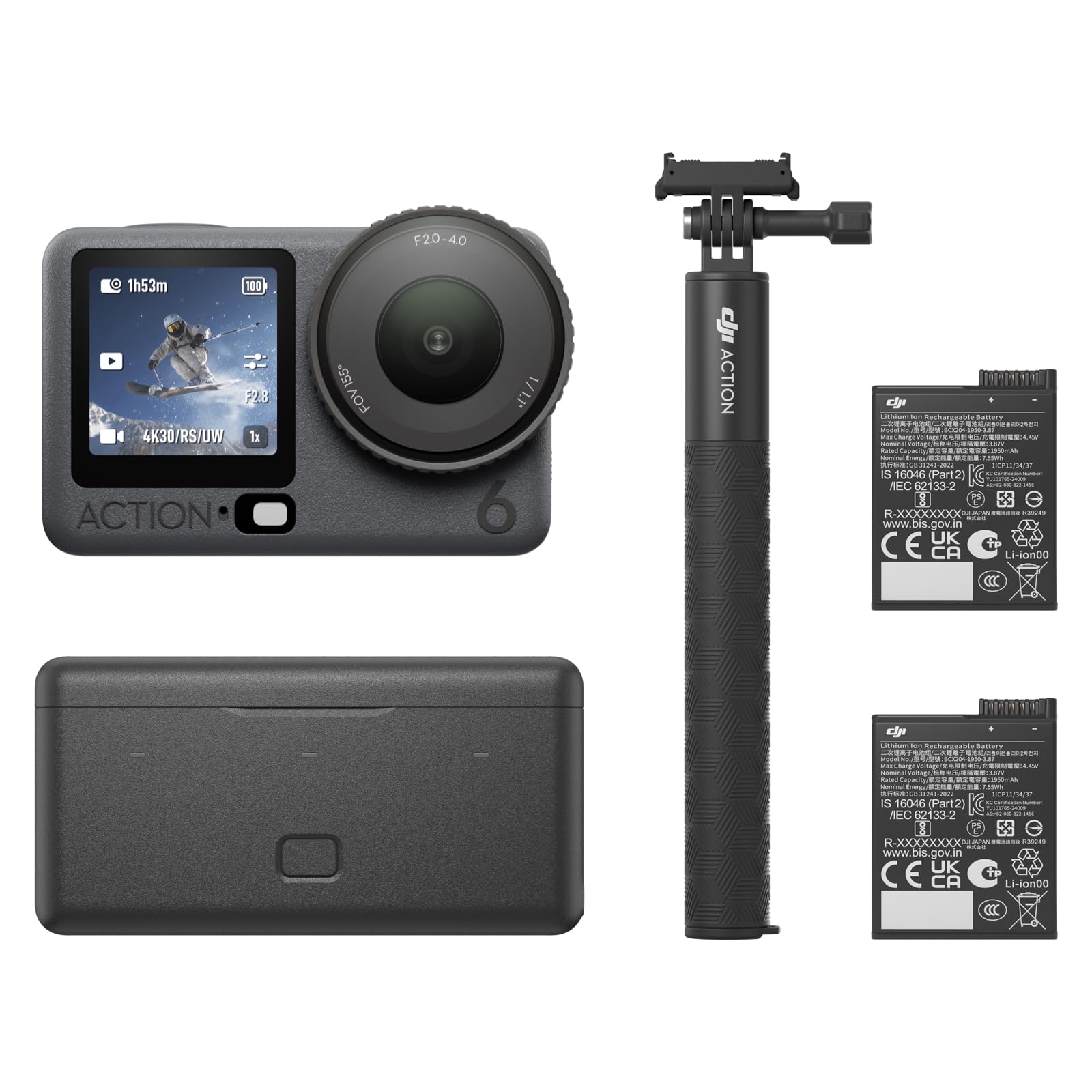
The DJI Osmo Action 6 sets a new benchmark for underwater video with its 1/1.1-inch square sensor and variable aperture that adjusts from f/2.0 to f/4.0. This combination delivers crisp 8K footage even in the low-light conditions found at depths beyond 10 meters. Real diver reviews confirm the colors remain accurate without aggressive post-processing, and the 20-meter waterproof rating means you can use it without a separate housing on most recreational dives. The Enhanced Combo includes two 1950mAh Extreme Batteries and a multifunctional battery case, which solves the cold-water battery drain problem that plagues many action cameras on multi-dive days.
The auto white balance system includes a dedicated underwater mode that compensates for the loss of red light, producing natural-looking skin tones and reef colors straight out of the camera. The 360-degree HorizonSteady stabilization keeps your footage level even when currents push you off-axis, and the voice control lets you start recording while wearing thick dive gloves. The built-in 50GB of storage is a genuine convenience for long trips where you might forget your memory card.
The primary drawback is that the waterproof case limits touchscreen responsiveness, so you will rely on the physical buttons when diving. Some users report that the microphone picks up housing vibration in strong currents, though the audio is clean in calm conditions. Overall, this is the most capable action camera we have tested for dedicated scuba use.
Why it’s great
- Variable aperture adapts to changing light conditions at depth
- Two batteries in the Enhanced Combo ensure you cover multiple dives
- 8K resolution leaves room for reframing and cropping underwater footage
- RockSteady 3.0 stabilization handles surge and current without fisheye warp
Good to know
- Housing limits rear touchscreen control during dives
- Microphone can pick up case vibration in rough water
- Charger for the battery case is sold separately
2. GoPro MAX2
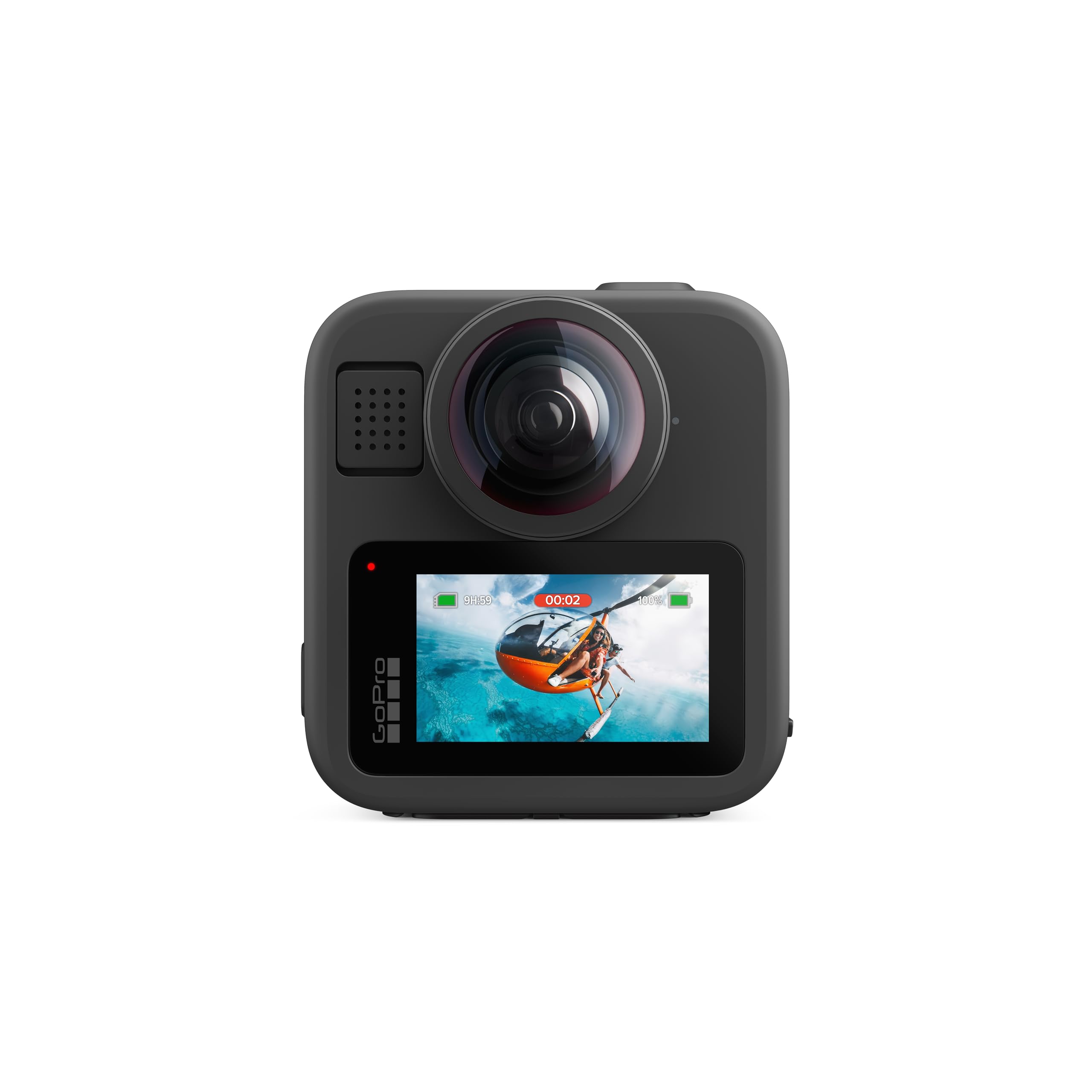
The GoPro MAX2 delivers true 8K spherical video that captures everything around you in a single take, which is a huge advantage underwater where you cannot quickly reposition yourself to frame a shot. The invisible selfie stick effect works reliably at depth, creating the illusion of a second diver filming you from a few feet away. The 29MP stills have impressive dynamic range that handles the contrast between bright surface light and dark reef crevices. Divers report that the 6-microphone ambisonic audio picks up the sound of bubbles and reef life with surprising clarity, though wind noise reduction is less effective at the surface.
HyperSmooth stabilization with Horizon Lock keeps the horizon level even when you rotate the camera a full 360 degrees, which is ideal for creative shots around coral formations. The replaceable glass lenses are a meaningful upgrade — if you scratch a lens on a rock, you swap it out instead of replacing the whole camera. The 1960mAh Enduro battery handles cold water better than previous GoPro batteries, lasting through a full dive of 8K 360 recording without needing a recharge.
The main downside is heat generation during extended 8K recording in warm surface conditions before a dive. Some users report that the camera gets noticeably warm, though it cools quickly once submerged. Also, the 360 workflow requires using the GoPro Quik app for reframing, which adds a step compared to traditional action cameras. For divers who value creative flexibility and immersive shots, the MAX2 is a compelling choice.
Why it’s great
- Spherical 8K video captures the entire dive scene without framing
- Replaceable lenses are a practical fix for scratched glass
- Horizon Lock stays level through 360-degree rotation
- 6 microphones deliver immersive underwater ambisonic audio
Good to know
- Heats up during 8K recording in warm air before submersion
- Reframing requires the Quik app or desktop software
- Battery life is shorter than non-360 models at high resolution
3. OM System Olympus Tough TG-7

The OM System Tough TG-7 is not an action camera in the traditional sense, but it is one of the best dedicated underwater cameras for scuba divers who prioritize still image quality and macro photography over video resolution. The F2.0 lens lets in significantly more light than the typical f/2.8 lens found on action cameras, which makes a real difference when shooting at depths where ambient light is scarce. Its five dedicated underwater modes — including underwater microscope and underwater HDR — are programmed using actual underwater image data, not generic presets, resulting in color and contrast that look natural right out of camera.
The variable macro system lets you focus from one centimeter away, which is ideal for capturing the detail of nudibranchs, coral polyps, and small crustaceans that action cameras cannot resolve. The camera is waterproof to 15 meters, shockproof from 2.1 meters, and crushproof to 100 kgf, so it withstands the abuse of being banged against tank valves and boat ladders. It also supports 4K video at 30fps and 120fps high-speed recording, though video quality does not match the top action cameras.
The main trade-off is that the TG-7 has a small sensor that struggles in very low light, producing noise above ISO 800. The battery life is decent but the charge indicator can drop from full to empty without warning, so carrying a spare battery is recommended. It also lacks the stabilization systems found in modern action cameras, so handheld video can be shaky. For still photographers who want the best underwater image quality in a rugged package, the TG-7 is the clear winner.
Why it’s great
- F2.0 lens captures more light at depth than typical action cameras
- Dedicated underwater modes produce natural colors without editing
- Microscope mode captures detail action cameras cannot touch
- Crushproof and shockproof construction survives rough handling
Good to know
- Sensor struggles with noise in low-light conditions below 15 meters
- Battery indicator drops without warning; carry a spare
- Video stabilization is weak compared to action camera standards
4. Insta360 X4 Invisible Dive Bundle
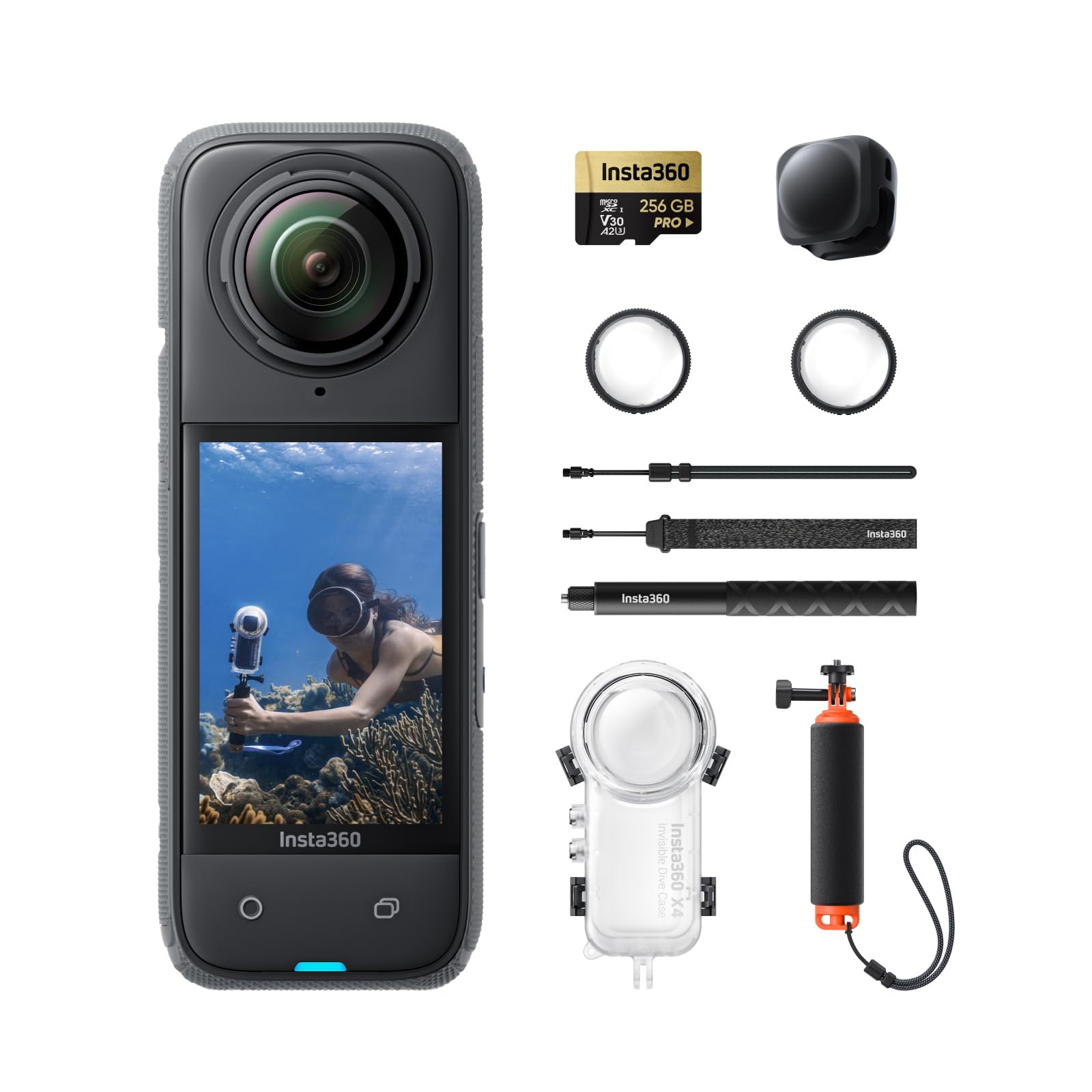
The Insta360 X4 Dive Bundle is purpose-built for divers who want the creative flexibility of 360 video without sacrificing depth. The Invisible Dive Case extends the camera’s depth rating to 50 meters, which covers virtually all recreational and advanced diving. The 2290mAh battery delivers up to 135 minutes of recording, and real-world tests show it can handle two full dives without recharging. The FlowState Stabilization keeps footage smooth even in strong currents, and the 360-degree Horizon Lock means you can rotate the camera freely underwater without worrying about horizon tilt.
The bundle includes a 114cm invisible selfie stick, a floating hand grip, and a 256GB microSD card, so you have everything you need out of the box. The AI-powered reframing in the Insta360 app is intuitive — you shoot first, then choose your angle later, which is a practical advantage when you are trying to keep your buoyancy and follow a dive guide. The standard lens guards are easy to swap in and out, protecting the main lenses from scratches during transport and handling.
The main concern reported by some users is that the underwater housing buttons can be stiff, making it difficult to start and stop recording with gloved hands. A few reviewers also noted that the camera can auto-shut off if the housing is not sealed correctly, so careful maintenance of the O-ring is essential. For divers who want the most versatile 360 setup available, the X4 Dive Bundle is unmatched.
Why it’s great
- 50-meter depth rating with the Invisible Dive Case covers advanced diving
- 135-minute battery lasts for multiple dives
- Invisible selfie stick creates drone-like third-person shots
- Reframing after the dive saves time underwater
Good to know
- Housing buttons can be stiff with thick dive gloves
- Incorrect seal can cause auto-shutoff; check O-rings carefully
- Reframing workflow requires the app, adding post-dive steps
5. GoPro HERO13 Black

The GoPro HERO13 Black is the most refined traditional action camera for divers who want 5.3K resolution without the complexity of 360 shooting. The HyperSmooth stabilization is best-in-class, producing gimbal-like footage even when you are swimming against a current. The 10-meter waterproof rating means you need a separate dive housing for deeper scuba dives, but the camera’s small footprint makes it easy to fit into any aftermarket housing. The Enduro battery provides solid run times in cold water, though it does not match the endurance of the DJI competitors.
The HB-Series lens compatibility adds versatility for specialty shots — the Ultra Wide Lens Mod is fantastic for expansive reef landscapes, while the Macro Lens Mod captures close-up details that standard action cameras miss. The camera detects which lens is attached and auto-adjusts settings, removing the guesswork. The 27MP photos pulled from 5.3K video are good enough for social media sharing without a dedicated still camera.
The main limitation for serious divers is the 10-meter native waterproofing. To reach typical scuba depths, you will need to invest in a GoPro dive housing or a third-party equivalent, which adds cost and bulk. Some users also report that the GoPro Quik app has UX issues that slow down file transfers. For existing GoPro users upgrading from older models, the HERO13 is a solid step forward in resolution and stabilization.
Why it’s great
- HyperSmooth stabilization delivers gimbal-quality footage in currents
- HB-Series lens system adds macro and ultra-wide utility
- 5.3K resolution captures exceptional detail for cropping and stabilization
- Small size fits easily into standard dive housings
Good to know
- Requires a separate dive housing for depths below 10 meters
- Battery life is shorter than DJI competitors in cold water
- Quik app can be frustrating for file management
6. DJI Osmo Action 5 Pro Standard Combo

The DJI Osmo Action 5 Pro is a seriously capable mid-range option that punches above its weight for night diving and low-light conditions. The 1/1.3-inch sensor with 2.4-micrometer pixels delivers clean footage in the dim blue light found at deeper depths, and the 13.5-stop dynamic range preserves highlight detail when you aim toward the surface. The subject tracking feature is surprisingly useful underwater — it can keep a dive buddy or a sea turtle centered in the frame automatically, which reduces the need for manual panning.
The dual OLED touchscreens are bright enough to see through a mask, and the front screen is especially useful for vlogging above the surface. The 1950mAh battery is rated for up to 4 hours of recording in normal conditions, and cold-water tests show it holds up well for two full dives. The 20-meter waterproof rating means you do not need a housing for most recreational dives, saving bulk and cost.
The main trade-off is that the video resolution tops out at 4K, compared to the 5.3K and 8K options from the premium models. Some divers report that the color temperature sensor does a good job underwater, but it is not as accurate as the dedicated underwater modes on the TG-7 or the Action 6. For budget-conscious divers who want excellent low-light performance and reliable stabilization, the Action 5 Pro is an outstanding choice.
Why it’s great
- Excellent low-light performance for night and deep diving
- Subject tracking keeps dive buddies centered automatically
- 20-meter waterproof rating eliminates the need for a housing
- Long battery life covers two full dives
Good to know
- Maximum resolution is 4K, not 5.3K or 8K
- Underwater color accuracy is good but not class-leading
- Voice control range is limited to 1 meter
7. SeaLife SportDiver Underwater Smartphone Housing
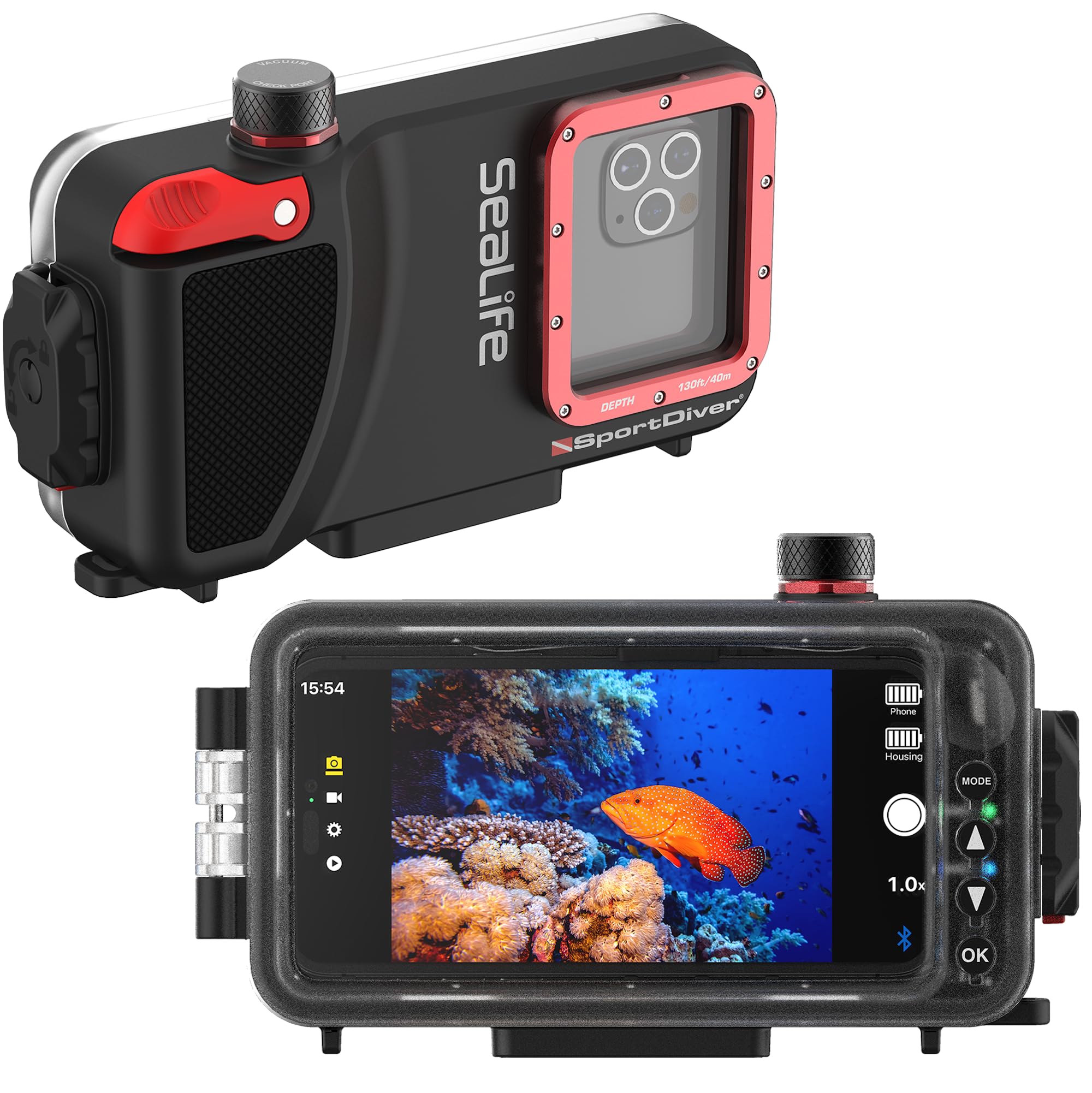
The SeaLife SportDiver Housing is a unique solution that turns your existing smartphone into a capable underwater camera, rated to 130 feet. The cam-lock sealing mechanism is straightforward to use, and the audible and visual moisture and pressure alarms provide confidence that your phone is protected. The included removable underwater color correction filter restores natural red tones that are lost at depth, so your photos and videos look vibrant without editing. The free SportDiver app connects via Bluetooth and lets you see full-size photos and videos on your phone between dives, with a thumbnail strip for quick review.
The case fits most Android models and iPhone 11 and later, including the iPhone 15 Pro Max, and the rubber grip tabs hold your phone securely while adding shock protection. The three 1/4-20 tripod mounting locations make it easy to attach the housing to a tray, arm, or selfie stick. The large shutter lever is designed for gloved hands, and the AAA batteries provide up to 50 hours of continuous use, which is excellent for liveaboard trips.
Reliability is a mixed bag. Many users report flawless performance after using the case for years, while others have experienced persistent leak test failures and moisture alarms that forced them to abort dives. The battery drains faster than expected — one reviewer reported a drop from full to empty after 1.75 dives with 206 photos and 7 videos. The case also does not float, so a wrist strap is essential. For divers who already own a high-end smartphone and prefer to avoid buying a dedicated camera, the SportDiver is a compelling but somewhat inconsistent option.
Why it’s great
- Uses your existing phone camera, avoiding a separate camera purchase
- 130-foot depth rating covers recreational and advanced diving
- Color correction filter produces natural tones without post-processing
- Large shutter lever works well with dive gloves
Good to know
- Some units have persistent leak test failures
- Battery drains faster than expected; charge between dives
- Housing does not float; use the included wrist strap
8. Ricoh WG-80 Orange

The Ricoh WG-80 is a rugged point-and-shoot camera designed for users who need a tough, waterproof camera for field work, construction inspection, and casual snorkeling rather than deep scuba diving. It is waterproof to 14 meters for up to two hours, which covers shallow reef dives and surface swimming. The back-illuminated 16-megapixel CMOS sensor delivers decent image quality in bright conditions, and the six macro LED lights positioned around the lens barrel provide uniform illumination for extreme close-ups of small subjects.
The underwater shooting mode is programmed to optimize color and contrast specifically for underwater conditions, and users report that it does a reasonable job of reducing the blue cast without requiring a physical filter. The 5x optical zoom lens covers a 28-140mm equivalent range, giving you more flexibility than a fixed wide-angle action camera lens. The shockproof rating of 1.6 meters and freezeproof rating of -10°C make it suitable for harsh environments on land and in the water.
The main drawbacks are the image quality limitations — the auto mode produces soft, flat results that look like cameras from a decade ago, and the autofocus is slow in low light. Some users report that the video quality is mediocre, and the lack of image stabilization means handheld footage can be shaky. The WG-80 is best understood as a dedicated tool for specific professional or recreational needs, not a general-purpose underwater camera.
Why it’s great
- Rugged build survives drops, dust, and freezing temperatures
- Macro LED lights illuminate small subjects for close-ups
- Optical zoom provides framing flexibility underwater
- Dedicated underwater mode adjusts color and contrast
Good to know
- Image quality in auto mode is noticeably soft
- Autofocus is slow in low-light conditions
- Video quality does not match modern action cameras
9. Pentax WG-90 Black
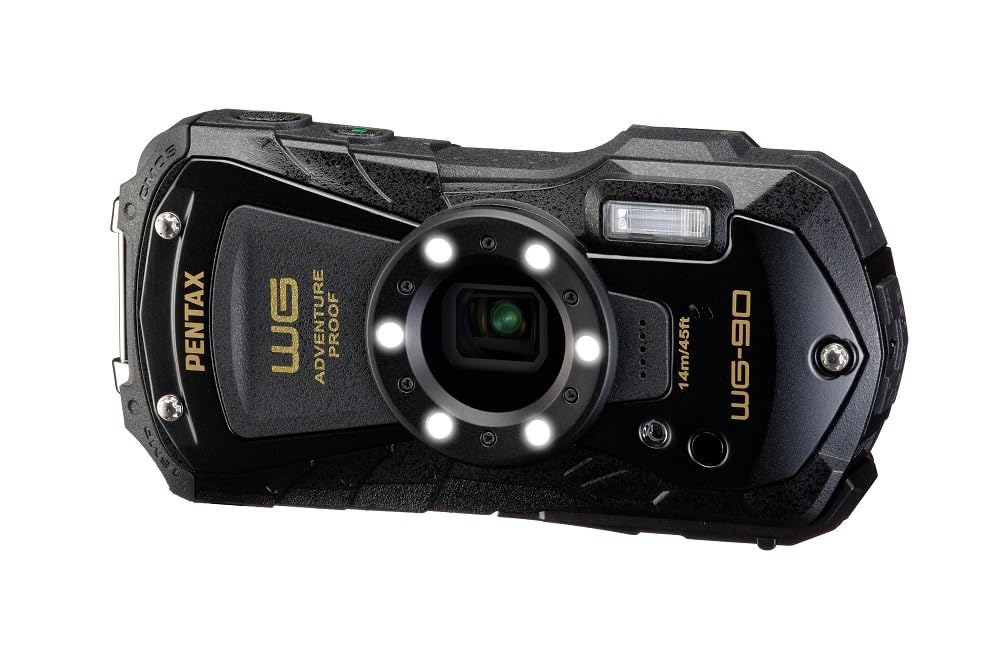
The Pentax WG-90 is the direct predecessor to the Ricoh WG-80, sharing the same rugged DNA and 14-meter waterproof rating. It is built for users who need a durable camera for inspection work, macro documentation, and shallow-water photography rather than dedicated video-oriented scuba diving. The 16-megapixel back-illuminated CMOS sensor and the six-LED macro ring provide bright, uniform illumination for subjects as close as one centimeter, which is useful for documenting small details in a survey or inspection context.
The underwater shooting mode optimizes color and contrast based on real underwater image data, producing more natural-looking results than a generic scene mode. The digital microscope mode captures details invisible to the naked eye, and the 5x optical zoom with 28mm wide-angle coverage gives you framing flexibility that fixed-lens action cameras lack. The included macro stand maintains a minimum focusing distance of one centimeter for extended macro observation.
The biggest concern raised by users is construction quality — multiple reports indicate that the battery/card cover can leak after a short period of use, flooding the camera and rendering it inoperable. This is a significant reliability issue for anyone planning to use it regularly in water. The image quality is also limited by the small sensor, producing noisy results in low light and exhibiting white blowout in high-contrast scenes. For occasional snorkeling or inspection work where water exposure is limited, the WG-90 can serve its purpose, but it is not a reliable choice for regular scuba use.
Why it’s great
- Durable construction for rough field environments
- Six-LED macro ring provides excellent close-up illumination
- Digital microscope mode captures extreme detail
- Dedicated underwater mode improves color balance
Good to know
- Battery/card cover has a history of leaking in some units
- Image quality is weak in low light and high contrast scenes
- Video capability is basic compared to action cameras
FAQ
What depth rating do I need for recreational scuba diving?
Do I need an underwater color correction filter?
Can I use my GoPro without a housing for scuba diving?
What battery life should I expect when diving in cold water?
Is 4K resolution enough for underwater video, or do I need 5.3K or 8K?
Final Thoughts: The Verdict
For most users, the best action camera for scuba diving winner is the DJI Osmo Action 6 Enhanced Combo because its 1/1.1-inch sensor, variable aperture, and 20-meter waterproof rating deliver the best balance of video quality, low-light performance, and depth capability for recreational and advanced divers. If you want 360-degree creative flexibility for unique underwater perspectives, grab the GoPro MAX2. And for still photography and macro detail that no action camera can match, nothing beats the OM System Tough TG-7.