
Our readers keep the lights on and the weekend projects moving. As an Amazon Associate, I earn from qualifying purchases.
Shooting from a helmet mount on a frigid chairlift or carving through deep powder demands a camera that won’t quit when the temperature drops and the terrain gets rough. Most buyers pick an action camera based on specs alone, only to discover that battery life collapses in the cold and stabilization can’t keep up with high-speed carving. The narrow question for the slopes is not about pure resolution—it’s about how each model handles the specific misery of winter sports: stiff hands operating tiny buttons, fogged lenses, and an operating window of often just a few hours.
I’m Rikta — the co-founder and writer behind FitlyFast. I’ve spent hundreds of hours analyzing sensor sizes, stabilization algorithms, and battery chemistries for the outdoor sports category, and I focus specifically on how each technical decision translates to real-world winter shooting.
Whether you’re a weekend skier or a backcountry guide, finding the right action camera for skiing starts with understanding how cold weather affects every component from the lens hood to the lithium cell.
How To Choose The Best Action Camera For Skiing
On the mountain, your camera faces three enemies that a summer runner or casual cyclist never confronts: extreme cold that drains the battery in minutes, reflected snow glare that tricks the auto-exposure, and violent vibration from high-speed carving across piste and mogul fields. The cameras that win here are the ones designed with cold-resistant battery cells, robust stabilization that keeps the horizon level as you lean into turns, and fast-access controls you can operate with gloves on.
Cold Battery Chemistry and Run Time
Standard lithium polymer cells lose up to 50% of their capacity at temperatures below freezing. Look for a camera that ships with a cold-resistant battery — typically labeled “Enduro” by GoPro or “Extreme Battery” by DJI. The DJI Osmo Action 5 Pro is rated for 3.6 hours at -20°C, while the GoPro HERO13 Black’s Enduro battery maintains performance far longer than the standard cell did in older models. If you ski all day, a hot-swappable battery system (the DJI Adventure Combo with three batteries) makes the difference between shooting lunch at the summit and stopping early.
Stabilization That Handles Carving Vibrations
Basic gyro-based stabilization works for slow hiking footage, but skiing demands horizon lock. The term used by DJI is HorizonSteady; GoPro calls it HyperSmooth AutoBoost; Insta360 has FlowState Stabilization. All three physically correct the entire roll axis so the horizon doesn’t tilt when you lean into a turn. Optical image stabilization alone won’t fix the swing from a pole-mounted camera. If you want the pole to disappear entirely, a 360 camera like the GoPro MAX2 or Insta360 X5 is the only way to reframe your shot after the fact.
Lens Protection and Field-Swappability
Ice, rocks, and the occasional chairlift gate scratch glass. A camera with replaceable lenses (GoPro MAX2, Insta360 X5) saves the entire camera from being discarded after one scrape. Models with fixed glass lenses rely on aftermarket protective covers, which can cause glare and reduce image quality. If you’re skiing trees or hiking backcountry lines where fall impact is likely, choose a model with field-replaceable optical glass or at least a robust lens guard system.
Quick Comparison
On smaller screens, swipe sideways to see the full table.
| Model | Category | Best For | Key Spec | Amazon |
|---|---|---|---|---|
| DJI Osmo Action 5 Pro | Premium Standard | Cold mountain days with all-day battery | 3.6 hours at -20°C | Amazon |
| DJI Osmo Action 6 | Big Sensor | Low-light morning or sunset runs | 1/1.1″ sensor + variable aperture | Amazon |
| GoPro HERO13 Black | Classic Hero | 5.3K resolution with HB-Series lens mods | 5.3K60 HDR video | Amazon |
| GoPro HERO13 Limited White | Heat Shield | Sun reflection reduction on snow | Polar White absorbs less heat | Amazon |
| GoPro MAX2 | 360 Action | Unframed 360 action with Invisible Mount | True 8K spherical 360 | Amazon |
| Insta360 X5 | 360 Flagship | AI reframing for instant social clips | Dual 1/1.28” sensors, 8K30 | Amazon |
| Xtra Edge Pro | Value Performer | Budget-conscious powder shredders | 65ft waterproof, 240 min battery | Amazon |
| Xtra Edge Standard | Entry 4K | First-time ski camera buyers | 52ft waterproof, 160 min battery | Amazon |
| Xtra Muse (Gimbal) | Gimbal Vlog | Smooth walk-and-talk lift line videos | 1” CMOS + 3-axis gimbal | Amazon |
In‑Depth Reviews
1. DJI Osmo Action 5 Pro Adventure Combo

The DJI Osmo Action 5 Pro is the gold standard for skiing because it specifically solves the cold-weather battery problem that plagues every other camera. The Adventure Combo gives you three Extreme Batteries (1950 mAh each), an external battery case, and a 1.5-meter extension rod — exactly what you need to shoot from a ski pole or backpack strap without worrying about your battery dying on the second chair lift ride. DJI rates the camera at 3.6 hours of recording at -20°C, which translates to a full day on the mountain with battery swaps at lunch.
The 1/1.3-inch sensor with 2.4-micron pixels and 13.5-stop dynamic range handles the high-contrast snow situation gracefully. Bright sun on white powder doesn’t blow out the highlights, and shadows in tree lines retain detail. HorizonSteady stabilization eliminates the roll-axis sway that happens when you lean into turns — the horizon stays locked at the correct angle even if you swing your head or pole during a mogul run. Voice control works well through a balaclava, letting you start/stop recording without popping your phone out in the cold.
The dual OLED touchscreens are bright enough to see in direct snow glare, and the front screen makes framing selfie-style helmet and pole shots easy. The main drawback is that the Advnace Combo is substantial — three batteries plus the case takes up space in a jacket pocket. If you don’t need the extra batteries, the Essential Combo is a lighter carry.
Why it’s great
- 3.6 hours of cold-weather recording per battery at -20°C
- HorizonSteady locks the horizon through aggressive carving turns
- Dual OLED touchscreens visible in bright snow conditions
- Voice control works through face coverage
Good to know
- Adventure Combo takes up significant pocket space
- Generates heat after extended 4K runs in warmer weather
- DJI Mimo app requires sideload on some Android devices
2. DJI Osmo Action 6 Essential Combo
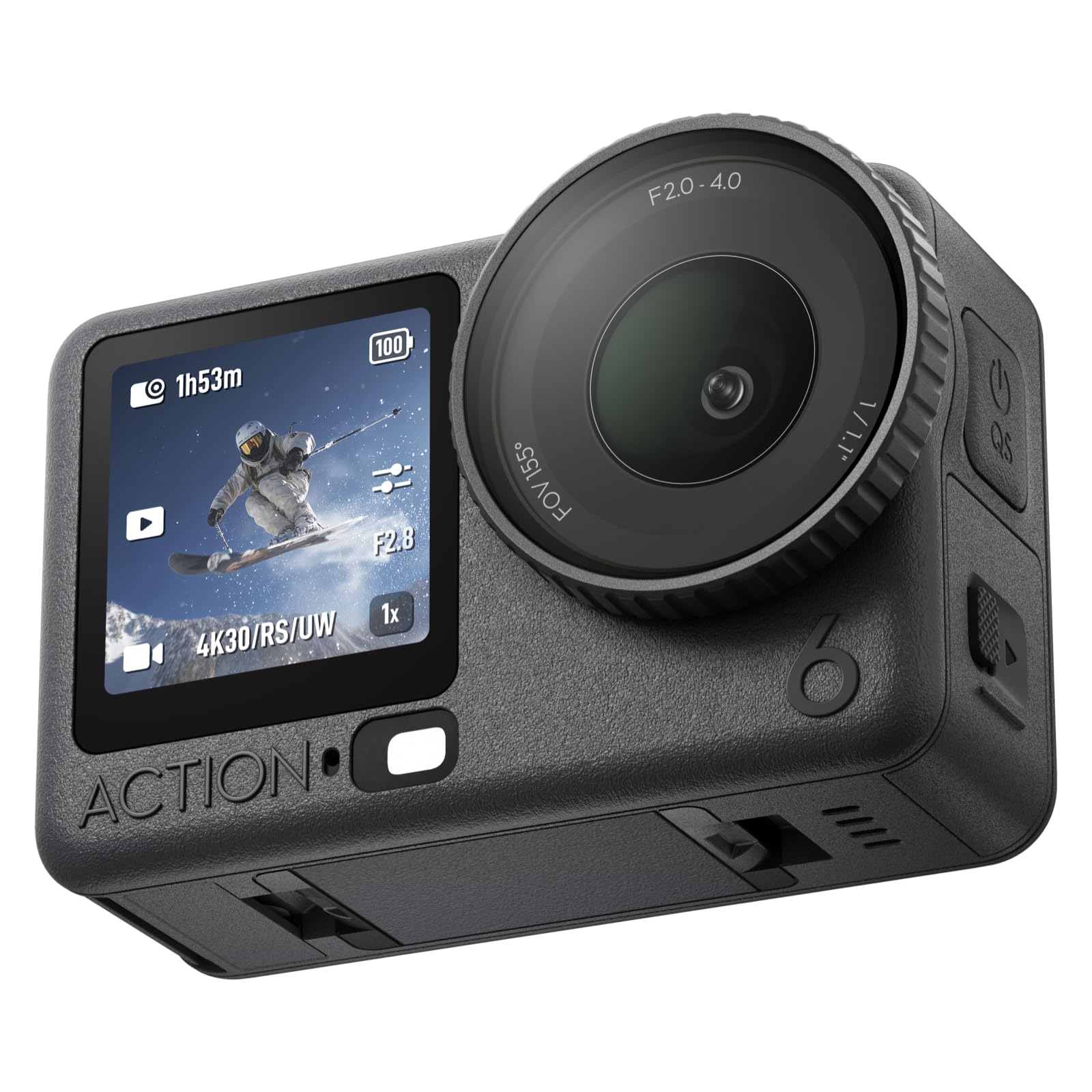
The DJI Osmo Action 6 brings a larger 1/1.1-inch square sensor and a variable aperture (f/2.0 to f/4.0) that is a genuine advantage for skiing. Morning and afternoon light on the mountain shifts quickly — the variable aperture lets you shoot at f/2.0 in flat light or tree shadows, then stop down to f/4.0 on the wide-open summit reflector section without swapping a filter. The sensor captures 8K footage, but the biggest real-world gain is in low-light noise reduction: ski runs in the late afternoon or under overcast skies stay sharp with minimal grain.
Cold resistance is a priority here — the Extreme Battery Plus (1950 mAh) is the same chemistry used in the Action 5 Pro, so you get all-day performance in sub-zero conditions. RockSteady 3.0 stabilization, combined with 360-degree HorizonSteady for 4K/60fps, keeps the frame level whether you’re side-hilling on a steep couloir or popping off a sun-baked bump. The Essential Combo includes a single battery, a curved adhesive mount, and a quick-release adapter — a focused kit for someone who already has mounts from a previous action camera.
The 50GB built-in storage is a surprising convenience for skiing because it acts as a buffer. If you forgot a memory card or fill one mid-session, the internal memory keeps recording at 8K/30fps. The downside is that the Essential Combo does not include the battery case or spare batteries standard — you’ll want to budget for an extra battery for all-day skiing. For the person who cares most about sensor size and low-light performance, this is the best pick on the mountain.
Why it’s great
- Variable aperture f/2.0–f/4.0 adapts to changing snow light
- 1/1.1-inch sensor for superior low-light performance
- 50GB built-in storage as a backup for missing SD cards
- Cold-resistant battery chemistry matches Action 5 Pro
Good to know
- Essential Combo includes only one battery
- No battery case or extension rod in this package
- 8K capture produces large file sizes on SD cards
3. GoPro HERO13 Black

The GoPro HERO13 Black remains the go-to choice for skiers who want the highest resolution capture from a helmet mount. The 5.3K60 HDR video gives you 91 percent more pixels than 4K, which means you can crop in post and still export a sharp 4K clip — useful when you want to pull a friend’s face from a group ski run. The Enduro battery is specifically engineered for cold weather and delivers significantly longer run times than the standard batteries in older HERO models, though it’s still rated at only 79 minutes under normal operation, so hot-swapping is necessary for full-day sessions.
HyperSmooth 6.0 stabilization with AutoBoost is the industry benchmark for helmet-mounted skiing. It corrects the micro-vibrations from carving hard on groomers and the sharp jolts from cat tracks, all while maintaining the widest possible field of view. The HB-Series lens system adds modularity: the Ultra Wide Lens Mod gives a 177-degree field of view for POV shots, while the ND filters let you blur motion for cinematic skiing clips. The camera automatically detects which lens is attached and adjusts settings, which saves fumbling with menus on a cold chairlift.
The waterproofing is sufficient to 10 meters, and the water-repelling lens cover reduces flare from snow and ice. Customer reviews consistently praise the image detail and rugged build, but the short battery life relative to DJI and Insta360 is a real limitation on the hill. The interface is glove-friendly and the quick-capture button starts recording instantly, but buyers should invest in at least one spare Enduro battery for anything longer than a morning session.
Why it’s great
- 5.3K60 HDR video with high crop flexibility
- HyperSmooth 6.0 with AutoBoost for aggressive carving
- HB-Series lens system with auto-detection for creative shots
- Water-repelling lens cover reduces snow flare
Good to know
- 79-minute battery life requires spare batteries for all-day skiing
- No variable aperture or built-in horizon lock at all resolutions
- Overheating reports in high-resolution recording even in cool weather
4. Limited Edition GoPro HERO13 Black Polar White
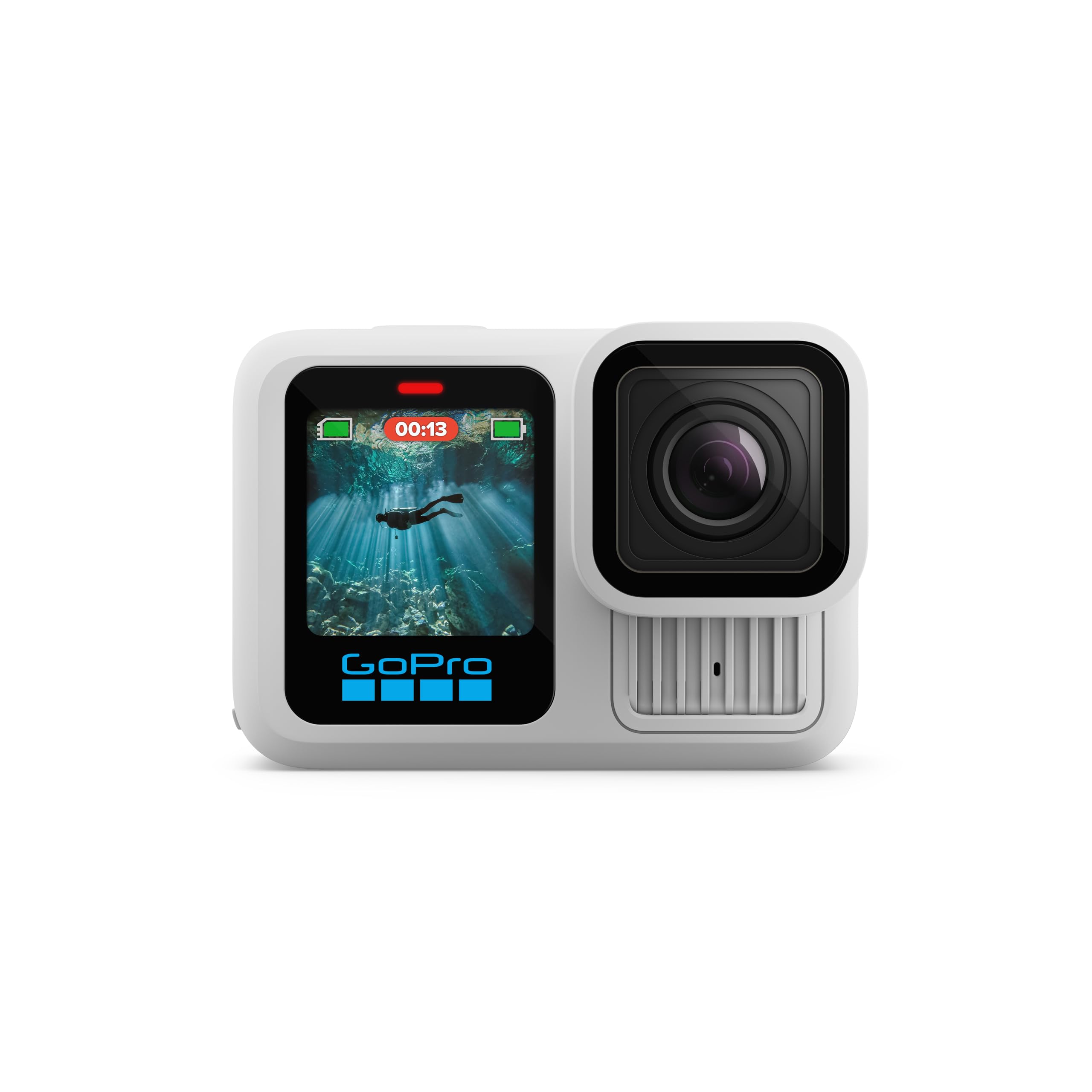
The Limited Edition GoPro HERO13 Black in Polar White is identical in every spec to the standard HERO13 Black, but the white shell offers a subtle advantage for skiing: it reflects sunlight rather than absorbing it. On a sunny spring day or high-elevation glacier run, a black camera housing can absorb heat and contribute to thermal shutdown when running 5.3K high-framerates. The white casing stays cooler, allowing the camera to sustain recording for slightly longer before throttling. The Enduro battery is the same cold-optimized cell, and the stabilization and image quality remain exactly as in the black model.
The burst slow-motion mode is a highlight: you can capture clips slowed to 13x normal speed at lower resolutions, which is excellent for filming a friend’s massive powder spray or a trick off a natural feature. HyperSmooth 6.0 with AutoBoost handles every carving scenario just as well as its sibling. The white color also stands out on the snow if you drop it in a whiteout — easier to spot in a drift than a black camera.
All the same limitations apply: 79-minute battery life, no built-in ND, and the occasional overheating alert if you push 5.3K too hard. The camera does cost a small premium over the standard black color and is technically a limited-run model. If you ski in direct sun regularly and prioritize a cooler-running camera, this is the one to grab. Otherwise, the black version will serve exactly the same purpose for a lower entry point.
Why it’s great
- White shell reflects sunlight and runs cooler on snow
- Same HyperSmooth 6.0 and cold battery as the standard Hero13
- Easy to spot in snow if dropped
- Burst slow-motion at 13x for creative skiing clips
Good to know
- Limited edition at a slight premium over the black model
- Battery life and heat limits are the same as standard Hero13
- No HB-Series lens or ND filters included
5. GoPro MAX2
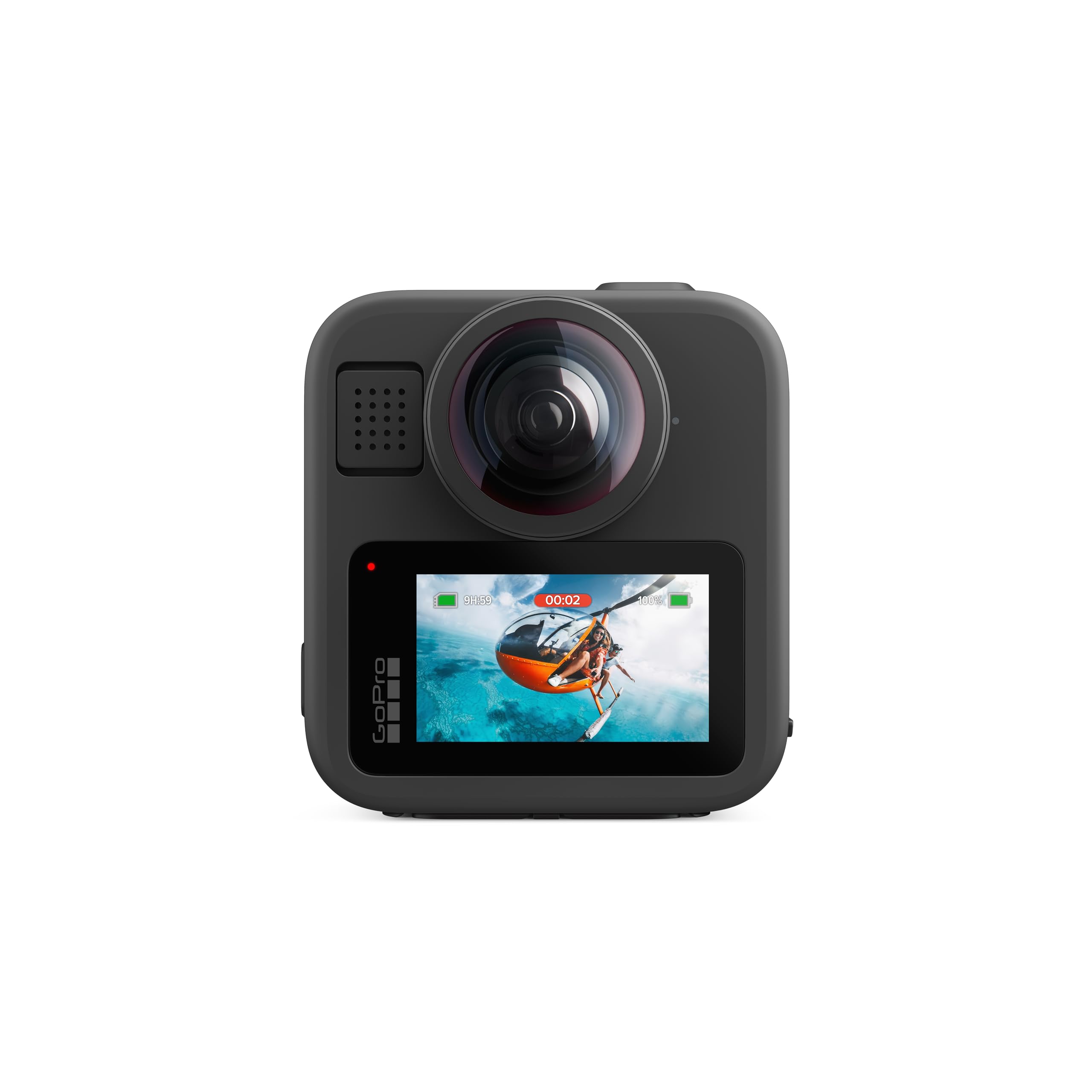
The GoPro MAX2 is the only traditional action camera in this lineup that captures true 8K spherical 360 video, and for skiers, that changes everything about composition. Instead of aiming the camera at your face or the slope, you just mount it on a helmet or pole and capture every direction at once. In the GoPro Quik app, you reframe the 360 footage into a standard 4K video — meaning you can pan, zoom, and switch between POV of your skis, the mountain ahead, and your friend skiing behind without moving the camera. The Invisible Mount feature removes the selfie stick from the shot, producing third-person views that look like another skier is filming you.
The 6-microphone array records ambisonic audio that shifts perspective with the viewer — a really immersive effect for skiing videos where wind, snow crunch, and carving sounds all tell part of the story. HyperSmooth stabilization includes 360-degree Horizon Lock, so the horizon stays perfectly level regardless of how much you spin or whip the camera. The replaceable glass lenses are a direct answer to a skiing problem: a scratch from a rock or ice crust now costs you only a lens replacement, not a new camera.
The tradeoff is learning the editing workflow. 8K 360 footage produces large files, and the Quick app’s reframing tool has a learning curve. Battery life is shorter than the dedicated 360 competitor (the Insta360 X5) due to the processing load of dual lenses. But for a skier who wants to produce dynamic multi-angle videos without crew or second cameras, the MAX2 is a creative powerhouse.
Why it’s great
- True 8K spherical capture captures every angle simultaneously
- Replaceable glass lenses are a life-saver for skiing impacts
- HyperSmooth Horizon Lock stays level through full spins
- 6-microphone ambisonic audio shifts with viewer perspective
Good to know
- Battery life is shorter than dedicated 360 competitor
- Reframing workflow in Quik app takes time to learn
- Large file sizes require substantial storage
6. Insta360 X5 Essentials Bundle

The Insta360 X5 is the most advanced 360 action camera available for skiing, and it earns its place on the mountain with battery life and AI-assisted editing that drastically reduces post-processing time. The dual 1/1.28-inch sensors capture 8K30fps spherical video with leading low-light performance — the triple AI chip design reduces noise in flat-light and evening runs better than the MAX2. The 208-minute battery is the longest of any 360 camera; fast charging to 80% in 20 minutes means a mid-day break at the lodge can top you off for the afternoon session.
FlowState Stabilization with full 360-degree Horizon Lock provides the same level horizon benefit as the GoPro MAX2, but the Insta360 app’s AI reframing goes further. One-tap export generates a quick clip without manual editing, and the AI auto-tracking keeps a specific skier at the center of the frame through every turn. The Invisible Selfie Stick effect is famous for a reason — on a ski pole, the stick disappears completely, giving you a drone-like follow-cam view of your own skiing. The 114cm selfie stick included in the bundle is long enough for pole-plant shots.
The X5 is waterproof to 49 feet without a case, and the replaceable lenses are tough, scratch-resistant, and easy to swap. The main drawback is the price and the fact that everything through the app — editing, changing reframe angles — requires a connected smartphone, which can be a cold-weather issue if your phone dies. For skiers who want to produce polished videos with minimal manual effort, this is the most powerful option on the list.
Why it’s great
- Dual 1/1.28-inch sensors with triple AI chip for low-light noise reduction
- 208-minute battery life with 80% fast charge in 20 minutes
- AI-assisted one-tap export for quick, polished clips
- 114cm Invisible Selfie Stick included
Good to know
- Requires smartphone app for all editing and reframing
- Premium price reflects advanced sensor and AI hardware
- File sizes from 8K spherical capture are large
7. Xtra Edge Pro Action Camera
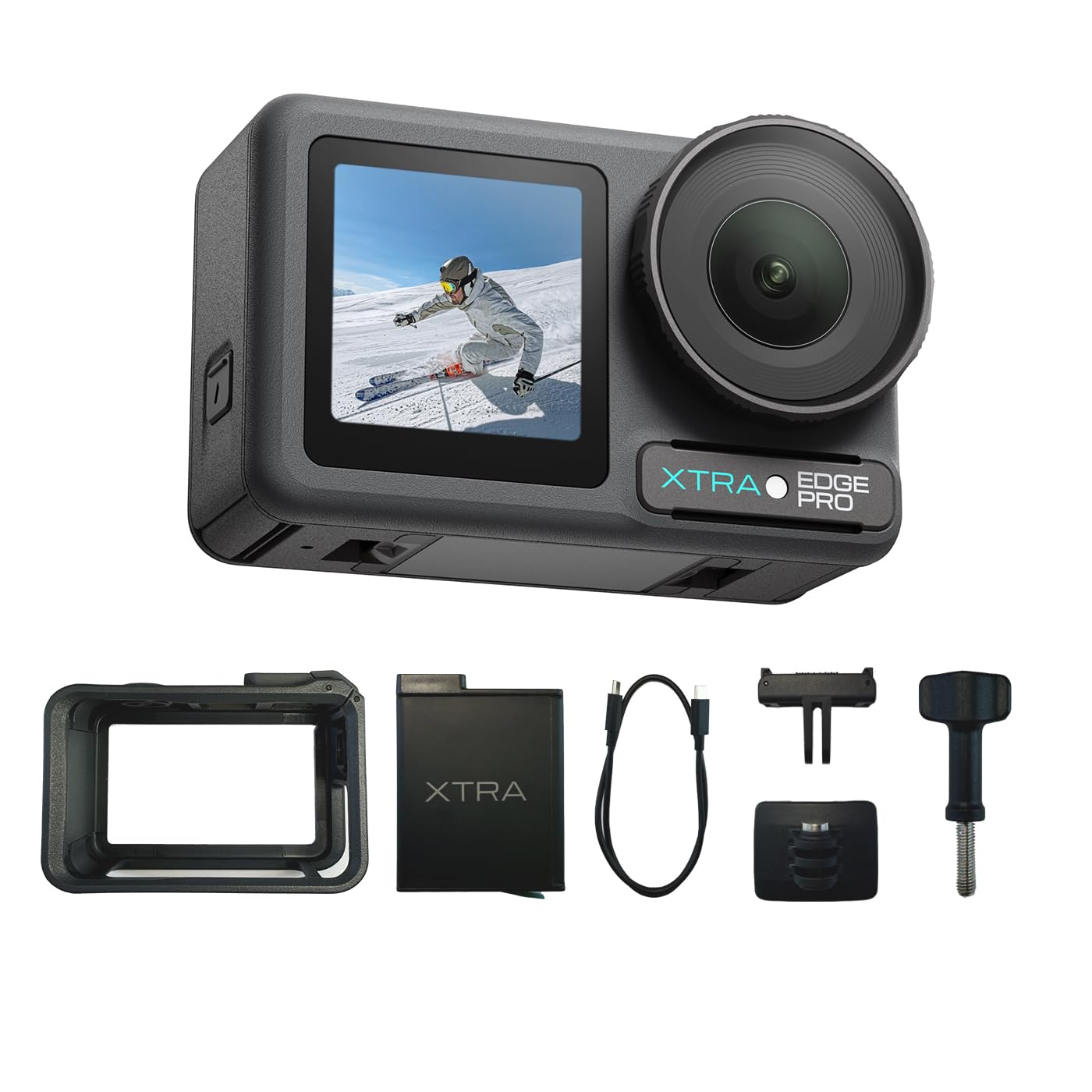
The Xtra Edge Pro brings a large 1/1.3-inch sensor and 4K60fps capture at a mid-range price point that makes it a serious contender for budget-conscious skiers. The waterproofing to 65 feet without a case beats both the GoPro and DJI entry-level limits, which is more than adequate for any in-bounds skiing scenario — rain, snow, or falling into a creek. The battery is rated at 240 minutes, a figure that holds up reasonably well in cold conditions thanks to the included cold-resistant battery in the Pro bundle.
The image stabilization uses a three-mode system called 360 Lock, TiltGuard, and MotionMaster. In practice, 360 Lock maintains the horizon on mount-based shots, and TiltGuard corrects the roll when you’re skiing aggressively. It’s not quite as refined as HorizonSteady or HyperSmooth, but for the price reduction it handles carving and mogul vibration well enough for social media clips. The Night View mode actually works in dusk conditions — a rarity at this tier — and brightens low-light scenes without plastering noise across the frame.
The bundle includes a dual-facing mount adapter and a protective frame, but lacks a helmet mount or a carrying case. The touchscreen is responsive but not as bright as OLED screens on premium models, so in direct sun you may need to shade it with a hand. Customer reviews highlight the value and stabilization, with one skier calling it the best camera for the money. If you want strong performance without the premium DJI/GoPro price, the Xtra Edge Pro delivers the best balance in its segment.
Why it’s great
- 1/1.3-inch sensor for vibrant color in snow light
- 65ft waterproof rating without a housing
- 240-minute battery with included cold-resistant cell
- Three-mode stabilization maintains horizon on mount shots
Good to know
- Stabilization not as refined as DJI/GoPro Horizon Lock
- Touchscreen brightness lower than OLED equivalents in direct sun
- No helmet mount or carrying case in the bundle
8. Xtra Edge Standard Action Camera
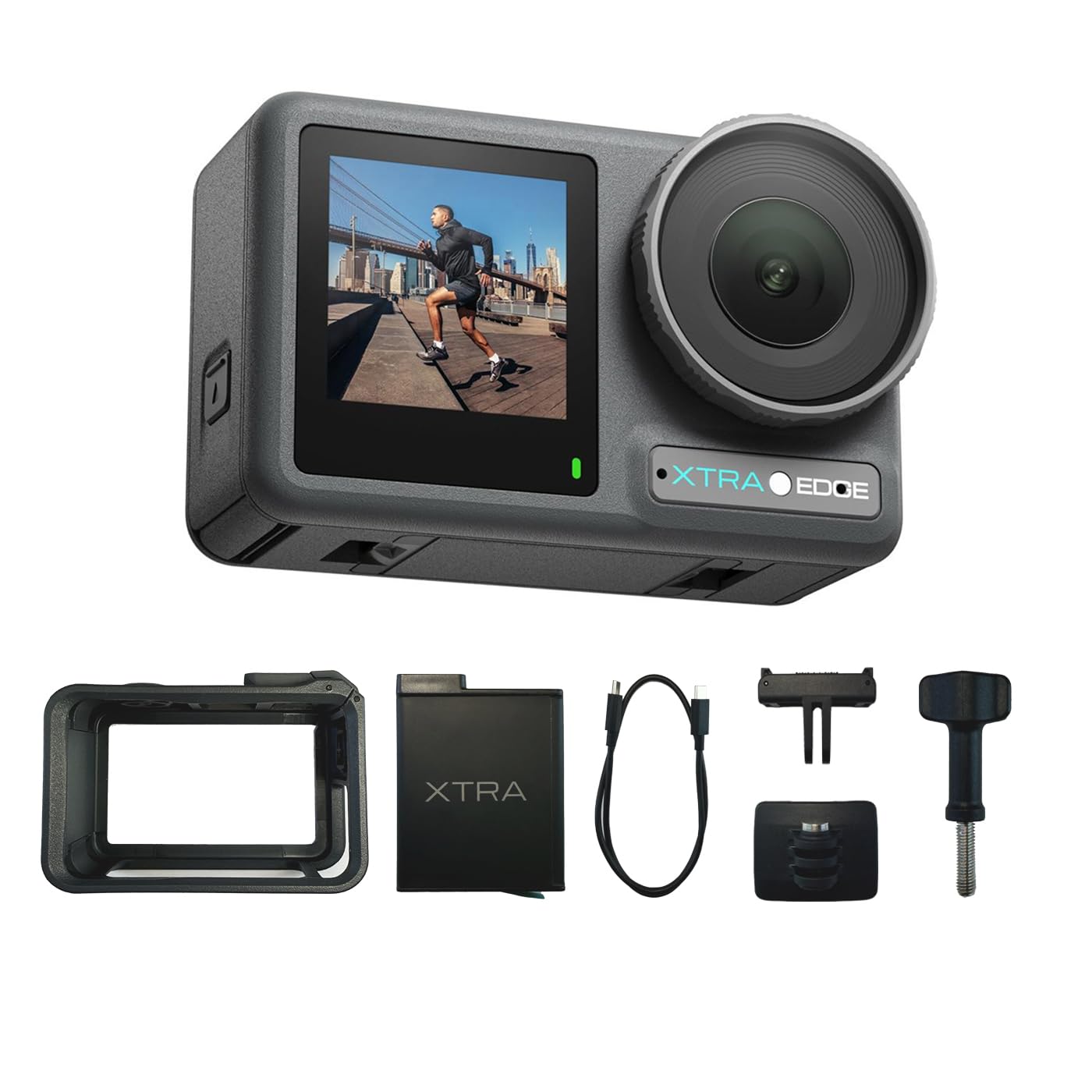
The Xtra Edge Standard is the entry-level option for skiers who want to dip a toe into helmet-mounted filming without committing to a premium platform. It shares the same 1/1.3-inch sensor as the Pro model, delivering solid 4K detail and color saturation in good light. The 52-foot waterproof rating covers any snow or rain situation, and the 160-minute battery with the included cold-resistant cell gets you through a half-day on the mountain comfortably.
The hyper-stabilization mode smooths out basic carving and hiking, but it lacks the horizon-lock capabilities of the higher-tier options. For a casual skier shooting Instagram stories and family trips, the stabilization is adequate. The Universal Quick Mount system uses a magnetic lock to switch between horizontal and vertical orientations, which is convenient for repurposing the same clip for stories on different platforms. The bundle includes a dual-facing mount adapter and a protective frame.
The touchscreen is still usable in cold weather but not as bright as premium models, and the stabilization has a range limit — aggressive mogul runs may show some jello effect in the frame. Customer reviews consistently praise the value, build quality, and battery length, with one calling it a “great little camera at a great price.” For the skier who wants to experiment with a POV camera without spending significant money, this is the safest starting point.
Why it’s great
- 1/1.3-inch sensor delivers strong 4K image quality
- Magnetic quick mount switches orientation easily
- Cold-resistant battery included
- Affordable entry point for POV skiing experiments
Good to know
- No horizon-lock stabilization for aggressive carving
- Battery and screen are adequate for half-day, not full-day
- Night footage is dim; stabilization shows jello effect on rough terrain
9. Xtra Muse (Gimbal Vlog Camera)
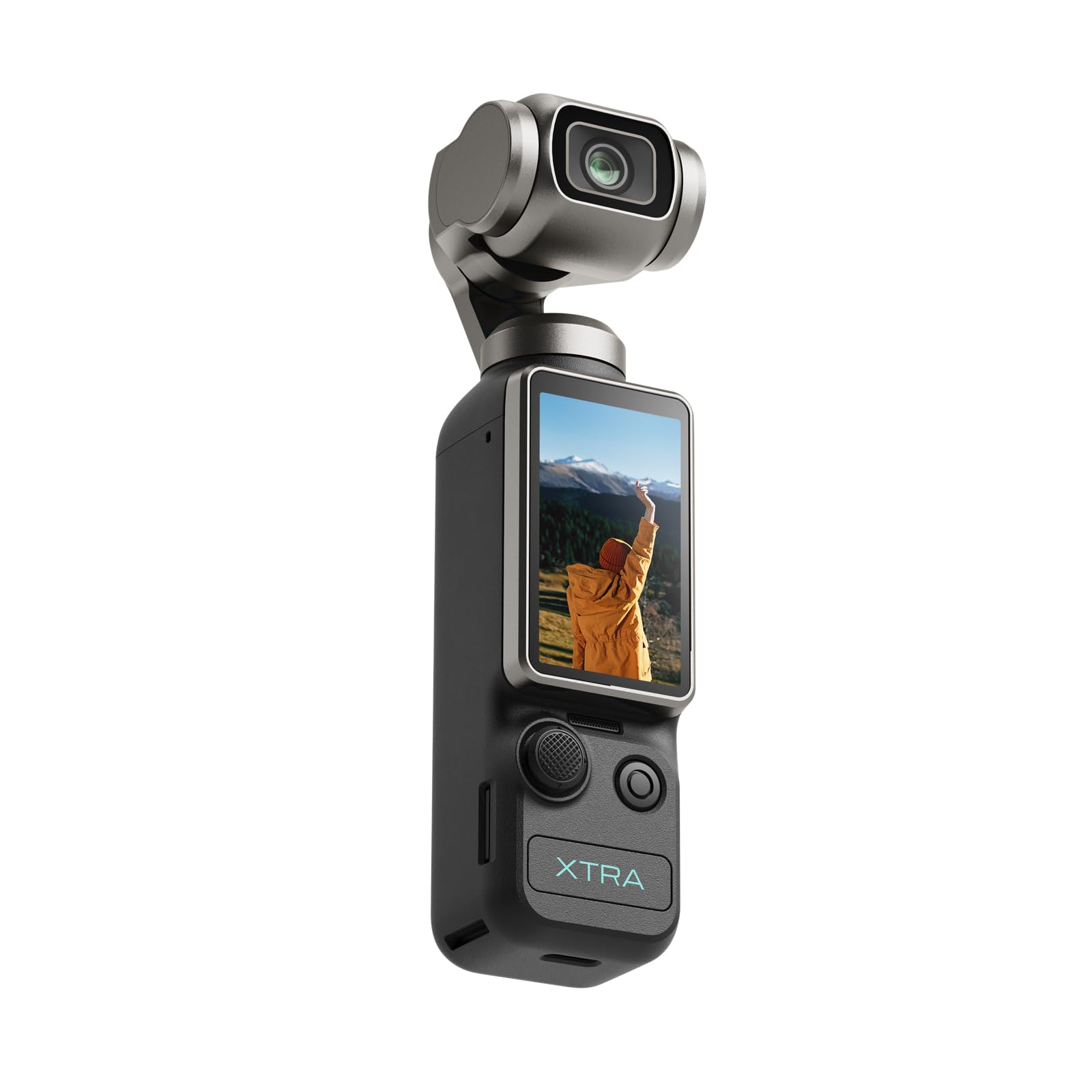
The Xtra Muse is not a traditional action camera — it is a pocket-sized vlogging camera with a built-in 3-axis gimbal stabilizer and a 1-inch CMOS sensor. For skiing, it is best suited for shooting lift-line conversations, lodge interviews, or walk-and-talk shots where you want professional-level gimbal smoothness. The 4K resolution at 120fps allows you to slow down footage from pre-run scenes or après-ski excitement without losing fluid motion.
The 2-inch touchscreen is easy to navigate with gloves off, and the Master Follow feature on the gimbal tracks the subject in the frame — meaning you stay centered even if you bob your head while walking in ski boots. The 10-bit X-Log color grading delivers professional color depth for post-production; if you are a serious content creator who shoots both action and vlog-style segments, the Xtra Muse fills the gimbal slot that no traditional action camera can match. The carrying bag, wrist strap, and 1/4-inch threaded handle give you mounting versatility.
The main limitation for pure skiing is the lack of waterproofing — the Xtra Muse is not designed to be submerged in snow or rain without protection. It also requires manual mounting and balancing on a pole, unlike the helmet-ready action cameras. Battery life is 161 minutes, which is adequate for a vlogging session, but you’ll need to store it in a jacket pocket between segments. This is a specialized tool for the skier who wants gimbal-stabilized talking-head footage alongside traditional POV action. It’s not a primary ski camera, but it is a powerful secondary rig.
Why it’s great
- Built-in 3-axis gimbal delivers cinematic smoothness for walking shots
- 1-inch CMOS sensor provides vivid color and 4K/120fps slow-motion
- Master Follow tracking keeps subject centered in frame
- 10-bit X-Log color for professional post-production
Good to know
- Not waterproof — needs protection from snow and rain
- Requires manual mounting; not designed for helmet use
- Best as a secondary camera for vlog-style content alongside a helmet cam
FAQ
Can I use an action camera below -15 degrees Celsius without special batteries?
Does stabilization really fail on rough mogul runs?
Is a 360 camera better than a traditional action camera for skiing?
What memory card speed do I need for 8K skiing footage?
Final Thoughts: The Verdict
For most skiers, the action camera for skiing winner is the DJI Osmo Action 5 Pro Adventure Combo because it solves the cold-weather battery problem with purpose-built cells and offers HorizonSteady stabilization that keeps the horizon level through aggressive turns. If you want the best low-light sensor for morning or evening runs, grab the DJI Osmo Action 6. And for the skier who wants 360-degree capture with AI-assisted editing, nothing beats the Insta360 X5.