
Our readers keep the lights on and the weekend projects moving. As an Amazon Associate, I earn from qualifying purchases.
Tap water can carry chlorine, lead, and hundreds of other contaminants even after municipal treatment, leaving an off-putting taste and potential health risks. An activated carbon water filter tackles this at the source, using a dense carbon block to trap impurities while preserving beneficial minerals your body needs.
I’m Rikta — the co-founder and writer behind FitlyFast. I’ve spent hundreds of hours analyzing independent lab reports, NSF certifications, and customer performance data to break down exactly how each activated carbon system performs in real-world kitchens.
Whether you need a countertop pitcher or a faucet mount, this guide cuts through the marketing to help you find the best activated carbon water filter for your specific water quality, usage habits, and budget.
How To Choose The Best Activated Carbon Water Filter
Activated carbon filters vary widely in build quality, filter longevity, and contaminant reduction scope. Understanding the core differentiators will help you avoid buying a system that underperforms or costs more in replacement filters than it saves.
Filter Media: Carbon Block vs Granular Activated Carbon
Solid carbon block filters pack finely ground carbon into a dense matrix, forcing water through a tortuous path that traps smaller particles and contaminants more effectively than loose granular activated carbon (GAC). Carbon block typically earns higher NSF certifications for lead, mercury, and volatile organic compound reduction, while GAC excels at chlorine taste and odor removal but leaves larger gaps for microscopic contaminants to slip through.
Certification Standards: NSF/ANSI Numbers That Matter
NSF/ANSI 42 covers aesthetic chlorine reduction and taste improvement. NSF/ANSI 53 addresses health-related contaminant reduction like lead, mercury, and VOCs. A filter certified to both delivers more than just better flavor — it provides verified protection against harmful substances. Many budget pitchers only claim one standard, so checking the fine print on certification prevents false expectations about what the unit can actually remove.
Filter Lifespan and Cost Per Gallon
Manufacturers rate filters in gallons or months, but local water quality dramatically affects actual longevity. A 100-gallon rated filter may last only six weeks if your water is heavily sediment-laden, while a 40-gallon filter in clean municipal water might stretch several months. Factor in replacement filter cost and how often you’ll realistically swap them — the most affordable pitcher can become the most expensive if replacements are frequent and costly.
Quick Comparison
On smaller screens, swipe sideways to see the full table.
| Model | Category | Best For | Key Spec | Amazon |
|---|---|---|---|---|
| Waterdrop ED01W | Premium | Instant filtered water | 200-gal filter, 0.5 µm carbon block | Amazon |
| Clearly Filtered Pitcher | Premium | Maximum contaminant removal | 365+ contaminants, NSF certified | Amazon |
| AquaTru Carafe RO | High‑End | Zero‑plumbing reverse osmosis | 4-stage RO, glass carafe | Amazon |
| ZeroWater 32-Cup | Mid‑Range | Zero TDS water | 5-stage ion exchange, TDS meter | Amazon |
| Waterdrop ED06W | Mid‑Range | Rechargeable instant dispenser | 17-cup, 40-gal, 20-day battery | Amazon |
| PUR Plus Faucet Mount | Value | Sink‑mounted convenience | 100-gal, 3-in-1 carbon filter | Amazon |
| Brita Large 10-Cup | Entry | Budget‑friendly everyday use | 40-gal standard filter, BPA‑free | Amazon |
In‑Depth Reviews
1. Waterdrop ED01W Electric Filter Pitcher
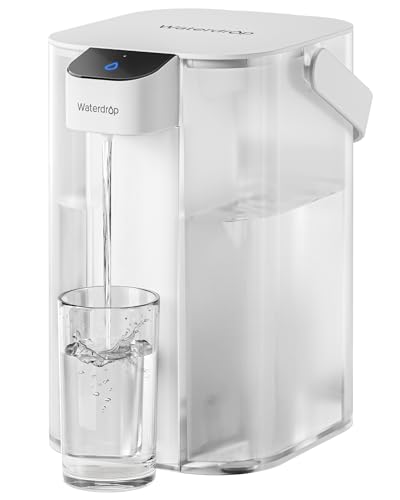
The Waterdrop ED01W redefines the countertop filter experience with a 0.5-micron carbon block that traps 45+ contaminants including lead, mercury, benzene, and microplastics. NSF/ANSI 42, 53, 401, and 372 certifications verify its claims, so you get third-party validation rather than a marketing promise. The one-touch electric dispenser delivers filtered water in roughly one second — no tilting a heavy pitcher or waiting for gravity to work.
With a 200-gallon filter lifespan, this unit drastically reduces replacement frequency compared to standard 40-gallon pitchers. The built-in rechargeable battery holds a 30-day charge, meaning unplugged use in kitchens, RVs, or offices is entirely practical. The filter preserves total dissolved solids, so mineral content stays intact for those who prefer the mouthfeel of natural spring water over stripped-down zero-TDS options.
Setup involves snapping in the included starter filter, charging via USB-C, and pressing the button. The compact footprint fits neatly under standard cabinets. The only caveat is that the top-load reservoir requires filling to the marked max line to avoid leaks — a small adjustment for the convenience of instant filtration.
Why it’s great
- Instant one-second dispense with no waiting
- NSF certified for lead, chlorine, microplastics, and VOCs
- 200-gallon filter slashes replacement costs
Good to know
- Does not lower TDS if you prefer distilled-style water
- Reservoir should not be overfilled to avoid leaks
2. Clearly Filtered Filtered Water Pitcher
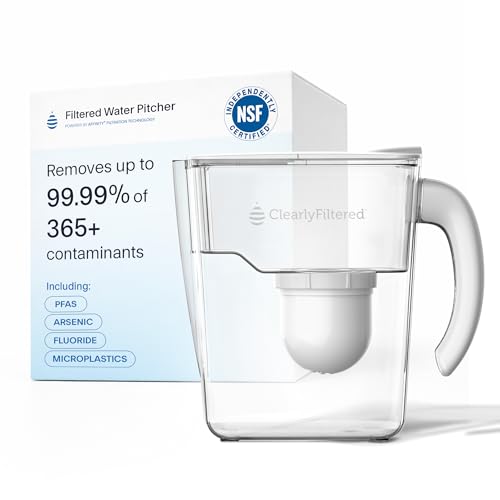
Clearly Filtered’s proprietary Affinity Filtration Technology uses ionic binding to pull 365+ contaminants — including fluoride, lead, PFAS, arsenic, and microplastics — while leaving beneficial minerals intact. That range is significantly broader than most pitcher filters, which typically target 30 to 70 substances. The unit carries NSF certification to standards 42 and 372, with independent lab testing confirming removal rates up to 99.99% for many concerning compounds.
The 80-ounce (10-cup) capacity fits standard refrigerator shelves, and the medical-grade Tritan plastic body is BPA- and BPS-free with non-leaching properties. Each filter handles 100 gallons — roughly four months of daily family use — and the redesigned reservoir includes a spill-resistant water dam that prevents splashing during refills. The ergonomic handle and easy-hinge lid make one-handed pouring simple.
Flow rate is slower than electric dispensers due to the dense carbon block, but that’s the trade-off for the highest contaminant reduction in a pitcher format. Customers report dramatic flavor improvement, especially in areas with heavy chloramine or fluoride treatment. The clear priming bag included in the box simplifies the initial setup process.
Why it’s great
- Targets more contaminants than any other pitcher in this guide
- NSF certified with publicly available lab results
- Medical-grade Tritan plastic resists leaching
Good to know
- Slower gravity filtration rate
- Higher upfront investment for the pitcher
3. AquaTru Glass Carafe Reverse Osmosis System
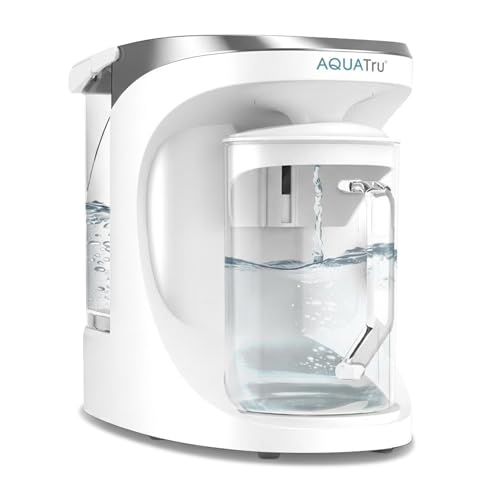
The AquaTru Carafe goes beyond activated carbon by integrating a full 4-stage reverse osmosis system in a countertop footprint with no plumbing required. The pre/carbon filter, reverse osmosis membrane, and VOC carbon filter work together to remove 84 contaminants — including fluoride, chromium-6, arsenic, PFOA/PFOS, and microplastics — that carbon-only pitchers cannot touch. The borosilicate glass carafe eliminates plastic storage concerns entirely.
Filtration produces two outputs: purified water into the carafe and wastewater into a separate reservoir. The pre/carbon filter lasts 300 gallons or six months, the RO membrane and VOC filter each last 600 and 300 gallons respectively. Plugging into a standard outlet powers the pump, and the unit sits about the size of a mid-range coffee maker. No drilling, no plumber, no permanent alteration to your kitchen.
The input tank holds roughly 1.5 carafe fills, so heavy users will need to refill and dump wastewater more frequently. Customer feedback highlights excellent water taste and peace of mind for households concerned about emerging contaminants, though the filter replacement cost is higher than simple pitchers. A 1-year warranty backs the system.
Why it’s great
- Removes contaminants carbon filters cannot address
- No installation or plumbing modifications
- Glass carafe avoids plastic microleaching
Good to know
- Produces wastewater that must be discarded
- Input tank requires frequent refilling for larger households
4. ZeroWater 32-Cup 5-Stage Dispenser

ZeroWater’s 5-stage ion exchange system combines activated carbon with a proprietary resin that strips virtually all total dissolved solids (TDS), producing water that reads 000 on the included TDS meter. This is dramatically different from standard carbon filters that only reduce chlorine and taste issues. The 32-cup dispenser is the largest in this guide, making it ideal for families, offices, or anyone who goes through multiple gallons daily.
The IAPMO certification covers lead, chromium, PFOA/PFOS, and mercury reduction, and the BPA-free plastic construction keeps the water path clean. The integrated TDS meter eliminates guesswork — when the reading hits 006, it’s time to swap the filter. The sliding hatch on the dispenser spout makes filling tall bottles or coffee carafes simple without removing the whole unit from the fridge or counter.
Because the filter removes essentially everything from the water, replacement frequency depends heavily on your source water’s starting TDS. Users with moderately hard water (300+ ppm) report replacing filters every two to four weeks, which adds up. If your goal is the purest possible water free of all dissolved solids, the ZeroWater delivers — but the ongoing filter cost should factor into your decision.
Why it’s great
- Reduces TDS to zero for the purest possible taste
- 32-cup capacity minimizes refills
- Built-in TDS meter eliminates filter-change guesswork
Good to know
- Filter lifespan is short with high-TDS source water
- Replacement filters are more expensive than standard carbon
5. Waterdrop ED06W Electric Filter Pitcher

The Waterdrop ED06W brings the same one-button instant dispense convenience as the premium ED01W but at a more accessible price point. It uses coconut shell activated carbon combined with ion-exchange resin and an activated carbon fiber layer to soften water while reducing chlorine, copper, calcium, and magnesium. The result is noticeably smoother-tasting water that also protects coffee makers and kettles from scale buildup.
Battery life reaches 20 days on a full charge, and the 17-cup capacity means fewer refill trips than smaller pitchers. The electric pump dispenses on demand with no waiting for gravity filtration — fill a glass, press the button, and clean water flows immediately. The filter lasts up to 40 gallons or roughly two months, which aligns with standard pitcher replacement intervals but without the tilt-and-wait chore.
Users consistently praise the ease of cleaning and the intuitive indicator lights that signal filter replacement and battery status. The compact design sits comfortably on countertops without dominating the space. The only practical difference from the ED01W is the shorter filter lifespan and smaller contaminant reduction scope — but for households focused primarily on taste and convenience, this is a polished mid-range choice.
Why it’s great
- Instant electric dispense eliminates gravity wait time
- Softens water to reduce scale in appliances
- Long 20-day battery life for cordless use
Good to know
- Filter rated for 40 gallons, shorter than premium models
- Less contaminant coverage than carbon block systems
6. PUR Plus Vertical Faucet-Mount System

The PUR Plus faucet mount delivers filtered water directly from your tap, eliminating the need to fill and store a pitcher. Its 3-in-1 carbon filter is WQA certified to reduce lead and NSF certified to reduce microplastics, chlorine, and 70 chemical and physical substances. The vertical design sits above the sink, leaving your counter clear and providing easy access to both filtered and unfiltered water via a simple lever switch.
Installation takes under a minute — snap the adaptor onto your standard faucet thread, clip the unit on, and it’s ready. The filter lasts 100 gallons or roughly three months, with an electronic indicator light that turns red when it’s time to replace. The filtered flow is gentler than a standard faucet stream, which users find reduces splashing, while the unfiltered bypass keeps full pressure for washing dishes or filling pots.
The compact size and 1.2-pound weight make it suitable for rental apartments or dorm rooms where permanent modifications are not allowed. The primary limitation is compatibility — the unit requires an external thread aerator and will not work with pull-out, pull-down, or handheld spray faucets. Customers with hard water report the filter lasts closer to two months before flow slows significantly due to sediment buildup.
Why it’s great
- No pitcher takes up fridge or counter space
- Instant filtered water on demand from the tap
- Simple tool-free installation under one minute
Good to know
- Not compatible with pull-out or handheld faucets
- Filtered flow is slower than unfiltered bypass
7. Brita Large 10-Cup Water Filter Pitcher
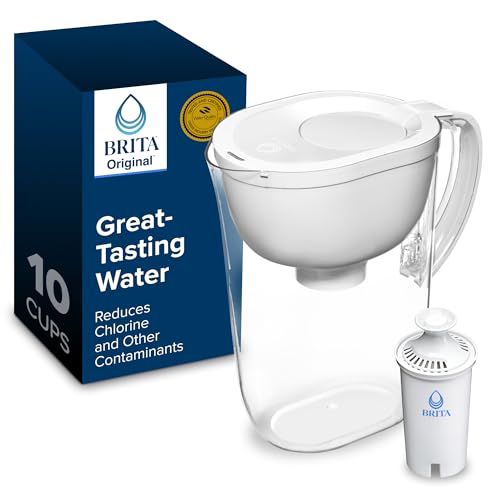
The Brita Large 10-Cup pitcher remains the most recognized entry point for activated carbon filtration, and for good reason — it reliably reduces chlorine taste and odor while also cutting zinc, copper, mercury, and cadmium. The BPA-free plastic construction and WQA NSF/ANSI certification provide a baseline of quality assurance that budget off-brands often lack. It holds 10 cups, enough to fill three standard 24-ounce reusable bottles or a full coffee maker reservoir.
The space-efficient design fits most refrigerator shelves, with an easy-fill locking lid and a comfortable ergonomic handle. The standard filter lasts 40 gallons or roughly two months, while the Longlast+ option extends to 120 gallons or six months. Brita’s widespread availability means replacement filters are sold in virtually every grocery store, never requiring an online order wait.
Filtration is gravity-driven, so it takes several minutes to fill the pitcher’s full capacity — a trade-off accepted by millions of users. The plastic body feels less substantial than medical-grade Tritan pitchers, and the contaminant reduction scope is narrower than premium competitors. But for someone needing affordable, reliable chlorine and taste improvement without complexity, this is the proven baseline.
Why it’s great
- Proven brand with WQA NSF/ANSI certification
- Replacement filters are widely available in stores
- Fits standard fridge shelves with a slim footprint
Good to know
- Narrower contaminant reduction than premium carbon blocks
- Plastic body feels less durable than Tritan alternatives
FAQ
Does an activated carbon filter remove fluoride from tap water?
How often should I replace my activated carbon water filter?
Is a carbon block filter better than granular activated carbon?
Final Thoughts: The Verdict
For most users, the activated carbon water filter winner is the Waterdrop ED01W because its 0.5-micron carbon block, NSF certifications, and 200-gallon instant electric dispensing strike the best balance of performance and convenience. If you want the absolute broadest contaminant protection in a pitcher, grab the Clearly Filtered Pitcher. And for households needing zero-TDS purity without plumbing, nothing beats the ZeroWater 32-Cup Dispenser.