
Our readers keep the lights on and the weekend projects moving. As an Amazon Associate, I earn from qualifying purchases.
Mounting your phone on the handlebars crushes your battery and leaves your primary communication device exposed to road spray and a hard fall. Cycling demands a dedicated tracker that logs accurate GPS, reads power meter data, and survives sweat, rain, and vibration without a second thought.
I’m Rikta — the co-founder and writer behind FitlyFast. I spend my days analyzing hardware specs, user feedback, and real-world performance data to find the activity trackers that actually hold up on the road, trail, and trainer.
Whether you commute to work, chase segment times, or grind through long endurance days, you need a rugged tool that delivers precise metrics without fail. This guide breaks down the best activity tracker for cycling to match your style and budget.
How To Choose The Best Activity Tracker For Cycling
Cycling trackers fall into two categories: dedicated bike computers with handlebar mounts and multisport watches worn on the wrist. Your decision hinges on sensor ecosystem, battery runtime, navigation needs, and whether you want one device for both riding and daily life.
GPS Acquisition and Accuracy
Multi-band GNSS (GPS + Galileo + GLONASS + BeiDou + QZSS) locks satellites faster and maintains position under tree cover and between buildings. Budget units use single-band GPS, which drifts more in urban canyons or dense forest trails.
Ant+ and Bluetooth Sensor Ecosystem
Power meters, cadence sensors, speed sensors, and heart rate straps communicate almost exclusively over Ant+. Bluetooth-only devices limit your sensor choices. A cycling tracker with dual Ant+ and Bluetooth opens the door to accurate wattage, pedal dynamics, and real-time endurance metrics.
Battery Life vs. Screen Quality
High-resolution color touchscreens drain faster. A unit with a monochrome LCD and button controls can run 40+ hours on a charge, while a vivid AMOLED display in always-on GPS mode typically lasts 15–26 hours. Decide if you want beautiful maps on a short ride or raw data endurance for multi‑day tours.
Quick Comparison
On smaller screens, swipe sideways to see the full table.
| Model | Category | Best For | Key Spec | Amazon |
|---|---|---|---|---|
| Wahoo ELEMNT Bolt V3 | Bike Computer | Turn-by-turn navigation on the fly | 20 hr battery, 2.3″ greyscale LCD | Amazon |
| Garmin Edge 540 | Bike Computer | Adaptive coaching and power guide | 42 hr battery saver, multi-band GPS | Amazon |
| Magene C606 V2 | Bike Computer | Color touchscreen with ClimbPro maps | 25 hr battery, 2.8″ color TFT | Amazon |
| Garmin Edge 1050 | Bike Computer | Premium ecosystem with hazard alerts | 60 hr battery saver, built-in speaker | Amazon |
| SRAM Hammerhead Karoo | Bike Computer | Smartphone-like interface with global maps | 15 hr battery, 3.2″ color LCD | Amazon |
| COROS PACE 4 | Multisport Watch | Ultralight wear for all-day training | 41 hr GPS, 1.2″ AMOLED display | Amazon |
| Apple Watch Ultra 3 | Multisport Watch | Cell connectivity and health ecosystem | 20 hr full GPS, dual-frequency GNSS | Amazon |
| Magene PES P505/P515 | Power Meter Crankset | Accurate power data for structured training | ±1% accuracy, 380 hr battery | Amazon |
| iGPSPORT BSC100S | Bike Computer | Budget entry with sensors included | 40 hr battery, 2.6″ LCD screen | Amazon |
In‑Depth Reviews
1. Wahoo ELEMNT Bolt V3
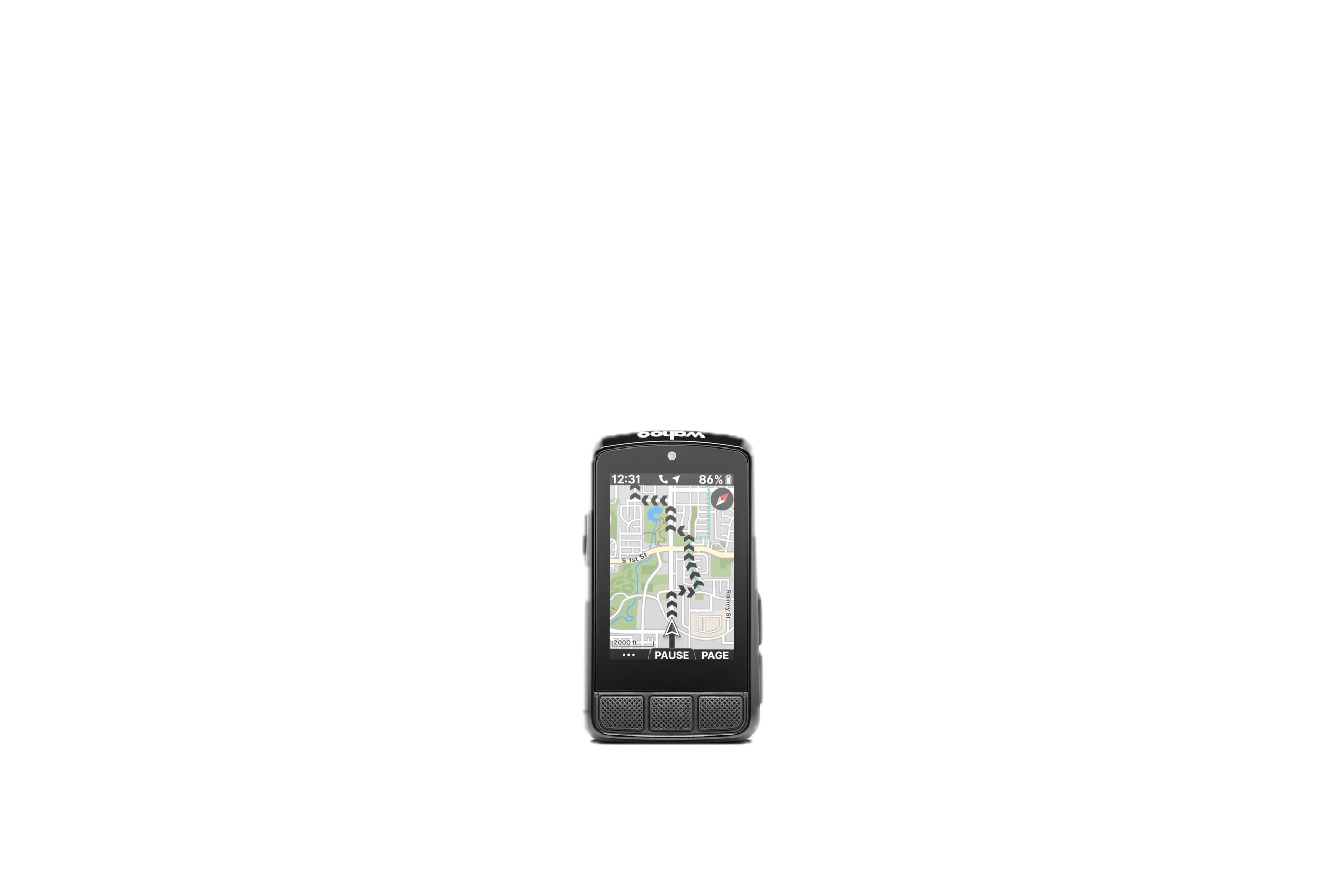
The Wahoo ELEMNT Bolt V3 hits the sweet spot between simplicity and depth. Its greyscale LCD is crisp in direct sunlight, and physical buttons let you scroll through data pages without taking your eyes off the road — no smudgy touchscreen to fiddle with on a wet climb. The on-device turn-by-turn navigation auto-generates prompts from Strava, RideWithGPS, and Komoot routes, while the top LEDs flash to signal upcoming turns or approaching cars via Ant+ radar integration.
Pairing is refreshingly straightforward: sensors like power meters, heart rate straps, and Varia radar connect the first time. The 20-hour battery covers century rides and multiple mid-week sessions between charges, though the greyscale display means you trade map detail for reliability. The companion app handles automatic route syncing and live tracking, but some users find the move from the legacy ELEMNT app to the new companion app mildly inconvenient.
For riders who want a no-fuss computer that just works — with tactile buttons, clean data screens, and seamless third-party integration — the Bolt V3 is the gold standard. It skips the glossy color screen for a purpose-built tool that prioritizes readability and endurance over flash.
Why it’s great
- Excellent sunlight-readable greyscale LCD
- Physical buttons work perfectly with sweaty or gloved hands
- Auto-route sync from popular cycling apps
- Lightweight at 84g with included out-front mount
Good to know
- No color mapping for detailed terrain visualization
- Requires Wahoo companion app instead of older ELEMNT app
- 20-hour battery is good but less than some competitors
2. Garmin Edge 540

The Garmin Edge 540 is built for the rider who craves structured training feedback. Its multi-band GNSS locks onto satellites instantly even in dense tree cover, and the ClimbPro ascent planner shows remaining grade and elevation gain on every ride — no pre-loaded course required. Pair it with a power meter and heart rate strap, and the device delivers daily suggested workouts that adapt to your recovery status and training load.
The button-operated interface is deliberate: gloved fingers never slip on a wet screen, and the layout of the five physical buttons becomes muscle memory after a few rides. The 42-hour battery saver mode extends into multi-day touring, though the standard 26-hour GPS mode still covers extra-long days. The Power Guide feature recalculates watt targets mid-ride based on real-time stamina and wind conditions, which is a genuine advantage for time trialists and gran fondo finishers.
Garmin’s ecosystem is deep but the setup menu can overwhelm new users — the 84-page online manual is exhaustive. Once configured, the Edge 540 runs without fuss and syncs seamlessly with Garmin Connect, TrainingPeaks, and Strava. If you want targeted adaptive coaching and climbing-specific data in a button-driven package, this is the pick.
Why it’s great
- Multi-band GNSS for accurate positioning under challenging conditions
- ClimbPro works without a pre-loaded route
- Power Guide adjusts targets live based on wind and stamina
- Excellent battery saver mode for extended rides
Good to know
- No touchscreen complicates map scrolling
- Initial setup and screen customization require patience
- Premium pricing places it above mid-range options
3. Magene C606 V2
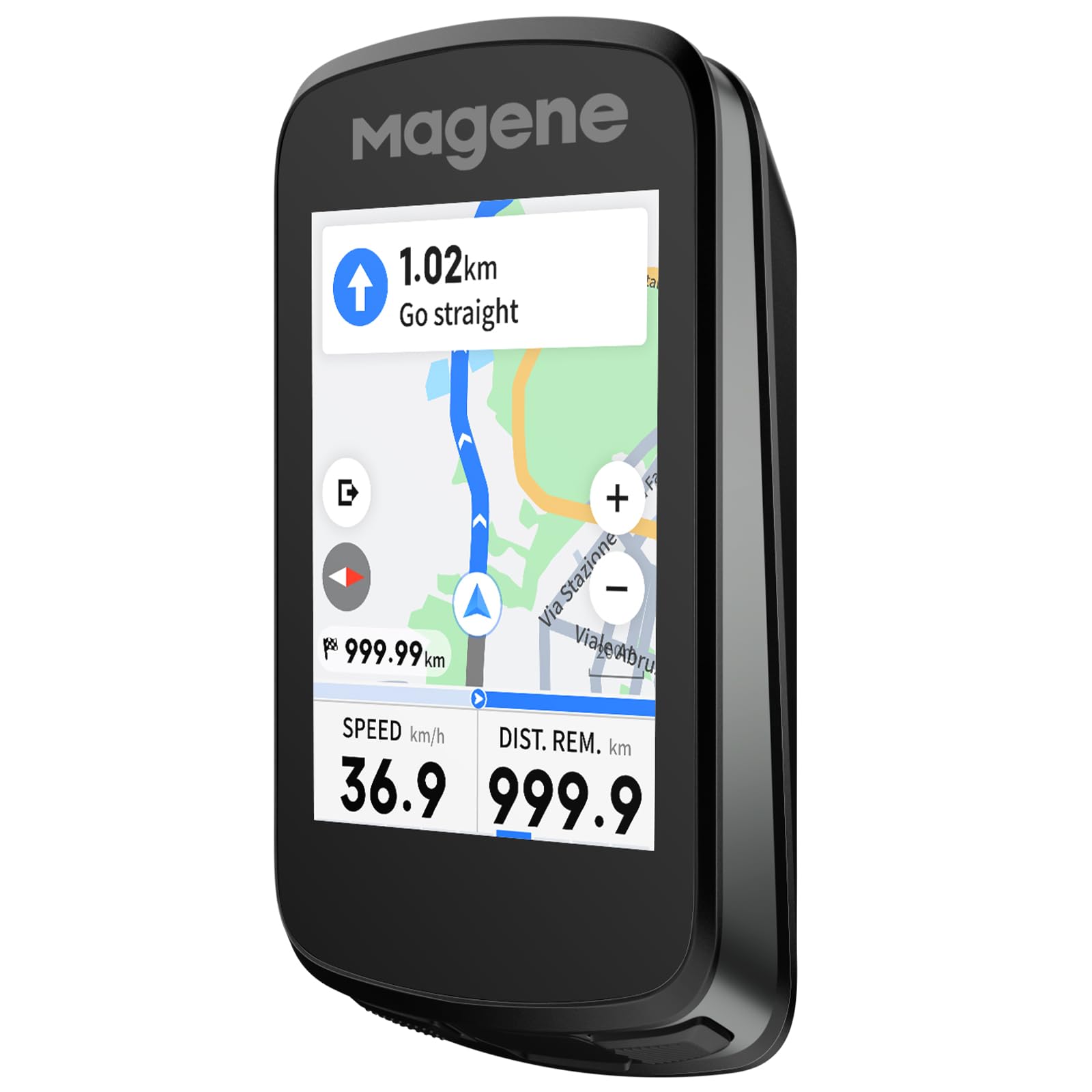
The Magene C606 V2 punches well above its price tier with a 2.8-inch color touchscreen that rivals units costing twice as much. The display is responsive and remains usable in light rain, though direct sunlight can wash out the contrast compared to Garmin’s high-end panels. Multi-Scenario ClimbPro and Strava Live Segments populate automatically, and the offline navigation with GPX import handles routes up to 1,000 km without a phone tether.
Battery life hovers around 25 hours in mixed use, which drops to roughly 15 hours with the backlight cranked to 60% brightness — a realistic trade for the vivid screen. The wireless smart camera control lets you trigger DJI or Insta360 action cams from the handlebar, a niche but welcome feature for content-creator cyclists. Pairing with power meters like Magene’s own P505 or Favero Assioma is fast, and the cycling dynamics data (power phase, seated/standing time) unlocks pedal-stroke analysis normally reserved for Garmin’s top-tier units.
Build quality feels solid with an IPX7 rating, and the included protective case and tempered glass protector add reassurance. The Magene app syncs to Strava and TrainingPeaks, though the interface is less polished than Garmin Connect. For the rider who wants color mapping, climbing profiles, and live segment racing without spending premium money, the C606 V2 is a compelling alternative.
Why it’s great
- Vibrant color touchscreen at a mid-range price
- Multi-Scenario ClimbPro for route and spontaneous climbs
- Wireless camera control for action cams
- Supports cycling dynamics with compatible power meters
Good to know
- Screen can be dim in bright sunlight
- Battery life drops noticeably with high brightness
- App interface is less refined than Garmin’s ecosystem
4. Garmin Edge 1050

The Garmin Edge 1050 is the flagship for cyclists who want every possible feature integrated into a single handlebar computer. Its vivid color touchscreen is the brightest Garmin has put on a bike computer, and the addition of a built-in speaker provides audio navigation prompts and a loud bike bell — genuinely useful for alerting pedestrians on shared paths. The road hazard alert system pulls reports from fellow cyclists in real time, adding a layer of safety awareness on unfamiliar routes.
Battery performance is exceptional: 20 hours in demanding use with the screen on, and up to 60 hours in battery saver mode. The device supports multi-band GNSS, ClimbPro, Power Guide with live wind adjustment, and in-ride group messaging when paired with a phone. The Garmin Pay contactless feature is a nice convenience for mid-ride coffee stops, and Di2 integration displays gear position and battery status clearly on the data fields.
The downside is the price and physical footprint — it is noticeably larger and heavier than the Edge 540 or Bolt V3. Some users report that the out-front mount and case require a larger handlebar space, and the always-on color display demands daily charging for frequent riders. But for the athlete who wants the complete Garmin ecosystem — radar, lights, power meter, Di2, and health tracking — the Edge 1050 delivers unparalleled cohesion.
Why it’s great
- Brightest color touchscreen on any cycling computer
- Built-in speaker for voice prompts and bike bell
- Real-time road hazard reports from the community
- Excellent battery saver mode for endurance events
Good to know
- Larger and heavier than mid-range computers
- High price puts it in true premium territory
- Requires daily recharging with always-on display
5. SRAM Hammerhead Karoo

The SRAM Hammerhead Karoo brings a smartphone-like experience to the handlebar with its 3.2-inch color LCD and responsive touch interface backed by 64GB of storage for offline global maps. The processor is snappy: route rendering, zooming, and data page transitions happen without lag. Multi-band GNSS combined with surface-specific routing (road, MTB, gravel) means the Karoo recalculates accurately even when you wander off the prescribed path.
Automatic climb detection works whether you are following a route or free-riding, and the live segment integration with Strava displays real-time time gaps to your PRs and the KOM/QOM leader. The hardware buttons flanking the touchscreen give you a physical backup for gloved or wet conditions, a smart redundancy not all touch-only units offer. Battery life is the main compromise: 15 hours in standard GPS mode forces a charge after long days, though the USB-C charging is fast.
Setup is genuinely easier than Garmin — the interface mirrors a phone’s logic, so most riders feel at home within minutes. The caveats are that mountain trail maps render as dashed lines by default (users have created file modifications to fix this), and calorie calculations require a power meter since the device cannot estimate from heart rate alone. For the rider who values a bright, fluid touchscreen and global offline maps without Garmin’s learning curve, the Karoo delivers.
Why it’s great
- Intuitive smartphone-like touch interface
- 64GB storage for full offline global maps
- Fast processor for smooth map navigation
- Surface-specific routing for road, MTB, and gravel
Good to know
- 15-hour battery life requires planning for long days
- Mountain trail map style may be hard to read
- Calorie tracking relies on a power meter, not HR data
6. COROS PACE 4
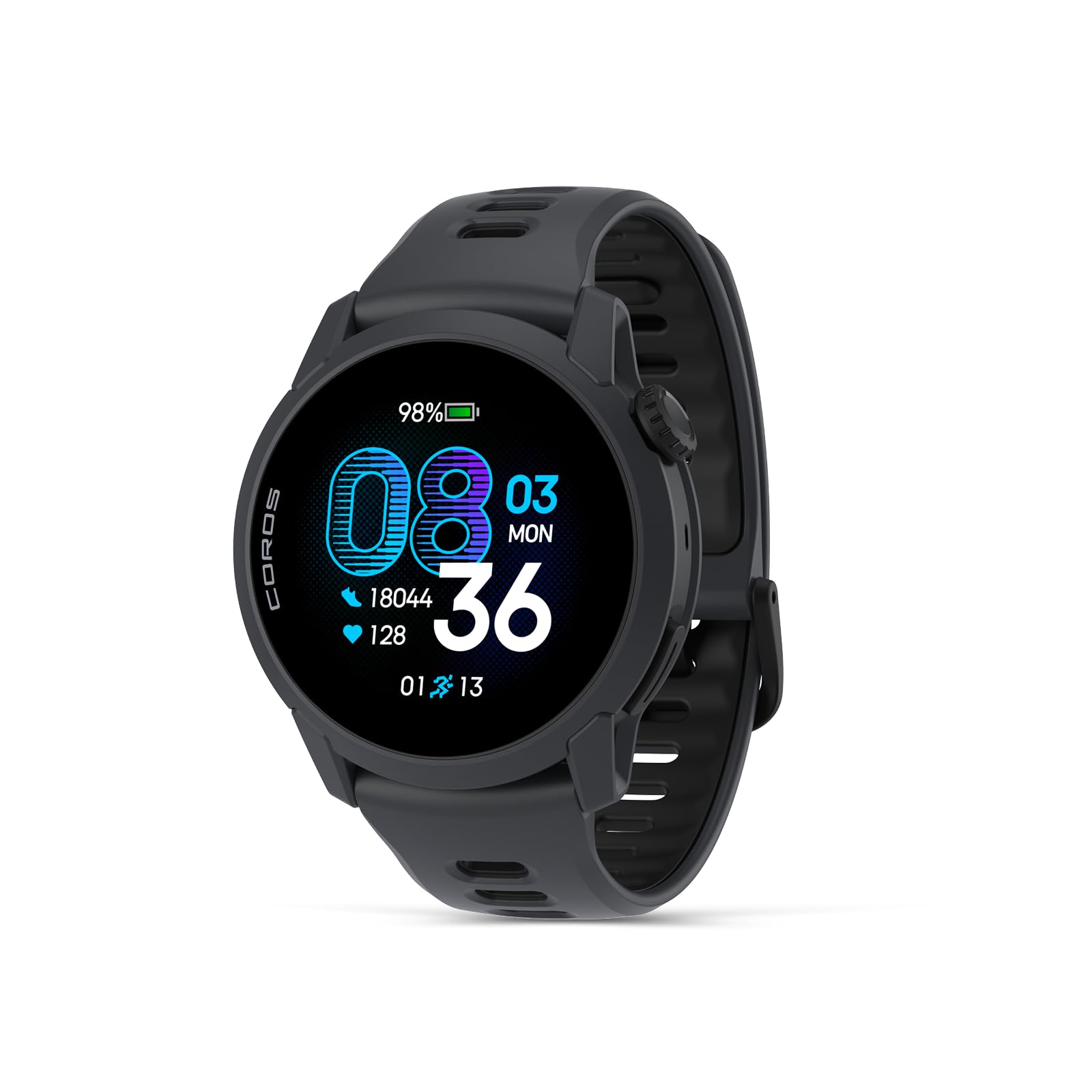
The COROS PACE 4 is an ultralight GPS watch at 32g with a nylon band, making it nearly imperceptible during rides. It is not a full bike computer replacement — you view data on your wrist rather than the handlebar — but for cyclists who also run, swim, and lift, it consolidates activity tracking into a single wearable. The 1.2-inch AMOLED auto-adjusts brightness and remains readable in most conditions, and the 41-hour GPS battery covers multi-day touring without a charger.
The watch pairs with Ant+ speed, cadence, and heart rate sensors, so you can log bike rides with proper external data. The voice control feature lets you set a target workout or log a voice note mid-ride, and the digital crown plus two buttons provide easy navigation while moving. The COROS app offers detailed recovery time, HRV, and sleep stage analysis, which helps periodize training across cycling and other disciplines.
Where the PACE 4 falls short for dedicated cyclists is the lack of on-device turn-by-turn navigation and power meter integration. It displays power data if paired, but you cannot view a map on the 1.2-inch screen for routing. For the all-sport athlete who cycles as part of a broader regimen and wants a featherweight watch with outstanding battery, the PACE 4 is an excellent companion.
Why it’s great
- Ultralight 32g design with nylon band
- AMOLED display with auto-brightness adjustment
- Excellent 41-hour GPS battery life
- Pairs with Ant+ bike sensors for accurate ride data
Good to know
- Small screen unsuitable for turn-by-turn map navigation
- No power meter pairing for structured cycling power data
- Watch must be worn, not mounted on handlebars
7. Apple Watch Ultra 3
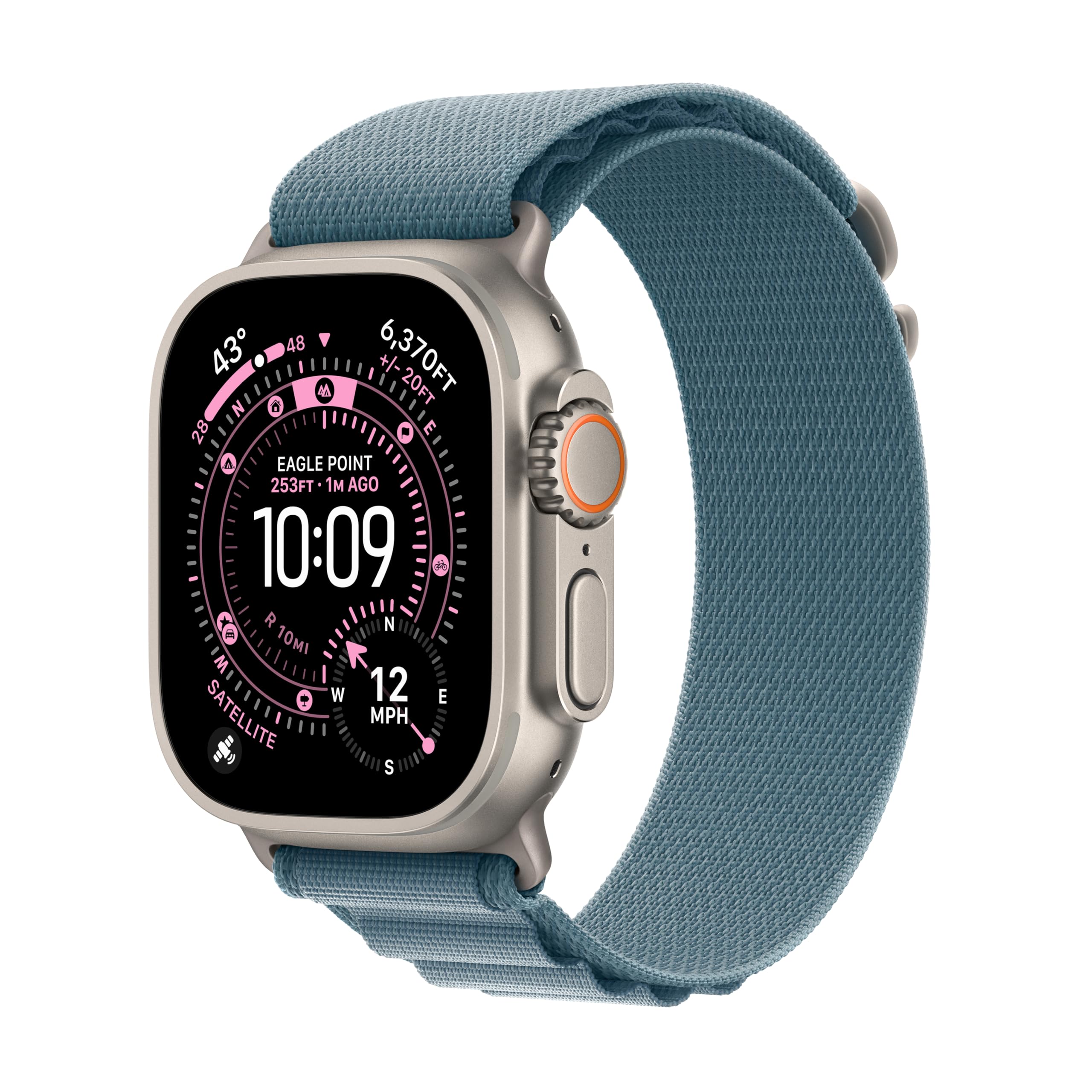
The Apple Watch Ultra 3 is the most versatile multisport smartwatch available, with a rugged titanium case, 100m water resistance, and dual-frequency GPS that delivers strong accuracy for cycling even in challenging signal environments. The 49mm sapphire crystal display is exceptionally bright and readable, and the cellular connectivity means you can leave your phone at home — streaming music, taking calls, and using satellite messaging for emergencies.
Cycling-specific features include automatic workout detection, heart rate zones, power display (when paired with a Bluetooth power meter), and training load tracking through Apple’s Fitness app. The Vitals app consolidates overnight health metrics like sleep stages and HRV, which helps you gauge recovery before a hard ride. The customizable Action Button can trigger a workout or flashlight instantly, and the battery delivers about 20 hours of full GPS tracking, which covers long days but not multi-day tours.
The catch is that the Apple ecosystem does not natively support Ant+ sensors — you are limited to Bluetooth accessories, which excludes most dedicated power meters and many cadence/speed sensors. The watch excels as a daily health and safety device that also tracks rides, but for the power-meter obsessed cyclist, a handlebar computer remains the better tool. For the triathlete or adventure rider who wants one device for everything including cellular safety, the Ultra 3 sets the standard.
Why it’s great
- Dual-frequency GNSS for accurate ride tracking
- Cellular connectivity for safety and music streaming
- Durable titanium build with sapphire crystal display
- Comprehensive health monitoring beyond cycling
Good to know
- Bluetooth-only sensor protocol limits power meter compatibility
- 20-hour GPS battery requires daily charging
- High price pushes into premium smartwatch territory
8. Magene PES P505/P515 Power Meter Crankset

The Magene PES P505/P515 is a complete crankset power meter that delivers ±1% accuracy at a fraction of the cost of comparable units from SRAM or Shimano. The 625g total weight (99g spider) is competitive, and the 7075 aircraft-grade aluminum crank arm with a hollow design passes 100,000-cycle durability tests. The rechargeable battery lasts up to 380 hours — charge it two or three times a year for typical riders — and the USB-C port makes recharging simple.
Installation is straightforward for anyone comfortable with bottom bracket work: the 24mm steel spindle fits most Shimano-compatible frames, and the 110BCD four-bolt chainring pattern accepts standard road chainrings. The unit broadcasts over both Ant+ and Bluetooth, pairing instantly with Garmin, Wahoo, Magene, Bryton computers and apps like Zwift and TrainingPeaks. The data stream includes power, cadence, left-right balance, and torque effectiveness, giving you a full picture of pedaling efficiency.
A few users note occasional connection drops that resolve on the next ride, and the activation code sometimes lands in spam folders. Once set up, the consistency is excellent — warm-up readings stabilize quickly and the temperature compensation algorithm prevents drift on long climbs. For the price-conscious racer or dedicated amateur who wants reliable wattage without the premium tax, this is the power meter to build your training around.
Why it’s great
- ±1% power accuracy at a mid-range price
- 380-hour battery life with USB-C charging
- Full data set including left-right balance and torque
- Lightweight 625g total with 7075 alloy crank
Good to know
- Requires compatible bottom bracket and chainring bolt pattern
- Activation code may be filtered as spam
- Occasional brief connection drops reported
9. iGPSPORT BSC100S
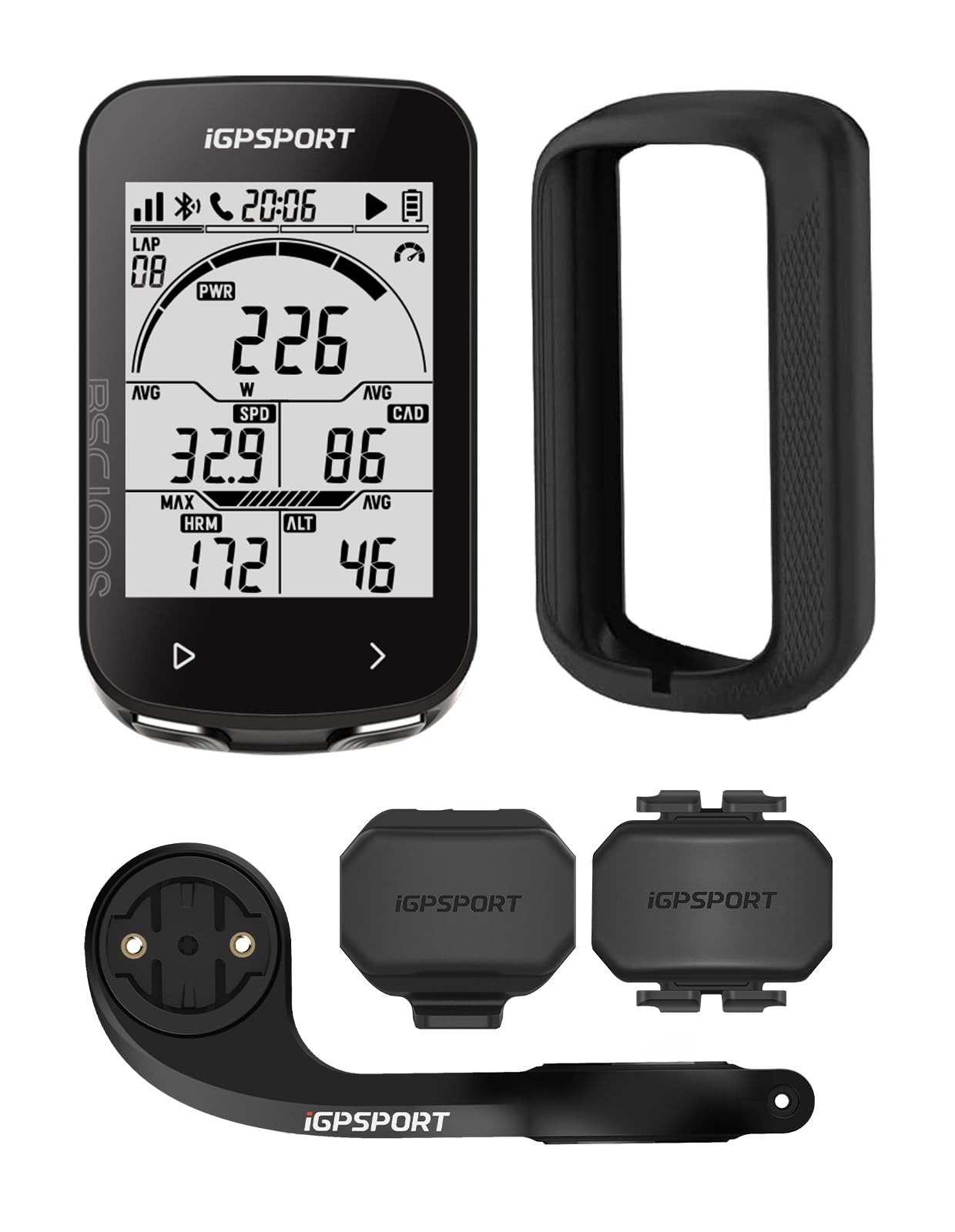
The iGPSPORT BSC100S is the entry point for cyclists who want GPS, cadence, and speed tracking without spending big. The package includes the computer, a CAD70 cadence sensor, an SPD70 speed sensor, a mount, and a case — everything needed to start logging rides out of the box. The 2.6-inch anti-glare LCD is easy to read in sunlight, and the 40-hour battery life eliminates range anxiety for even the longest weekend tours.
It supports five satellite systems (GPS, BeiDou, GLONASS, Galileo, QZSS) for solid accuracy, and the Ant+ and Bluetooth 5.0 dual protocol means it pairs with most third-party sensors, including heart rate monitors and some power meters. The iGPSPORT app syncs ride data to Strava and Komoot, and the .FIT file export works with TrainingPeaks. The two-button interface is simple but functional — you can cycle through the 40+ data fields quickly once you memorize the layout.
The trade-offs are expected at this level: no navigation, no color mapping, and no ClimbPro-type feature. The manual has minor translation errors, and the rubber band mount feels less secure than Garmin or Wahoo quarter-turn systems. Some units have reported occasional freezes that reset with the button hold. For the new rider or budget-conscious commuter who wants to track speed, distance, and cadence with GPS accuracy, the BSC100S delivers remarkable value.
Why it’s great
- Complete kit with cadence and speed sensors included
- 40-hour battery for ultra-long endurance rides
- Five-satellite GPS for solid positioning
- Syncs to Strava and Komoot via app
Good to know
- No turn-by-turn navigation or color screen
- Manual has translation errors and missing details
- Rubber band mount is less durable than quarter-turn designs
FAQ
Can I use a smartwatch instead of a bike computer for cycling?
What is ClimbPro and do I need it?
Why do I need a power meter for cycling?
How many hours of battery do I realistically need?
Final Thoughts: The Verdict
For most users, the activity tracker for cycling winner is the Wahoo ELEMNT Bolt V3 because it balances reliable button navigation, seamless app integration, and a sunlight-readable display at a mid-range price. If you want adaptive coaching and ClimbPro features, grab the Garmin Edge 540. And for a budget-friendly entry with sensors included, nothing beats the iGPSPORT BSC100S.