
The struggle is real: you want the health insights of a modern tracker, but standard-sized watches look like a brick strapped to your arm, and the sensors often fail because the band can’t make proper skin contact. The search for a device that combines accurate data collection with a genuinely comfortable, proportional fit is a specific challenge that generic buying guides ignore.
I’m Rikta — the co-founder and writer behind FitlyFast. I’ve spent years analyzing the physical dimensions, sensor placement, and band taper of hundreds of wearables to determine which models truly accommodate smaller wrist circumferences without sacrificing core functionality.
This guide cuts through the marketing noise to identify the wearable computers that actually work for slender wrists, not just those that claim to. This is the definitive breakdown of the best activity tracker for small wrists based on fit, sensor accuracy, and daily comfort.
How To Choose The Best Activity Tracker For Small Wrists
Selecting a fitness wearable for a slender wrist is a balancing act between display size, sensor pod dimensions, and overall weight. You cannot simply choose the smallest face and call it a day; every component interacts with the unique geometry of a smaller arm.
Case Diameter and Lug Overhang
The golden rule is that the watch case should not extend past the width of your wrist bone. For wrists measuring 14-16cm, a case diameter of 38-40mm is the sweet spot. But the often-ignored spec is the lug-to-lug length—the distance across the top of the case where the strap attaches. If the lugs overhang, the band will never sit flush, creating light gaps that ruin heart rate accuracy.
Band Taper and Material
A 20mm band on a 38mm case is a standard ratio, but the taper of the strap matters. Many trackers have a quick-release 20mm band that stays that width all the way to the buckle, which can feel bulky on a small wrist. Look for models where the band tapers down to 16-18mm near the clasp, as this creates a much more balanced, jewelry-like feel. Soft silicone or woven nylon materials also conform better than rigid leather or metal link bands.
Sensor Pod and Rear Housing
Budget trackers often use a flat, protruding sensor block that creates a pressure point on the wrist bone. Premium models use a contoured, domed rear housing that sits comfortably in the hollow of the wrist. For small wrists with less soft tissue, this contour is critical for consistent optical heart rate readings without causing discomfort or bruising.
Quick Comparison
On smaller screens, swipe sideways to see the full table.
| Model | Category | Best For | Key Spec | Amazon |
|---|---|---|---|---|
| Garmin Lily 2 Active | Premium Fashion | Style & full GPS | 38mm case, 20mm tapered band | Amazon |
| Apple Watch SE 3 (40mm) | Smart Ecosystem | iPhone integration | 40mm case, 20mm band, 0.96oz | Amazon |
| Garmin vívoactive 5 | Premium Health | Deep health metrics | 42mm case, 11 days battery | Amazon |
| Fitbit Charge 6 | Mid-Range Tracker | Google integration | Slim, banded form, ECG | Amazon |
| Fitbit Inspire 3 | Entry-Level Tracker | Pure simplicity | Ultra-light, 10 days battery | Amazon |
| TOOBUR Petite DR07 | Value Smartwatch | Budget AMOLED | 37mm case, 33g weight | Amazon |
| FITVII Screenless | Screenless Wearable | Zero bulk, no screen | Screenless, 6.2-9.45in fit | Amazon |
In‑Depth Reviews
1. Garmin Lily 2 Active

The Garmin Lily 2 Active is the most deliberately designed small-wrist tracker on the market. With a 38mm anodized aluminum case and a unique patterned lens that hides the display until tapped, it feels like a piece of jewelry rather than tech gear. The 20mm band tapers elegantly, and the domed rear sensor housing sits flush against the wrist bone without digging in, solving the comfort issue that plagues flat-backed competitors.
Where this device really shines is the feature depth packed into that petite frame. It includes built-in GPS, Garmin Pay contactless payments, Body Battery energy monitoring, and Sleep Coach. The touchscreen is bright and responsive, yet the “hidden display” concept means you get a full-featured health computer without the bulky, masculine aesthetic of a traditional sports watch.
The one trade-off for the small build is a slightly less robust vibration motor, and the proprietary charging cable is a minor inconvenience if you travel. But for anyone who prioritizes design and a true small-wrist fit over raw smartwatch features, this is the reference standard. The lack of an altimeter for stair counting is notable, but the overall package is unmatched for its target audience.
Why it’s great
- 38mm case is ideal for 14-16cm wrists
- Elegant, jewelry-like design with hidden display
- Full GPS, Garmin Pay, and advanced sleep coaching
- Domed sensor back improves HR accuracy on small wrists
Good to know
- Proprietary charger, not USB-C
- Weak vibration motor can be easy to miss
- Limited watch face customization compared to Vivo series
2. Apple Watch SE 3 (40mm)
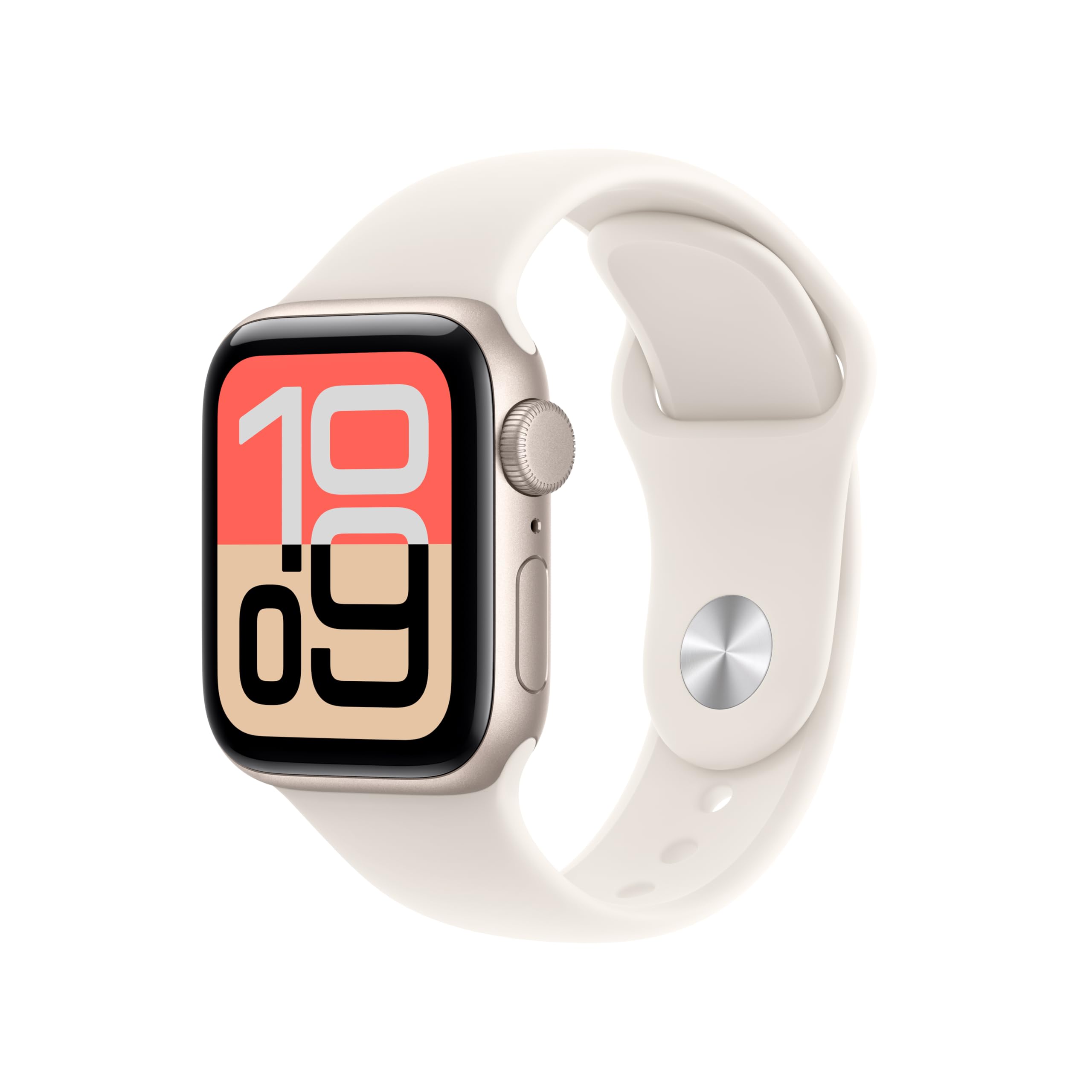
The Apple Watch SE 3 in 40mm is the perfect entry point for iPhone users with small wrists. At just 0.96 ounces, it is incredibly light, and the case geometry is rounded enough that it doesn’t look oversized on a slender wrist. The Always-On Retina display means you can read the time without a dramatic wrist roll, a subtle benefit for professional settings.
The health tracking suite is comprehensive for the price tier: heart rate monitoring with irregular rhythm notifications, sleep stages with apnea alerts, and a new temperature sensor for deeper health insights. The Workout Buddy feature leverages the iPhone’s processing power for real-time coaching. For parents, the family setup mode lets you manage a child’s watch from your own phone.
The battery life of 18 hours means daily charging is mandatory, and the 40mm variant has a noticeably smaller battery than the 44mm/46mm models. The Sport Band is comfortable but can trap moisture against the skin during intense workouts. If you can accept the daily charging ritual, the SE 3 provides the most seamless integration with the Apple ecosystem available in a small-wrist-compatible package.
Why it’s great
- Excellent iPhone integration and app support
- Lightweight at under 1 ounce
- Safety features: Fall/Crash detection, Emergency SOS
- Fast charging: 0-80% in ~40 minutes
Good to know
- 18-hour battery life requires daily charging
- No blood oxygen sensor (health feature omissions)
- Sport Band can feel sweaty during long runs
3. Garmin vívoactive 5

The Garmin vívoactive 5 is a premium health tracker that pushes the boundary of what fits a small wrist. At 42mm, it is on the larger side of the acceptable range for 15cm wrists, but the extremely lightweight fiber-reinforced polymer case and the 20mm quick-release band make it feel much smaller than its diameter suggests. The bright AMOLED display is phenomenal for outdoor visibility.
The true value of the vívoactive 5 is the depth of its health metrics. You get Body Battery energy monitoring, HRV status, a detailed Sleep Score with nap detection, and over 30 built-in sports apps including a dedicated wheelchair mode. The battery life of up to 11 days in smartwatch mode (5 days with always-on display) is a liberating upgrade from any Apple Watch—you can track a full week of sleep without reaching for a charger.
The 42mm case may still overhang on extremely slender wrists (sub-14cm), and the preloaded watch faces are limited in customization. The lack of a dedicated flashlight feature or an included charger block are minor annoyances. However, for the user who prioritizes comprehensive, subscription-free health analysis over a fashion-first aesthetic, the vívoactive 5 is the top performer in this class.
Why it’s great
- 11-day battery life for uninterrupted sleep tracking
- Advanced Body Battery and HRV metrics
- Bright AMOLED display with excellent sunlight readability
- No subscription fees for detailed analytics
Good to know
- 42mm case may be too wide for very slender wrists
- Nap detection can have false positives you can’t delete
- Touchscreen can be finicky with wet skin
4. Fitbit Charge 6

The Fitbit Charge 6 is a significant step up from the Inspire 3, offering a slimmer, band-style form that actually conforms better to small wrists than many round-cased alternatives. The silicone band is soft and flexible, and the sensor pod is far less protruding than the Charge 5, making it comfortable for 24/7 wear. The addition of a physical button on the side is a huge usability improvement over the touch-only predecessor.
Health tracking is robust: you get 24/7 heart rate with ECG app support, SpO2 monitoring, stress management tracking, and a Daily Readiness Score powered by Google Health Premium. The integration with Google Maps for turn-by-turn directions and YouTube Music controls adds smartwatch convenience. The 6-7 day battery life hits a sweet spot between the Inspire 3’s stamina and the Apple Watch’s daily charge.
The biggest downside is the reliance on the Fitbit app, which has seen inconsistent updates since the Google acquisition. Some users report calorie tracking bugs and GPS connectivity issues. The proprietary charging cable is also a point of failure. For the small-wrist user who wants a screen but hates the weight of a traditional watch, the Charge 6’s slim profile is hard to beat.
Why it’s great
- Slim, band-style design comfortable for small wrists
- ECG and SpO2 monitoring included
- Google Maps integration and contactless payments
- 6-7 day battery life
Good to know
- Fitbit app quality has declined post-Google acquisition
- Proprietary charger is easy to lose
- GPS performance can be inconsistent
5. Fitbit Inspire 3

The Fitbit Inspire 3 is the quintessential no-compromise tracker for small wrists. It is incredibly lightweight, and the narrow resin case with a simple silicone band creates zero bulk. It is so unobtrusive that you will genuinely forget you are wearing it, which is the highest praise for a device designed for 24/7 health monitoring. The color touchscreen is small but bright.
The feature set is basic but well-executed: 24/7 heart rate, sleep tracking with a Sleep Score, stress management with guided breathing sessions, and 20+ exercise modes. The 10-day battery life is the best in this comparison, allowing you to wear it from Monday to the following Wednesday without a thought. The automatic exercise tracking works reliably for walks and runs.
The limitations are clear: there is no built-in GPS, no ECG, no SpO2 sensor, and no music storage. The screen is too small for reading notifications comfortably. It is strictly a fitness tracker, not a smartwatch. For the user who simply wants accurate step, heart rate, and sleep data in the smallest possible package, the Inspire 3 is the efficient, budget-conscious choice.
Why it’s great
- Smallest and lightest form factor in its class
- Excellent 10-day battery life
- Accurate step, heart rate, and sleep tracking
- Water-resistant to 50 meters
Good to know
- No built-in GPS (relies on phone)
- Small screen is not great for reading texts
- Proprietary charging cable
6. TOOBUR Petite DR07
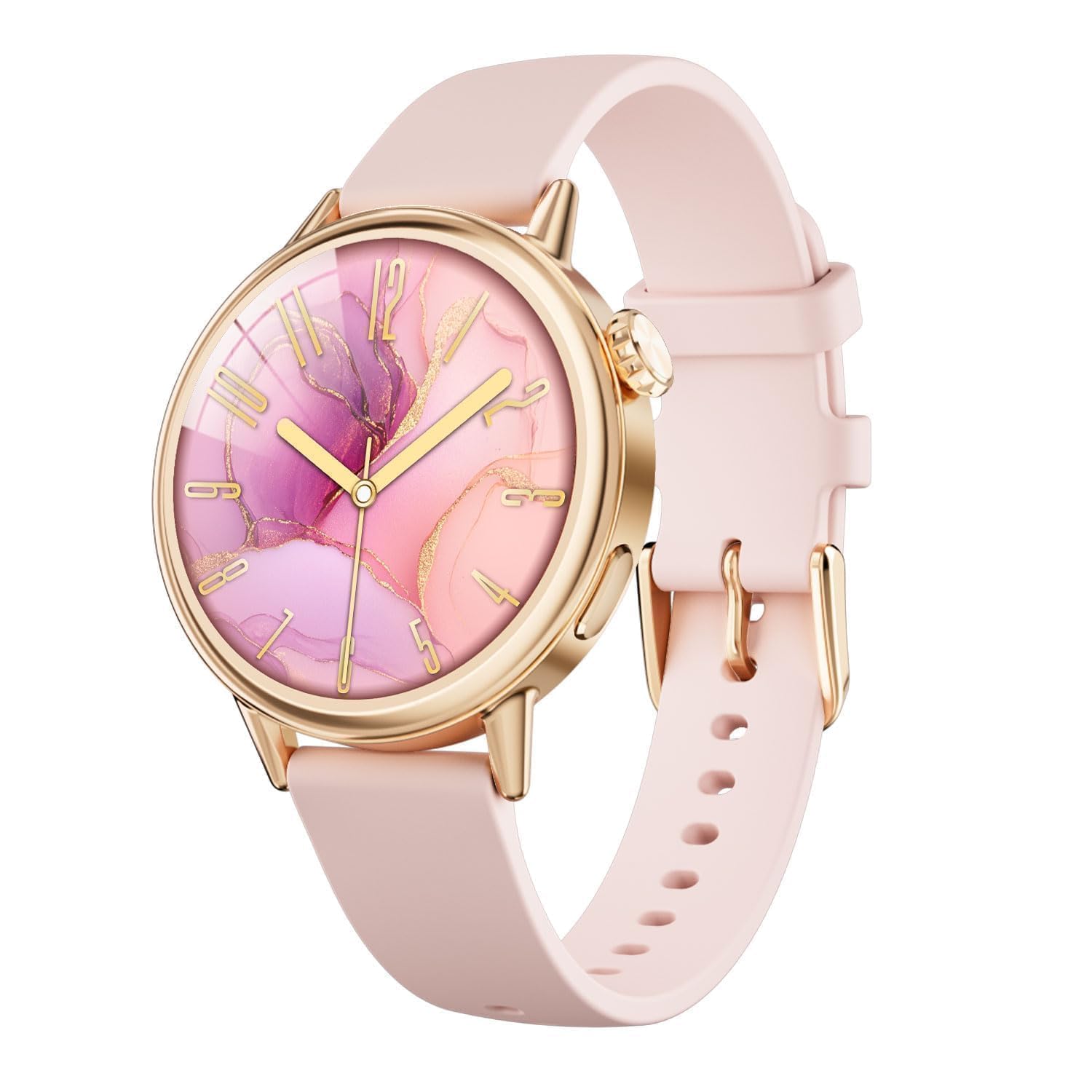
The TOOBUR Petite DR07 is built from the ground up for the small-wrist demographic, featuring a 37mm case that is genuinely petite. At just 33g with the strap, it is among the lightest smartwatches available. The AMOLED display is vibrant and offers an Always-On Display mode, which is rare at this size and price tier. The 16mm tapering band is perfect for slender wrists.
The fitness tracking covers all the basics: 24/7 heart rate, sleep monitoring, SpO2, and 100+ sports modes. The 185mAh battery delivers a solid 5-7 days of real-world usage, and the fast charging via USB-C is a welcome convenience. The physical knob is a user-friendly touch, allowing easy menu navigation without fumbling on a small screen.
Where the budget nature shows is in the sensor accuracy and connectivity. Bluetooth disconnections are a common complaint, and call/speaker functionality is limited. It is a great entry-level device for someone who wants an attractive, small watch for basic activity tracking and notifications, but it lacks the precision and ecosystem of the premium Garmin or Apple options.
Why it’s great
- 37mm case is ideal for very small wrists
- Extremely lightweight at 33g
- Vibrant AMOLED display with AOD
- USB-C fast charging
Good to know
- Bluetooth connectivity can be unreliable
- Sensor accuracy is not on par with Garmin/Fitbit
- Notification reliability is inconsistent
7. FITVII Screenless Fitness Tracker
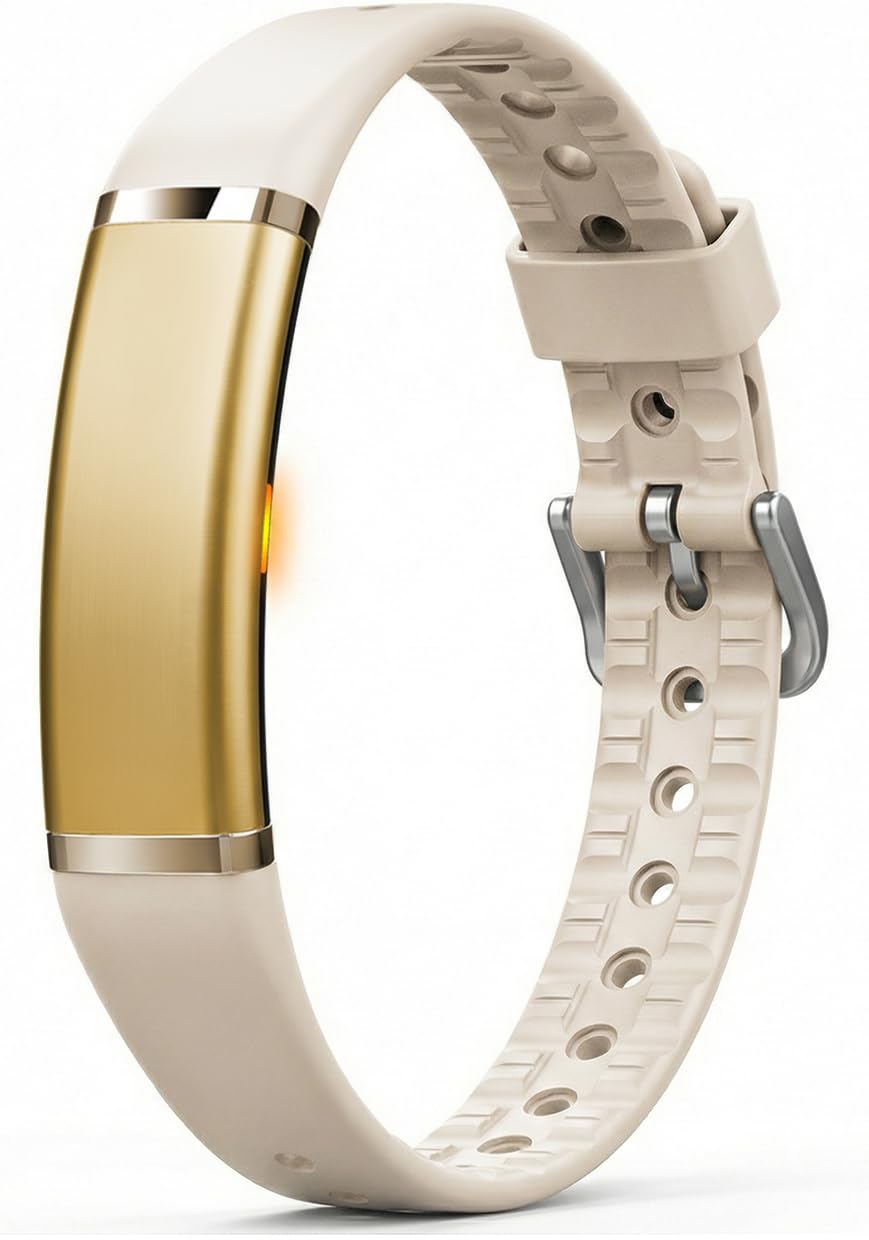
The FITVII Screenless tracker is a radical but effective solution for small wrists: remove the screen entirely. This form factor is the absolute minimum bulk possible. It sits flat and flush against the wrist like a thin pebble, with zero glare, zero accidental screen taps, and zero distraction. For users with extremely slender wrists who find even a 37mm case too wide, this is the ultimate fit compromise.
The health tracking is surprisingly deep for a device without a screen. It monitors 24/7 heart rate, blood pressure, HRV, blood oxygen, and sleep patterns. The data is easily viewable in the companion app, and all features operate without any subscription fees. The IP68 waterproofing is excellent, and the 10-day battery life is liberating. Two bands (S and L) are included to ensure a snug fit.
The obvious drawback is the lack of a screen: you get no time display, no notifications, and no workout feedback. You must check your phone for all data. The blood pressure and sleep algorithm accuracy has received mixed feedback from users. However, for the specific niche user who hates wearing a watch but wants continuous health data, the FITVII’s screenless concept is a compelling alternative.
Why it’s great
- Smallest possible form factor with zero bulk
- No screen distractions or glare
- Long 10-day battery life
- No subscription fees for health data
Good to know
- No screen means no time, notifications, or workout feedback
- Blood pressure and sleep data accuracy is inconsistent
- App connectivity can be finicky
FAQ
Will a 42mm watch look too big on a 15cm wrist?
Does a smaller tracker mean less accurate heart rate data?
Should I get a screenless tracker if I have very small wrists?
Final Thoughts: The Verdict
For most users, the activity tracker for small wrists winner is the Garmin Lily 2 Active because it uniquely combines a true 38mm fashion-first design with professional-grade GPS and health tracking features, all without a bulky profile. If you want the deepest health analytics and longest battery life, grab the Garmin vívoactive 5. And for the absolute smallest possible footprint with no screen distractions, nothing beats the FITVII Screenless Fitness Tracker.