
Our readers keep the lights on and the weekend projects moving. As an Amazon Associate, I earn from qualifying purchases.
Weight loss is a numbers game. You need to know exactly how many calories you burn, how well you sleep to control cravings, and when your body is ready to push harder. An activity tracker that specializes in calorie expenditure, resting metabolic rate cues, and recovery windows gives you a data-driven edge over guesswork.
I’m Rikta — the co-founder and writer behind FitlyFast. I’ve analyzed each tracker’s sensor array, battery life for continuous heart rate logging, and app ecosystem to determine which models actually support a fat-loss goal without fluff or subscription traps.
Tracking your energy out with a wrist-based device is the most reliable way to build a caloric deficit you can trust. This guide covers the five best options available right now for the activity tracker for weight loss.
How To Choose The Best Activity Tracker For Weight Loss
A tracker for weight loss must go beyond counting steps. The critical metric is total daily energy expenditure — the sum of your resting burn, activity burn, and exercise-induced afterburn. The best devices calculate this using a combination of continuous heart rate, movement sensors, and personal profile data. Without accurate heart rate logging, your calorie estimates are just guesses.
Heart Rate Accuracy and Continuous Monitoring
Optical heart rate sensors vary widely in quality. For weight loss, you need a tracker that logs beats per minute every few seconds throughout the day, not just during recorded workouts. This allows the algorithm to calculate your resting metabolic rate baseline and the caloric impact of stress or poor sleep. Look for devices with multi-LED photoplethysmography sensors that maintain a tight seal against the wrist during movement.
Battery Life That Supports Uninterrupted Tracking
If your tracker dies mid-week, you lose a full day of caloric deficit data. Models with at least seven days of battery life are ideal because they let you keep the device on through sleep cycles without interruption. Shorter battery life forces you to recharge during waking hours, which creates gaps in your heart rate and activity timeline.
Sleep and Stress Metrics for Recovery Awareness
Cortisol levels from poor sleep directly impact your ability to lose fat. A good weight-loss tracker provides a sleep score that breaks down light, deep, and REM phases. Stress management features — like heart rate variability trends and guided breathing prompts — help you identify patterns that may drive late-night snacking or skipped workouts.
Quick Comparison
On smaller screens, swipe sideways to see the full table.
| Model | Category | Best For | Key Spec | Amazon |
|---|---|---|---|---|
| Garmin vívoactive 6 | Mid-Range | Body Battery & Recovery | 11-day battery, AMOLED | Amazon |
| Amazfit Balance 2 | Premium | Battery & Multisport | 21-day battery, sapphire glass | Amazon |
| Withings ScanWatch Light | Premium Hybrid | Classic Style & Long Life | 30-day battery, analog face | Amazon |
| Fitbit Sense | Mid-Range | Stress & Heart Health | ECG, EDA sensor, GPS | Amazon |
| Fitbit Inspire 3 | Budget | Entry-Level Simplicity | 10-day battery, silicone band | Amazon |
In‑Depth Reviews
1. Garmin vívoactive 6

The Garmin vívoactive 6 stands out for weight loss because of its Body Battery energy monitoring, which combines heart rate variability, stress, sleep quality, and activity to tell you when you are charged up or need rest. This helps you avoid overtraining — a common saboteur of fat loss when cortisol spikes. The 11-day battery life in smartwatch mode means you can wear it through an entire week of workouts and sleep without a recharge gap.
The smart wake alarm vibrates to wake you during your lightest sleep phase, which directly improves your readiness score and reduces grogginess. Combined with personalized daily suggested walking workouts, this tracker actively guides your movement volume without requiring manual programming. The AMOLED display is bright enough for outdoor visibility, and the fiber-reinforced polymer case keeps the unit lightweight at only 30 grams.
This model includes more than 80 built-in sports apps and animated on-watch workouts for strength, yoga, and HIIT — all of which help diversify your calorie burn. The Garmin Connect app provides free coaching plans, which is a significant advantage over competitors that require paid subscriptions. For anyone treating weight loss as a long-term training project, the vívoactive 6 delivers the most complete data package in the mid-range tier.
Why it’s great
- Body Battery energy monitoring prevents recovery mistakes during a deficit
- 11-day battery eliminates data gaps during sleep and workouts
- Free adaptive training plans in Garmin Connect save subscription fees
Good to know
- No built-in altimeter for stair climbing tracking
- Silicone band collects dust during sweaty sessions
2. Amazfit Balance 2

The Amazfit Balance 2 is built for the athlete who wants maximum battery endurance without sacrificing sensor quality. Its 21-day battery life under typical use is the best in this comparison, meaning you can log a full month of continuous heart rate and sleep data before reaching for the charger. The 1.5-inch sapphire crystal glass display is highly scratch-resistant, which matters for active users who hike or train outdoors frequently.
Dual-band GPS with six satellite systems provides accurate pace and distance tracking during outdoor runs and walks, which is essential for calculating net calorie burn per session. The device includes 170-plus sport modes, including an official HYROX training mode — useful for anyone combining strength and cardio for fat loss. The Zepp Flow voice assistant lets you check real-time stats without tapping the screen mid-workout, keeping your focus on form and intensity.
The advanced optical sensor tracks heart rate, blood oxygen, stress, and HRV continuously. Users report that the oxygen and heart rate data are accurate when cross-checked against standalone medical devices. The main weakness for weight loss tracking is that the food logging feature is AI-driven with no manual entry option, so you will need a separate app for calorie counting. Still, for raw activity and recovery data, this is the most premium package available.
Why it’s great
- 21-day battery gives uninterrupted data across three weeks
- Sapphire crystal glass resists scratches from gym equipment and trails
- Dual-band GPS tracks outdoor calorie burn with high accuracy
Good to know
- Strap is short for larger wrists — third-party band recommended
- Food tracking is AI-only with no manual serving entry
3. Withings ScanWatch Light
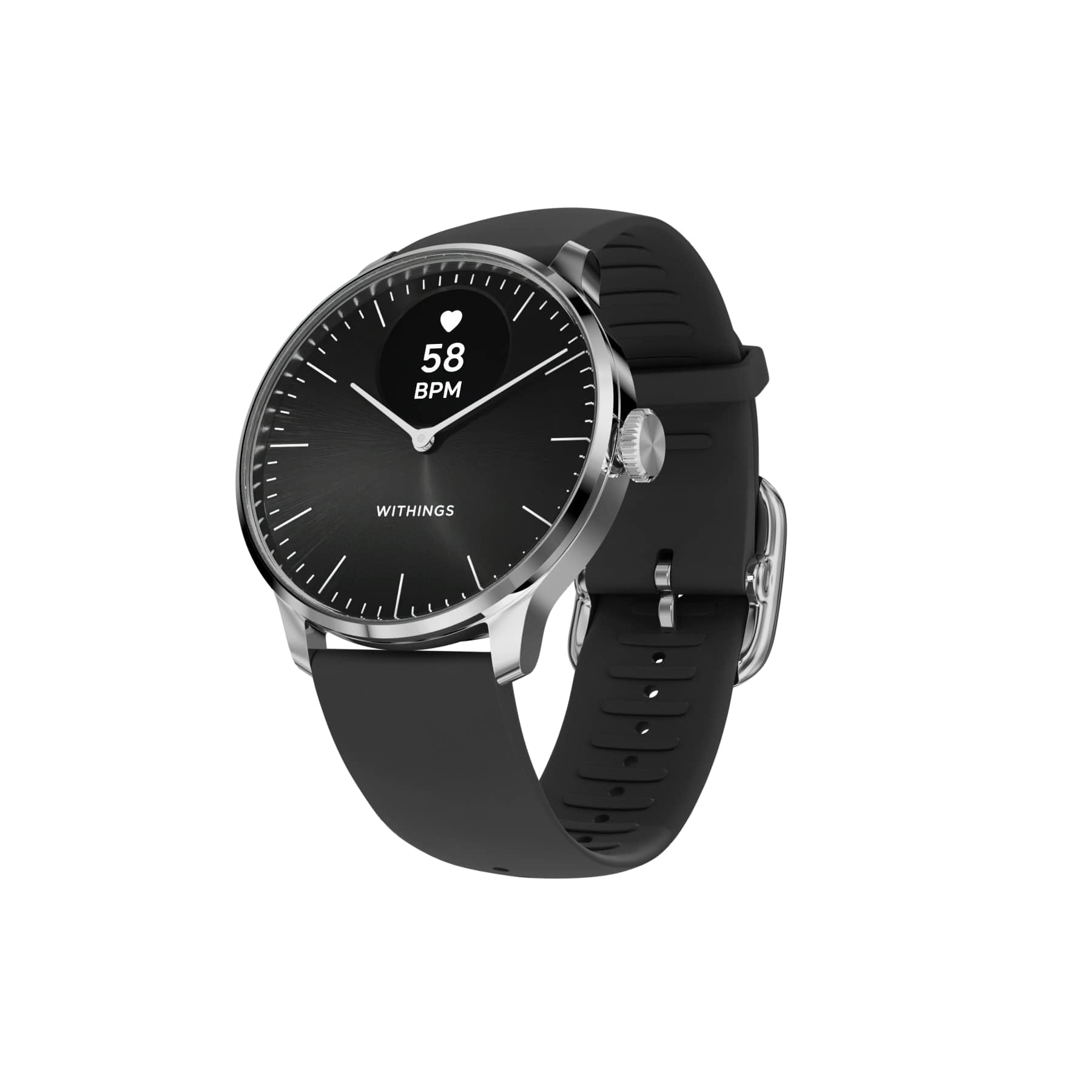
The Withings ScanWatch Light is the ideal choice for anyone who wants a weight loss tracker that does not look like a smartwatch. Its hybrid design uses a classic analog watch face with a small digital sub-display for metrics. The stainless steel case and band give it a premium, professional appearance that works in the office or at a dinner table. The battery lasts approximately 30 days, which is the strongest endurance in this lineup.
For weight loss, the ScanWatch Light tracks heart rate 24/7 with high and low notifications, sleep quality score broken into light, deep, and REM phases, and activity recognition for over 40 exercise types. It also includes connected GPS via your phone for outdoor workout mapping. The menstrual cycle tracking is integrated, which is helpful for women whose weight fluctuates with hormone phases. The VO2 max estimation gives you a direct measure of cardiovascular fitness improvements.
The downside is that the activity recognition requires you to launch workouts from the watch — it does not auto-detect and log everything like full smartwatches do. The small digital screen also limits glanceable data during a run. But if your priority is a low-distraction tracker that supports sleep and activity logging without constant screen time, this hybrid is the most elegant option for your weight loss journey.
Why it’s great
- 30-day battery means you never worry about charging during a diet phase
- Analog hybrid design fits formal and casual settings seamlessly
- VO2 max and sleep quality give direct fitness improvement metrics
Good to know
- Customer service for account recovery is reportedly poor
- No built-in GPS — requires phone connection for outdoor routes
4. Fitbit Sense

The Fitbit Sense is the most health-focused tracker in the Fitbit lineup, with an ECG app for atrial fibrillation assessment and an EDA scan for electrodermal activity — both useful for understanding how stress impacts your weight loss progress. High cortisol from stress signals your body to store visceral fat, so having a tool that alerts you to elevated stress levels can help you intervene before emotional eating starts. The skin temperature sensor also logs nightly trends that may indicate illness or recovery needs.
Built-in GPS lets you track outdoor runs and walks without carrying your phone, which simplifies calorie burn estimation for outdoor sessions. The Daily Readiness Score tells you whether you should train or rest, which is critical for avoiding burnout during a calorie deficit. The 6-day-plus battery life is adequate for most users, but the fast charging feature — a full day of charge in 12 minutes — helps recover quickly if you do forget to charge overnight.
The main trade-off is that the heart rate sensor during high-intensity exercise can be erratic. Multiple user reports note a 20-to-80-BPM discrepancy compared to a chest strap during running. If your weight loss plan relies heavily on zone-based heart rate training, this could mislead your intensity targets. For casual daily activity, sleep, and general stress tracking, it is a capable mid-range option with solid health monitoring features.
Why it’s great
- EDA and ECG sensors help manage stress-driven weight gain
- Built-in GPS simplifies outdoor calorie tracking without a phone
- Fast charging gives a full day of battery in just 12 minutes
Good to know
- Heart rate tracking during exercise can be significantly inaccurate
- Battery life is shorter at 4-5 days with consistent use
5. Fitbit Inspire 3

The Fitbit Inspire 3 is the most accessible entry point for anyone starting a weight loss journey. It tracks step count, 24/7 heart rate, active zone minutes, sleep stages, and stress score — all the core metrics you need without smartwatch extras. The 10-day battery life is excellent for a device at this level, allowing you to wear it continuously through the weekend and into the next work week without charging.
The Daily Readiness Score is available through the free tier, telling you whether your body is primed for exercise or needs rest. The Active Zone Minutes metric pushes you toward moderate-to-vigorous effort levels, which is more relevant for fat loss than raw step count. The lightweight resin case and silicone band make it comfortable for 24/7 wear, including sleep. The small display is bright enough for indoor use but shows limited data per screen.
The main limitations are the lack of built-in GPS — you need your phone nearby for mapped outdoor workouts — and the screen is prone to scratching. The proprietary charging cable is also a minor inconvenience if you lose it. However, for pure budget-conscious tracking of the daily habits that drive weight loss, the Inspire 3 delivers reliable data without requiring a premium subscription commitment to unlock essential metrics.
Why it’s great
- 10-day battery supports uninterrupted weeklong tracking
- Daily Readiness Score helps avoid overtraining on a calorie deficit
- Lightweight and comfortable for continuous daytime and sleep wear
Good to know
- No built-in GPS — requires phone connection for outdoor routes
- Screen scratches easily — screen protector is recommended
FAQ
How accurate are activity trackers for estimating calorie burn?
Do I need an expensive subscription for a weight loss tracker?
Final Thoughts: The Verdict
For most users, the activity tracker for weight loss winner is the Garmin vívoactive 6 because Body Battery and Recovery Time give you actionable signals for when to push hard and when to rest — critical for sustaining a calorie deficit. If you want a 21-day battery and premium build quality, grab the Amazfit Balance 2. And for a classic analog look with 30-day battery life, nothing beats the Withings ScanWatch Light.