
A heart rate monitor on your wrist is useless if it reports random numbers during a sprint or misses your resting baseline entirely. The difference between a tracker that feels like a toy and one that earns its spot on your wrist comes down to sensor quality, optical algorithm refinement, and how the data integrates into your daily decisions—not just the number of sport modes listed on the box.
I’m Rikta — the co-founder and writer behind FitlyFast. I analyze wearable hardware specs and cross-reference user-validated accuracy data to separate meaningful metrics from marketing claims in the activity tracker space.
After sorting through dozens of models and filtering for optical heart rate reliability, battery endurance, and real-world feedback, these are the picks that define the best activity tracker with heart rate monitor category for 2025 and beyond.
How To Choose The Best Activity Tracker With Heart Rate Monitor
Every tracker in this category uses photoplethysmography (PPG) to estimate heart rate by shining light through your skin. The quality of that estimation varies wildly based on the number of LED wavelengths, sampling frequency, and how the on-device algorithm filters out motion artifacts. A tracker with a single green LED and no motion compensation will spike your heart rate during a fast walk just because your arm swung. Look for multi-LED configurations—green, red, and infrared—which improve accuracy during high-intensity movement and low-perfusion conditions like cold weather.
Battery Life vs. Continuous Monitoring
A tracker that needs charging every day defeats the purpose of 24/7 heart rate tracking. You lose overnight sleep data and morning resting heart rate trends if the device is on the charger. Devices with 7-day or longer battery life encourage consistent wear, which produces meaningful longitudinal data. Fast charging is a bonus but does not compensate for a short-lived battery if you want uninterrupted monitoring.
Software Ecosystem and Data Utility
Raw heart rate numbers are noise without context. The companion app should present trends, resting heart rate changes, heart rate variability (HRV) insights, and recovery recommendations. A tracker with excellent hardware but a clunky or subscription-locked app will frustrate you over time. Evaluate whether the app provides actionable feedback—like readiness scores or sleep quality correlations—or just dumps numbers on a graph.
Quick Comparison
On smaller screens, swipe sideways to see the full table.
| Model | Category | Best For | Key Spec | Amazon |
|---|---|---|---|---|
| Garmin Vivoactive 5 | Smartwatch | All-day health insight | 11 days battery, AMOLED | Amazon |
| Fitbit Charge 6 | Tracker | Ecosystem & HR on gym machines | ECG, 7-day battery | Amazon |
| Fitbit Versa 4 | Smartwatch | Daily Readiness coaching | 6-day battery, built-in GPS | Amazon |
| Garmin Instinct E | Outdoor | Rugged durability | 16 days battery, MIL-STD-810 | Amazon |
| Xiaomi Smart Band 10 | Band | Display & battery value | 21 days, 1.72 AMOLED | Amazon |
| MorePro Air2 | Band | Budget wellness tracking | 2 bands, 7-day battery | Amazon |
| Bestinn H32 | Smartwatch | Feature-packed entry price | 1.58 display, 120 sport modes | Amazon |
In‑Depth Reviews
1. Garmin Vivoactive 5

The Vivoactive 5 strikes the ideal balance between comprehensive health tracking and battery longevity. Its optical heart rate sensor feeds into Garmin’s Body Battery energy monitoring, sleep score, and HRV status—metrics that actually help you decide whether to push hard or recover. The 11-day battery life means you wear it through the night without anxiety about charging, preserving the continuity of your resting heart rate and sleep stage data.
The bright AMOLED display makes heart rate and workout stats readable in direct sunlight, and the 30+ built-in GPS sport apps cover everything from pool swimming to HIIT. Wheelchair mode and automatic nap detection show Garmin designed this for real-life variability, not just for runners. The morning report gives a snapshot of overnight recovery, resting heart rate, and readiness, which is a feature that turns raw data into a daily decision tool.
Where it compromises is smartwatch depth—no music streaming directly from the watch without preloading, and the touchscreen can be sluggish when wet. But if your priority is accurate, uninterrupted heart rate monitoring backed by a thoughtful analytics ecosystem, this is the unit that delivers on every promise.
Why it’s great
- Excellent battery life preserves 24/7 HR data continuity
- Body Battery and HRV insights translate raw heart rate into actionable recovery advice
- Bright AMOLED screen works well in direct sun
- No subscription required for advanced metrics
Good to know
- No onboard music streaming services without subscription accounts
- Touchscreen responsiveness drops in water or heavy sweat
2. Fitbit Charge 6

The Charge 6 brings Fitbit’s mature heart rate algorithm into a slim form factor and adds a feature no other tracker at this size offers: broadcasting your heart rate to compatible gym equipment, so you see your pulse on the treadmill or elliptical display. This alone makes it the best pick for gym-goers who want consistent HR data across their entire workout, not just from the wrist sensor.
Seven-day battery life supports continuous heart rate and sleep tracking without mid-week charging, and the built-in GPS removes the need to carry your phone for outdoor runs. The addition of an ECG app (validated for atrial fibrillation detection) places this in the category of trackers that can provide clinically-relevant data, not just fitness estimates. Google Wallet and YouTube Music controls add convenience, though the app experience now requires a Google account.
Accuracy complaints from some users focus on distance tracking during elliptical sessions—the GPS relies on arm swing dynamics that differ from outdoor running. The sensor itself is a generation ahead of previous Charge models, with improved motion artifacts filtering during high-intensity intervals. For someone embedded in the Fitbit ecosystem or wanting HR broadcast at the gym, this is the obvious choice.
Why it’s great
- Broadcasts heart rate to compatible gym machines
- ECG and SpO2 monitoring for health insights
- Comfortable slim silhouette for 24/7 wear
- Integrated Google Maps and Wallet
Good to know
- Google login required, no Apple Fitness sync
- Distance accuracy can be inconsistent indoors
3. Fitbit Versa 4

The Versa 4 expands on the heart rate tracking foundation with the Daily Readiness Score, which factors in your recent activity, sleep quality, and heart rate variability to tell you whether today is a training day or a rest day. This turns the optical heart rate sensor from a passive recorder into an active coaching tool, especially for users who struggle with balancing workout intensity and recovery.
Battery life reaches 6 days with typical use, which is sufficient for consistent overnight wear. The built-in GPS tracks outdoor routes accurately, and Amazon Alexa integration allows hands-free control of smart home devices or quick timers. On-wrist Bluetooth calls are a pleasant surprise for a fitness-focused smartwatch, though the speaker quality is adequate for short calls rather than lengthy conversations.
The main trade-off is the app shift to Google Fitbit platform, which has caused some syncing quirks for iPhone users. The stress management score and guided breathing sessions leverage heart rate data to provide mindfulness prompts, adding a dimension beyond pure fitness tracking. For users who want a coach-like experience built around their heart rate and recovery, the Versa 4 delivers.
Why it’s great
- Daily Readiness Score uses HRV and sleep to guide training
- On-wrist Bluetooth calls add convenience
- Water resistant to 50 meters for pool swimming
- Google Wallet and Maps integration
Good to know
- App experience prefers Google ecosystem
- GPS accuracy can degrade in dense urban environments
4. Garmin Instinct E

The Instinct E is built for environments that would crack a standard fitness tracker. It meets MIL-STD-810 standards for thermal and shock resistance and is water-rated to 10 ATM, meaning it survives pressure washing, whitewater rafting, and submersion beyond recreational swimming depth. The wrist-based heart rate sensor operates reliably even when the watch is caked in mud or submerged, thanks to the fiber-reinforced polymer case that isolates optics from impact shocks.
Battery life is the standout feature here—up to 16 days in smartwatch mode with continuous heart rate. This enables multi-week field trips without a charger, and the heart rate data remains intact across the full duration. Multi-GNSS support (GPS, GLONASS, Galileo) provides accurate location tracking in remote areas, and the 3-axis compass and barometric altimeter are essential for navigation-oriented users.
The monochrome display is purposefully low-resolution to conserve power and improve durability, but it sacrifices the visual appeal of AMOLED screens. The Connect IQ Store allows limited customization, but this is a tool watch first. For construction workers, outdoor guides, or anyone whose daily environment is hard on gear, this is the heart rate tracker that won’t quit.
Why it’s great
- Extreme durability with MIL-STD-810 and 10 ATM water rating
- 16-day battery supports uninterrupted HR monitoring
- Multi-GNSS delivers reliable positioning in remote areas
- Physical buttons work with gloves or wet conditions
Good to know
- Monochrome display lacks the vibrancy of AMOLED competitors
- Band length may be too short for larger wrists out of the box
5. Xiaomi Smart Band 10
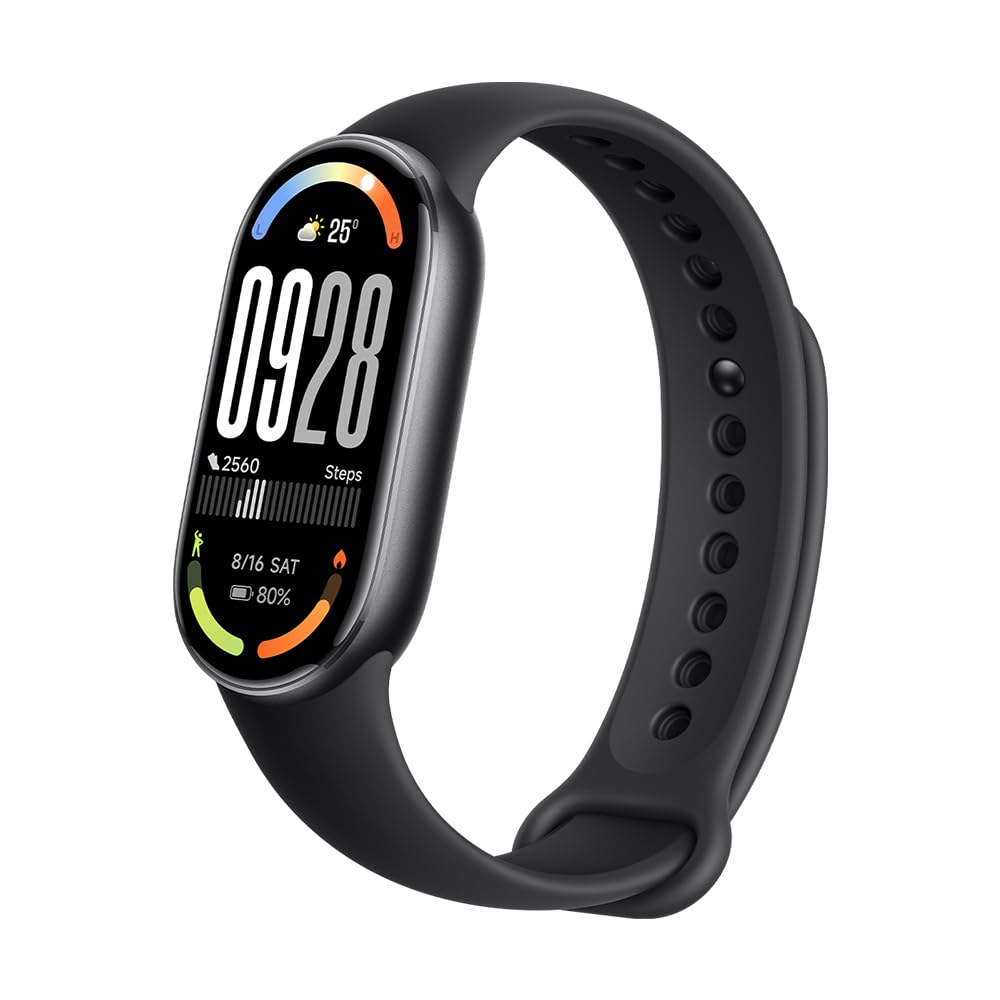
The Xiaomi Smart Band 10 delivers a 1.72-inch AMOLED display with 1500 nits peak brightness—brighter than most premium smartwatches—at a fraction of the cost. This makes heart rate data glanceable even under harsh sunlight, a critical factor if you check your pulse mid-run without breaking stride. The 21-day battery life is the longest in this roundup, meaning the heart rate sensor is practically always on your wrist, logging every resting and active moment.
Health tracking includes continuous heart rate, SpO2, stress, and sleep staging with breathing quality analysis. The HyperOS software provides a smooth, responsive interface, though the companion app defaults to the metric system, which requires a workaround via Google Fit to display imperial units. The electronic compass adds swimming direction tracking, making it a capable pool companion despite the lack of built-in GPS.
Step count accuracy lags behind Fitbit or Garmin by about 25% in some tests, and the GPS relies on the phone connection. The fluoroelastomer band is comfortable for small to medium wrists but may feel snug for larger ones. For the price, you get a display and battery combination that punches above its weight class, making it ideal for budget-conscious users who want continuous heart rate trends without daily charging.
Why it’s great
- Bright AMOLED screen readable in direct sunlight
- Exceptional 21-day battery for uninterrupted HR logging
- Lightweight and comfortable for all-night wear
- Swimming direction tracking with electronic compass
Good to know
- Step count accuracy trails premium competitors
- App primarily metric; imperial display requires Google Fit link
6. MorePro Air2
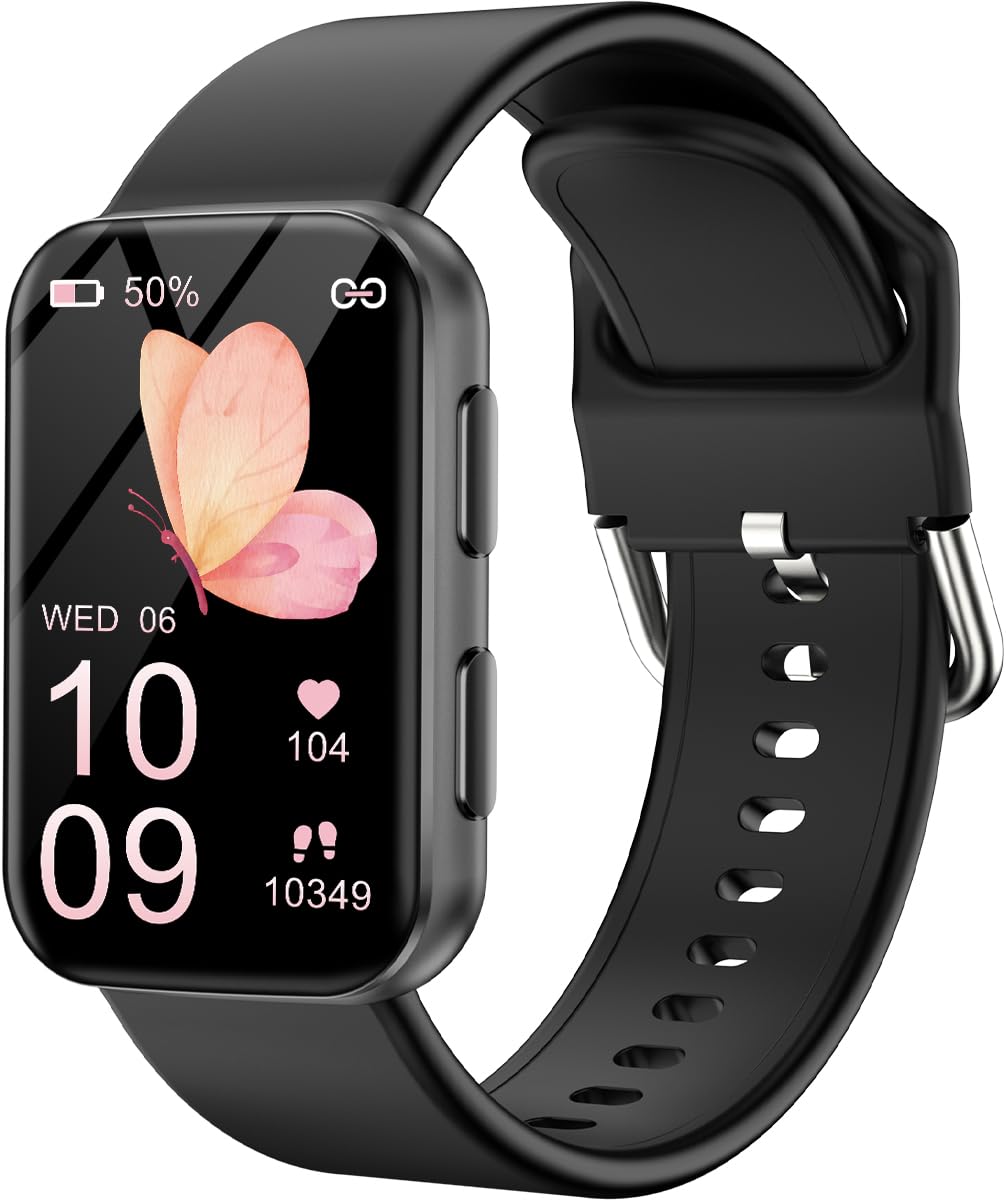
The MorePro Air2 targets the entry-level buyer who wants heart rate, blood pressure, and SpO2 tracking without spending on a premium brand. The 1.57-inch HD touchscreen is bright and responsive, and the inclusion of both a silicone band and a nylon band in the box lets you switch between workout sweat-wicking and everyday comfort. The battery life reaches about 7 days with continuous heart rate monitoring, which is solid for the price tier.
The app (GloryFit) provides trend graphs for heart rate, sleep stages, and blood oxygen, and syncs reliably via Bluetooth 5.2. The sleep tracking records awake, light, and deep sleep, though some users report the tracking starts only after midnight, missing early evening naps. Over 100 sport modes cover most activities, and the IP68 rating means you can wear it in the shower or while washing dishes.
The heart rate sensor is less accurate during interval-style workouts compared to Garmin or Fitbit, with occasional lag in detecting sudden rate changes. The step count resets at midnight with a slight data loss (~100 steps), which is minor but worth noting. For casual wellness awareness on a tight budget, the Air2 covers the essentials without major compromises.
Why it’s great
- Comes with two bands for versatility
- IP68 water resistance for daily wear confidence
- 7-day battery supports continuous health tracking
- Bright and responsive touchscreen for the price
Good to know
- Heart rate sensor lags during high-intensity intervals
- Sleep tracking may miss early evening naps
7. Bestinn H32

The Bestinn H32 packs an extraordinary number of features into a very accessible price point. It offers 24/7 heart rate, blood pressure, and blood oxygen monitoring, plus a 1.58-inch always-on display, 120 sport modes, and menstrual cycle tracking. The Da Fit app presents health trends clearly and integrates with Apple Health, which is rare at this price level. The magnetic charger brings the device from empty to full in under 90 minutes, and battery life stretches to roughly a week with continuous heart rate enabled.
The design is modern and slim, with a unique tucking band that sits flush against the wrist without a traditional buckle protruding. The full touchscreen is supplemented by a side button for menu navigation, and over-the-air watch face customization offers hundreds of options. Notifications for calls and messages arrive reliably, and the GPS connectivity uses the phone for route mapping during outdoor workouts.
The trade-offs are mostly in sensor refinement. The blood pressure readings should be treated as trend indicators, not clinical measurements. The always-on display, while convenient, reduces battery life compared to competitors in the same range. The pre-loaded watch faces are cartoonish in style, though the custom face download option mitigates this. For someone who wants maximum features at minimum outlay and values screen visibility over sensor clinical-grade precision, the H32 is a compelling package.
Why it’s great
- Always-on display for convenient time and HR checks
- Rapid charging under 90 minutes
- Integrates with Apple Health for consolidated data
- Includes blood pressure, SpO2, and stress tracking
Good to know
- Blood pressure sensor is trend-only, not for medical use
- Default watch face styles may feel basic
FAQ
How accurate are wrist-based heart rate monitors during exercise?
Can I swim with an activity tracker with heart rate monitor?
Do I need GPS built into the tracker for accurate pace data?
How do I know if my tracker measures heart rate variability (HRV)?
Final Thoughts: The Verdict
For most users, the best activity tracker with heart rate monitor winner is the Garmin Vivoactive 5 because it combines accurate multi-wavelength heart rate sensing with 11-day battery life and a subscription-free analytics ecosystem that turns raw pulse data into daily readiness insights. If you want a gym-specific heart rate experience that broadcasts your pulse to exercise machines, grab the Fitbit Charge 6. And for an ultra-durable tracker that survives extreme environments while logging heart rate for over two weeks, nothing beats the Garmin Instinct E.