
Our readers keep the lights on and the weekend projects moving. As an Amazon Associate, I earn from qualifying purchases.
Most people buy an activity tracker expecting a magic wand for their health, only to realize the real prize is a detailed look at their sleep cycle and resting heart rate trends. The gap between a gadget that collects data and one that actually helps you recover, move smarter, and build consistent habits comes down to sensor accuracy, battery endurance, and how well the software translates raw numbers into usable advice.
I’m Rikta — the co-founder and writer behind FitlyFast. I spend my time dissecting wearable sensor stacks, comparing optical heart rate sampling rates, and stress-testing sleep-stage algorithms to separate marketing noise from genuine physiological insight.
This guide breaks down the seven strongest options across form factors and price tiers, so you can confidently choose the best activity tracker for your specific daily routine and health goals.
How To Choose The Best Activity Tracker
Activity trackers span a wide range of designs — from bright AMOLED wristbands to screenless sleep rings. The right choice depends on how much data you want, how often you want to charge, and whether you value distraction-free wear or glanceable stats.
Sensor Quality and Sampling Frequency
The core technology in any tracker is the optical heart rate sensor (photoplethysmography). Cheaper sensors sample once every few minutes, missing HRV spikes and dips. Premium models sample continuously or every few seconds, enabling accurate sleep staging, stress scores, and recovery insights. Always check whether the device offers continuous 24/7 heart rate or only periodic spot checks.
Battery Life and Real-World Adherence
A tracker that dies mid-week loses its primary value: trend data. Basic wristbands often last 7–10 days, while advanced color displays may need charging every 2–3 days. Screenless trackers and rings push past a week, reducing the friction of nightly charging. Consider how often you’re willing to dock the device when matching it to your lifestyle.
Display vs. Discretion
Full-color touchscreens provide rich workout metrics, smart notifications, and customizable watch faces. Screenless or low-profile designs (fitness rings, minimalist bands) offer a more discreet, distraction-free experience that pairs easily with an analog watch. The tradeoff is sacrificing at-a-glance data for longer battery and a sleeker silhouette.
Quick Comparison
On smaller screens, swipe sideways to see the full table.
| Model | Category | Best For | Key Spec | Amazon |
|---|---|---|---|---|
| Fitbit Charge 6 | Premium Wristband | Serious fitness + daily wear | Built-in GPS, ECG, 7-day battery | Amazon |
| Fitbit Inspire 3 | Mid-Range Wristband | Stress & sleep management | 10-day battery, SpO2, stress score | Amazon |
| Google Fitbit Air | Screenless Band | Distraction-free tracking | No screen, 7-day battery, AI coaching | Amazon |
| Xiaomi Mi Smart Band 10 | AMOLED Wristband | Swimmers & bright-light visibility | 1.72″ AMOLED, 21-day battery, 1500 nits | Amazon |
| Bestinn Fitness Tracker Watch | Value Smartwatch | Budget-friendly all-day health | 1.58″ display, 120+ sports, IP68 | Amazon |
| MorePro Health Fitness Tracker | Value Wristband | Everyday activity + 2 bands included | 1.57″ HD, 7-day battery, IP68 | Amazon |
| prxxhri Smart Health Ring | Screenless Ring | Subtle 24/7 sleep & activity | 80m waterproof, no subscription, ring form | Amazon |
In‑Depth Reviews
1. Fitbit Charge 6 Fitness Tracker

The Charge 6 strikes the hardest balance between robust sensor hardware and everyday wearability. Its built-in GPS tracks outdoor runs and rides without tethering to a phone, while the ECG app offers on-demand heart rhythm checks that few wristbands include at this level. The stainless steel case and responsive triple-tap interface make navigation feel much closer to a smartwatch than a basic band.
Google integration brings useful extras — Google Maps turn-by-turn directions on your wrist, YouTube Music controls during workouts, and Google Wallet for tap-to-pay. Users consistently report 6–7 days of battery life with continuous heart rate and sleep tracking enabled, which is competitive for a color touchscreen tracker. The included small and large bands ensure a snug fit for wrist circumferences from 5.1 to 8.7 inches.
Some early units had sync hiccups with the app, but recent firmware updates have stabilized the connection. The step counter tends to read slightly lower than dedicated pedometers, though the active zone minutes metric compensates by focusing on intensity rather than raw step counts. For anyone who wants GPS, ECG, and Google services in a slim package, this is the current standard.
Why it’s great
- Built-in GPS tracks runs without a phone
- ECG app provides on-demand heart rhythm data
- Google Maps and Wallet add daily utility
Good to know
- App calorie tracking has known inaccuracies
- Google login required for full feature set
2. Fitbit Inspire 3 Health & Fitness Tracker

The Inspire 3 is purpose-built for people who care more about stress recovery and sleep quality than GPS routing or on-wrist payments. Its Daily Readiness Score combines your overnight heart rate variability, recent sleep patterns, and activity history to tell you whether to push hard or take a rest day — a feature usually reserved for much pricier wearables. The always-on SpO2 sensor tracks overnight blood oxygen variation, which is valuable for understanding breathing quality during sleep.
Battery endurance is a standout here: most users get a full 10 days between charges, even with the color touchscreen and continuous heart rate monitoring active. The band itself is lightweight (under 30 grams) and water resistant to 50 meters, so it handles swimming and showering without complaint. The bundled 3-month Google Health Premium membership unlocks deeper sleep analytics, mindfulness content, and a personalized wellness report.
It lacks built-in GPS — it relies on your phone’s GPS for mapping outdoor routes — and the proprietary charging cable is easy to misplace. The step tracking is generally accurate for consistent walking patterns, though occasional sync delays with iOS devices have been reported. For users focused on lowering stress and improving sleep habits, the Inspire 3 delivers targeted tools without distracting extras.
Why it’s great
- Daily Readiness Score guides recovery decisions
- 10-day battery covers two full work weeks
- Water resistant to 50 meters for swimming
Good to know
- No built-in GPS — requires phone connection
- Proprietary charging cable is easy to lose
3. Google Fitbit Air Screenless Activity Tracker
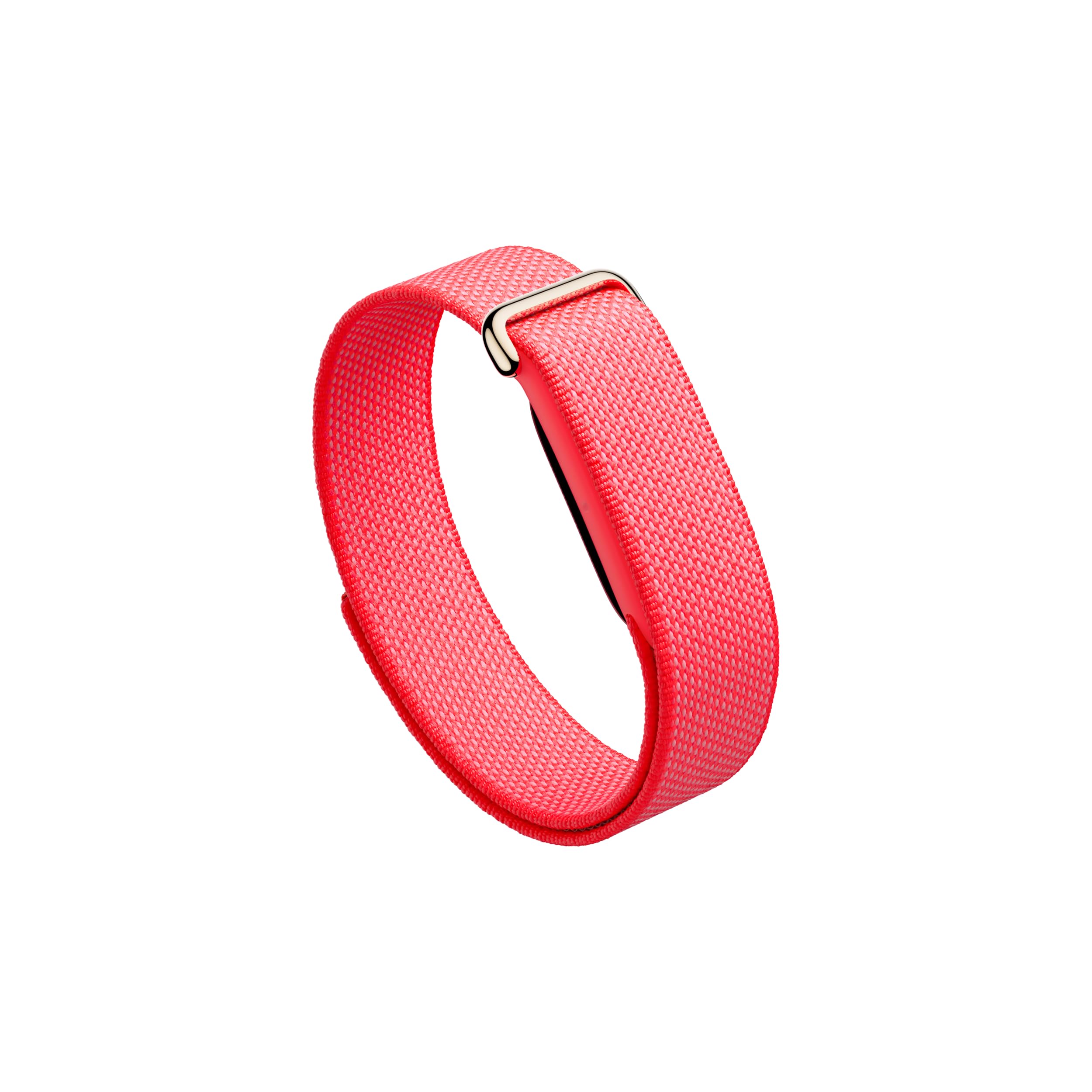
The Fitbit Air throws out the display entirely, betting that accurate data and long battery are more important than a screen. The result is a remarkably comfortable tracker that slips under a dress shirt cuff or pairs invisibly with an analog watch. It uses advanced optical sensors and updated algorithms to monitor heart rate, SpO2, HRV, sleep stages, and even atrial fibrillation indicators — all with no glowing screen to distract during meetings or dinner.
Battery life hits a full week, and the fast-charge feature delivers a day of power in just 5 minutes, which is ideal for forgetful chargers. The micro-adjustable woven band fits wrists between 130mm and 210mm without bulk, and the pebble-shaped sensor pod pops in and out of different bands (sport, sleep, bracelet) in seconds. The Google Health Premium membership (included for 3 months) uses Gemini AI to generate adaptive fitness plans based on your metrics.
Distance tracking for runs can be inaccurate without a connected phone’s GPS, and the AI coaching sometimes delivers verbose or off-target advice. Users who want glanceable stats mid-workout will miss a display, but those prioritizing discretion, battery longevity, and distraction-free health tracking will find the Air the most wear-all-day option on this list.
Why it’s great
- Screenless design maximizes comfort and discretion
- 5-minute fast charge gives a full day of tracking
- Advanced sensors track HR, SpO2, HRV, and AFib
Good to know
- No display means no on-wrist workout stats
- Distance tracking requires phone GPS for accuracy
4. Xiaomi Mi Smart Band 10
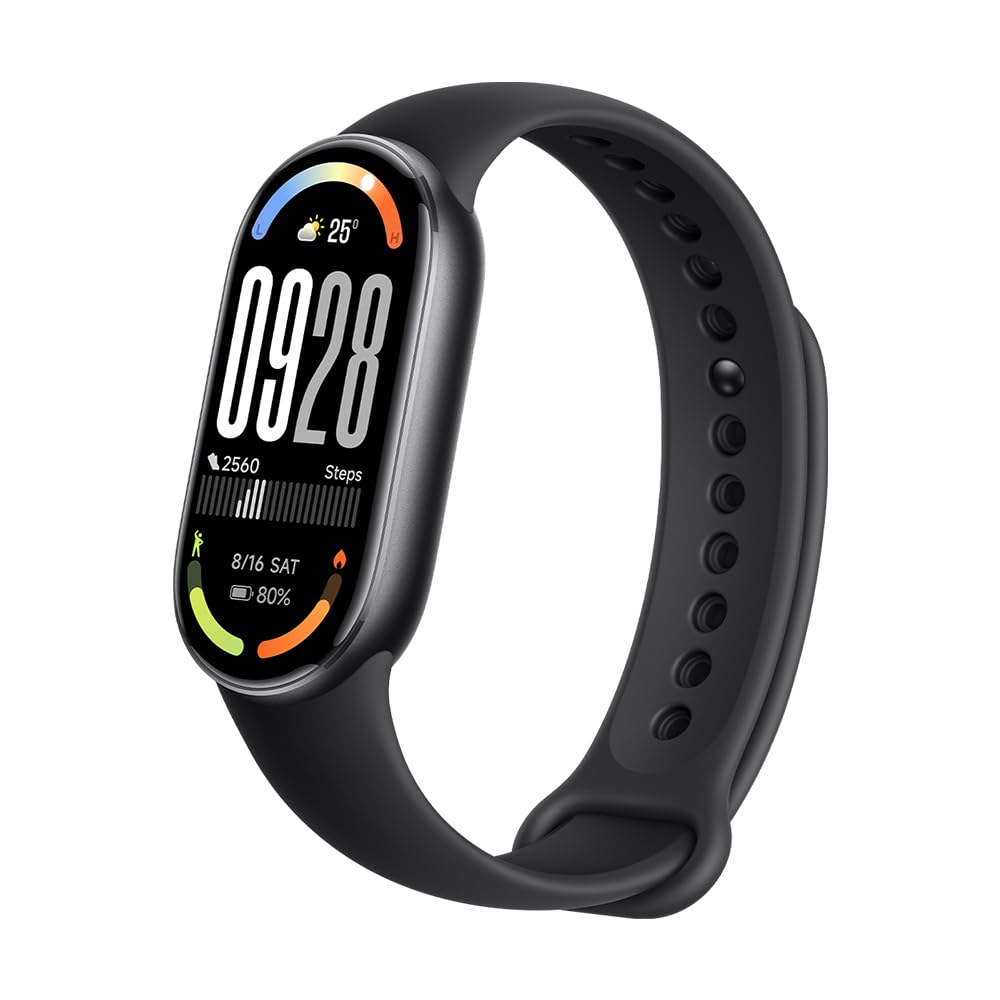
The Mi Smart Band 10 delivers a 1.72-inch AMOLED display with 1500 nits peak brightness — bright enough to read clearly under direct sunlight, which is a genuine advantage for outdoor runners and swimmers. The screen-to-body ratio jumps to 73% thanks to ultrathin 2.0mm bezels, and the touch interaction is buttery smooth. It also packs a high-precision electronic compass for tracking swimming direction in pools, a niche capability for lap swimmers.
Battery life is the headline: 21 days on a single charge under typical use, with fast charging that hits full in about an hour. Xiaomi’s HyperOS 2 provides a snappy, intuitive interface, and the comprehensive sleep monitoring breaks down light, deep, and REM stages with daily trend data. The fluoroelastomer band is skin-friendly and holds up well to chlorine and saltwater.
The step counter tends to read lower than competitors — some users report a 25% difference versus Fitbit — so those who obsess over exact step counts might find it frustrating. The Xiaomi Fit app defaults to metric units, requiring a third-party connection to Google Fit for imperial display. For anyone who wants the brightest, longest-lasting color display in a compact wristband, this is the clear frontrunner.
Why it’s great
- 1500-nit AMOLED is superb in bright sunlight
- 21-day battery sets the endurance benchmark
- Swim tracking with electronic compass
Good to know
- Step counter reads lower than many competitors
- App defaults to metric units without easy imperial switch
5. Bestinn Fitness Tracker Watch

The Bestinn tracker packs an impressive feature list for its cost: a 1.58-inch color display with always-on clock, 24/7 heart rate, blood pressure, and SpO2 monitoring, plus over 120 exercise modes. The bright touchscreen and smooth four-direction swiping make navigating the metrics feel responsive. It also includes period tracking, breathing training, sedentary reminders, and even remote camera control — extras that add genuine daily utility.
Battery life sits at around 5–7 days depending on how often the always-on display is active. The IP68 water resistance rating means it survives hand washing and rain but isn’t designed for swimming. Setup is straightforward via the Da Fit app, which integrates with Apple Health for consolidated data. Users consistently praise the accurate heart rate and oxygen readings compared to other budget alternatives.
The blood pressure monitor should be viewed as a wellness trend indicator rather than a clinical tool — optical blood pressure readings on wrist wearables are not FDA-cleared. Some users with larger wrists found the default band length snug. For a budget-friendly entry point into full-day health tracking with a smartwatch aesthetic, this device offers strong value.
Why it’s great
- 120+ sports modes cover nearly any activity
- Always-on display keeps time visible without tap
- Reliable SpO2 and heart rate for the price
Good to know
- Blood pressure monitor is not clinically validated
- IP68 is splash-proof, not swim-proof
6. MorePro Health Fitness Tracker
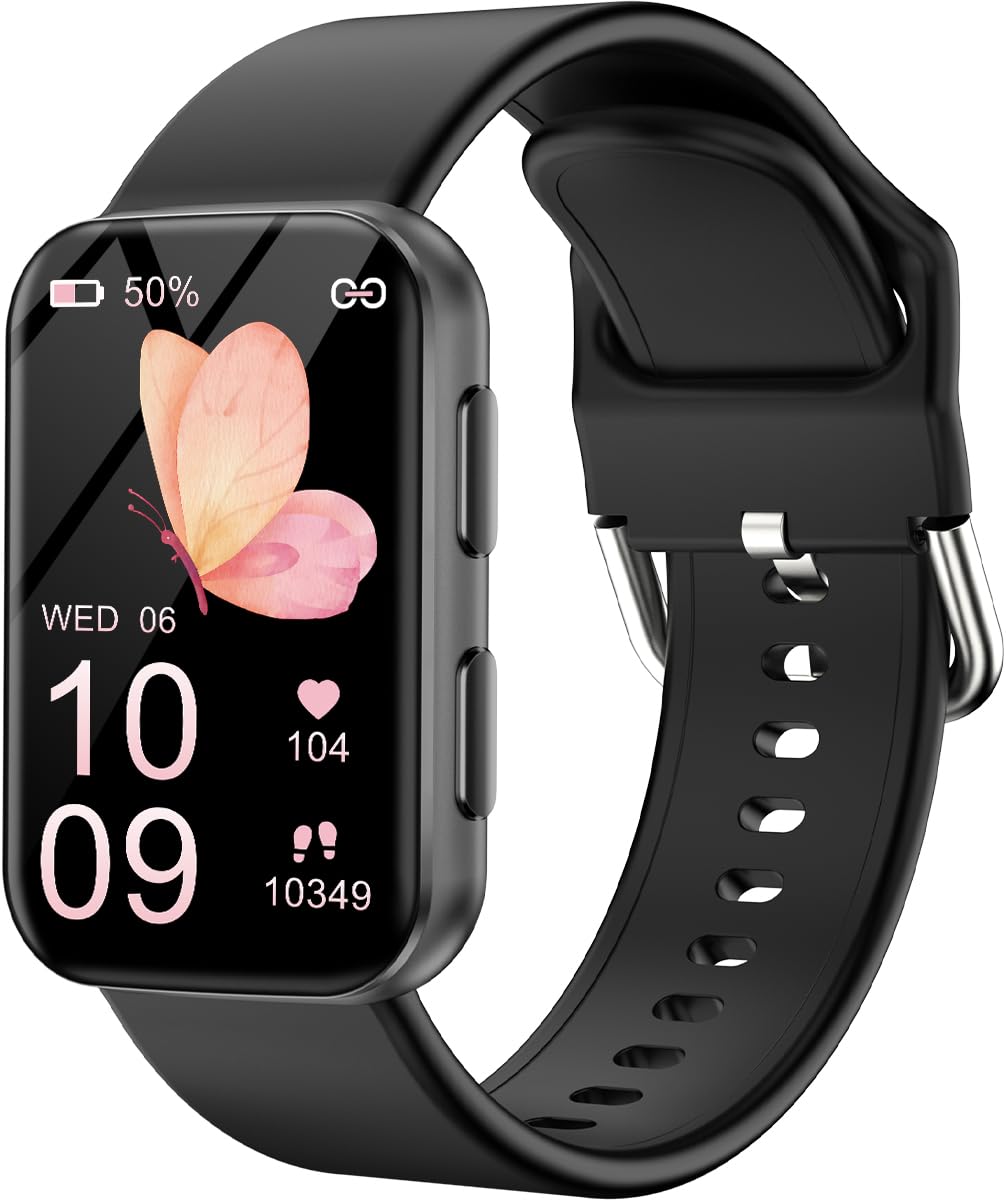
MorePro’s AIR2 focuses on the essentials — accurate step counting, continuous heart rate, SpO2, and sleep stage tracking — without overcomplicating the experience. The 1.57-inch HD LCD touchscreen is bright and readable indoors, and the user interface is simple enough to navigate without a manual. It connects to phones via Bluetooth 5.2, providing stable sync with both Android and iOS devices.
The inclusion of both a silicone band and a nylon band in the box is a thoughtful touch, letting users switch between gym-proof washable wear and breathable daily comfort. Battery life reaches a reliable 7 days with continuous heart rate monitoring, and the charging cradle is magnetic and easy to align. The IP68 water resistance handles sweat and rain but isn’t rated for swimming.
The sleep tracking algorithm occasionally flags midnight as a new sleep session, causing minor fragmentation in the data. Step counters can lose about 100 steps during daily resets, a quirk noted by several long-term users. For those who want a straightforward, comfortable tracker with dual-band flexibility and long battery life at a modest investment, the MorePro AIR2 is a solid pick.
Why it’s great
- Comes with both silicone and nylon bands for versatility
- Stable Bluetooth 5.2 connection with quick sync
- Easy-to-navigate interface ideal for beginners
Good to know
- Sleep tracking may start a new session at midnight
- Minor step count loss during daily reset
7. prxxhri Smart Health Ring
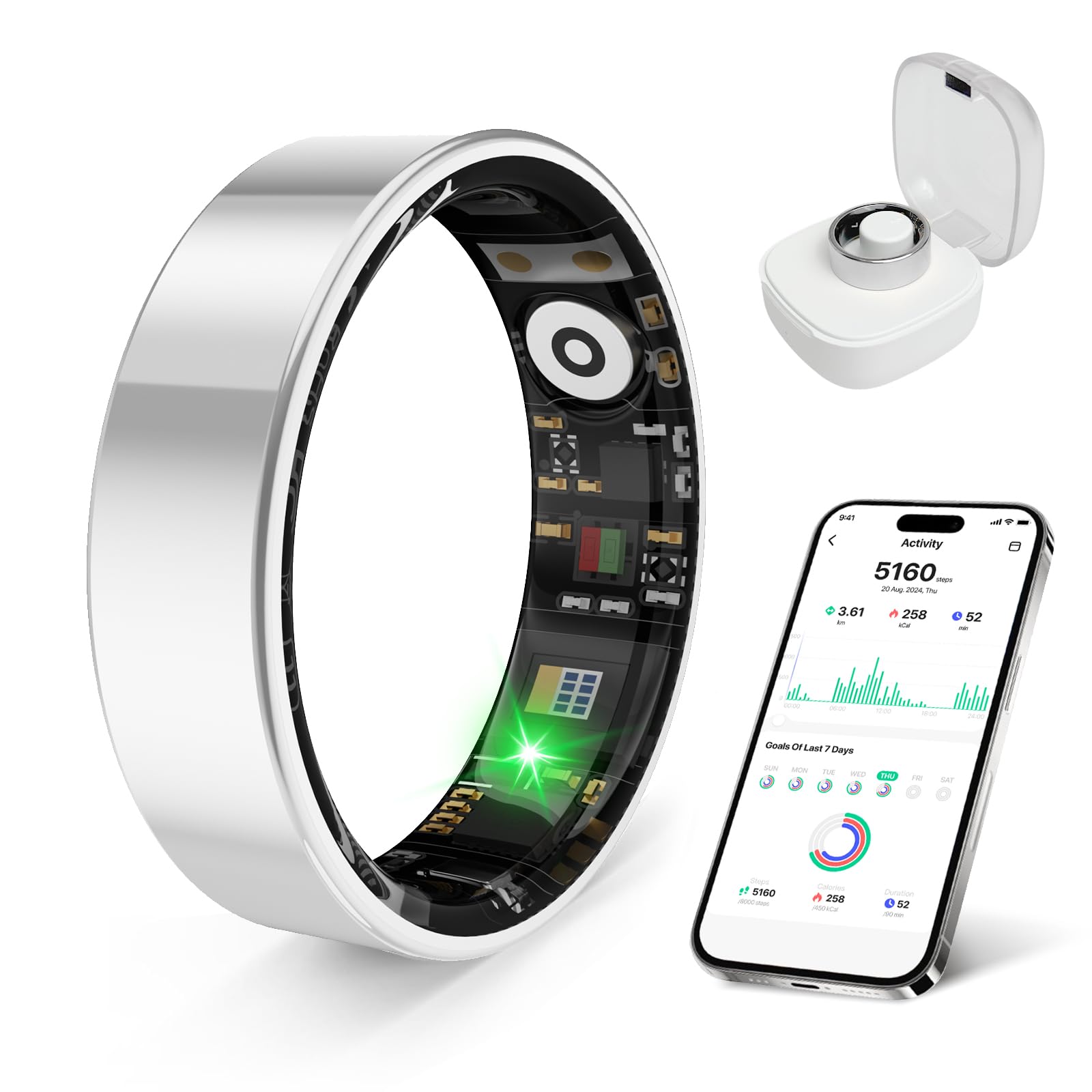
The prxxhri ring is the most discreet option on this list, packing a full suite of health sensors into a lightweight titanium shell with no screen at all. It uses advanced 4.0 photoplethysmography sensors to measure heart rate every 30 minutes, auto-detecting sleep stages, stress levels, and daily activity without ever vibrating or buzzing. The ring form factor is particularly suited for those who dislike wearing anything on their wrist, or who want to wear a traditional watch alongside their tracker.
Battery life reaches 2–3 days in the ring itself, but the included smart charging case extends total usage past 10 days — similar to how wireless earbuds work. The 80-meter water resistance rating is genuinely deep, making it suitable for lap swimming and even recreational diving. Setup is simple: download the app, pair via Bluetooth, and start tracking with no subscription fees locking any features.
The lack of a display means you can’t check time or notifications on the ring, and the small form factor limits sensor real estate compared to wristbands, so workout tracking may be less granular. Silicone sizing can feel snug or loose depending on temperature and activity. For users who prioritize stealth, all-day comfort, and no-screens-required health monitoring, this ring offers a fundamentally different wearing experience that many find more sustainable.
Why it’s great
- Ultra-discreet ring format, no wrist bulk
- Charging case extends usage beyond 10 days
- 80-meter water resistance for serious swimming
Good to know
- No display for time, notifications, or instant data
- Form factor limits granular workout tracking
FAQ
How often do I need to charge an activity tracker?
Can I swim with a typical fitness tracker?
Final Thoughts: The Verdict
For most users, the best activity tracker winner is the Fitbit Charge 6 because it combines built-in GPS, ECG, Google services, and versatile fitness tracking in a slim daily-wearable package. If you want advanced sleep analysis and stress management, grab the Fitbit Inspire 3. And for a completely distraction-free experience with exceptional comfort and battery, nothing beats the Google Fitbit Air.