
Our readers keep the lights on and the weekend projects moving. As an Amazon Associate, I earn from qualifying purchases.
Managing adult ADHD often feels like trying to hold water in your hands — the second you think you’ve got a grip on your schedule, your keys, or that one important thought, it slips away. The right tools don’t just remind you of a task; they change the sensory and structural environment so your brain can actually follow through.
I’m Rikta — the founder and writer behind FitlyFast. I’ve spent years analyzing the specific hardware, materials, and design principles that make productivity aids genuinely effective for the adult ADHD brain, focusing on how tactile feedback, visual cues, and workflow structure influence executive function.
After reviewing dozens of options across multiple categories, I’ve narrowed the field down to the seven most effective tools that directly address time blindness, sensory seeking, and task paralysis. This guide breaks down the essential specs and real-world performance of the best adhd tools for adults currently available, helping you find the right match for your specific needs.
How To Choose The Best ADHD Tools For Adults
Not every fidget spinner or generic daily planner will help an adult with ADHD. The key is matching the tool to your specific bottleneck — whether that’s initiating a task, staying seated, or tracking long-term goals. Focus on three core areas before buying.
Sensory Input vs. Cognitive Load
Some tools, like a silent fidget cushion or a shape-shifting cube, provide the sensory input your brain needs to regulate attention without adding extra thinking. Others, like a structured planner or a Pomodoro timer, impose a cognitive system that helps you organize time. Choose based on whether you need more physical grounding or more executive scaffolding.
Visual vs. Numeric Time Tracking
Digital countdowns are abstract numbers. Adults with time blindness often respond better to a visual timer where a colored wedge physically disappears over the interval. This turns a concept into a tangible, observable event, making it easier to sense the passing of time without constant clock-checking.
Undated Flexibility vs. Fixed Structure
A rigid datebook can trigger shame when you miss a day. Undated planners — especially those with brain-dump sections, goal breakdowns, and habit trackers — remove the penalty of a skipped entry. Look for lay-flat binding, paper that doesn’t bleed through, and a layout that prioritizes open space over dense grids.
Quick Comparison
On smaller screens, swipe sideways to see the full table.
| Model | Category | Best For | Key Spec | Amazon |
|---|---|---|---|---|
| Roterunner Purpose Planner | Planner Notebook | Structured goal tracking | 100GSM no-bleed paper | Amazon |
| BestSelf 13-Week Journal | Goal Journal | SMART goal framework | 240 FSC-certified pages | Amazon |
| Jack Pomodoro Timer | Pomodoro Cube | Work session timing | USB-C rechargeable | Amazon |
| Time Timer 3 Inch | Visual Timer | Time blindness management | 60-minute visual countdown | Amazon |
| Shashibo Sensory Cube | Fidget Toy | Tactile fidgeting | 36 ultra-strong magnets | Amazon |
| Bouncyband Wiggle Feet | Foot Cushion | Under-desk movement | Dual-chamber air flow | Amazon |
| Epic Self ADHD Planner | Daily Organizer | Daily habit building | 90-day undated layout | Amazon |
In‑Depth Reviews
1. Roterunner Purpose Planner Notebook

The Roterunner Purpose Planner stands out because it was designed by someone who actually has ADHD. The undated 6-month layout lets you start anytime without the guilt of wasted pages, and the 100GSM paper handles fountain pens and gel inks without bleed-through — a detail most budget planners ignore. The B5 format gives you enough horizontal space for week-at-a-glance planning, which is a lifesaver when you need to see your entire week in one spread.
The two ribbon bookmarks let you keep your place in both the weekly dashboard and the notes section simultaneously, reducing the friction of flipping back and forth. The softcover has a buttery texture that feels premium, and the elastic closure keeps everything secure in a bag.
Some users noted the elastic closure could be tighter over time, and the rounded corners — while comfortable — show wear if stored loosely. But the pairing of structured weekly goals and free-form note pages makes this a true hybrid tool that adapts to how your brain works on any given day. If you want one tool that manages planning, journaling, and task tracking without overwhelming you, this is it.
Why it’s great
- No-bleed 100GSM paper works with most pens
- Two ribbon bookmarks keep weekly and notes open
- Undated start removes penalty of missed days
Good to know
- Softcover can scuff in a crowded bag
- Elastic closure may loosen with heavy use
2. BestSelf 13-Week Self Journal
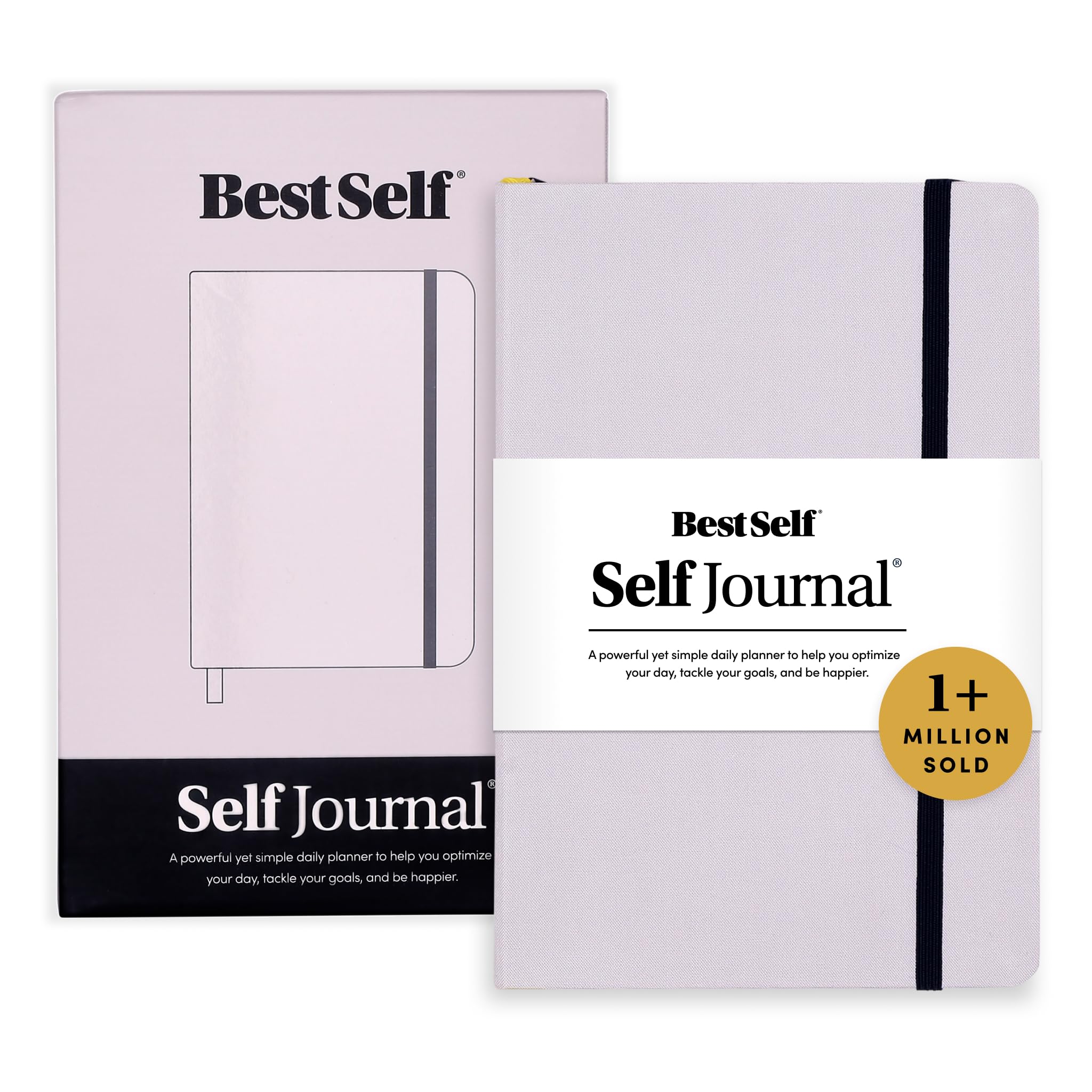
The BestSelf Journal uses a science-backed SMART goals framework that many productivity gurus recommend, but it adapts it specifically for the ADHD brain by emphasizing weekly reflection and daily time-blocking. The 13-week undated design gives you a finite sprint rather than an infinite calendar, which makes it easier to stay motivated through completion. Each day includes a dedicated space for a morning intention, a task list with time blocks, and an evening reflection.
One of the smartest features is the inclusion of bucket lists, personal benchmarks, and tactic tracking that breaks goals into executable steps. This addresses the common ADHD trap of setting a goal without a path. The 240 FSC-certified ivory pages use lay-flat binding so you can write comfortably at the edges, and the A5 size is compact enough for a work bag without feeling cramped. The gender-neutral gray mist color keeps it professional on any desk.
The hardcover is durable but can stain or scratch if tossed loosely into a purse, and a few users mentioned the packaging has changed recently, so quality may vary slightly between batches. That said, the structured weekly planning combined with the habit tracker makes this a strong competitor for anyone who needs a system that balances freedom with accountability.
Why it’s great
- SMART goal breakdown with tactic tracking
- Lay-flat binding for easy edge writing
- Undated 13-week format for flexible start
Good to know
- Cover can scratch easily in a bag
- Packaging and paper may vary
3. Jack Pomodoro Timer

The Jack Pomodoro Timer is a gravity-based cube that removes the friction of setting digital alarms. Flip it to the 25-minute face to start a focused work session, flip to 5 for a break, and let the built-in vibration mode or adjustable sound alert you without pulling your attention to a phone screen. The six preset countdowns — 3, 5, 10, 25, 30, and 60 minutes — cover the most common work intervals without needing to scroll through menus.
What really sells this tool for ADHD adults is the option for silent vibration alerts. No jarring phone buzz, no notification light — just a gentle buzz that signals the end of a session. The magnetic base is surprisingly strong, allowing you to stick it to a whiteboard, fridge, or metal desk leg without it falling off. The adjustable backlight has four levels, making it usable in dim rooms without being distracting. It charges via USB-C, so there are no disposable batteries to manage.
Some users found the power button hard to distinguish by touch, and the alarm only lasts about 30 seconds without a repeat option. It also lacks a 15-minute preset, which would be useful for shorter focus bursts. But the combination of tactile flipping, strong magnet, and silent vibration makes this a superior alternative to phone timers for anyone who needs to separate the act of timing from the act of scrolling.
Why it’s great
- Silent vibration mode for distraction-free alerts
- Strong magnetic base for easy desk mounting
- USB-C rechargeable with no battery waste
Good to know
- Alarm is only 30 seconds with no repeat
- Power button is hard to locate by feel
4. Time Timer 3 Inch Visual Timer
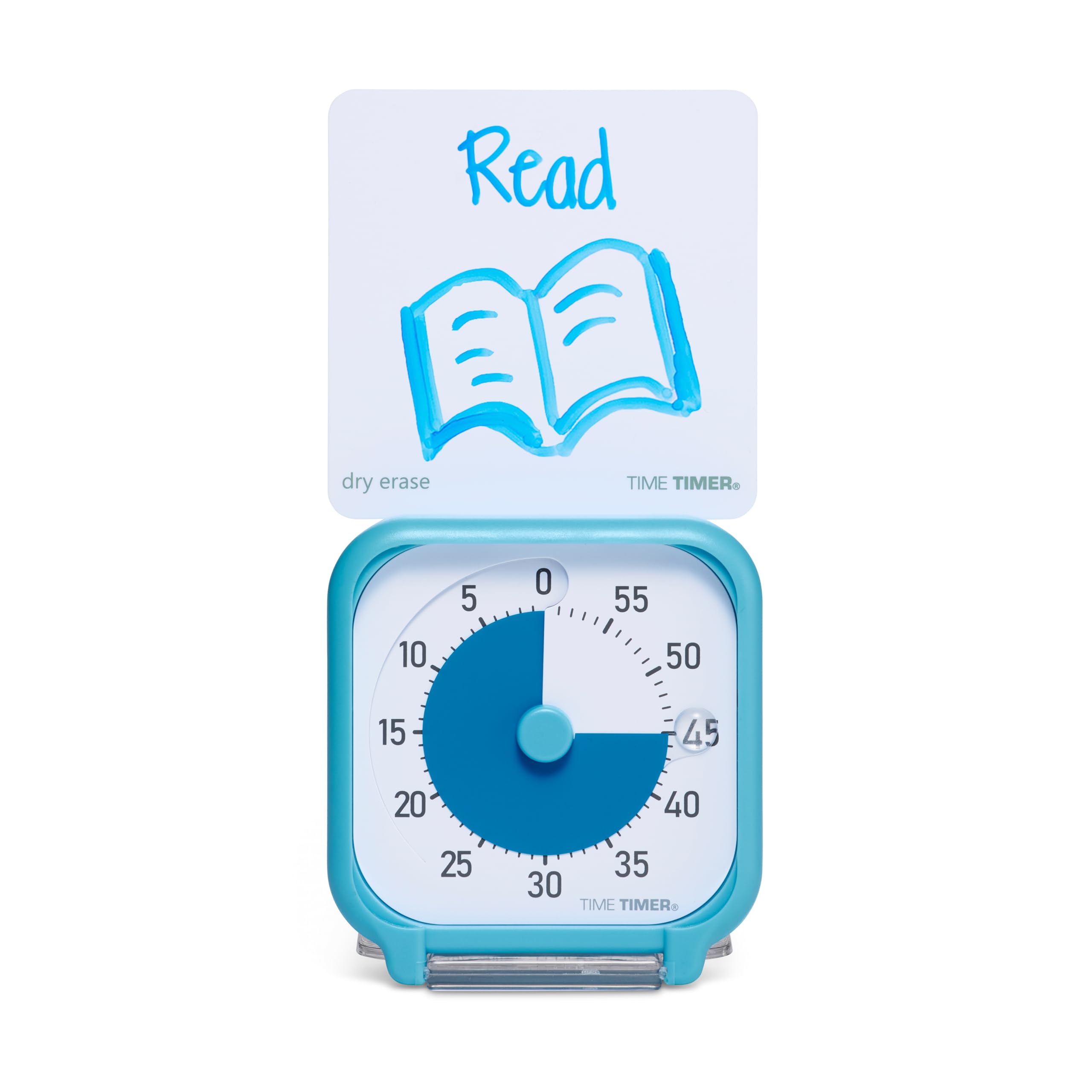
The Time Timer is the gold standard for visual time management in the ADHD community for one simple reason: it transforms an abstract duration into a shrinking red wedge. There is no blinking numbers, no beeping countdown — just a clear, passive visual cue that tells you exactly how much time remains at a glance. The 60-minute dial covers everything from a quick 10-minute break to a full hour of deep work, and the optional audible alert can be silenced entirely for sound-sensitive environments.
The 3-inch model strikes the perfect balance between portability and readability. It fits easily on a desk, nightstand, or even clipped into a bag, while the enhanced 2-inch colored disk is large enough to read from across a small room. The snap-on cover protects the dial when not in use and doubles as a desk stand when flipped open. A dry-erase board on top lets you write the current task directly on the timer, reinforcing the connection between the visual countdown and the specific activity.
The only limitations are the single timer setting — you can’t run multiple countdowns in sequence — and the lack of a soft beep option for those who want a subtle alert but find the loud beep too jarring. But for pure, friction-free time awareness, this tool is unmatched. It’s the easiest way to hack your perception of time when your internal clock is unreliable.
Why it’s great
- Visual red wedge eliminates clock-checking
- Dry-erase task board is integrated into the body
- Snap-on cover doubles as a stand
Good to know
- Only one timer interval at a time
- No soft beep option between silent and loud
5. Epic Self ADHD Planner
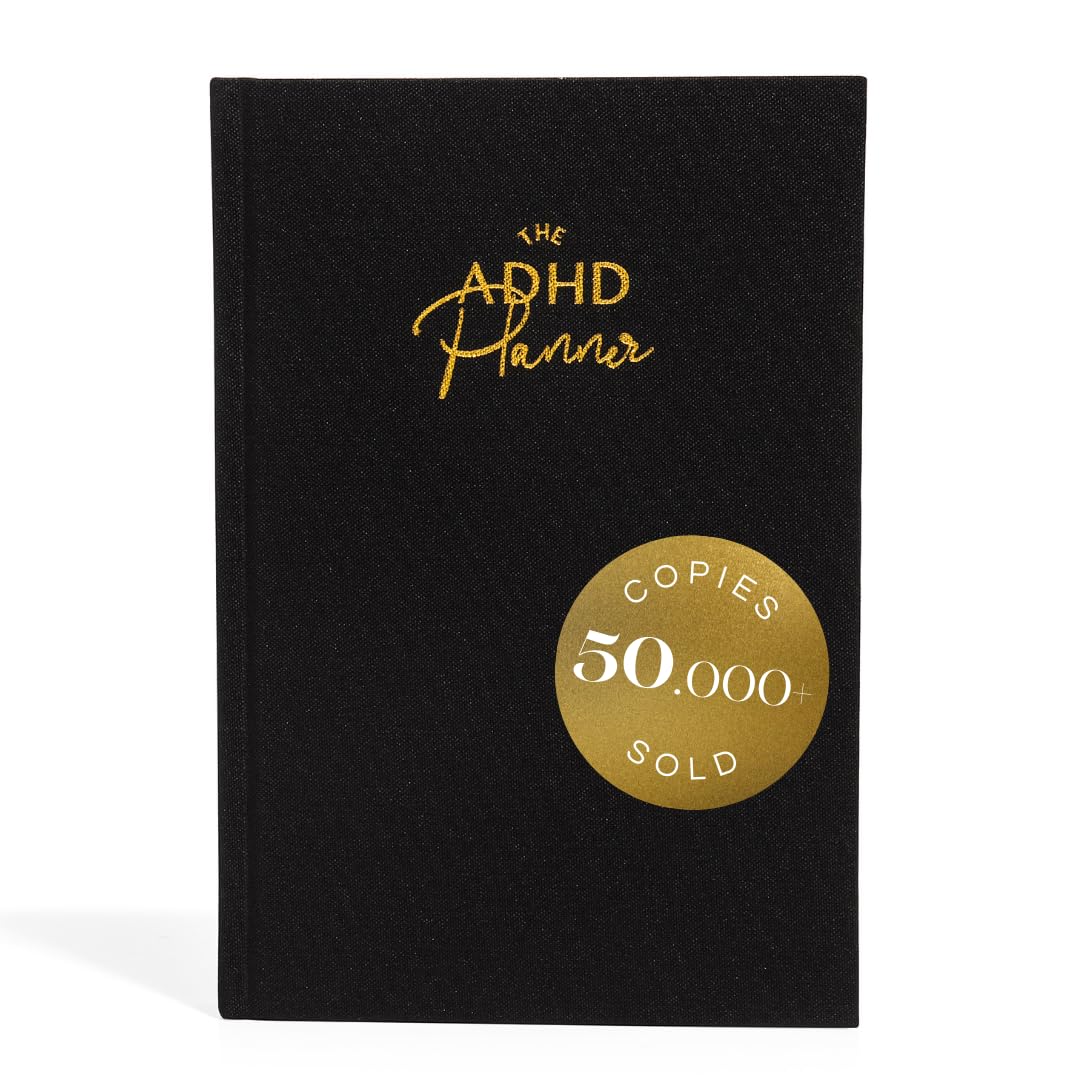
The Epic Self ADHD Planner was created by an entrepreneur with ADHD, and it shows in the deliberate simplicity of the layout. Rather than bombarding you with 15 different trackers, it focuses on three essential areas: daily priorities, weekly brain dumps, and long-term goal breakdowns. The 90-day undated format is long enough to build a habit but short enough to stay manageable, and the faux leather cover feels sturdy without adding bulk.
One standout feature is the dedicated space for weekly brain dumps — a section designed specifically for purging the overflow thoughts that pile up during the week. This prevents the shame of uncompleted tasks by giving them a designated home rather than letting them float around your mental space. The daily pages include a priorities list, a freeform notes area, and an achievements log, which shifts the focus from what you didn’t do to what you actually accomplished.
Some users have noted that the price has been increasing, making it feel less of a value over time. It also lacks a separate weekly view, instead relying on the brain-dump page to cover that function. But for anyone who has struggled with planners that demand too much writing or too many categories, this stripped-down approach provides just enough structure without feeling like homework.
Why it’s great
- Weekly brain-dump pages reduce task shame
- Achievements log highlights what you completed
- Undated 90-day format is low-pressure
Good to know
- No separate weekly calendar view
- Price has increased since release
6. Bouncyband Wiggle Feet

The Bouncyband Wiggle Feet is an under-desk sensory cushion that allows you to bounce, tap, and shift your feet silently while working. For adults who struggle with sitting still, this tool provides the proprioceptive input your brain needs to regulate attention without the noise of a traditional fidget device. The dual-chamber air flow creates a gentle resistance that makes each bounce feel deliberate, and the two textured surfaces — flexible nubs on one side and bumps on the other — let you choose your preferred level of stimulation.
Many users find that the ability to move their feet while keeping their hands free for typing or writing dramatically improves sustained focus during meetings or deep work sessions. The rectangular 12 x 9 x 2.5-inch shape fits under most desks without sliding around. It also promotes better bilateral coordination and can serve as a low-impact exercise tool for those who spend long hours seated. The dark blue color is professional enough for an office environment, and the rubber construction is easy to wipe clean.
The main drawback is noise on hard floors — the textured bottom can squeak against tile or hardwood, so pairing it with a small mat or towel is recommended. It also doesn’t work well for everyone, as its effectiveness depends on whether you’re a foot-bouncer or a leg-tapper. But for the many adults who need to channel excess physical energy into a quiet, under-desk motion, this cushion is a game-changer.
Why it’s great
- Dual textures provide adjustable sensory input
- Quiet under-desk use for office environments
- Promotes bilateral coordination and movement
Good to know
- Can squeak on hard floors without a mat
- Effectiveness varies by individual
7. Shashibo Sensory Fidget Cube

Shashibo is a 2.3-inch magnetic cube with 36 ultra-strong internal magnets that allow it to transform into over 100 different geometric shapes. For adults who need a quiet, tactile fidget that engages both hands and mind, this cube provides a portable sensory anchor. The act of manipulating it works on working memory — you have to remember the movement sequence to create a specific shape — which can help calm a racing mind without requiring total focus.
The magnetic connectivity also allows multiple cubes to connect together, so you can expand the complexity as you get bored with simpler shapes. The Spaced Out color variant is visually engaging without being childish, making it appropriate for a professional desk. It is completely silent during use, which is critical for office or classroom environments where clicking fidgets are disruptive. The satisfying magnetic snap of each fold provides just enough sensory feedback to be grounding without being addictive.
Durability is a mixed point — the magnets are strong, but the seams can start to tear after a few weeks of heavy manipulation by multiple people. It is also not cheap for its small size, and some users find folding it back into a perfect cube frustrating. But if you are someone who needs to keep your hands busy while listening in meetings or processing information, the Shashibo provides that motion without drawing attention.
Why it’s great
- Silent magnetic folding for discreet fidgeting
- Over 100 shapes for long-term engagement
- Connects with other cubes for expanded play
Good to know
- Seams may tear after moderate use
- Can be difficult to fold back to original cube
FAQ
What is the difference between a Pomodoro timer and a visual timer for ADHD?
Can a fidget cushion really help an adult with ADHD focus at work?
How many days should an ADHD planner cover to be effective?
Final Thoughts: The Verdict
For most users, the adhd tools for adults winner is the Roterunner Purpose Planner because it genuinely combines structured weekly planning, flexible note-taking, and high-quality materials in a way that doesn’t overwhelm the ADHD brain. If you want a physical tool that helps you sense the passage of time without clock-checking, grab the Time Timer 3 Inch. And for silent under-desk movement that keeps your hands free, nothing beats the Bouncyband Wiggle Feet.