
Our readers keep the lights on and the weekend projects moving. As an Amazon Associate, I earn from qualifying purchases.
A loose ceramic tile or a wobbly peel-and-stick panel can turn a fresh kitchen backsplash into a daily annoyance. The wrong adhesive leads to sagging on vertical walls, visible squeeze-out, or a bond that fails under heat and humidity—forcing you to redo the entire job. Selecting an adhesive formulated for vertical holds, moisture resistance, and the specific material you’re mounting is the difference between a weekend triumph and a costly do-over.
I’m Rikta — the co-founder and writer behind FitlyFast. I’ve spent years analyzing adhesive formulations for contractors and DIYers, comparing tensile strength, cure windows, and substrate compatibility to separate the products that actually grip tile from the ones that just look good on a shelf.
Whether you’re tackling ceramic subway tile, stone mosaic, or glass sheets, this guide breaks down the best formulas available. After testing performance across wet kitchens, humid baths, and dry walls, only a few adhesives earn a spot on the list of the best adhesive for backsplash.
How To Choose The Best Adhesive For Backsplash
Buying the wrong adhesive for a backsplash usually comes down to ignoring how the material will be used. Kitchen backsplashes deal with heat, steam, and occasional splashes; bath backsplashes face constant humidity. The adhesive must maintain its grip without softening, yellowing, or releasing the tile over time.
Match the Adhesive to Your Tile Material
Ceramic and porcelain absorb very little moisture, so glue that relies on absorption (like basic mastic) may dry too slowly on the surface. Glass tile needs a white or clear adhesive because any dark color will show through. Natural stone, like marble or granite, is acid-sensitive and can be damaged by solvent-based compounds. Always check the manufacturer’s substrate list before buying.
Check the Cure Time and Open Time
Every adhesive has a working window called “open time”—how long you can adjust the tile after placement. Water-based mastics typically offer 10-15 minutes of adjustability, while solvent-based construction adhesives set faster but leave you only 5-7 minutes to reposition. If you are a first-time tiler, choose a formula with a longer open time so you can slide the tile into alignment without fighting a rigid bond.
Evaluate for Moisture and Heat Tolerance
Backsplashes near a stove or sink see repeated temperature swings. Look for adhesives rated between 40°F and 140°F at minimum. For areas behind a cooktop, consider a heat-tolerant construction adhesive or a mastic rated for interior wet areas. Avoid wallpaper-type pastes here—they break down under steam.
Quick Comparison
On smaller screens, swipe sideways to see the full table.
| Model | Category | Best For | Key Spec | Amazon |
|---|---|---|---|---|
| Loctite Power Grab Ultimate Crystal Clear | Construction | Clear bond on glass/mirror | Cure Time: 24 hours | Amazon |
| CS-4300 Mirror Adhesive | Construction | Large mirror panels | Low-Odor, VOC Compliant | Amazon |
| Loctite PL 530 | Construction | Wet/humid kitchen & bath | Set Time: 15 minutes | Amazon |
| MusselBound Adhesive Tile Mat | Peel-and-Stick Mat | Easy DIY no-mess install | Coverage: 15 sq ft per roll | Amazon |
| Henry 314 Premixed Mastic | Mastic | Small ceramic tile repairs | Container: Quart Pail | Amazon |
| YKF Heavy Duty Tile Adhesive | Acrylic | Re-attaching loose tiles | Initial Grab: 3-5 minutes | Amazon |
| Zinsser SureGrip Border Adhesive | Wallpaper Paste | Peel-and-stick wallpaper/backsplash | Dries Clear | Amazon |
In‑Depth Reviews
1. Loctite Power Grab Ultimate Crystal Clear Construction Adhesive
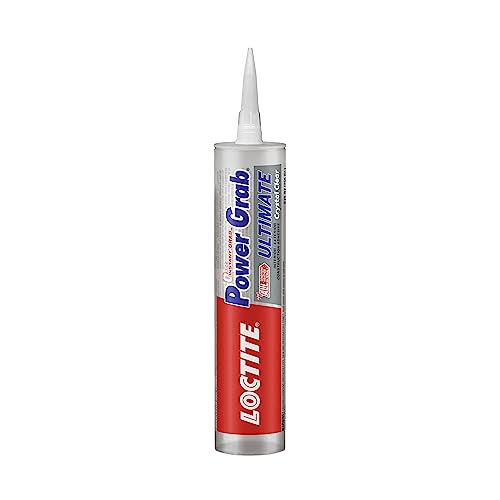
This construction adhesive from Loctite stands out for its ability to bond two non-porous surfaces and remain completely invisible after curing. The crystal clear formula means no yellowing or darkened lines show through translucent stone or glass tile. It is weatherproof and temperature-rated from 0°F to 140°F, so it won’t soften behind a hot cooktop.
Users report excellent results mounting stainless steel backsplashes and decorative ceiling tiles, with the adhesive holding a 36×24-inch panel using just 75% of a tube. The initial tack is strong enough to reduce or eliminate the need for bracing during cure. Cleanup requires mineral spirits before the 24-hour full cure window.
The main trade-off is that the 9-ounce cartridge requires a caulking gun and a bit of finesse to apply cleanly. A few users noted the tip is fragile if dropped. For backsplash projects where visual discretion matters, this is the most reliable option.
Why it’s great
- Dries completely clear with rock-hard strength
- Works on wet surfaces and extreme temperatures
- High initial tack reduces need for bracing
Good to know
- Requires a caulking gun for application
- Tip can break if dropped on a hard surface
- Cleanup before cure needs mineral spirits
2. CS-4300 Mirror Adhesive, Low Odor, VOC Compliant
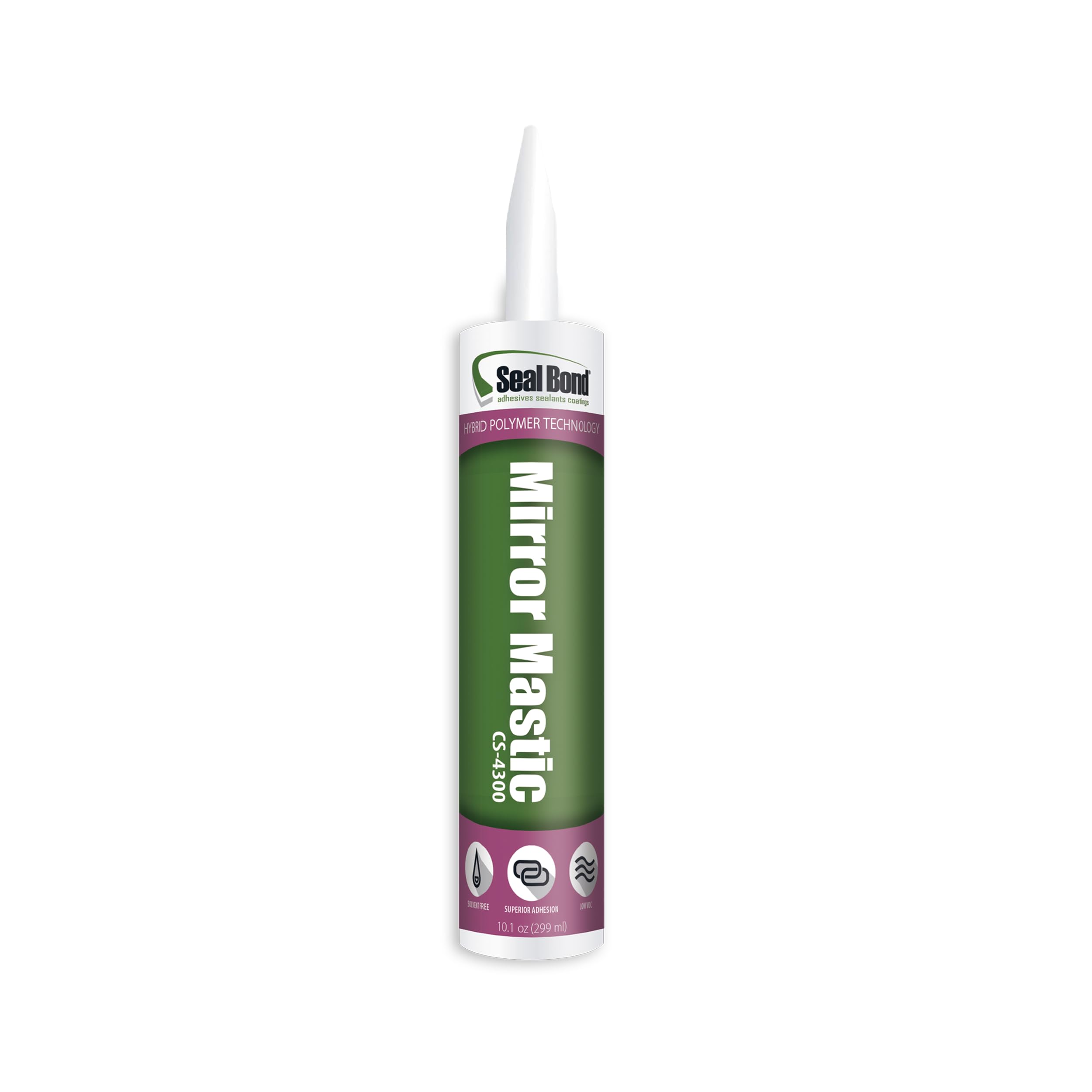
The CS-4300 is a solvent-free, isocyanate-free mirror adhesive that also serves as an exceptional choice for glass backsplash panels. Its ultra-low VOC profile makes it safe for indoor application without requiring heavy ventilation. The formula grabs instantly upon contact, holding 1/8-inch mirrors vertically without mechanical fasteners during cure.
Real-world tests show a single 10.1-ounce cartridge applied in three vertical lines secures four mirrors weighing 10 pounds each on painted doors. Repositioning is limited to about 1/16-inch before the bond locks. The off-white color blends well behind most translucent materials, unlike standard yellow construction adhesives.
While designed for mirrors, the adhesive’s high build-out and gap-filling properties make it a strong candidate for larger backsplash formats where the wall is slightly uneven. The only drawback is that the cartridge size is generous for small projects—plan your layout to avoid waste.
Why it’s great
- Solvent and isocyanate-free with ultra-low VOC
- Grabs instantly with minimal repositioning window
- Excellent build-out for uneven walls
Good to know
- Limited repositioning time
- Cartridge size may be too large for tiny repairs
- Off-white color may show under very clear glass
3. Loctite PL 530 Mirror, Marble and Granite Construction Adhesive

Loctite PL 530 is purpose-built for kitchen and bath applications, including countertops and backsplashes made of marble, granite, or mirror. Its solvent-based formula delivers a fast 15-minute set time, which accelerates complex tile layouts where you need to secure multiple rows quickly. The bond performs reliably in wet and humid conditions, making it ideal for backsplashes behind a sink or in a steamy bathroom.
Customer reviews confirm the adhesive holds industrial-sized mirrors with such strength that one user joked they could “hang upside down” from the installation. The low VOC formulation meets federal guidelines, reducing fume load indoors. Full cure takes 48 hours, though the bond is workable much sooner.
Because it is solvent-based, cleanup requires a solvent like mineral spirits before the adhesive skins over. The 10-ounce cartridge fits standard caulking guns. Avoid using this on moisture-sensitive stone like porous marble if the grout lines are very thin—test a small area first to check for solvent migration.
Why it’s great
- Sets in 15 minutes for faster project completion
- Engineered for humid kitchen and bath conditions
- Low VOC meets strict air quality standards
Good to know
- Solvent-based, requires mineral spirits for cleanup
- Full cure takes 48 hours
- Not ideal for thin-set applications on porous stone
4. MusselBound Adhesive Tile Mat with Spacers
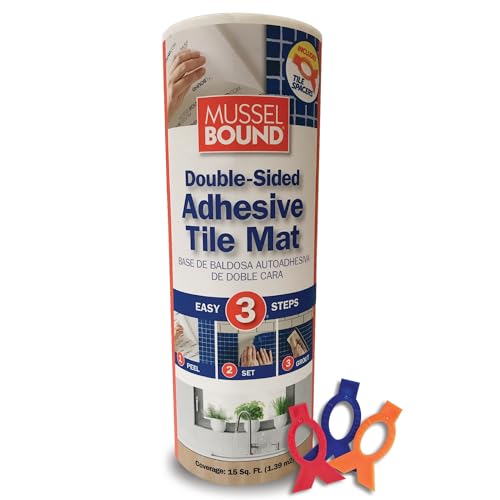
MusselBound changes the equation by replacing wet adhesive entirely. Each 12-inch by 15-foot roll covers 15 square feet with a double-sided adhesive mat that bonds real ceramic tile without mixing, troweling, or curing time. The mat includes built-in spacers for consistent 1/6-inch, 1/32-inch, and 1/8-inch gaps, so you can grout immediately after placing tiles.
DIY users consistently praise the instant grab and the ability to lift and realign tiles if needed during placement. The mat holds tiles securely in vertical backsplash applications behind stoves, and one reviewer used cut pieces to hang pictures. Bond strength is high, yet the mat can be removed from drywall without damaging the surface—a major plus for renters or temporary installations.
This system works best on clean, smooth walls. The mat will not adhere well to textured drywall or surfaces with dust or grease residue. MusselBound is not recommended for fully submerged areas like shower floors, but for a kitchen or bath backsplash, it offers the fastest, cleanest installation of any option in this guide.
Why it’s great
- No mixing, no mortar, no dry time
- Built-in spacers for professional-looking grout lines
- Removable from drywall without damage
Good to know
- Walls must be very clean and smooth
- Not for wet applications like showers
- Higher upfront cost per square foot
5. Henry 314 Premixed Mastic Adhesive 1 QT Ready Set

Henry 314 is a classic premixed mastic that comes ready to use straight out of the quart pail. It is ideal for small ceramic tile backsplash repairs or tiling a compact area like a metal plant stand or a 8×42-inch alcove. The beige color blends well with ceramic grout lines, and the consistency spreads easily with a small notched trowel.
The key advantage is convenience: no mixing, no measuring, and the water-based formula cleans up with soap and water. However, the mastic dries quickly once exposed to air, so you need to work fast and keep the pail sealed between applications. Multiple reports mention the lid can crack during shipping, leading to a dried top layer.
This product works best for ceramic and concrete substrates. It is not formulated for glass, metal, or large-format stone. For a weekend project involving less than three square feet of standard ceramic tile, it is a tidy, budget-friendly solution that saves you from buying a full bucket of thin-set mortar.
Why it’s great
- Completely premixed with no preparation needed
- Easy water cleanup before it dries
- Perfect size for small repair patches
Good to know
- Dries very fast—must work quickly
- Not suitable for glass or metal tile
- Lid may crack during shipping
6. YKF Heavy Duty Tile Adhesive & Repair Glue
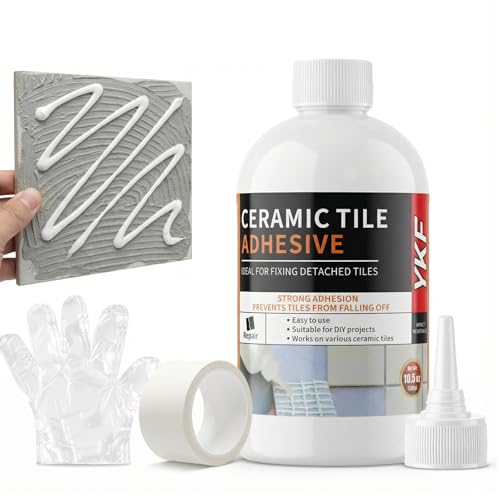
The YKF Heavy Duty Tile Adhesive is a water-based acrylic formula engineered specifically for re-attaching loose ceramic, porcelain, and stone tiles to walls, floors, and backsplashes. The squeeze bottle design means you don’t need a caulking gun—just cut the precision nozzle tip and inject adhesive into hollow spots behind loose tiles or apply in a “#” pattern for full coverage.
The “non-sag” consistency prevents the glue from running down vertical surfaces, and the initial grab occurs within 3-5 minutes. Once fully cured at 24 hours, the acrylic bond is tough yet flexible enough to withstand foot traffic and minor wall movements. The kit includes protective gloves, which is a nice touch for first-time users.
The main criticism is that the adhesive dries yellow, so excessive squeeze-out can discolor light grout or tile edges. For repairs behind existing tiles where you inject through a drilled hole, this isn’t a concern. But for surface-level repairs, apply sparingly and wipe away excess immediately. The water-based formula freezes below 41°F, so store it indoors before use.
Why it’s great
- No caulking gun required—easy squeeze application
- Non-sag formula for vertical tile repair
- Includes gloves and precision nozzle
Good to know
- Dries yellow, can discolor light grout
- Water-based formula freezes below 41°F
- Best for repairs, not full-area coverage
7. Zinsser SureGrip Universal Border Adhesive, Quart
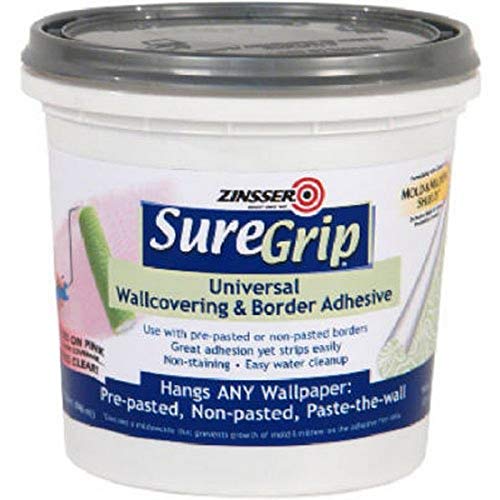
The Zinsser SureGrip is technically a wallpaper border adhesive, but it deserves a spot here because it solves the most common problem with peel-and-stick wallpaper backsplashes: adhesion failure in humid bathrooms. The formula goes on pink so you can see coverage, then dries clear to remain invisible behind the panel.
Users consistently report that their pre-pasted wallpaper fell off within a week in a steamy bathroom, but after applying SureGrip to both the wall and the back of the paper, the seams held perfectly. The one-step system eliminates the need for primer or sizing. Because it is water-based, any drips wipe off with a damp cloth, and you have plenty of working time to slide panels into place.
The limitation is that this is not a structural adhesive for ceramic tile or stone. It is designed for thin wallcoverings—paper, vinyl, or fabric-backed peel-and-stick panels. Use it only if your “backsplash” is a wallpaper product, not genuine tile. For that specific use case, it outperforms every standard wallpaper paste on the market.
Why it’s great
- Pink color shows coverage then dries clear
- Water-based with simple soap and water cleanup
- Holds peel-and-stick wallpaper in high-humidity rooms
Good to know
- Not designed for ceramic tile or stone
- Long dry time compared to construction adhesive
- Best for wallpaper-style backsplash products only
FAQ
Can I use regular construction adhesive for a glass tile backsplash?
How long should I wait before grouting a tile backsplash?
Is premixed mastic strong enough for a kitchen backsplash?
Final Thoughts: The Verdict
For most users, the adhesive for backsplash winner is the Loctite Power Grab Ultimate Crystal Clear because it provides an invisible, rock-hard bond on any non-porous surface and handles the heat and humidity behind a cooktop. If you want a mess-free weekend install with real ceramic tile, grab the MusselBound Adhesive Tile Mat. And for a budget-friendly squeeze-and-repair solution, nothing beats the YKF Heavy Duty Tile Adhesive for quick fixes on loose tiles.