
Our readers keep the lights on and the weekend projects moving. As an Amazon Associate, I earn from qualifying purchases.
Mounting canvas—whether a stretched print, a gallery wrap, or a raw art panel—demands an adhesive that bonds aggressively without soaking through the weave or turning brittle over time. Water-based white glues can warp the fibers, and weak spray adhesives let the canvas sag within months.
I’m Rikta — the co-founder and writer behind FitlyFast. I’ve spent years dissecting archival framing materials, PVA formulations, and pressure-sensitive tapes, cross-referencing pH levels, lay-flat properties, and bond permanence specifically for canvas substrates.
This guide compares seven professional-grade options to help you choose the best adhesive for canvas, with a focus on archival safety, bond strength, and clean application for both framing and craft projects.
How To Choose The Best Adhesive For Canvas
Canvas is a fibrous, porous material that reacts poorly to solvent-heavy adhesives and high-moisture glues. The wrong choice can cause staining, rippling, or complete delamination. Here are the three specs that matter most.
Archival Quality and Acid-Free Chemistry
Any adhesive that will touch a canvas meant to last must have a neutral pH—ideally between 7.0 and 8.0. Acids in cheap adhesives yellow the canvas over time and make fibers brittle. Look for labels stating “acid-free” or “archival safe.” An alkaline reserve is a bonus for long-term framing.
Bond Type: Permanent vs. Repositionable
Permanent spray adhesives lock the canvas in place and are ideal for gallery wraps and embedded mounting. Repositionable options let you slide the canvas before pressing, which is useful for multi-layer collages or aligning a print precisely within a frame. For most canvas framing, a permanent bond is preferred.
Application Method and Lay-Flat Performance
A spray adhesive gives even, wide coverage without puddling, but requires masking to protect the canvas face. A liquid PVA applied with a brush provides precise control for edges and repair work. “Lay-flat” properties determine whether the canvas stays flush after curing—critical for a smooth, professional finish.
Quick Comparison
On smaller screens, swipe sideways to see the full table.
| Model | Category | Best For | Key Spec | Amazon |
|---|---|---|---|---|
| Scotch Photo Mount | Spray | Permanent photo/canvas mounting | Photo-safe ISO 18916 | Amazon |
| Lineco PVA Adhesive | Liquid PVA | Wood frame assembly & canvas gluing | Solids content >50% | Amazon |
| Elmer’s Multi-Purpose Spray | Spray | General craft & foam board mounting | Acid-free, fast-drying | Amazon |
| Brodart Bind-Art Adhesive | Liquid PVA | Book repair & canvas tipping-in | pH 7.9, non-toxic | Amazon |
| Framers Tape II | Tape | Hinging & reinforcing canvas edges | Archival mylar, 1″ x 180 ft | Amazon |
| Pres-On Mounting Board | Pressure-Sensitive | Cross-stitch & handcraft mounting | Self-adhesive sheet, reusable | Amazon |
| Scotch Spray Mount | Spray | Repositionable layout & poster work | Repositionable, non-wrinkling | Amazon |
In‑Depth Reviews
1. Scotch Photo Mount Adhesive
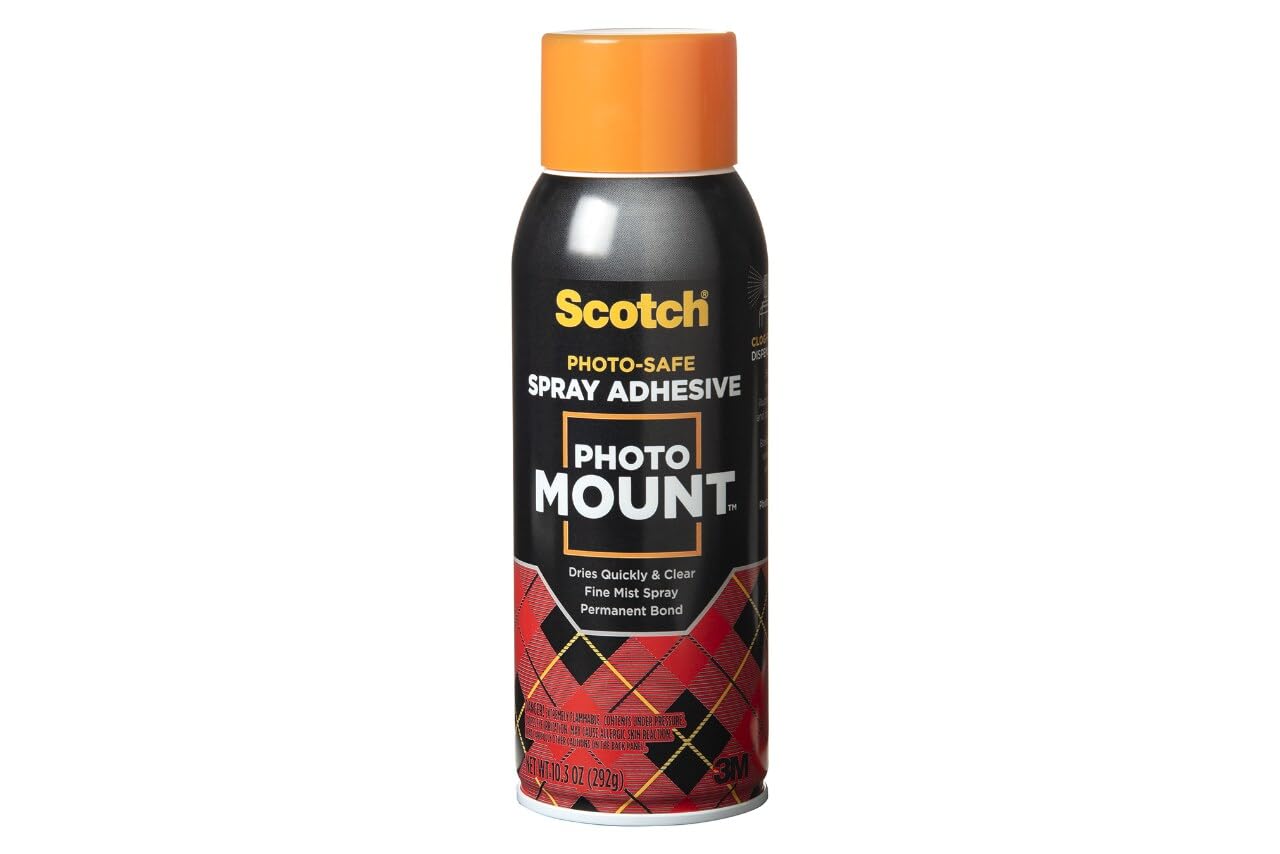
The Scotch Photo Mount complies with ISO 18916 for photo safety, meaning it won’t off-gas or cause color shifts on canvas prints. The spray pattern is fine and consistent, allowing you to coat a full 16×20 canvas in about three passes without puddling. Drying time is roughly 15 minutes to a tack-free state, with full cure at 24 hours.
Reviewers highlight that the bond is aggressive enough to hold canvas to foam core or mat board permanently, yet clean enough to avoid bleed-through on thin cotton duck. A masking border is still recommended to protect the face of the artwork. The 10.3-ounce can covers roughly 20 square feet per can, making it cost-effective for heavy framing workloads.
The primary limitation is the lack of repositionability—once the canvas makes contact, it stays. For exact placement, use a hinge method with wax paper before pressing. This is the gold standard for permanent, archival-grade mounting.
Why it’s great
- ISO-certified photo safe—no yellowing
- Ultra-strong permanent bond for canvas
- Fine mist nozzle for even coverage
Good to know
- Requires ventilation during application
- No repositioning after contact
2. Lineco PVA Adhesive

Lineco’s PVA is built for wood frame joining, but its archival properties and high solids content make it a superior choice for gluing canvas to wooden strainers or hardboard panels. It sets in roughly 30 minutes and forms a bond that often exceeds the tensile strength of the wood itself. The adhesive dries completely clear, so any small squeeze-out on the canvas edge is invisible.
Users report excellent results when mounting a loose canvas print to a painted wood surface, with no moisture-related ripples. The 8-ounce can provides enough glue for a dozen small frames or several canvas tension mounts. The brush-on application gives you margin for alignment before the glue grabs.
One drawback: the bottle tip, when cut, leaves the container unsealed for storage. You’ll need to unscrew the cap and clean the threads after each use. If your primary need is mounting canvas to a solid backing, this is the most precise option available.
Why it’s great
- Archival quality with no acidic degradation
- Short press time of 30 minutes
- Bonds wood and canvas without warping
Good to know
- Bottle cap doesn’t seal the cut tip
- Requires a brush for even canvas lay-up
3. Elmer’s Multi-Purpose Craft Spray Adhesive

Elmer’s spray is a contact-style adhesive similar to 3M #77, but formulated with an acid-free composition that makes it safer for canvas than many general-purpose sprays. The wide-spray pattern covers large areas quickly, which is ideal for mounting canvas to foam board or matting for temporary displays. It dries clear and stays flexible, preventing the brittle cracking that some solvent-based sprays develop over time.
Reviewers consistently mention it as their go-to for event signage and poster board mounting, but several have also used it to laminate canvas sheets to insulation board with good adhesion. The bond is strong enough to hold heavier canvas without delamination, though it is not as aggressive as the Scotch Photo Mount for permanent framing work.
Be cautious with the nozzle—the cap is prone to damage during shipping. The 11-ounce can is standard, but the active spray time is shorter than premium options due to a larger orifice. For casual framing and classroom settings, this is a reliable mid-range pick.
Why it’s great
- Acid-free formula won’t yellow canvas
- Fast-drying, dries transparent
- Wide spray pattern for quick coverage
Good to know
- Cap can shatter if shipped without padding
- Not archival-grade for long-term framing
4. Brodart Acid Free Bind-Art Adhesive
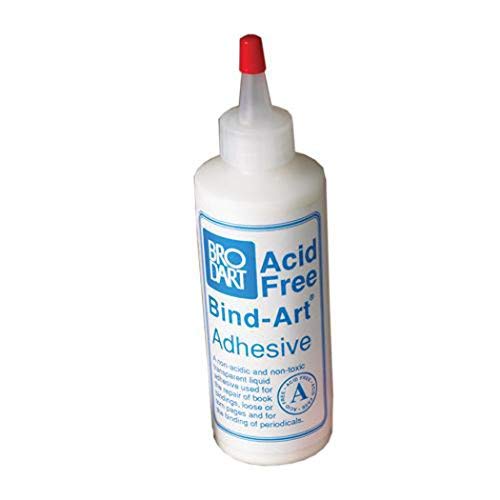
Brodart’s Bind-Art is a specialty PVA formulated to maintain a stable pH of 7.9, making it a favorite among book conservators and archivists. For canvas, it excels in “tipping in” a loose canvas edge or repairing a tear where a spray adhesive would overspray. The lay-flat properties are exceptional—the bond remains flexible, so the canvas can expand and contract with humidity changes without delaminating.
Users with decades of library experience swear by this glue for its longevity. It applies thickly, so a toothpick or small brush is recommended for canvas work. It is non-toxic and contains no parabens, fragrances, or alcohol, making it safe for indoor use without fume extraction. A 4-ounce bottle covers many small repairs.
The trade-off is the viscosity—it is thicker than standard white glues, so you need patience and precision. Also, the bottle cap has no built-in applicator, so you must transfer the glue to a stopper bottle for controlled application. That said, for archival conservation of canvas art, this is the benchmark.
Why it’s great
- Acid-free with stable 7.9 pH
- Remains flexible after curing
- Non-toxic, safe for indoor use
Good to know
- Thick consistency requires careful application
- No applicator nozzle on the bottle
5. Scotch Spray Mount (Repositionable)

Scotch Spray Mount is the industry standard for repositionable mounting. It allows you to press canvas onto a backing, peel it back, and adjust until the alignment is perfect—then apply weight for a permanent hold. This makes it invaluable for graphic designers and framers who need to center a canvas precisely within a frame without committing on the first touch.
The adhesive does not wrinkle the canvas, even when applying a textured gallery wrap to a flat board. Users report success using it for appliqué sewing, where it holds fabric in place temporarily without gumming up a needle. The 10.25-ounce can provides generous coverage, and the bond, once cured, is strong enough to hold a 29×39 framed poster securely.
The main catch is that the repositionable window is moderate; the tack increases over 30-60 seconds, so work quickly. If you need a permanent bond from the start, the standard Scotch Photo Mount is a better match. But for layout work and multi-layer canvas collages, nothing beats this can.
Why it’s great
- Repositionable for precise canvas alignment
- Won’t wrinkle fabric or canvas
- Low VOC formulation
Good to know
- Not a permanent wet-bond for heavy-duty framing
- Repositionable window lasts only seconds
6. Framers Tape II Archival Grade Self-Adhesive Tape

Framers Tape II uses a mylar backing with an archival-grade acrylic adhesive that is specifically designed for hinging canvas to a frame or reinforcing the folded edges before stretching. Unlike standard masking tape, this tape is acid-free and removable with minimal heat, making it safe for long-term framing. The 1-inch by 180-foot roll offers massive coverage for frequent framers.
Needlepoint and cross-stitch artists use this tape to secure canvas edges onto wooden stretcher bars before framing. The adhesive is tacky enough to hold firmly but peels off cleanly without residue if you need to reposition. It also works well for sealing the dust cover on the back of a framed piece.
The tape is glossy rather than matte, which can be visually distracting if visible from the front. For hidden hinge points, this is a non-issue. It is also slightly more expensive than generic framing tape, but the archival safety and consistent stick justify the premium.
Why it’s great
- Archival mylar adhesive won’t yellow
- Removable with mild heat
- Trusted by professional framers
Good to know
- Glossy finish, not matte
- Higher cost than basic framing tapes
7. Pres-On Mounting Board (3-Pack)

Pres-On Mounting Boards are 8×10-inch sheets with a pressure-sensitive adhesive on one side, covered by a release liner. They are intended for mounting cross-stitch fabric and handcrafts, but can be used for small canvas panels or stretched canvas miniatures. The adhesive is very tacky, providing a secure hold that resists lifting over time.
Reviewers consistently mention this as a lifesaver for counted cross-stitch projects that need a stable mount before framing. The adhesive is durable enough to handle the tension of a finished embroidery, and the 3-pack provides a good starting inventory for small projects. The sheets are also listed as reusable, though in practice removal is difficult once the adhesive cures.
The vinyl-based adhesive does not meet strict archival standards for long-term canvas conservation—it can become difficult to remove after a year or so. For temporary displays or craft mounting, this is a fast, clean solution. For heirloom canvas work, stick to the spray or liquid PVA options.
Why it’s great
- Peel-and-stick simplicity, no glue prep
- Excellent for cross-stitch fabric mounting
- 3-pack provides good value
Good to know
- Not archival-grade for long-term canvas
- Very tacky; repositioning is difficult
FAQ
Can I use a regular PVA glue like Elmer’s white glue on canvas?
Will spray adhesive bleed through my canvas print?
What does “repositionable” mean for a canvas adhesive?
Final Thoughts: The Verdict
For most users, the adhesive for canvas winner is the Scotch Photo Mount because it combines photo-safe certifications with a permanent, wrinkle-free bond that will not yellow or degrade. If you want a liquid adhesive for precise framing repairs, grab the Lineco PVA Adhesive. And for temporarily positioning canvas before the final press, nothing beats the Scotch Spray Mount (Repositionable).