
Our readers keep the lights on and the weekend projects moving. As an Amazon Associate, I earn from qualifying purchases.
The difference between a fiberglass repair that lasts a season and one that lasts a decade comes down to one choice: the adhesive. Water intrusion, hull flex, UV exposure, and vibration will tear apart a weak bond within months, leaving you with delaminated decks, leaking through-hulls, or a hole that keeps growing. The right formulation—polyurethane, epoxy, or polyester resin—must match both the substrate and the stress it will face.
I’m Rikta — the co-founder and writer behind FitlyFast. I’ve spent hundreds of hours combing through technical specifications, curing time data, tensile strength claims, and real-world user reports on marine-grade adhesives to separate the formulations that actually hold from those that fail under load.
Whether you are bedding hardware, sealing a below-waterline fitting, or rebuilding a cracked hull, this guide to the best adhesive for fiberglass breaks down which chemistry works for which job and why the cheap tube can cost you more in the long run.
How To Choose The Best Adhesive For Fiberglass
Fiberglass itself is not a single material. Gelcoat, polyester laminates, epoxy composites, and fiberglass cloth each bond differently. Choosing an adhesive without understanding your substrate chemistry guarantees failure. Map the adhesive type to the job.
Polyurethane vs. Epoxy vs. Polyester Resin
Polyurethane sealants like 5200 create flexible, waterproof bonds ideal for bedding hardware and sealing joints that experience movement. Epoxy systems such as West System G/flex and the 105-K Repair Kit provide structural reinforcement with higher tensile strength—better for rebuilding damaged laminates and bonding dissimilar materials. Polyester resins, including Bondo and TotalBoat putty, are best for fairing, filling, and cosmetic repairs where the parent material is already polyester-based. Mixing chemistries—for example, putting polyester over epoxy—leads to adhesion failure.
Cure Time and Working Window
Fast-cure formulas skin in under two hours and reach handling strength within 24 hours, allowing you to return the boat or vehicle to service quickly. Traditional formulations can take up to seven days to fully cure. A 24-hour cure is a practical middle ground for most DIY repairs. Epoxy systems with longer pot life (45–75 minutes) give you time to wet out fiberglass cloth and position patches before the material kicks off. Working time matters more for complex laminating repairs than for simple sealant beads.
Surface Preparation Is the Deciding Factor
No adhesive overcomes poor surface prep. Fiberglass must be clean, dry, and abraded. Sand with 60–80 grit to create a mechanical key, wipe with acetone or isopropyl alcohol, and remove all wax and mold release agents. For challenging plastics like polyethylene, flame treatment before epoxy application is mandatory. Skimping on prep explains nearly every “adhesive failed” review.
Quick Comparison
On smaller screens, swipe sideways to see the full table.
| Model | Category | Best For | Key Spec | Amazon |
|---|---|---|---|---|
| FORTIVO 5200 Marine Sealant | Polyurethane | Watertight sealing above/below waterline | Tensile Strength 1000 PSI | Amazon |
| Berkland 5200 Fast Cure | Polyurethane | Permanent bond with 24-hour cure | 24-Hour Fast Cure | Amazon |
| 3M Bondo Fiberglass Resin | Polyester Resin | Repair/resurface fiberglass surfaces | 0.9 Pint Liquid Resin | Amazon |
| J-B Weld Fiberglass Resin | Polyester Resin | Waterproof repairs on boats, pools, tubs | 2-Hour Dry Time | Amazon |
| West System G/flex 655 | Epoxy | Bonding dissimilar & difficult materials | 150,000 PSI Modulus | Amazon |
| TotalBoat Structural Putty | Polyester Putty | High-strength filleting & gap filling | 15-20 Min Working Time | Amazon |
| West System 105-K Repair Kit | Epoxy Kit | All-in-one fiberglass boat repair | Includes Cloth & Fillers | Amazon |
In‑Depth Reviews
1. West System 655-8 G/flex Epoxy Adhesive
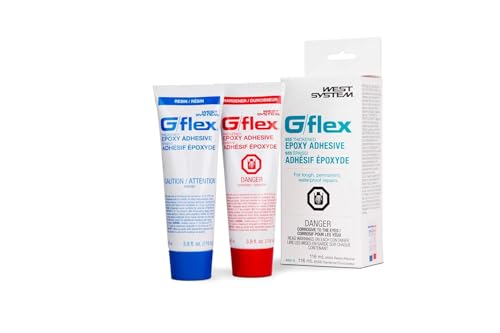
The West System G/flex 655 is a toughened epoxy formulated specifically for materials that standard epoxies cannot reliably bond—polyethylene, ABS, damp wood, and metals. Its 150,000 PSI modulus provides enough stiffness for structural repairs while maintaining flexibility to absorb shock and vibration, a critical advantage for boat hulls and vehicle components that experience constant flex.
The 1:1 mix ratio simplifies measuring, and the 46-minute pot life at 72°F gives ample time for laminating or positioning parts. The thickened consistency stays on vertical and overhead surfaces without sagging, which eliminates a major frustration of thinner epoxies. Multiple users confirm it works on polyethylene after flame treatment, something few adhesives can claim.
The 4.5 fl oz tubes are small, so this is best suited for targeted repairs and bonding tasks rather than large-area laminating. The 24-hour full cure requires planning, but the initial 3–4 hour cure allows for quick follow-up work. For bonding dissimilar materials or repairing plastic kayaks, canoes, and RV tanks, this is the most reliable option available.
Why it’s great
- Bonds polyethylene, ABS, and damp wood when other adhesives fail
- Thickened formula stays on vertical surfaces without sagging
- Excellent shock and vibration absorption for high-stress repairs
Good to know
- Small tube size limits use to targeted repairs
- Requires flame treatment for polyethylene adhesion
- Full 24-hour cure needed before load
2. FORTIVO 5200 Marine Sealant Fast-Cure
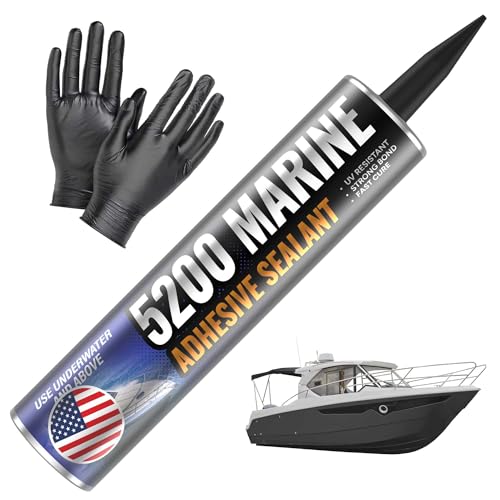
The FORTIVO 5200 Fast-Cure delivers the permanent watertight bond that marine 5200 is known for, but reaches full strength in 24 hours instead of the traditional seven-day cure. This is a game-changer for boat owners who need their vessel back in the water quickly. The polyurethane formula creates a flexible yet tenacious bond that holds against water pressure, hull flex, and impact, suitable for use both above and below the waterline.
With a tensile strength of 1000 PSI, this sealant outperforms many general-purpose adhesives on fiberglass, gelcoat, and wood. The 10 oz cartridge fits any standard caulk gun, and the included nozzle and nitrile gloves make application straightforward. It skins in just two hours, allowing you to move on to the next task without waiting days.
The main trade-off is adhesion to skin—users report it is extremely difficult to remove once cured, so gloves are non-negotiable. Some users also note the lack of a resealable cap means leftover material can dry out in the tube. For the price, this provides 5200-level performance at a budget-friendly cost, making it the best overall value for general fiberglass sealing tasks.
Why it’s great
- 24-hour fast cure with 2-hour skin time for quick turnaround
- 1000 PSI tensile strength provides strong, flexible bond
- Suitable for below-waterline use and UV resistant
Good to know
- Extremely difficult to remove from skin once cured
- No cap included to reseal partially used tube
- Must be applied with adequate ventilation
3. Berkland 5200 Fast Cure Marine Adhesive Sealant
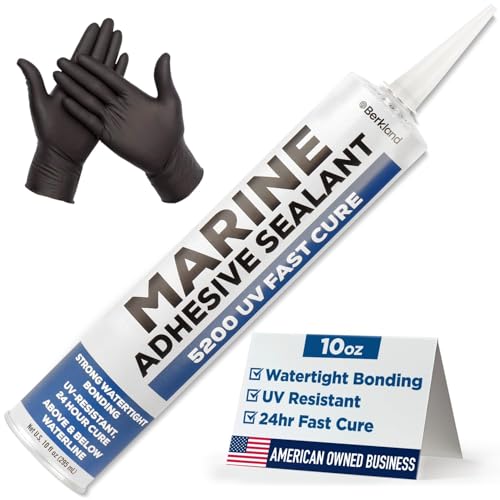
The Berkland 5200 Fast Cure delivers the same permanent, watertight bond that defines the 5200 category, with the crucial advantage of a 24-hour cure cycle. Traditional 5200 formulations can take a full week to reach full strength, but this fast-cure version skins in one hour and is ready for light service within a day. This makes it ideal for through-hull fittings, transducer mounts, and deck hardware where you cannot afford a prolonged dry dock.
The polyurethane paste bonds aggressively to fiberglass, wood, gelcoat, and most metals, creating a seal that handles water pressure, hull flex, and UV exposure without cracking or shrinking. The included gloves and nozzle make application clean, though users consistently point out the lack of a resealable cap—a roofing nail or tape is needed to preserve leftover material. The American-owned company backs the product with a family business reputation, adding a layer of trust for buyers.
Compared to the FORTIVO 5200, the Berkland is nearly identical in performance but comes from a smaller brand with a focused marine line. The fast cure is the headline feature here; the trade-off is that the material is still tenacious once cured and difficult to remove from surfaces or skin. For any below-waterline application where a permanent bond is required, this is a top contender.
Why it’s great
- 24-hour fast cure vs. traditional 7-day cure
- Permanent bond works above and below waterline
- UV and weather resistant for long outdoor life
Good to know
- No resealable cap for leftover material
- Creates a permanent bond that is difficult to remove
- Requires good ventilation during application
4. 3M Bondo Fiberglass Resin 0.9 Pint
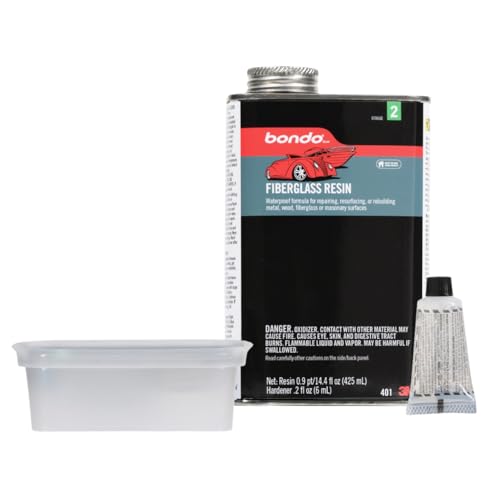
The 3M Bondo Fiberglass Resin is a two-part polyester resin system designed for repairing, resurfacing, and rebuilding fiberglass, wood, metal, and masonry surfaces. It is a stage 2 product in the 3M Body Repair System, meaning it is applied after the fiberglass cloth and before the final filler and paint. The amber liquid cures into a hard, machinable solid that bonds well to original polyester substrates.
This 0.9-pint kit includes the liquid hardener, but the mixing ratio requires careful attention—too little hardener leaves the resin tacky, too much causes brittleness. Users report strong results on boat hulls, auto body panels, and even wooden tool handles, but mixing accuracy is the most common frustration. The resin is compatible with gelcoat and marine paints, making it suitable for cosmetic finishes after sanding.
The small volume is sufficient for patch repairs and small projects, but not economical for large-area laminating. The strong styrene odor demands good ventilation or a respirator. For anyone already familiar with polyester resin chemistry, this is a reliable, affordable option for structural fiberglass repairs that will be painted or gelcoated afterward.
Why it’s great
- Bonds well to polyester fiberglass and gelcoat
- Hardens into machinable solid for sanding and shaping
- Compatible with all paints including marine coatings
Good to know
- Mixing ratio requires careful measuring to avoid failure
- Small 0.9-pint size limits scope of projects
- Strong styrene odor requires ventilation
5. J-B Weld Fiberglass Resin – Quart

J-B Weld’s Fiberglass Resin is a two-component polyester resin system that cures in two hours, making it one of the fastest-setting options in this category. The quart size provides enough material for multiple repairs on boats, pools, tubs, and auto body panels. When used with fiberglass cloth or mat, it creates a waterproof structural repair that bridges gaps and fills holes effectively.
The resin brushes on easily with a consistency similar to thick stain, wetting out fiberglass cloth thoroughly for a strong laminate. Users report successful repairs on cracked tub floors, boat transoms, and large yard decorations. The 2-hour dry time allows for same-day sanding and painting, which is a major advantage over slower-curing epoxies for weekend projects.
The main risk is that some batches have arrived pre-solidified due to poor storage by distributors—the resin is temperature-sensitive and can harden in the can if exposed to heat. Always inspect the container before opening. Additionally, the styrene odor is strong, so a respirator is advisable. For fast, waterproof fiberglass repairs at a reasonable per-quart cost, this is a solid mid-range choice.
Why it’s great
- Two-hour dry time enables same-day finishing
- Quart size covers multiple repair projects
- Wets out fiberglass cloth easily for strong laminates
Good to know
- Resin can solidify in container if stored improperly
- Strong styrene odor requires ventilation
- Not as flexible as epoxy for high-movement areas
6. TotalBoat Polyester Structural Repair Putty

The TotalBoat Polyester Structural Repair Putty is a pre-thickened, long-strand fiberglass-reinforced filler designed for structural filleting, bonding, and gap filling in marine and auto applications. Unlike liquid resins, this putty stays exactly where you put it—no sagging on vertical surfaces or dripping through holes. It is ideal for bonding decks to hulls, filleting bulkheads, and filling screw holes or chips in fiberglass.
The paste catalyzes with 2% MEKP (included) and provides 15–20 minutes of working time at 70°F, which is short but manageable for focused application. Once cured in 30 minutes, it sands easily and can be finished with gelcoat or paint. Users note it fills low spots smoothly and holds its shape during cure, making it superior to liquid fillers for building up contours.
The 30-minute full cure is significantly faster than epoxy or polyurethane sealants, but the polyester chemistry means it bonds best to polyester-based fiberglass—not epoxy laminates. It also emits strong styrene fumes. For anyone filleting corners, bedding structural components, or filling voids in a fiberglass hull, this putty saves hours compared to layering liquid resin and cloth.
Why it’s great
- Non-sag putty stays in place on vertical surfaces
- 30-minute fast cure for rapid project progression
- Sandable and paintable for a smooth finish
Good to know
- Strong styrene fumes require a respirator
- Short 15–20 minute working time
- Best adhesion is to polyester-based substrates
7. West System 105-K Fiberglass Boat Repair Kit

The West System 105-K is not just an adhesive—it is a complete fiberglass repair kit containing premeasured packets of 105 Epoxy Resin and 205 Fast Hardener, fiberglass fabric, adhesive and fairing fillers, mixing pots, brushes, a syringe, gloves, and illustrated instructions. It is engineered for boat owners who need to repair cracks, gelcoat blisters, loose hardware, delaminated decks, and holes up to 1 inch in diameter.
The epoxy system cures into a strong, waterproof bond that is tougher than polyester resin and adheres reliably to epoxy and polyester laminates alike. The premeasured packets eliminate the guesswork of mixing ratios, one of the main failure points for DIY epoxy users. The compact, resealable container fits onboard storage, so repair materials are always accessible when damage occurs away from the workshop.
The biggest drawback is the premium cost for a relatively small volume—users with multiple or large repairs may need two kits. The epoxy also has a strong smell and requires careful grinding for cosmetic results. For the first-time fiberglass repairer or the experienced boater who wants a turnkey solution, this kit delivers professional-level results without requiring a separate run to the marine supply store.
Why it’s great
- All-in-one kit eliminates guesswork for first-time users
- Proven West System epoxy for strong, waterproof repairs
- Compact storage case keeps supplies organized onboard
Good to know
- Higher cost per repair compared to bulk resins
- Small kit volume may require multiple purchases for large jobs
- Epoxy odor requires ventilation during application
FAQ
Can I use polyurethane sealant instead of epoxy for structural fiberglass repairs?
Do I need to sand fiberglass before applying adhesive?
How do I store leftover polyurethane sealant after opening the tube?
Final Thoughts: The Verdict
For most users, the best adhesive for fiberglass winner is the FORTIVO 5200 Marine Sealant Fast-Cure because it delivers a permanent, waterproof, UV-resistant bond at an accessible price point with a fast 24-hour cure. If you need to bond polyethylene or repair a cracked kayak, grab the West System G/flex 655 Epoxy. And for a complete turnkey fiberglass repair kit that includes everything but the labor, nothing beats the West System 105-K Boat Repair Kit.