
Foam and wood are a paradox for adhesives: foam is porous and chemically sensitive, wood is thirsty and unpredictable. Spray one wrong solvent on polystyrene and you get a melted crater instead of a solid bond. The right adhesive for foam to wood must grab fast, stay flexible without cracking, and absolutely never eat through the foam substrate. That narrows the field to a handful of contact cements, spray adhesives, and specialty glues designed specifically for this mixed-material challenge.
I’m Rikta — the co-founder and writer behind FitlyFast. I’ve spent years analyzing adhesive chemistries, reading through thousands of verified build logs from upholsterers, cosplayers, and RC hobbyists to understand exactly which formulations deliver permanent bonds without damaging sensitive foam surfaces.
After testing formulations across contact cement, cyanoacrylate, and hybrid urethane chemistries against foam-to-wood joints, the results are clear. Whether you need a water-resistant outdoor bond or a clean, repositionable indoor hold, this guide narrows the search for a reliable adhesive for foam to wood that won’t let you down mid-project.
How To Choose The Best Adhesive For Foam To Wood
Foam-to-wood bonding is chemically demanding. Many general-purpose glues either dissolve the foam or fail to grip the wood grain. The right choice depends on foam type (open-cell vs. closed-cell), load requirements, and whether the bond needs water resistance.
Foam Safety First
Polystyrene foams (EPS, XPS) dissolve instantly under most solvent-based adhesives. Look for foam-safe labeling or water-based formulas. Polyurethane and polyethylene foams tolerate more aggressive chemistries but still benefit from a low-solvent contact cement.
Tack Level and Open Time
Foam compresses easily, so an adhesive with instant aggressive tack lets you position without clamping pressure. Open time matters too — longer open windows (30 to 60 minutes) give you room to align large foam panels on wood without rushing.
Cure and Flexibility
A rigid bond will crack when foam expands and contracts with temperature shifts. Flexible adhesives — typically contact cements or hybrid urethanes — absorb that movement. Ensure the full cure time matches your project timeline, especially for outdoor use where moisture and UV exposure accelerate failure.
Quick Comparison
On smaller screens, swipe sideways to see the full table.
| Model | Category | Best For | Key Spec | Amazon |
|---|---|---|---|---|
| Gorilla Ultimate Spray Adhesive | Spray Adhesive | Multi-material grab | 2-min full cure | Amazon |
| Titebond Instant Bond Thick | Cyanoacrylate Gel | Fast wood repairs | 18-sec full cure | Amazon |
| Beacon Foam-Tac | Foam Contact | RC plane assembly | 24-hr full cure | Amazon |
| Gorilla Max Strength Construction Adhesive | Hybrid Paste | Gap-filling indoor/outdoor | 24-hr full cure | Amazon |
| Hot Wire StyroGoo | Foam-Safe Liquid | EPS/XPS to wood | Instant tack | Amazon |
| Barge Contact Cement All Purpose | Contact Cement | Flexible hold on shoes/upholstery | 1-day full cure | Amazon |
| 3M Hi-Strength 94 ET Spray | Hi-Tack Spray | Large surface lamination | 60-min open time | Amazon |
In‑Depth Reviews
1. Gorilla Ultimate Spray Adhesive
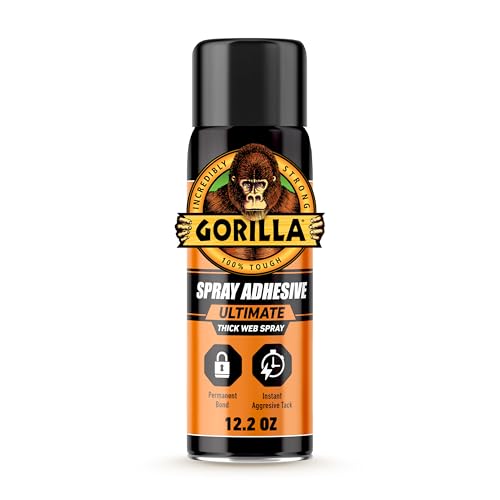
This web-spray contact adhesive delivers instant aggressive tack that grabs foam and wood on contact, with a 2-minute full cure that eliminates the need for clamping. The adjustable nozzle lets you dial in Low, Medium, or High spray patterns, giving you precise control for narrow trim pieces or wide panel coverage. It resists heat and moisture, holding strong on indoor upholstery projects or outdoor foam-backed wood assemblies without delaminating.
The low-VOC formula meets CA CARB/OTC requirements, making it safer for indoor work than traditional solvent-based sprays. Customer feedback confirms it bonds throw rugs, car headliners, and craft foam to wood without the foam dissolving — a common failure point with harsher aerosol adhesives. The permanent bond means you must align perfectly on the first try since repositioning is difficult once the surfaces meet.
For mixed-material projects where speed and coverage matter, this spray adhesive saves hours of clamping time. The 12.2-ounce can covers generous surface area, and the web pattern reduces overspray compared to fan-spray alternatives. It also bonds ceramic, leather, and fabric, making it a versatile shop staple beyond foam-to-wood applications.
Why it’s great
- Instant aggressive tack for no-clamp bonding
- Adjustable spray nozzle for precision application
Good to know
- Permanent bond — no repositioning after contact
- Not ideal for small, detail-oriented repairs
2. 3M Hi-Strength 94 ET Spray Adhesive
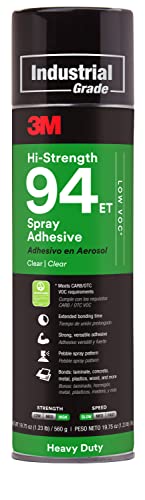
3M engineered this high-strength spray for professional laminators and woodworkers who need to bond large foam sheets to wood substrates with generous positioning time. The 60-minute open window is unmatched — you can lay down foam panels and make micro-adjustments for nearly an hour before the tack locks in. The aggressive grab on wood, metal, rubber, and carpet makes it a staple in custom fabrication shops.
The low-VOC formula carries GREENGUARD certification and contributes to LEED credits, so it passes muster in commercial or residential indoor environments where air quality matters. Customer builds confirm it holds foam soundproofing panels to plastic and metal in freezing temperatures, indicating excellent cold-weather performance. The spray pattern covers wide surfaces efficiently, but you need adequate ventilation — the odor is strong despite reduced solvents.
For large-scale upholstery, acoustic paneling, or foam-backed architectural elements, this industrial-grade spray delivers the longest working window in its class. The bond remains flexible after full 24-hour cure, resisting the shear forces that foam exerts as it flexes over time. It pairs well with both open-cell polyurethane foam and closed-cell polyethylene.
Why it’s great
- 60-minute open time for large-scale adjustments
- GREENGUARD Certified and low-VOC
Good to know
- Strong chemical smell requires ventilation
- Best suited for broad surface area work
3. Beacon Foam-Tac Powerful Glue
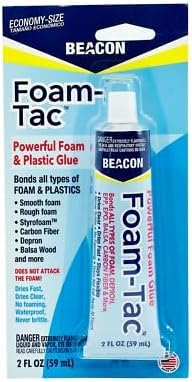
Foam-Tac is the go-to glue among RC aircraft builders for a reason — it bonds EPP, EPO, Depron foam, and balsa wood without melting the foam core. The formula includes UV blockers that prevent yellowing and degradation when the bond is exposed to sunlight, which is critical for outdoor foam planes and decorations. The adhesion promoter chemically links the glue to both porous foam and wood grain for a joint that outlasts the substrate.
The consistency is thick and stringy — almost snot-like according to some users — which takes practice to apply cleanly. It requires clamping or pinning during the 24-hour full cure, but the bond line stays flexible enough to absorb the natural flexing of foam in use. Customer repairs range from cracked Cambro coolers to broken RC motor mounts, all holding through repeated stress cycles.
Foam-Tac also works well for tacking down wires and cables inside RC chassis, keeping the workspace tidy. The squeeze bottle allows precise dot placement, though the thickness can make it stringy on removal. If your project involves thin foam sheets glued to wood frames (like model wings), this glue delivers the right balance of flexibility and peel resistance.
Why it’s great
- Foam-safe with UV protection for outdoor use
- Flexible bond withstands foam flexing
Good to know
- Thick consistency can be messy without practice
- 24-hour cure requires clamping or pinning
4. Gorilla Max Strength Construction Adhesive
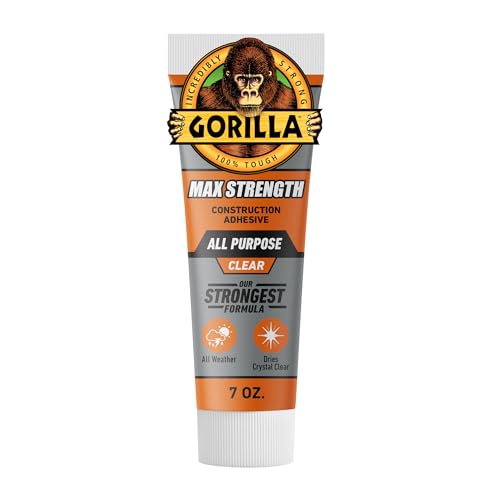
Gorilla’s hybrid construction adhesive is 2x stronger than their heavy-duty formula, yet it stays crystal clear after curing — a rare trait for a gap-filling paste. It bonds foam, fiberglass, stone, and wood directly, making it a solid option for attaching thick foam panels to rough wood surfaces where other adhesives would pool in gaps. The waterproof rating holds up even under water, so outdoor foam-to-wood assemblies like planter boxes or pond decorations remain intact.
The paste consistency is thick enough to fill uneven joints without sagging, and it remains repositionable for about 5 minutes after application. Users report that it dries to a hard rubber consistency, providing some flexibility but less than traditional contact cements. It requires clamping for the full 24-hour cure, and the tube dispenser can produce large gobs — a smaller nozzle would improve precision for detailed work.
For structural foam-to-wood bonds where appearance matters (clear finish), this adhesive outperforms messy spray or yellow wood glue. It also seals moisture entry points around the bond line, preventing rot in the wood substrate. Cleanup with rubbing alcohol before curing keeps the work area tidy.
Why it’s great
- Dries crystal clear for invisible repairs
- Waterproof and gap-filling for outdoor use
Good to know
- Needs clamping for 24 hours
- Thick application can be messy on small parts
5. Hot Wire Foam Factory StyroGoo
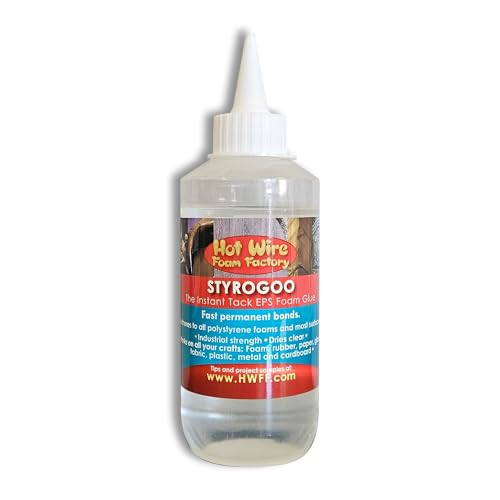
StyroGoo is formulated specifically for EPS and XPS foam — the two types most at risk of melting under standard glue solvents. The industrial-strength formula bonds foam, foam rubber, paper, fabric, wood, plastic, glass, and metal with instant tack that eliminates the need for clamping. The solvent-free chemistry means no foam melt, no cell collapse, and no noxious fumes during application.
The squeeze bottle applicator gives precise dot placement, ideal for attaching foam inserts to wooden display bases or holiday village scenery. Customer reviews consistently confirm it holds dense styrofoam to wood without degradation, even in ambient temperature shifts. The 12-hour full cure is faster than most contact cements, and the clear finish keeps the bond line discreet.
For crafters, model builders, and decorators working with expanded polystyrene, StyroGoo removes the guesswork around foam safety. The permanent bond forms quickly enough that you can continue building within hours rather than waiting a full day. It also adheres to glass and metal, expanding its use to mixed-material holiday displays.
Why it’s great
- Guaranteed foam-safe for EPS/XPS
- Instant tack with no clamping needed
Good to know
- Limited to smaller squeeze-bottle applications
- 12-hour cure may be long for quick projects
6. Barge Contact Cement All Purpose

Barge’s original contact cement formula has been a staple in shoe repair and upholstery shops for decades, and it translates directly to foam-to-wood bonding where flexibility is paramount. The paste-like consistency spreads smoothly with the included Pixiss spreaders, allowing even coats on both surfaces before the adhesive cures. It remains water resistant after full drying, making it suitable for outdoor gear repairs where foam meets wooden soles or handles.
The toluene-free composition reduces the overpowering solvent smell typical of traditional contact cements, though some odor remains. It bonds rubber, leather, vinyl, wood, and EVA foam securely — users report fixing Birkenstock soles, upholstery seams, and foam padding with results that outlast the original construction. The 24-hour full cure produces a durable yet flexible joint that resists shear.
The 2-ounce tube is best suited for small repairs rather than large-scale lamination. The cap tends to clog if not cleaned immediately, and the glue dries with a slightly yellowish tint rather than crystal clear. For crafters who need a flexible, water-resistant bond between thin foam layers and wooden bases, Barge remains a trusted contact cement.
Why it’s great
- Flexible bond ideal for foam and leather repairs
- Toluene-free with reduced odor
Good to know
- Small tube limits use to small projects
- Dries with slight yellow tint
7. Titebond Instant Bond Wood Adhesive Thick

Titebond’s thick cyanoacrylate gel is a fast-fix solution for bonding small foam pieces to wooden bases, especially in model-making and craft repairs where clamping is impractical. The gel consistency stays in place on vertical surfaces without dripping, and it sets in 18 seconds — fast enough to hold foam and wood together by hand pressure alone. The bond strength exceeds the wood itself, meaning the substrate will break before the glue line.
It bonds wood, MDF, acrylic, granite, natural rubber, PVC, and foam, so it works across mixed-material assemblies. The formula provides excellent heat and solvent resistance, making it suitable for small outdoor foam decorations that see sun exposure. Customer feedback notes it works well on oak and other dense hardwoods, and the thick gel fills minor gaps between uneven foam and wood surfaces.
The 2-ounce bottle is compact and the applicator tip delivers controlled drops, though users warn that alignment must be perfect — there is no repositioning after contact. It is not intended for large foam panels but excels at precision bonding of foam trim to wood picture frames, scale models, or broken furniture components. For instant grab without clamps, this gel is the fastest option.
Why it’s great
- 18-second set eliminates clamping
- Thick gel resists dripping on vertical surfaces
Good to know
- No repositioning — instant permanent bond
- Best for small joints, not large panels
FAQ
Will spray adhesive melt my foam board?
Can I use wood glue to attach foam to wood?
Final Thoughts: The Verdict
For most users, the adhesive for foam to wood winner is the Gorilla Ultimate Spray Adhesive because it balances instant aggressive tack, low-VOC safety, and the flexibility needed for various foam types on wood. If you need the maximum repositioning window for large laminations, grab the 3M Hi-Strength 94 ET. And for absolute foam safety with EPS/XPS projects, nothing beats the Hot Wire StyroGoo.