
Our readers keep the lights on and the weekend projects moving. As an Amazon Associate, I earn from qualifying purchases.
Nothing sinks a jewelry project faster than a stone that pops off or a clasp that fails under the lightest tension. The wrong adhesive leaves tacky residue, yellows over time, or snaps under heat, turning a delicate repair into a complete re-do. The best formulations create a tough, transparent, and waterproof bond that disappears into your design while outlasting daily wear.
I’m Rikta — the co-founder and writer behind FitlyFast. I have spent hundreds of hours analyzing adhesive chemistries, epoxy cure times, and real-world bond strength data from customer break tests on porous gemstones versus polished metals to pinpoint exactly where most jewelry glues fail.
This guide breaks down seven top-tier formulas — from precision applicators for seed beads to UV-cured resin that sets in minutes — to help you match the right chemistry to your specific project. Read on to find your ideal adhesive for jewelry making.
How To Choose The Best Adhesive For Jewelry Making
Selecting the right glue is not about picking the strongest option — it is about matching the adhesive chemistry to your base material and the demands of daily wear. A brittle cyanoacrylate can shatter under flex, while a slow-curing epoxy creates a tougher bond for metal-to-stone joins. The table below outlines the main categories you will encounter.
Epoxy for High-Stress Metal and Stone Bonds
Two-part epoxies are the gold standard for joining polished metals, ceramic beads, and dense gemstones. They cure through a chemical reaction between resin and hardener, forming a very durable, waterproof, and gap-filling bond that resists pulling and twisting. The trade-off is a longer cure time — typically 12 to 24 hours — and the need for precise 1:1 mixing ratios. For repairs that need near-soldering strength, like fixing a bezel to a ring shank, a jeweler’s epoxy is the right call.
UV Resin for Fast, Clear Casting and Embedding
UV-cured resin is ideal for projects where you want to embed dried flowers, glitter, or small charms in a clear, glossy coating. The formula hardens in one to three minutes under a 36W to 48W UV lamp, allowing you to complete a cast piece in a single sitting. Low viscosity (around 2000 cps) helps the resin flow into fine mold details without trapping air bubbles. Because UV light must reach every layer, this option works best for thin pours — about 3 to 6 mm per layer — rather than thick structural joins.
Precision Applicators for Beadwork and Small Repairs
When you need to seal a knot inside a bead, attach a jump ring to a micro link, or fix a watch crystal, a precise applicator prevents messy overflow. Look for needle-tip caps or built-in fine-tipped nozzles that deposit adhesive in a controlled drop. Formulations in this category — such as G-S Hypo Cement or Beadsmith Clear Precision Cement — are often solvent-based, drying clear and staying flexible rather than brittle. They are not meant for large surface bonds, but they excel where over-application would ruin the look of the piece.
Quick Comparison
On smaller screens, swipe sideways to see the full table.
| Model | Category | Best For | Key Spec | Amazon |
|---|---|---|---|---|
| Vigor Jeweler’s Epoxy 2 Step | Two-Part Epoxy | High-strength metal and stone repairs | 24-hour full cure | Amazon |
| CRAFT RESIN UV Resin Kit | UV Resin | Casting charms and bezel fillings | 2000 cps viscosity | Amazon |
| E6000 Jewelry and Bead Adhesive | Industrial Adhesive | Bonding porous materials to metal | 1 fl oz tube | Amazon |
| The Beadsmith Clear Precision Cement | Precision Cement | Sealing knots and fine beadwork | 9 ml pinpoint tip | Amazon |
| B7000 Jewelry Glue | Gel Adhesive | Flexible, waterproof gem attachment | 2 fl oz precision nozzle | Amazon |
| G-S Hypo Cement (3 Pack) | Needle-Tip Cement | Controlled adhesive inside beads | 3 x 30g precision tubes | Amazon |
| KISREL UV Resin Kit | Starter UV Kit | All-in-one beginner jewelry casting | 300g resin + 12W lamp | Amazon |
In‑Depth Reviews
1. Vigor Jeweler’s Epoxy 2 Step

The Vigor Jeweler’s Epoxy delivers structural bonding that rivals low-heat soldering for metal and dense stone joins. Its two-part chemical cure produces a clear, rigid shim that fills gaps invisible to the naked eye, making it ideal for resetting a fallen pearl or securing a bezel to a ring shank. Customer tests confirm it holds after full submersion in salt water and hot tub environments — a different durability tier from flexible craft glues.
The 1:1 mix ratio is straightforward, and the liquid resin flows easily under a toothpick for microscopic application. A small drop goes a long way; users report single tubes lasting through multiple major repairs. The 24-hour full cure time means you cannot wear the piece immediately, but the wait is offset by bond strength that resists snapping under tension.
The formula requires scuffed or rough surfaces on polished metal or smooth gemstones — a polished face will not hold. Plan to lightly abrade the bonding surface with fine-grit paper before application. Ventilation during cure is recommended due to mild resin odor.
Why it’s great
- Near-soldering strength on metal and stone joins
- Fully waterproof — survives salt water and hot tub conditions
- Dries crystal clear with no shrinkage visible
Good to know
- Requires rough, scored surface for adhesion on polished metal
- Full 24-hour cure is slower than UV or CA options
- Mild odor — use with airflow
2. CRAFT RESIN UV Resin Kit with Light
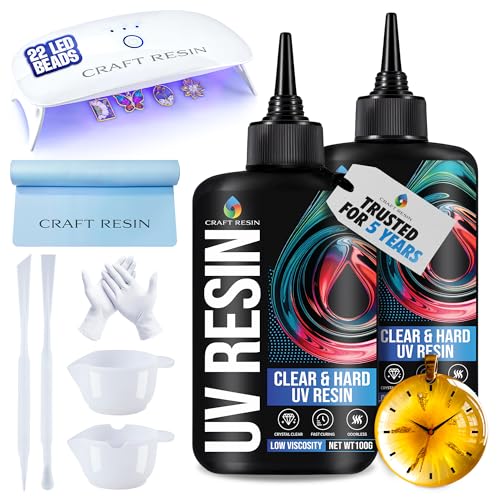
For crafters who want to move from idea to finished piece in under ten minutes, this UV resin kit streamlines the entire process. The 2000 cps low-viscosity resin flows into detailed bezels and silicone molds with minimal bubble entrapment, and the included 36W, 22-LED lamp cures small projects in one to three minutes. Users report a glass-like, non-tacky surface that resists yellowing over repeated UV exposure.
The hard-type formula hits Shore 85D hardness with less than 2 percent shrinkage, which means your cast earrings and charms retain their intended dimensions. The kit comes with mixing cups, sticks, and gloves, so beginners have everything needed for first pours. The resin cures clear even under heavy glitter or pigment loads, provided the layer stays under 6 mm depth.
Because UV light must penetrate the full resin layer, thick pours will remain soft at the bottom. The kit is best suited for small items like keychains, pendants, and earring shapes. The lamp is compact and draws power via USB, limiting its output for larger projects like coasters without multiple positioning passes.
Why it’s great
- Fast one to three minute cure under included 36W LED lamp
- Low viscosity flows into fine mold details with fewer bubbles
- High glass-like finish with no tackiness after cure
Good to know
- Unsuitable for thick pours over 6 mm per layer
- Requires a UV lamp — cannot be used without it
- USB-powered lamp limits output for larger pieces
3. KISREL UV Resin Jewelry Making Kit
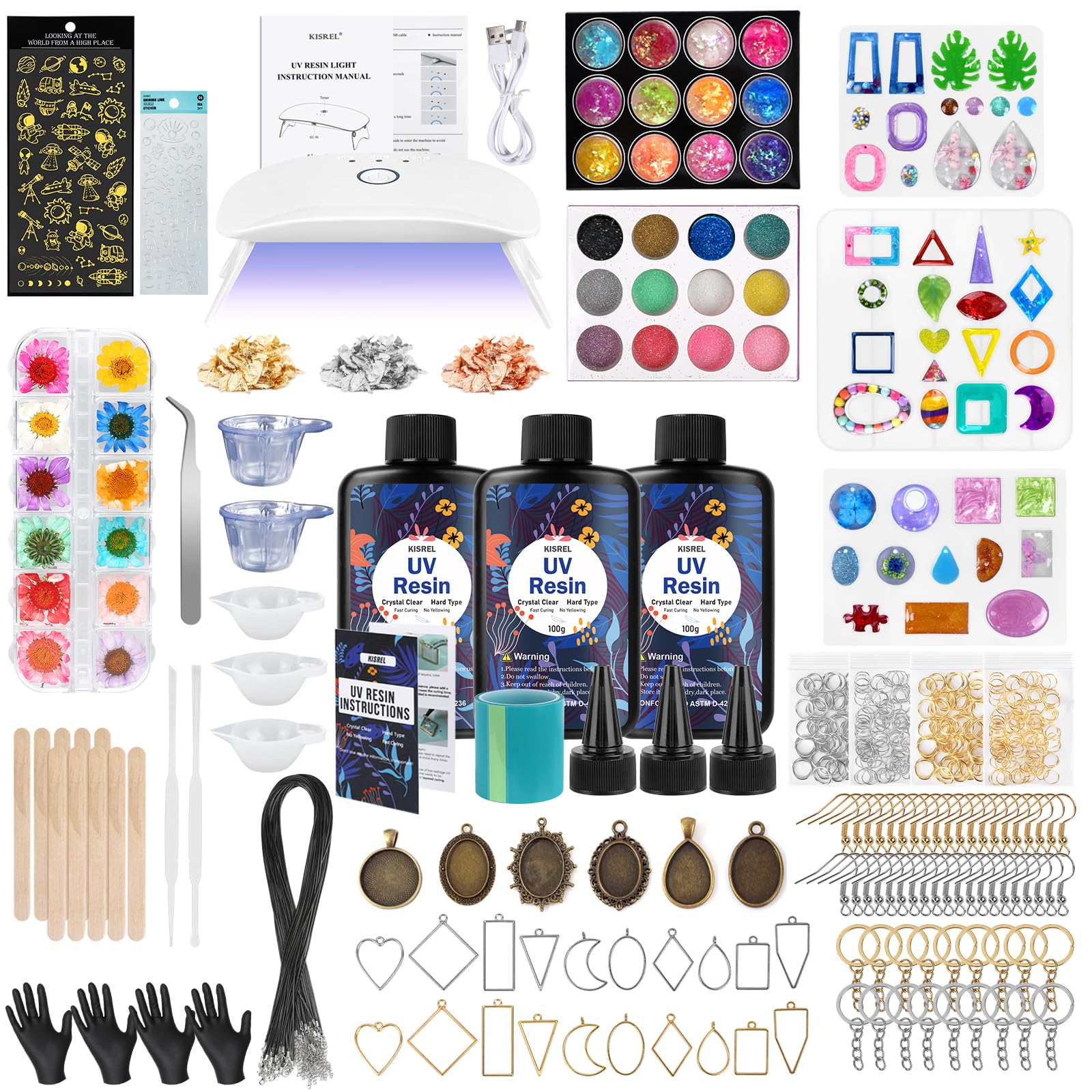
This comprehensive starter kit from KISREL is built for beginners who want to experiment with UV resin casting without buying twenty separate items. The set includes 300 grams of crystal-clear resin, an upgraded 12W lamp with eight UV beads, three silicone molds, twelve colors of glitter, dried flowers, gold foil, metal bezels, cords, and tools. The resin cures hard and clear in one to three minutes under the dedicated lamp.
The inclusion of reusable silicone molds reduces waste, and the rich assortment of fillers — from cellophane paper to pressed flowers — gives beginners immediate creative range. Customer feedback highlights that the resin works well for thin layers and heavy pigment loads, curing with no sticky residue. The USB-C interface on the lamp makes it convenient for portable use at a workshop or desk.
The included lamp delivers only 12W, which is less powerful than the 36W lamp in dedicated UV resin kits. For faster, deeper cures, you may eventually want to upgrade the light source. Some users report that mica powder leaves the underside wet if the layer is too thick; liquid pigment or alcohol ink yields better results.
Why it’s great
- Complete all-in-one kit with resin, lamp, molds, and fillers
- Reusable silicone molds reduce material waste
- USB-C lamp works on the go
Good to know
- 12W lamp is less powerful than premium 36W alternatives
- Mica powder may leave wet spots in thick layers
- No liquid pigments included in the set
4. B7000 Jewelry Glue

B7000 jewelry glue bridges the gap between rigid epoxy and flexible craft adhesive. Its gel consistency stays where placed without running into adjacent crevices, and the precision needle tip on the 2 fl oz tube allows single-drop control for attaching small rhinestones, pearls, or metal findings. The formula dries transparent with high elasticity — you can stretch the cured glue slightly without it fracturing, which matters for earrings or bracelet links that bend during wear.
Users consistently report the bond is strong enough for permanent jewelry repairs while remaining flexible enough to absorb daily handling. The capped pin inside the lid prevents the nozzle from clogging between uses, a common frustration with tube adhesives. The glue is formulated to be non-irritating and non-corrosive to common jewelry metals, reducing the risk of tarnish or discoloration.
The full cure takes about 24 hours, and during that time the bond is still adjustable, which can be helpful for positioning. The gel is thicker than liquid epoxies, so it will not flow into hairline cracks or deeply porous surfaces without some pressure. For very tight micro-setting work, a thinner adhesive may be easier to maneuver.
Why it’s great
- Flexible bond resists fracturing under bending stress
- Precision needle tip for clean, single-drop application
- Non-corrosive and low-odor formulation
Good to know
- Thick gel does not flow into hairline cracks
- Full 24-hour cure before final strength
- May require clamping or tape hold during setup
5. E6000 Jewelry and Bead Adhesive Bundle
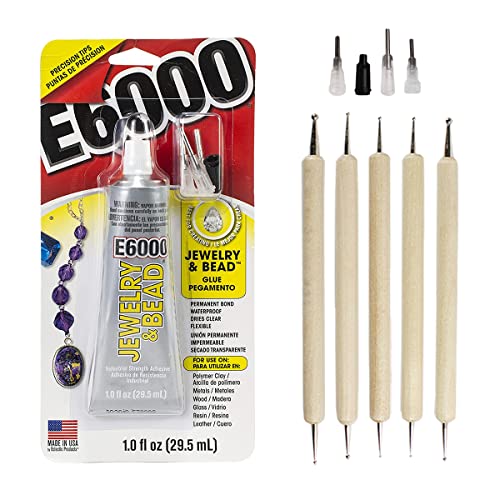
The E6000 Jewelry and Bead Adhesive bundle brings the well-known industrial strength of E6000 into a jewelry-specific format. The kit includes a 1 fl oz tube plus four precision applicator tips and five wooden nail dotting tools, giving you the control to place tiny dots on sequins, beads, and metal findings. The formula bonds porous materials like leather, wood, and polymer clay to metal surfaces with a waterproof bond that remains secure after wet exposure.
Users praise the durability — the glue holds heavy shell jewelry components that lesser adhesives could not support. The applicator tips attach directly to the tube nozzle, letting you switch between broad coverage and pinpoint placement without a separate brush. The dotting tools double as mixing sticks for epoxy or acrylic paints, adding utility beyond gluing.
The strong chemical odor requires good ventilation during application, and the paste-like consistency can be difficult to squeeze out of the tube, especially when the tube is new and fully filled. Some users also note the cap can be tricky to align for re-sealing. The bond remains flexible after cure, which is fine for fabric and leather but may lack the rigid strength needed for heavy metal-to-metal surface joints.
Why it’s great
- Strong waterproof bond for porous materials like leather and wood
- Four precision applicator tips allow pinpoint placement
- Includes dotting tools for mixing and application
Good to know
- Strong chemical odor — use only in ventilated areas
- Paste consistency is hard to squeeze from a full tube
- Cap alignment can be tricky for proper sealing
6. The Beadsmith Clear Precision Cement
When your project demands placing adhesive in a space smaller than a grain of rice, the Beadsmith Clear Precision Cement delivers. Its built-in fine-tipped applicator deposits a controlled micro-drop that stays where applied — no wicking along adjacent surfaces. This is the primary tool for sealing knots inside beads, securing watch crystals, or reinforcing jump rings on delicate chains.
The cement dries transparent and remains slightly flexible rather than rock-hard, reducing the risk of cracking when the jewelry flexes. Users report good adherence to glass, metal, ceramic, and painted surfaces, making it versatile for mixed-material repairs. The non-fusing formula means accidental skin contact does not bond fingers together, and excess adhesive wipes off easily with rubbing alcohol before it cures.
The cap is a common pain point — several users find it difficult to re-seal properly, which risks the tip drying out between uses. At 9 ml, the tube is small, and the price per volume is higher than bulk options, but for the precision it enables, experienced beaders consider it essential. The full waterproof cure takes up to 24 hours, so immediate water exposure should be avoided.
Why it’s great
- Built-in pinpoint applicator for sub-millimeter accuracy
- Dries clear and flexible — resists cracking under movement
- Non-fusing formula won’t bond skin together
Good to know
- Cap seal is tricky to reattach properly
- Small 9 ml volume offers lower value per ounce
- Full cure time of 24 hours before waterproof hold
7. G-S Hypo Cement (3 Pack)
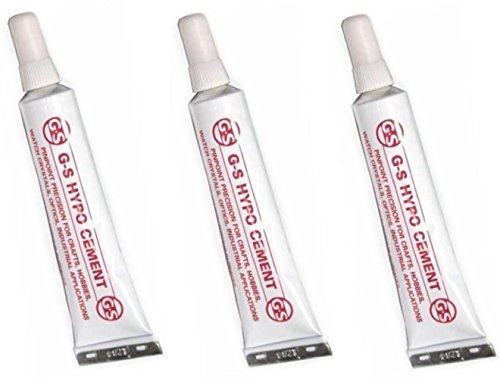
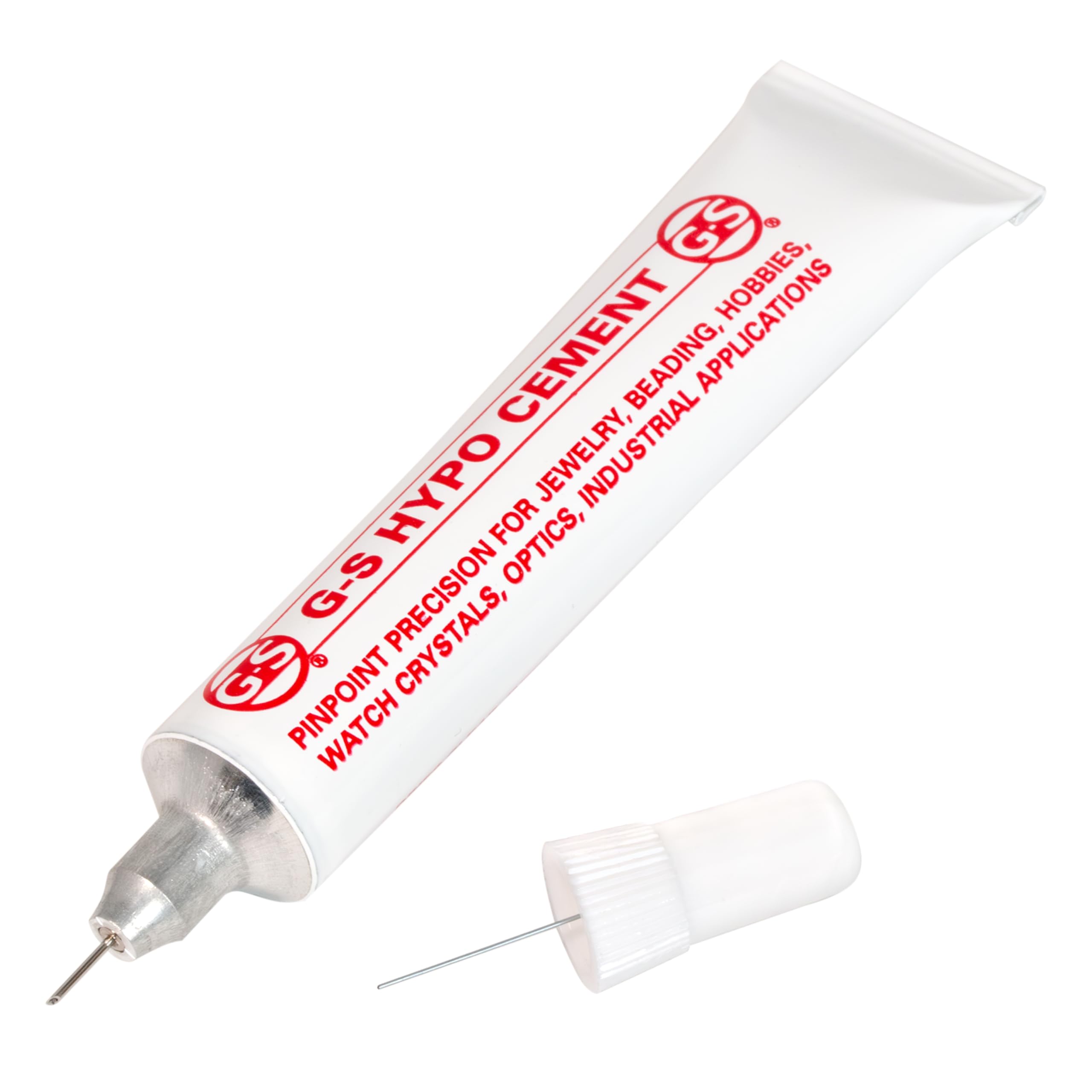
G-S Hypo Cement has been a staple in professional jewelry workshops for years, and this three-pack ensures you always have a fresh tube ready. The needle-thin applicator tip fits into the smallest bead holes for securing knots and attaching pearls, while the slow-curing formula gives you time to adjust components before the bond sets. This is particularly useful for multi-element assembly where you need to position several pieces before the adhesive grabs.
The cement dries clear and does not shrink as it cures, so there is no sunken look around a repair joint. Customers appreciate that the tip stays clear with the included top cap — as long as the cap is properly aligned and sealed. The slow cure means the bond remains repositionable for several minutes, a distinct advantage over instant-set cyanoacrylates that lock in place immediately.
Durability of the tube itself is a known weak point — many users report that the aluminum tube cracks or leaks at the crimped seal before the cement is fully used, typically when about a quarter of the adhesive remains. The slow cure also means the piece must stay undisturbed for hours, which can be inconvenient for fast repairs. The cement is best for internal bead applications and small surface bonds, not for heavy load-bearing joints.
Why it’s great
- Needle-thin tip fits into the smallest bead holes
- Slow-cure formula allows repositioning of components
- Dries clear with zero shrinkage for professional finish
Good to know
- Tube crimps tend to leak when about 25% remains
- Slow cure requires hours of undisturbed setting time
- Not suitable for heavy load-bearing joints
FAQ
Can I use super glue for jewelry making or is epoxy better?
How do I prevent bubbles in UV resin when casting jewelry?
What is the best adhesive for gluing pearls to metal findings?
How do I clean excess jewelry glue from a finished piece?
Final Thoughts: The Verdict
For most users, the adhesive for jewelry making winner is the Vigor Jeweler’s Epoxy 2 Step because its structural bond strength matches soldering for metal and stone repairs while remaining fully waterproof and crystal-clear. If you want instant project turnaround with a glossy casting finish, grab the CRAFT RESIN UV Resin Kit. And for precision beadwork where a single misplaced drop ruins the look, nothing beats the Beadsmith Clear Precision Cement.