
Our readers keep the lights on and the weekend projects moving. As an Amazon Associate, I earn from qualifying purchases.
Whether you’re dealing with a single popped tile in the kitchen or a cluster of hollow spots across an old ceramic floor, the right repair adhesive saves the cost and labor of a full tear-out. The challenge is choosing a formula that flows deep into voids, bonds permanently, and won’t crack under foot traffic or temperature shifts.
I’m Rikta — the co-founder and writer behind FitlyFast. My analysis focuses on comparing the chemical makeup, viscosity, and application methods of each adhesive to determine which one solves the most common loose-tile scenarios without introducing new problems.
After evaluating formulations from low-viscosity injection glues to heavy-duty acrylics, this guide identifies the most reliable adhesive for peel and stick tiles based on bond strength, dry time, and ease of use for DIY homeowners.
How To Choose The Best Adhesive For Peel And Stick Tiles
Selecting the right adhesive for loose tiles depends on the substrate material, the size of the void, and whether you’re working on a floor or a vertical wall. Using the wrong consistency or cure time can result in a weak bond that fails under daily use.
Viscosity and Injection Method
Thin, watery adhesives flow easily into narrow gaps and under hollow tiles, making them ideal for injection repair through drilled grout lines. Thicker formulas work better for bonding replacement tiles onto surfaces where you can spread the adhesive in a pattern. Choose a product that includes or supports a precision needle tip for controlled injection into tight spaces.
Substrate Compatibility
Concrete, plywood, cement board, and existing vinyl all require different bonding characteristics. Most high-performance tile adhesives are engineered for concrete and cement subfloors, while some multi-surface formulas also bond to wood, metal, and stone without priming. Verify compatibility with your specific floor material before purchase.
Cure Time and Temperature Range
Full cure typically takes 24 hours, but some formulas achieve initial grab in minutes. Temperature affects viscosity and curing—water-based acrylics perform best above 41°F, while copolymer blends remain stable in cooler conditions. If you’re working in a basement or unheated space, check the product’s minimum application temperature.
Quick Comparison
On smaller screens, swipe sideways to see the full table.
| Model | Category | Best For | Key Spec | Amazon |
|---|---|---|---|---|
| Fix-A-Floor PRO Pack | Premium Kit | Precision injection repair | Two 10.1 oz tubes + syringe set | Amazon |
| MusselBound Adhesive Mat | Mortar Alternative | Peel-and-stick wall tile installation | 15 sq ft per roll, 12″ wide | Amazon |
| ROBERTS Universal Adhesive | Bulk Adhesive | Large-format LVT/LVP installation | 1 gallon pail, solvent-free | Amazon |
| Injectafix Tile Repair Kit | Injection Kit | Loose LVT and laminate repairs | 1.8mm stainless steel tip | Amazon |
| YKF Heavy Duty Adhesive | Squeeze Bottle | Small DIY wall and floor repairs | Non-sag acrylic, 10.5 oz | Amazon |
| Fix-A-Floor Original | Caulk Gun Tube | Single-tile hollow floor repair | CoPolymer formula, 10.1 oz | Amazon |
| Art3d Adhesive Setting Mat | Double-Sided Tape | Peel-and-stick tile backing | 12″ x 360″ roll, 0.01″ thick | Amazon |
In‑Depth Reviews
1. Fix-A-Floor Micro Syringe Injector PRO Pack
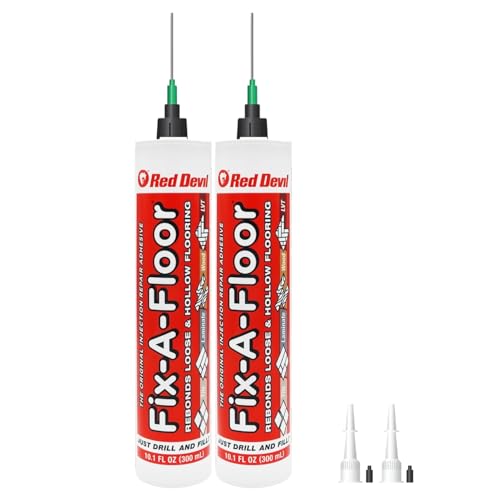
The PRO Pack elevates the standard Fix-A-Floor formula with two micro syringe adapters, 14-gauge blunt steel needles, and two 2.5mm diamond drill bits. This turns the adhesive into a controlled injection system that reaches deep under hollow tiles without flooding the grout lines.
The copolymer liquid flows like milk during application and cures into a permanent, water-resistant bond within 24 hours. Non-toxic and self-leveling, it works on ceramic, porcelain, marble, stone, and wood subfloors. Many users reported solid results on concrete slabs after hurricane damage, with the tiles gripping firmly after a single cure cycle.
The included drill bits are not carbide-tipped and may struggle on hard porcelain or thick concrete—owners recommend swapping them for a quality masonry bit. The tube can leak from the back if used with a standard caulk gun, though the syringe system largely solves that. Proudly made in the USA.
Why it’s great
- Precision syringes allow clean, targeted injection into voids
- Copolymer formula bonds permanently to concrete, wood, and stone
- Dries clear and non-toxic for indoor use
Good to know
- Included drill bits are not carbide; upgrade for hard tile
- Tube can leak from the back if not using recommended caulk gun
2. MusselBound Adhesive Tile Mat with Spacers
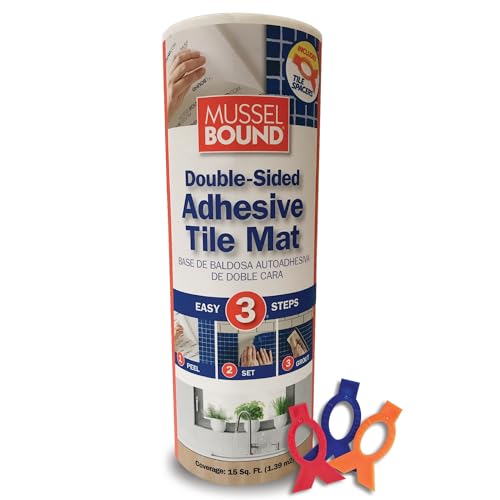
MusselBound replaces traditional thin-set mortar with a double-sided adhesive mat that sticks real wall tile directly to drywall, cement board, or painted surfaces—no mixing, no trowels, no drying time before grouting. Each 12-inch by 15-foot roll covers 15 square feet and includes custom-engineered spacers for uniform 1/16-, 1/32-, and 1/8-inch gaps.
The bond is immediate and strong enough to hold ceramic, marble, and glass tiles up to 1 square foot. Users consistently report that tiles stay in place without slipping, and the mat can be repositioned slightly during installation if applied gently. It works especially well for backsplashes, laundry rooms, and decorative wall projects where mortar cleanup would be a hassle.
MusselBound is not recommended for submerged applications like shower pans, and the walls must be exceptionally clean and dry for the mat to grab. The price per roll sits at a premium, but the labor savings and lack of mess make it appealing for weekend DIYers.
Why it’s great
- No mortar mixing, troweling, or cleanup required
- Strong initial grab holds tiles securely during installation
- Can be removed without damaging drywall underneath
Good to know
- Not intended for shower floors or fully submerged areas
- Requires perfectly clean, dry walls for maximum adhesion
3. ROBERTS Universal Resilient Flooring Adhesive

ROBERTS 7350 is a pressure-sensitive acrylic latex adhesive designed for large-scale resilient flooring projects, including luxury vinyl tile, vinyl composition tile, and vinyl-backed carpet. It comes in a 1-gallon pail and delivers high initial grab with a long open time for repositioning planks.
The formula is solvent-free and powered by Microban antimicrobial protection to resist stain-causing degradation. Users report strong bonding on concrete, plywood, and even existing well-bonded vinyl, with the adhesive drying clear to allow chalk-line visibility during layout. One motorcycle trailer owner reported no lifting after six months of exposure to snow, mud, and rain.
Cleanup requires immediate action—dried adhesive is difficult to remove. The pail lid can leak during shipping if not sealed tightly, so taping the lid before transport is wise. It is not designed for injection repairs; this is a trowel-applied adhesive for full-floor installations.
Why it’s great
- Long open time allows careful plank alignment
- Microban protection resists mold and mildew
- Dries clear to preserve layout chalk lines
Good to know
- Must be cleaned immediately; dried adhesive is stubborn
- Pail lid can leak during shipping if not sealed
4. Floor-Fix Pro Injectafix Tile Repair Kit
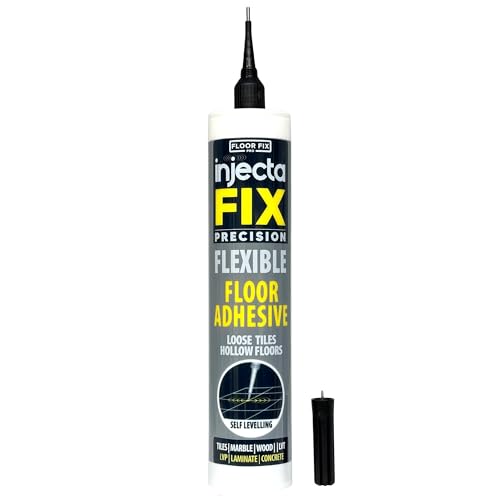
Injectafix is a low-viscosity structural adhesive engineered specifically to flow beneath loose tiles without the need for removal. The kit includes a 1.8mm stainless steel precision tip that fits into drilled grout holes, delivering the copolymer adhesive directly into the void.
The custom modified co-polymer dries clear and cures into a permanent, water-resistant bond in 24-72 hours. Users report excellent results on LVT and laminate floors, filling soft spots and eliminating creaking with about three locations per tube. The winner of the 2025 Gold Innovation Award, it is designed by Floor-Fix Pro for ceramic, stone, laminate, wood, and engineered flooring.
Some batches have inconsistent viscosity—ranging from watery to Elmer’s-glue thickness—though users noted no difference in final bond performance. The precision tip can fall out or get stuck mid-job, so keeping the original tube tip as backup is recommended. The second tube purchased may not include the needle tip, so order with care.
Why it’s great
- Stainless steel needle allows precise injection into small holes
- Low viscosity flows deep under LVT, laminate, and ceramic tiles
- Dries clear and cures to a water-resistant bond
Good to know
- Inconsistent viscosity between tubes reported
- Injection tip may detach or get stuck during use
5. YKF Heavy Duty Tile Adhesive & Repair Glue
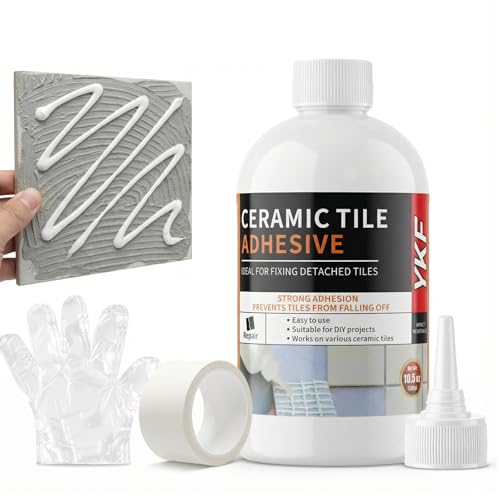
YKF delivers a professional-grade acrylic polymer adhesive in a squeeze bottle that requires no caulking gun—ideal for small repairs where setting up mortar would be overkill. The non-sag consistency holds firm on vertical wall tiles without sliding, making it perfect for backsplash and shower surround fixes.
The formula achieves initial grab in 3-5 minutes with press-and-hold, curing to a tough yet flexible bond that withstands daily foot traffic. It is water-resistant for humid bathrooms and kitchens, though not rated for submerged use. The kit includes a precision nozzle for injection into hollows and a pair of protective gloves.
Users praise the ease of use and strong bond for re-attaching tiles on outdoor fountains and indoor floors. One caution: the adhesive dries yellow, so over-application that seeps from tile edges can create unattractive discoloration. The water-based formula can freeze during winter shipping, so thaw fully before use.
Why it’s great
- Squeeze bottle application—no caulking gun needed
- Non-sag acrylic holds vertical tiles without sliding
- Initial grab in 3-5 minutes speeds up small repairs
Good to know
- Dries yellow; excess can discolor grout and tile edges
- Water-based formula may freeze if shipped in winter
6. Fix-A-Floor Original Loose Tile Repair Adhesive
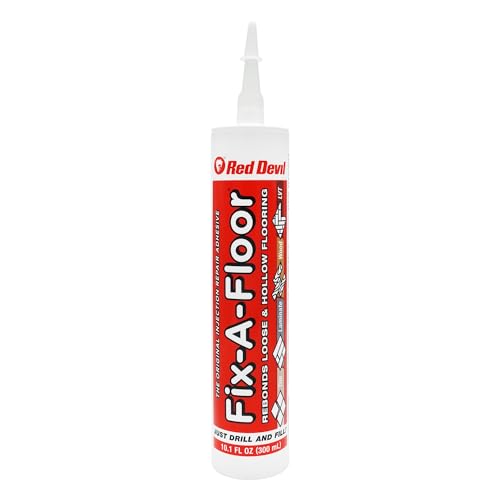
The original Fix-A-Floor tube adhesive is a tried-and-true solution for rebonding loose and hollow tiles without removal. The extra-strength copolymer formula injects through drilled holes in the grout and fills voids underneath, curing to a permanent bond within 24 hours.
Its trimmable nozzle lets the user cut openings from 2.5mm up to 1/4 inch, making it compatible with different grout line widths. The adhesive is compatible with all subfloor materials including concrete, plywood, and cement board. Users report excellent results on porcelain, ceramic, and even creaky wood floors.
The liquid is very fluid and can leak from the back of the tube if used with skeleton-style or high-thrust caulk guns—Red Devil 3935, 3936, or 3988 are recommended. The needle attachment included in some versions has been known to burst under pressure, so using the standard nozzle and drilling pilot holes is a more reliable method.
Why it’s great
- Extra-strength copolymer bonds porcelain, ceramic, and stone
- Trimmable nozzle fits 2.5mm to 1/4-inch grout lines
- Non-toxic and self-leveling for even void filling
Good to know
- Requires specific caulk gun model to prevent back leakage
- Needle attachment can burst if used with high pressure
7. Art3d Adhesive Tile Setting Mat

Art3d offers a clear double-sided adhesive sheet made from unplasticized PVC, designed as a setting mat for peel-and-stick tiles and non-adhesive tile installations. The 12-inch by 360-inch roll comes with a plastic scraper and a box cutter for trimming.
The mat provides strong adhesion to hard-to-stick surfaces like orange-peel texture walls and glossy painted walls. Users find it indispensable for DIY backsplash projects—it adds an extra bonding layer that prevents peel-and-stick tiles from lifting over time. It is also heat- and water-resistant, though not designed for full submersion.
The adhesion is immediate and permanent; once the mat touches the surface, repositioning is nearly impossible without damaging the paint or drywall. The thin 0.01-inch thickness means surface imperfections may telegraph through, so prepare the wall carefully before application.
Why it’s great
- Strong adhesion works on textured and glossy surfaces
- Heat- and water-resistant for backsplash and bathroom use
- Residue-free removal from most smooth surfaces
Good to know
- Not repositionable—requires precise placement
- Thin material may not hide wall imperfections
FAQ
Can I use silicone caulk to fix loose floor tiles?
How many loose tiles can one tube of injection adhesive fix?
Do I need to remove grout before using injection adhesive?
Can I use peel-and-stick tile adhesive on concrete basement floors?
Will adhesive injection fix a tile that sounds hollow but is not yet loose?
How do I clean up excess adhesive before it dries?
Final Thoughts: The Verdict
For most users, the adhesive for peel and stick tiles winner is the Fix-A-Floor Micro Syringe Injector PRO Pack because its precision syringe system delivers controlled injection into deep voids, and the two-tube kit covers multiple tiles without a second purchase. If you want a mess-free wall tile installation without mortar, grab the MusselBound Adhesive Tile Mat. And for budget-friendly large-format flooring projects, nothing beats the ROBERTS Universal Resilient Flooring Adhesive in terms of coverage per dollar.