
Our readers keep the lights on and the weekend projects moving. As an Amazon Associate, I earn from qualifying purchases.
Bonding slick glass to flexible plastic is a specific engineering challenge many DIYers underestimate. The wrong adhesive beads up, turns cloudy, or snaps apart the first time the joint faces any stress or temperature swing. Success demands an adhesive that can chemically lock onto two radically different surface energy levels at once.
I’m Rikta — the co-founder and writer behind FitlyFast. I’ve spent hundreds of hours researching and cross-referencing adhesive chemistry, surface prep techniques, and real-world failure modes to build this guide around the specific demands of plastic-to-glass bonding.
After comparing cure times, bond strength, waterproof ratings, and application convenience across seven top contenders, I’ve identified the very best adhesive for plastic to glass for every common household, workshop, and repair scenario.
How To Choose The Best Adhesive For Plastic To Glass
Not every glue sticks to both plastic and glass equally. The key is matching the adhesive chemistry to the type of plastic you are bonding — polypropylene and polyethylene are notoriously difficult while acrylic and PVC accept many glues readily. Look for adhesives that list both plastic and glass as compatible materials on the label.
Bond Strength vs. Flexibility
Glass will not flex, but many plastics will. A rigid cyanoacrylate bond that works perfectly between two glass surfaces may shatter when the plastic part expands or bends under load. For applications where the plastic piece may flex, a hybrid or neoprene-based adhesive with some elasticity is safer than a brittle superglue.
Cure Time and Working Window
Fast-setting glues lock you into alignment in seconds, which is ideal for small repairs but unforgiving on larger surfaces. Slower-curing construction adhesives offer repositionability for up to 30 minutes, making them better for bonding larger panels or components where perfect alignment matters.
Water and Temperature Resistance
If the bond will face moisture, humidity, or dishwasher cycles, check specifically for waterproof claims. Some glues labeled water-resistant may fail under sustained immersion. Similarly, outdoor or automotive applications require adhesives rated to handle temperature swings without losing grip or turning brittle.
Quick Comparison
On smaller screens, swipe sideways to see the full table.
| Model | Category | Best For | Key Spec | Amazon |
|---|---|---|---|---|
| Gorilla Max Strength Construction Adhesive | Hybrid | Heavy outdoor bonds | 100% waterproof, 30 min reposition | Amazon |
| Loctite Glass Glue 6-Pack | Cyanoacrylate | Small glass repair | Dishwasher safe, 2g tubes | Amazon |
| Adhesive Guru CA Glue with Activator | Cyanoacrylate Kit | Rapid bonding projects | Sets in 3 seconds | Amazon |
| S-18 All-Purpose Adhesive | Neoprene | Flexible, waterproof bonds | Heat resistant, 4oz can | Amazon |
| Loctite Vinyl, Plastic, and Fabric Adhesive | Paste | Vinyl/fabric to glass | Dries clear, 24hr full cure | Amazon |
| Berkland Acrylic Bonding Cement | Acrylic Cement | Plexiglass sheet bonding | Water-thin capillary flow | Amazon |
| OCEA CBONE Transparent Waterproof Coating | Sealant | Secondary waterproof layer | Invisible finish, 17.5oz | Amazon |
In‑Depth Reviews
1. Gorilla Max Strength Construction Adhesive
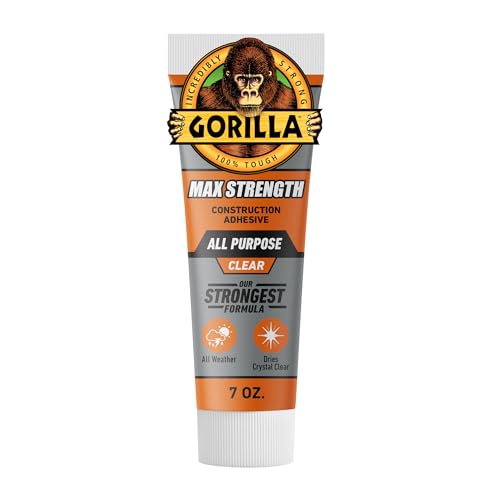
Gorilla’s hybrid formula delivers the most versatile plastic-to-glass bond in this lineup. It is 100% waterproof and works even when applied to wet surfaces, making it the clear choice for tub surrounds, shower doors, outdoor fixtures, or any joint exposed to moisture. The paste consistency is thick enough to bridge gaps between uneven surfaces without sagging on vertical applications.
What sets this adhesive apart is the 30-minute repositioning window. Unlike instant cyanoacrylates that lock you into place immediately, this gives you time to align a glass panel or plastic trim piece perfectly. It dries crystal clear, so the bond line remains invisible on transparent materials. Users report the cured bond holds strong even under car interior heat and outdoor temperature swings.
The main trade-off is full cure time: 24 hours before the bond reaches maximum strength, and the paste is quite sticky to handle without gloves. Cleanup requires rubbing alcohol. For indoor and outdoor jobs where waterproof reliability and adjustability matter more than speed, this is the premium pick.
Why it’s great
- True waterproof performance even on wet surfaces
- 30-minute repositionable working time for precise alignment
- Dries crystal clear with paintable finish after curing
Good to know
- Requires full 24-hour cure before bond reaches peak strength
- Very sticky and messy to remove from skin if not careful
2. Loctite Glass Glue 6-Pack
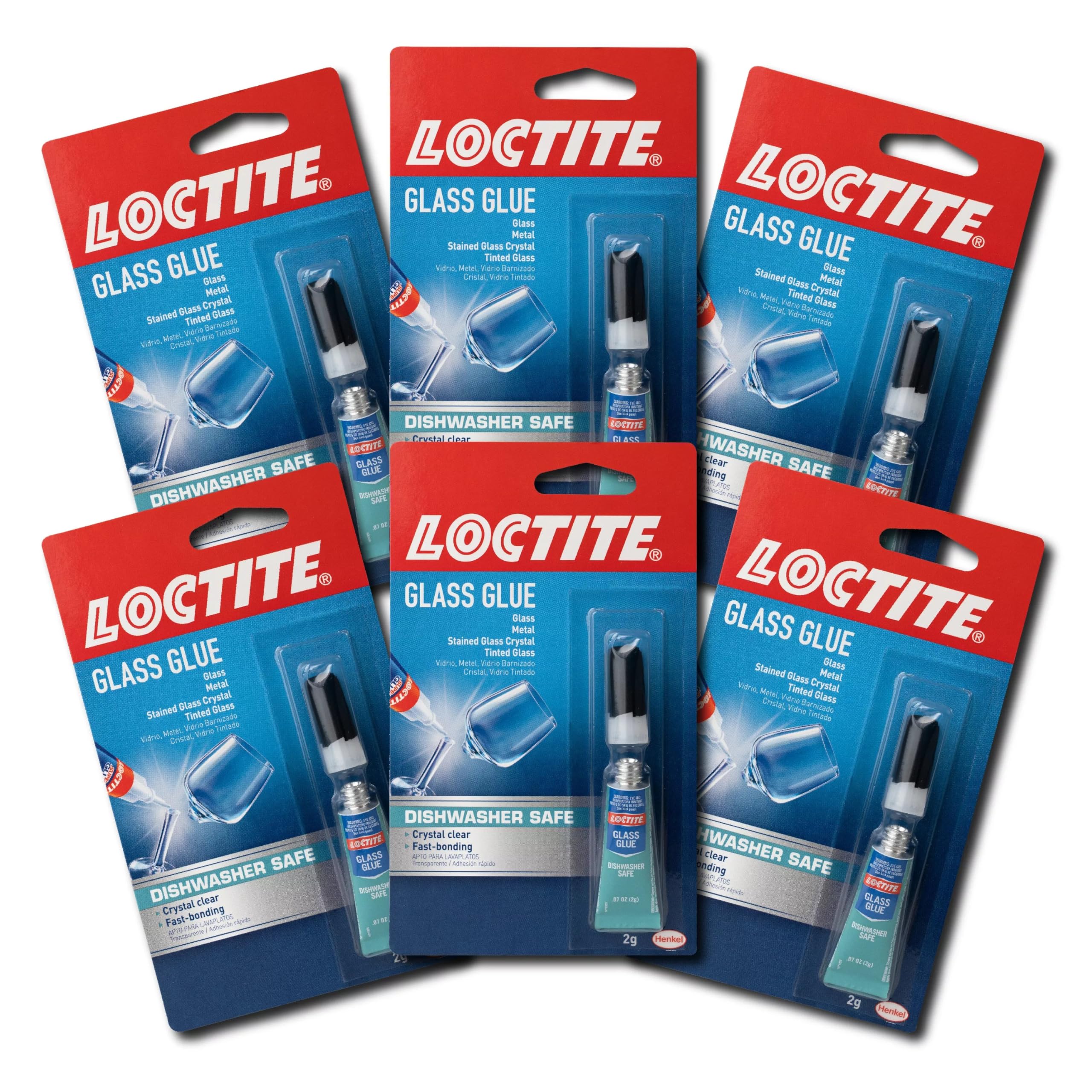
Loctite’s dedicated glass formula is specifically engineered for bonding glass to itself, and to certain plastics and metals. The cyanoacrylate formulation dries completely clear and colorless, which is critical for repairing glassware, crystal stems, or decorative items where the bond line must be invisible. Users report successful repairs on plate glass tabletops and glass artwork.
This glue bonds without clamping, which simplifies small repairs. It is heat resistant and dishwasher safe, so repaired glass items can survive the dishwasher cycle after full cure. The six 2-gram tube pack provides multiple single-use applications without the risk of one tube drying out before you finish the project — a common pain point with single large tubes of CA glue.
It is not recommended for exterior or outdoor applications, and the bonding window is short — you must align parts within seconds. For indoor glass repair jobs where optical clarity and dishwasher safety are priorities, this is a focused solution that outperforms general-purpose glues on glass surfaces.
Why it’s great
- Dishwasher safe after full cure for repaired glassware
- Six individually sealed tubes prevent waste from dried-out nozzles
- Dries colorless — nearly invisible on clear glass repairs
Good to know
- Not recommended for outdoor or exterior applications
- Fast grab time means zero repositionability
3. Adhesive Guru CA Glue with Activator

The Adhesive Guru kit combines a cyanoacrylate glue with a separate aerosol activator spray to achieve bond times as fast as 3 seconds. This two-part system is ideal when you need to hold parts together quickly without clamps or extended pressure. The activator spray delivers a fine mist, and the glue itself is thick enough to avoid running on vertical surfaces.
Users report exceptional bond strength on wood and ceramic, and the manufacturer claims compatibility with most plastics, glass, rubber, leather, and aluminum. The kit is a strong mid-range option for workshop repairs, 3D print bonding, and hobby work where speed matters. It is also weather resistant, making it suitable for indoor and outdoor projects.
Some users note the bottle tip clogs if not cleaned after use, and the aerosol spray pattern can cover a wider area than ideal for small precision pieces. The glue sets so fast that alignment must be perfect on the first attempt. For experienced users who need instant bonding without clamping, this kit delivers professional-grade speed.
Why it’s great
- Full bond in as little as 3 seconds with activator spray
- Versatile on many materials including plastic, glass, and metal
- Weather resistant for indoor and outdoor use
Good to know
- Bottle tip clogs easily if not cleaned promptly after use
- Spray pattern may overspray on very small repair areas
4. S-18 All-Purpose Adhesive
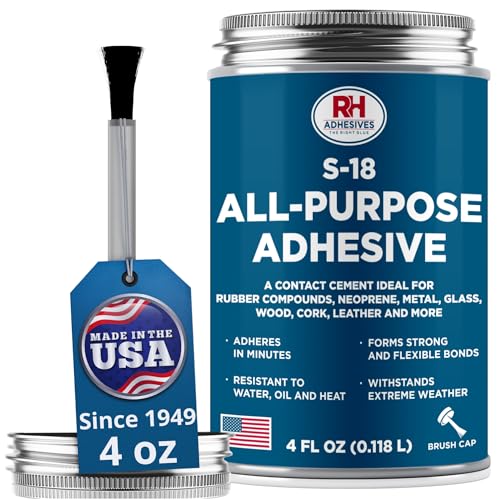
The S-18 from RH Adhesives is a neoprene-based formula that offers something cyanoacrylates cannot: flexibility. This is critical when bonding plastic components that will flex, vibrate, or expand under temperature changes. The adhesive dries to form a strong yet slightly elastic film that resists peel forces, making it ideal for attaching neoprene, rubber, or flexible plastic to glass.
It is water resistant and heat resistant, with a 24-hour full cure time. Users have successfully bonded leather, foam, rubber mats, and various plastics with this glue. The 4-ounce can provides generous coverage for larger projects, and the adhesive maintains its integrity even outdoors in summer heat — though one user noted failure during heavy rain exposure, so it is best suited for indoor or sheltered outdoor use.
The solvent-based formula has a noticeable odor and requires proper ventilation during application. The open time is shorter than some construction adhesives, so parts need to be positioned soon after application. For flexible, peel-resistant bonds on non-porous materials, this American-made adhesive is a strong budget-friendly workhorse.
Why it’s great
- Flexible bond that resists peeling — ideal for plastic parts under tension
- Heat resistant for applications near engines or summer sunlight
- Large 4-ounce can provides great coverage per dollar
Good to know
- Solvent odor requires good ventilation during use
- Not fully waterproof — may fail under sustained heavy rain exposure
5. Loctite Vinyl, Plastic, and Fabric Adhesive

This Loctite paste adhesive is purpose-built for bonding flexible materials like vinyl, fabric, and plastic to surfaces such as glass and wood. It is the go-to option when you need to reattach a vinyl seat cover to a glass base, repair a fabric blind, or fix a plastic trim piece to a glass window. The paste consistency gives you some control over application and minimizes drips.
The adhesive dries clear and remains flexible, which prevents cracking when the fabric or plastic layer moves. Users have successfully repaired vinyl bar stools and reattached lawn mower seat padding with lasting results through an entire mowing season. The pack includes two tubes, providing backup for larger or multiple repairs.
The glue does string if you pull the nozzle away too quickly, so clean application requires a steady hand and immediate cleanup. Full cure takes 24 hours. For fabric-backed or flexible plastic-to-glass repairs where flexibility and clear drying are non-negotiable, this Loctite formulation is the correct specialist tool.
Why it’s great
- Remains flexible after curing, ideal for fabric and vinyl applications
- Dries clear for invisible bond lines on transparent materials
- Two-tube pack gives backup stock for progressive repairs
Good to know
- Strings easily if nozzle is pulled away too quickly
- Full 24-hour cure required before bond reaches maximum strength
6. Berkland Acrylic Bonding Cement
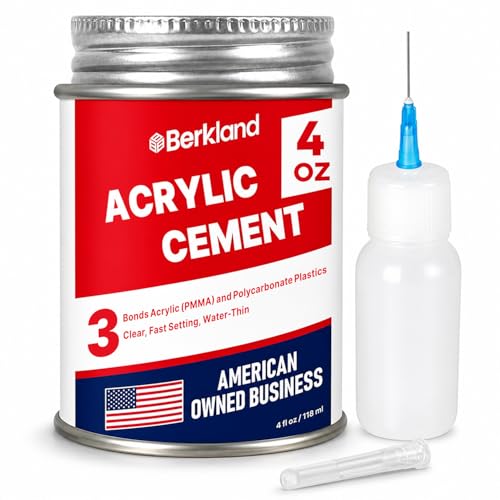
For bonding clear acrylic or plexiglass to glass, this Berkland cement is the specialist. The formula is water-thin, designed to flow into tight seams via capillary action — you apply it to the joint edge and it wicks inward, creating a seamless, crystal-clear bond. This is the same chemistry used in professional acrylic fabrication for display cases, signs, and aquariums.
The cement sets in minutes, but requires precise technique: apply sparingly or the excess can cause clouding or bubbling. The included applicator bottle with a needle tip provides controlled delivery for detailed work. Users report strong bonds on 3D-printed PLA parts and acrylic sheet joints, with bond strength exceeding the material itself.
This is not a general-purpose adhesive — it only works on thermoplastics like acrylic, polycarbonate, and some other plastics, and is not suitable for glass-to-glass bonding or mixed-material joints where one side is a non-thermoplastic. The container requires careful handling to prevent leakage. For dedicated acrylic sheet bonding projects, this cement produces professional, weld-like results.
Why it’s great
- Capillary action creates invisible, weld-like bonds on acrylic seams
- Fast setting in minutes for quick project turnover
- Precision needle applicator enables clean, controlled application
Good to know
- Works only on thermoplastics — not a general plastic-to-glass adhesive
- Water-thin consistency can cause bubbling if over-applied
7. OCEA CBONE Transparent Waterproof Coating

The OCEA CBONE coating serves a different role than the bonding adhesives above: it is a transparent waterproof sealant applied over a joint to protect an existing adhesive bond from moisture degradation. Brush or sponge it over a cured epoxy or CA glue joint on a skylight, window frame, or outdoor fixture to seal out rain and humidity without discoloring the surface.
Users report success sealing leaking skylights in heavy rain conditions, and the transparent formula leaves no visible residue. The 17.5-ounce container holds enough material to cover multiple medium-sized projects. It also works as a general waterproof coating on wood, fabric, and brick surfaces, adding versatility beyond just joint protection.
Quality control is a concern — some units arrive clumpy or solidified, likely from freezing during shipping, so inspect immediately upon arrival. It is also not a bonding agent itself, so it cannot substitute for a primary structural adhesive on a plastic-to-glass joint. Use it as a secondary moisture barrier over your primary bond for outdoor peace of mind.
Why it’s great
- Transparent finish preserves the look of the underlying repair
- Effective moisture seal for outdoor joints and skylight leaks
- Generous 17.5-ounce container for multiple application passes
Good to know
- Not a structural adhesive — must be applied over an existing cured bond
- Product can arrive clumpy if frozen during shipping transit
FAQ
How should I prepare a plastic surface for bonding to glass?
Can I use regular super glue for plastic to glass bonding?
Why does my adhesive turn white or cloudy on glass?
Is there an adhesive that bonds polyethylene or polypropylene to glass?
Final Thoughts: The Verdict
For most users, the adhesive for plastic to glass winner is the Gorilla Max Strength Construction Adhesive because it combines 100% waterproof performance, a 30-minute repositioning window, and the versatility to handle both indoor and outdoor mixed-material bonds with crystal-clear results. If you need lightning-fast 3-second bonding on small projects, grab the Adhesive Guru CA Glue with Activator. And for dedicated acrylic sheet fabrication to glass, nothing beats the capillary action precision of the Berkland Acrylic Bonding Cement.