
Our readers keep the lights on and the weekend projects moving. As an Amazon Associate, I earn from qualifying purchases.
Polyethylene (PE) is the notorious rebel of the plastics world — nothing sticks to it without the right chemistry. Its low surface energy repels most glues, leaving DIYers and pros wrestling with joints that pop loose, tapes that lift, and repairs that fail. The trick is selecting a formulation engineered to wet out that waxy surface and form a true structural bond.
I’m Rikta — the co-founder and writer behind FitlyFast. I spend my time analyzing chemical bonding mechanisms, surface energy ratings, and ASTM peel strength data to separate the few adhesives that genuinely work on polyolefins from the many that just claim to.
Whether you are repairing a greenhouse panel, mounting a plastic fixture, or splicing a polyethylene tarp, knowing which adhesive will actually grab and hold saves time, frustration, and material waste — this guide to the best adhesive for polyethylene breaks down exactly what makes each formula effective on that tricky low-energy substrate.
How To Choose The Best Adhesive For Polyethylene
Polyethylene’s low surface energy (around 31 dynes/cm) makes it chemically non-stick. Standard glues bead up and pop off because they can’t form the molecular entanglement needed for strength. The key is to select a formula designed to overcome this — either by chemically etching the surface, using a flexible base that expands and contracts with the substrate, or curing via UV to lock in crosslinks before the bond line pulls apart.
Flexibility vs. Rigidity
A rigid bond on a flexible polyethylene sheet or pipe will shatter under thermal expansion or vibration. Toughened epoxies like G/flex and contact cements like HH-66 retain some flex, making them ideal for outdoor equipment, inflatables, and marine repairs. For rigid acrylic or polycarbonate over PE, a thin solvent cement works better.
Cure Mechanism and Speed
Solvent-weld cements (the PVC and acrylic types) fuse plastic chemically, requiring no clamp but needing precise alignment within seconds. UV-cure resins like Solarez give you open working time and harden on command in sunlight. Two-part epoxies offer the longest working window but demand thorough mixing and a full 24-hour cure.
Quick Comparison
On smaller screens, swipe sideways to see the full table.
| Model | Category | Best For | Key Spec | Amazon |
|---|---|---|---|---|
| G/flex 655-1 | Toughened Epoxy | Structural laminates & dissimilar materials | Flexible cure; 24 hr set | Amazon |
| Titebond Instant Bond Thick | Cyanoacrylate | Small repairs needing ultra-fast grab | Sets in 18 seconds | Amazon |
| ARVYNE PVC Cement | Solvent Weld | PVC pipe & rigid inflatable repairs | Fast-dry; up to 6″ pipe | Amazon |
| HH-66 Vinyl Cement | Contact Cement | Flexible vinyl tarps & pool liners | Flexible from -30°F to 150°F | Amazon |
| TapeManBlue Greenhouse Tape | PE Film Tape | Poly sheet repair & greenhouse patching | 3 mil PE tape; 108 ft roll | Amazon |
| Berkland Acrylic Cement | Solvent Cement | Acrylic-to-acrylic precision bonding | Water-thin; capillary action | Amazon |
| Solarez Epoxy Weenie Kit | UV-Cure Resin | Small dings & fast field repairs | Cures in 3 min in sunlight | Amazon |
In‑Depth Reviews
1. G/flex 655-1 Toughened Epoxy
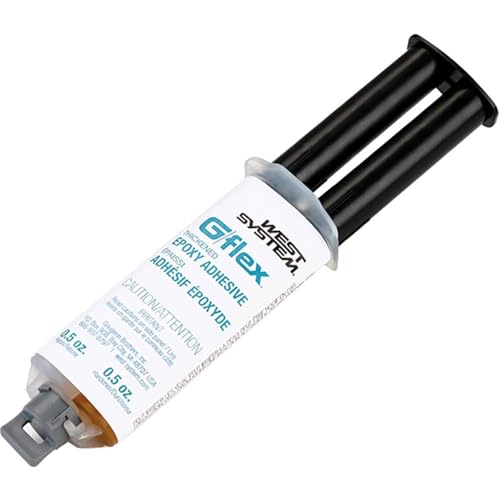
G/flex is a toughened, two-part epoxy that retains flexibility after cure — critical when bonding PE to wood, metal, or fiberglass because thermal expansion differences will snap a brittle joint. The 1-ounce syringe dispenses equal parts of resin and hardener, and the 24-hour full cure is non-negotiable; rushing it compromises the crosslinking density that makes this bond waterproof and shock-resistant.
Users consistently report success on snowboard base repairs, boat fittings, and even reattaching handles to plastic water tanks. The cured epoxy remains slightly resilient, absorbing vibration without cracking. It dries crystal clear and sands well, though the 1-ounce format means you pay more per volume than standard epoxy — the trade-off is reliable adhesion to low-energy plastics that ordinary epoxies reject.
Surface prep is still essential: rough the PE with 80-grit sandpaper and wipe with acetone. G/flex’s chemistry then does the heavy lifting, wetting out the substrate far better than general-purpose epoxy. For structural bonds where failure means water ingress or mechanical collapse, this is the formula pros reach for.
Why it’s great
- Creates flexible, waterproof structural bonds on PE and other difficult plastics.
- Long working time allows careful alignment of complex assemblies.
Good to know
- Requires thorough mixing and 24-hour cure — not for quick fixes.
- Higher cost per ounce compared to standard epoxy on the shelf.
2. Titebond Instant Bond Wood Adhesive Thick

This thickened cyanoacrylate formula is designed primarily for wood but performs surprisingly well on PE when used as a gap-filling tack — the gel consistency stays put on vertical surfaces and swells slightly as it cures, locking into minor surface irregularities. The 18-second fixture time is a double-edged sword: you need perfect alignment before the bond sets, but once it grabs, no clamping is needed.
Professional remodeler reviews note that this glue bonds split oak and polyurethane trim with a strength that exceeds the wood itself. For small PE repairs — think a broken tab on a plastic tool handle or a hairline crack in a polyethylene cutting board — the thick gel forms a bridge that thin super glues cannot. The heat and solvent resistance also matter if the part sees occasional warmth.
Be aware that cyanoacrylate bonds are inherently brittle under peel or impact. This is not the adhesive for a flexible polyethylene tarp or an inflatable seam. Use it where the joint will see compression or shear loads, and where the plastic substrate is thick enough to resist flexing at the bond line.
Why it’s great
- Thick gel fills gaps and eliminates drips on vertical surfaces.
- Extremely fast cure — parts are immobile in under 20 seconds.
Good to know
- Brittle under peel stress; not suitable for flexible PE films.
- Bottle can clog if nozzle is not cleaned after each use.
3. ARVYNE PVC Cement 4 oz
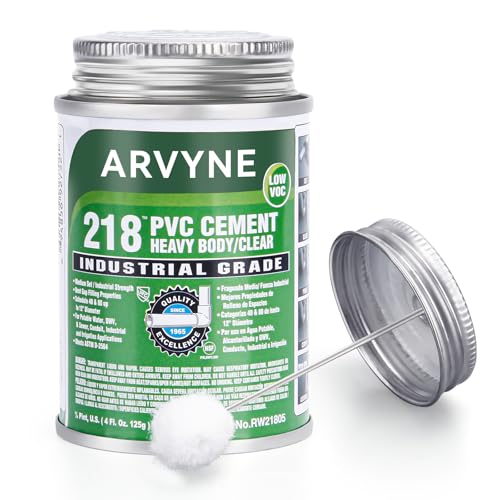
ARVYNE’s PVC cement operates by solvent-welding — it chemically softens the plastic surfaces so they fuse into a single homogenous joint. This is the standard approach for rigid PVC pipe and fittings, but the same mechanism works on some polyethylene grades if the PE is compatible. The fast-dry formula sets in minutes, creating a watertight bond rated for up to 6-inch pipe.
Users have successfully joined schedule 80 PVC for dock ladders without primer, a testament to the cement’s aggressive solvent action. The built-in dauber allows controlled application inside the fitting socket. For repairing a polyethylene kayak hatch, a pool filter line, or an inflatable valve, this one-step solvent cement beats the two-part epoxy hassle.
The biggest issue reported is inconsistent fill levels in the can — some arrive nearly full, others only 20% full. Weigh the can on receipt if that matters. Also note that solvent-weld cements are rigid when cured; they cannot accommodate the flex of thin-walled polyethylene sheeting or inflatable fabric.
Why it’s great
- Creates a true solvent-weld joint, fusing plastic at the molecular level.
- Dries waterproof and clear, with fast set for quick plumbing repairs.
Good to know
- Can fill levels are inconsistent; check the can weight on arrival.
- Not suitable for flexible PE film or vinyl inflatable material.
4. HH-66 Vinyl Cement 4 oz
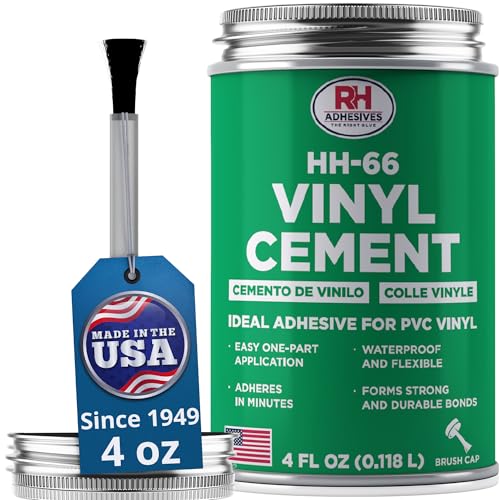
HH-66 is a solvent-based contact cement specifically formulated for flexible PVC and vinyl — materials that share polyethylene’s low surface energy issues. Unlike epoxies that cure rigid, HH-66 remains flexible across a -30°F to 150°F service range, making it the go-to for repairing truck tarps, pool liners, inflatable boats, and vinyl upholstery seams. The brush-in-can cap allows precise application.
The bond requires both surfaces to be coated, allowed to tack up (about 5 minutes), then pressed together. Once mated, the joint cannot be repositioned. Reviews highlight its strength on vinyl-on-vinyl repairs: patches stay waterproof even under pool water pressure or wind-whipped tarp loads. A small kayak hole repair held long-term where Flex Seal failed within days.
Critical caveat: HH-66 does NOT bond polyethylene — the manufacturer explicitly excludes PE and polypropylene (the typical blue tarp material). Always verify your substrate. This cement is the champion for flexible PVC and vinyl; if your project is polyethylene, look to G/flex or a PE-specific tape instead.
Why it’s great
- Flexible, waterproof bond that survives extreme temperatures and vibration.
- Brush-on application gives control over coverage thickness.
Good to know
- Does NOT bond to polyethylene or polypropylene — check your material.
- Solvent fumes require good ventilation during application.
5. TapeManBlue Greenhouse Repair Tape
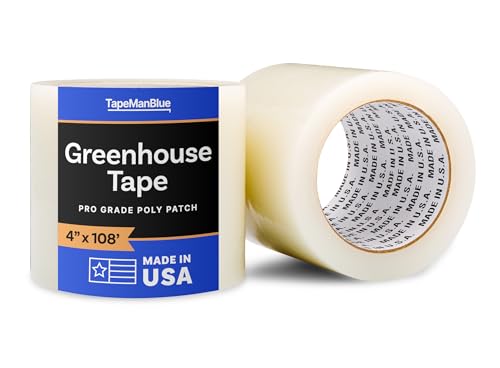
Sometimes the best adhesive for polyethylene is not a glue at all — it is a dedicated PE patch tape. TapeManBlue’s 3-mil clear polyethylene tape is formulated to bond with poly sheeting, creating a weather-resistant seal that stays flexible from sub-zero winter nights to blistering summer sun. The 4-inch by 108-foot roll provides enough material for multiple greenhouse repairs or poly-film seam splicing.
Users report that the tape survives 40 mph winds and snow loads when applied over a clean, dry surface. The adhesive system is aggressive — once it contacts the polyethylene film, it locks down and does not release. This makes it ideal for fixing tears in cold frames, hoop houses, and poly tarps where a liquid glue would run or fail to cure properly in cold weather.
The tape is not meant for structural joints or high-pressure applications. For holding a patch on a static polyethylene sheet exposed to weather, it delivers a simple, instant fix. Some users note the tape is difficult to cut cleanly with scissors; a sharp utility knife or a tape dispenser with a cutter blade makes the job easier.
Why it’s great
- Specifically engineered to bond polyethylene film to polyethylene.
- UV-resistant and weatherproof — holds through extreme temperature swings.
Good to know
- Not a structural adhesive; cannot carry heavy loads or fill gaps.
- Difficult to cut cleanly; a sharp blade is recommended.
6. Berkland Acrylic Bonding Cement
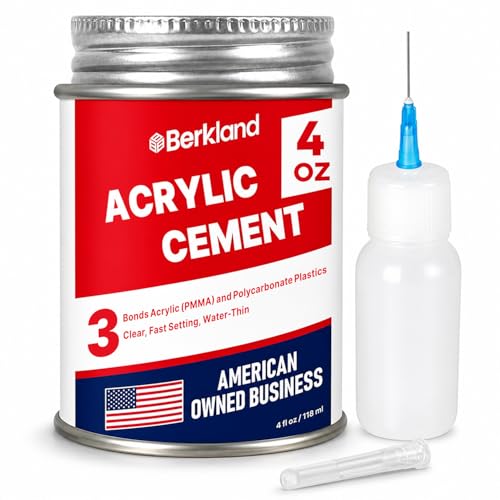
Berkland’s acrylic cement is a solvent-based formula with the consistency of water — it wicks into tight joints by capillary action, dissolving the acrylic surface layers and fusing them together. This is the standard method for bonding plexiglass display cases, acrylic signs, and laser-cut parts. For polyethylene, the same thin-penetration mechanism can work if the PE is compatible, but results vary by grade.
The included applicator bottle with a needle tip allows micro-precision, essential when bonding transparent acrylic where any spill or smear mars the optical finish. Users report successful bonds on 1/2-inch thick plexiglass boxes and PLA 3D-printed parts, with the cured joint reaching strength beyond the base material. Cure is fast — minutes to initial set, full strength in 24 hours.
The water-thin nature is a liability on vertical surfaces or porous edges where the solvent runs before bonding. This cement also requires a very tight fit — it does not fill gaps. For butt-joining thin polyethylene sheets where alignment is perfect, this can work; for lap joints or flexible film, look to the contact cement or tape options instead.
Why it’s great
- Capillary action creates invisible, optical-clear joints on acrylic and PE.
- Precision applicator minimizes waste and mess on detailed work.
Good to know
- Runs off vertical surfaces; not a gap-filler.
- May require refinement of technique to avoid surface marring.
7. Solarez Epoxy Weenie Travel Kit

The Solarez Weenie Kit is a UV-cure epoxy resin designed for surfboard ding repair, but its no-mix, instant-cure chemistry translates well to small polyethylene repairs where portability and speed matter. The 0.5-ounce tube contains a single-component gel that hardens in 3 minutes under direct sunlight — no measuring, no clamping, no 24-hour wait. For patching a hole in a polyethylene kayak or a plastic fender in the field, this is uniquely convenient.
The kit includes a sanding pad and an acetone prep pad, reinforcing that surface preparation is still mandatory. The resin cures tack-free and does not yellow over time thanks to added urethane stabilizers. Users love it for small dings and cracks, noting the cure speed allows them to sand and paint the repair within half an hour.
The downside is the tiny quantity — this kit is really for touch-ups, not large-area bonding. On thicker polyethylene pieces, the UV light may not penetrate deeply enough to cure the full resin mass. For emergency field repairs on PE gear, it is a lifesaver; for structural joining of polyethylene components, the toughened epoxy is the safer bet.
Why it’s great
- UV cure in minutes — no mixing, no clamps, no 24-hour wait.
- Portable kit includes prep tools for immediate field use.
Good to know
- Very small amount — only 0.5 ounces; not for large jobs.
- UV penetration limits depth cure on thick plastic sections.
FAQ
Can I use regular super glue on polyethylene?
Do I need to flame-treat polyethylene before gluing?
What is the difference between solvent-weld and epoxy for PE?
Final Thoughts: The Verdict
For most users, the best adhesive for polyethylene winner is the G/flex 655-1 Toughened Epoxy because it creates a flexible, waterproof structural bond that actually grips low-energy plastics — a rare combination. If you need an instant fix for a greenhouse poly sheet, grab the TapeManBlue Greenhouse Tape for a quick, weatherproof patch. And for small dings and emergency field repairs on PE gear, nothing beats the portability of the Solarez Epoxy Weenie Kit with its 3-minute UV cure.