
Our readers keep the lights on and the weekend projects moving. As an Amazon Associate, I earn from qualifying purchases.
A loose pool tile or a crack in the grout isn’t just an eyesore — it’s a water-loss gateway that can undermine your plaster and raise your chemical bills. The right repair adhesive needs to bond through moisture, resist constant chlorine exposure, and set fast enough that you’re swimming again within 24 hours. Choose wrong, and you’ll be chiseling out a failed patch mid-season.
I’m Rikta — the co-founder and writer behind FitlyFast. I’ve spent countless hours cross-referencing epoxy cure rates, cementitious compression specs, and underwater application data so you can pick a fix that actually survives a full swim season without rework.
Whether you’re resetting a single waterline tile or filling a row of cracked grout, this guide walks you through the top options for adhesive for pool tile repair based on real performance specs and verified user results.
How To Choose The Best Adhesive For Pool Tile Repair
Pool tile adhesive isn’t one-size-fits-all. The chemistry that works for a dry backsplash will fail underwater within weeks. You need to match the adhesive’s cure mechanism, water resistance, and flexibility to the submerged environment.
Epoxy vs. Cementitious vs. Acrylic
Epoxy putties and pastes cure by chemical reaction, not evaporation, so they harden reliably underwater and bond to damp surfaces. Cementitious thinsets (like polymer-modified white grout) are excellent for resetting tiles in dry or damp conditions but require proper water ratio control and cure time before submersion. Acrylic-modified grout kits offer a middle ground — easy mixing with decent waterproofing for waterline use.
Working Time and Set Speed
Pool environments demand fast-setting materials because you can’t always keep the repair area dry for long. Some epoxies give you only 10–15 minutes of working time; fast-setting thinsets can firm up in under 10 minutes. If you’re a slow beginner, a product with 20–30 minutes of open time is safer, but you’ll need to wait longer before refilling the pool.
Underwater Applicability
Not all adhesives labeled “waterproof” can be applied while submerged. True underwater-cure epoxies (labeled “water-curing” or “underwater”) can be hand-molded onto wet tile and grout lines without draining the pool. Standard waterproof adhesives require the surface to be damp but not submerged — they’ll wash out if applied below the waterline.
Quick Comparison
On smaller screens, swipe sideways to see the full table.
| Model | Category | Best For | Key Spec | Amazon |
|---|---|---|---|---|
| Epoxybond Atlas Pool Putty | Epoxy Putty | Underwater crack sealing & tile bonding | Underwater-cure epoxy; 14 oz | Amazon |
| E-Z Patch 4 F.S. Grout Repair Kit | Thinset Grout | Waterline tile resetting & grouting | Underwater/above water; 3 lb | Amazon |
| Pool Patch White Grout Repair Kit | Acrylic Grout | Grout line restoration in dry/damp areas | Acrylic-modified; 3 lb | Amazon |
| Fix-A-Floor Loose Tile Adhesive | Construction Adhesive | Re-bonding hollow or loose floor tiles | CoPolymer; 2-pack tubes | Amazon |
| Ankita Tile Repair Kit | Color-Match Paste | Chip and crack filling on ceramic/porcelain | Color-matching pigments; paste | Amazon |
| PC-Masonry Epoxy Adhesive Paste | Epoxy Paste | Repairing masonry cracks around pool structure | Non-sag; 32 oz (two jars) | Amazon |
| E-Z Patch 3 Thinset Pool Cement | Thinset Cement | Setting replacement tiles above waterline | White thinset; 3 lb | Amazon |
In‑Depth Reviews
1. Epoxybond Atlas Pool Putty Epoxy Leak Sealer Kit

This epoxy putty is the single most versatile option for pool tile repair because it cures underwater without needing to drain the pool. The 14-ounce stick contains both resin and catalyst in a single hand-moldable mass — knead it until the color is uniform, press it into the crack or behind the loose tile, and it hardens into a rigid plastic-like bond. Users have sealed skimmer cracks, return jet leaks, and loose waterline tiles with a single application, often using only a fifth of the stick per repair.
The kit includes step-by-step instructional videos that walk beginners through mixing, applying, and sanding the putty. Because it bonds to damp concrete, plaster, and tile without surface prep beyond cleaning, it eliminates the most common DIY frustration: adhesive that slides off a wet surface. Working time runs about 10 minutes, after which the putty sets firm enough to sand, drill, or paint.
At roughly 14 ounces, it’s a compact solution for multiple small repairs. The main limitation is that the putty is white — if your pool tile or grout is a different shade, you’ll need to paint over it after cure. For anyone facing a leak around a skimmer, light fixture, or loose tile below the waterline, this is the most reliable first-line fix available.
Why it’s great
- Cures fully underwater — no draining needed
- Hand-moldable for tight spaces around fixtures
- Single stick covers multiple repair spots
Good to know
- White color may not match all tile shades
- Working time is only about 10 minutes
- Not suitable for large-area grout replacement
2. E-Z Products 4 F.S. White Pool Tile Grout Repair Kit

This 3-pound kit is engineered specifically for pool tile work and stands out because it does not require a separate liquid acrylic bonder — the polymer modifiers are already integrated into the dry mix. It can be applied above or below the waterline, setting in minutes and allowing swimming the next day. Users report excellent results bonding waterline tiles and filling missing grout in partially submerged areas, noting that the final cure is “solid as rock” even when applied underwater.
The mix ratio is critical: experienced users recommend a texture like mashed potatoes — too dry and it crumbles, too wet and it slumps on vertical surfaces. The 3-pound tub covers roughly 10 square feet at a quarter-inch thickness, which is ample for most waterline repairs. Because it sets fast, the biggest advice from veteran users is to mix in small batches no larger than what you can apply in 5 minutes.
While the color is a bright white that blends well with standard pool grout, the fast set time can be a double-edged sword for beginners. If you’re a first-timer, have all tools and tiles ready before mixing. For the combination of underwater capability, fast cure, and dedicated pool formulation, this kit earns its spot for waterline work.
Why it’s great
- Works above and below the waterline
- No extra bonder needed — all-in-one mix
- Swim-ready the next day
Good to know
- Water ratio is very sensitive to consistency
- Sets extremely fast — must mix in small batches
- Bright white may not match aged grout
3. Pool Patch White Pool Tile Grout Repair Kit

Pool Patch combines waterproof Portland cement with a liquid acrylic bonder in a 3-pound tub, making it a straightforward choice for restoring grout lines above the waterline or in damp (but not submerged) conditions. The acrylic modifier reduces shrinkage and improves adhesion to ceramic, glass, and porcelain tiles. Users consistently praise its bright white finish and ease of mixing, noting that it hardens in a few hours and feels “hard as rock” by the next day.
The kit covers about 10 square feet at a quarter-inch thickness, which matches the other 3-pound options. Detailed video instructions are available on the listing, and many DIYers appreciate that it can be applied with a grout float or even a gloved finger for small void fills. The main caution from experienced users is that the included liquid bonder bottle may be missing from some units — order extra if you’re tackling a large vertical surface where bond strength is critical.
This product is not designed for underwater application; it works best when the repair area is dry or only slightly damp. If your pool tile grout is failing above the waterline and you want a fast-setting, color-stable white grout that resists pool chemicals, Pool Patch delivers a proven formulation. It also includes a liquid cement bonder that improves adhesion on slick tile edges.
Why it’s great
- Acrylic-modified for minimal shrinkage
- Bright white color resists pool chemical discoloration
- Includes liquid cement bonder for stronger adhesion
Good to know
- Not for submerged application
- Liquid bonder bottle may be missing from some units
- White only — no color-matching options
4. Fix-A-Floor Loose Tile Repair Adhesive
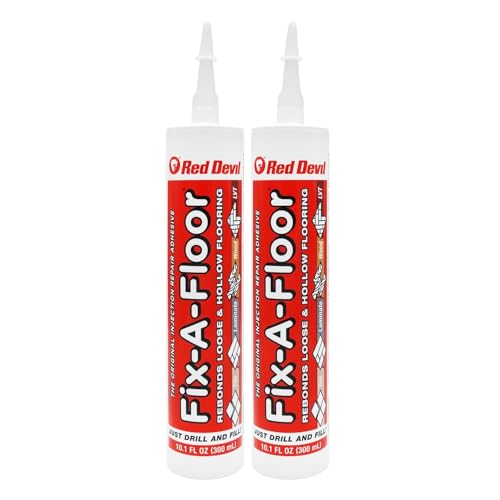
Fix-A-Floor addresses a specific pain: hollow-sounding or loose pool deck tiles that are still intact but have lost their bond to the subfloor. This low-viscosity adhesive is injected through drilled holes in the grout line, spreading underneath the tile to re-bond it without removing or breaking the tile. The 2-pack includes precision tip applicators sized for various grout line widths, and the copolymer formula is non-toxic, self-leveling, and compatible with heated subfloors.
Users report that the adhesive flows well through the included syringe-style tips, though some found the stock tips prone to leaking at the caulk gun connection. A frequent field hack is to transfer the adhesive into 30ml luer-lock syringes with 14-gauge blunt tips for cleaner, more controlled injection. The product bonds to concrete, wood, stone, and most subfloor materials, making it suitable for pool coping and deck tiles above the waterline.
The primary limitation is that this is not a gap-filling grout or a putty — it’s a fluid adhesive designed to seep under loose tiles. For cracked grout or missing chunks, you’ll still need a separate repair compound. But for re-anchoring a single loose tile in a pool deck without demolition, this is the most targeted tool in the list.
Why it’s great
- Re-bonds loose tiles without removal
- Works with heated subfloor systems
- Multiple precision tips for different grout sizes
Good to know
- Stock syringe tips can leak under gun pressure
- Not designed for gap-filling or grout replacement
- Best for above-waterline pool deck tiles
5. Ankita Tile Repair Kit (Color Match)
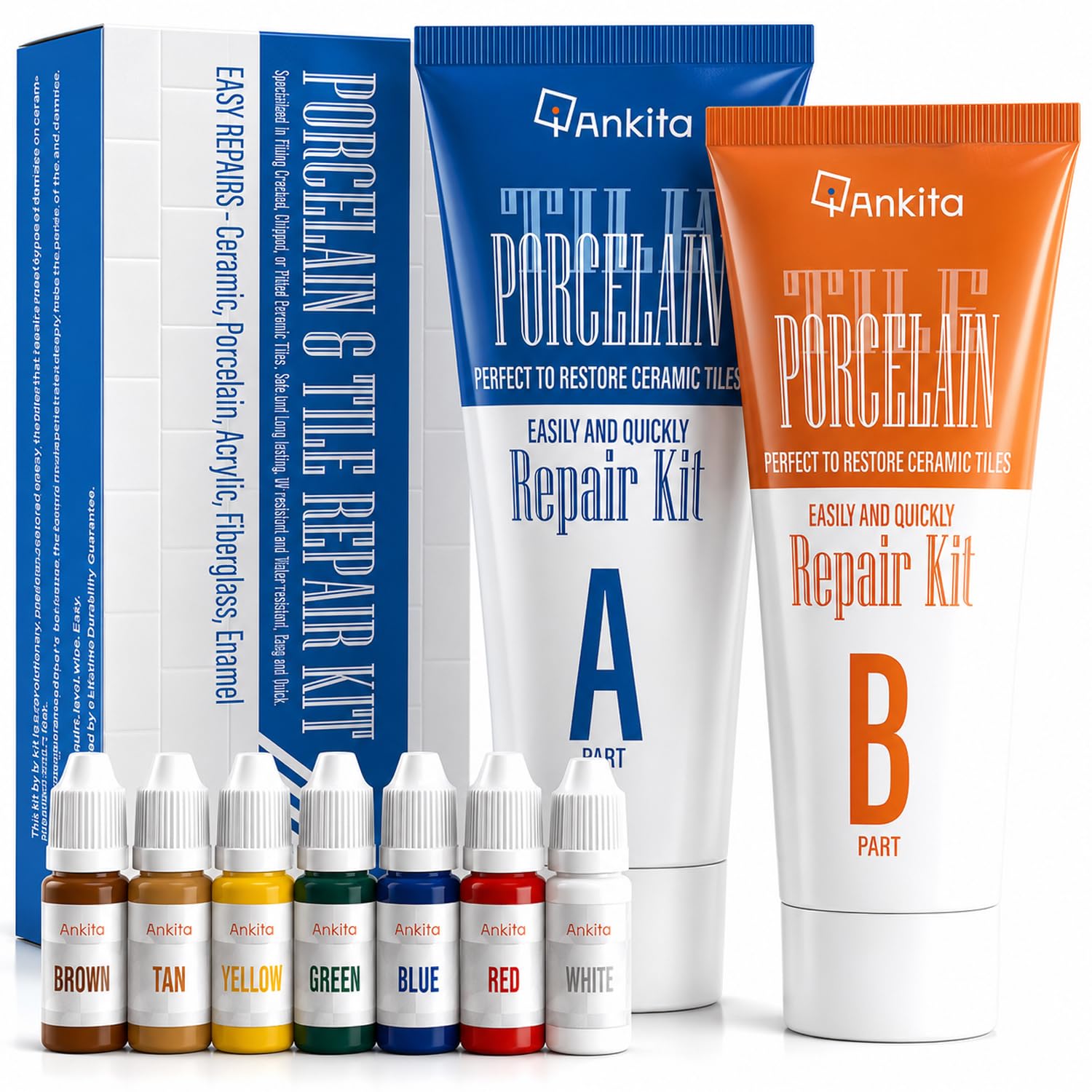
This repair kit focuses on cosmetic restoration of chips, cracks, and small holes in ceramic and porcelain pool tiles. It includes seven pigment tubes for matching white, beige, gray, almond, blue, black, and common tile colors. The two-part epoxy paste mixes to a putty-like consistency that can be applied with a small spatula or finger, then sanded smooth after curing. Users have successfully repaired chipped bathtub surrounds, sink enamel, and tile surface damage with a seamless-looking finish.
The paste hardens quickly and is waterproof after full cure, making it suitable for damp areas around the pool waterline. However, it is not designed for structural bonding of loose tiles — it’s a surface filler. The kit works best on chips no larger than a dime and cracks that don’t compromise the tile’s attachment. Some users noted that the color match shifted slightly over time, becoming cream rather than pure white, so test a small area first.
For the price, this is an affordable way to extend the life of pool tiles that have isolated cosmetic damage. The included pigments allow you to blend a close match to most standard tile colors, and the waterproof cured finish handles splashing and chemicals. Just don’t expect it to re-bond a tile that has detached from the substrate — that requires a stronger epoxy or thinset.
Why it’s great
- Seven pigments for custom color matching
- Waterproof after curing — good for pool areas
- Easy sanding for a smooth, blended finish
Good to know
- Only for surface chip/crack filling, not structural bonding
- Color may shift slightly over time
- Not suitable for large missing tile sections
6. PC Products PC-Masonry Epoxy Adhesive Paste

This two-part epoxy paste is formulated for masonry repairs — filling cracks in concrete, reattaching stone veneer, and rebuilding deteriorated pool substructure. The non-sag formula is thick enough to stay on overhead surfaces and vertical walls without dripping, making it useful for repairing pool coping, gunite, and the concrete substrate behind loose tile. It can be applied to wet or dry surfaces and cures within a service temperature range of -20 to 200 degrees Fahrenheit.
Users have used it to rebuild broken brick staircases, repair concrete planter bases, and set bolts into stone steps — reporting bonds that are stronger than the original concrete. The 32-ounce (two-jar) kit is a paste, not a liquid, so it builds up thickness in layers. Multiple users layered up to an inch per day, allowing complex structural repairs without formwork. Once cured, it can be sanded, painted, stained, and drilled.
The main limitation for pool tile work is that this epoxy is gray, not white, so it’s not a cosmetic match for white tile grout. It’s best reserved for structural repairs behind the tile or for bonding stone coping and aggregate deck edges. If your pool tile issue is a loose tile that requires a high-strength bond to the substrate below, this paste will hold long after standard adhesives have failed.
Why it’s great
- Non-sag formula works on vertical and overhead surfaces
- Can be applied to wet surfaces
- Layerable — builds up to structural thickness
Good to know
- Gray color — not a cosmetic match for white grout
- Working time is about 15 minutes
- Designed for masonry, not direct tile-to-tile bonding
7. E-Z Patch 3 Thinset Pool Tile Setting Cement

This white thinset cement from E-Z Patch is a simple, no-frills powder that you mix with water to form a paste for setting replacement pool tiles. It’s moisture-resistant and designed for ceramic and porcelain tile work in indoor pools and fountains. Users have successfully used it to reattach tiles in resistance pools and decorative fountains, noting that it holds solidly underwater after a 24-hour cure and is easy for beginners to work with.
The 3-pound pail is compact and affordable, making it a good entry point for DIYers who have never tackled pool tile repair before. Instructions are straightforward — mix with water to a peanut-butter consistency, butter the back of the tile, and press into place. The powder takes well to small-batch mixing, and users recommend making only as much as you can use in 10 minutes to avoid waste as it starts to set.
Unlike the acrylic-modified Pool Patch kit, this is a straight thinset cement without polymer additives. It cures hard but may not have the same flexibility as the acrylic blends. It also requires the repair area to be clean and slightly damp — not submerged — during application. For an uncomplicated, low-cost way to reset a few loose tiles above the waterline, this is a reliable basic option that gets the job done without expensive additives.
Why it’s great
- Simple water-mix formula — no extra bonder needed
- Moisture-resistant after full cure
- Compact 3 lb pail for small DIY jobs
Good to know
- Not designed for underwater application
- No polymer modifiers — less flexibility than acrylic blends
- Must be used in small batches to avoid waste
FAQ
Can pool tile adhesive be applied underwater without draining the pool?
How long should I wait before filling the pool after using a grout repair kit?
What’s the difference between thinset cement and acrylic-modified grout for pool tiles?
Final Thoughts: The Verdict
For most users, the adhesive for pool tile repair winner is the Epoxybond Atlas Pool Putty because it eliminates the biggest hassle — draining the pool — and forms a waterproof bond that lasts. If you want a dedicated thinset for resetting waterline tiles with a fast cure, grab the E-Z Products 4 F.S. Grout Repair Kit. And for cosmetic chip and crack filling on existing pool tiles without removing them, nothing beats the Ankita Color-Match Tile Repair Kit for its ability to blend seven pigments into an invisible repair.