
Our readers keep the lights on and the weekend projects moving. As an Amazon Associate, I earn from qualifying purchases.
A chipped porcelain tile in the middle of your bathroom floor or kitchen backsplash is one of those visual annoyances that makes an entire room feel shabby. Whether the damage is from a dropped pan or a shifting tile in a high-traffic area, the challenge is twofold: you need an adhesive that bonds permanently to dense, non-porous porcelain, and—if you care about appearance—one that vanishes into the existing color. Most standard glues slide right off a glazed surface or leave an ugly white lump that screams “repair.” The right adhesive for porcelain tiles combines mechanical grip, moisture resistance, and often a color-matching system that hides the fix.
I’m Rikta — the co-founder and writer behind FitlyFast. I’ve spent years analyzing product specs for construction and home improvement categories, digging into real-world customer feedback and manufacturer data to separate effective solutions from marketing hype. This guide covers seven of the most practical products currently on the market.
To help you cut through the noise, I’ve ranked and reviewed the best options for repairing, installing, or mosaicking porcelain, with a spotlight on color-matching repair kits and high-strength mortars that pros and DIYers alike trust. This is the definitive guide to choosing the right adhesive for porcelain tiles.
How To Choose The Best Adhesive For Porcelain Tiles
Choosing an adhesive for porcelain isn’t as simple as grabbing the first tube of construction glue you see. Porcelain tile is fired at extremely high temperatures, making it dense and nearly impervious to moisture. This density means many adhesives cannot penetrate the surface or form a chemical bond. You typically face two distinct scenarios: repairing a chip or crack in an existing tile, or installing a new tile from scratch. Each scenario demands a different type of adhesive.
Repair vs Installation: Know Your Task
If you are filling a small chip or scratch, an epoxy-based repair kit with color-matching pigments is the right tool. These products cure into a hard, sandable, paintable surface that mimics the look of the original glaze. If you are adhering a new porcelain tile to a wall, floor, or countertop, you need a thin-set mortar or a high-grab construction adhesive. Mortars like Mapei Adesilex-P10 or Custom Building Products thin-set are polymer-modified for superior bond strength and are formulated to handle the weight and rigidity of porcelain. Using a repair filler for an installation is a waste—it won’t hold the tile secure.
Color Matching: Pigment Kits vs. Pre-Mixed
For visible repairs, color matching is the most critical spec. The best kits, like those from cocomfix and Ankita, include seven primary pigments that allow you to mix any shade from white and beige to dark charcoal and brown. However, reviews consistently warn that the provided color guide is basic, and achieving a seamless match requires patience and test mixing. If your tile has a distinctive multi-color pattern or a metallic finish, no pigment kit will provide a perfect match. In that case, a clear-drying adhesive like Weldbond might be better—at least the glue won’t add color contrast, though the filler itself may still be visually distinct if not sanded perfectly.
Water and Heat Resistance
Porcelain tile is common in bathrooms, kitchens, and outdoor areas. Any adhesive used in these environments must be water-resistant after curing, and ideally heat-resistant for areas near a stove or radiator. Epoxy repair compounds are naturally water-resistant and non-yellowing once cured, which makes them suitable for shower walls and floor tiles. Construction adhesives like PL Premium are water-resistant and can withstand temperature swings. Thin-set mortars, when mixed correctly, are also waterproof once the thinset cures and is covered by grout and sealant. Always check the “Water Resistance Level” spec on the packaging—products listed as “Water Resistant” may not handle continuous submersion.
Quick Comparison
On smaller screens, swipe sideways to see the full table.
| Model | Category | Best For | Key Spec | Amazon |
|---|---|---|---|---|
| cocomfix Color Match | Repair Kit | Hiding chips in glazed porcelain | 7-pigment epoxy with high gloss | Amazon |
| Mapei Adesilex-P10 | Mortar | Mosaic & glass tile installation | Bright white, nonsag for walls | Amazon |
| Custom Building MTSG25 | Mortar | Floor & wall tile projects | Polymer-modified, ANSI A118.4 | Amazon |
| Ankita Color Match | Repair Kit | Cost-effective chip & crack fix | 7 pigments for common tile tones | Amazon |
| Le Page PL Premium | Construction Adhesive | High-grab, time-sensitive installs | 4X instant grab vs original | Amazon |
| Roberts 3085 | Multipurpose Adhesive | Bonding felt-back sheet vinyl | Solvent-free, fast-setting SBR | Amazon |
| Weldbond 3L | PVA Glue | Mosaic and craft projects | Non-toxic, dries crystal clear | Amazon |
In‑Depth Reviews
1. cocomfix Color Match Tile Repair Kit
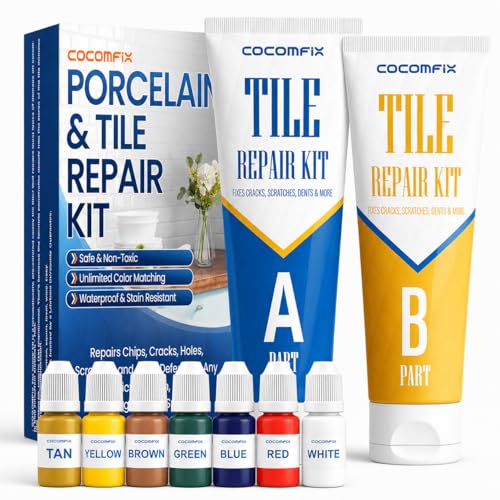
The cocomfix kit is the most comprehensive epoxy repair solution for anyone trying to make a chip or crack vanish. Its standout feature is the seven primary pigments—Red, Yellow, Blue, White, Green, Tan, and Brown—which allow you to mix a vast range of shades, from modern gray to vintage brown. The formula is designed to cure into a high-gloss, waterproof finish that resists yellowing, which is crucial for kitchen and bathroom areas that see daily moisture and sunlight.
Customer feedback praises its durability and ease of use for small repairs, but repeatedly notes that achieving a perfect color match requires patience. The provided color guide offers only basic ratios, so expect to do some trial-and-error mixing on a scrap surface before applying it to the damage. Once cured, the epoxy sands cleanly and can be buffed to a shine, making the repair nearly invisible on solid-color tiles.
The kit also works on acrylic, fiberglass, and natural stone surfaces beyond porcelain, adding versatility for multi-surface homes. The low-odor, non-toxic formulation is a plus for indoor use around family and pets. For someone who has a few scattered chips and wants a professional-looking result without hiring a restoration specialist, this kit delivers the tools and the flexibility to get there.
Why it’s great
- Seven pigments allow precise color matching for most common tile hues.
- High-gloss, non-yellowing cure works well in wet areas like shower walls.
- Safe, low-odor formula is comfortable for indoor DIY work.
Good to know
- Color-matching guide is basic; expect to experiment for a perfect blend.
- Some users report opacity issues on very dark or unevenly colored tiles.
2. Mapei Adesilex-P10 Premium Mosaic & Glass Tile Mortar

When you need to install new porcelain tile—especially mosaics or large-format stone—the adhesive choice shifts from color-matching epoxies to performance-based thinset mortars. The Mapei Adesilex-P10 is a premium white mortar engineered for sheet-mounted mosaics and glass tiles, but its formula also provides exceptional nonsag performance for vertical wall applications. This means the tile stays in place after you press it onto the wall, even with heavier stone or dense porcelain pieces, without creeping downward before the mortar sets.
The bright white color is a deliberate spec: it prevents any dark mortar shadow from bleeding through translucent glass tiles or thin porcelain. Mixing it with Keraply additive boosts performance for submerged installations like pool surrounds or steam showers. Coverage is efficient—one bag covers 11 to 24 square feet depending on trowel notch size, making it a practical choice for medium-sized backsplashes or bathroom walls.
Professional tilers consistently give this formula high marks for ease of working and consistent quality. The polymer modification ensures a strong bond to porcelain without requiring a separate primer. If you are investing in high-end tile and need an adhesive that meets manufacturer warranties, the Adesilex-P10 is the standard you want.
Why it’s great
- Nonsag formula is perfect for vertical wall installations of porcelain mosaics.
- Bright white base ensures no color bleeding through translucent or glass tiles.
- Can be enhanced with Keraply additive for water-submerged settings.
Good to know
- Designed for mosaic and smaller tiles; large-format floor tiles may need a different thinset.
- Premium price point reflects professional-grade reliability.
3. Custom Building Products MTSG25 Thin Set Mortar

For general-purpose porcelain tile installation on floors and walls, the Custom Building Products MTSG25 is the reliable, no-fuss choice. It is a polymer-modified thin-set mortar that meets ANSI A118.4 and A118.11 standards without requiring additional liquid additives—just mix with water. This simplifies the workflow and reduces the risk of a bad batch. The polymer modification gives it the flexibility and bond strength needed to hold dense porcelain tiles in high-traffic areas without cracking.
The 25-pound bag size covers roughly 40 to 50 square feet depending on trowel depth, making it ideal for single-room projects like a kitchen floor or a shower wall. Customer reviews consistently mention how easy it is to work with, noting good open time and smooth troweling. The extended open time is particularly useful for DIYers who need extra minutes to adjust tiles before the mortar skins over.
It is suitable for both interior and exterior use, as long as the tile is intended for outdoor exposure. The mortar cures reliably even in colder weather, which is a practical advantage for seasonal projects. If you need a bag of thinset that performs predictably and doesn’t require a trip to a specialty tile store, the Custom MTSG25 delivers consistency at a fair price.
Why it’s great
- Polymer-modified, just add water—no extra additives needed for standard installs.
- Meets ANSI A118.4 and A118.11 standards for high-performance bonding.
- Extended open time gives DIYers room to adjust tiles before set.
Good to know
- 25-pound bag may be too small for large open-plan floors; order two bags.
- Not formulated for glass or translucent tiles—use white mortar for those.
4. Ankita Color Match Tile Repair Kit
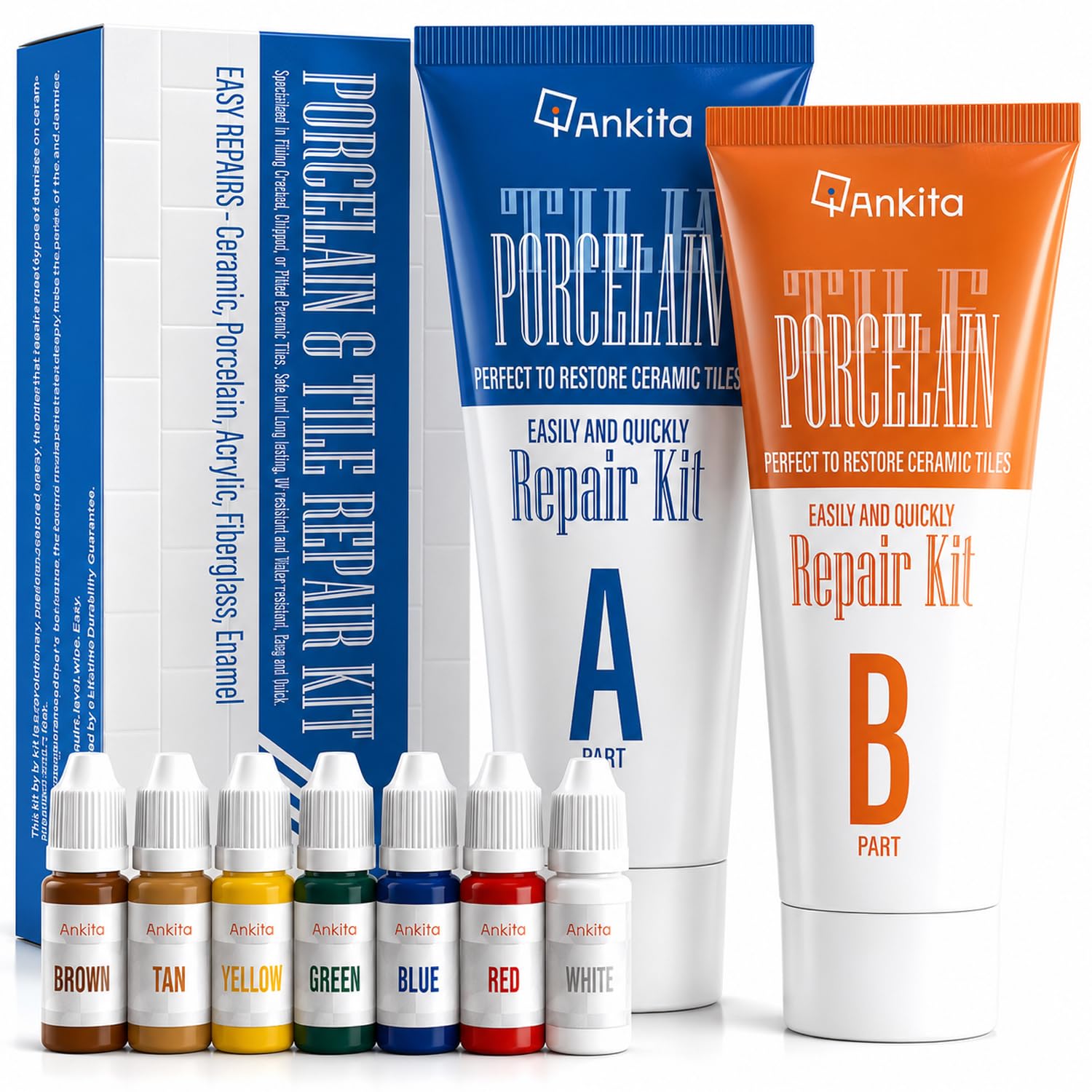
If the premium cocomfix kit is overkill for your project, the Ankita Color Match kit offers a similar seven-pigment system at a lower entry point. It targets the same use case: repairing chips, cracks, scratches, and holes on ceramic, porcelain, and acrylic surfaces. The formula is described as a paste that mixes Part A with Part B and the pigments, then cures into a waterproof, heat-resistant patch that can be sanded and finished.
Customer feedback highlights the ease of mixing and the effectiveness for small chips on bathroom tubs and kitchen sinks. However, there is a consistent warning about color stability—some users report the repair initially matches but turns cream or slightly yellow over time, especially in areas exposed to direct sunlight or heat. This means the Ankita kit works best for low-visibility repairs, such as on the side of a toilet or inside a cabinet, where color shift won’t be as obvious.
The kit’s cost savings make it a good option for someone with multiple small repairs who doesn’t want to pay for a high-end kit. The inclusion of seven pigments still gives you flexibility. For a quick fix on a white or beige tile in a bathroom corner, this kit gets the job done affordably, but it may not stand up to long-term color fidelity demands.
Why it’s great
- Affordable seven-pigment kit for multiple small-scale repairs.
- Water-resistant and heat-resistant after full cure, suitable for kitchen and bath.
- Easy mixing and application for DIY beginners.
Good to know
- Some users report the white pigment turns cream-colored over time in sunlight.
- Color matching is tricky; expect a visible patch if you can’t hide the repair line.
5. Le Page PL Premium Fast Grab Construction Adhesive

PL Premium Fast Grab is not a repair filler or a thin-set mortar—it is a beefy construction adhesive that excels when you need to bond a porcelain tile to a vertical surface quickly without waiting for mortar to set. The formula boasts four times the instant grab of the original PL Premium, which means you press the tile onto the adhesive and it stays put, even on a wall. This is useful for spot repairs where a single tile has popped loose and you cannot use traditional thinset.
The adhesive is water-resistant and heat-resistant once cured, making it suitable for shower walls and backsplash areas. Users who have used it for floor and shower tile installations describe it as a time-saver compared to mixing mortar, though they still recommend using grout over it for the finished look. It bonds to a wide range of surfaces, including wood, concrete, and metal, which makes it a versatile tool for any tiler’s kit.
The main drawback is its texture: it is extremely thick and requires a heavy-duty caulking gun to extrude. Some users note that applying it in cold temperatures (below 21°C/70°F) makes it near-impossible to push through the nozzle. Plan your application in a warm space and use a high-ratio gun. For a fast, structural bond on a loose tile, this is as reliable as construction glue gets.
Why it’s great
- Instant grab eliminates the need for temporary bracing on vertical tile installs.
- Water and heat resistant after cure, works in wet bathrooms and near ovens.
- Extraordinarily strong across diverse materials—wood, concrete, ceramic.
Good to know
- Extremely thick consistency; requires a strong caulking gun and warm conditions.
- Not a color-matching repair tool—best for structural bonding, not visible filling.
6. Roberts 3085 Multipurpose Adhesive
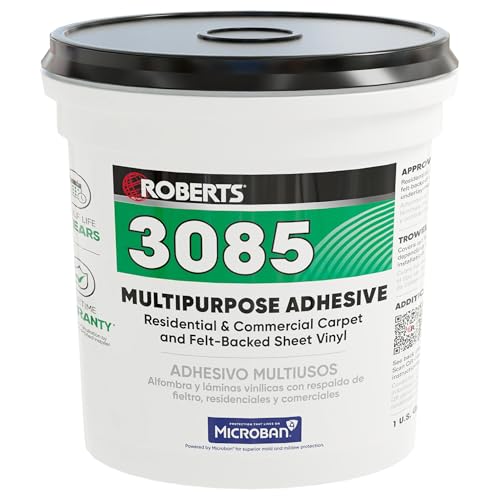
Roberts 3085 is a SBR latex-based, solvent-free multipurpose adhesive designed specifically for carpet, felt-back sheet vinyl, and acoustical cork underlayment. While it is not a direct adhesive for porcelain tile itself, it is a relevant pick for projects where you need to adhere a secondary layer—like a cork underlayment or a vinyl floor—over a concrete or plywood subfloor before tiling. The fast-setting formula provides a long-lasting bond that can handle moderate commercial traffic.
Users report covering around 92 square feet per gallon can when applied with a thin layer. The adhesive sets quickly, allowing flooring to be laid after about 30 minutes. It bonds well to concrete, APA-rated plywood, and terrazzo. A few customers mention inconsistent packaging, with some cans arriving with broken seals and dried-out adhesive, so inspect the seal upon delivery.
For tiling projects that incorporate underlayment, this adhesive provides a reliable, low-odor, and non-flammable option. The solvent-free nature makes it safer to use in indoor spaces without heavy ventilation. It is a specific tool for a specific layer in the floor assembly, not a direct tile adhesive.
Why it’s great
- Solvent-free, low-odor formula is safer for indoor use.
- Fast setting—floor coverings can be laid within 30 minutes.
- Versatile bonding to concrete, plywood, and terrazzo surfaces.
Good to know
- Not a porcelain tile-to-subfloor adhesive; use for underlayment or sheet vinyl.
- Some packaging arrives with compromised seals—inspect on arrival.
7. Weldbond Glue 3L /101 oz Non-Toxic PVA Adhesive
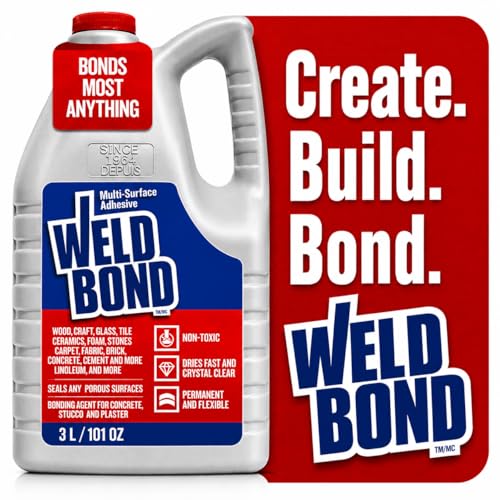
Weldbond is a polyvinyl acetate (PVA) glue that has been a favorite among mosaic artists for years. It bonds a variety of porous surfaces including ceramic, porcelain, stone, glass, wood, and concrete. For porcelain tile mosaics, its biggest advantage is that it dries completely clear, which eliminates the need for color matching when the adhesive line might be visible between tile pieces. The glue is non-toxic, odorless, and non-flammable, making it safe for indoor craft projects and children’s art.
Users who create mosaic tabletops, wall art, and deco pieces consistently praise its holding strength and clarity. It sets in about 20 minutes and reaches full cure within 30 minutes, which is fast enough for step-by-step assembly without waiting hours between pieces. After curing, it is water-resistant and weatherproof, so mosaic pieces can be displayed outdoors or in bathrooms.
Weldbond is not a structural adhesive for load-bearing tile installations—it is not a substitute for thinset mortar on a floor. But for decorative mosaics, craft repairs, or attaching porcelain tile to a non-traditional backing like wood or foam board, it is the best clear-drying option. The 3-liter bottle is a bulk size that covers many projects.
Why it’s great
- Dries crystal clear, leaving no visible glue residue on mosaic surfaces.
- Non-toxic, odorless, and water-resistant after full cure.
- 20-minute set time allows fast project assembly without clamping.
Good to know
- Not suitable for structural bonding of floor or wall tiles—use mortar.
- Best for small decorative or craft applications; not a general construction adhesive.
FAQ
Can I use regular super glue to fix a chipped porcelain tile?
What is the difference between thin-set and mastic for porcelain tile?
Why won’t my tile repair epoxy stay stuck to the porcelain?
Can I use Weldbond to tile a bathroom wall?
Final Thoughts: The Verdict
For most users, the adhesive for porcelain tiles winner is the cocomfix Color Match Tile Repair Kit because it offers the most comprehensive color-matching system and a durable high-gloss finish that hides chips and cracks in glazed tile seamlessly. If you are installing new porcelain tile and need professional-grade bonding, grab the Mapei Adesilex-P10 for its nonsag wall performance. And for a quick grab-and-stick solution for a loose single tile, nothing beats the Le Page PL Premium Fast Grab.