
Our readers keep the lights on and the weekend projects moving. As an Amazon Associate, I earn from qualifying purchases.
Retaining walls shift, bulge, and lean over time if the block-to-block bond isn’t engineered for the weight of soil, freeze-thaw cycles, and lateral pressure. A general-purpose caulk or cheap construction glue simply won’t hold capstones in place or keep a multi-tier wall from separating at the seams. The difference between a wall that lasts a decade and one that fails in the first winter comes down to the specific adhesive chemistry—polyurethane, epoxy, or polymer—and its ability to grab wet, dusty, or uneven stone surfaces instantly.
I’m Rikta — the co-founder and writer behind FitlyFast. I specialize in analyzing outdoor construction materials, focusing on load-bearing bonds and weather-resistance specs that most homeowners overlook.
After reviewing hundreds of real-world installations and lab data on shear strength, open time, and cure rates, I’ve narrowed the field to the seven most reliable tubes for locking block walls together. This guide ranks the best adhesive for retaining wall blocks on the market today, so you can choose the one that matches your wall height, stone type, and installation pace.
How To Choose The Best Adhesive For Retaining Wall Blocks
Not every tube in the hardware aisle is built for the constant outward pressure of a retaining wall. The wrong adhesive dries brittle, loses grip in moisture, or skins over before you’ve placed the next block. Focus on these three factors to get a bond that holds for years.
Chemistry Matters: Polyurethane vs Epoxy vs Polymer
Polyurethane adhesives like the Loctite PL Premium absorb movement without cracking and bond to damp surfaces, making them ideal for outdoor retaining walls exposed to rain. Epoxy options like the Sika AnchorFix-2 deliver extreme strength for anchoring rebar or metal brackets into concrete block, but they set fast—often within 3–5 minutes—so they’re better for repairs and hardware installations than for laying whole courses of block. Standard polymer construction adhesives work for light-duty garden edging but lack the elongation needed for walls over three feet tall.
Open Time and Grab Strength
Open time is the window you have to adjust a block after applying adhesive. For multi-block walls, a 20–30 minute open time lets you level and tap each stone into place. Fast-set products with 3–5 minute windows are fine for one-shot anchor jobs. Grab strength—how much weight the adhesive holds immediately after contact—determines whether a capstone stays put on a vertical face without bracing. Look for adhesives that claim “instant grab” or “no-slide hold” for capstone work.
Waterproofing and Freeze-Thaw Resistance
A retaining wall adhesive that absorbs water will eventually fail when trapped moisture freezes and expands in winter. Every adhesive on this list is labeled waterproof, but not all are rated for sub-freezing application. If you’re building in a cold climate, confirm the low-temperature gunnability (some work down to 0°F) and the fully-cured flexibility so the bond line doesn’t crack as the ground shifts.
Quick Comparison
On smaller screens, swipe sideways to see the full table.
| Model | Category | Best For | Key Spec | Amazon |
|---|---|---|---|---|
| Loctite PL Premium Polyurethane | Polyurethane | All-purpose block & capstone bonding | 3x stronger than standard construction adhesive | Amazon |
| Loctite PL 500 Landscape Block | Polymer | Multi-block retaining walls | Gunnable at 0°F to 100°F | Amazon |
| Liquid Nails LN-905 | Polymer | Large-volume landscape projects | Low VOC, 12-pack bulk | Amazon |
| Titebond TiteGrab Plus | Polymer | Instant-grab vertical applications | 24-hour full cure, waterproof | Amazon |
| PL 600 Landscape Block | Polymer | Budget-friendly light walls | Water resistant, 295mL tube | Amazon |
| Somafix S700 Fast-Curing | Epoxy Resin | Anchoring fasteners in hollow block | Fast-set polyester resin | Amazon |
| Sika AnchorFix-2 Epoxy | Epoxy | Heavy-duty hardware anchoring | 5-min full cure, solvent-free | Amazon |
In‑Depth Reviews
1. Loctite PL Premium Polyurethane Construction Adhesive

The Loctite PL Premium is the undisputed workhorse for retaining wall block bonding because its polyurethane formulation delivers three times the strength of standard construction adhesives. That elongation—the ability to flex under ground pressure without fracturing—makes it ideal for walls that experience seasonal soil expansion. It bonds aggressively to damp concrete blocks and wet lumber alike, which is critical when you’re building in dew-heavy mornings or after light rain.
Its 30-minute set time gives you a generous window to tap and level each stone, while the full cure at 24 hours ensures the bond reaches its peak load-bearing capacity before backfilling. The 12-pack cartridge format means you won’t run dry mid-project on a medium-sized wall. Users consistently report that it holds capstones in place without sliding, and many have used it to glue wood furring strips to concrete foundations with the same reliability.
Just note that polyurethane foams slightly as it cures—so apply a thin bead and expect some squeeze-out that can be trimmed with a utility knife once dry. This is not a neat cosmetic bond, but for structural block adhesion, that foaming action actually fills micro-gaps in porous stone better than a non-expanding formula would.
Why it’s great
- Three times stronger than standard construction adhesives
- Bonds to wet and frozen surfaces, extending the building season
- 24-hour cure reaches full structural strength
Good to know
- Polyurethane foams on cure — expect some squeeze-out
- Requires a sturdy caulk gun for consistent flow
2. Loctite PL 500 Landscape Block & Stone Construction Adhesive
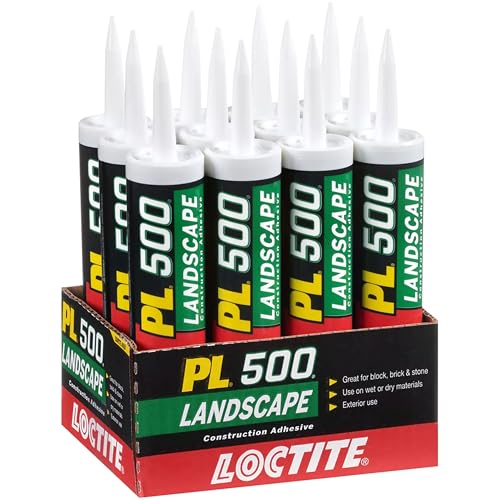
Engineered specifically for landscaping, the PL 500 is formulated to grip irregular block surfaces and bridge gaps between uneven stones—a common headache when capstones don’t sit perfectly flush. Its polymer chemistry stays gunnable down to 0°F, so you can keep working through winter repairs without having to warm the tubes. The adhesive also resists run-off on vertical faces, which is essential for gluing the top cap row onto a finished wall.
User feedback consistently highlights how well this adhesive holds block walls together during backfill. One installer used it to secure a three-row retainer for a flower garden and noted it performed far better than a previous general-purpose product. The 12-pack covers roughly 60 linear feet of block-to-block bonding depending on bead size, making it a solid mid-range option for walls up to four feet tall.
On the downside, the PL 500 is a polymer-based adhesive rather than polyurethane, so it lacks the same level of flexibility on shifting soils. It’s best suited for well-compacted base walls where lateral movement is minimal. If your site has expansive clay or heavy frost heave, step up to the polyurethane option above.
Why it’s great
- Gunnable down to 0°F for cold-weather builds
- Excellent gap-filling on uneven block surfaces and capstone edges
- Resists sag on vertical applications
Good to know
- Polymer base — less flexible than polyurethane in heavy-frost zones
- Best for walls under four feet or well-compacted bases
3. Liquid Nails LN-905 Landscape Block Adhesive
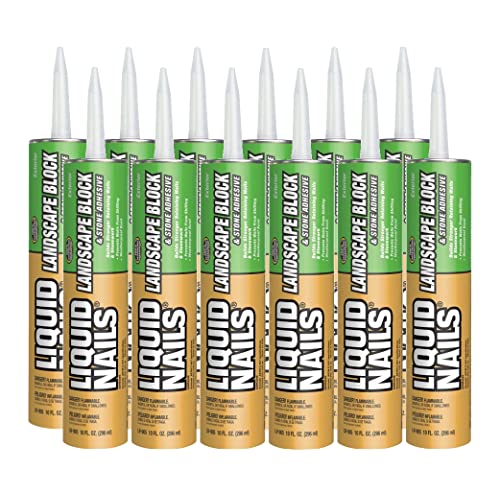
Liquid Nails LN-905 is the go-to when you’re tackling a large retaining wall project and need to stock multiple tubes without breaking the bank. This 12-pack delivers a tan-colored bond that blends well with natural stone and concrete blocks, making squeeze-out less noticeable than bright white adhesives. The low-VOC formulation also reduces fumes during extended application sessions—valuable if you’re gunning tube after tube in a single afternoon.
Real-world testing shows it holds pavers and landscape blocks securely, though a few users noted that larger capstones on sunny exposures needed extra curing time before the bond reached full grab strength. It works well for re-gluing loose stones on existing walls and for adhering solar lights and decorative elements to masonry surfaces. The 10-ounce cartridge fits standard caulk guns, and the paste-like consistency stays where you put it without dripping.
Keep in mind that the LN-905 is not marketed as a polyurethane hybrid, so its flexibility in extreme cold is limited. For a low retaining wall or garden border that won’t face heavy soil pressure, this is a reliable mid-range choice. For taller structural walls, pair it with mechanical reinforcement or choose a polyurethane option.
Why it’s great
- Low VOC formula for comfortable indoor or prolonged use
- Tan color blends with stone and block, minimizing visible squeeze-out
- Bulk 12-pack covers large wall projects efficiently
Good to know
- Grab strength on warm capstones can be slow — allow longer cure
- Not ideal for walls taller than three feet without mechanical support
4. Titebond TiteGrab Plus Construction Adhesive
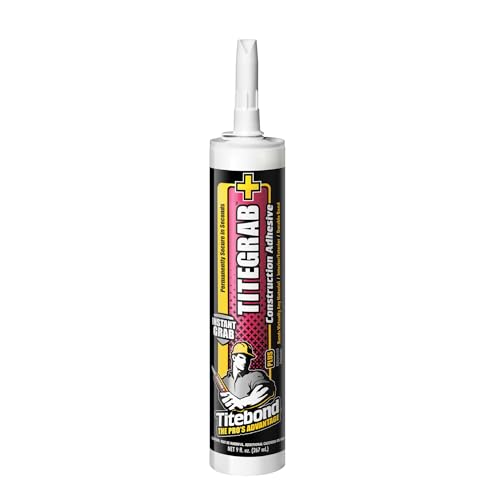
Titebond’s TiteGrab Plus earns its name with an advanced polymer formula that grabs instantly on vertical surfaces, reducing the need for bracing while the adhesive cures. For retaining wall work, this means you can place a capstone and walk away without worrying about it sliding off during the first hour. The creamy, high-solids formula extrudes smoothly from the tube and provides a waterproof bond that won’t shrink or become brittle over time.
Users rave about using this adhesive for tile backsplashes and ceiling tiles, which speaks to its holding power on vertical installations. For block walls, it works particularly well for bonding lightweight decorative stone veneers and for securing the top course on low garden walls. The 2–3 minute tack time gives just enough play to nudge a stone into perfect alignment before the grab locks it in place.
The trade-off is that this adhesive struggles on smooth non-porous surfaces, as one reviewer noted. For retaining wall blocks that are rough-textured concrete or natural stone, that’s not an issue—the texture provides excellent mechanical grip. But if you’re working with polished or glazed masonry units, you’ll need to scuff the surface first or choose a different product.
Why it’s great
- Instant grab on vertical surfaces — minimal bracing needed
- Waterproof and won’t shrink or become brittle after curing
- Smooth extrusion from the cartridge for precise bead control
Good to know
- Not recommended for smooth, non-porous surfaces without surface prep
- 2–3 minute tack time — plan your alignment quickly
5. PL 600 Landscape Block Construction Adhesive

The PL 600 from Le Page is a simple, no-frills construction adhesive that gets the job done for light retaining wall repairs and garden edging projects. It comes in a 295mL tube and applies as a bead that sticks aggressively to concrete, stone, and wood. Users report that it glues stones together with amazing solidity for the price point and that weather exposure doesn’t degrade the hardness of the cured bond.
Where the PL 600 shines is quick fix-ups: reattaching a loose capstone on a low wall, securing a half-brick to a facade, or bonding stepping stones in a garden path. The open time is short, so you need to have your alignment decided before the adhesive skins over. Several reviewers mentioned they appreciated the fast shipping and low cost, making it an easy entry-level option for small-scale jobs.
The main limitation is that the PL 600 is not designed for heavy structural loads or multi-tier retaining walls over two feet tall. It’s a temporary-plus solution — strong enough for a season or two, but not a permanent fix for a wall that’s holding back significant soil. Use it for cosmetic repairs, not for load-bearing block courses.
Why it’s great
- Affordable per-tube cost for small repair projects
- Weather-resistant once fully cured
- Strong initial grab on porous stone and concrete
Good to know
- Short open time — work quickly to align stones
- Not designed for structural retaining walls over two feet tall
6. Somafix S700 Fast-Curing Anchoring Adhesive
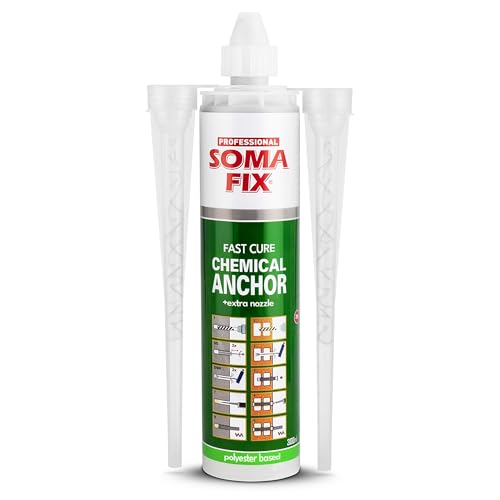
This fast-curing polyester resin from Somafix is an anchoring adhesive, not a block-to-block construction glue—so its use case is distinct from the other products on this list. It’s ideal for securing metal railing brackets, fence posts, or anchor bolts into concrete block or brick. You drill a hole, clean it, inject the resin, and insert the fastener; the resin cures in minutes and locks the fastener in place without expansion pressure that could crack the block.
The included extra mixing nozzle is a genuine convenience for multi-fastener jobs, and users consistently praise how quickly it sets—some noted it’s rock-hard within 3 minutes. One reviewer used it to fix a loose outdoor railing before listing a house, and the bond held immediately. Another mentioned it works perfectly with mesh sleeves for hollow masonry, which is common in newer retaining wall blocks that have internal voids.
Because the cure is so fast, you cannot afford to mix the resin, walk away, and come back. Have your fastener pre-cut and ready before you inject. The Somafix S700 is a specialist tool—excellent for hardware anchoring into block faces, but not the right choice for bonding capstones or laying courses of block.
Why it’s great
- Extra mixing nozzle included — less downtime between applications
- Fast cure in 3–5 minutes for quick project completion
- No expansion pressure, safe for hollow and thin-walled block
Good to know
- Sets too fast for multi-bolt alignment — have everything ready before mixing
- Not a substitute for block-to-block construction adhesive
7. Sika AnchorFix-2 High-Performance Construction Adhesive

Sika AnchorFix-2 is a professional-grade epoxy designed for anchoring threaded bars in uncracked concrete, solid masonry, and steel. It’s the strongest bond on this list, with a pull-out strength that exceeds most mechanical anchors. The 5-minute cure time is astonishingly fast—you can set a bolt and have it holding load within the hour—but that speed demands flawless preparation and precision.
Installers use this for heavy-duty projects like securing a two-post car lift to a concrete slab or anchoring wrought-iron railings into brick. The epoxy is solvent-free and certified safe for use in drinking water systems, so it won’t leach chemicals into the soil near a retaining wall. The cartridge fits standard caulk guns, though the thick paste requires a powered gun for consistent flow on large jobs.
The critical downside for retaining wall block use is that the epoxy sets before you can adjust the fastener. Multiple reviewers noted that by the time they finished injecting the second or third hole, the nozzle had already cured solid. This epoxy is for anchoring hardware into a wall face, not for gluing blocks together. If your project involves attaching metal brackets or railing posts to a retaining wall, this is the ultimate bond. For stacking blocks, stick with the polyurethane options above.
Why it’s great
- Solvent-free and safe for drinking water contact — environmentally neutral
- Extreme pull-out strength for heavy-duty anchoring in concrete and masonry
- 5-minute cure means the job is ready fast
Good to know
- Requires a powered caulk gun — manual guns struggle with the thick epoxy
- Too fast-setting for multi-bolt installations — plan each shot carefully
FAQ
How long does retaining wall block adhesive take to cure fully?
Can I use regular construction adhesive for retaining wall blocks?
What is the best way to apply adhesive to retaining wall blocks?
Will adhesive work on damp or wet retaining wall blocks?
Final Thoughts: The Verdict
For most users, the best adhesive for retaining wall blocks winner is the Loctite PL Premium Polyurethane because it combines 3x strength, damp-surface capability, and a forgiving 30-minute open time. If you want a dedicated landscape-block formula with cold-weather performance, grab the Loctite PL 500 Landscape Block. And for anchoring hardware into a retaining wall face, nothing beats the speed and pull-out strength of the Sika AnchorFix-2 Epoxy.