
Our readers keep the lights on and the weekend projects moving. As an Amazon Associate, I earn from qualifying purchases.
Nothing is more frustrating than gluing a rubber pad to a wooden surface only to have it peel off hours later. The chemical mismatch between flexible rubber and porous wood requires a specific type of adhesive that stays flexible, resists moisture, and grabs both materials equally.
I’m Rikta — the co-founder and writer behind FitlyFast. I’ve spent hundreds of hours analyzing adhesive chemistries and cross-referencing real-world user reports to find the formulations that actually solve the rubber-to-wood bonding challenge.
Whether you are repairing a shoe sole, attaching a rubber bumper to furniture, or bonding a neoprene mat to wood, this guide singles out the best adhesive for rubber to wood across different project sizes and working conditions.
How To Choose The Best Adhesive For Rubber To Wood
Not every glue can handle the opposing flex and porosity of rubber and wood. The right choice depends on the rubber type, the stress the joint will face, and whether you need a fast set or a repositionable bond.
Understand the Chemistry: Neoprene vs. Epoxy vs. Hybrid
Neoprene-based contact cements are the gold standard for rubber-to-wood bonding. They dry into a flexible film that absorbs vibration and thermal expansion without cracking. Epoxies create a rigid bond that works best for hard rubbers bonded to non-flexing wood surfaces. Hybrid polymer adhesives like those from Gorilla offer a middle ground with waterproof properties and gap-filling ability.
Key takeaway: For soft rubber like neoprene or SBR, stick to neoprene contact cement. For dense rubber soles or rubber-to-wood structural joints, a two-part epoxy or construction adhesive is a better fit.
Quick Comparison
On smaller screens, swipe sideways to see the full table.
| Model | Category | Best For | Key Spec | Amazon |
|---|---|---|---|---|
| 3M Hi-Strength 94 ET | Spray Adhesive | Large surface laminations | 60 min open time | Amazon |
| Gorilla Max Strength (Cartridge) | Construction Adhesive | Structural & outdoor bonds | 30 min working time | Amazon |
| RH Adhesives S-18 All-Purpose | Neoprene Cement | Flexible film & peel strength | 24 hr full cure | Amazon |
| Gorilla Max Strength (Squeeze Tube) | Hybrid Polymer | Gap filling & invisible finish | 2.5 oz squeeze tube | Amazon |
| RH Adhesives Clear-Tite Contact Cement | Contact Cement | High heat resistance | 250°F max temp | Amazon |
| Bob Smith Industries Quik-Cure Epoxy | Fast-Set Epoxy | Small repairs & hard rubbers | 5 min working time | Amazon |
| Wonshine Contact Cement with Brush | Brush-On Cement | Precision application on small crafts | Built-in brush tip | Amazon |
In‑Depth Reviews
1. 3M Hi-Strength 94 ET Spray Adhesive
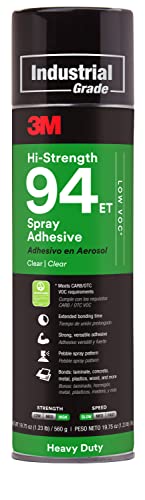
This spray adhesive from 3M is a contact cement in an aerosol can, delivering industrial-grade bonding for large surface areas. Its aggressive tack grabs rubber sheeting, carpets, and foam instantly, yet the 60-minute open time lets you reposition the material for precise alignment—a rare combination in spray adhesives.
The formula is GREENGUARD certified and low VOC, making it a better choice for indoor workshops compared to solvent-heavy alternatives. Users consistently report that it bonds foam soundproofing to metal van walls through freezing temperatures without delamination, a testament to its flexibility and cold resistance.
For rubber-to-wood projects like laminating a rubber mat onto a workbench or attaching carpet to wooden stairs, the even spray pattern prevents pooling and delivers full-surface coverage that brush-on liquids cannot match. The 19.75 oz net weight can covers roughly 30 square feet per can.
Why it’s great
- 60-minute open time allows repositioning
- Low VOC and GREENGUARD certified
Good to know
- Requires ventilation due to solvent odor
- Needs 30 minutes drying time before pressing surfaces
2. Gorilla Max Strength Construction Adhesive (Cartridge)
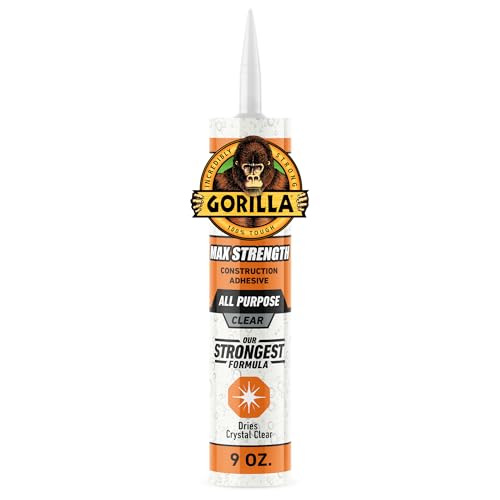
This hybrid polymer construction adhesive is Gorilla’s strongest formula, designed for demanding structural bonds. It dries crystal clear and remains flexible enough to handle the differential expansion between rubber and wood in outdoor environments.
The 30-minute working time gives you enough space to clamp and adjust the joint, and the formula bonds underwater—ideal for shower or marine repairs. One user successfully bonded a vinyl-to-steel moisture barrier for a convertible top that lasted over a year, proving its resistance to UV and water.
For rubber-to-wood jobs like attaching rubber bumpers to wooden gates or sealing rubber gaskets to wooden window frames, this cartridge delivers a clean, paintable finish that holds under extreme weather. Note that it requires a caulking gun for application.
Why it’s great
- 100% waterproof and bonds on wet surfaces
- Gap-filling formula fills uneven joints
Good to know
- UV exposure may cause yellowing over time
- Requires a caulking gun for application
3. RH Adhesives S-18 All-Purpose Adhesive
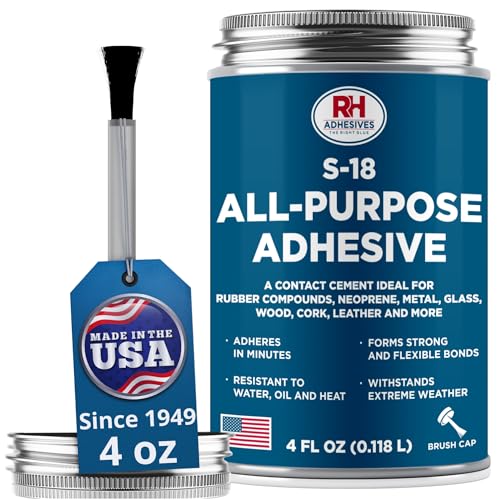
The S-18 is a classic neoprene-based contact cement that excels in bonding flexible materials like SBR rubber and neoprene to metal and wood. It creates a strong film with excellent peel strength, making it the top choice for shoe repair where the bond must withstand repeated bending.
Users have successfully used it to reattach leather boot soles and repair neoprene yoga mats for car use. The water-resistant solvent means it holds up in marine environments, though one user reported indoor use is recommended due to heat and rain causing eventual failure in outdoor automotive applications.
This is a liquid formula applied with the brush built into the cap or a separate brush. The 4 oz can is compact but covers many small repairs. The strong solvent smell demands a well-ventilated workspace, and the glue can thicken if the can is stored open for too long.
Why it’s great
- High peel strength ideal for flexible rubber bonds
- Water-resistant formula for marine applications
Good to know
- Not recommended for constant outdoor weather exposure
- Solvent fumes require strong ventilation
4. Gorilla Max Strength Construction Adhesive (Squeeze Tube)

This squeeze tube version of the Gorilla Max Strength adhesive offers the same hybrid polymer formula in a more convenient no-gun format. The crystal-clear cure makes it perfect for visible joints where a clean aesthetic matters, such as attaching a transparent rubber bumper to a wooden shelf.
Users have used it to bond magnets to metal in a hot car interior, where a rubbery bond held strong without melting. The adhesive is extremely sticky and viscous, forming a quick initial bond in about 30 seconds while remaining repositionable for up to 5 minutes. Cleanup is easiest with rubbing alcohol before the glue cures.
The gap-filling property makes it great for uneven rubber-to-wood surfaces, but the full 24-hour cure time demands patience. One reviewer noted it is not quite as strong as competing products for extreme load-bearing tasks, so it is best suited for medium-stress applications like attaching rubber feet to wooden furniture.
Why it’s great
- Dries crystal clear for invisible bonds
- Gap-filling formula works with uneven surfaces
Good to know
- Not as strong as cartridge version for heavy loads
- Very sticky and hard to remove from skin
5. RH Adhesives Clear-Tite Contact Cement

Clear-Tite is a contact cement specifically formulated to maintain bond integrity at temperatures up to 250 degrees Fahrenheit. This makes it the go-to choice for bonding rubber to wood in applications near heat sources, such as kitchen countertop laminations or automotive engine bay repairs.
The formula sets in about 10 minutes after application to both surfaces, speeding up projects compared to slower-setting epoxies. Users have used it successfully for laminated countertop edges and flooring installations. One review noted the product is not truly clear but has a transparent yellow tint, which is typical for neoprene-based contact cements.
This adhesive excels on crepe rubber, which is a common material for shoe soles and industrial pads. The built-in brush applicator makes small jobs easy, but the 4 oz can size limits its use to smaller projects. It shares the same strong solvent smell as the S-18, requiring good ventilation.
Why it’s great
- Withstands high temperatures up to 250°F
- Fast 10-minute bond set time
Good to know
- Dries transparent yellow, not perfectly clear
- Strong solvent odor requires ventilation
6. Bob Smith Industries Quik-Cure Epoxy
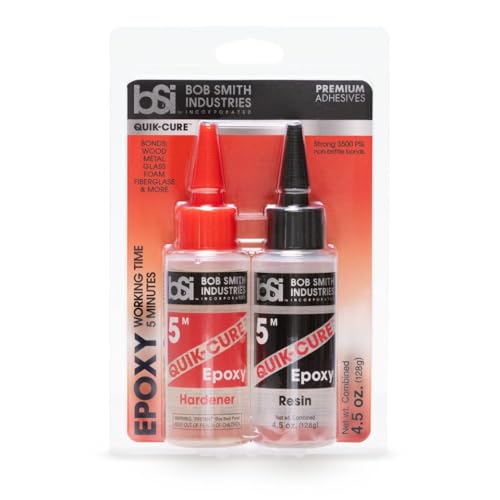
This two-part epoxy sets in just 5 minutes and fully cures in 15 minutes, making it the fastest option in this list. It creates a rigid, impact-resistant bond that is ideal for dense, hard rubbers bonded to non-flexing wooden surfaces, such as attaching a rubber heel to a wooden shoe last.
The squeeze tube dispenser allows precise mixing of small batches, reducing waste. Users have reported excellent results repairing vintage plastic tail lights, bonding costumes, and making tool handles. The cured epoxy is rock-hard and rock-clear, blending seamlessly on visible repairs.
Because the bond is rigid, it is not the best choice for thin, flexible rubber sheets that need to bend repeatedly. The inner caps on the tubes prevent the remaining epoxy from drying out, extending the product’s shelf life significantly. A little goes a long way—one user noted the small bottles last through many projects.
Why it’s great
- Fast 5-minute set time for quick repairs
- Crystal-clear finish for invisible fixes
Good to know
- Rigid bond is not suitable for flexible rubber
- Requires scuffing plastic surfaces for best grip
7. Wonshine Contact Cement with Brush
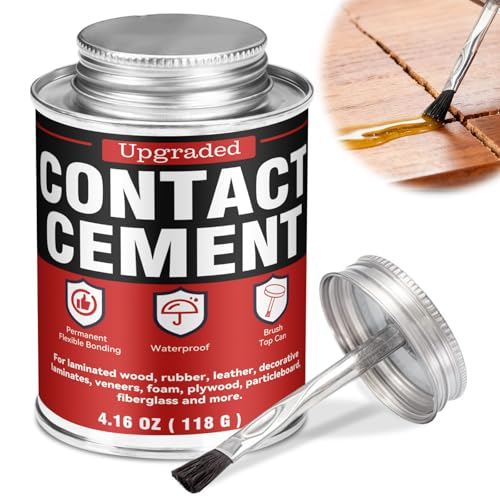
This entry-level brush-on contact cement uses a chloroprene (neoprene) formula that delivers a strong flexible bond between rubber and wood while remaining soft after curing. The built-in brush tip lets you reach tight spaces and apply precise lines of glue without overspray or puddling.
The application process is straightforward: apply a thin coat to both clean dry surfaces, wait 10 to 15 minutes until the glue becomes slightly dry and glossy, then press the parts together. The 24-hour full cure time ensures the bond develops maximum strength. It is waterproof and heat-resistant, making it viable for small household fixes.
This is a budget-friendly option suited for light-duty crafts like attaching rubber pads to wooden coasters or small furniture repairs. For heavy structural loads or outdoor exposure, you will want a more robust adhesive like the 3M spray or Gorilla construction adhesive. The small 4.16 oz bottle is ideal for occasional users.
Why it’s great
- Integrated brush for mess-free precision application
- Remains flexible after curing
Good to know
- Small bottle size limits project volume
- Not intended for heavy structural loads
FAQ
Can I use regular super glue for rubber to wood?
Why does my rubber glue keep peeling off the wood?
How long should I let contact cement dry before pressing rubber to wood?
Is spray adhesive or brush-on cement better for large rubber sheets?
Final Thoughts: The Verdict
For most users, the best adhesive for rubber to wood winner is the 3M Hi-Strength 94 ET Spray Adhesive because its long open time, low VOC formulation, and strong bond work across the widest range of projects from crafts to large laminations. If you need a waterproof outdoor bond with gap-filling ability, grab the Gorilla Max Strength Construction Adhesive (Cartridge). And for quick small repairs where precision matters, nothing beats the Bob Smith Industries Quik-Cure Epoxy.