
Our readers keep the lights on and the weekend projects moving. As an Amazon Associate, I earn from qualifying purchases.
Nothing ruins a fresh vinyl floor faster than curled edges, bubbling planks, or a bond that fails within months. Unlike click-lock systems, glue-down vinyl on concrete demands an adhesive that can handle moisture vapor, temperature swings, and the constant foot traffic of daily life. Get the wrong formula and you are pulling up your investment before the first year is done.
I’m Rikta — the co-founder and writer behind FitlyFast. I have spent the last 15 years analyzing the chemical composition, open times, and concrete adhesion properties of flooring adhesives from the biggest names in the trade.
After combing through real-world customer experiences and technical spec sheets for dozens of formulas, I have distilled the list down to a select few that deliver lasting results. This is the definitive guide to the best adhesive for vinyl flooring on concrete.
How To Choose The Best Adhesive For Vinyl Flooring On Concrete
The concrete subfloor presents unique challenges — alkalinity, residual moisture, and a porous surface that can suck the water out of a weak adhesive before it sets. Choosing the right product means matching the adhesive type to your vinyl format and your room conditions.
Acrylic Latex vs. SBR Latex
Acrylic latex adhesives offer flexibility and resistance to moisture, making them the standard for LVT and LVP on concrete slabs. SBR latex (like the Roberts 3085) sets faster but can be less tolerant of damp subfloors. For basements or ground-level concrete, lean toward acrylic formulas with moisture resistance ratings.
Open Time and Working Time
Open time is how long the adhesive remains workable after troweling. If your room is large or your cuts are complex, you want an adhesive with at least 30 minutes of open time. Fast-setting products (like SBR formulas) can trap you in a corner if you spread too much at once.
Quick Comparison
On smaller screens, swipe sideways to see the full table.
| Model | Category | Best For | Key Spec | Amazon |
|---|---|---|---|---|
| ROBERTS 7350 | Acrylic Latex | LVT/LVP permanent bond | Microban protection | Amazon |
| ROMAN PRO-690 | Pressure Sensitive | Zero VOC releasable install | 0 g/L VOCs | Amazon |
| Henry 32079 | Water Resistant | Sheet vinyl on concrete | 4-hour cure time | Amazon |
| Roberts 3085 | SBR Latex | Budget-friendly fast set | 92 sq. ft per gallon | Amazon |
| RecPro RP-128 | Water-Based | RV/boat vinyl on wood | 24-hour full cure | Amazon |
| HOOK UP Vinyl Cement | Solvent-Based | Pool liner patch repair | Underwater application | Amazon |
| MULGREAT Peel & Stick | Self-Adhesive | DIY peel-and-stick tile | 1.5 mm thick planks | Amazon |
In‑Depth Reviews
1. ROBERTS Universal Resilient Flooring & Vinyl-Backed Carpet Tile Adhesive

The ROBERTS 7350 is a solvent-free acrylic latex adhesive engineered for luxury vinyl tile, luxury vinyl plank, vinyl composition tile, and sheet goods over properly prepared concrete. Its pressure-sensitive formula provides high initial strength, which means your planks lock into place immediately with no creeping. The Microban antimicrobial protection is a strong bonus for concrete slabs in basements or ground-level rooms where moisture and microbial growth can compromise a standard bond.
Customer reports confirm the working time is generous — multiple reviews note the adhesive remained tacky long enough to reposition boards in larger rooms. One RV owner used it to patch a torn floor and reported zero lifting after six months of road vibration and temperature changes. The pint-sized 8.37-pound pail covers about 75 to 100 square feet with a 1/16-inch notch trowel, putting it on par with mid-range household projects.
The trade-off is cleanup: once dry, this stuff resists simple soap and water removal. You need to wipe up any overspread adhesive before it sets, especially on porous concrete where it can stain. For an occupied home, the low-odor profile is a welcome relief compared to solvent-based alternatives.
Why it’s great
- Microban protection fights bacterial growth on concrete subfloors.
- Long open time allows relaxed positioning of planks.
- Strong initial tack prevents edge curl on LVT.
Good to know
- Cleanup must happen immediately before adhesive dries.
- Not ideal for extremely damp concrete slabs.
2. ROMAN PRO-690 Pressure Sensitive Flooring Adhesive
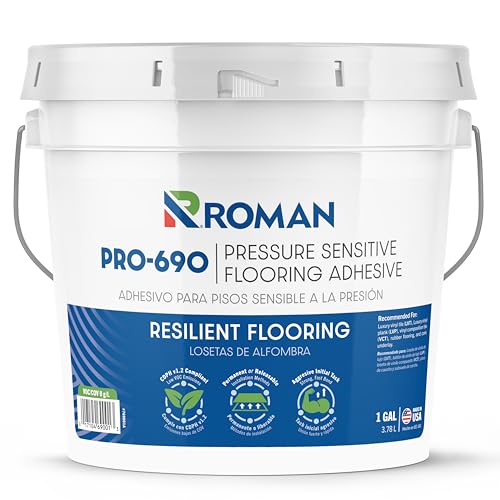
The ROMAN PRO-690 is a standout for installers who value indoor air quality. With a verified 0 g/L VOC content and CDPH v1.2 compliance, it meets LEED low-emitting material requirements — a rare property in the flooring adhesive space. The paste-like formula spreads easily with a 1/16-inch notched trowel and becomes aggressively tacky after 15 to 20 minutes of open time, giving you a pressure-sensitive bond that allows plank repositioning before full cure.
One unique feature is its dual-mode capability: you can apply it wet for a permanent bond or let it dry tacky for a releasable installation. This flexibility is clutch for rentals or temporary commercial spaces where you may need to pull up flooring later. The dries-clear property means the adhesive won’t show through the seams of thin vinyl planks.
The 8-hour full cure time means you need to keep foot traffic off the floor for a full workday. Some customers who tested it on VCT noted that the bond held firmly even in high-moisture environments, but the manufacturer recommends the subfloor surface temperature stay below 85 degrees Fahrenheit for radiant-heated slabs.
Why it’s great
- Zero VOC and LEED-compliant for safe indoor use.
- Dries clear so seams remain invisible.
- Dual permanent or releasable bond option.
Good to know
- 8-hour cure time requires patience before walking on the floor.
- Not intended for felt-backed sheet vinyl.
3. Henry 32079 695 Vinyl Flooring Adhesive
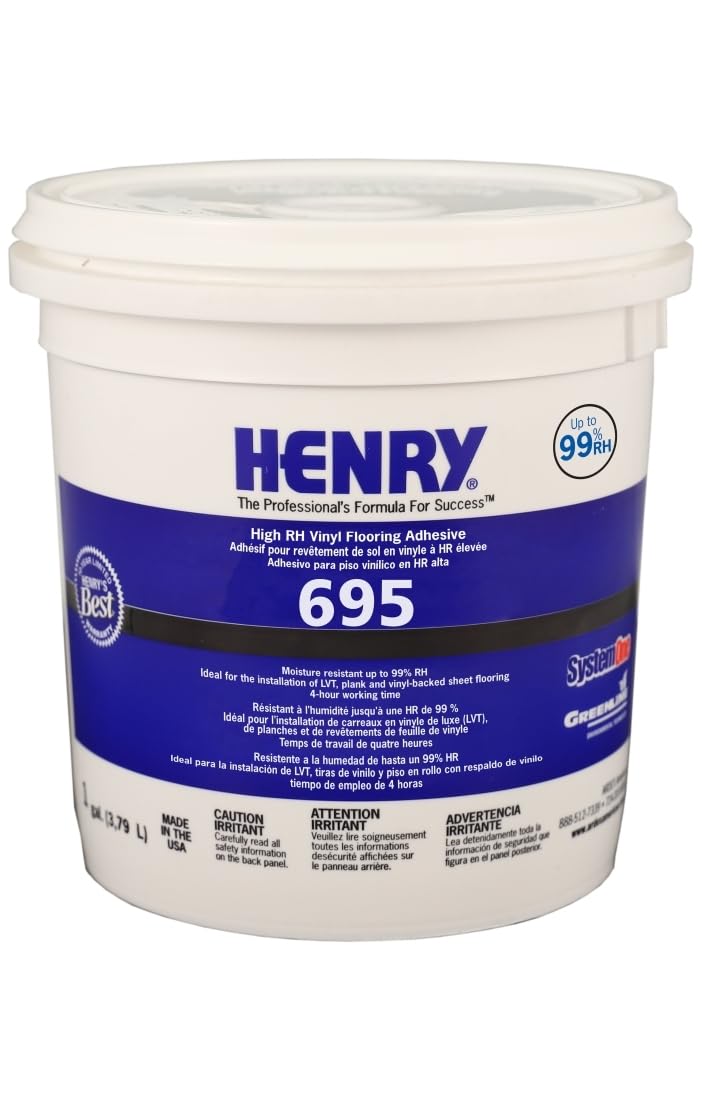
The Henry 32079 is purpose-built for sheet vinyl installations on concrete, with a water-resistant formulation that resists the wicking moisture common on ground-level slabs. The off-white paste spreads evenly and offers a balanced grab that gives you enough working time to roll out large sheets without the adhesive setting prematurely. One verified review noted it filled small cracks in the concrete subfloor while still providing a flat bed for the vinyl, a welcome bonus.
The 4-hour full cure time is faster than many acrylic alternatives, making it a solid pick for weekend projects where you want to move furniture back in the same day. The manufacturer specifies it for vinyl-compatible materials and recommends using a 1/16-inch V-notch trowel for consistent coverage. The 9.5-pound pail covers roughly 80 to 100 square feet, depending on subfloor porosity.
The downside is limited versatility — this adhesive is formulated primarily for sheet vinyl and roll goods. It is not optimized for click-lock LVP or VCT tiles, so if you plan to mix flooring types in the same project, a multi-purpose acrylic like the ROBERTS 7350 is a better fit.
Why it’s great
- Water-resistant formula handles concrete slab moisture.
- Fast 4-hour cure gets furniture back sooner.
- Fills minor subfloor imperfections for a smooth base.
Good to know
- Primarily for sheet vinyl, not LVT or VCT.
- Limited availability at some retailers.
4. Roberts 3085 Multipurpose Adhesive
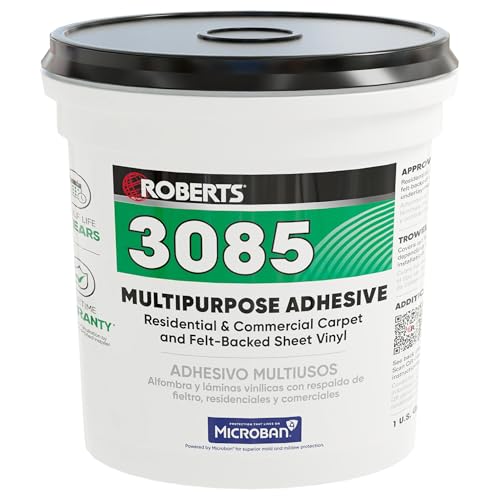
The Roberts 3085 is an SBR latex solvent-free adhesive that prioritizes speed. It sets fast enough that one customer reported being able to lay linoleum 30 minutes after applying a thin coat. That rapid grab makes it a favorite for small areas like kitchen floors or laundry rooms where you want to minimize downtime. The formula bonds to concrete, plywood, terrazzo, and properly prepared VCT, giving you some flexibility across substrate types.
A single gallon covers roughly 92 square feet per customer reports, which aligns with the manufacturer’s guidelines for a thin trowel application. The price point keeps it firmly in the accessible range for DIYers tackling a single room. Multiple verified reviews praise its long-lasting hold — one reviewer reported the vinyl was still in great shape years after installation.
The big caveat with SBR latex is moisture tolerance. On concrete slabs with high moisture vapor emission rates, this adhesive can weaken over time. A few customers also noted inconsistent packaging with lids that were not sealed properly, causing leakage during shipping. Inspect the lid before opening and expect to use a separate applicator.
Why it’s great
- Fast set allows floor use within 30 minutes.
- Budget-friendly for small rooms.
- Bonds to multiple subfloor types including concrete.
Good to know
- Not designed for damp or below-grade concrete.
- Inconsistent lid seals may cause leakage upon arrival.
5. RecPro RV Roll On Floor Adhesive
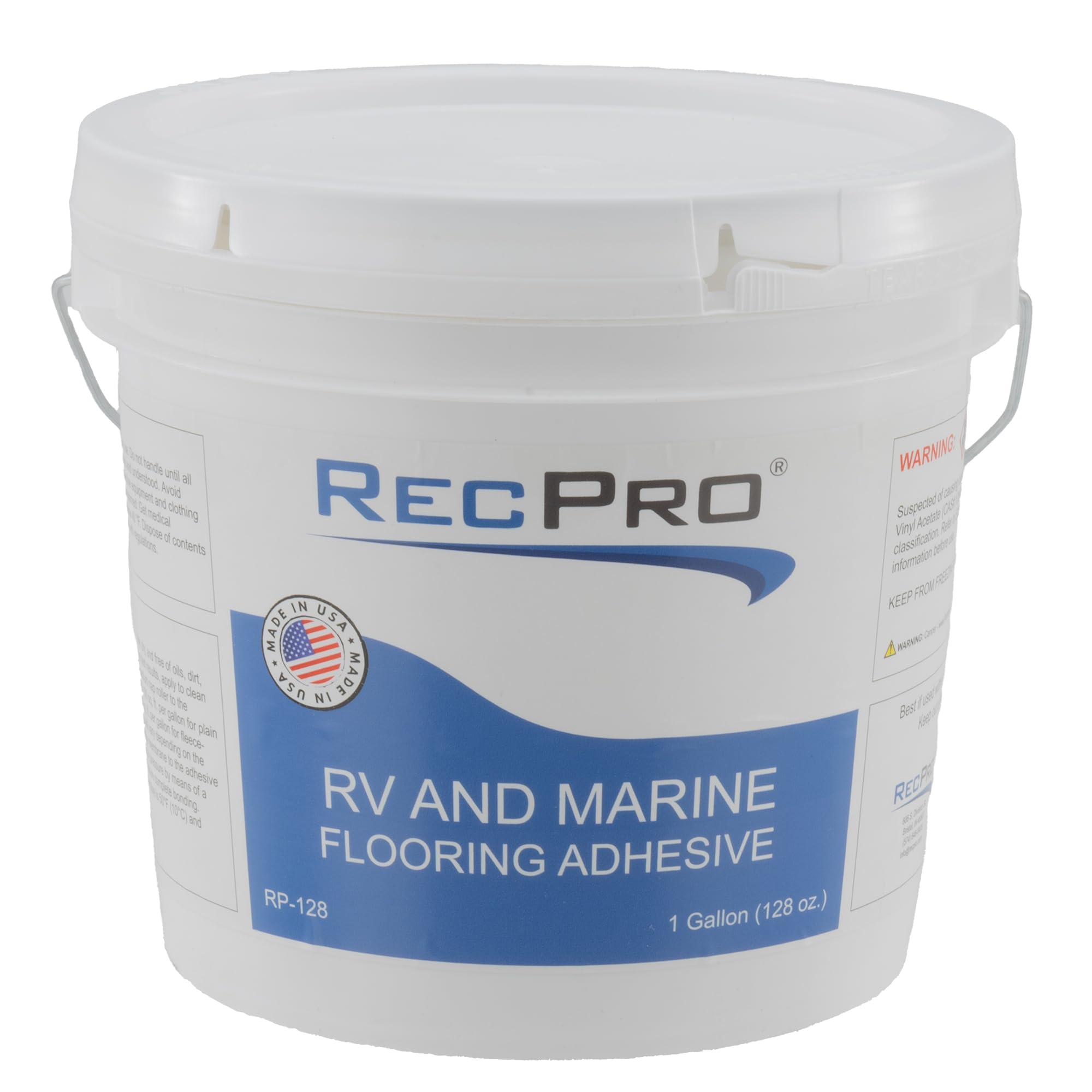
The RecPro RP-128 is a water-based adhesive formulated for mobile environments — RVs, boats, and vans — where vibration and temperature swings demand a flexible, durable bond. The formula penetrates plywood substrates deeply to create a secure connection with felt-backed vinyl or rubber coin flooring. The manufacturer recommends applying between 65 and 75 degrees Fahrenheit and using a steel roller after spreading to eliminate air pockets.
One verified customer installed rubber coin flooring in an RV and reported the adhesive held perfectly after months of travel at highway speeds. The water-based chemistry means low odor and easier cleanup compared to solvent-based options, which is a major advantage in tight living quarters. Coverage is roughly 100 square feet per gallon with a notched trowel.
The main concern is batch inconsistency. Two customers who ordered multiple gallons reported receiving pails with different colors and consistency levels — one was loose, the other thick. If you are covering a large area, order all your pails at once from the same lot to ensure uniform application. Also, the 24-hour full cure time means you cannot use the space for a full day.
Why it’s great
- Water-based formula safe for enclosed RV and boat spaces.
- Flexible bond handles vibration and temperature shifts.
- Easy cleanup with soap and water before drying.
Good to know
- Batch consistency may vary between pails.
- Not suitable for aluminum substrates with marine carpet.
6. HOOK UP Vinyl Cement
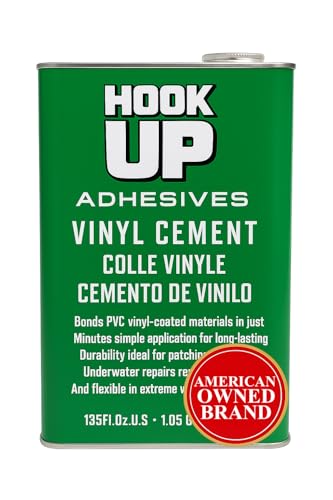
The HOOK UP Vinyl Cement fills a specific niche: waterproof, solvent-based contact cement for vinyl and PVC repairs — pool liners, inflatables, tarps, and hot tub covers. The 1-gallon can includes a built-in brush for targeted application, and the clear drying finish keeps patches low-visibility. The manufacturer states it can be applied underwater, making it functional for repairing pool liner tears without draining the pool.
One reviewer successfully used it to re-glue a vinyl kneeling cushion that had detached in a greenhouse, while another repaired an underwater pool patch with no issues. The solvent-based chemistry gives it strong holding power on smooth, non-porous surfaces like PVC and vinyl, which are notoriously difficult for water-based adhesives to grip.
This is not a full-floor adhesive — it is designed for repairs, not trowel-applied large-area installations. The high VOC content requires excellent ventilation during use, and the built-in brush can get messy if you over-apply. For patching a tear in an existing vinyl floor on concrete, it can work in a pinch, but it is far from a primary flooring adhesive.
Why it’s great
- Waterproof bond works on underwater pool patches.
- Dries clear for invisible repairs.
- Built-in brush simplifies spot application.
Good to know
- High VOC requires ventilation during use.
- Not intended for large floor installations.
7. MULGREAT Peel and Stick Floor Tile
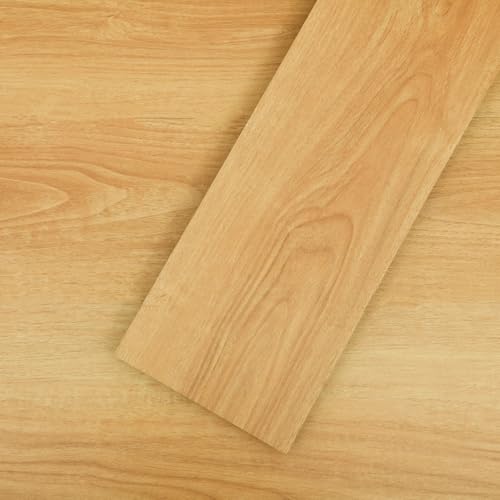
The MULGREAT peel-and-stick planks skip the adhesive bucket entirely. Each 6-by-36-inch plank has a pre-applied pressure-sensitive backing that bonds to dry, flat concrete without a separate adhesive layer. The 1.5 mm thick PVC construction includes a wear layer that resists scratches from foot traffic, and the deep embossed wood grain texture delivers a realistic look for a fraction of the labor of glue-down vinyl.
Customers found the planks easy to cut with scissors and a utility knife, and multiple reviews note the color matches the warm oak sample shown online. One customer transformed their kitchen in a couple of hours, while another used spray adhesive on corners to reinforce the bond on slightly uneven concrete. The 54-square-foot box works best for small bathrooms, laundry rooms, or RV kitchens.
The pre-applied adhesive is less aggressive than trowel-on formulas. On concrete slabs with glossy sealers or heavy contamination, the bond can lift at the edges over time. Several users recommend supplementing with a tube of construction adhesive on corners for long-term hold. This is an entry-level solution for renters or cosmetic upgrades, not a permanent bond for high-traffic commercial concrete floors.
Why it’s great
- No messy adhesive trowel required.
- Realistic wood grain embossed texture.
- Fast installation in under 2 hours for a small room.
Good to know
- Pre-applied adhesive may lift on uneven or sealed concrete.
- Not suitable for high-moisture basements.
FAQ
Can I use peel-and-stick vinyl directly on concrete without a primer?
How long should I wait before walking on vinyl glued to concrete?
Final Thoughts: The Verdict
For most users, the adhesive for vinyl flooring on concrete winner is the ROBERTS 7350 because it combines strong initial tack, Microban protection, and solvent-free safety for LVT, LVP, and VCT on concrete slabs. If you want zero VOC compliance and a dual permanent-or-releasable bond, grab the ROMAN PRO-690. And for small sheet vinyl projects where speed matters, nothing beats the Henry 32079.